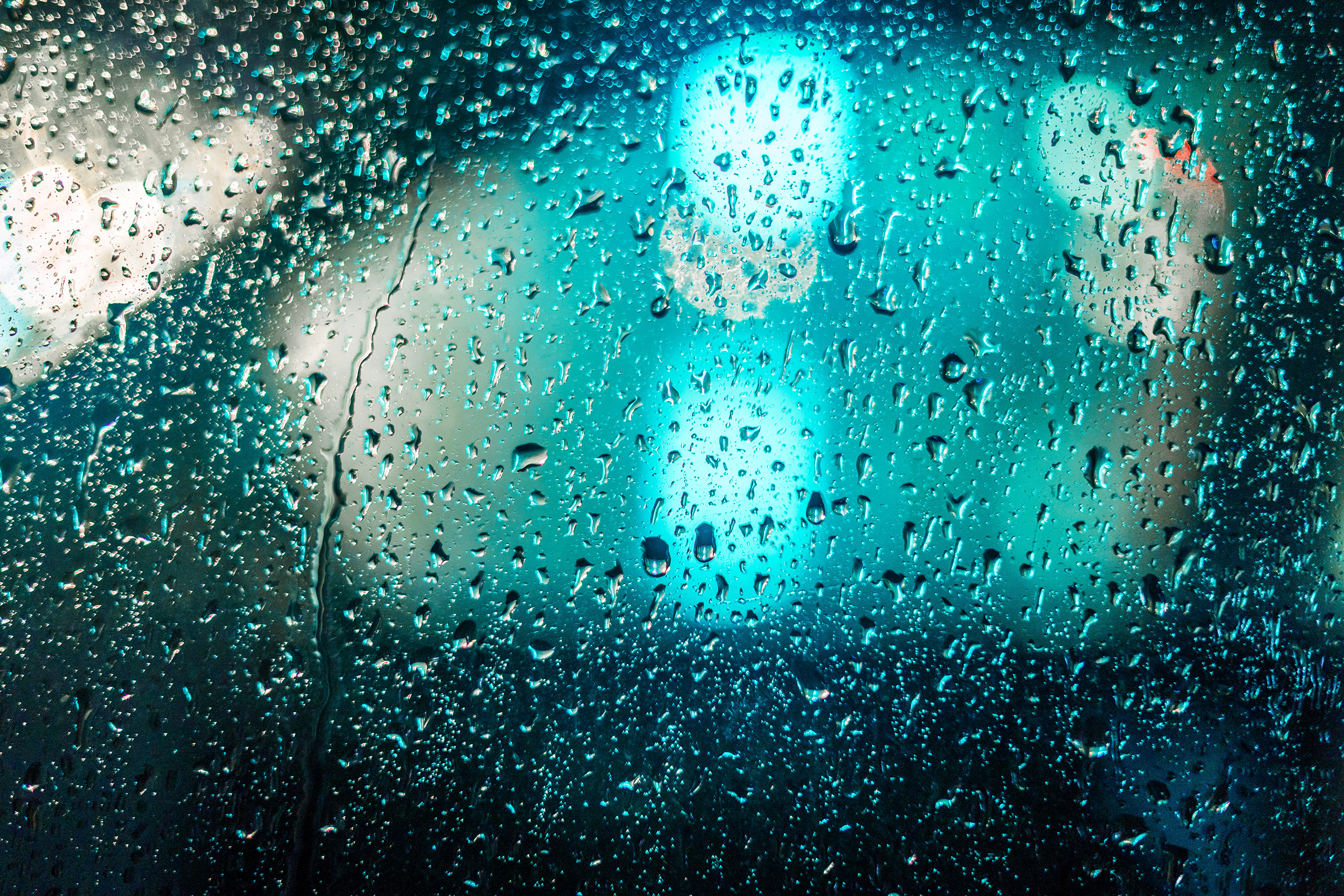
When I was a child, I was fascinated by the raindrops that shimmied along the windshield of our car. Some would slide up the glass. Some would run down. And some just seemed to wiggle in place, until the car’s speed changed. As common as this sight is, the physics of these droplets is quite complicated and not completely understood.
Each droplet has a host of forces on it: gravity flattening it or pulling it down an incline; a drag force from the wind flowing over it; and friction between the drop and the surface trying to pin it in place. Recently, scientists have developed a new mathematical model that captures some of the behaviors behind these drops. The work describes the wind speed necessary to move a drop of a given size sitting on a flat surface. The authors also explored how that critical wind speed changes when a drop sits on a tilted surface aligned or against the wind. (Image credit: P. Gupta; research credit: A. Hooshanginejad and S. Lee; via Science News; submitted by Kam-Yung Soh)
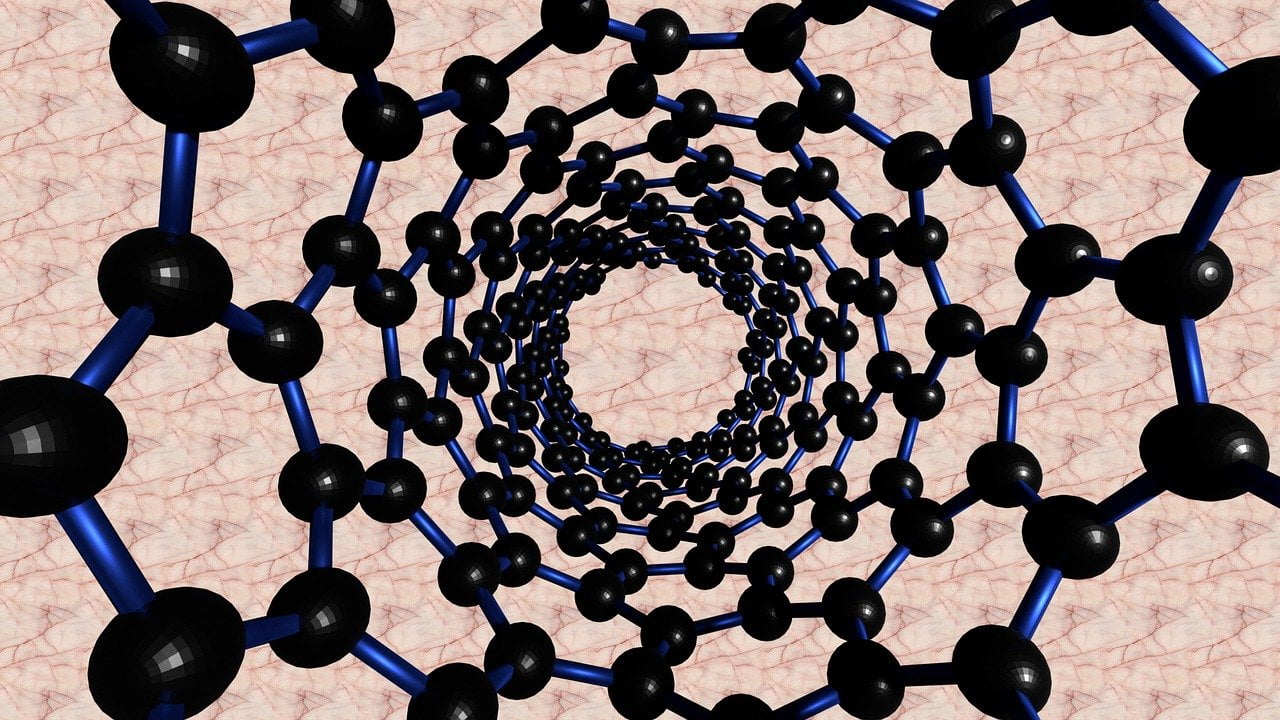
Years ago, physicists discovered that water flows with surprisingly little friction through narrow carbon nanotubes. At our scale, flow behavior is typically the opposite: there’s greater friction (and, thus, slower flow) in a narrower pipe. To unravel the mystery, researchers had to delve into quantum mechanics and model the interactions between the atoms of a water molecule and the electrons of the carbon atom. Essentially, this meant building a quantum picture of the liquid-solid interface inside the nanotube.
The team found that the electrons of the nanotube exert a drag-like force on the water molecules, creating friction that slows the flow. Since narrow nanotubes have fewer electrons than larger tubes, there is less friction on the flow and the water flows faster! (Image credit: cintersimone; research credit: N. Kavokine et al.; via SciAm; submitted by Kam-Yung Soh)
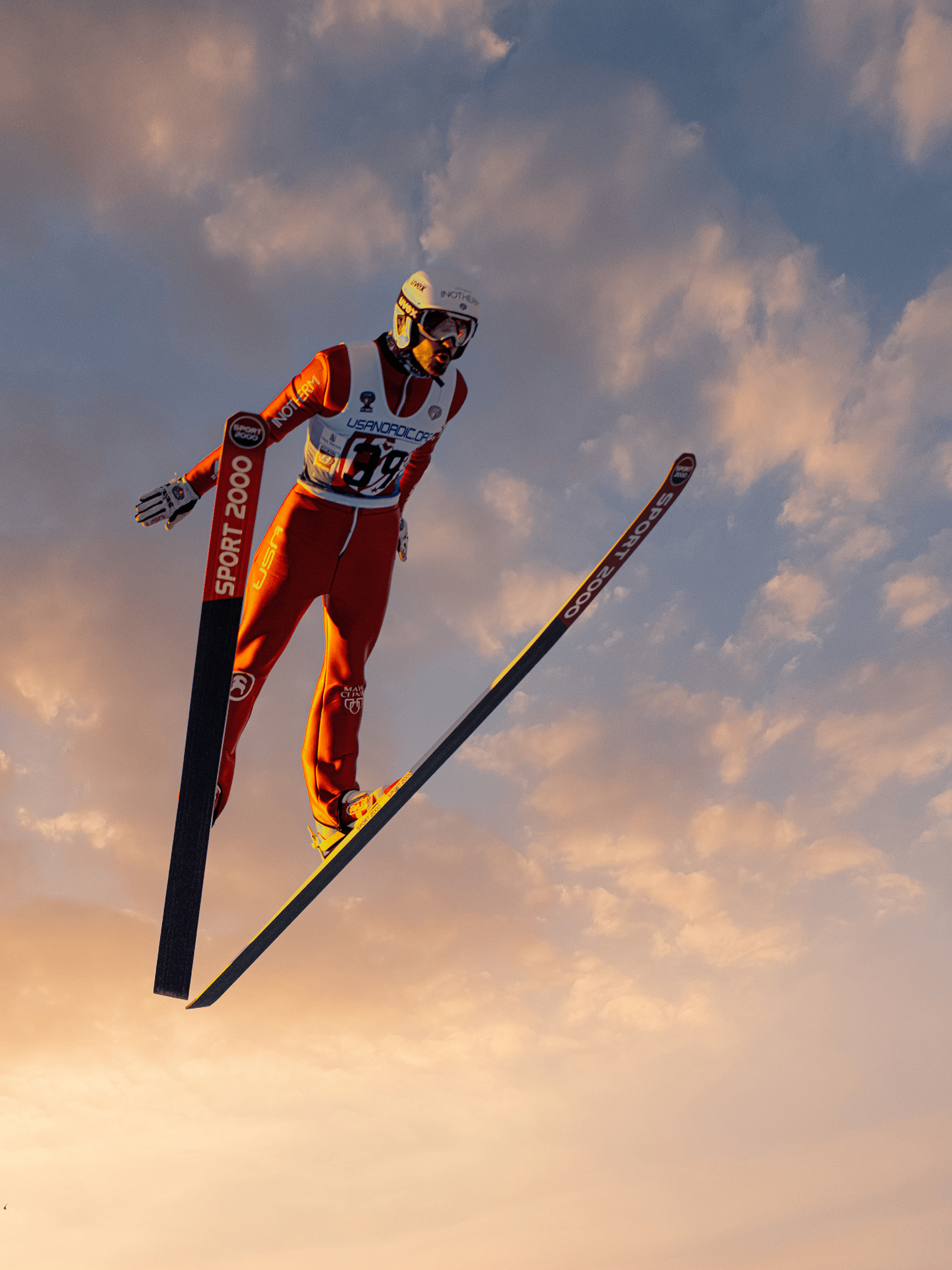
In ski jumping, aerodynamics are paramount. Each jump consists of four segments: the in-run, take-off, flight, and landing. Of these, aerodynamics dominates in the in-run — where jumpers streamline themselves to minimize drag and maximize their take-off speed — and in flight. During flight, ski jumpers spread their skis in a V-shape and lift their arms to the sides to turn themselves into a glider. Their goal is to maximize their lift-to-drag ratio, so that the air keeps them aloft as long as possible. Because of the short flight time and high risk of taking jump after jump, many elite ski jumpers use wind tunnel time to practice and hone their flight positioning, as seen in the video below.
Weather also plays a significant role in ski jumping; it’s one of the few sports where a headwind is an advantage to athletes. To try to adjust for wind effects, scoring for the sport uses a wind factor. (Image credit: T. Trapani; video credit: NBC News)
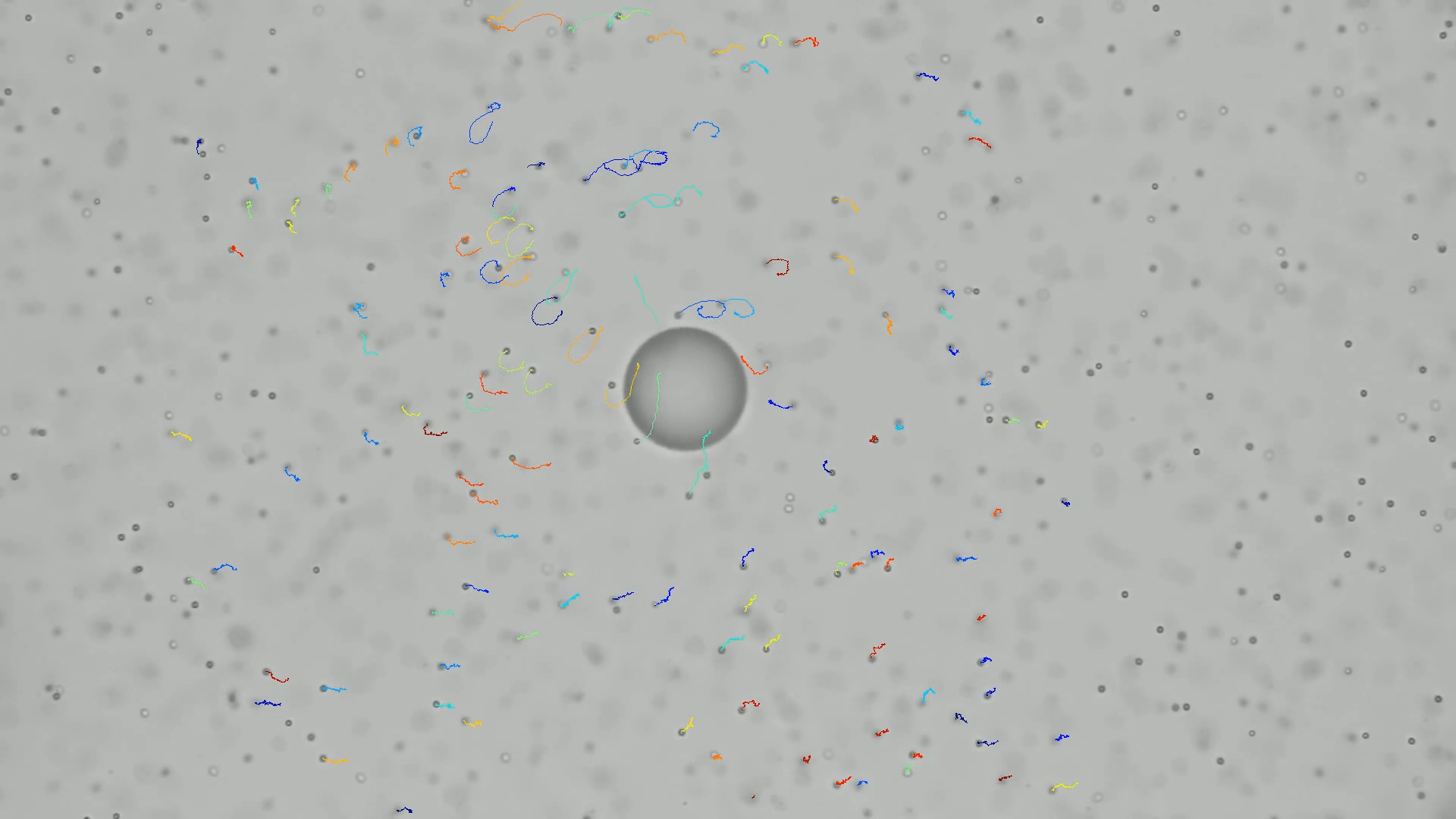
When a car drives over a leaf-strewn autumn road, it pulls leaves up with its passage. This tendency to drag fluid along when an object passes is called entrainment, and it may be a key to transporting loads like medicine in microfluidic applications.
As shown above, a self-propelled microswimmer — in this case, an oil droplet — pulls the surrounding fluid and tracer particles with it (Image 1). Researchers modeled this single-swimmer entrainment (Image 2) to quantify just how much fluid the droplet pulls with it. Then they studied what happens when many swimmers pass through an area (Image 3). They found that the droplet swarm entrained ten times the volume of fluid compared to the fluid entrained by the same number of isolated droplets. The fluid volume pulled along was also far larger than any payload the droplets themselves could carry. So future microswimmer swarms may simply sweep their cargo along in their wake. (Image and research credit: C. Jin et al.; via APS Physics)
Maine’s giant, spinning ice disk is taking shape again. In 2019, it reached about 91 meters across, rotating slowly in the Presumpscot River. How exactly these features form is still a matter of debate, but scientists have worked out a few relevant mechanisms. The spinning of the disk seems to depend on a vortex that forms beneath the ice as melting water sinks. (One of water’s peculiarities is that it’s densest around 4 degrees Celsius, so newly melted water is actually denser than ice. Otherwise ice wouldn’t float!) The plume of sinking water sets up a vortex that drags the ice disk with it as it spins in the river beneath. (Image credit: R. Bukaty/AP; via Gizmodo)
Photographer Mark Harvey captured these stunning portraits of birds in flight. From acrobatic songbirds to soaring raptors, the images show the incredible morphology of a bird’s wing during flight. Most birds are constantly changing their wing shape to generate lift, change trajectory, and stabilize their flight. Note the separation between the flight feathers in all of these birds. Those gaps are thought help break up the birds’ wingtip vortices, thereby reducing their induced drag. You may also notice that the owls in Harvey’s photos have feathers that look a bit different from the other birds; owls have adaptations in their feathers that help damp out turbulence, which makes them quieter in flight. Prints of Harvey’s images are available on his website. (Image credit: M. Harvey; via Colossal 1, 2)
When swimming in open waters, it pays to keep your ducks (or your goslings!) in a row. A recent study examined the waves generated behind adult water fowl and found that babies following directly behind them benefit from their wake. In the right spot behind its mother, a duckling sees 158% less wave-drag than it would when swimming solo. That’s such a large reduction that the duckling actually gets pulled along! And the advantage doesn’t just help one duckling; a properly-placed duckling passes the benefit on to its siblings as well. So any duckling that stays in line has a much easier time keeping up, but those who slip out of the ideal spot will have a much tougher time. (Image credit: D. Spohr; research credit: Z. Yuan et al.; via Science News; submitted by Kam-Yung Soh)
The ekranoplan was a massive, Soviet-era aircraft that relied on ground effect to stay aloft. In this video, RC pilots test out their own homemade version of the craft, including some neat flow visualization of the wingtip vortices. When an aircraft (or, for that matter, a bird) flies near the ground, it experiences less drag than at higher altitudes. This happens primarily because of the ground’s effect on wingtip vortices.
In normal flight, the vortices from an aircraft’s wingtips create a downwash that reduces the wing’s overall lift. But in ground effect, the vortices cannot drift downward as they normally do. Instead, they spread apart from one another, thereby reducing the drag caused by downwash from the aircraft. The end result is better performance, though it comes with added risk since there’s very little time to correct an error when flying at an altitude less than half the aircraft’s wingspan. (Video and image credit: rctestflight; submitted by Simplicator)
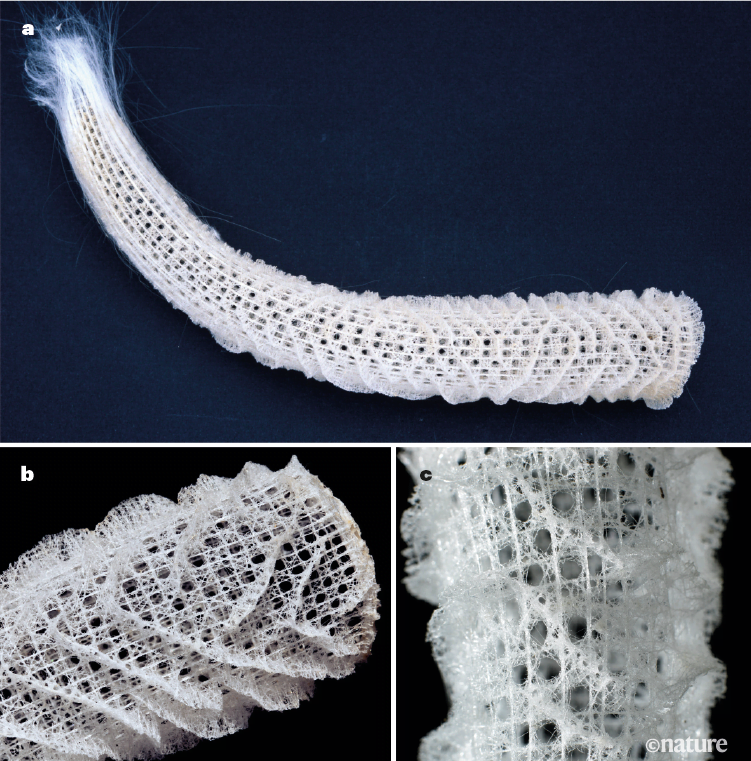
The Venus’s flower basket is a sea sponge that lives at depths of 100-1000 meters. Its intricate latticework skeleton has long fascinated engineers for its structural mechanics, but a new study shows that the sponge’s shape benefits it hydrodynamically as well.
The sea sponge’s skeleton is predominantly cylindrical, with tiny gaps that allow water to flow through it and helical ridges alongside its outer surface to strengthen it against the deep-sea currents surrounding it. Through detailed numerical simulations, researchers found that both of these features — the holes and the ridges — serve fluid mechanical purposes for the sponge. The porous holes of the sea sponge drastically reduce flow in the sponge’s wake (third image), which provides major drag reduction for the sea sponge. That drag reduction makes it easier for the sponge to stay rooted to the ocean floor.
The helical ridges, on the other hand, create low-speed vortices within the sea-sponge’s body cavity (second image). Such vortices increase the time water spends inside the sponge, likely helping it to filter-feed more efficiently. The additional vorticity comes at the cost of slightly increased drag but not enough to outweigh the savings from its porosity. (Image and research credit: G. Falcucci et al.; via Nature; submitted by Kam-Yung Soh)
For a long time, people thought baseball aerodynamics were simply a competition between gravity and the Magnus effect caused when a ball is spinning. But the seams of a baseball are so prominent that they, too, have a role to play. Here’s a baseline image of flow around a non-spinning baseball:
An non-spinning baseball with a straight, unaltered wake.
As in our previous post on golf, the colors indicate the direction of vorticity but don’t matter much to us here. What’s important is that the wake behind the ball is straight, indicating that there is no additional force beyond gravity and drag acting on the ball. Contrast this to the spinning baseball below:
Flow around a baseball spinning clockwise.
This ball is spinning in a clockwise motion, which causes flow to separate from the ball earlier on the advancing (bottom) side and later on the retreating (top) side. As a result, the wake is tilted downward. This indicates an upward force on the ball, caused by the Magnus effect.
But what if the seams fall in a place where they affect the flow? Here’s another baseball that’s not spinning:
Flow around a non-spinning baseball with a seam-shifted wake caused by early separation on the top surface of the baseball.
Notice that seam sitting just past the widest point on the top of the baseball. Flow around that wide point (called the shoulder) is very sensitive to disturbances essentially because the boundary layer is just barely hanging on to the ball. The blue arrow marks where the boundary layer separates from the ball on the top, which takes place earlier than the flow separation on the bottom, marked by the red arrow. As a result, the wake of the ball is tilted upward, indicating a downward force on the ball. The researchers who first proved this effect call it a seam-shifted wake, and it turns out to be a very common effect in baseball. They’ve got a great blog dedicated to baseball aerodynamics where you can learn tons more if you’re interested. (Image credit: top – Pixabay, others – B. Smith; research credit: B. Smith; see also Baseball Aerodynamics)
Today wraps up our Olympic coverage, but if you missed our earlier posts, you can find them all here.