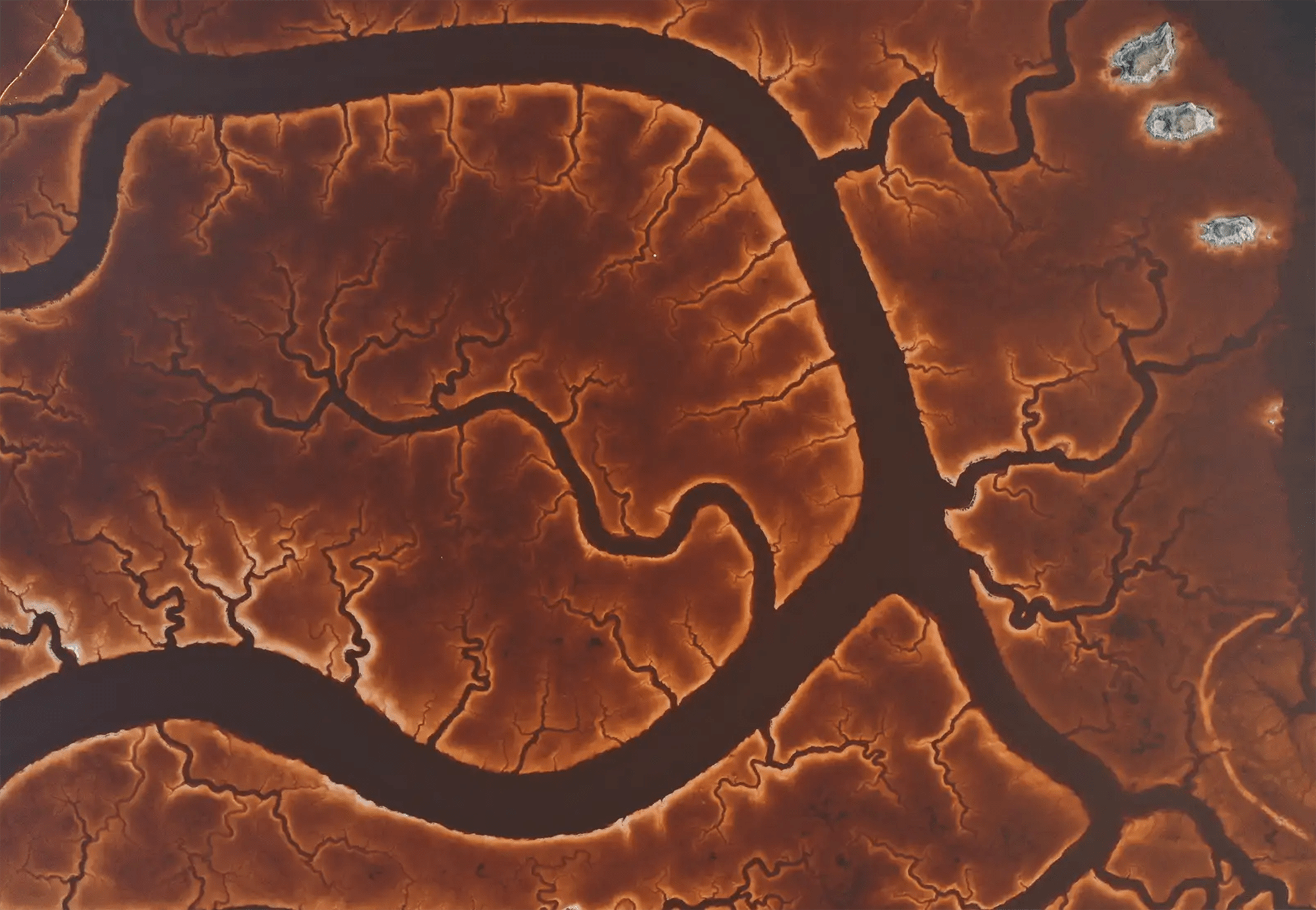
From above, the salt marshes of Alviso Marina County Park look like veins and capillaries in this photo from Tayfun Coskun. The waterways curve and branch, forming fractal patterns only apparent from the air. Although the mechanisms that form these dendritic patterns vary, they are very common in fluids, appearing over and over at many scales. (Image credit: T. Coskun; via Gizmodo)
Search results for: “art”

Bubble Trails – Straight or Wonky?
Watch the bubbles rising in a glass of champagne and you’ll see them form tiny straight lines, with each bubble following its predecessor. But in a carbonated soda, the bubbles rise all over the place, each following its own zig-zaggy line. Why the difference? A recent study points out the culprits: bubble size and surfactants.

As bubble size increases from left to right, the bubble trail straightens. Looking at a variety of beverage scenarios, researchers found that both a bubble’s size and its surfactant concentration affected what sort of path it followed. For clean (surfactant-free) bubbles, small bubbles take a winding path, but bigger ones move in a straight line. Simulations show that bubbles can only form a straight path if they produce enough vorticity on their surface. Small bubbles just can’t deform enough to do that.

For bubbles of the same size, increasing the surfactants on the bubbles straightens their path. When surfactants get added, though, the story changes. For bubbles of a set size, adding surfactants made their paths straighter. This was due, the team found, to a bump in vorticity provided by the stabilizing effect of the surfactants. Champagne, they concluded, has straight bubble paths despite its tiny bubbles because of the drink’s high number of flavorful surfactants. (Image credit: top – D. Cook, experiments – O. Atasi et al.; research credit: O. Atasi et al.; via APS Physics)
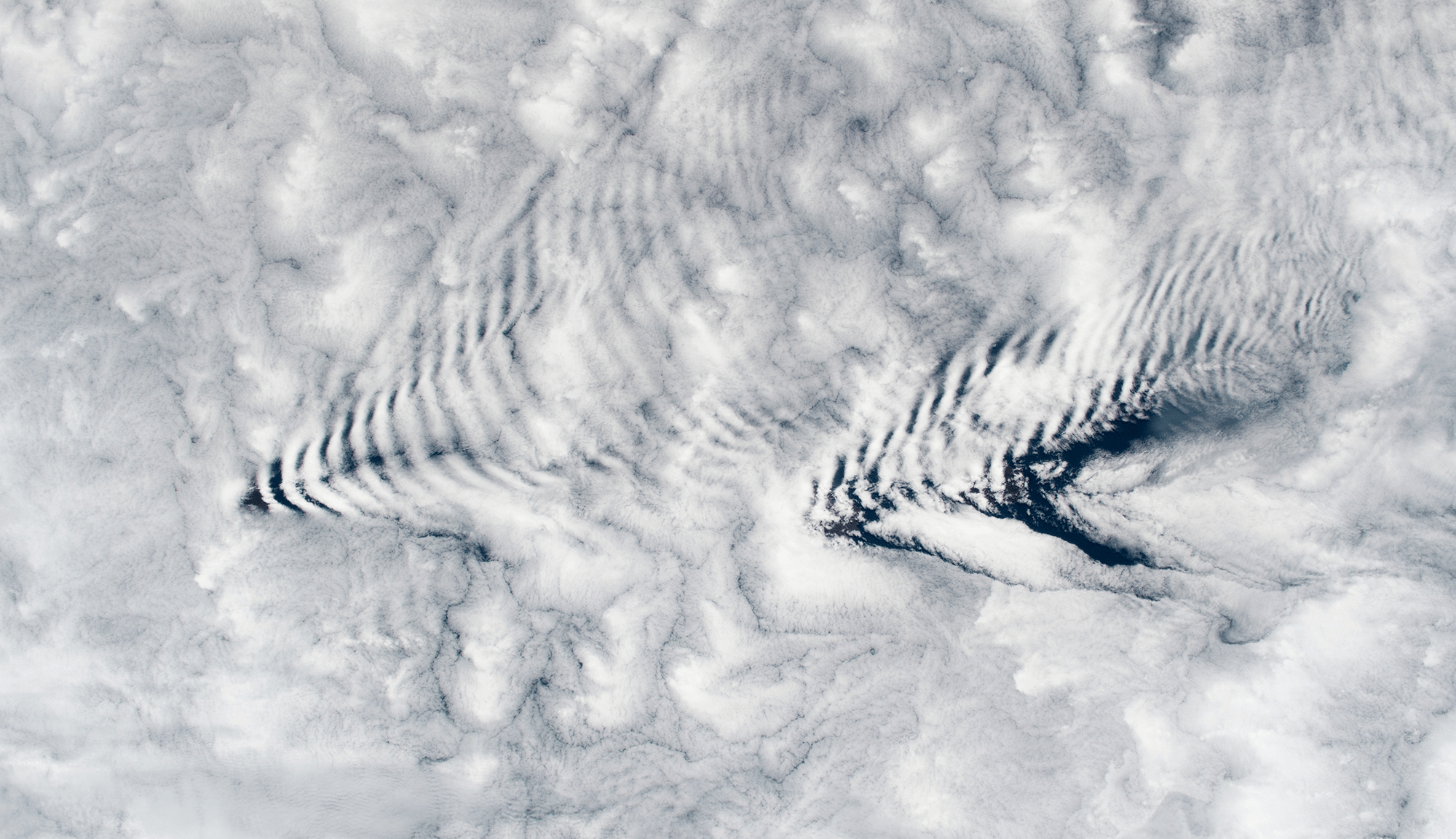
Wave Clouds From Space
An astronaut snapped this image of wave clouds formed around the Crozet Islands, which lie between South Africa and Antarctica. Clouds like these form when warm, moist air gets pushed up and over a mountain. As it rises, the air cools and its pressure decreases, causing condensation. Pushed out of equilibrium, gravity then pulls the air back downward in the wake of the mountain. That warms the air, causing evaporation. Like a mass bouncing on a spring, the air continues to yo-yo up and down, forming cloudy stripes and clear ones until the energy from its mountain climb is spent. (Image credit: NASA; via NASA Earth Observatory)
How Squall Lines Form
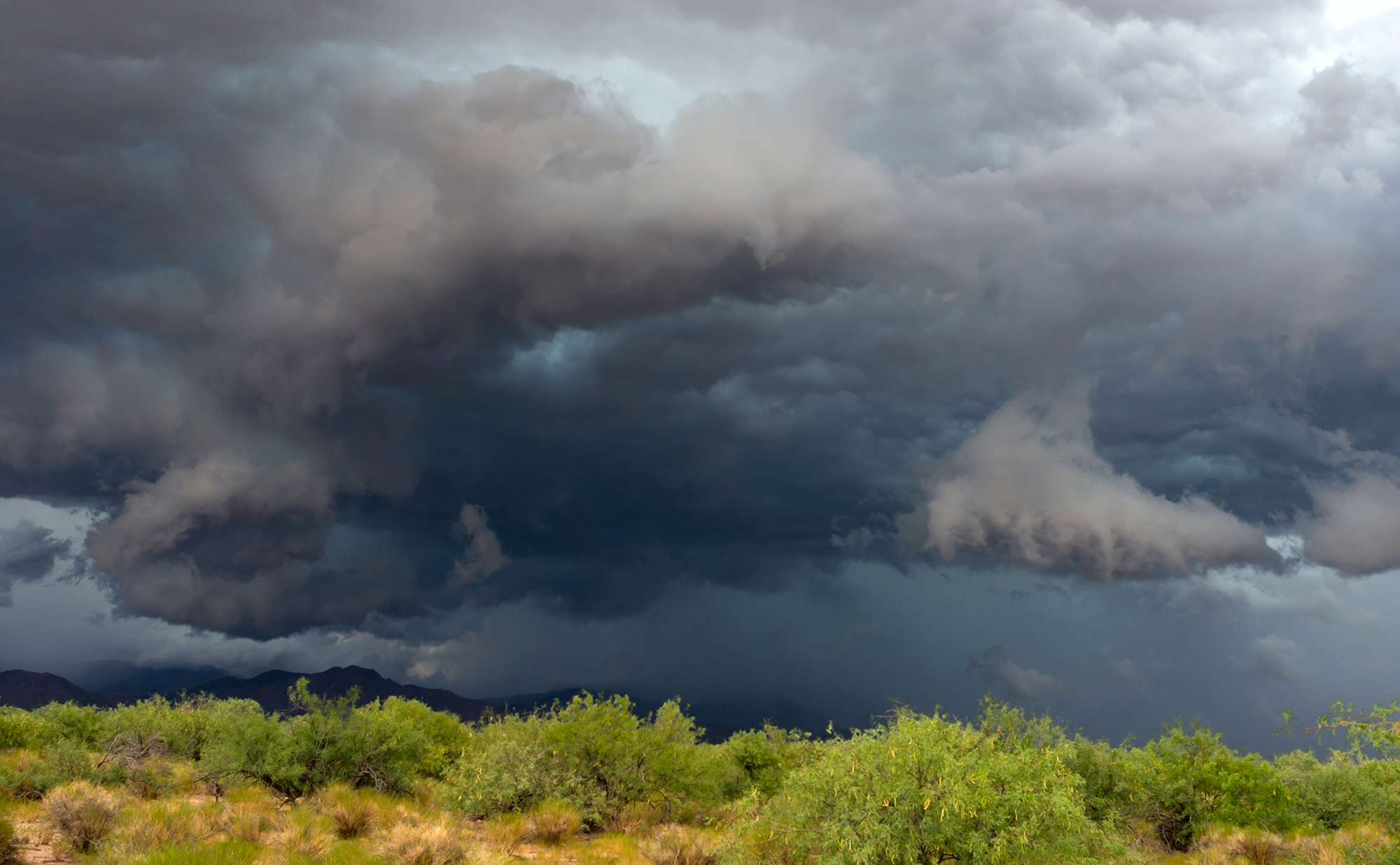
Summertime in the middle U.S. means thunderstorms, many of which can form long lines of storms known as squall lines. Complex convective dynamics feed such storms. Here is an illustration of one part of a squall’s lifecycle:

As rain falls and evaporates, it fuels the formation of a cold pool of air below the cloud. Incoming wind (gray arrows) blocks the cold pool from spreading. In turn, the cold pool acts as a ramp that redirects this warm, moist air upward. The vertical variation in wind speed (wind shear, shown with pink arrows) creates a positive vorticity. Together with the negative vorticity in the cold pool, this induces a vorticity dipole that lifts air and moisture, feeding the growing line of storms. As it falls, rain evaporates, cooling air near the ground and forming a cold pool. If incoming winds block the cold pool from spreading, the pool will act instead as a ramp that redirects the wind upward, carrying any warmth and moisture up into the storm cloud. Wind shear — a vertical variation in wind strength with altitude — creates positve vorticity that opposes the negative vorticity inherent to the cold pool. Together these two regions of opposing vorticity lift more air and moisture into the squall, generating more clouds and more rainfall. (Image credit: top – J. Witkowski, illustration – C. Muller and S. Abramian; see also C. Muller and S. Abramian)

Glowing Skies
Not every experiment turns out as expected. Photographer Julien Looten expected to capture the Milky Way arching across the sky above this French chateau. But the photo’s most striking feature is instead the airglow suffusing the sky. The psychedelic colors result from air high in Earth’s atmosphere getting excited by sunlight and producing a faint glow of its own. Such airglow is common, though not always easily seen. If you watch videos from the ISS, you may notice the orange arc of airglow over the atmosphere. (Image credit: J. Looten; via APOD)
Bubble Cleaning
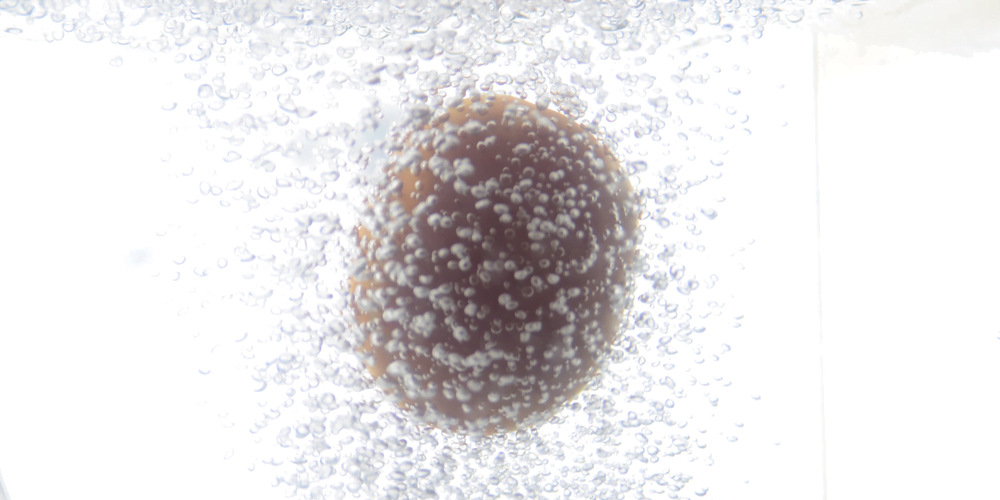
Removing dirt and bacteria from fruits and vegetables is a delicate job; too much force can bruise the produce and hasten spoiling. That’s why fluid mechanicians want to give the job to bubbles. Placing objects in a stream of air bubbles inside a bath is a surprisingly effective method for gently cleaning surfaces. A recent study finds that 22.5 degrees is the optimal angle for sliding bubbles to scrape a surface clean.
As the bubbles slide past the surface, they exert a shear force that scrapes away debris, just as you might use a loofah in the shower. The angle the bubble makes with the surface determines how long it’s in contact and how much force the bubble exerts. Increasing the angle makes the bubble slide faster, increasing its shear force. But above 22.5 degrees, the bubble’s buoyancy means that it spends less time pressed against the surface, which decreases its cleaning ability.
The team hopes to use their results to build a “fruit Jacuzzi” device that will direct bubble streams to gently and effectively clean fruits and vegetables in a matter of minutes. (Image and research credit: A. Hooshanginejad et al.; via APS Physics)
A Sea of Pollen
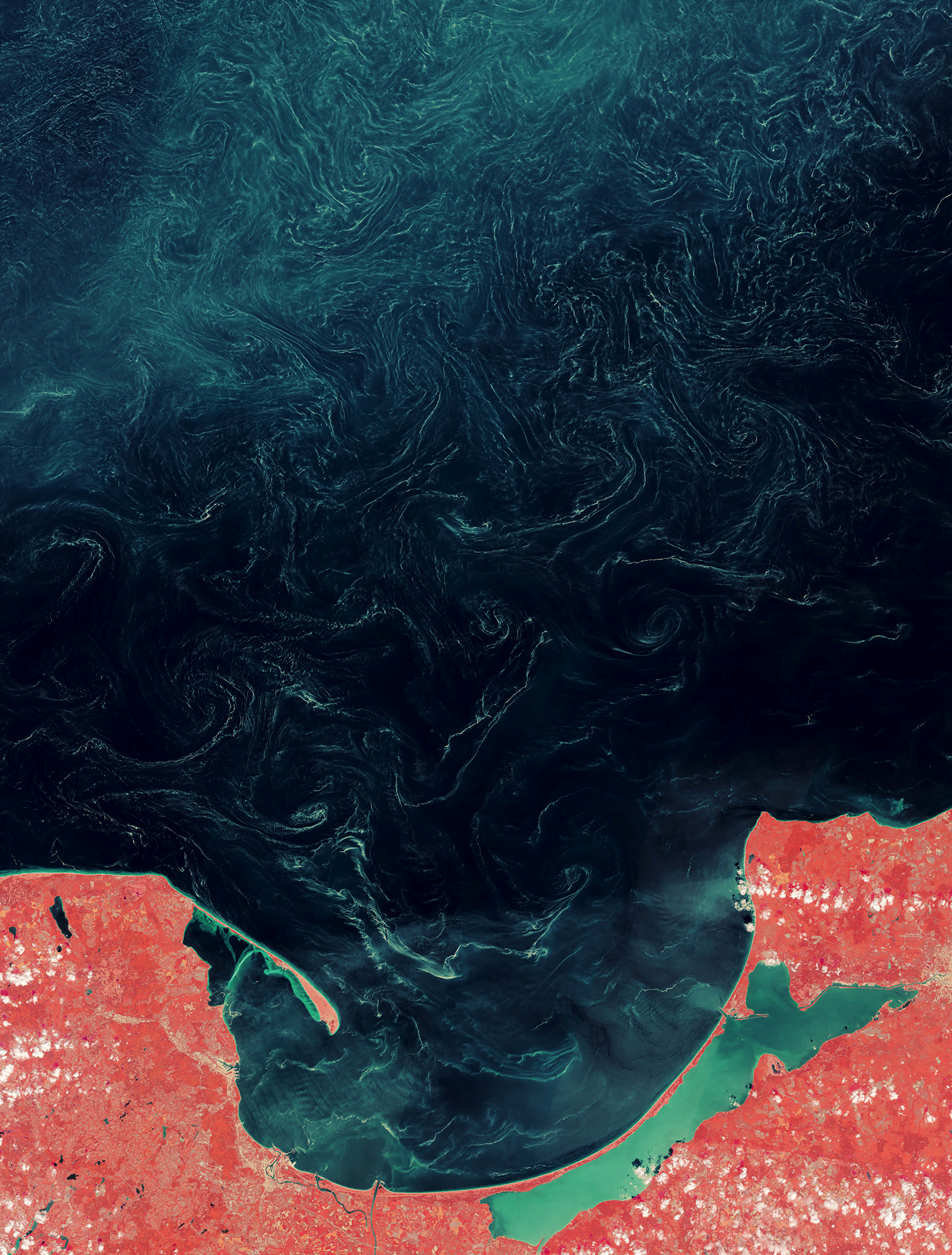
Fellow allergy sufferers, beware! This false-color satellite image of the Baltic Sea shows massive slicks made up of pine pollen. I don’t know about you, but the mere thought of enough pollen that it’s visible from space makes me want to double — triple?! — my antihistamines. The swirling patterns in the pollen come from wind-driven currents and waves moving the pollen on the surface of the water.
It took some sleuthing for scientists to identify these slicks as pollen rather than bacteria or plankton. But by combining experimental results, ground-based observations, and satellite image processing, scientists discovered that the pine pollen has a particular spectral signature. Using that, the team could trawl through older satellite imagery and locate pine pollen in previous seasons. They identified pine pollen slicks in 14 of the last 20 springs. The size of the slicks is growing over time, too, consistent with other observations of longer pollinating seasons. (Image credit: L. Dauphin; via NASA Earth Observatory)
The Architecture of Music
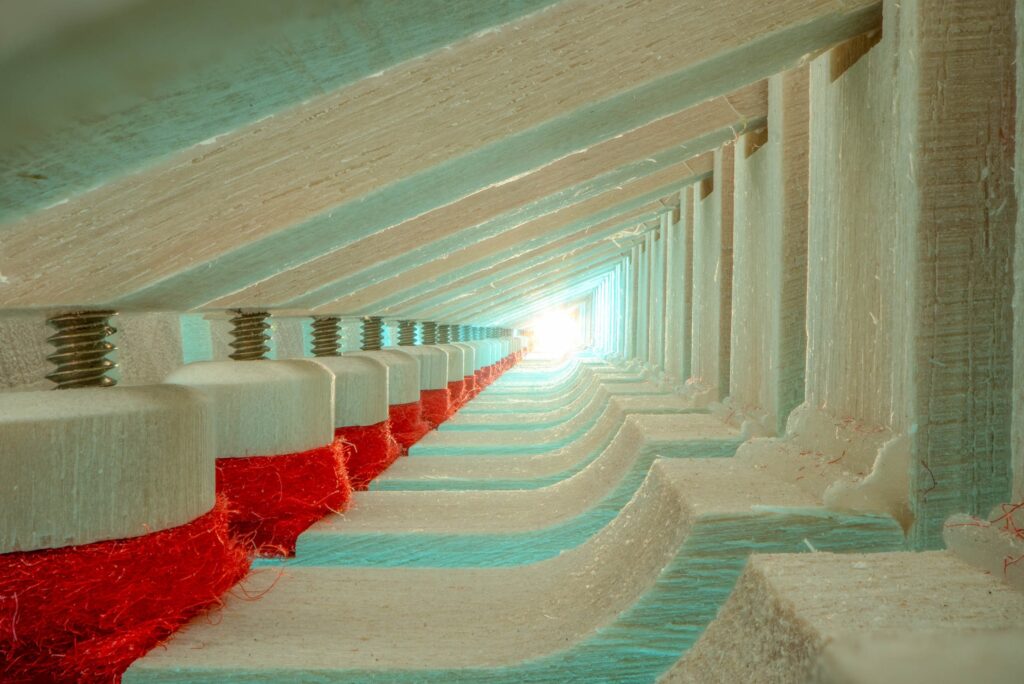
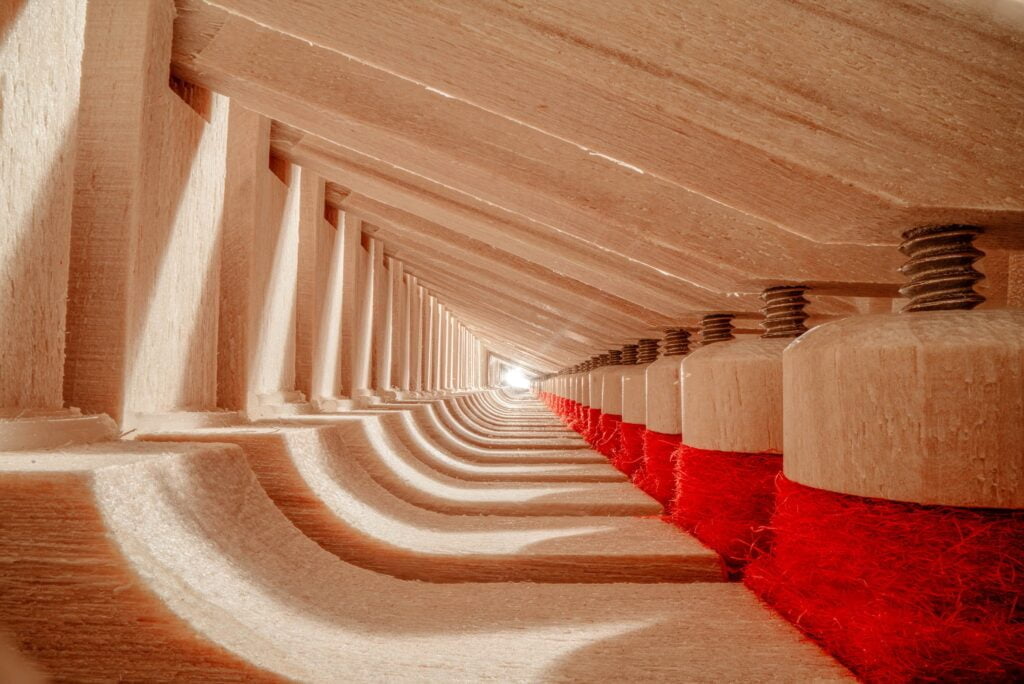
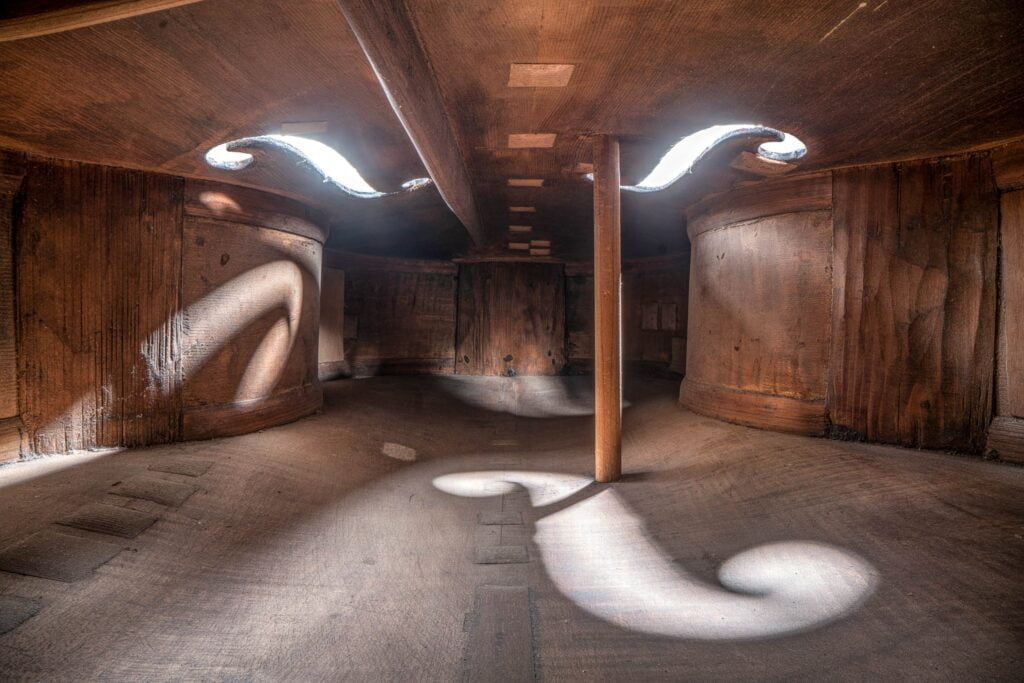

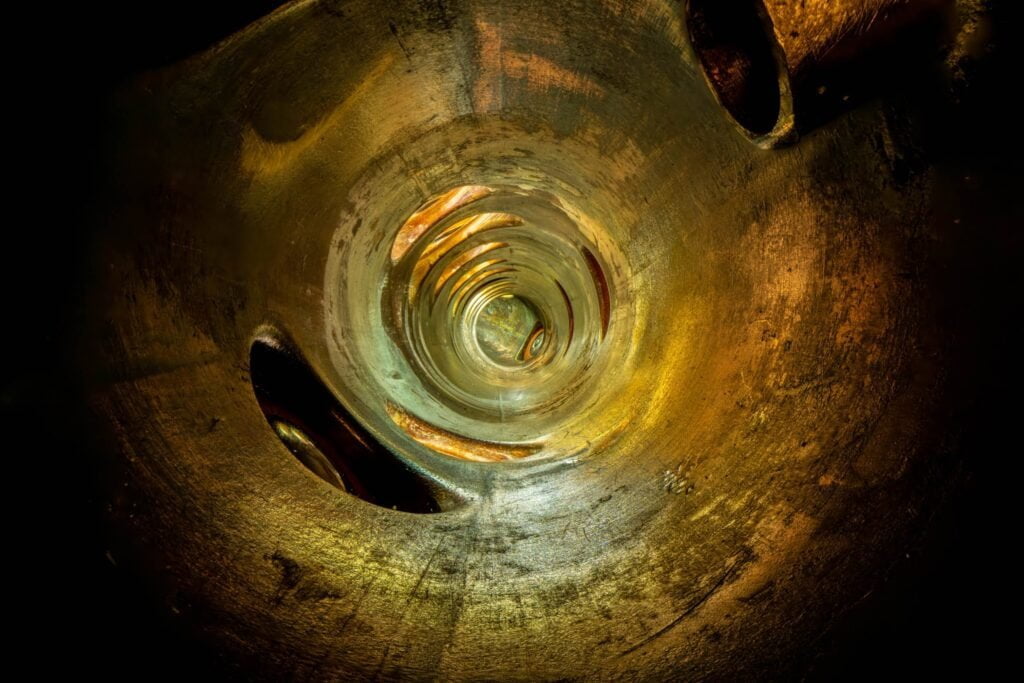


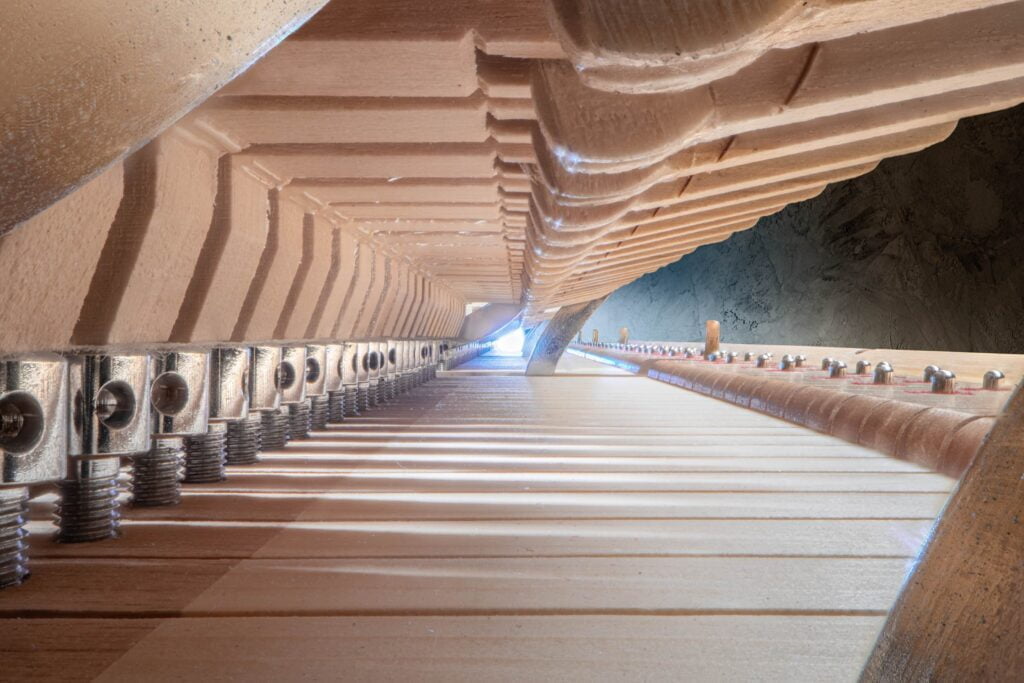
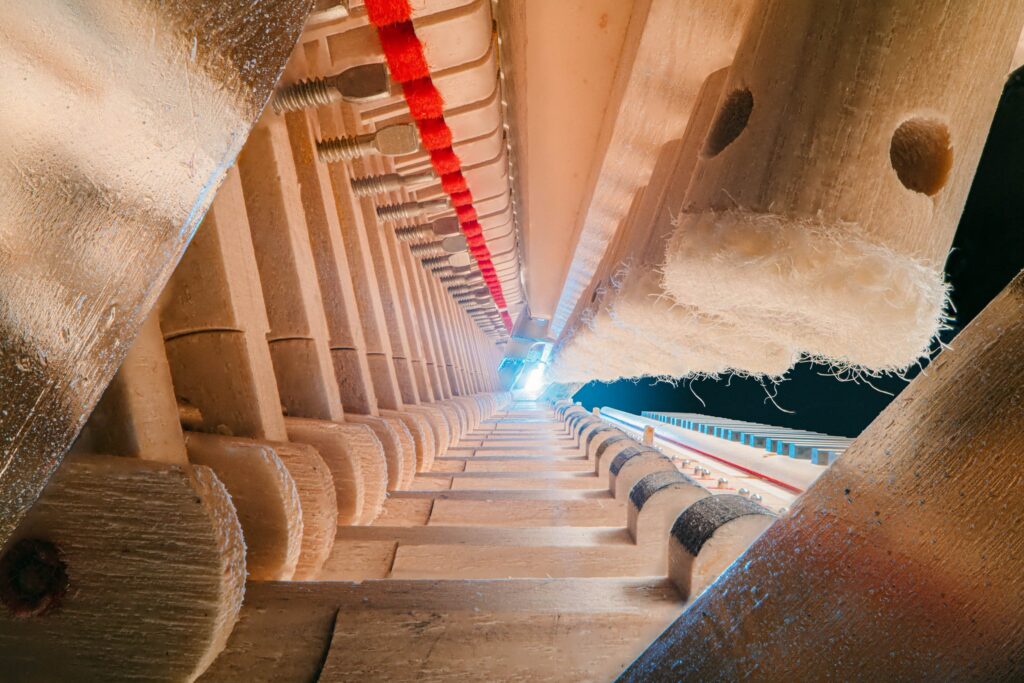
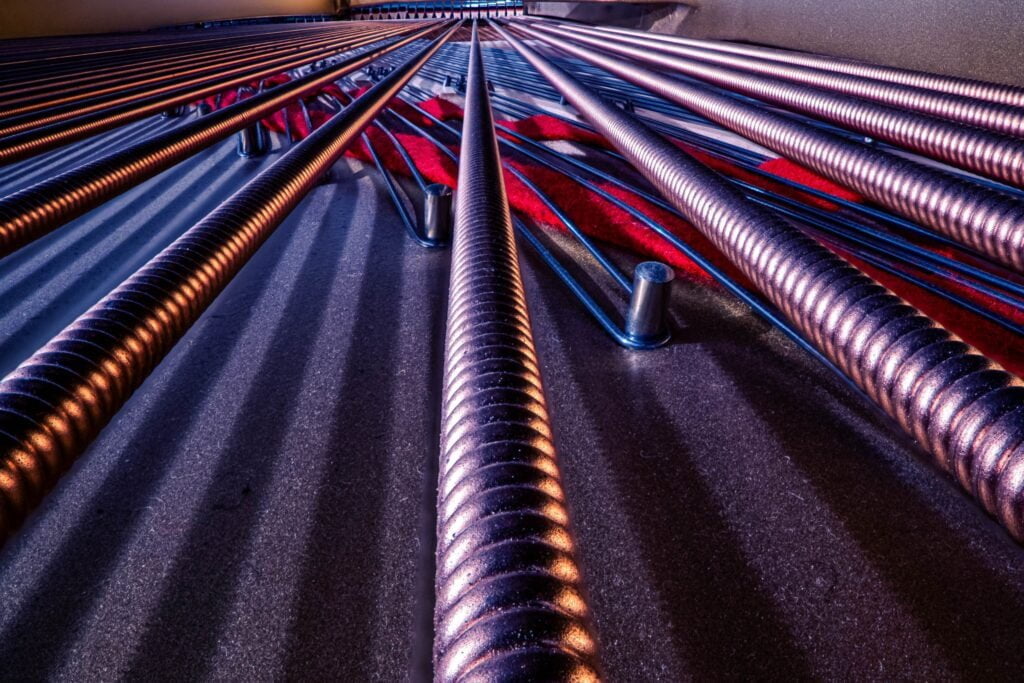
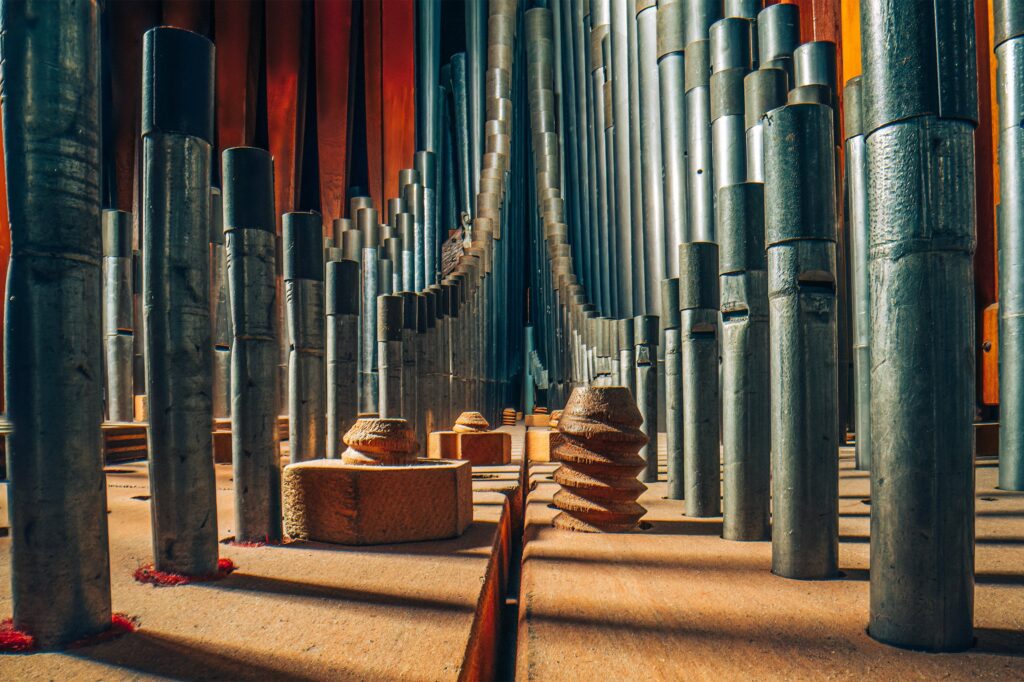


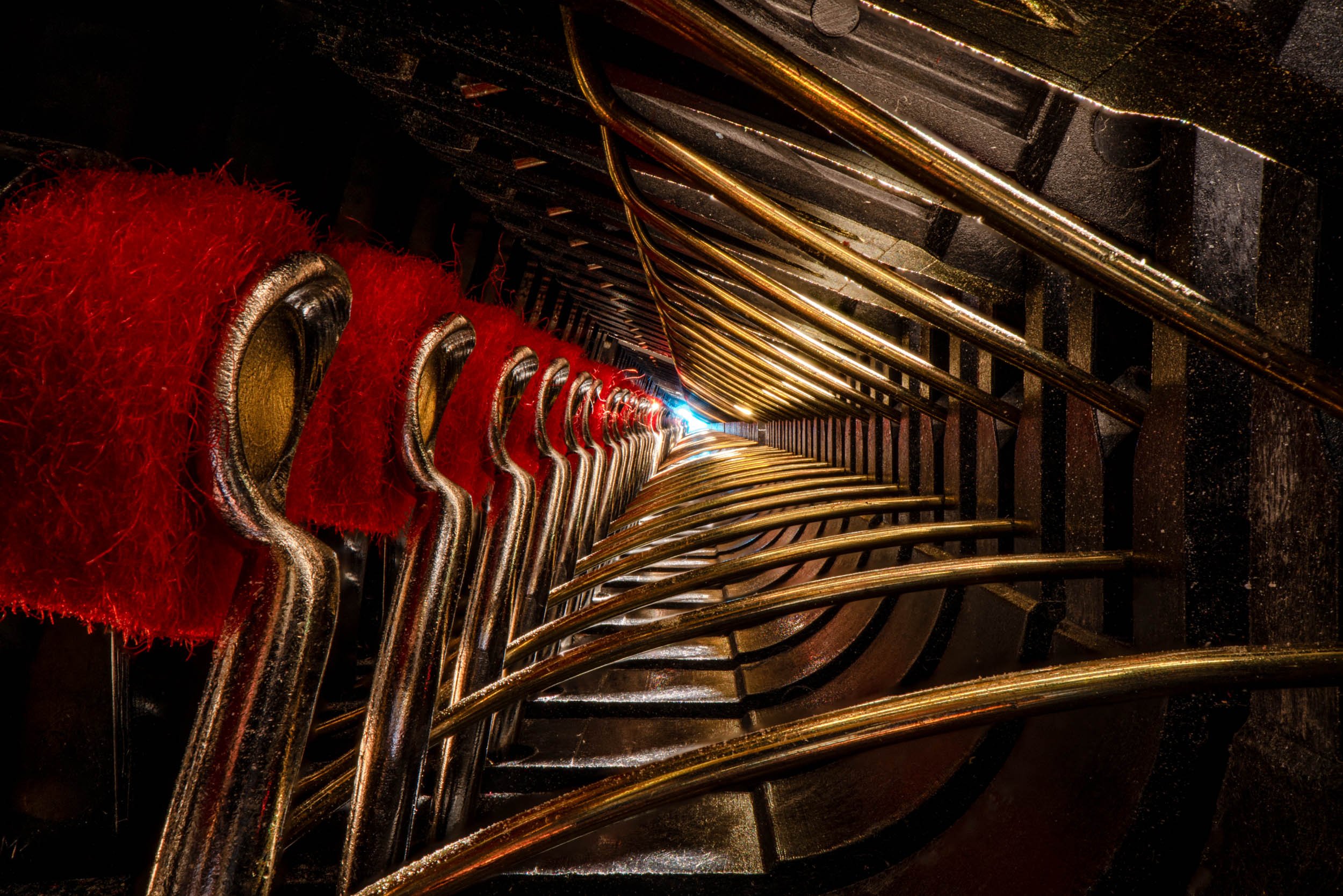
Photographer Charles Brooks offers a rare glimpse into the interiors of musical instruments in this series. Whether stringed, wind, or percussion, an instrument’s unseen interior structure creates the acoustic resonance needed for their music. Brooks makes these spaces feel like vast cathedrals of sound, which, to the pressure waves emanating from the instruments, they are. Which is your favorite? Personally, I love the graceful lines of the cello and the rough surface of the didgeridoo. (Image credit: C. Brooks; via Colossal)

How a Leak Can Stop Itself
Some leaks can actually stop themselves, and a new analysis shows how. When a vertical pipe has a small hole, water initially spouts out of it, then dribbles, and, finally, drips as the water level in the pipe falls, decreasing the driving pressure of the flow. But the pipe doesn’t have to empty to a level below the hole for the leak to stop. Instead, a final droplet can form a cap over the hole, with its shape providing enough pressure to balance the remaining pressure from fluid in the pipe.

Water leaking from a vertical pipe transitions from continuous flow to discrete drops (left). Dripping continues until the final droplet forms at t = 0 seconds. The researchers found that the final drop’s kinetic energy (as well as its potential energy) was critical to determining which drop would stop the flow. The last drop behaves like a lightly-damped harmonic oscillator; it needs enough potential energy to counter the flow and a small enough inertia that it doesn’t slip away down the pipe. (Image credit: top – G. Crofte, experiment – C. Tally et al.; research credit: C. Tally et al.; via APS Physics)

Splash-Spread Mushrooms


Bird’s nest fungi are tiny — only about a centimeter wide. When mature, they form a curved splash cap containing spore sacs known as peridioles. Then they await rain. When a lucky drop hits the mushroom, it flings the peridioles out of their nest. Some will use sticky cords to cling to nearby blades of grass, setting them up to eventually hitch a ride to elsewhere with a grazing herbivore. It’s an impressive journey for a teeny spore sac, and it all starts with a single drop of rain. (Image and video credit: Deep Look)