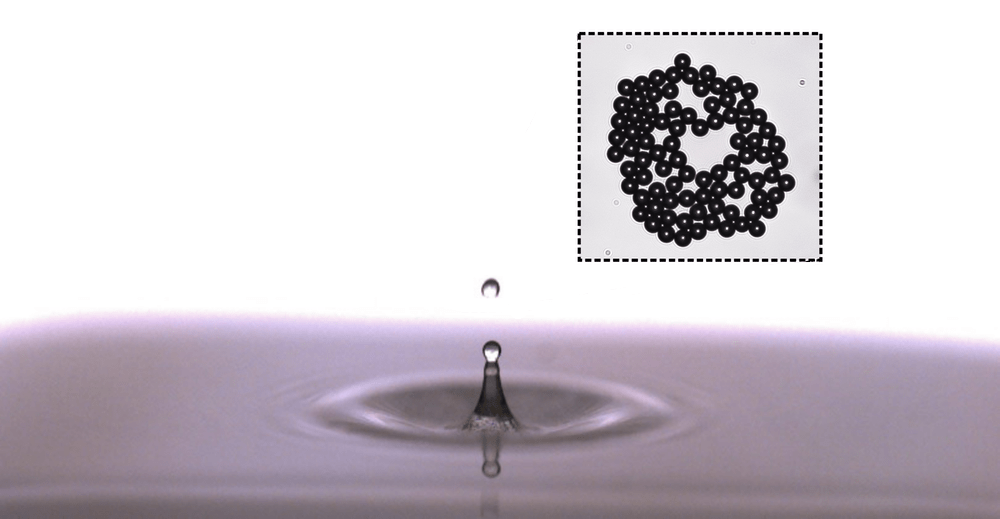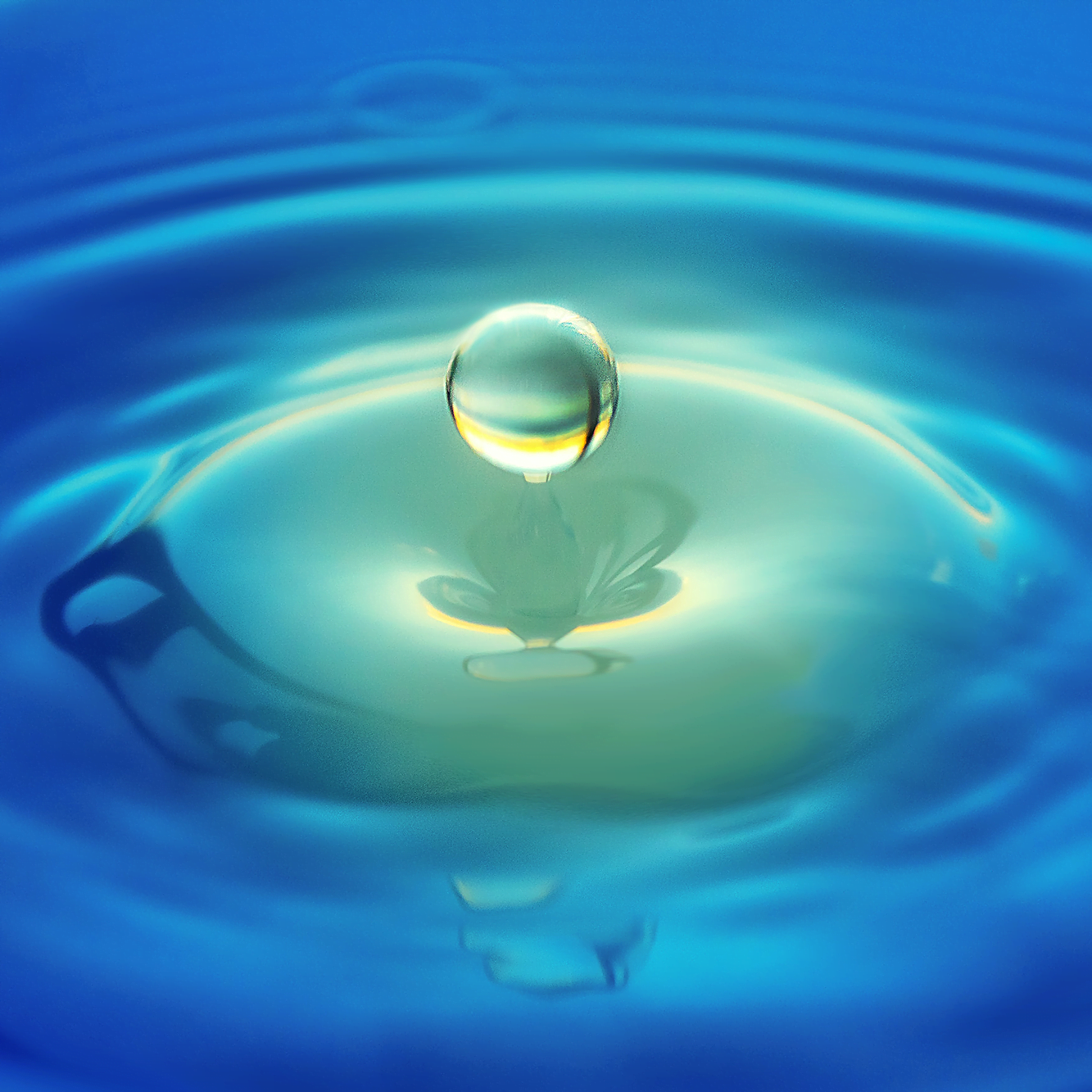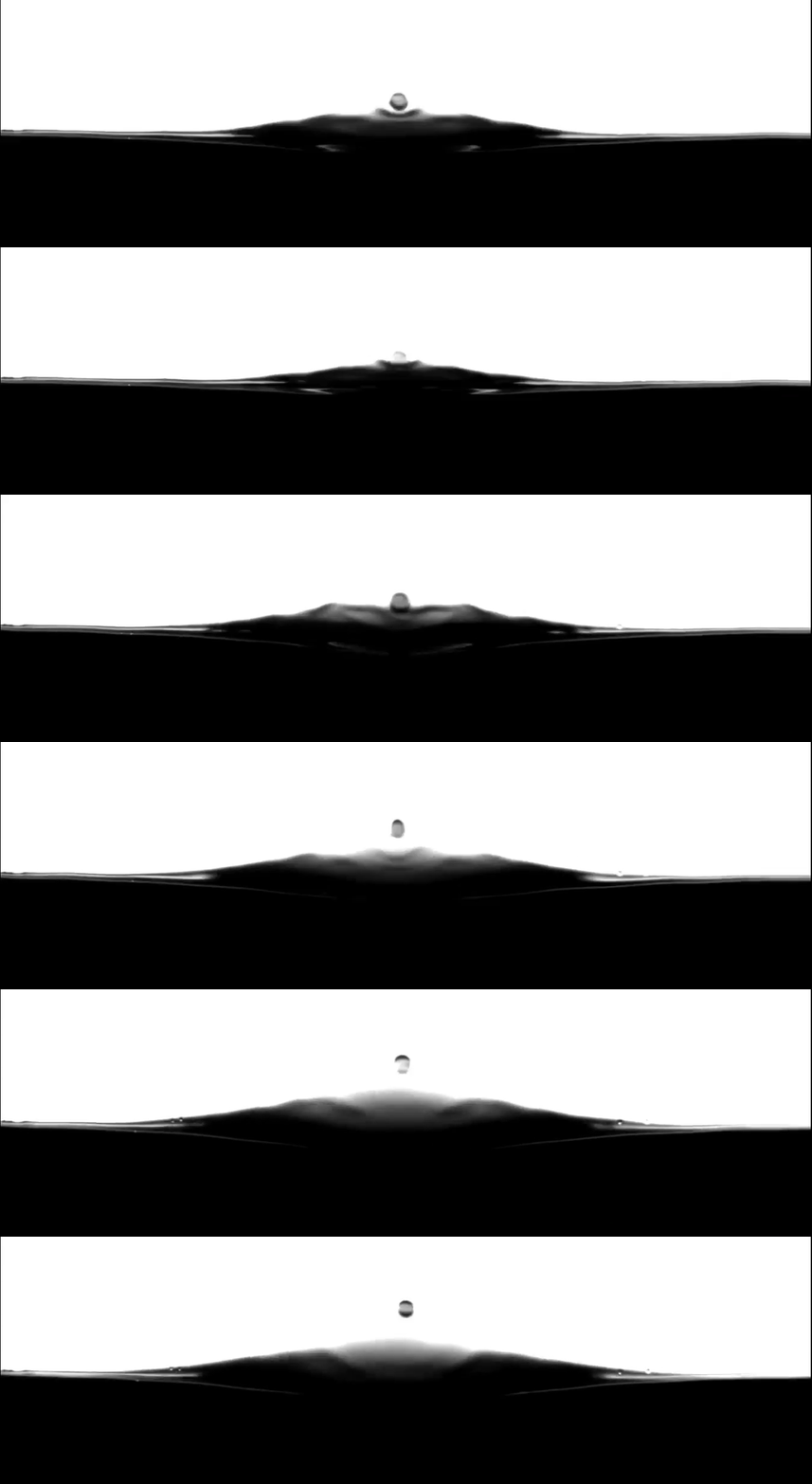
Over the past few years, we’ve seen lots of droplets bouncing and walking on waves. But today’s example is a little different. In this set-up, the wave is a large standing wave that sloshes from side-to-side in a narrow container. As it does, the wave catches and tosses a large ~3mm water droplet. The system is surprisingly stable, with this game of catch lasting for tens of thousands of cycles and up to 90 minutes before the droplet coalesces. The researchers found that, if the droplet tries to wander from its spot, the oscillating surface wave corrects it, guiding the droplet back to the optimal position. (Image and research credit: C. Sandivari et al.; via APS Physics; submitted by Kam-Yung Soh)
Category: Research

Breaking Clots With Sound
Clots that block blood flow away from the brain are one of the most common causes of strokes for younger people. If caught early, anticoagulants can sometimes resolve the issue, but the treatment fails in 20-40% of cases. Now researchers are investigating a new ultrasound technique capable of quickly and effectively removing these clots.

An illustration of the vortex ultrasound technique breaking up a blood clot. The group attached a 2 x 2 array of ultrasound transducers to the tip of a catheter like those doctors feed through blood vessels in other interventions. The offset between each ultrasound transducer creates a vortex-like flow when the array is activated. The helical wavefront creates shear stress along the clot’s face, helping to break it up faster. In one test, the new technique broke up a clot and completely restored flow in just 8 minutes. Pharmaceutical treatments take at least 15 hours and average closer to 29 hours.
The team is moving forward to animal trials next and hope, with success there, to bring the technique to clinical studies. (Image credit: abstract – C. Josh, illustration – X. Jiang and C. Shi; research credit: B. Zhang et al.; via Physics World)

Rocket-Like Supercooled Drops
Many droplets can self-propel, often through the Leidenfrost effect and evaporation. But now researchers have observed freezing droplets that self-propel, too. The discovery came when observing the freezing of supercooled water drops inside a vacuum chamber. The researchers kept losing track of drops that seemingly disappeared. Upon closer inspection, though, they found that the drops weren’t shattering; they were flying away as they froze.
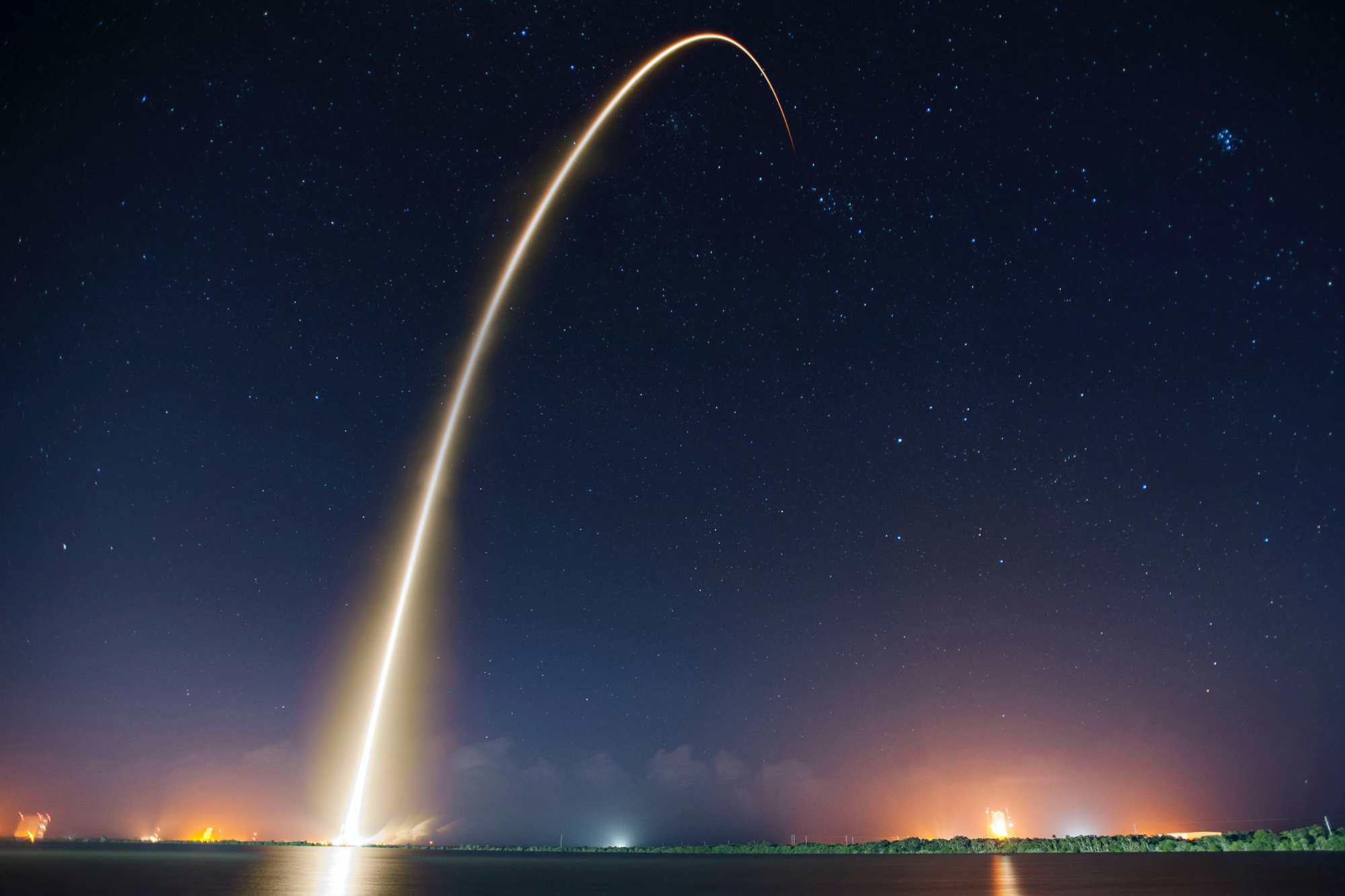
Inside a drop, freezing starts at a point, the nucleation point, and spreads from there. But the nucleation point isn’t always at the center of the drop. This asymmetry, the researchers found, is at the heart of the drop’s propulsion. When ice nucleates, the phase change releases heat that increases the drop’s evaporation rate, which can impart momentum to the drop. For an off-center nucleation, that momentum is enough to send the drop shooting off at nearly 1 meter per second. (Image credit: SpaceX; research credit: C. Stan et al.; via APS Physics)

How Large Particles Get in Sea Spray
When bubbles burst at the ocean’s surface, they eject droplets that can carry high concentrations of contaminants like pollutants, viruses, and microplastics. Previous theories posited that only particles smaller than the microlayer surrounding the bubble could make their way into these drops, but new work shows otherwise.
As bubbles rise to the surface, they carry particles on their surface, collecting them to a concentration that’s even higher than the surrounding seawater. But which particles make it into the air depend on the details of what happens when the bubble pops. Previously, researchers assumed that the thin microlayer of fluid surrounding the bubble was uniform, but that turns out not to be the case. As the bubble pops, some regions of the microlayer stretch and thin, while others grow thicker. The thicker the microlayer, the larger the particles it can pull along. In their single-bubble experiments, the researchers found that 15- and 30-micrometer plastic beads — representing oceanic microplastics — appeared in high concentrations in ejected droplets.

This animated simulation shows how fluid along the edge of a bubble makes its way into ejected droplets. Green particles indicate fluid from the left half of the bubble; blue shows fluid from the right side. Environmental scientists are keen to understand these mechanisms because they link our oceans and atmosphere, potentially affecting rainfall, pollution spread, and epidemiology. (Image, video, and research credit: L. Dubitsky et al.; via APS Physics)

Instabilities on Instabilities
The world of fluid instabilities is a rich one. Combine fluids with differing viscosities, densities, or flow speeds and they’ll often break down in picturesque and predictable manners. Here, researchers explore the Rayleigh-Taylor instability (RTI), which occurs when a denser fluid sits above a less dense one (in a gravitational field). It’s an extremely common instability, showing up in both the cream in your ice coffee and the shape of a supernova’s explosion. It’s very difficult to set up and observe, though, which is where the real cleverness of this experiment stands out.
To study the RTI, these researchers first created another instability, the Saffman-Taylor instability. They filled the space between two glass plates with a viscous fluid, then injected a less viscous one. That created the distinctive viscous fingering pattern seen in the top image. In addition to being less viscous, the injected fluid was also less dense. As it pushed into the original fluid, it displaced some of it, creating a three-layer structure with dense fluid over less-dense fluid over dense fluid. That laid the groundwork for the Rayleigh-Taylor instability form.

A side-view through the fluid mixture shows the characteristic mushroom-like plume of the Rayleigh-Taylor instability. Check out the cell-like pattern distributed across the fluid in the top image. These are plumes formed in the RTI as dense fluid sinks into the less-dense fluid below it. From the side (see second image), each plume takes on the distinctive mushroom-like shape of a Rayleigh-Taylor instability. Given time, the two fluids mix and the cellular pattern disappears. But until then, this set-up uses one instability to study a second one. How cool is that?! (Image and research credit: S. Alqatari et al., see also)

Möbius-Like Liquid Crystals
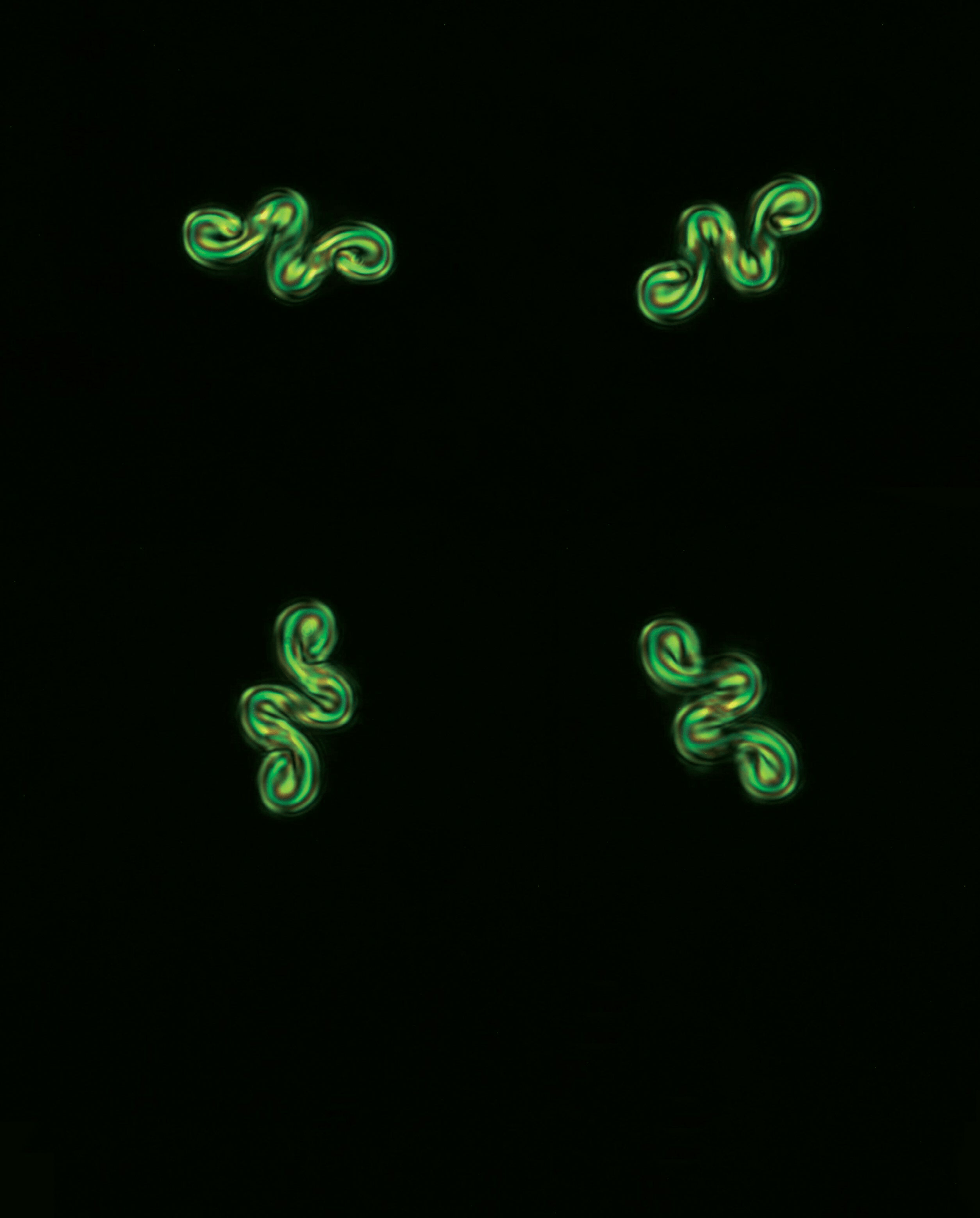
Möbius strips are nonintuitive objects. They appear multi-dimensional but are single-sided. Such topologies show up in other systems, too. Here we see a liquid crystal where molecular alignments, along with vortices in the fluid, result in tiny, three-dimensional shapes nicknamed “möbiusons,” thanks to their unusual properties. Each one is about 10 μm long. The researchers found that these möbiusons can spontaneously fold into many configurations. But under an electrical field, the möbiusons can self-propel and remain stable through many motions, including rotation. Such behaviors could be useful for transporting nano-sized cargo. (Image and research credit: H. Zhao et al.; via Physics Today)
A Bubble’s Path
Centuries ago, Leonardo da Vinci noticed something peculiar about bubbles rising through water. Small bubbles followed a straight path, but slightly larger ones swung back and forth or corkscrewed upward. The mechanism behind this behavior has been a matter of debate ever since, but the authors of a recent study believe they’ve nailed down the answer.
The forces determining a bubble’s path are remarkably complex, which is why it’s taken so long to figure this out. Viscosity acts as a source of drag on the rising bubble, acting across a thin boundary region surrounding the bubble. That boundary isn’t constant, though; the bubble’s shape changes as the flow pushes on it, and the changing shape of the bubble pushes on the flow, in turn. Capturing those subtle interactions numerically and comparing them to careful experiments was necessary to unravel the mystery.
The team found that bubbles above a critical radius (0.926 millimeters) begin to tilt. That tilt causes a change in the bubble’s shape, which increases the flow along one side. This kicks off the wobbling motion, which carries on because of the continuing changes in the bubble’s shape and the flow around it. (Image credit: A. Grey; research credit: M. Herrada and J. Eggers; via Vice; submitted by @lediva)

The Chicxulub Impact’s Tsunami
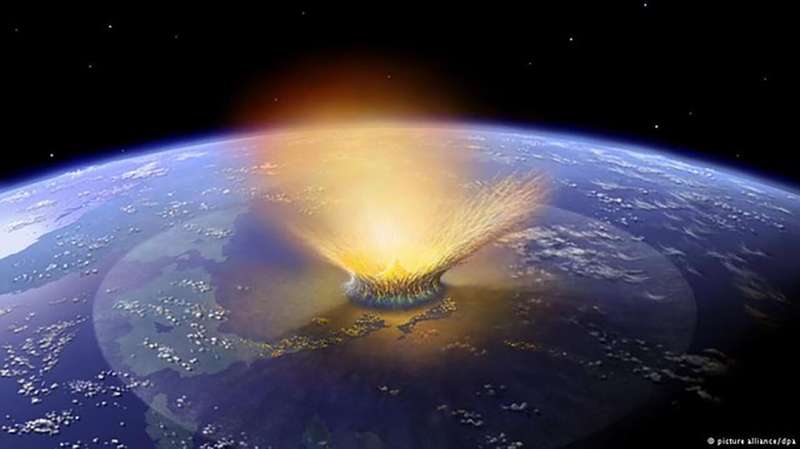
66 million years ago an asteroid struck offshore of what is now Chicxulub near the Yucatán Peninsula in Mexico. The impact and its aftermath are widely credited with a mass extinction that wiped out 75% of plant and animal life on Earth, including non-avian dinosaurs. Since the impact occurred in shallow waters, it also generated a tsunami, one over 30,000 times bigger than any in recorded history.

Snapshot showing the spreading tsunami after the asteroid’s impact. Click on the image to go to NOAA’s website and watch the video. In this simulation, researchers show how that tsunami spread globally. The initial wave was about a mile high but stretched up to about 2.5 miles as it rushed ashore. Worldwide, every shoreline saw flows at 20 cm/s or higher as the wave hit. In the image above, black areas show the landmasses as they existed at the time, with modern borders shown in white outline. To watch the video, click on the image or head to NOAA’s visualization.
You may wonder how scientists can validate a simulation like this one, which so wildly exceeds any recorded event. One way they judged these results is by looking at the sedimentary records of the seafloor. Their results show flows large enough to scour the seafloor and disrupt any sedimentary records in those areas, and, sure enough, those regions hold no records older than the asteroid’s impact. That alignment between the geological record and the simulation’s highest flow areas helps establish confidence in the results. (Image credit: illustration – SWRI/D. Davis, simulation – NOAA; research credit: M. Range et al.; submitted by Kam-Yung Soh)
Dandelion Seeds
Each seed on the head of a dandelion has a preferred wind direction, according to new research. Seeds facing the breeze are most likely to release from the head, with those facing other directions holding on tens to hundreds of times harder — until their breeze comes along. To measure the force needed to pluck a dandelion seed, researchers superglued a fine wire to individual seeds and pulled from different directions. This seed-by-seed removal mimics winds from varying angles and allowed the researchers to test the directional dependence of seed release. With seeds poised to release in every direction, the dandelion ensures its successful spread. (Image credit: S. Chaudhry; research credit: J. Shields and C. Roh; via Science News; submitted by Kam-Yung Soh)

The Optical Atom
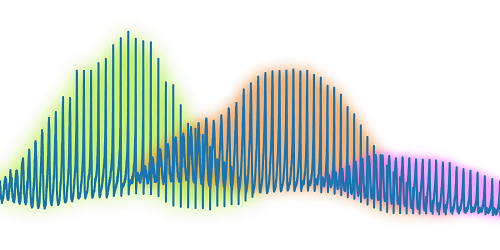
Researchers applied a quantum mechanical technique to study an evaporating drop in extreme detail. The team trapped a spherical water drop and collected the light scattered off it as it evaporated. Using an analytic technique originally developed for an atom, they were able to study changes in the drop down to the nanometric level without relying on numerical simulations to interpret the results. The authors suggest that their method is well-suited to studying the concentration of chemical or biological contaminants on the surface of a drop as it evaporates. (Image credit: droplet – Z. Kaiyv, Fano combs – J. Marmolejo et al.; research credit: J. Marmolejo et al.; via APS Physics)

Illustration of the Fano combs seen by analyzing light scattered from an evaporating drop.