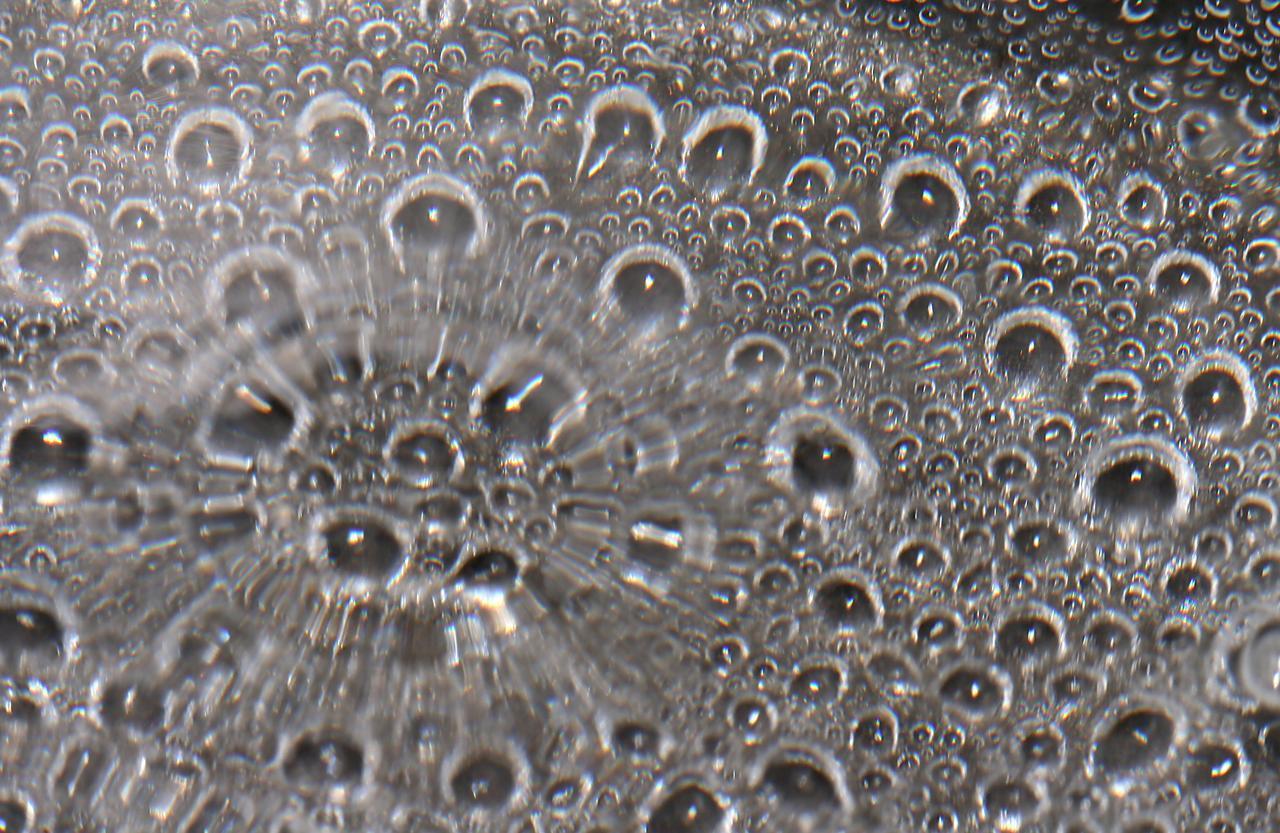
Imagine blowing through a straw into a nearly empty glass–we probably all did this as children and sent water, milk, and soda flying everywhere! In essence, this video shows that same act, but filmed by a high-speed camera. The “straw” blows a steady stream of helium into a shallow pool of silicone oil and slowly moves so that the angle the straw makes with the pool changes. As the angle changes, different regimes are visible. First waves appear on the surface of the pool, then a bulge forms, which develops into a droplet stream, then on into the chaos of bubbles and jets. It’s good I couldn’t see this in slow motion as a child or I would have never used my straw for drinking!
Category: Research

Boiling in Microgravity
This week’s edition of the ISS research blog focuses on the Boiling Experiment Facility (BXF) and the goals of unlocking the secrets of boiling in microgravity. Without gravity to provide buoyant convection, boiling in space tends to produce one giant bubble instead of the hundreds of tiny ones we’re accustomed to seeing on our stoves. According to Dr. Tara Ruttley:
TheBoiling Experiment Facility or BXF, which launched on STS-133 in February 2010, will enable scientists to perform in-depth studies of the complexities involved in bubble formation as a result of heat transfer. For instance, what roles do surface tension and evaporation play during nucleate boiling when buoyancy and convection are not in the equation? What about the variations in the properties of the heating surface? By controlling for gravity while on the International Space Station, scientists can investigate the various elements of boiling, thus potentially driving improved cooling system designs. Improved efficiency in cooling technology can lead to positive impacts on the global economy and environment; two hot topics that have much to gain from boiling in space.

Jets from Waves
When vibrated, fluid surfaces can exhibit standing waves known as Faraday waves. In this experiment, increased forcing of these standing waves causes the formation of a jet. Under the right conditions, as the standing wave collapses, a singularity forms on the fluid surface when velocity and surface curvature diverge. The narrow jet column forms as a result of the fluid’s kinetic energy getting focused by the collapse. For more, see this letter to Nature. #

Laminar Flow Control
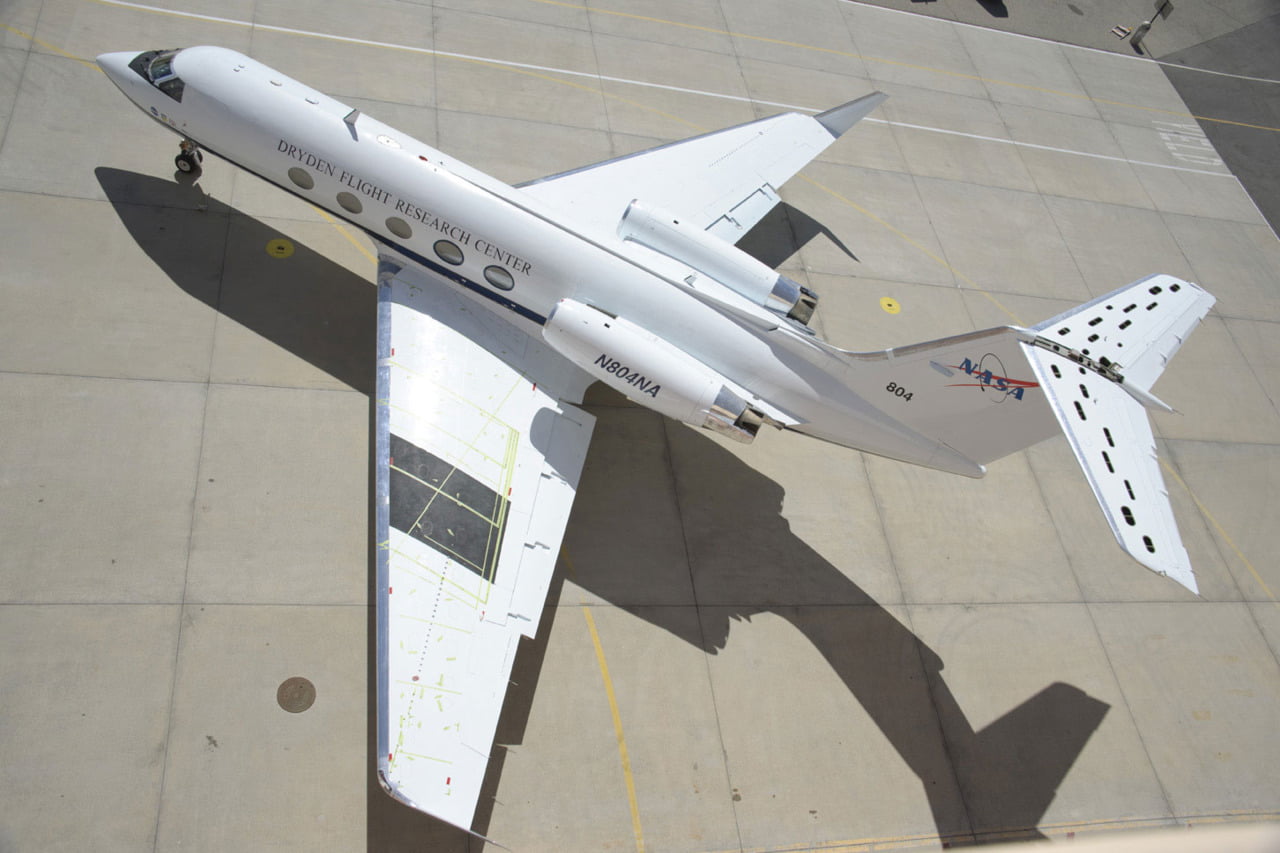
On Wednesday, March 30, 2011 at 3:00 EDT NASA engineers are holding an online chat about a current project to achieve laminar flow control on business jet-class airplanes. Keeping flow over an airplane’s wings laminar could decrease the total drag on an airplane by as much as 15%. In particular, this project involves placing tiny hockey-puck-shaped discrete roughness elements (DREs) along the front of the wing. These DREs are positioned such that they perturb the mean-flow over the wing at a higher frequency than the naturally most unstable frequency; as a result, flow actually remains laminar over a greater extent of the wing than would normally be the case. For more on the technical ideas, see this NASA blog post or feel free to ask questions in the comments. #
Full disclosure: This project is being conducted in joint with professors with whom I work, and the subject matter is related to my own research.
Computational Vortex Rings
Computational fluid dynamics (CFD) sometimes gets a bad rep as “colorful fluid dynamics”, but as computers get faster and faster, more complicated and physically accurate simulations are possible. Shown here are simulations of vortex rings and wingtip vortices in stunningly gorgeous detail. Understanding the evolution of these vortices from a fundamental level helps fluid mechanicians design better methods of controlling them. As mentioned in the video, wingtip vortices are a particularly hazardous everyday example; the time it takes for one plane’s wingtip vortices to disperse determines how quickly the next airplane can take-off or land on that same runway. Being able to break down these vortices faster would allow more frequent use of existing facilities.

Smoke Visualization on an F-16
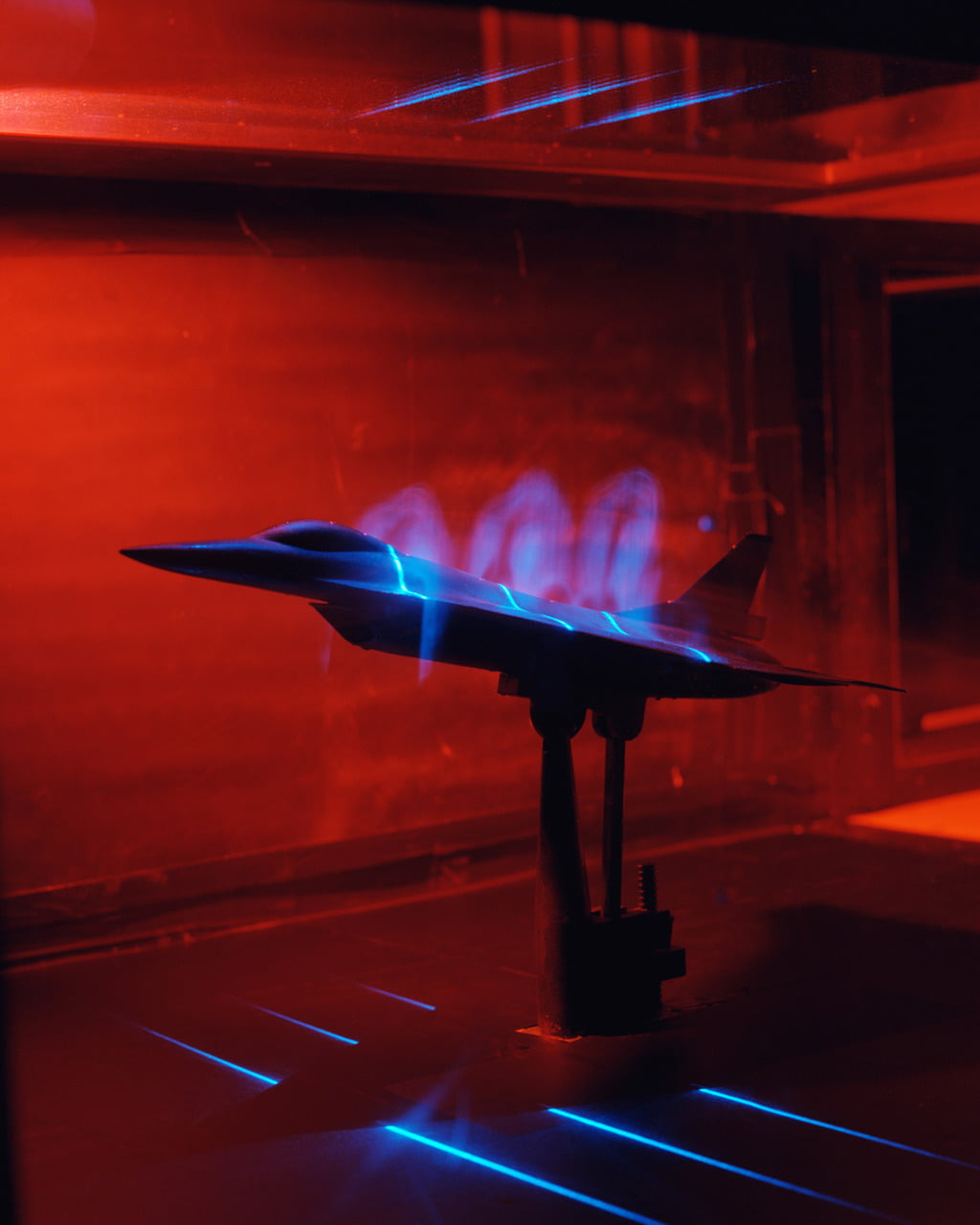
Flow around an F-16XL Scamp model is visualized using smoke illuminated by laser sheets. Lasers are common equipment in fluids laboratories; they’re useful for flow visualization and for many velocimetry techniques.

Wind Tunnel Testing
This photo shows a prototype of the X-48C blended wing body aircraft being tested in NASA Langley’s 12-Foot Low-Speed Tunnel. Blended wing bodies have many advantages over conventional tube-and-wing designs: the entire surface of the craft can generate lift; the usable cargo/passenger area of the craft is increased; and, structurally, the craft is easier to manufacture. Flight tests of a remote-controlled version of the craft have also taken place.
Air Force Gears Up For Hypersonic Missile Test
Air Force Gears Up For Hypersonic Missile Test
The U.S. Air Force has announced another test of the X-51 Waverider coming up on March 22nd. This will be the latest in only a handful of tests of a new supersonic combustion ramjet engine, also known as a scramjet. The test should involve flying at Mach 6 for about four minutes. Hopefully we’ll have see some exciting results from that test flight in a week or so.

Hotwire Anemometry
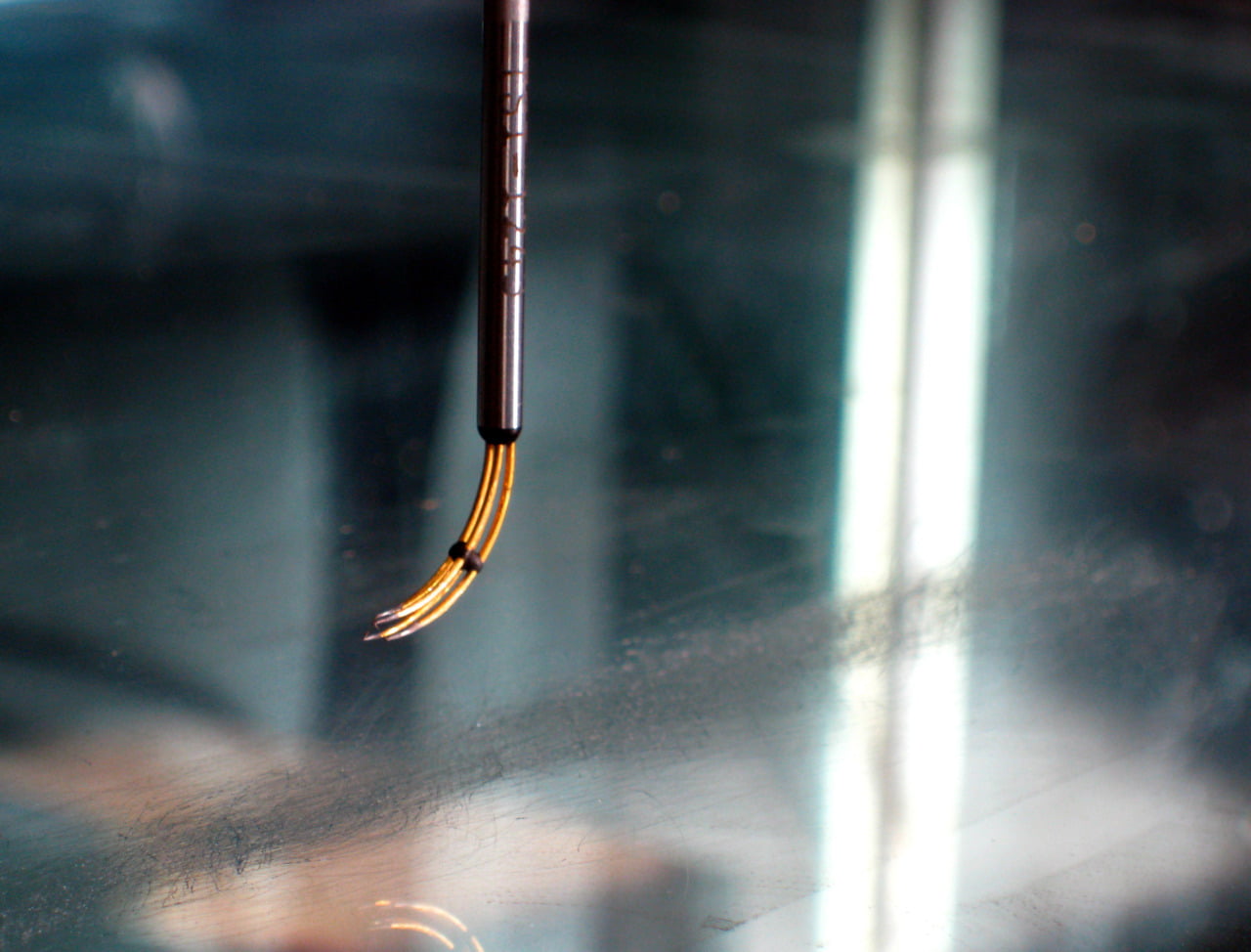
Hotwire anemometry is used in experimental fluid dynamics to measure velocities with high temporal resolution. The boundary layer crosswire probe shown here was used for turbulence research. Between the prongs, which are about the thickness of a sewing needle, are tiny wires about 3 microns in diameter. A human hair is about 80 microns in diameter. Hotwires actually measure voltage; when part of an electrical circuit, the hotwire’s temperature rises above ambient. As air flows over the wire, it cools, which causes the wire’s resistance to drop. By tracking this change in resistance, it is possible to determine the speed of the air moving over the wire.

Neutron Superfluids in Stars?
This image shows a composite X-ray (red, green, and blue) and optical (gold) view of the supernova remnant Cassiopeia A, located about 11,000 light years away. At the heart of this supernova remnant is a neutron star. After ten years of observations, astronomers have found a 4% decline in the temperature of this neutron star, which cannot be accounted for in current theory. Two research teams have independently found that this cooling could be due to the star converting the neutrons in its core into a superfluid. As the neutron superfluid is formed, neutrinos are emitted; this decreases the energy in the star and causes more rapid cooling. See Wired for more. #