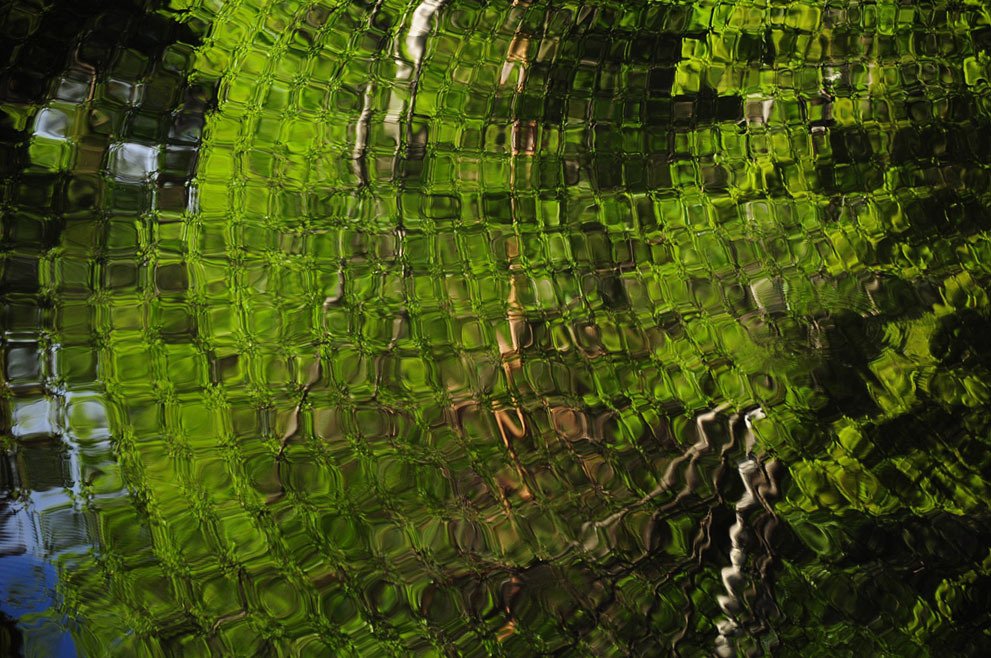
Capillary waves–ripples–interfere with one another after the photographer throws objects into a narrow point in a small lake. The reflections of these waves off the lake’s boundaries and against one another creates a mosaic-like geometric effect on the liquid surface. (Photo credit: Jorgen Tharaldsen/National Geographic Photo Contest)
Category: Art

INK World v01
In this video, mixtures of inks (likely printer toners) and fluids move and swirl. Magnetic fields contort the ferrofluidic ink and make it dance, while less viscous fluids spread into their surroundings via finger-like protuberances. (Video credit and submission: Antoine Delach)
Laminar Fountain
In the midst of holiday travels, take a moment (particularly if you’re flying through Detroit) to enjoy the simple beauty of WET Design’s fountain in the McNamara Terminal. Laminar jets arc through the air almost like perfect crystalline columns of fluid. Watch closely and you’ll see a few wavy variations–like a Plateau-Rayleigh instability creeping in–but there will be no turbulence to distress passengers and passers-by. (Video credit: WET Design)

Ferrofluid Sculptures


Artist Sachiko Kodama is known for her mesmerizing ferrofluid sculptures. Ferrofluids are a colloidal liquid consisting of nanoscale ferromagnetic particles and a carrier fluid such as water or oil. They can react strongly to magnetic fields, forming spikes, brain-like whorls, and even labyrinths. (Photo credits: Sachiko Kodama; via freshphotons)

“Kusho”


Artist Shinichi Maruyama uses photography to freeze the transient motion of fluids into water sculptures. Inertia, gravity, and surface tension are at war in each piece. Plateau-Rayleigh instabilities break long filaments of liquid into droplets that splash, collide, and reform. To see how he makes this art, check out his videos. (Photo credits: Shinichi Maruyama)

The Beauty of the Great Red Spot

Jupiter is home to one of the most famous storms in the solar system, the Great Red Spot, which Earth observations place at a minimum of 180 (Earth) years in duration. Some evidence suggests that it may have been observed by humans as early as 1665. The magnitude of such a storm is almost unimaginable. At its narrowest point, the storm is still as wide as our entire planet and observations from the Voyager crafts indicate that the storm has 250 mph winds. The scale of mixing and turbulence around the storm, seen in photographs, is stunning and beautiful. (Photo credits: NASA/Voyager 1 and Michael Benson; submitted by oneheadtoanother)

Fluidic Public Art by Charles Sowers


Artist Charles Sowers creates exhibits and public art focused on illuminating natural phenomenon that might otherwise go unnoticed, and much of his work features fluid dynamics directly or indirectly. “Windswept” and “Wave Wall” are both outdoor exhibits that show undulations and vortices corresponding to local wind flow. Other pieces explore ferrofluids through magnetic mazes or feature foggy turbulence. My own favorite, “Drip Chamber”, oozes with viscous fluids whose dripping forms patterns reminiscent of convection cells. Be sure to check out his website for videos of the exhibits in action. (Photo credits: Charles Sowers; submitted by rreis)

“Millefiori”
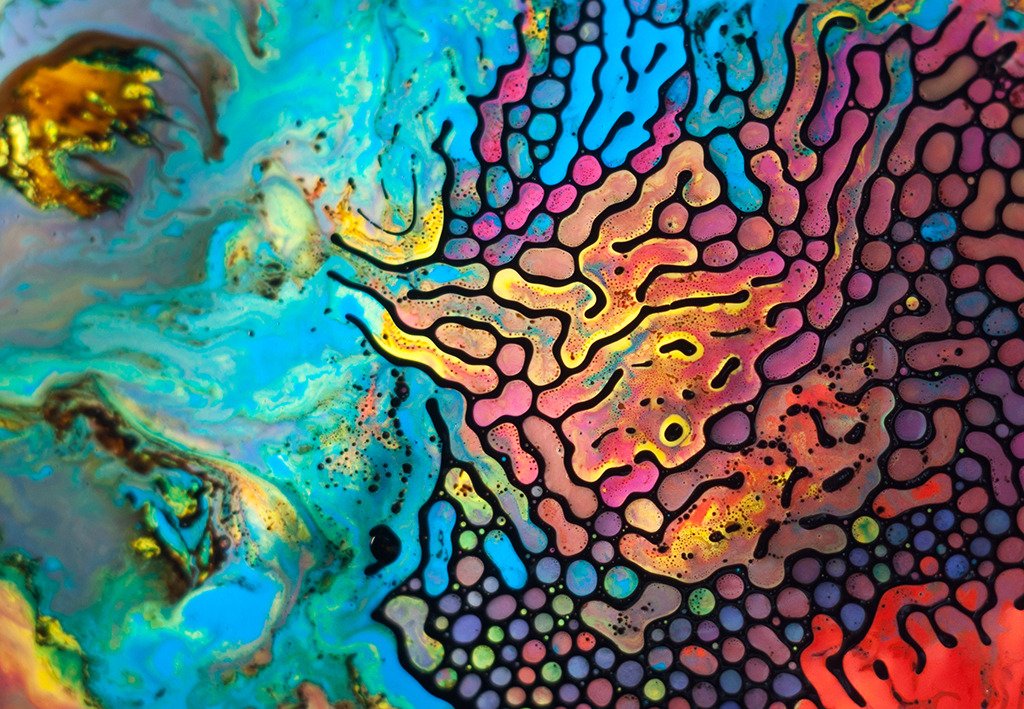
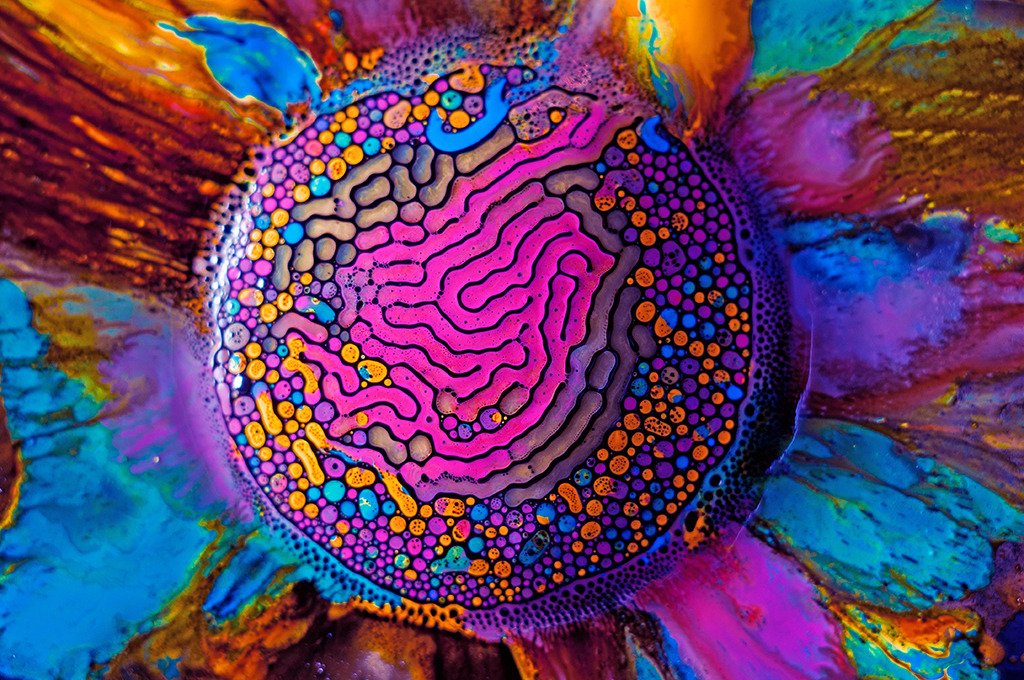
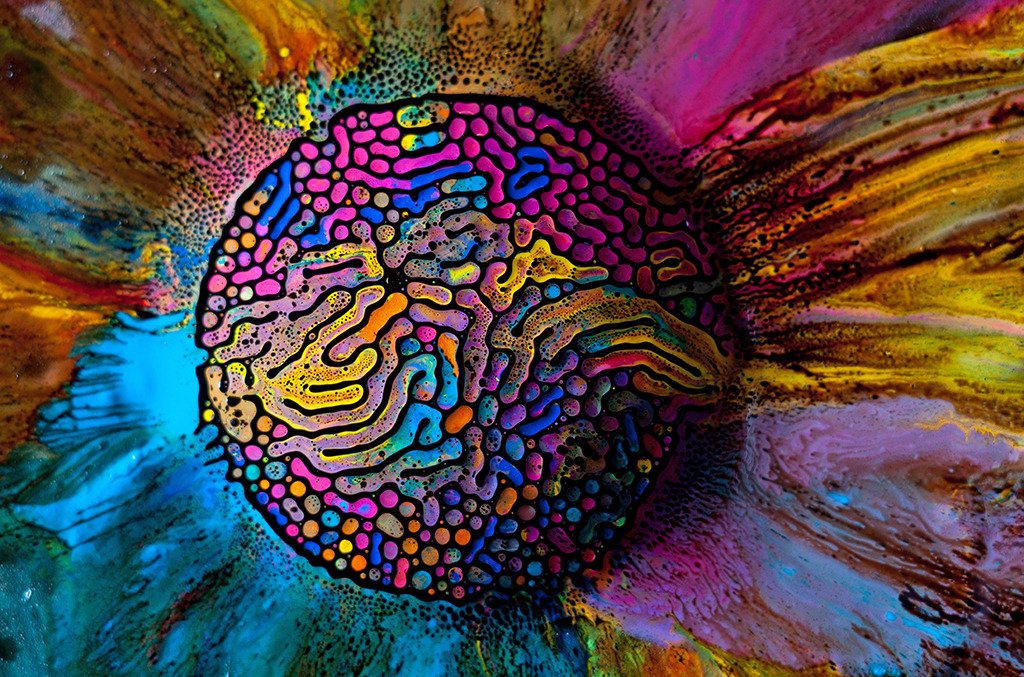
In “Millefiori” artist Fabian Oefner mixes watercolors with ferrofluids to create bright fluid microcosms. Each photograph represents an area about the size of a thumbnail. Ferrofluids contain iron-based nanoparticles suspended in a carrier fluid and thus respond to magnetic fields. They can form sharp points, labyrinthine mazes, or even brain-like patterns depending on the magnetic field and the substances surrounding them. For more on this art project, see this interview with the artist. (Photo credit: Fabian Oefner)

“Surface Tension”

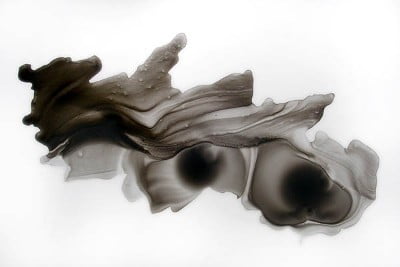

From a series called “Surface Tension,” these ink and water drawings by Marguerite French explore the effects of diffusion, surface tension, and evaporation. The forms left by the thin layer of liquids suggest other natural processes like erosion, weathering, and the rings inside trees. (Photo credits: Marguerite French)
“Ferienne”
In “Ferienne” artist Afiq Omar utilizes ferrofluids, magnetism, and vibration to create analog visual effects. Most of the dot and labyrinthine patterns result from the reaction of a ferrofluid submerged in a nonmagnetic fluid to an external magnetic field. Diffusion effects and surface tension instabilities are also visible in the way the darker ferrofluid breaks down in the carrier fluid. Also be sure to check out Omar’s previously featured fluid film “Ferroux”. (Video credit: Afiq Omar)


