This numerical simulation shows a von Karman vortex street in the wake of a bluff body. As flow moves over the object, vortices are periodically shed off the object’s upper and lower surfaces at a steady frequency related to the velocity of the flow. The simulation takes place in a channel; note how the thickness of the boundary layers on the walls increases with downstream distance, forcing a slight constriction on the vortex street in the freestream.
Year: 2011

Soap Film Flow Viz
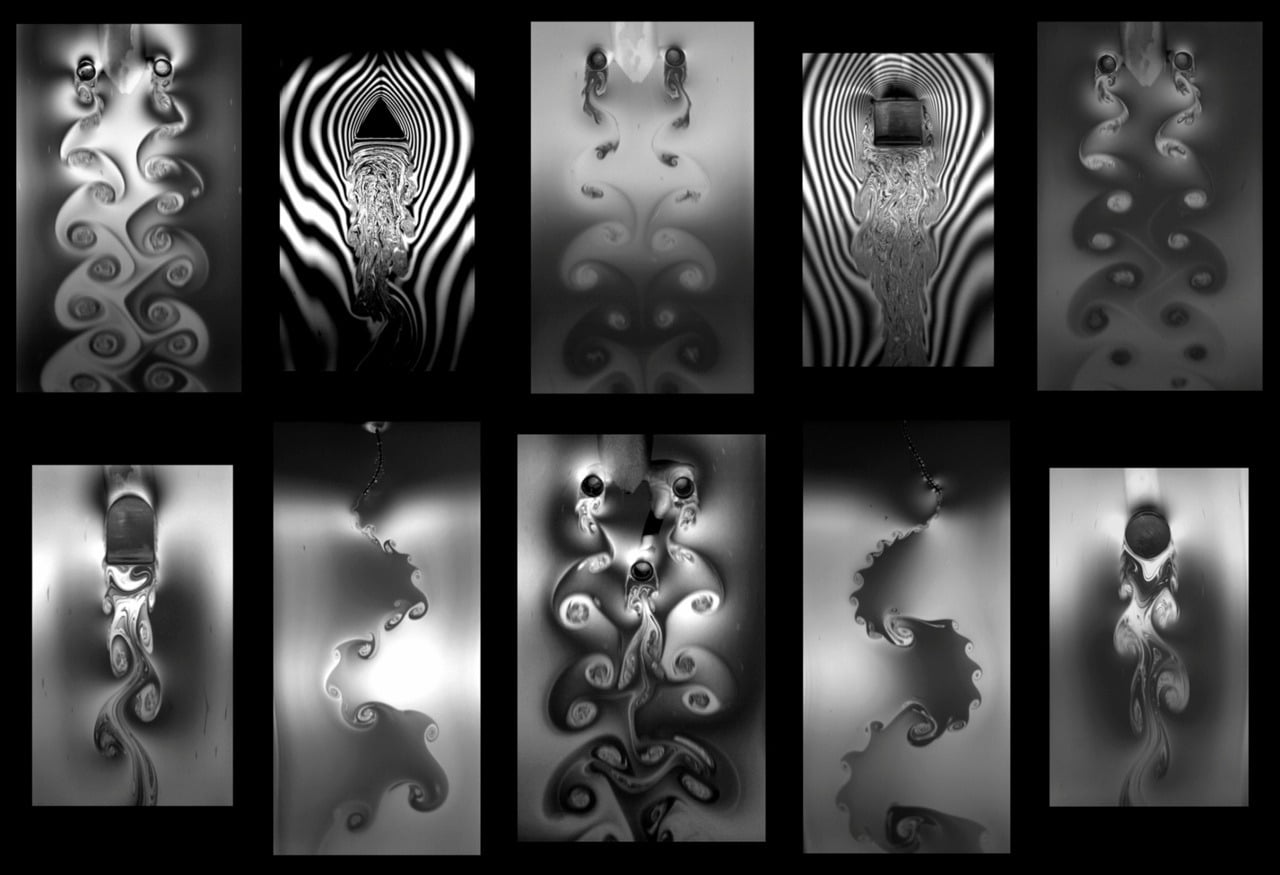
Flowing soap films provide an educational and beautiful method for visualizing the wakes of objects in two-dimensional flows. High-speed photography highlights the interference patterns on the soap film, providing detail without the necessity for the particulate tracking of other flow visualization methods. Highlights here include wakes behind bluff bodies, interacting cylinders, and flapping flags. (pdf) #

Aurora from the ISS
The solar wind, a rarefied stream of hot plasma ejected from the sun, constantly bombards Earth’s magnetic field. This results in the formation of the magnetosphere, which deflects most of these charged particles away from the earth. Some of them, however, are drawn toward the magnetic poles; when these charged particles strike the upper atmosphere, they cause the gases there to release photons, resulting in the lights we know as auroras. This animation shows the International Space Station flying through the aurora australis–the southern lights. The fluid-like motion of the aurora is no accident; though diffuse, the solar wind is still a fluid governed by magnetohydrodynamics.
Sharkskin-Style Swimsuits
Fans of swimming will recall the controversies of the now-banned sharkskin-style swimsuits that helped break so many records in the past few years. The suits decrease drag on a swimmer both by making them more hydrodynamic in form and by drastically reducing skin friction where the water meets the swimmer’s body. In addition to decreasing the two major sources of drag on a swimmer, the compression provided by the material can help increase blood flow to muscles. These improvements came at a high material cost, though, and, since the technology was not viable for all athletes, it has since been banned.
Mixing in Space
Living here on earth, we are so accustomed to gravity’s effects on fluid behaviors that it’s not always obvious how microgravity will affect them. Here astronaut Richard Garriott demonstrates mixing and separating immiscible liquids in space.

Flow Vis

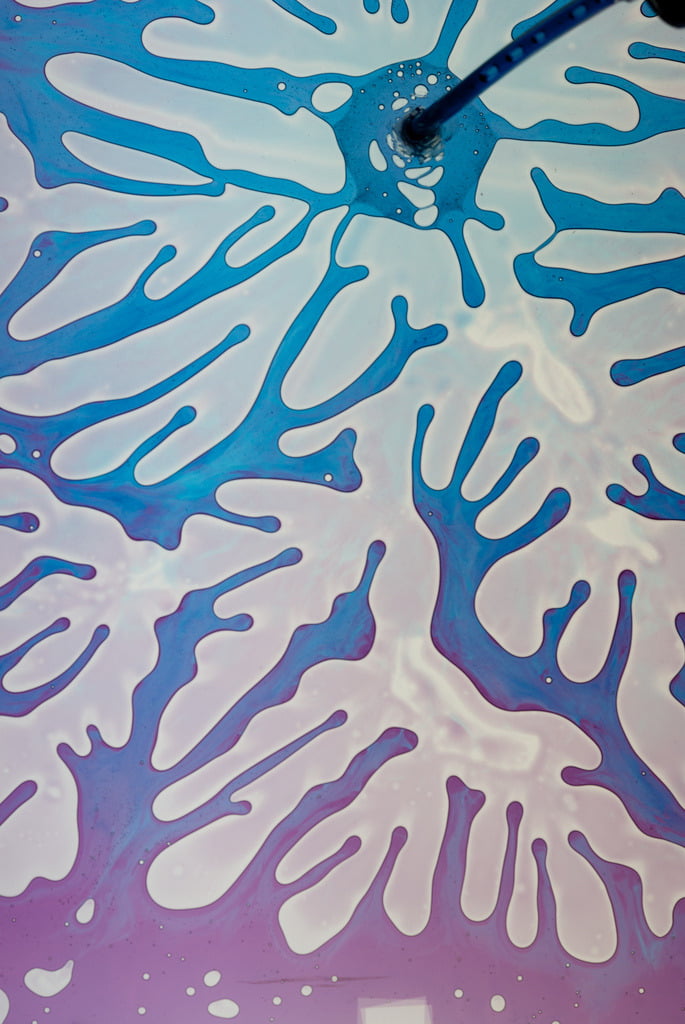
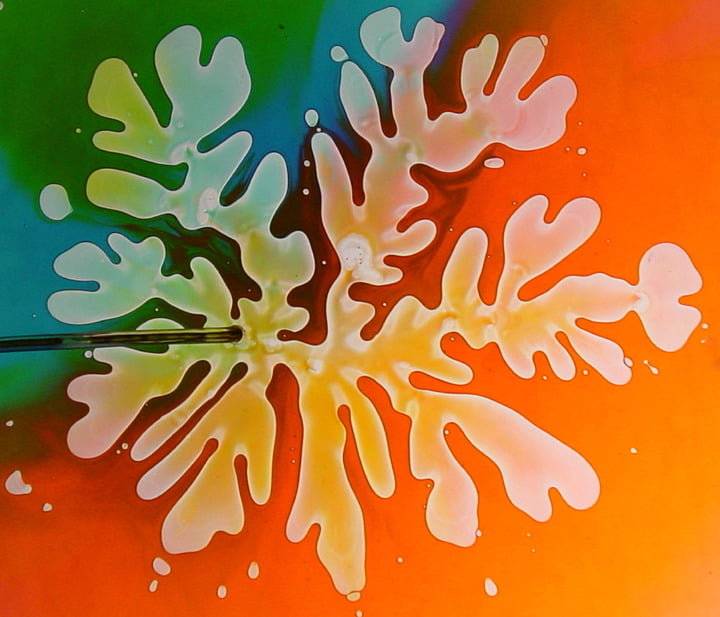
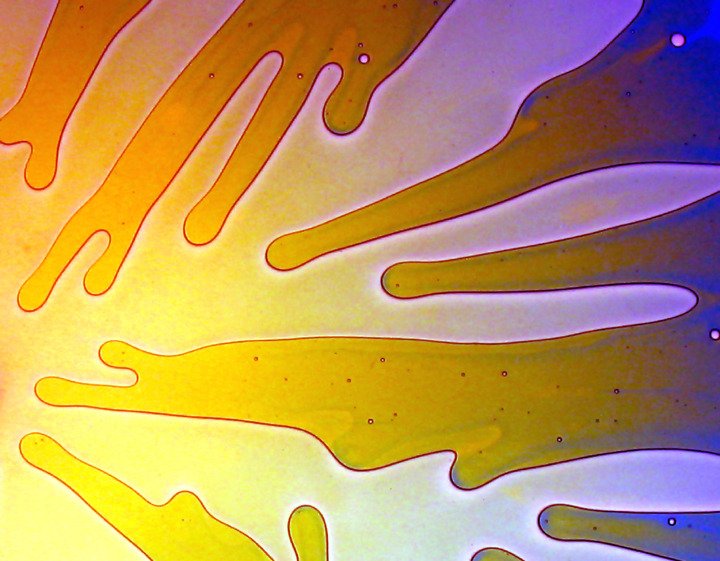
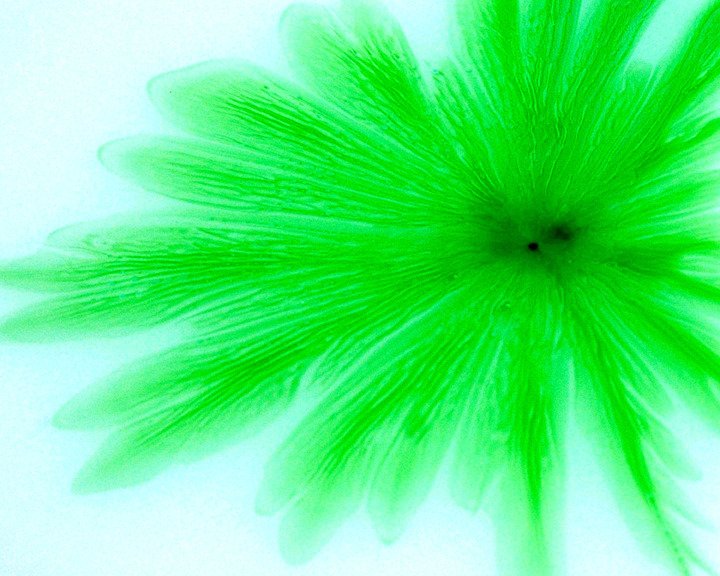
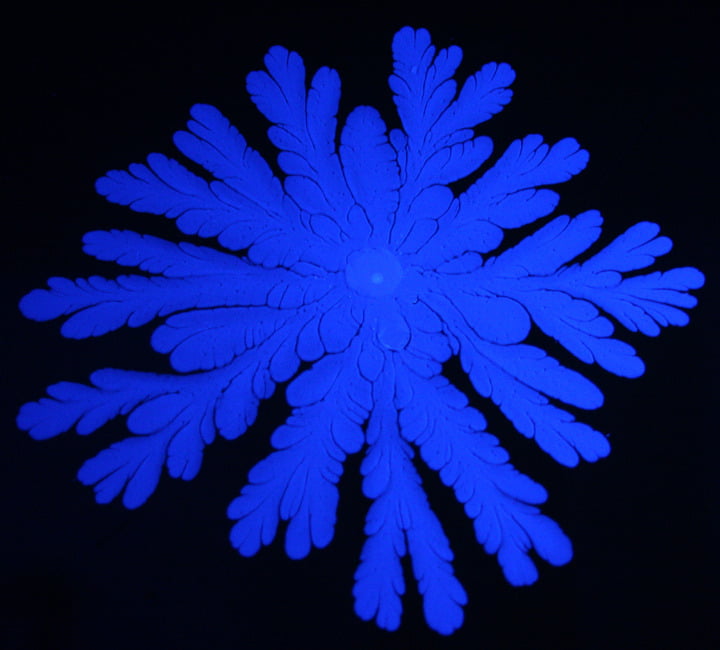
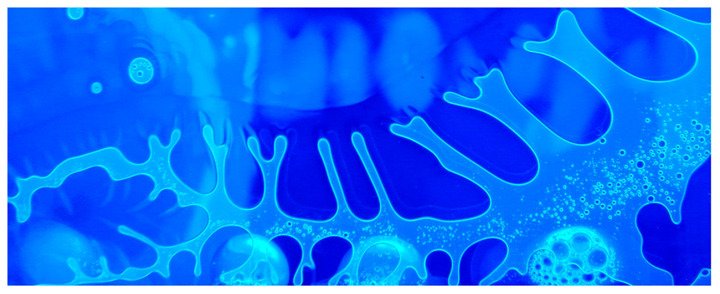
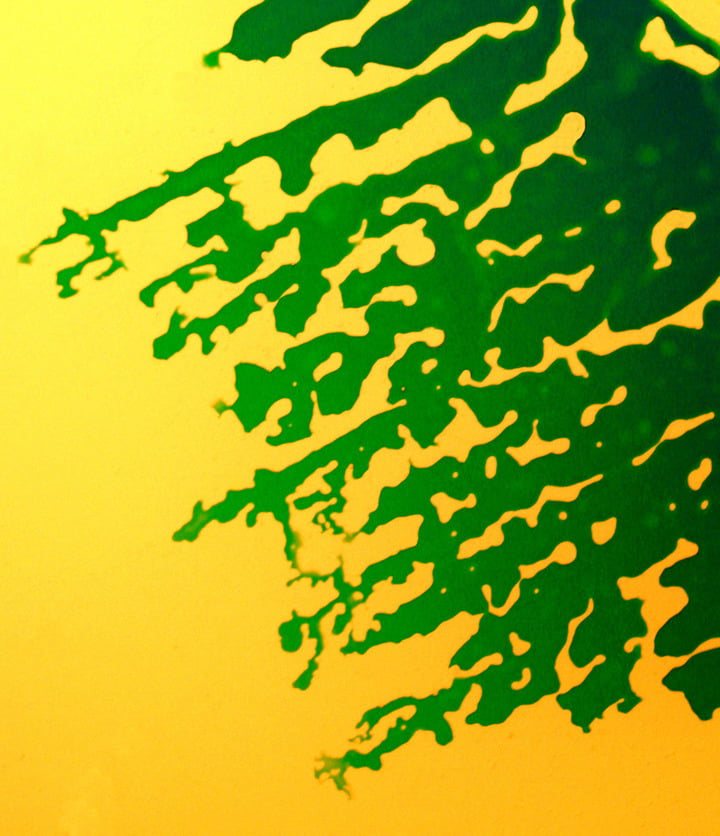
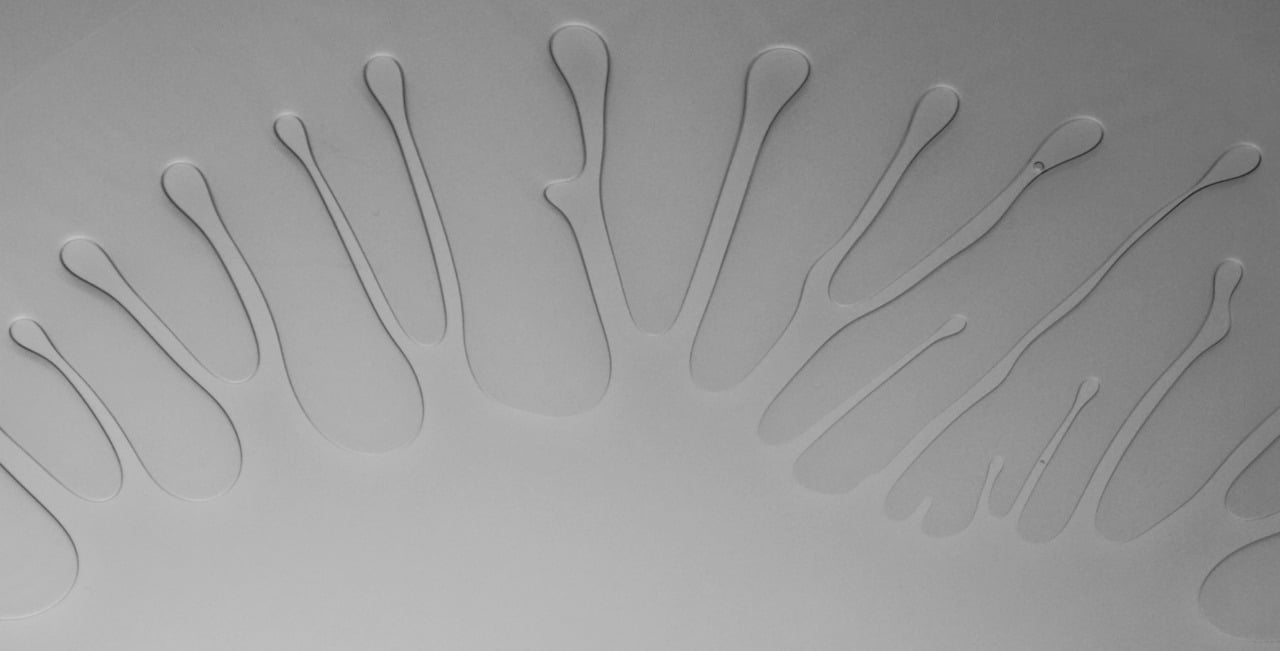
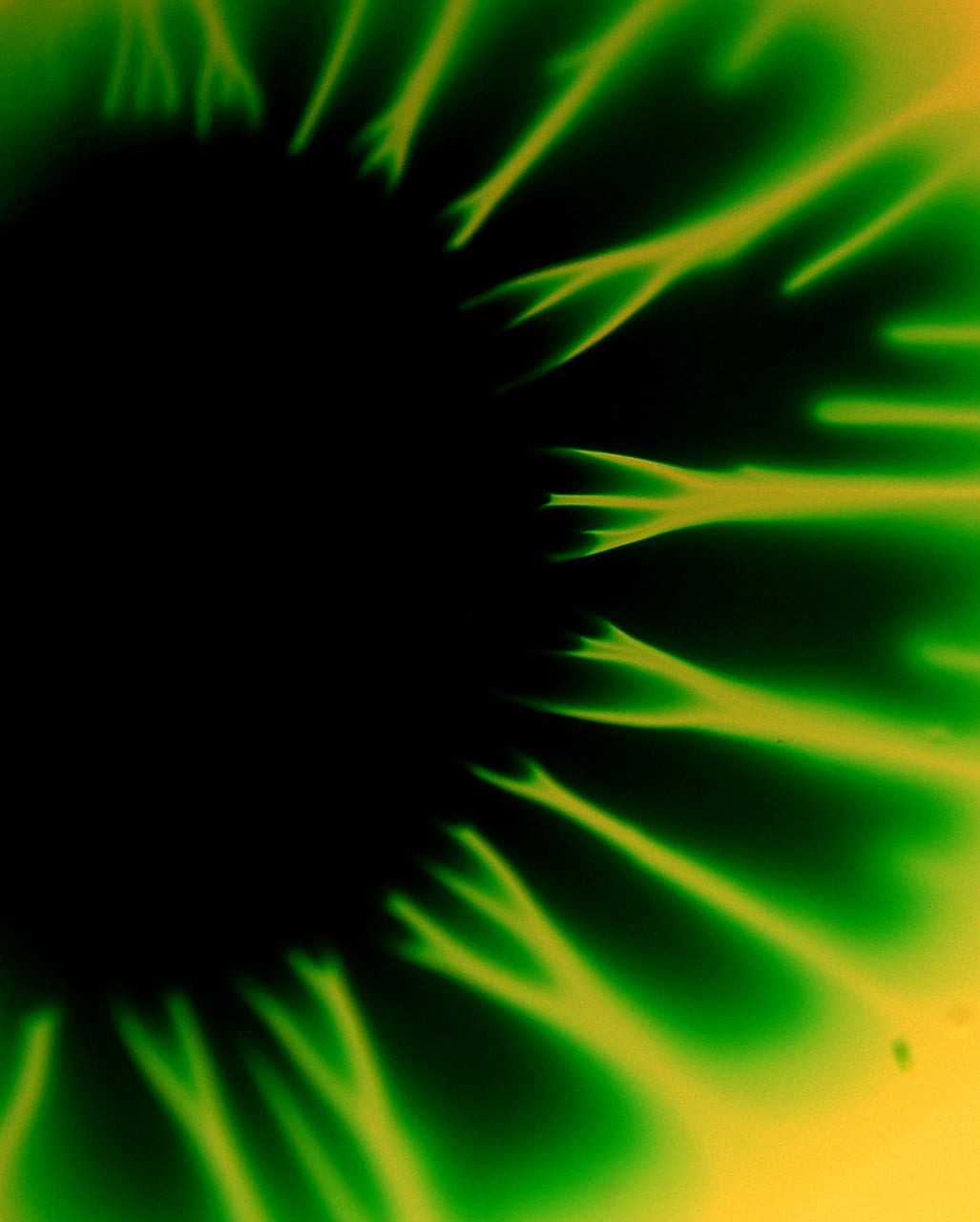
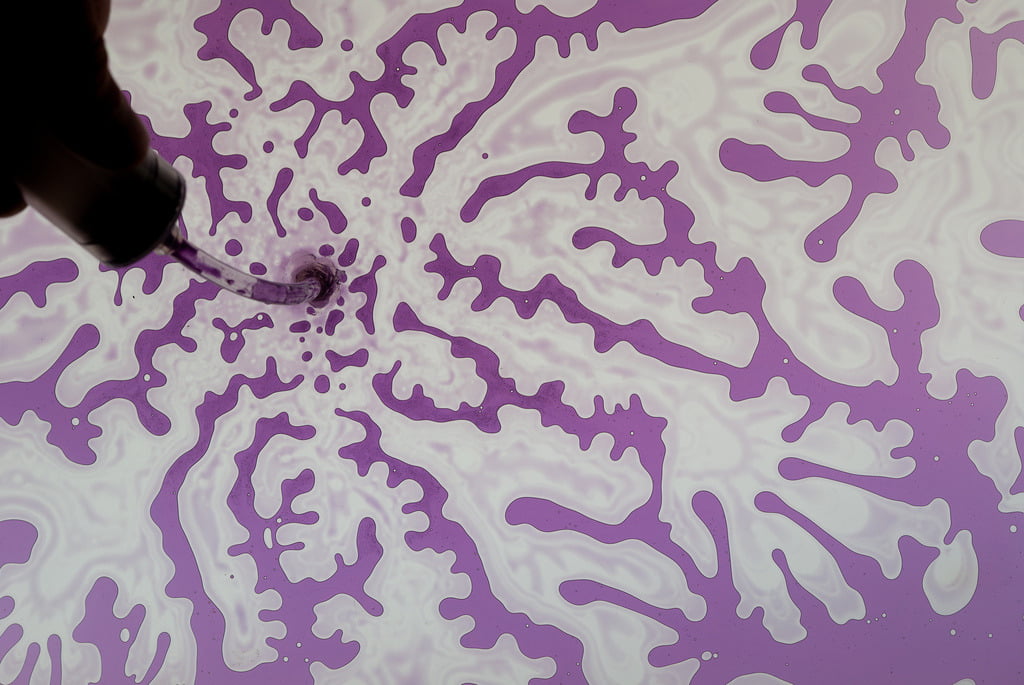
Place a viscous fluid in the gap between two plates of glass and you have created a Hele Shaw cell. If a less viscous fluid is then injected between the plates, a fascinating pattern of finger-like protrusions results. This is known as the Saffman-Taylor instability. Because of the relative simplicity of the set-up, it’s possible to create such experiments at home using common household fluids like glycerin, dish soap, dyed water, or laundry detergent. (Photo credits: Jessica Rosencranz, Jessica Todd, Laurel Swift et al, Andrea Fabri et al, Tanner Ladtkow et al, Mike Demmons et al, Trisha Harrison, Justin Cohee, and Erik Hansen)

Flow Around a Delta Wing
Smoke visualization in a wind tunnel shows the vortices wrapping around and trailing behind a delta wing. As with more commonly seen rectangular or swept wings, the vortices that form around delta wings affect lift, drag, and control of an aircraft. They can also be hazardous to aircraft nearby. Note that, although delta wings are often seen on supersonic aircraft, this visualization only applies at subsonic speeds. The flow field changes drastically above the speed of sound.
Reader Question: How Hot Can It Be Before a Fan Stops Cooling You?
lazenby asks:
This isn’t strictly a dynamics question, but I was wondering how hot a stream of fluid has to be before it can no longer lower the average temperature of a body placed in its flow. As an example, how hot a day does it have to be before fans stop cooling you down? What’s the relation and the math to reach for here?
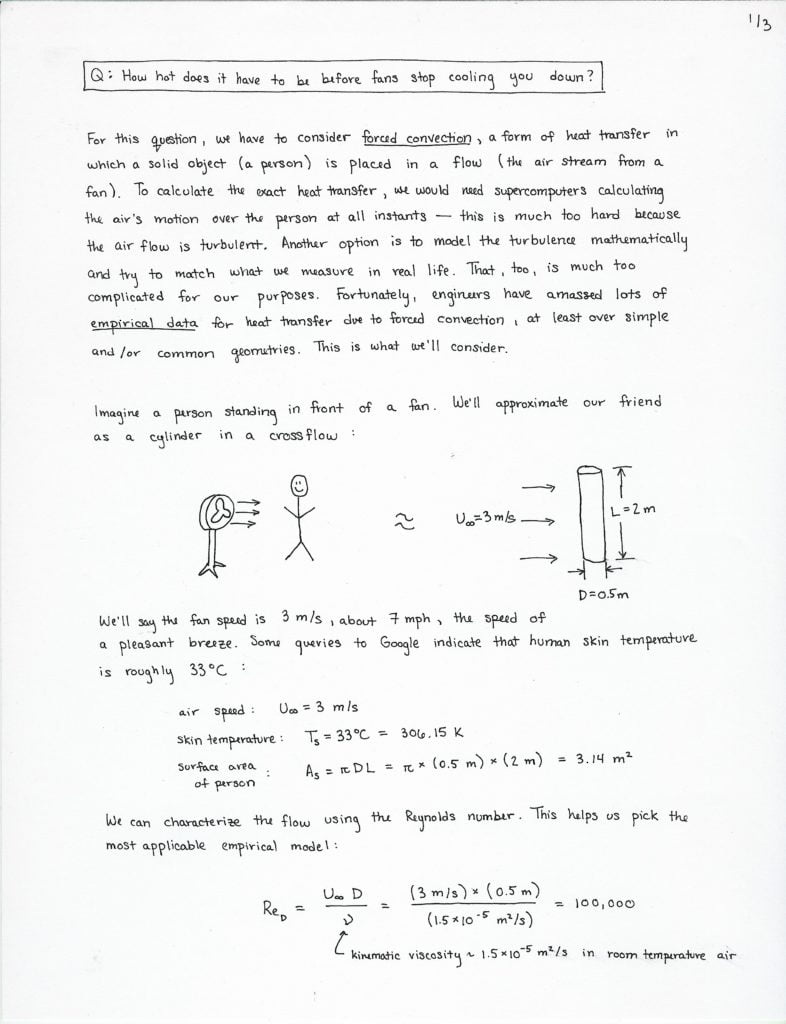
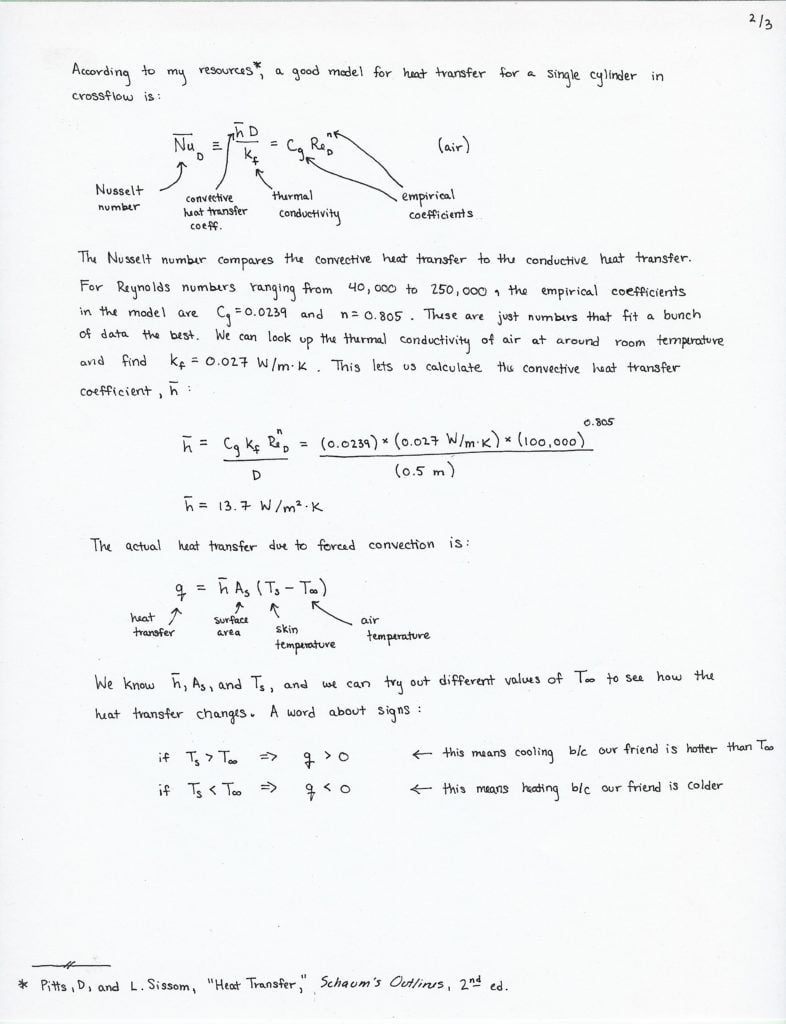
Wonder no further! You seek the subject of heat transfer–specifically forced convection. Here’s a brief look at how to calculate the cooling due to a fan. Click to enlarge each page.

Airfoil Boundary Layer
This video shows the turbulent boundary layer on a NACA 0010 airfoil at high angle of attack (15 degrees). Notice how substantial the variations are in the boundary layer over time. At one instant the boundary layer is thick and smoke-filled and in another we see freestream fluid (non-smoke) reaching nearly to the surface. This variability, known as intermittency, is characteristic of turbulent flows, and is part of what makes them difficult to model.

Microgravity Combustion
This collage of three combustion images reveals the beautiful symmetry of flames in microgravity. In the absence of gravity, flames are spherical, and, in the confines of a spacecraft, any combustion is extremely dangerous. Thus, most microgravity combustion experiments occur in drop towers. From NASA:
Each image is of flame spread over cellulose paper in a spacecraft ventilation flow in microgravity. The different colors represent different chemical reactions within the flame. The blue areas are caused by chemiluminescence (light produced by a chemical reaction.) The white, yellow and orange regions are due to glowing soot within the flame zone. #