Some 4,100 light years away in the Sagittarius constellation, a stellar nursery births new stars. Known as Messier 8, or the Lagoon Nebula, this region is one of the most visible nebulas from Earth. It is filled with turbulent gases and dark strands of dust. Near the centerline of the image is the bright, hourglass shape of the NGC 6530 star cluster. Its intense ultraviolet light ionizes surrounding gases, creating the distinctive red glow surrounding the nebula. (Image credit: J. Drudis and C. Sasse; via APOD)
Tag: turbulence

“Aquakosmos”


Colorful chandeliers, passing spirits, sprouting mushrooms, and fountains of falling ink appear in Christopher Dormoy’s “Aquakosmos.” Driven by the slight density difference between ink and water, many of these elaborate shapes result from the Rayleigh-Taylor instability. Anytime you see mushroom-like plumes and chandelier-like splitting vortex rings, there’s probably a Rayleigh-Taylor instability behind it. Check out the full video above, and, if you want to give this kind of flow visualization a try yourself, a glass of water and vial of food coloring is a great place to start. (Video and image credit: C. Dormoy)

Modeling Wildfires With Water
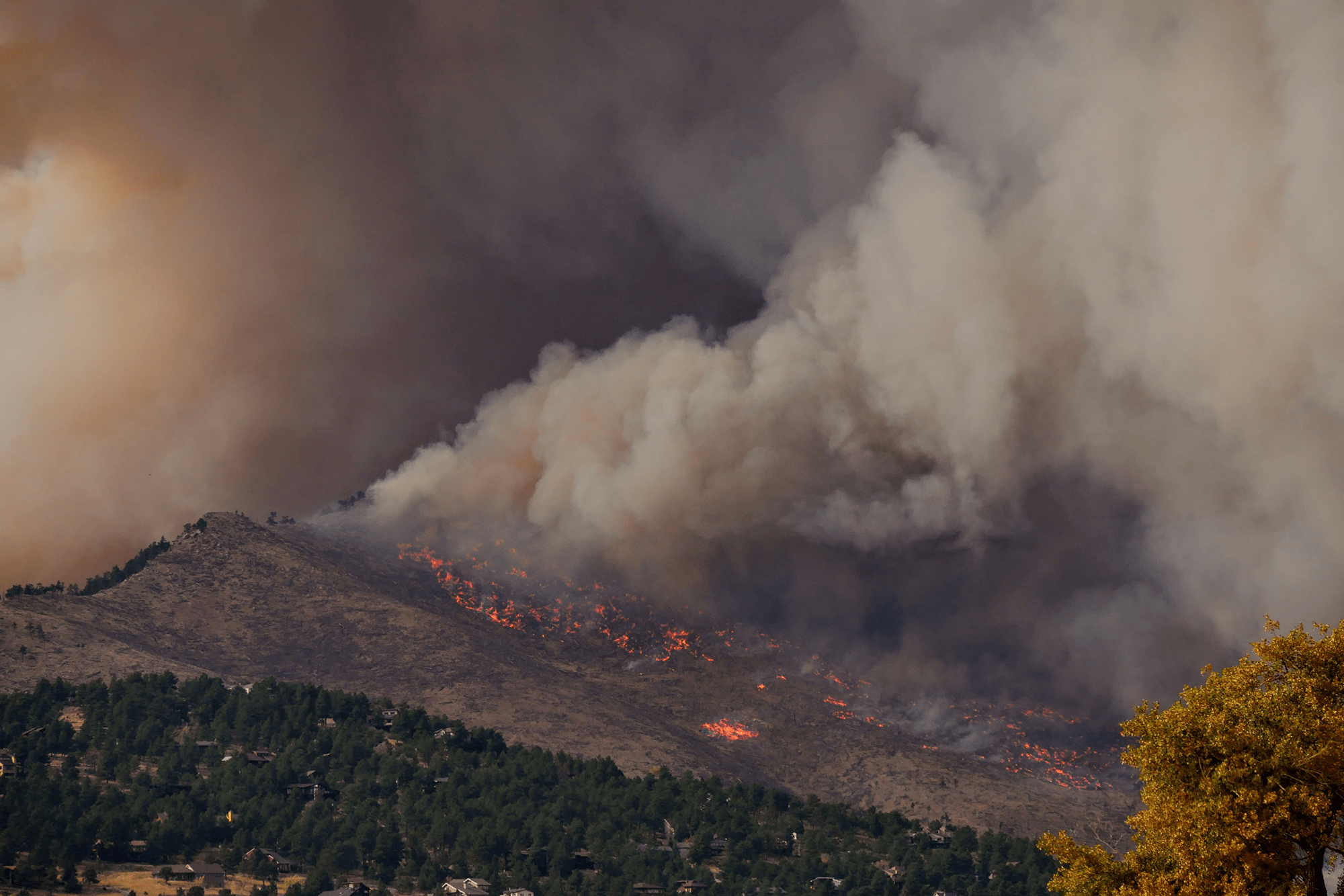
Turbulence over a burning forest can carry embers that spread the wildfire. To understand how wildfire plumes interact with the natural turbulence found above the forest canopy, researchers modeled the situation in a water flume. Dowel rods acted as a forest, with turbulence developing naturally from the water flowing past. For a wildfire, the researchers used a plume of warmer water, which buoyancy lofted into the turbulence over their model forest.

The experiment used to model wildfire flows. Dowel rods represent the forest and a plume of warm water (right side; distorting the background) represents the wildfire. The dark device in the foreground is a probe used to measure turbulence. The flow over the forest canopy naturally forms side-by-side rolls of air rotating around a horizontal axis. As the buoyant plume rises, it can be torn apart by these rollers, as well as carried downstream. Varying the turbulence, they found, did not affect the average trajectory of the plume. But the more intense the turbulence, the greater the vertical fluctuations in the plume. Those large variations, they concluded, could lift more embers into stronger winds that distribute them further and spread a fire faster. (Image credit: wildfire – M. Brooks, experiment – H. Chung and J. Koseff; research credit: H. Chung and J. Koseff; via APS Physics)
“Vorticity 5”


Photographer and stormchaser extraordinaire Mike Olbinski is back with the fifth volume in his “Vorticity” series. Shot over the 2022 and 2023 tornado seasons in the U.S. Central Plains, this edition has virtually everything: supercells, microbursts, lightning, tornadoes, and haboobs. There’s towering convection and churning, swirling turbulence. It’s a spectacular look at the power and grandeur of our atmosphere. (Video and image credit: M. Olbinski)

Testing Turbulence’s Limits
Understanding chaotic, turbulent flows has long challenged scientists and engineers due to their sheer complexity. In turbulent flows, energy cascades from the largest scales — like the kilometer-size cross-section of a cloud — to the very smallest scales, less than a millimeter in size, where viscosity transforms the flow’s motion to heat. For nearly a century, our theoretical understanding of turbulence has posited that there are certain universal behaviors in the statistics of a turbulent flow — essentially that, due to this energy cascade, some aspects of every turbulent flow are the same from clouds to ocean currents to your coffee cup.
Accordingly, experimentalists have tried for decades to measure this expected universality. Often, there are some signs of agreement, and any deviation was attributed to the finite difference between the large and small scales of the flow. (The theory assumes the difference in these scales’ size is effectively infinite.) But now researchers have achieved the largest range of scales yet — comparable to those found in the atmosphere — and the gaps between theory and experiment remain. The new study does show signs of universality but in a different way than existing theory predicts. As the authors point out, we’ll need new theories to explain these findings. (Image credit: D. Páscoa; research credit: C. Küchler et al.; via APS Physics)

Atlantic Blooms
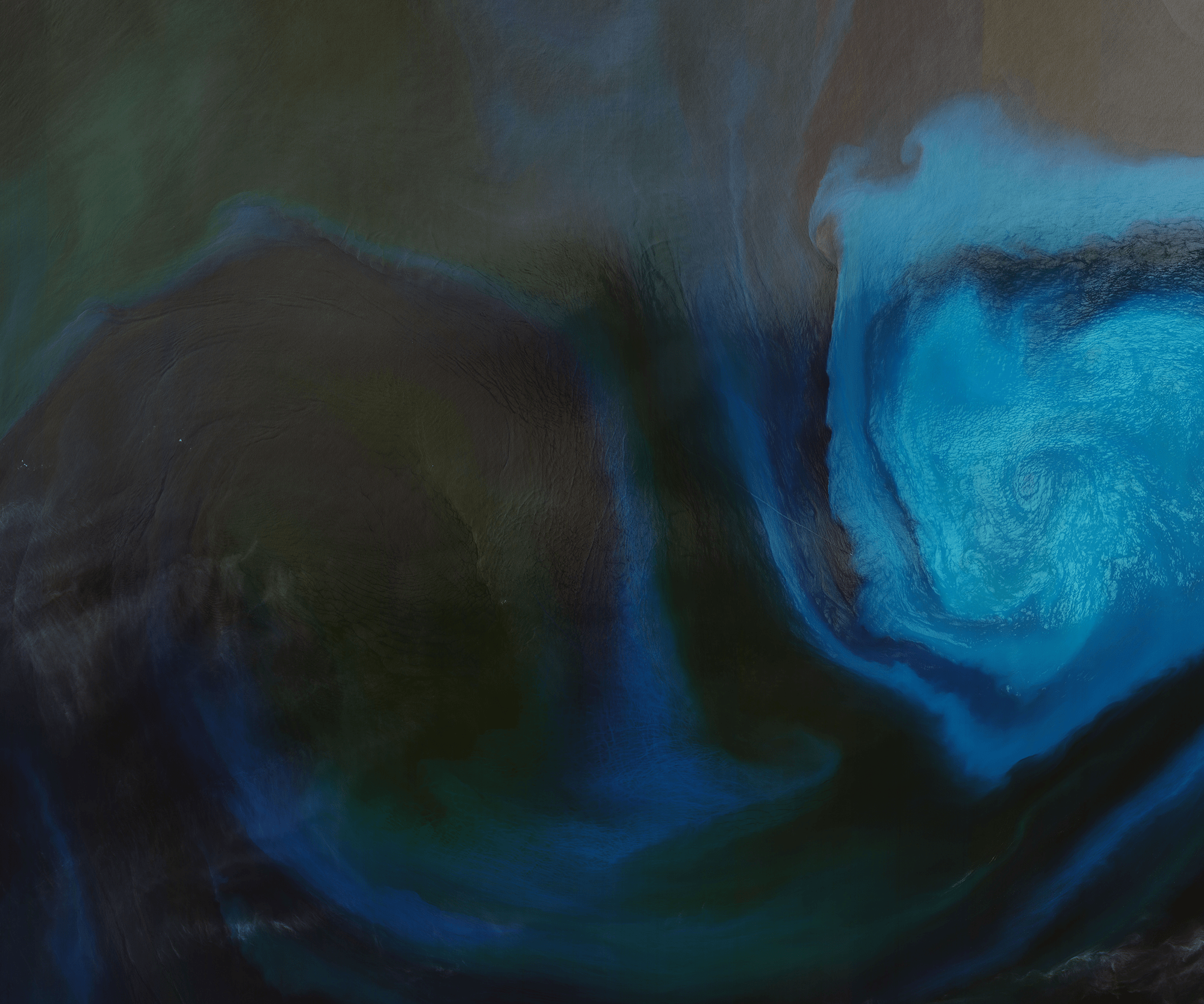

In April 2023, swirls of green and turquoise burst into vivid color in the Atlantic. Much of the color comes from a phytoplankton bloom. Although phytoplankton are individually microscopic, they form eddies a hundred kilometers across that are visible from space. In detailed images like the one above (available here in full resolution) these swirls have amazing turbulent details. Some of the brightest sections almost look like a field of sea ice! (Image credit: L. Dauphin; via NASA Earth Observatory)


Overcoming Turbulence
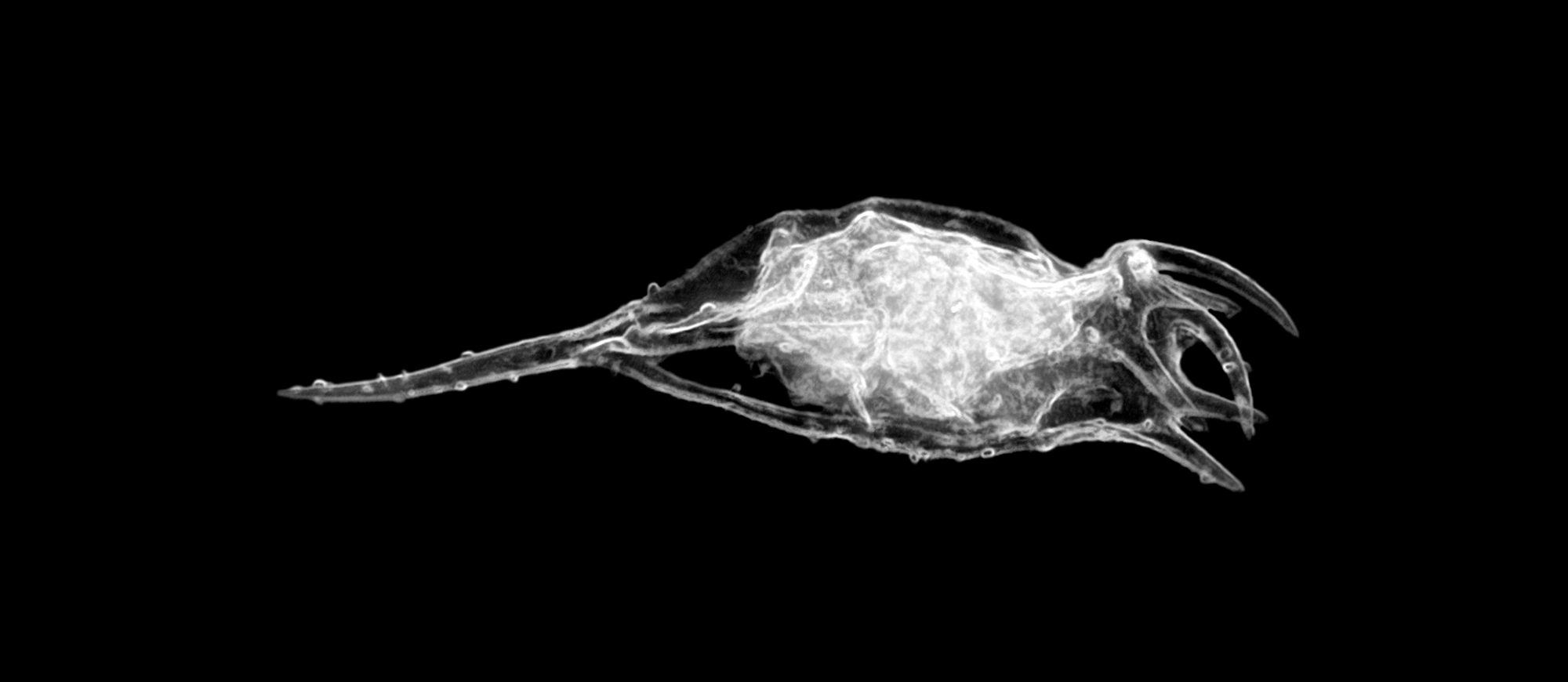
Despite their microscopic size, many plankton undertake a daily migration that covers tens of meters in depth. As they journey, they must contend with currents, turbulence, and other flows that could knock them off-course. And, increasingly, research shows that a plankton’s shape makes a big difference in these flows.
Spherical plankton tend to cluster in areas of flow moving opposite to their direction of travel. But more elongated plankton can resist — or even reverse — this tendency, helping them stay on track. In turbulence, elongated swimmers are also better at keeping their thrust oriented in the desired direction of travel. So both nature and engineers should favor elongated microswimmers when contending with turbulence and potential crossflows. (Image credit: Picturepest/Flickr; research credit: R. Bearon and W. Durham)

Hunting By Whisker
Seals and sea lions often hunt fish in waters too dark or turbid to rely on eyesight. Instead, they follow their whiskers, using the turbulence generated by a fish’s wake. The vortices shed by the fish cause the seal’s whiskers to vibrate, giving them sensory information. To better understand what a seal can derive from this, a recent experiment looked at what a thin whisker can pick up from an upstream cylinder.
As expected, the strength of the whisker’s vibration fell off the farther away the cylinder was. But the researchers found that, if they moved the cylinder quickly — like a fish trying to dart away — the vibration of the whisker was stronger. They also found that the whisker was sensitive to misalignment. If the cylinder was placed ahead and to the side of the whisker, the whisker would still vibrate but would do so around a different equilibrium position. That result implies that a seal can get information both about the fish’s speed and direction, simply from the twitch of its whiskers. (Image credit: seal – K. Luke, illustration – P. Gong et al.; research credit: P. Gong et al.; via APS Physics)

Illustration of a seal following a fish versus the experiment, a whisker following a cylinder’s wake. 
Banzai Pipeline From Above
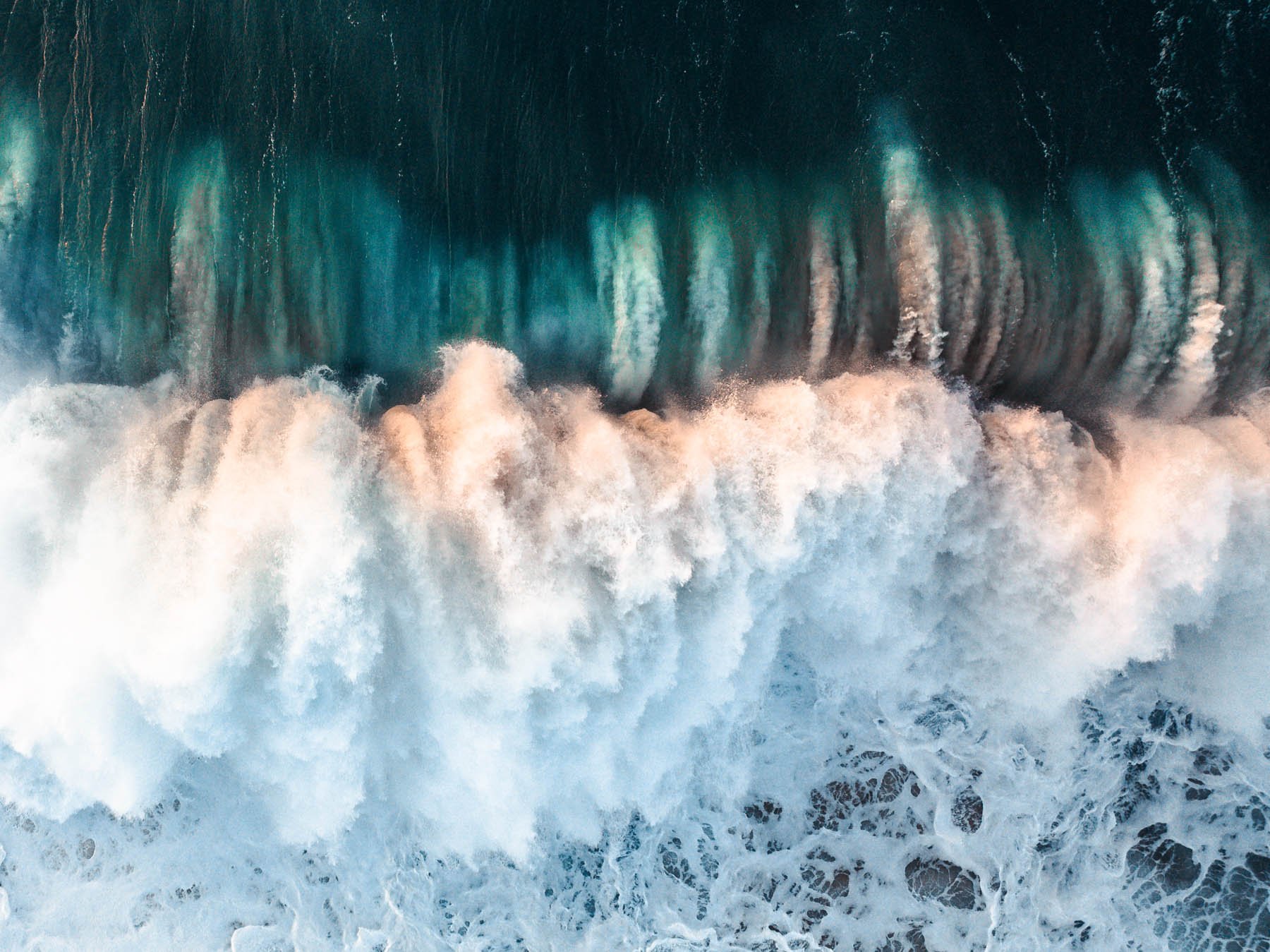


On the north shore of O’ahu, Hawaii, Banzai Pipeline is known for some of the most thrilling and deadly surfing in the world. The area’s barrel rolls are triggered when incoming waves break over the shallow reef. Photographer Kevin Krautgartner captures the waves from above, showcasing the incredible energy inherent in the ocean. The motion and texture of the water is mesmerizing. I feel like I could stare at these all day long! (Image credit: K. Krautgartner; via Colossal)

Ominous Mammatus
Mammatus clouds are fairly unusual and often look quite dramatic. Most clouds have flat bottoms, caused by the specific height and temperature at which their droplets condense. But mammatus clouds have bubble-like bottoms that are thought to form when large droplets of water or ice sink as they evaporate. Although they can occur in the turbulence caused by a thunderstorm, mammatus clouds themselves are not a storm cloud. They appear in non-stormy skies, too. The clouds are particularly striking when they’re lit from the side, as in the image above. (Image credit: J. Olson; via APOD)