Severe weather — like thunderstorms, tornadoes, and hurricanes — can push air upward into a higher layer of the atmosphere and trigger gravity waves. Aboard the International Space Station (ISS), the Atmospheric Waves Experiment (AWE) instrument captures these waves by looking for variations in the brightness of Earth’s airglow (above). Recently, when Hurricane Helene hit the southeastern United States, AWE caught a series of gravity waves some 55 miles up, pushed by the storm (below). It’s incredible to see these long-ranging ripples spreading far beyond the heart of the storm. (Video credits: NASA Goddard and Utah State University)
Tag: science

Beneath a River of Red
A glowing arch of red, pink, and white anchors this stunning composite astrophotograph. This is a STEVE (Strong Thermal Emission Velocity Enhancement) caused by a river of fast-moving ions high in the atmosphere. Above the STEVE’s glow, the skies are red; that’s due either to the STEVE or to the heat-related glow of a Stable Auroral Red (SAR) arc. Find even more beautiful astrophotography at the artist’s website and Instagram. (Image credit: L. Leroux-Géré; via APOD)
Fediverse Reactions
-

Inside the Squirting Cucumber
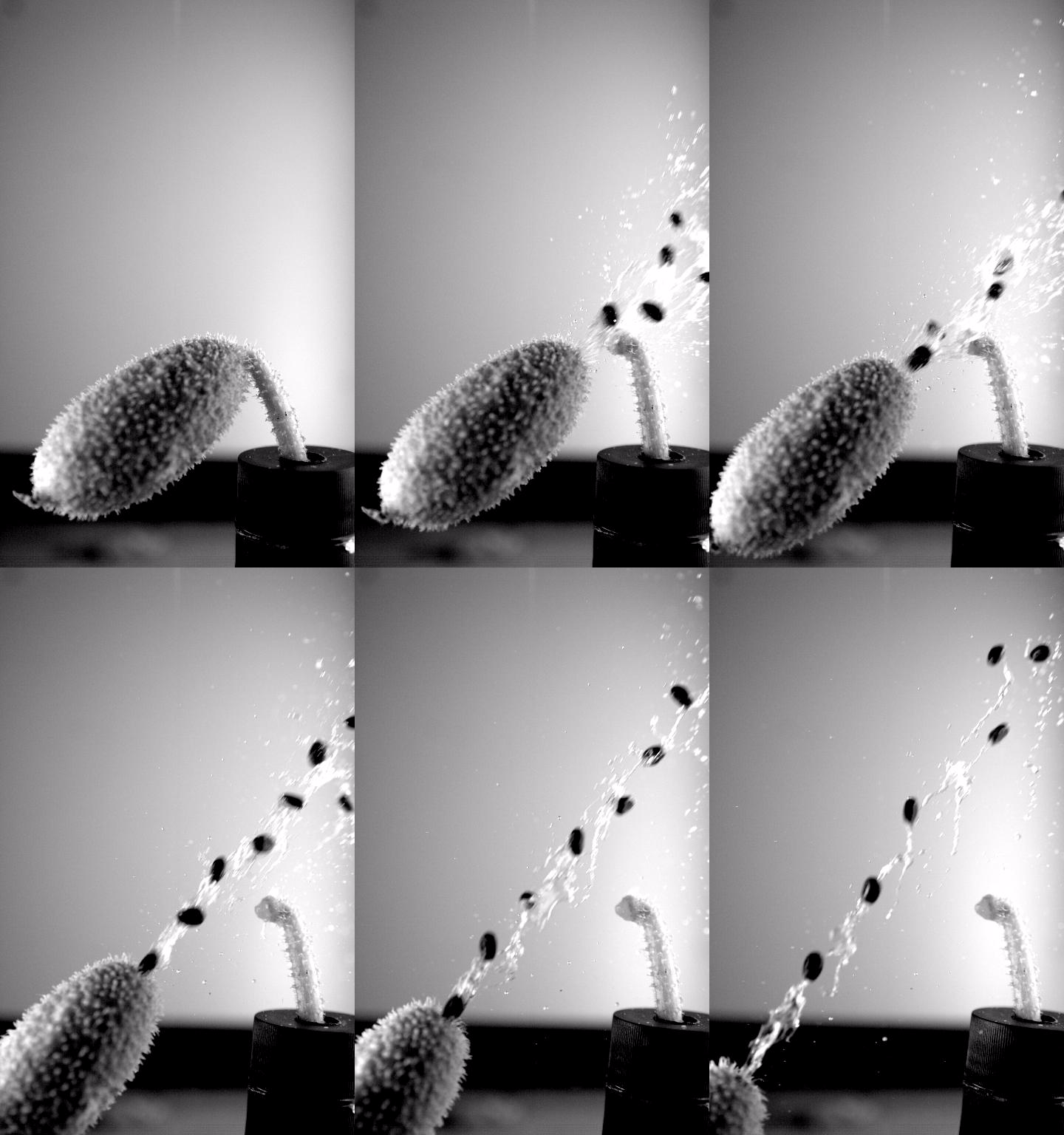
Though only 5 cm long, the squirting cucumber can spray its seeds up to 10 meters away. The little fruit does so through a clever combination of preparation and ballistic maneuvers. Ahead of launch, the plant actually moves water from the fruit into the stem; this reorients the cucumber so that its long axis sits close to 45 degrees. It also makes the stem thicker and stiffer.

This high-speed video shows the explosive release of the squirting cucumber’s seeds. When the burst happens, fruit spews out a jet of mucus that propels the seeds at up to 20 m/s. The initial seeds move the fastest — thanks to the fruit’s high-pressure reservoir — and fly the furthest. As the pressure drops, the jet slows and the fruit’s rotation sends the seeds higher, causing them to land closer to the original plant. With multiple fruits in different orientations, a single plant can spread its seeds in a fairly even ring around itself. (Research and image credit: F. Box et al.; via Gizmodo)
Fediverse Reactions
-

Glacial Tributaries
Just as rivers have tributaries that feed their flow, small glaciers can flow as tributaries into larger ones. This astronaut photo shows Siachen Glacier and four of its tributaries coming together and continuing to flow from the top to the bottom of the image. The dark parallel lines running through the glaciers are moraines, where rocks and debris are carried along by the ice. Those seen here are medial moraines left by the joining of tributaries. When glaciers retreat, moraines are often left behind, strewn with sediment that ranges from the fine powder of glacial flour all the way to enormous boulders. (Image credit: NASA; via NASA Earth Observatory)
Fediverse Reactions
-

A Seismic Warning for the Tongan Eruption
In mid-January 2022, the Hunga Tonga-Hunga Ha’apai (HTHH) volcano had one of the most massive eruptions ever recorded, destroying an island, generating a tsunami, and blanketing Tonga in ash. Volcanologists are accustomed to monitoring nearby seismic equipment for signs of an imminent eruption, but researchers found that the HTHH eruption generated a surface-level seismic wave picked up by detectors 750 kilometers away about 15 minutes before the eruption began. They propose that the seismic wave occurred when the oceanic crust beneath the caldera fractured. That fracture could have allowed seawater and magma to mix above the volcano’s subsurface magma chamber, creating the explosive trigger for the eruption. Their finding suggests that real-time monitoring for these distant signals could provide valuable early warning of future eruptions. (Image credit: NASA Earth Observatory; research credit: T. Horiuchi et al.; via Gizmodo and AGU News)
Fediverse Reactions
-

Wave Clouds in the Atacama
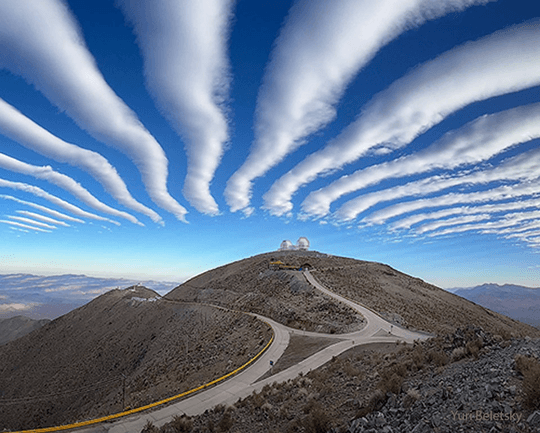
Striped clouds appear to converge over a mountaintop in this photo, but that’s an illusion. In reality, these clouds are parallel and periodic; it’s only the camera’s wide-angle lens that makes them appear to converge.
Wave clouds like these form when air gets pushed up and over topography, triggering an up-and-down oscillation (known as an internal wave) in the atmosphere. At the peak of the wave, cool moist air condenses water vapor into droplets that form clouds. As the air bobs back down and warms, the clouds evaporate, leaving behind a series of stripes. You can learn more about the physics behind these clouds here and here. (Image credit: Y. Beletsky; via APOD)
Fediverse Reactions
-

“Paradolia”


In “Paradolia,” filmmaker Susi Sie plays with pareidolia, our tendency to seek patterns in nebulous data — like faces on a slice of toast. Droplets of miscible and immiscible fluids collide, part, and mix in each sequence, providing plenty of fodder for an active imagination. For myself, my brain especially likes assigning cartoon expressions to well-spaced drops in the video. What do you see? (Video and image credit: S. Sie)

Inside a Big Cat’s Roar
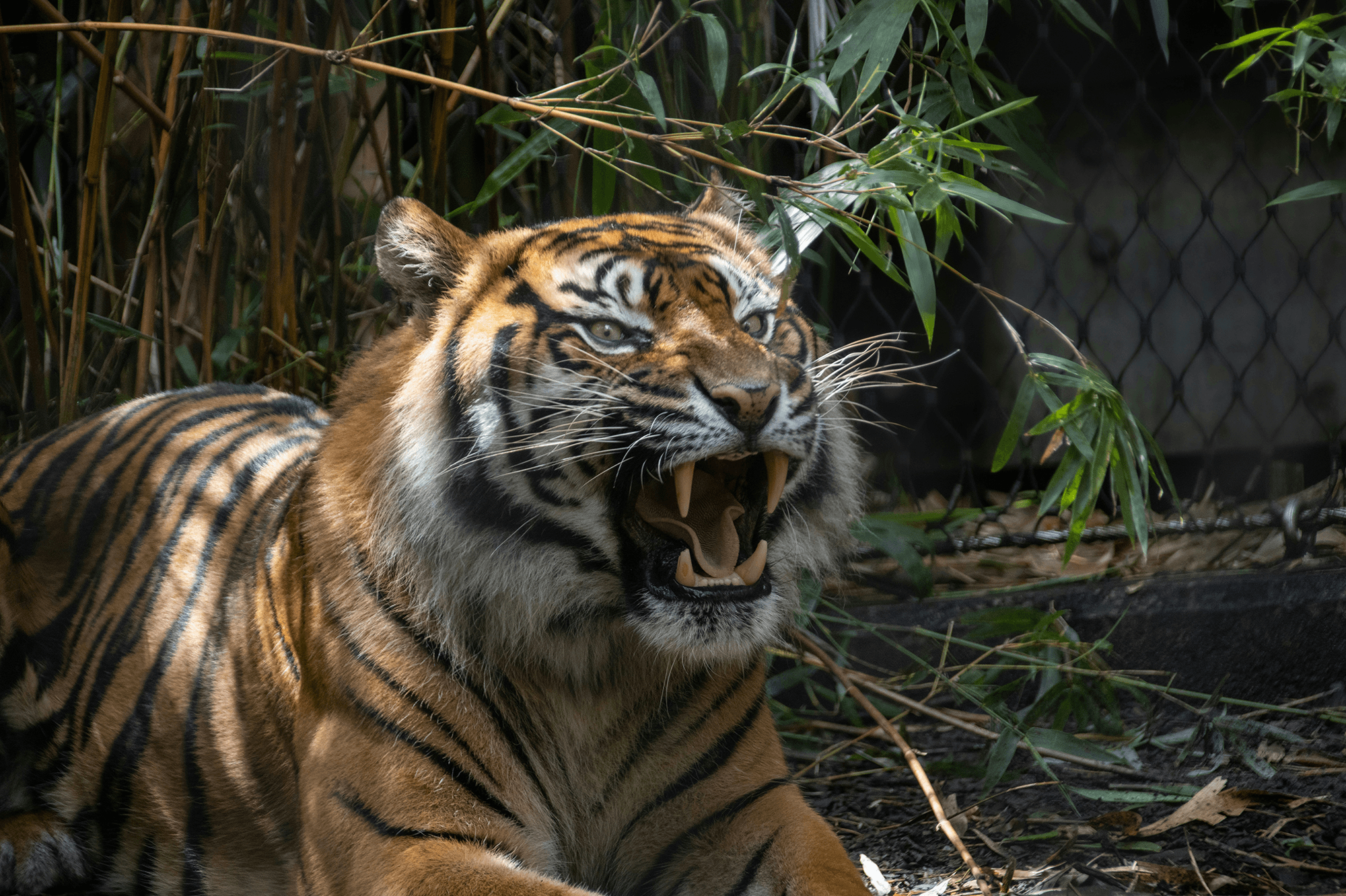
The roars of big cats — tigers, lions, jaguars, and leopards — carry long distances. In part, this reflects the animals’ size: large lungs exhale lots of air through a large voice-box, whose vibrations resonate in a large throat. But size alone does not make the roar. Below are examples of two big cat voice-boxes. On the left is the nonroaring snow leopard; on the right is the voice-box of a roaring jaguar. The red boxes labeled “VF” mark each cat’s vocal folds. Nonroaring cats have triangular folds, while roaring ones have thick square or rectangular vocal folds. These rectangular folds are more aerodynamically efficient, allowing them to produce a wider range of output levels. They’re also more resilient to the intense forces of a roar, thanks to the cushioning effect of fat deposits inside them. If interested, you can learn more over at Physics Today. (Image credit: tiger – T. Myburgh, voice box – E. Walsh and J. McGee; research credit: E. Walsh and J. McGee)

The vocal folds (VF) of nonroaring cats are triangular (left), whereas roaring cats have rectangular vocal folds (right). 
A Mini Jupiter
Astronaut Don Pettit posted this image of a Jupiter-like water globe he created on the International Space Station. In microgravity, surface tension reigns as the water’s supreme force, pulling the mixture of water and food coloring into a perfect sphere. It will be interesting to see a video version of this experiment, so that we can tell what tools Pettit used to swirl the droplet into the eddies we see. Is the full droplet rotating (as a planet would), or are we just seeing the remains of a wire passed through the drop? We’ll have to stay tuned to Pettit’s experiments to find out. (Image credit: NASA/D. Pettit; via space.com; submitted by J. Shoer)
Fediverse Reactions
-

A Magnetic Tsunami Warning
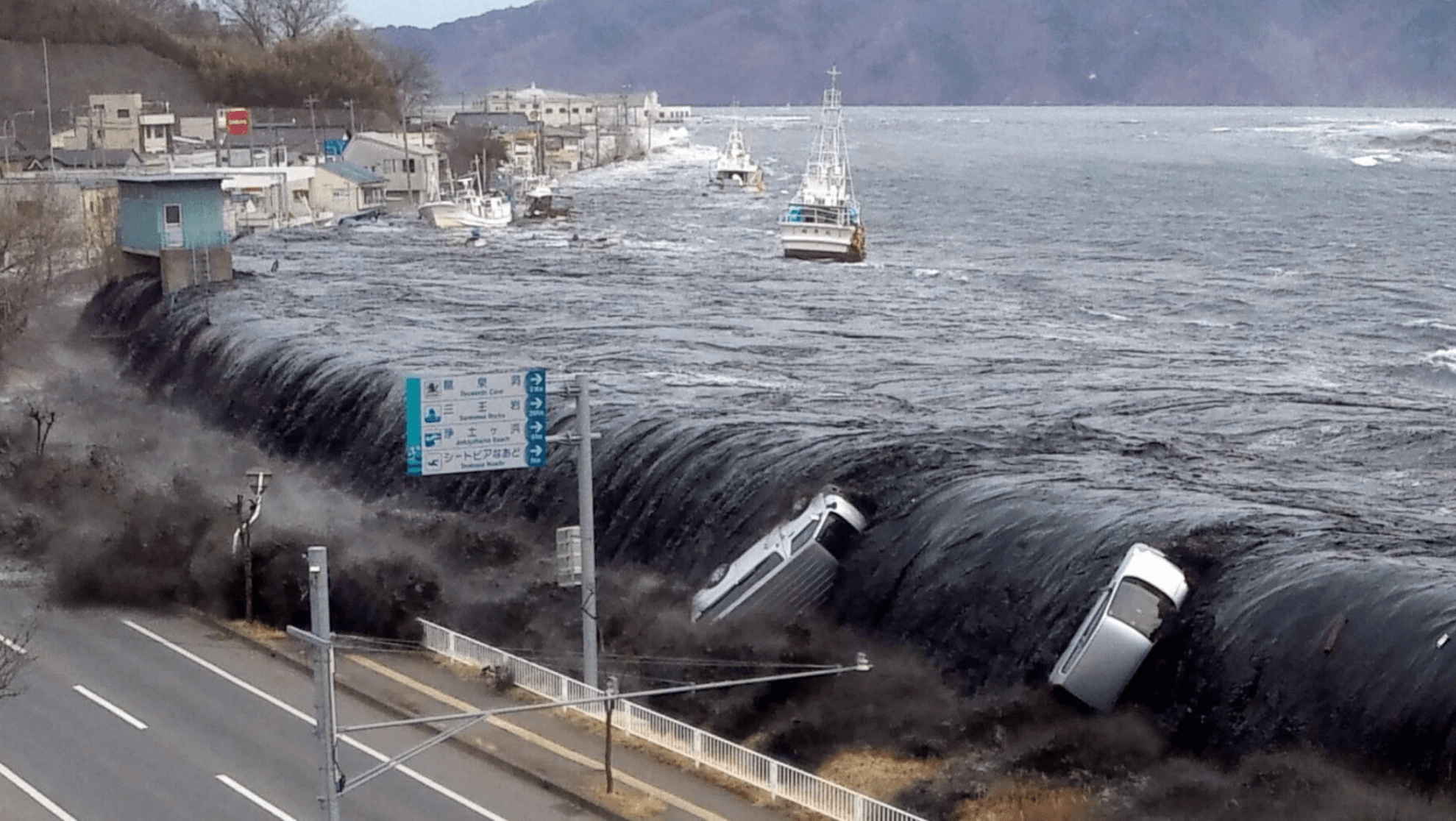
Tsunamis are devastating natural disasters that can strike with little to no warning for coastlines. Often the first sign of major tsunami is a drop in the sea level as water flows out to join the incoming wave. But researchers have now shown that magnetic fields can signal a coming wave, too. Because seawater is electrically conductive, its movement affects local magnetic fields, and a tsunami’s signal is large enough to be discernible. One study found that the magnetic field level changes are detectable a full minute before visible changes in the sea level. One minute may not sound like much, but in an evacuation where seconds count, it could make a big difference in saving lives. (Image credit: Jiji Press/AFP/Getty Images; research credit: Z. Lin et al.; via Gizmodo)




![[!38C3] ~/phranck :antifa:](https://fyfluiddynamics.com/wp-content/uploads/activitypub/actors/25626/bb2e03be7f44a4ae4c68f74211c886ba.webp)