Tag: science

  • Featured Video Play Icon

    Breaking Down a Water-Powered Timer

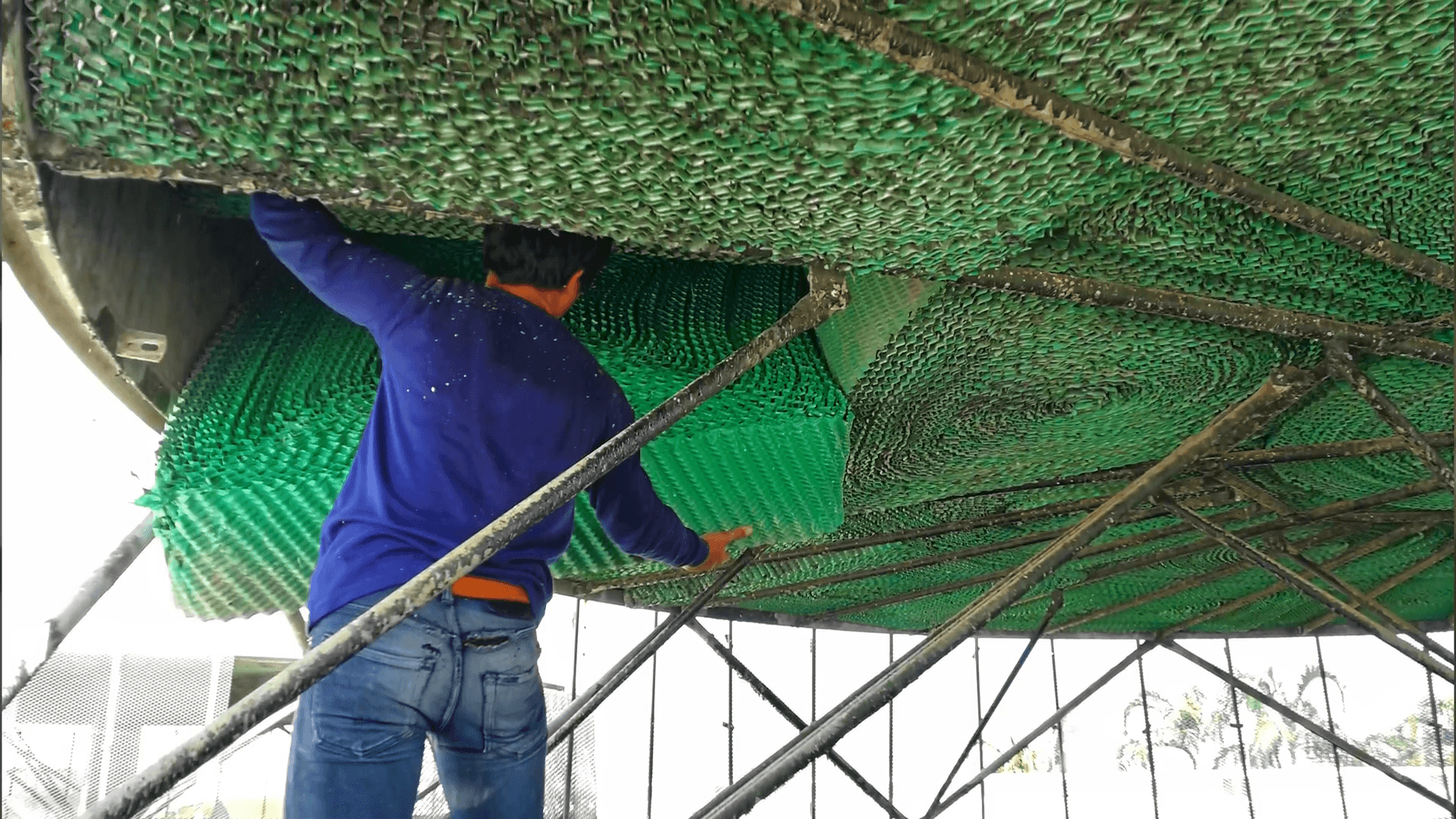
    In his latest “cutaway” video, Steve Mould takes a look at how you can nest siphons to create a system that periodically flushes itself. This kind of water-powered timer is useful in, say, public restrooms with a urinal system that collectively flushes every once in a while. In the video, Mould talks through each step of the system and some of the challenges he ran into when trying to create a pseudo-2D version of it. As is often the case with these videos, it’s a strangely satisfying process to watch. (Video and image credit: S. Mould)

  • Shaped Splashes

    Shaped Splashes

    When a raindrop hits a leaf, it spreads out into a rimmed sheet that breaks up into droplets. These tiny drops can carry dust, spores, and even pathogens as they fly off. But many leaves aren’t smooth-edged; instead they have serrations or teeth. How does that affect a splash? That’s the question at the heart of today’s study.

    A water drop hits a star-shaped pillar and breaks up.
    A water drop hits a star-shaped pillar and breaks up.

    To simplify from a leaf’s shape, the team studied water dropping onto star-shaped pillars. As seen above and below, the pillar’s edge shaped the splash sheet, with the sheet extending further in the edge’s troughs. This asymmetry extends into the rim also, concentrating the liquid — and the subsequent spray of droplets — along lines that extend from the edge’s troughs and peaks.

    A viscous water-glycerol drop hits a star-shaped pillar, spreads, and breaks into droplets.
    A viscous water-glycerol drop hits a star-shaped pillar, spreads, and breaks into droplets.

    The team found that, in addition to sending drops along a preferred direction, the shaped edge made the droplets larger and faster than a smooth edge did. (Image and research credit: T. Bauer and T. Gilet)

  • A Triangular Prominence

    A Triangular Prominence

    Our Sun is a maelstrom of light and heat, a constant battlefield for plasma and magnetic fields. This recent prominence, captured by Andrea Vanoni and others, bore a striking triangular shape. This fiery outburst — larger than our entire planet — formed and broke up over the course of a single day. The wavy solar surface features in the lower part of the image are solar fibrils, magnetically confined tubes of hot plasma. What changing magnetic fields might allow them to burst forth in a glorious candle of their own? (Image credit: A. Vanoni; via APOD)

  • Featured Video Play Icon

    “Starlit”

    In “Starlit,” filmmaker Roman de Giuli leverages paint, ink, water, and oil to create astronomical views. Colorful droplets spin past like neon exoplanets. Shards of glitter form comets. Satellite droplets become moons about their larger sibling. (Video and image credit: R. de Giuli)

  • Catching Krill With Bubble Nets

    Catching Krill With Bubble Nets

    On their own and in groups, some humpback whales enclose their prey in bubbly columns before feeding. The whales build these bubble nets intentionally, swimming in a ring at a constant speed while producing bursts of air from their blowhole. After observing hundreds of bubble nets created by dozens of whales, researchers concluded that whales actively tune the nets, using more rings, closer bubble spacing, or deeper extents to suit their needs. Once they’ve completed the net, whales lunge up through the center, mouth open, collecting their food.

    In their study, the team found that building bubble nets is no more energy intensive for whales than typical lunge-feeding. However, the prey concentration in a bubble net means that hunting there nabs more food per lunge. The authors argue that the way humpback whales build and use bubble nets qualifies them as tool users on par with many fellow mammals, as well as some birds, fish, and insects. (Image credit: C. Le Duc; research credit: A. Szabo et al.; via Gizmodo)

  • Featured Video Play Icon

    The Art of French Drains

    Civil engineers face a constant challenge trying to protect their structures from water — both above and below the ground. Subsurface water can build up enough pressure to lift and damage structures, so engineers use subsurface infrastructure — like French drains — to control the water underground. Despite the name (and my title pun), French drains have nothing to do with France. Instead, they are named for Henry French, an author who described their construction and use in the 19th century. These drains use a combination of rocks, mechanical filters, and perforated pipeline to guide subsurface water and drain it away from foundations. (Video and image credit: Practical Engineering)

  • Synchronizing Cilia

    Synchronizing Cilia

    Just like human swimmers, microswimmers have to coordinate their motion to swim. But unlike humans, swimmers like the freshwater alga Chlamydomonas reinhardtii doesn’t have a brain to help it synchronize its cilia. To investigate how these microswimmers manage their stroke, researchers built a biorobot with mechanically linked segments that mimic the alga’s swimming once a motor sets the robot vibrating.

    When the robot's base is allowed to rotate, the cilia synchronize in the freestyle-like R-mode.
    When the robot’s base is allowed to rotate, the cilia synchronize in the freestyle-like R-mode.
    When allowed to move forward and back, the biorobot's cilia synchronize in the X-mode, which resembles the breaststroke.
    When allowed to move along an axis, the biorobot’s cilia synchronize in the X-mode, which resembles the breaststroke.

    The researchers found two strokes that mirrored the real-life alga. In one, allowing the robot’s base to rotate produced a freestyle-like stroke they called R-mode. The other came from allowing the robot’s base to move forward and backward, which created a breaststroke-like X-mode. In the wild, only the X-mode provides helpful motion, but, oddly enough, the researchers found this mode was the most energy intensive. (Image credit: top – J. Larson, others – Y. Xia et al.; research credit: Y. Xia et al.; via APS Physics)

  • Featured Video Play Icon

    Engineering the City of Venice

    In 452, Roman refugees established what became the city of Venice across a series of low-lying marshy islands in a lagoon. With no solid ground available, Venice has needed clever engineering for its infrastructure, as discussed in this Primal Space video. That started with building the first piles — which still survive to this day — by driving long timbers down into harder clay levels. Because these wooden poles sit entirely below the water and are capped with stone foundations, they are preserved against rotting.

    As Venice grew over the next thousand years, its citizens had other infrastructure problems to solve. When fresh water needs outstripped what could be delivered by boat from the mainland, Venetians redesigned the substructure of each square to capture, filter, and store rainwater. And to wash away waste, they designed tunnels that use gravity and the daily tides to flush out sewage. (Video and image credit: Primal Space)

  • Beneath the Surf

    Beneath the Surf

    A surfer duck-dives beneath a passing wave in this image from photographer John Barton. I always love seeing big waves from this underwater perspective. The turbulent surf looks like storm clouds, and sometimes you see features that are invisible from the surface. Barton’s shot captures the dichotomy of serenity and chaos in the breaking surf. (Image credit: J. Barton/OPOTY; via Colossal)

  • An Exoplanet With Earth-Like Temperatures

    An Exoplanet With Earth-Like Temperatures

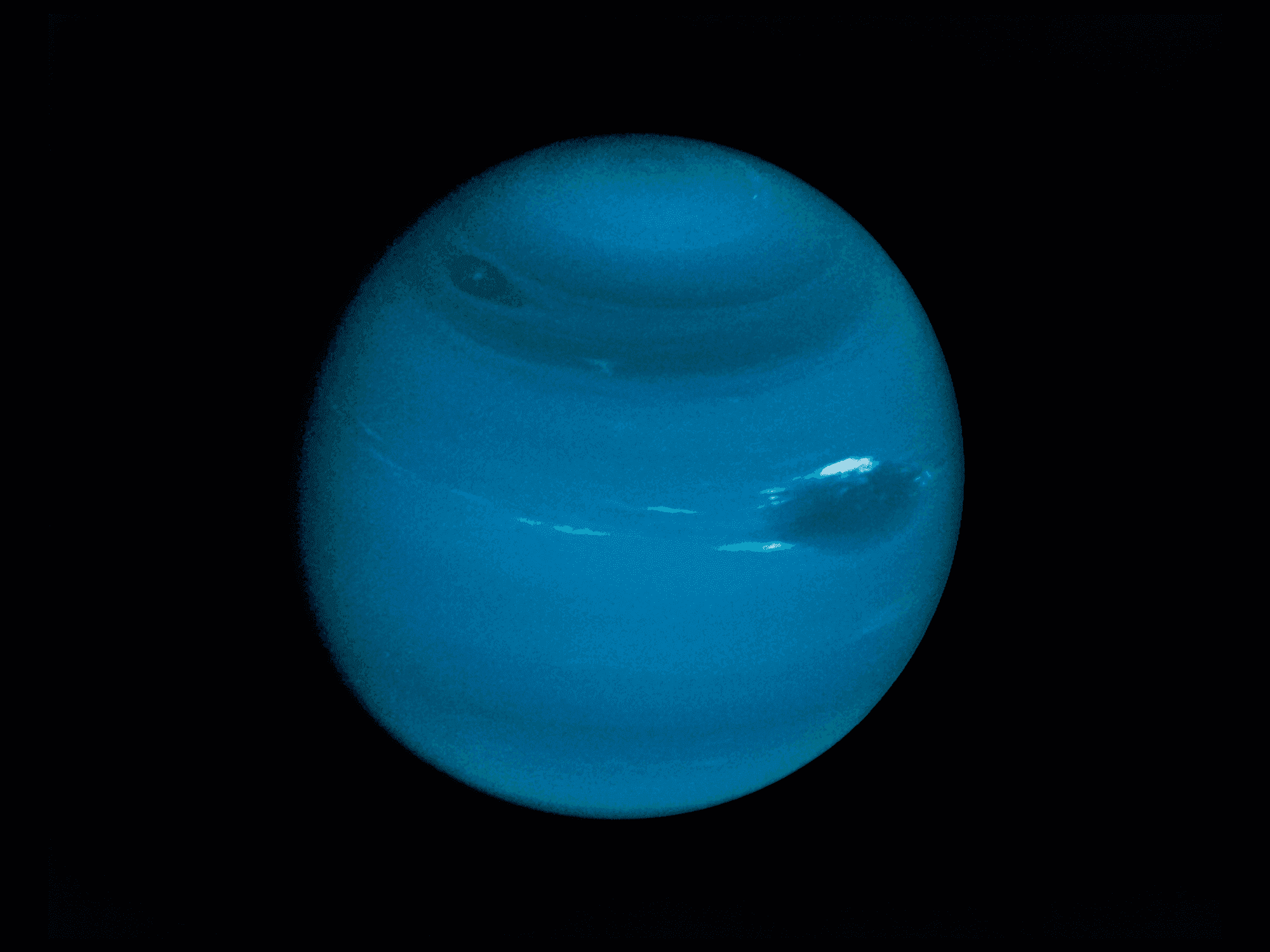
    Although researchers have identified thousands of exoplanets in the last 25 years, most of them are far larger and far hotter than Earth. But a team recently announced the discovery of a temperate neighbor, Gliese 12 b, some 40 light years away. Gliese 12 b is a rocky Venus-sized planet orbiting the cool red dwarf star Gliese 12. Based on the star’s energy output and the planet’s characteristics, the team estimate its equilibrium temperature — about how hot it would be without an atmosphere — as 42 degrees Celsius. (For comparison, Earth’s average surface temperature is 15 degrees Celsius and rising.) The next goal will be to determine whether Gliese 12 b has an atmosphere and, if so, what it’s made up of. (Image credit: NASA/JPL-Caltech/R. Hurt; research credit: S. Dholakia et al.; via Gizmodo)