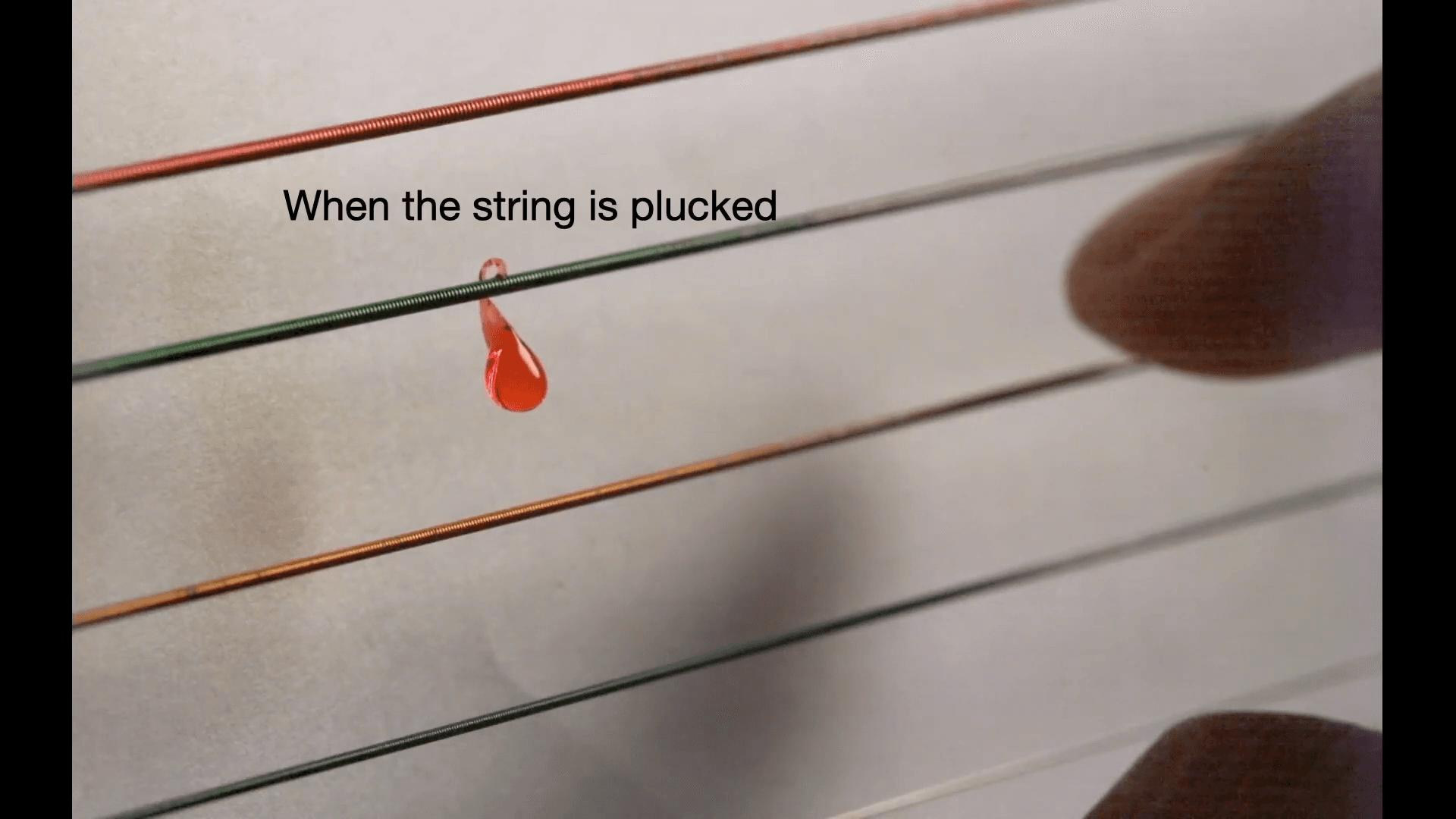
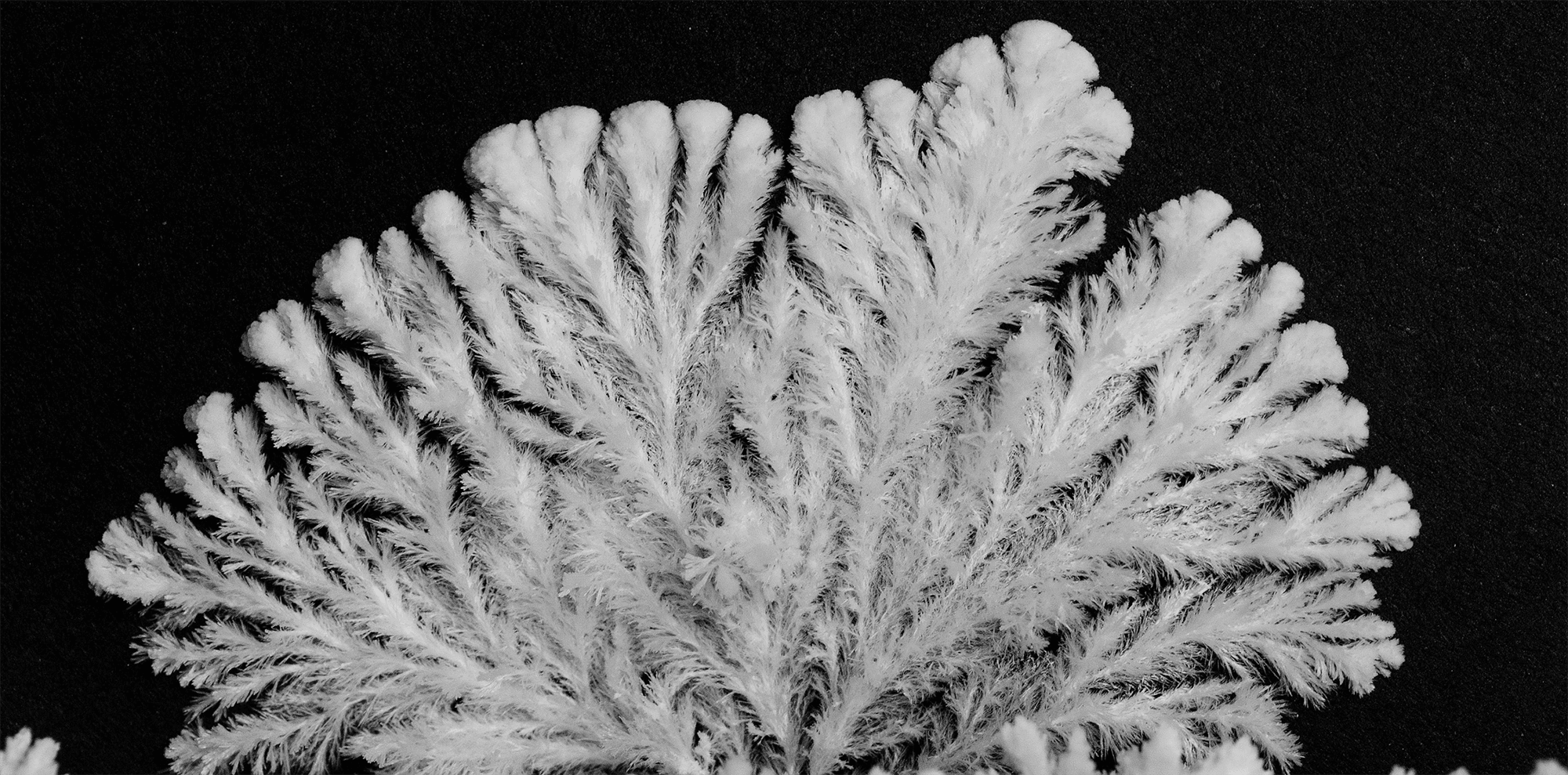
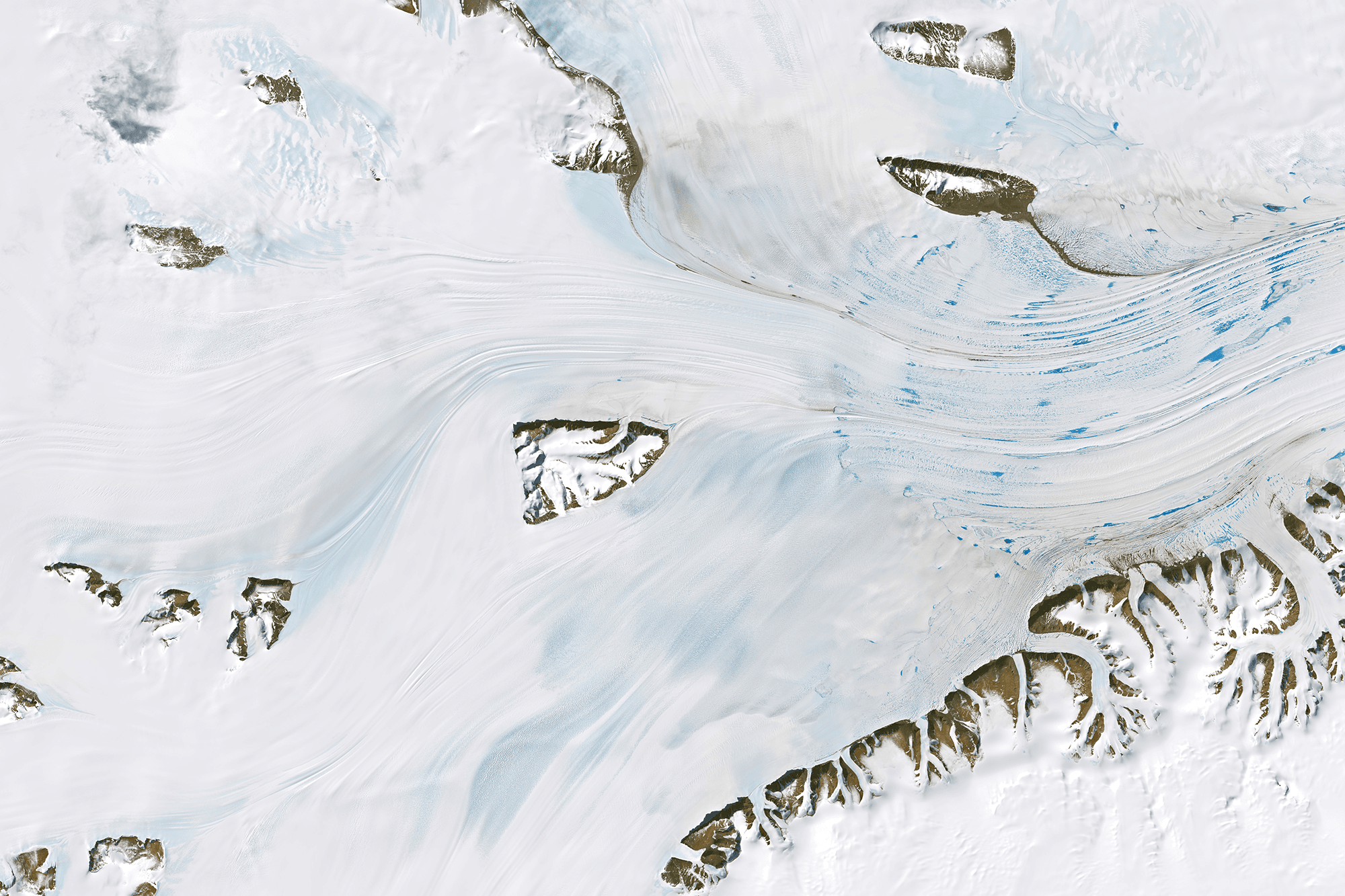
Trees, blood vessels, and rivers all follow branching patterns that make their pieces look very similar to their whole. We call this repeating, self-similar shape a fractal, and this Be Smart video explores why these branching patterns are so common, both in living and non-living systems. For trees, packing a large, leafy surface area onto the smallest amount of wood makes sense; the tree needs plenty of solar energy (and water and carbon dioxide) to photosynthesize, and it has to be efficient about how much it grows to get that energy. Similarly, our lungs and blood vessels need to pack a lot of surface area into a small space to support the diffusion that lets us move oxygen and waste through our bodies. Non-living systems, like the branches of viscous fingers or river deltas or the branching of cracks and lightning, rely on different physics but wind up with the same patterns because they, too, have to balance forces that scale with surface area and ones that scale with volume. (Video and image credit: Be Smart)

Tag: science

“Kirigami Sun”
Kirigami is a variation of origami in which paper can be cut as well as folded. Here, researchers look at flow through a cut kirigami sheet and how that flow changes with the cuts’ length. In the top central image, white lines mark the paper boundaries. As the cut gaps get larger, flow through them transitions from a continuous jet to swirling vortex shedding. Along the bottom, we see similar patterns emerge in the wake of uniformly-cut sheets, too. On the right, the flow comes through in jets; moving leftward, it transitions to an unsteady vortex shedding flow. (Image credit: D. Caraeni and Y. Modarres-Sadeghi)

“My Own Galaxy”
Fungal spores sketch out minute air currents in this shortlisted photograph by Avilash Ghosh. The moth atop a mushroom appears to admire the celestial view. In the largely still air near the forest floor, mushrooms use evaporation and buoyancy to generate air flows capable of lifting their spores high enough to catch a stray breeze. (Image credit: A. Ghosh/CUPOTY; via Colossal)

Behind the San Antonio River Walk
How do you manage necessary updates to an iconic landmark like the San Antonio River Walk without disrupting its function? That’s the concept behind this Practical Engineering video, which shows how the city removed and replaced two control gates for the River Walk without ever changing the water level. It’s a neat view both into the engineering of civil water infrastructure and into the practical considerations of how construction on these systems works. (Video credit: Practical Engineering)

An Exoplanet’s Supersonic Jet Stream
WASP-127b is a hot Jupiter-type exoplanet located about 520 light-years from us. A new study of the planet’s atmosphere reveals a supersonic jet stream whipping around its equatorial region at 9 kilometers per second. For comparison, our Solar System’s fastest winds, on Neptune, are a comparatively paltry 0.5 kilometers per second. The team estimates the speed of sound — which depends on temperature and the atmosphere’s chemical make-up — on WASP-127b as about 3 kilometers per second, far below the measured wind speed. The planet’s poles, in contrast, are much colder and have far lower wind speeds.
Of course, these measurements can only give us a snapshot of what the exoplanet’s atmosphere is like; we don’t have altitude data, for example, to see how the wind speed varies with height. Nevertheless, it shows that exoplanets beyond our planetary system can have some unimaginably wild weather. (Video and image credit: ESO/L. Calçada; research credit: L. Nortmann et al.; via Gizmodo)

Galloping Bubbles
A buoyant bubble rises until it’s stopped by a wall. What happens, this video asks, if that wall vibrates up and down? If the vibration is large enough, the bubble loses its symmetry and starts to gallop along the wall. Using numerical simulations, the team determined the flow around the bubble. They also demonstrate several possible applications for this behavior: sorting bubbles by size, traversing mazes, and cleaning a surface. (Video and image credit: J. Guan et al.)

“Lively”
In “Lively,” filmmaker Christopher Dormoy zooms in on ice. He shows ice forming and melting, capturing bubbles and their trails, as well as the subtle flows that go on in and around the ice. By introducing blue dye, he highlights some of the internal flows we would otherwise miss. (Video and image credit: C. Dormoy)

Explosively Jetting
Dropping water from a plastic pipette onto a pool of oil electrically charges the drop. Then, as it evaporates, it shrinks and concentrates the charges closer and closer. Eventually, the strength of the electrical charge overcomes surface tension, making the drop form a cone-shaped edge that jets out tiny, highly-charged microdrops. Afterward, the drop returns to its spherical shape… until shrinkage builds up the charge density again. This microjetting behavior can carry on for hours! (Video and image credit: M. Lin et al.; research preprint: M. Lin et al.)