Turbulent flows are ubiquitous, but they’re also mindbogglingly complex: ever-changing in both time and space across length scales both large and small. To try to unravel this complexity, scientists use simplified model problems. One such simplification is Kolmogorov flow: an imaginary flow where the fluid is forced back and forth sinusoidally. This large-scale forcing puts energy into the flow that cascades down to smaller length scales through the turbulent energy cascade. Here, researchers depict a numerical simulation of a turbulent Kolmogorov flow. The colors represent the flow’s vorticity field. Notice how your eye can pick out both tiny eddies and larger clusters in the flow; those patterns reflect the multi-scale nature of turbulence. (Image credit: C. Amores and M. Graham)
Tag: numerical simulation

Galloping Bubbles


A buoyant bubble rises until it’s stopped by a wall. What happens, this video asks, if that wall vibrates up and down? If the vibration is large enough, the bubble loses its symmetry and starts to gallop along the wall. Using numerical simulations, the team determined the flow around the bubble. They also demonstrate several possible applications for this behavior: sorting bubbles by size, traversing mazes, and cleaning a surface. (Video and image credit: J. Guan et al.)
Fediverse Reactions
-
How CO2 Gets Into the Ocean


Our oceans absorb large amounts of atmospheric carbon dioxide. Liquid water is quite good at dissolving carbon dioxide gas, which is why we have seltzer, beer, sodas, and other carbonated drinks. The larger the surface area between the atmosphere and the ocean, the more quickly carbon dioxide gets dissolved. So breaking waves — which trap lots of bubbles — are a major factor in this carbon exchange.
This video shows off numerical simulations exploring how breaking waves and bubbly turbulence affect carbon getting into the ocean. The visualizations are gorgeous, and you can follow the problem from the large-scale (breaking waves) all the way down to the smallest scales (bubbles coalescing). (Video and image credit: S. Pirozzoli et al.)
Fediverse Reactions
-

Why Icy Giants Have Strange Magnetic Fields
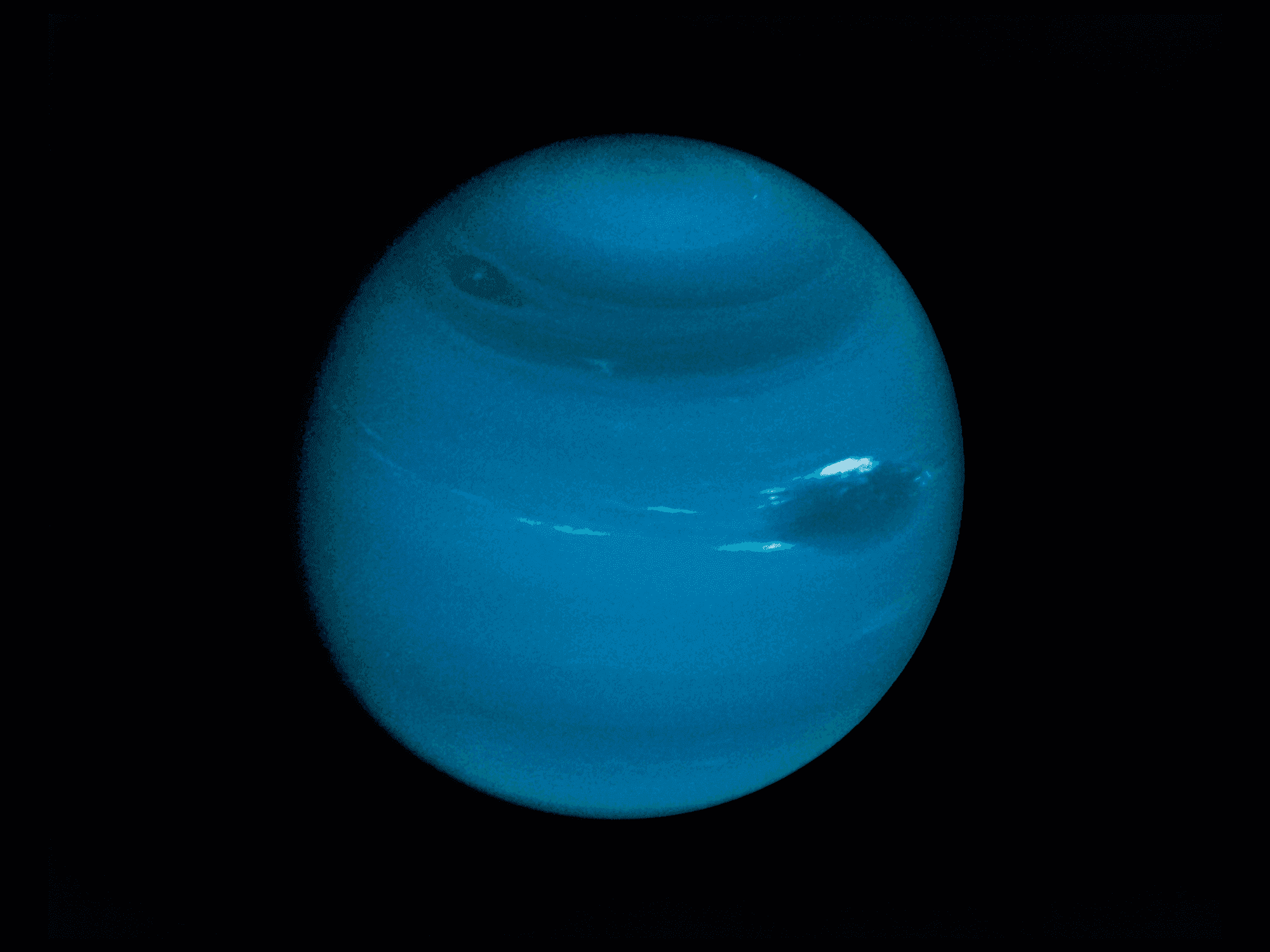
When Voyager 2 visited Uranus and Neptune, scientists were puzzled by the icy giants’ disorderly magnetic fields. Contrary to expectations, neither planet had a well-defined north and south magnetic pole, indicating that the planets’ thick, icy interiors must not convect the way Earth’s mantle does. Years later, other researchers suggested that the icy giants’ magnetic fields could come from a single thin, convecting layer in the planet, but how that would look remained unclear. Now a scientist thinks he has an answer.
When simulating a mixture of water, methane, and ammonia under icy giant temperature and pressure conditions, he saw the chemicals split themselves into two layers — a water-hydrogen mix capable of convection and a hydrocarbon-rich, stagnant lower layer. Such phase separation, he argues, matches both the icy giants’ gravitational fields and their odd magnetic fields. To test whether the model holds up, we’ll need another spacecraft — one equipped with a Doppler imager — to visit Uranus and/or Neptune to measure the predicted layers firsthand. (Image credit: NASA; research credit: B. Militzer; via Physics World)
Fediverse Reactions
-

Holding Steady
Before a mammalian cell divides, the spindle — a protein structure — divides the cell’s genetic material in two. As it does, the cytoplasm inside the cell forms a toroidal flow (below, left). Researchers wondered how the spindle manages to stay in place with this flow; the spindle sits just where the flow diverges, a spot that seems ripe for unstable shifts in position. But, contrary to expectations, their analysis showed that — although a smaller spindle would be unstable in that spot — the protein spindle is large enough that its size distorts the cell’s flow and creates a pressure that moves it back into place if it shifts. (Image credit: top – ColiN00B, illustration – W. Liao and E. Lauga; research credit: W. Liao and E. Lauga; via APS Physics)

Left: illustration of the toroidal flow near the spindle (purple) in a cell. Right: schematic of flow near the spindle’s fixed point. Fediverse Reactions
-

Underground Convection Thaws Permafrost Faster
In recent years, Arctic permafrost has thawed at a surprisingly fast pace. Much of that is, of course, due to the rapid warming caused by climate change. But some of that phenomenon lives underground, where water’s unusual properties cause convection in gaps between rocks, sediment, and soil.
Water is densest not as ice but as water. This is why ice cubes float in your glass. Water’s densest form is actually a liquid at 4 degrees Celsius. For water-logged Arctic soils, this means that the densest layer is not at the frozen depth but at a higher, shallower depth. This places a dense liquid-infused layer over a lighter one, a recipe for unstable convection.

Illustration of underground convection and permafrost thaw. On the left: temperature and density of the water in Arctic soil varies with depth. The temperature gets colder the deeper you go, but because water is densest at 4 degrees Celsius, the density is greatest at a shallower depth than the freezing interface. As a result of this unstable configuration (dense water over less dense water), convection can occur (right). In a recent numerical simulation, researchers found that this underground convection caused permafrost to thaw much more quickly than it would due to heat conduction alone. In fact, the effects appeared in as little as one month, so in a single summer, this convection could have a big effect on the thaw depth. (Image credit: top – Florence D., figure – M. Magnani et al.; research credit: M. Magnani et al.)

Resolution Effects on Ocean Circulation
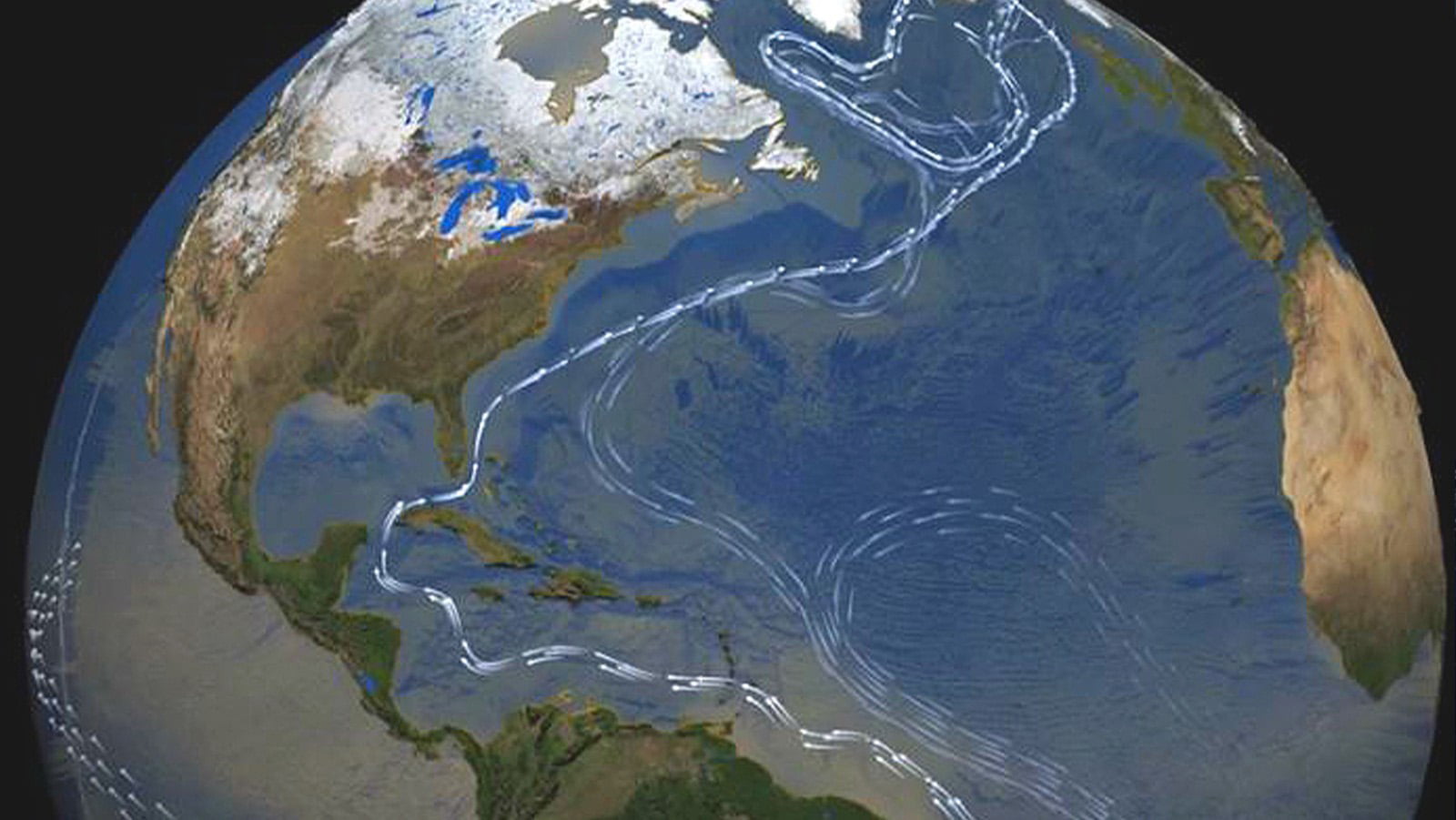
The Gulf Stream current carries warm, salty water from the Gulf of Mexico northeastward. In the North Atlantic, this water cools and sinks and drifts southwestward, emerging centuries later in the Southern Ocean. Known as the Atlantic Meridional Overturning Circulation (AMOC), this circulation is critical, among other things, to Europe’s temperate climate. Since 1995, scientists have been warning that human-driven climate change is weakening the AMOC and may cause it to shut down entirely — which would have catastrophic consequences for our society.

Comparison of ocean current speeds in the low-resolution (left) and high-resolution (right) simulations. A recent study re-examined the AMOC using both low- and high-resolution numerical simulations, combined with direct observations. Both simulations covered 1950 – 2100 and found the AMOC’s strength has declined since 1950. But the high-resolution simulation found significant regional variations in the AMOC’s behavior. Some regions saw localized strengthening, while other areas showed abrupt collapse. These sensitive shifts underscore the importance of driving toward higher resolutions in our next-generation climate models, if we want to better understand — and perhaps predict — what lies ahead as our climate changes. (Image credit: illustration – Atlantic Oceanographic and Meteorological Laboratory, simulations – R. Gou et al.; research credit: R. Gou et al.; via APS Physics)

Venus Flower Basket Sponges
Venus flower basket sponges have an elaborate, vase-like skeleton pocked with holes that allow water to pass through the organism. A recent numerical study looked at how the sponge’s shape deflects incoming (horizontal) ocean currents into a vertical flow the sponge can use to filter out food.
The sponges’ structure is porous and lined with helical structures. In their simulation, researchers reproduced a version of this structure (shown below) that used none of the real sponge’s active pumping mechanisms. The digital sponge was, instead, purely passive. Nevertheless, the simulation showed that, by their skeletal structure alone, sponges could redirect a significant fraction of incoming flow toward its filtering surfaces. Interestingly, the highest deflection fraction occurred at relatively low flow speeds, showing that the sponges are set up so that their structure is especially helpful for scavenging nutrients from nearly-still waters.
In the real world, these sponges use a combination of passive filtering and active pumping to capture their food, but this study shows that the sponge’s clever structure helps it save energy, especially in tough flow conditions. (Image credit: sponges – NOAA, simulation – G. Falcucci et al.; research credit: G. Falcucci et al.; via APS Physics)

A detail from a numerical simulation shows streamlines around and inside a model sponge. 
Slipping Along Enceladus
Home to a sub-surface ocean, Saturn‘s moon Enceladus is a fascinating candidate for life in our solar system. As it orbits Saturn, plumes periodically shoot out long surface features known as tiger stripes that sit near the icy moon’s southern pole. A recent study, based on numerical simulation, suggests a geophysical mechanism that could account for the plumes.
The team suggests that, like the San Andreas Fault, the tiger stripes are a fault subject to strike-slip motion. In this type of fault, the ice on either side meets along a vertical face and the two sides will slide past one another in opposite directions. As Enceladus orbits, its proximity to Saturn causes tidal compression across the fault that modulates how much slip motion occurs. In their model, the authors found that strike-slip motion would intermittently open gaps in the fault that would allow water from the subsurface ocean to create plumes at intervals consistent with those observed. (Image credit: top – NASA/JPL-Caltech/Space Science Institute, illustration – A. Berne et al.; research credit: A. Berne et al.; via Gizmodo)

Illustration of the strike-slip mechanism over the course of Enceladus’s tides. The two sides of the “tiger stripe” fault move in opposite directions. How much they move depends on the amount of tidal compression caused by Enceladus’s orbit around Saturn. At times, motion along the fault pulls apart narrow sections of the ice, allowing a plume to spray out. 
Saving Screens with Shear-Thinning Fluids
These days glass screens travel with us everywhere, and they can take some big hits on the way. Manufacturers have made tougher glass, but they continue to look for ways to protect our screens. Recently, a study suggested that non-Newtonian fluids are well-suited to the task.
The team explored the physics of sandwiching a layer of fluid between a glass top layer and an LCD screen bottom layer, mimicking structures found in electronic devices. Through simulation, they searched for the fluid characteristics that would best minimize the forces felt by the solid layers during an impact. They found that shear-thinning fluids — fluids that, like paint or shampoo, get runnier when they’re deformed — provided the best protection. Having the impact energy go into reducing the local viscosity of the fluid stretches the length of time the impact affects the glass, which lowers the bending forces on it and helps avoid breakage. (Image credit: G. Rosenke; research credit: J. Richards et al.; via Physics World)