Tag: microfluidics

  • Swept Along

    Swept Along

    When a car drives over a leaf-strewn autumn road, it pulls leaves up with its passage. This tendency to drag fluid along when an object passes is called entrainment, and it may be a key to transporting loads like medicine in microfluidic applications.

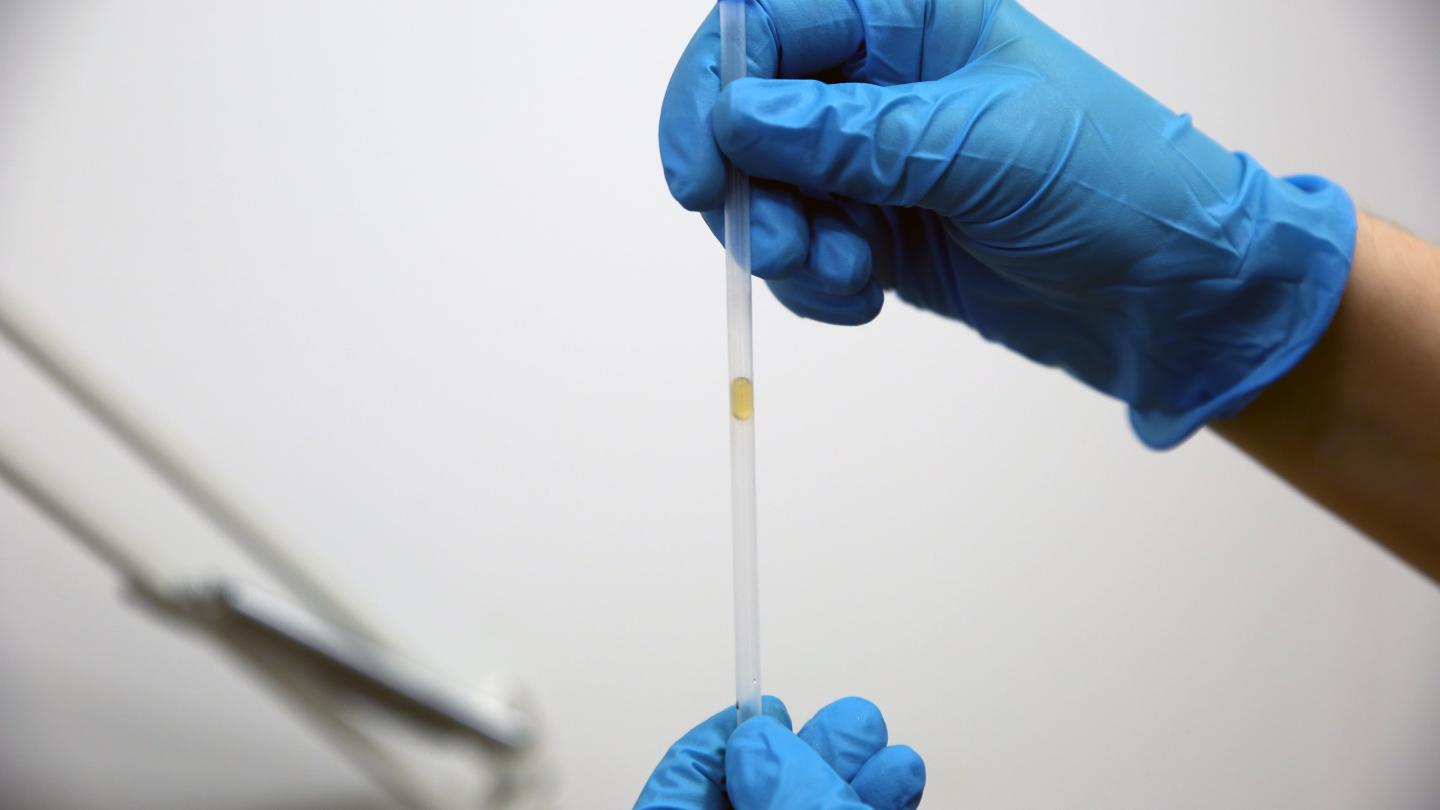
    As shown above, a self-propelled microswimmer — in this case, an oil droplet — pulls the surrounding fluid and tracer particles with it (Image 1). Researchers modeled this single-swimmer entrainment (Image 2) to quantify just how much fluid the droplet pulls with it. Then they studied what happens when many swimmers pass through an area (Image 3). They found that the droplet swarm entrained ten times the volume of fluid compared to the fluid entrained by the same number of isolated droplets. The fluid volume pulled along was also far larger than any payload the droplets themselves could carry. So future microswimmer swarms may simply sweep their cargo along in their wake. (Image and research credit: C. Jin et al.; via APS Physics)
  • Changing with the Flow

    Changing with the Flow

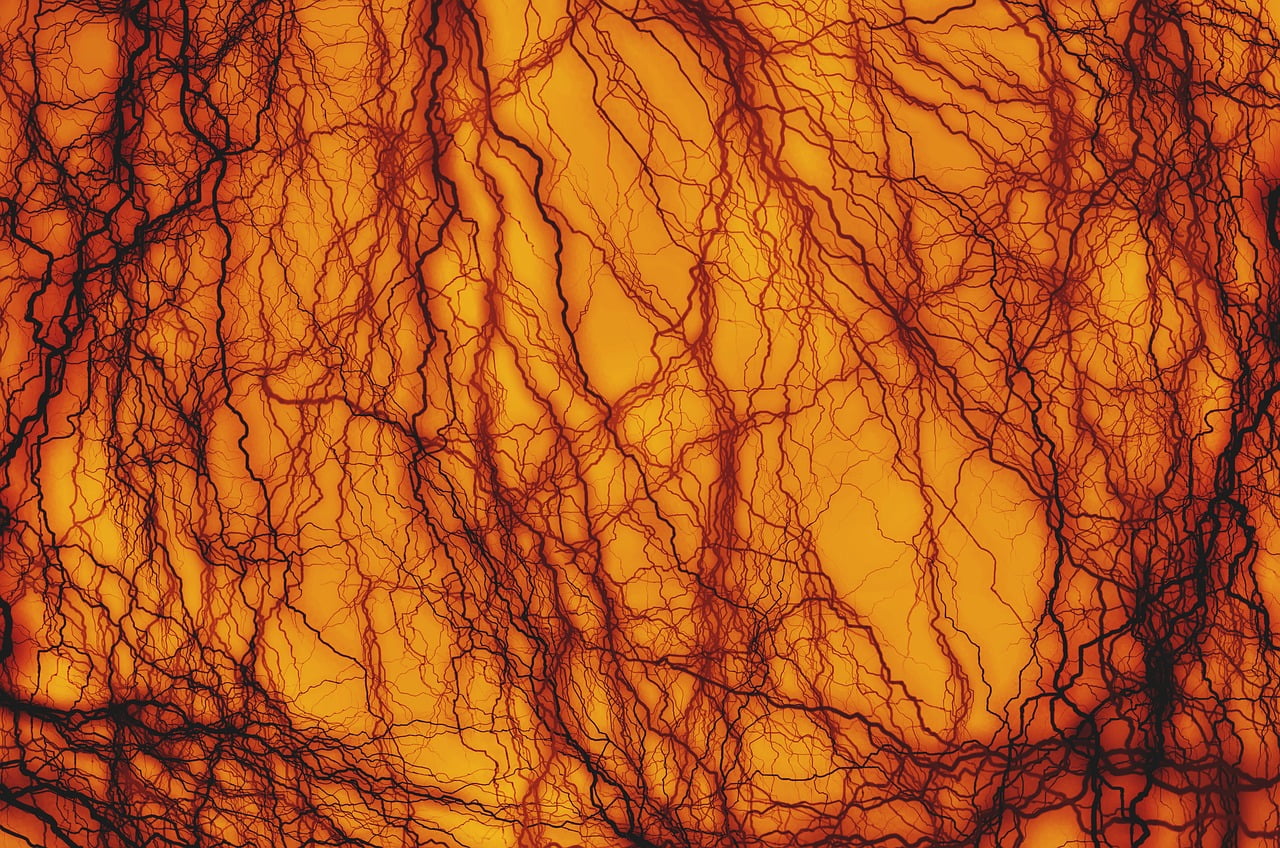
    Chemically-reacting flows are some of the toughest problems to unravel. In this new study, researchers found that the very act of flowing through narrow channels can change the speed of chemical reactions. In particular, they found that protein molecules carried through a capillary tube (comparable in size to human capillaries) changed their local shape as a result of the shear forces they experienced. Those changes actually sped up the proteins’ chemical reactions compared to the reaction speed for the chemicals in bulk.

    That finding suggests two important takeaways: 1) chemicals may be absorbed in the human bloodstream differently in capillaries than in other parts of the cardiovascular system, and 2) mimicking these tiny capillaries in microfluidic devices could be useful in speeding up certain biochemical reactions. (Image credit: top – KazuN, visual abstract – T. Hakala et al.; research credit: T. Hakala et al.; via Science; submitted by Kam-Yung Soh)

    Graphical abstract showing that shear forces in small channels can cause local changes to protein structure that affect the rate of chemical reactions.
  • Devising Greener Chemistry

    Devising Greener Chemistry

    Not all microfluidic devices use tiny channels to pump and mix fluids. Some, like the Vortex Fluidic Device (VFD), conduct their microfluidic mixing in thin films of fluid. The VFD is essentially a tube spinning at several thousand RPM that can be tilted to various angles. Coriolis forces, shear, and Faraday instabilities in the thin fluid film create a complex microfluidic flow field that’s excellent for mixing, crystallization, and processing of injected chemicals. One rather notorious application of this device was unboiling an egg, a feat for which the researchers won an Ig Nobel Prize. But other, more practical applications abound, including a waste-free method for coating particles. (Image and research credit: T. Alharbi et al.; video credit: Flinders University; via Cosmos; submitted by Marc A.)

  • When Honey Flows Faster Than Water

    When Honey Flows Faster Than Water

    With its high viscosity, no one would ever pick honey to beat water in a race. But a new study shows there’s at least one circumstance where honey wins: inside a narrow, superhydrophobic tube with one or both ends closed. Inside these specially coated tubes a narrow cushion of air stays between the drop and the wall, reducing friction and increasing flow speed for both fluids.

    But when one or both ends of the tube are blocked, the drops can only move when air squeezes past. In less viscous fluids, like water, the researchers found rapid internal flows inside the drop. These flows pressed the surface of the drop outward, reducing the air cushion and making it harder for air to squeeze past so that the drop could flow. In contrast, honey showed very little internal flow and so was able to flow through the tubes ten times faster than water! (Image and research credit: M. Vuckovac et al.; via Physics World; submitted by Kam-Yung Soh)

  • Microfluidic Pac-Man

    Microfluidic Pac-Man

    Researchers are using coalescence to guide microdroplets through a miniature maze, a la Pac-Man. To steer the main droplet, they place a smaller droplet nearby in the direction they want to move. When the drops coalesce, it moves the main droplet in the target direction. By repeating the process, researchers can drive the drop through a maze or perform tasks like cleaning or transporting particles by picking them up. Learn more over at APS Physics. (Image and research credit: J. Chaaban et al.; via APS Physics)
  • Synchronizing Microfluidic Drops

    Synchronizing Microfluidic Drops

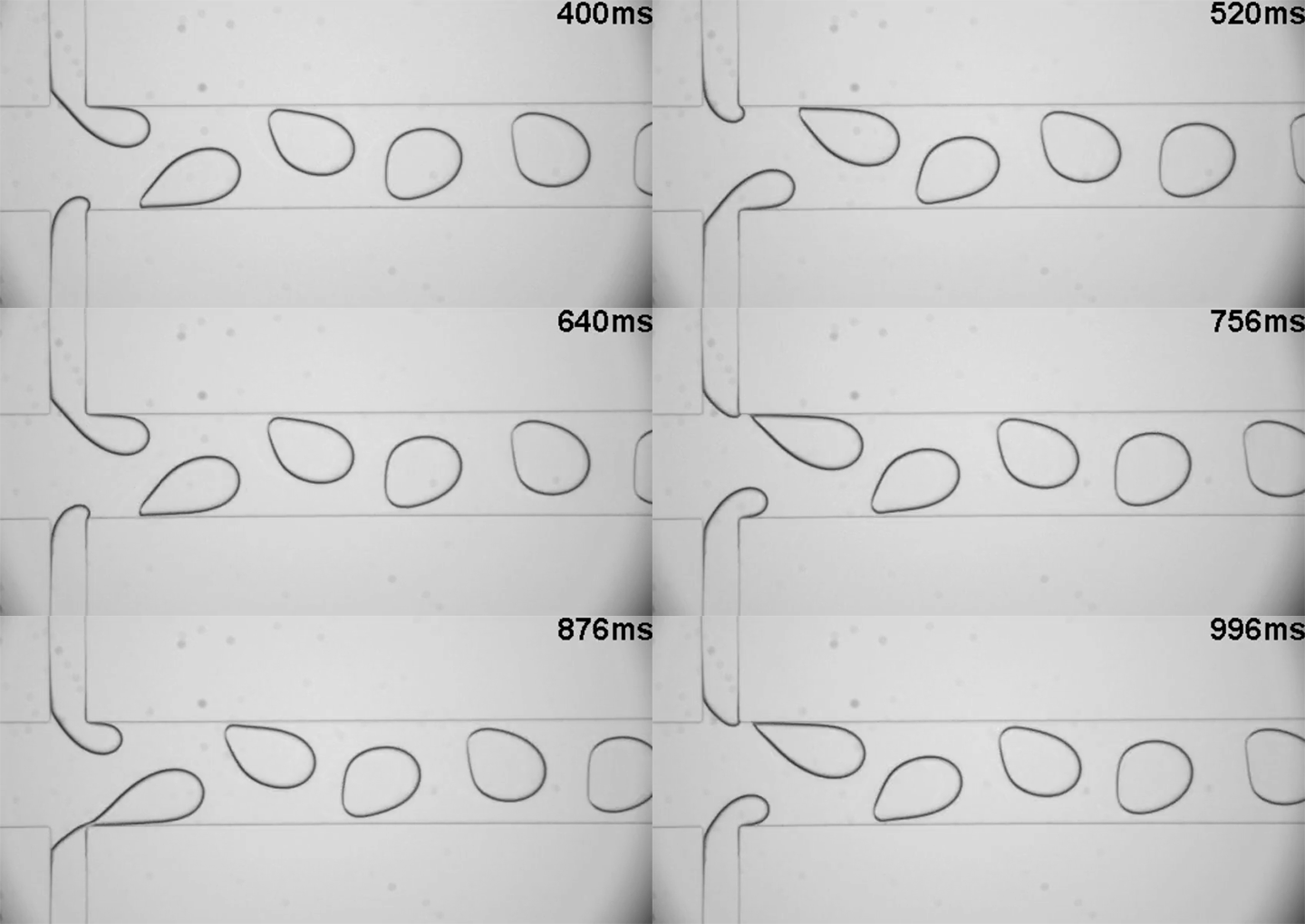
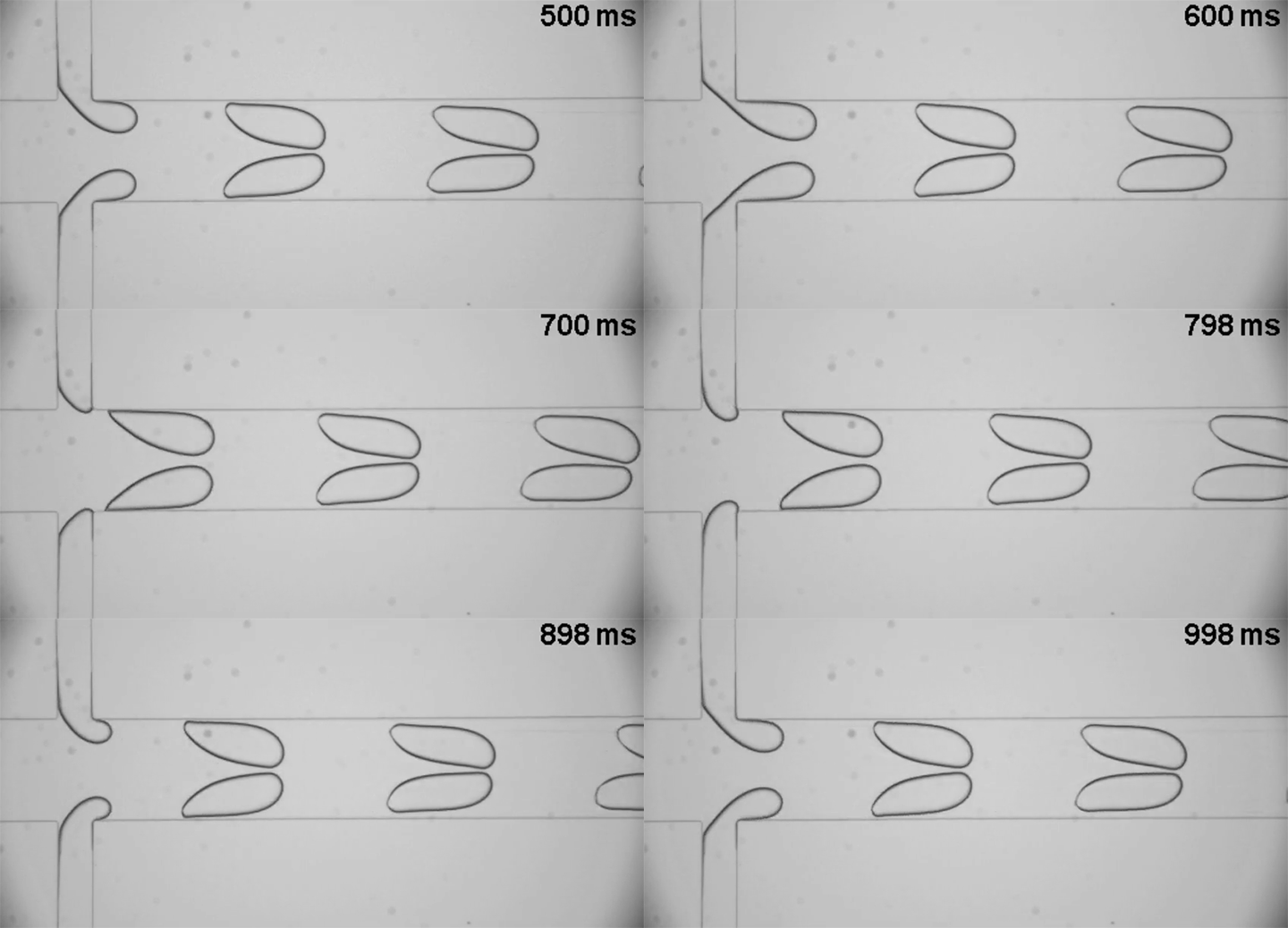
    In nature, synchronization occurs when oscillators interact. A group of metronomes shifting to tick in unison is a classic example. Here, the system is a microfluidic T-junction and the oscillators are the liquid interfaces along the narrower inlet channels. Systems like this one have long been used to create alternating droplets (Image 1), corresponding to out-of-phase synchronization. But a new paper shows that the same system can perform in-phase synchronization (Image 2), too, generating droplets at the same time.

    For any synchronization to occur, the main channel must be narrow enough for the two side channels to influence one another. Once that’s the case, the out-of-phase synchronization happens at a relatively high flow rate, and lowering the flow rate causes the system to transition to in-phase synchronization. (Image and research credit: E. Um et al.; submitted by Joonwoo J.)

  • The Wanderings of Micro-Scallops

    The Wanderings of Micro-Scallops

    In the 19th century, botanist Robert Brown observed pollen granules beneath his microscope jittering randomly. Einstein showed that this motion resulted from the impacts of much-smaller atoms against the particles. For small enough objects, the random walk of Brownian motion dominates their dynamics. A new study explores how flexible objects move at this Brownian scale.

    The researchers used trios of colloids — microscopic particles — held together by a lipid fluid layer that allows the three particles to change shape without losing contact. Essentially, each trio forms a tiny hinge. As atoms strike the colloids, they both move and change shape.

    Compared to rigid shapes, the researchers found their flexible hinges moved around in space about 3-15% faster. They also found coupling between the shape changes and motion. When the colloids hinge closed, it propels them in the direction the hinge points. Because this resembles the propulsion of scallops, the researchers refer to this as the “Brownian quasi-scallop mode.” (Image and research credit: R. Verweij et al.; via phys.org)

  • Bacterial Turbulence

    Bacterial Turbulence

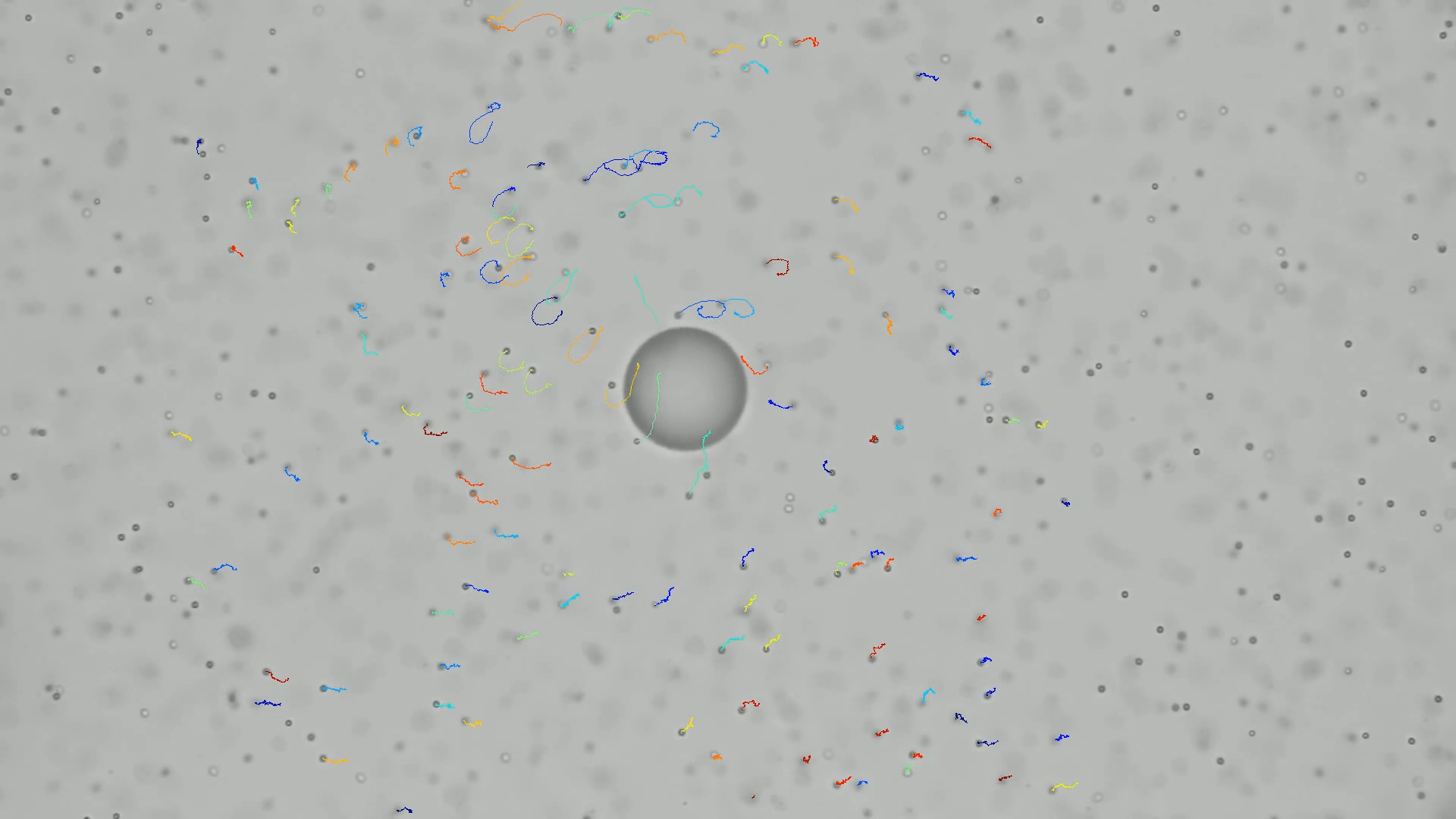
    Conventional fluid dynamical wisdom posits that any flows at the microscale should be laminar. Tiny swimmers like microorganisms live in a world dominated by viscosity, therefore, there can be no turbulence. But experiments with bacterial colonies have shown that’s not entirely true. With enough micro-swimmers moving around, even these viscous, small-scale flows become turbulent.

    That’s what is shown in Image 2, where tracer particles show the complex motion of fluid around a bacterial swarm. By tracking both the bacteria motion and the fluid motion, researchers were able to describe the flow using statistical methods similar to those used for conventional turbulence. The characteristics of this bacterial turbulence are not identical to larger-scale turbulence, but they are certainly more turbulent than laminar. (Image credits: bacterium – A. Weiner, bacterial turbulence – J. Dunkel et al.; research credit: J. Dunkel et al.; submitted by Jeff M.)

  • Featured Video Play Icon

    Pumping Through Liquid Tubes

    As the tubes carrying a liquid get smaller, it becomes harder and harder to keep fluids flowing. Friction between the fluid and the wall brings flow there to a standstill and means that moving fluid through tiny tubes requires enormous forces. To alleviate this issue, a new study uses a clever arrangement of magnets to create a tube with ferrofluid walls instead of solid ones.

    The researchers call their liquid-walled pipes “antitubes” and show off just how useful they can be. Because the ferrofluid allows liquid to slip by it, flow through the antitubes is nearly frictionless. As seen in the last animation, honey flows about as easily through the antitube as it does with no tube in place at all!

    The antitubes are also easy to modify into valves and pumps just by applying (and/or moving) a magnet (Images 1 and 2). Combined with their low friction, these features make antitubes perfect for applications like pumping blood outside the human body without damaging delicate cells. You can see a demonstration of that in the video above. (Video, image, and research credit: P. Dunne et al.; via Physics World; submitted by Kam-Yung Soh)

  • A Microfluidic Zoo

    A Microfluidic Zoo

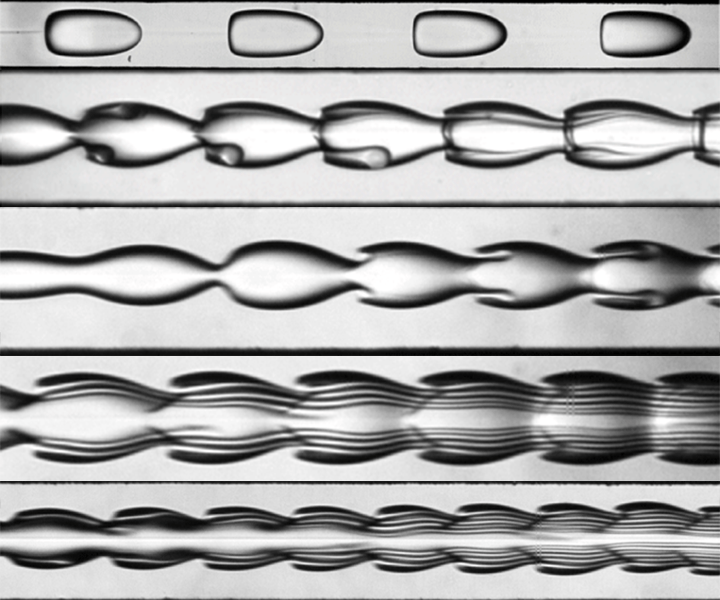
    Microfluidic channels are excellent at creating a steady supply of droplets. But depending on the characteristics of the two viscous fluids being used, as well as factors like flow rate and channel geometry, the results can be anything from well-defined and separated drops to steady jets to wild instabilities. The image above shows a series of different outcomes, including waves that break on the edges of drops and ligaments that stretch around the central fluid. (Image and research credit: X. Hu and T. Cubaud)