Tag: colloid

  • Soap Film Ruptures

    Soap Film Ruptures

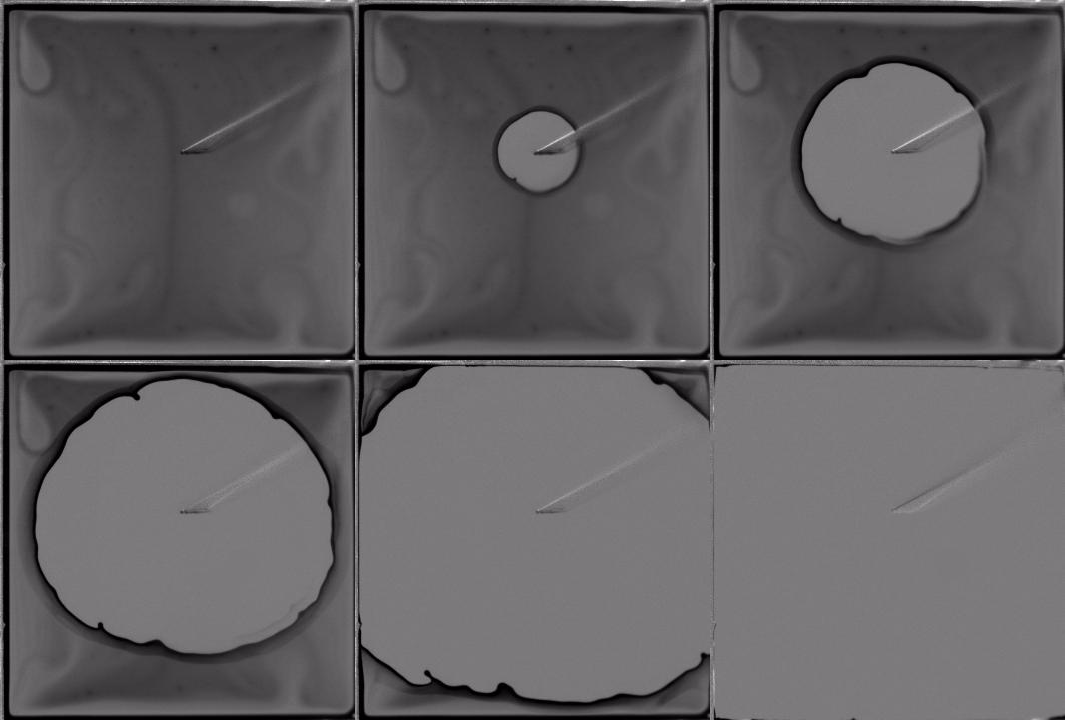
    Soap film ruptures are well understood for your typical bubble solution, but what happens when tiny particles get added to the soap film? That’s the question in this recent study. Researchers added 660-nanometer particles, in varying amounts, to their soap films to see how it affected rupture. When they broke the films just after formation (top image), they found results that were quite similar to the usual, particle-free case. But when the films sat for awhile before breaking spontaneously (bottom image), the rupture caused wrinkling and folding similar to a piece of fabric. The researchers hypothesize that aging allowed the soap film to thin until the film and the particles were similar in size. Then, when the film ruptured, the particles affected how it broke up. (Image and research credit: P. Shah et al.)

    After aging and thinning, a colloidal film ruptures spontaneously, forming fabric-like wrinkles.
    After aging and thinning, a colloidal film ruptures spontaneously, forming fabric-like wrinkles.
  • Swimming in Complex Fluids

    Swimming in Complex Fluids

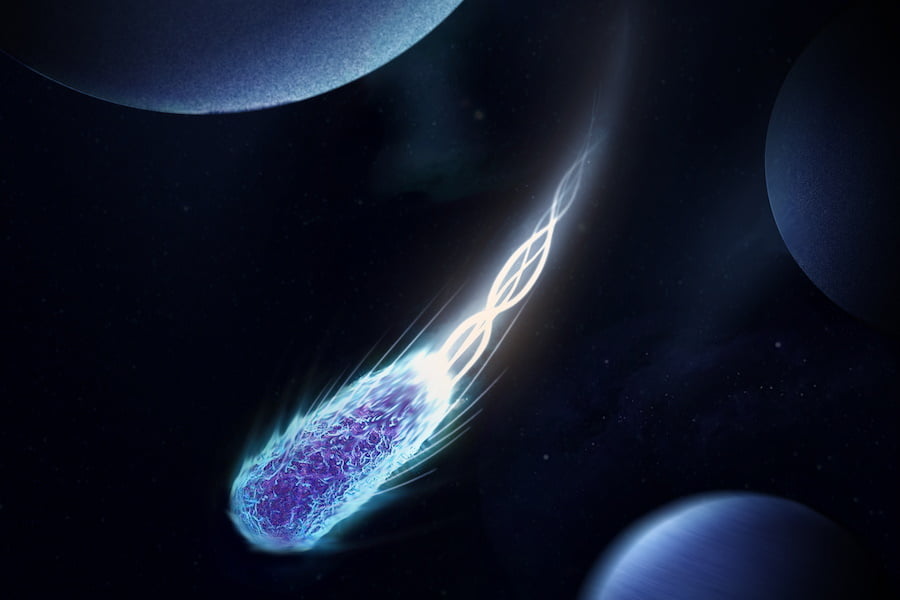
    Bacteria like E. coli swim using flagella, helical filaments attached to biological motors on their bodies. By rotating the flagella, the bacterium generates thrust that propels it forward. Oddly, though, researchers observed decades ago that bacteria actually travel faster through complex fluids — like those with polymers or particles in them — than they do through simple fluids like water. A new study using colloids — small particles suspended in a liquid — shows why.

    The researchers compared bacteria swimming through polymer-filled fluids and colloidal fluids and found strong overlap both qualitatively and quantitatively. They observed, for example, that bacteria swim in straighter lines — they wobble less — in complex fluids. The reason, according to the authors, is the hydrodynamic influence of the added materials. Essentially, when a bacterium swims near a colloid or piece of polymer, the particle exerts a torque on the microswimmer that reduces its wobble and enhances its speed. (Image credit: Cheng Research Group; research credit: S. Kamdar et al.; via Physics World)

  • Whiskey Webs

    Whiskey Webs

    Unlike scotch whisky, when American bourbon whiskeys are diluted, they form unique web-like evaporation patterns. These differences arise in part from the way the liquors are aged: scotch is aged in re-used barrels, whereas bourbons require aging in a new, charred American white oak barrel*.

    During aging, the whiskey picks up water-insoluble chemicals from the barrel. When water is added to the bourbon, it helps transport those insoluble components to the surface of a droplet, where they form a monolayer of fatty acid chains (Image 2; in green). As evaporation continues and the droplet gets smaller, the molecules at the shrinking surface collapse inward, forming the rigid web structure we see left behind. The patterns that form act as a kind of fingerprint for the bourbon. Check out some of the brand-to-brand variations over at the researchers’ Whiskey Webs site. (Image and research credit: S. Williams et al.; via Physics Today)

    * In case you were wondering, this is actually a legal requirement in order to be considered bourbon. Bourbons must also be made from a grain mixture that is >50% corn.

  • The Wanderings of Micro-Scallops

    The Wanderings of Micro-Scallops

    In the 19th century, botanist Robert Brown observed pollen granules beneath his microscope jittering randomly. Einstein showed that this motion resulted from the impacts of much-smaller atoms against the particles. For small enough objects, the random walk of Brownian motion dominates their dynamics. A new study explores how flexible objects move at this Brownian scale.

    The researchers used trios of colloids — microscopic particles — held together by a lipid fluid layer that allows the three particles to change shape without losing contact. Essentially, each trio forms a tiny hinge. As atoms strike the colloids, they both move and change shape.

    Compared to rigid shapes, the researchers found their flexible hinges moved around in space about 3-15% faster. They also found coupling between the shape changes and motion. When the colloids hinge closed, it propels them in the direction the hinge points. Because this resembles the propulsion of scallops, the researchers refer to this as the “Brownian quasi-scallop mode.” (Image and research credit: R. Verweij et al.; via phys.org)

  • When Shear Meets Slip

    When Shear Meets Slip

    One of the classic concepts students learn early in their fluids education is the no-slip condition. In essence, this idea says that friction between a solid object — say, a wall — and the fluid immediately next to it is such that no movement is possible where they meet. The fluid cannot “slip” along the surface, hence “no-slip”. It’s a simple concept, but one that can create a lot of complexity in practice.

    Imagine, for example, a fluid sandwiched between two surfaces: one stationary and one moving at a constant speed. This movement creates a shear flow, in which the velocity of the fluid varies from the speed of the moving plate all the way down to zero, the speed of the stationary plate. If we placed a little platelet in the middle of this flow, we’d expect it to rotate because of the faster flow on one side.

    But a new paper finds something rather different, at least when considering an extremely small nanoplatelet. With a tiny enough plate, individual molecules can slip along the surface, and when that happens, instead of rotating, the nanoplatelet aligns itself with the flow. That alignment means the added particle would disturb the flow less, creating a lower viscosity and better flowability. (Image and research credit: C. Kamal et al.; submitted by Simon G.)

  • Featured Video Play Icon

    Blooming Deposits

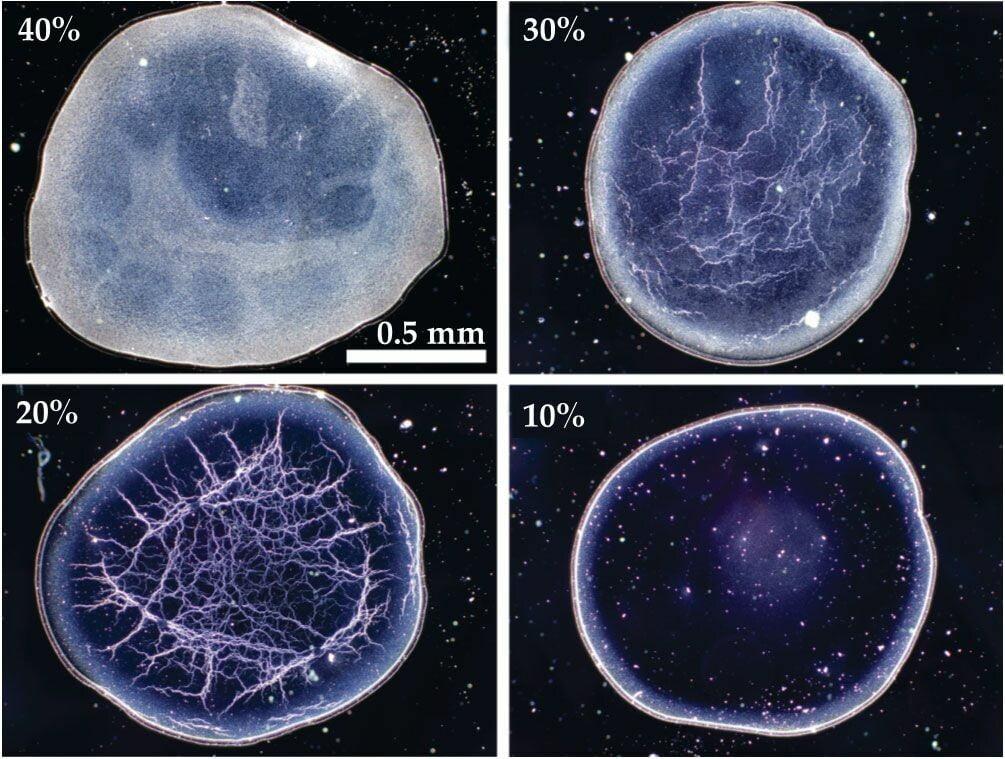
    Evaporate a droplet full of silica nanoparticles, and you’ll get beautiful, flower-like films. As the water evaporates, dry nanoparticles build up in a solid deposit. The evaporation creates a pressure gradient that pulls toward the center of the drop, forcing the deposit to bend. As stress builds in the deposit, cracks form petal-like segments. The number of cracks is indicative of how much of the drop was solid material; the higher the volume fraction of particles is, the fewer cracks form and the less the deposit bends. (Image, video, and research credit: P. Lilin et al.)

  • Ferrofluid in a Cell

    Ferrofluid in a Cell

    Ferrofluids are a colloid consisting of magnetically sensitive nanoparticles suspended in a carrier liquid, like oil. They’re often associated with a distinctive spiky appearance when exposed to a magnet, but this isn’t their only magnetic response. Above we see a ferrofluid confined to a Hele-Shaw cell – essentially two glass plates with a small gap between them. In the upper image, the ferrofluid is exposed first to an axial magnetic field, which stretches it to form spidery arms. Then the magnetic field switches to a rotating configuration, which curls the arms around and causes the ferrofluid to slowly rotate.

    In the lower image, you see the reverse. First, the ferrofluid feels a rotating magnetic field. When this is changed to an axial field, the ferrofluid bursts into a cell-like center with straight arms. As the magnitude of the axial field increases further, the arms begin to curl. For more fantastical ferrofluid formations, check out these previous posts featuring artists Linden Gledhill and Fabian Oefner. (Image credit: M. Zahn and C. Lorenz, source; via Ashlyn N.)

  • Inside Fondue

    Inside Fondue

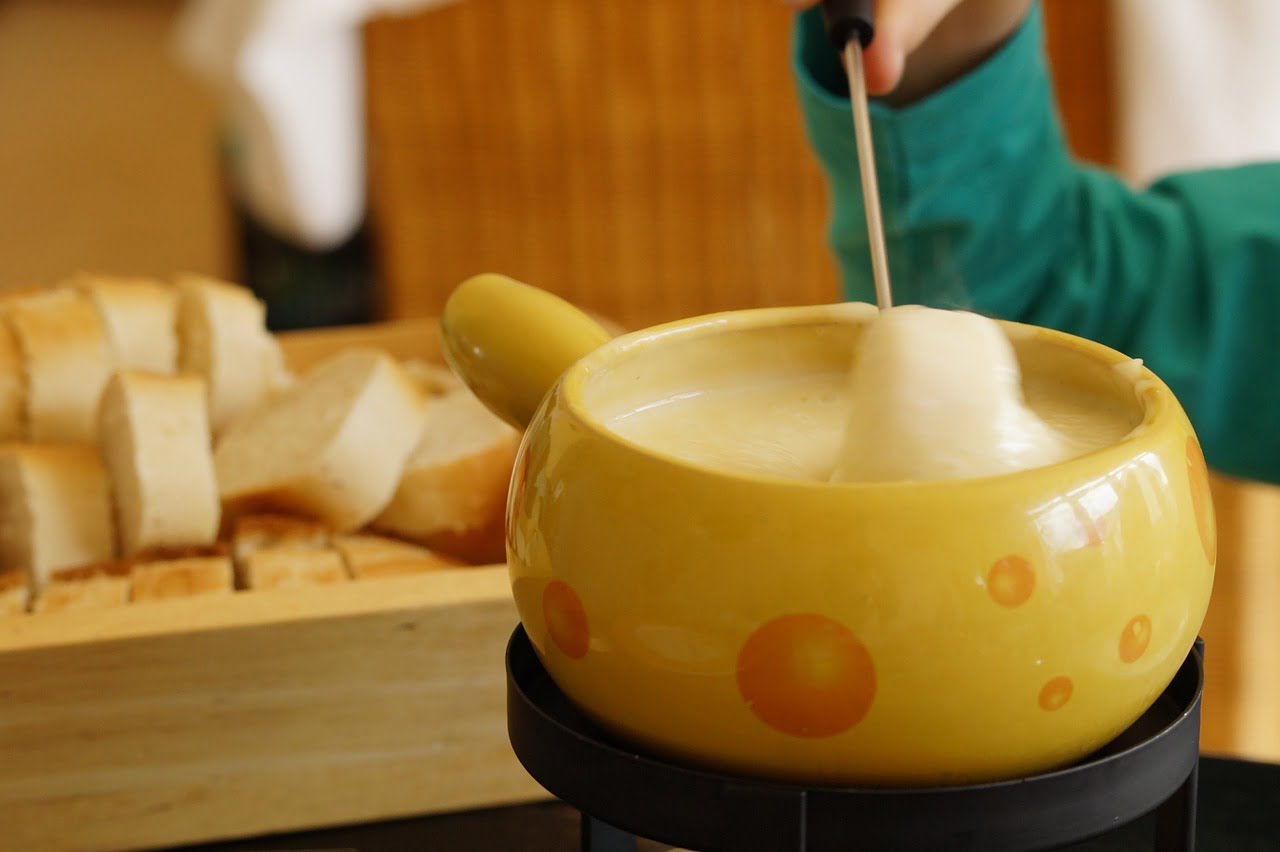
    Cheese fondue is a complex – and delicious – Swiss delicacy. The perfect fondue requires the right mix of ingredients and preparation to get the rheology – the flow character – just right. Fondue is a colloid, a fluid containing a mixture of suspended insoluble particles.

    The major components, rheologically speaking, are fat globules and casein proteins from the cheese, ethanol from the wine, and some added starch. Left on their own, the fat and casein tend to separate, something that’s sure to ruin the fondue. Adding the right amount of starch prevents that separation and keeps the fondue together. The viscosity of fondue is very important as well. If it’s too runny or too gummy, the mouthfeel will be wrong and it may not stick to the bread when dipped. Adding wine decreases the viscosity.

    All in all, the quality and perception of a good fondue relies heavily on its rheological character. Without the right proportion of ingredients to set the perfect viscous and chemical character, the dish literally comes apart. (Image credit: Pixabay; research credit and submission: P. Bertsch et al.)

  • Blue Man Group in Slow Mo

    Blue Man Group in Slow Mo

    In their latest video, the Slow Mo Guys team up with the Blue Man Group for some high-speed hijinks, some of which make for great fluidsy visuals. Their first experiment involves dropping a bowling ball on gelatin. The gelatin goes through some massive deformation but comes out remarkably unscathed. Gelatin is what is known as a colloid and essentially consists of water trapped in a matrix of protein molecules. This gives it both solid and liquid-like properties, which means that the energy the bowling ball’s impact imparts can be dissipated through liquid-like waves ricocheting through the gelatin before the elasticity of the protein matrix allows it to reform in its original shape.

    The video ends with buckets of paint flung at Dan. The paints form beautiful splash sheets that expand and thin until surface tension can no longer hold them together. Holes form in the sheet and eat outward until the paint forms thin ligaments and catenaries. As those continue to stretch, surface tension drives the paint to break into droplets, though that break-up may be countered to some extent by any viscoelastic properties of the paint. (Image and video credit: The Slow Mo Guys + Blue Man Group, source)