Artist D. A. Siqueiros sometimes used a technique he referred to as “accidental painting” in his work, in which he would pour a layer of one color of paint and then pour a second color over it. The two colors would mix in striking patterns. Here researchers recreate the technique and analyze the fluid dynamics of it. Each paint has a slightly different density thanks to the pigments used to color them. When a denser paint is poured over a less dense one (as in the white on black in the video), this activates the Rayleigh-Taylor instability. The white paint will tend to sink down below the black paint due to gravity. At the same time, the spreading of the two paints also affects the shapes and patterns through mixing and diffusion. (Video credit: S. Zetina and R. Zenit)
Tag: fluids as art

“Millefiori”
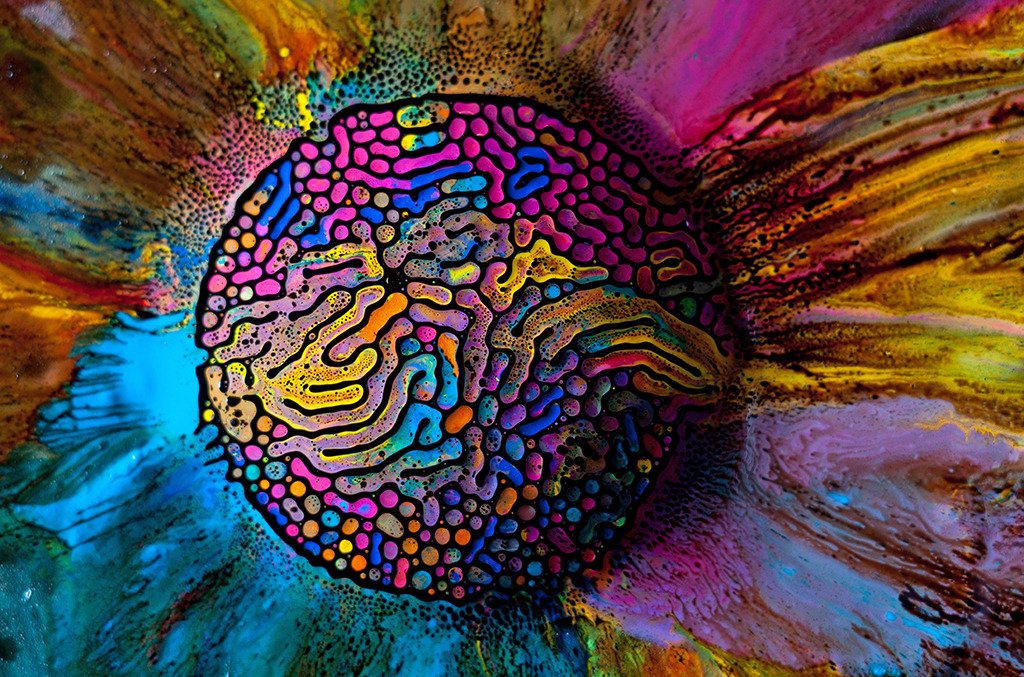
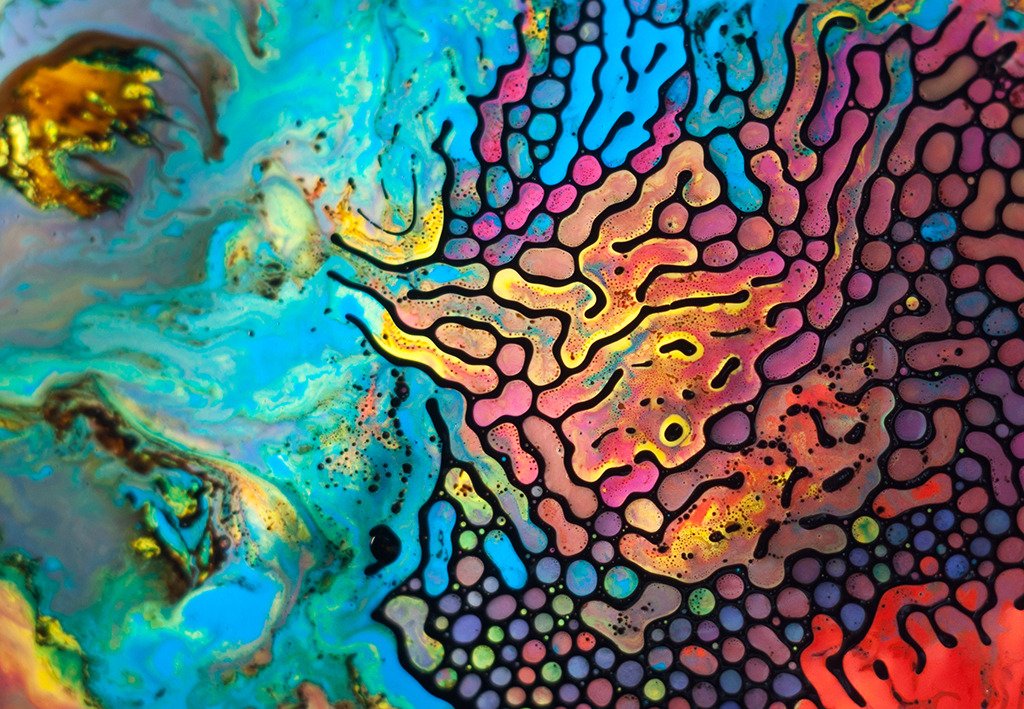
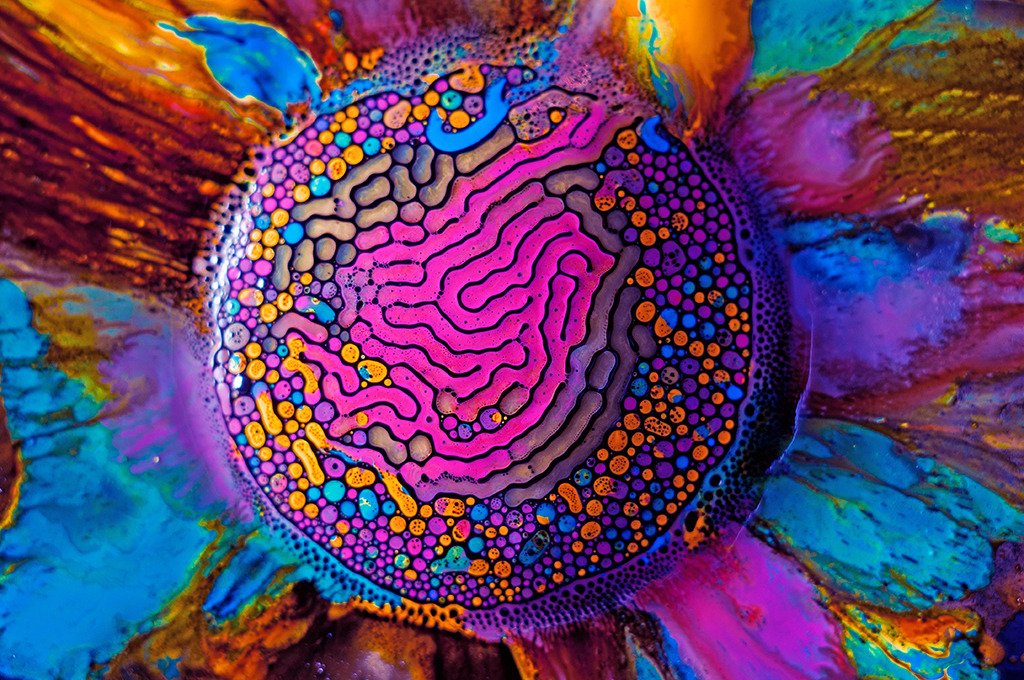
In “Millefiori” artist Fabian Oefner mixes watercolors with ferrofluids to create bright fluid microcosms. Each photograph represents an area about the size of a thumbnail. Ferrofluids contain iron-based nanoparticles suspended in a carrier fluid and thus respond to magnetic fields. They can form sharp points, labyrinthine mazes, or even brain-like patterns depending on the magnetic field and the substances surrounding them. For more on this art project, see this interview with the artist. (Photo credit: Fabian Oefner)

“Surface Tension”
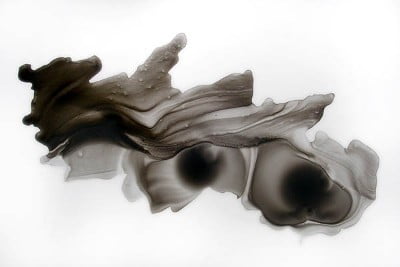
From a series called “Surface Tension,” these ink and water drawings by Marguerite French explore the effects of diffusion, surface tension, and evaporation. The forms left by the thin layer of liquids suggest other natural processes like erosion, weathering, and the rings inside trees. (Photo credits: Marguerite French)

“Ferienne”
In “Ferienne” artist Afiq Omar utilizes ferrofluids, magnetism, and vibration to create analog visual effects. Most of the dot and labyrinthine patterns result from the reaction of a ferrofluid submerged in a nonmagnetic fluid to an external magnetic field. Diffusion effects and surface tension instabilities are also visible in the way the darker ferrofluid breaks down in the carrier fluid. Also be sure to check out Omar’s previously featured fluid film “Ferroux”. (Video credit: Afiq Omar)

Supercomputed Fluids
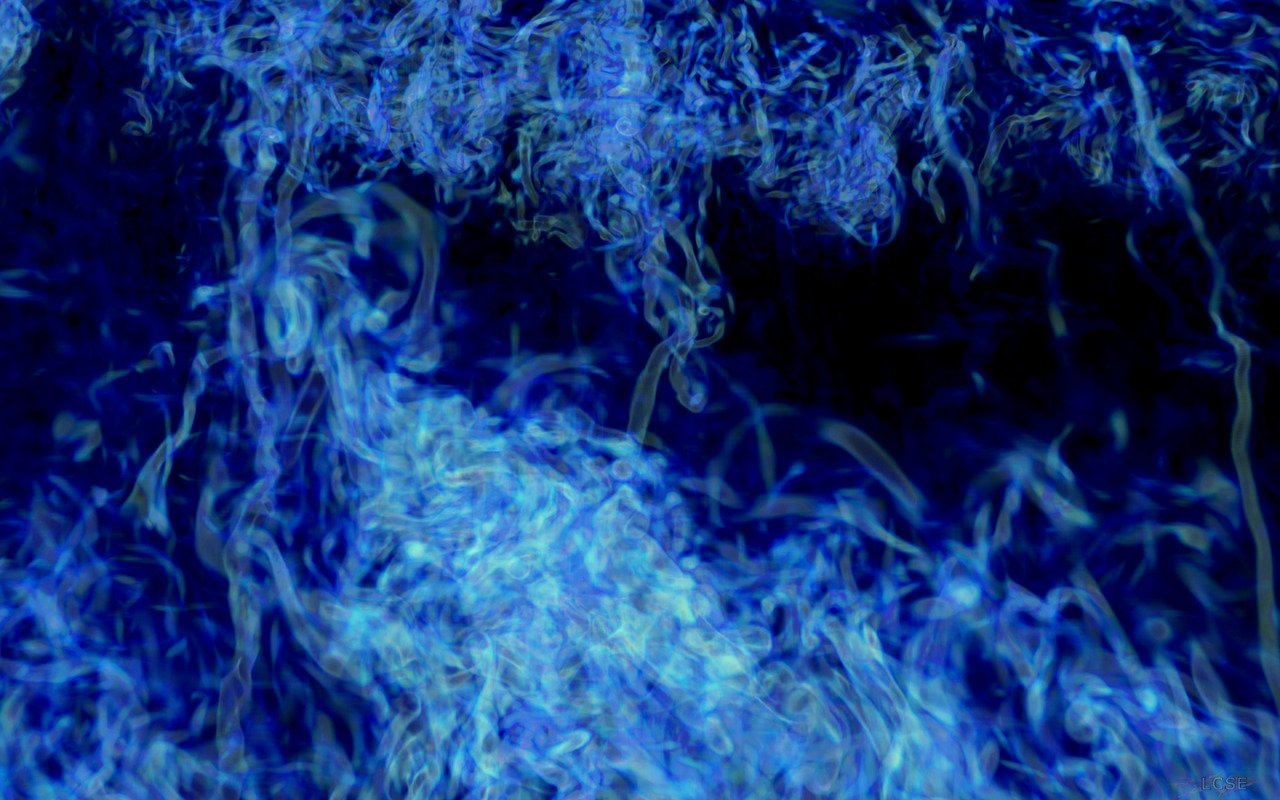
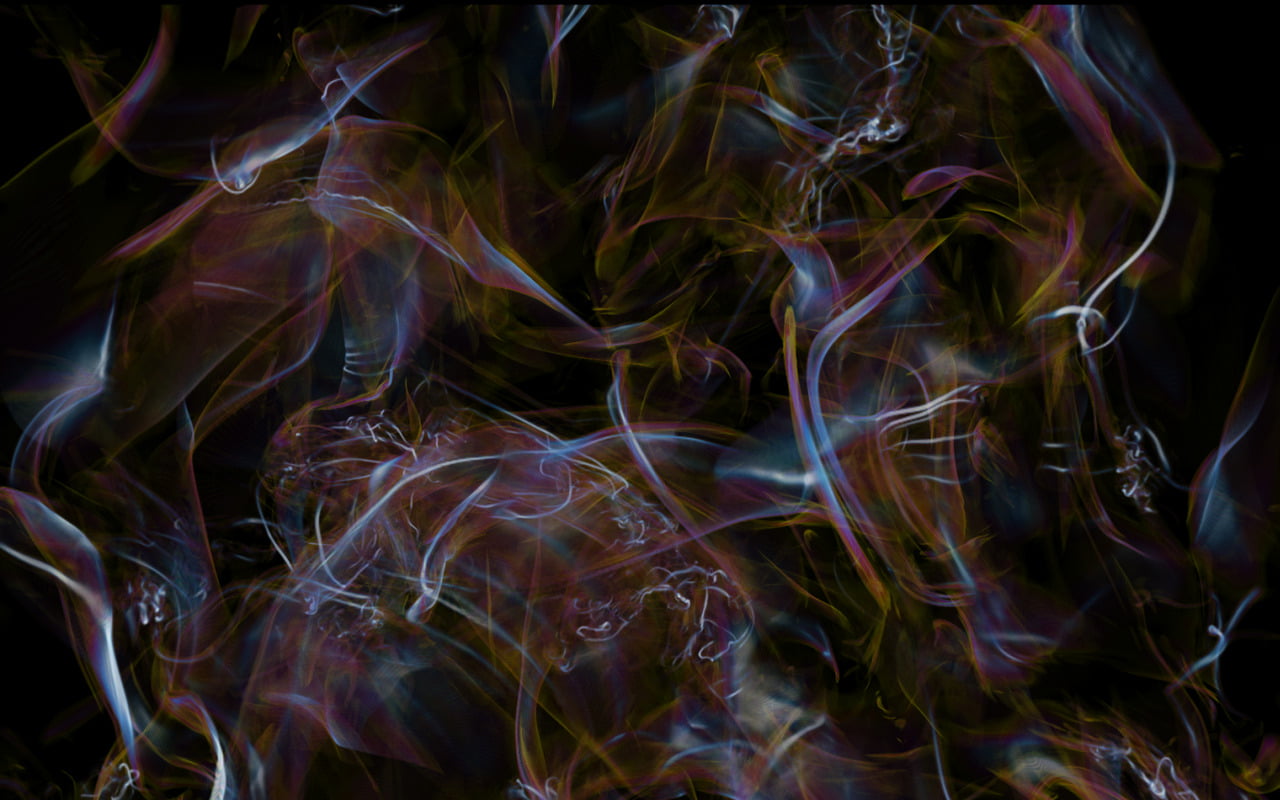
Computational fluid dynamics and supercomputers can produce some stunning flow visualizations. Above are examples of turbulence, the Rayleigh-Taylor instability, and the Kelvin-Helmholtz instability. Be sure to check out LCSE’s website for more; they’ve included wallpapers of some of the most spectacular ones. (Photo credits: Laboratory for Computational Science and Engineering, University of Minnesota, #)

Ferrofluid Drop
A drop of ferrofluid is shaped by seven small circular magnets sitting beneath the glass and paper. Ferrofluids are made up of nanoscale ferromagnetic particles suspended in a carrier liquid. Under the influence of magnetic fields, they can take on fantastic shapes, including sharp-tipped droplets and labyrinthine mazes. This image is taken from the National Academy of Science’s book Convergence, focused on the intersection between science and art. (Photo credit: Felice Frankel)

Chronoscapes
Exeter University artist-in-residence Pery Burge uses ink, water, soap films, and other fluids to create her spectacular “artistic flow visualization”. Looking closely, one sees the influence of bubbles, vortices, diffusion, and many fluid instabilities, all combined to create psychedelic and dream-like landscapes. For more on her work and additional galleries, see her website Chronoscapes. (Photo credit: Pery Burge)

Homemade Astronomy
Artist Julia Cuddy uses liquids, soaps, and glitter to create photographs that replicate the look of deep space astronomy. By adding soap to the dyes, she uses Marangoni effects to drive surface tension instabilities that cause swirling colors and motions reminiscent of galaxies and nebulae. Although I’ve seen fluid dynamics used in art before, this may be one of the cleverest usages I’ve seen! (Photo credits: Julia Cuddy)

Fractal Fluids
Part of the beauty of numerical simulation is its ability to explore the physics of a situation that would difficult or impossible to create experimentally. Here the Rayleigh-Taylor instability–which occurs when a heavier fluid sits atop a lighter fluid–is simulated in two-dimensions. Viscosity and diffusion are set extremely low in the simulation; this is why we see intricate fractal-like structures at many scales rather than the simulation quickly fading into gray. (The low diffusion is also what causes the numerical instabilities in the last couple seconds of video.) The final result is both physics and art. (Video credit: Mark Stock)

Bubble Art
Photographer Janet Waters uses liquids and bubbles to create her fascinating abstract macro art. Check out this interview with the artist and her portfolio for more. (Photo credits: Janet Waters)