A cylinder standing upright in a flow creates a complicated system of vortices and recirculation. In the photo above, the flow is left to right. The cylinder itself is somewhat hard to see but is located in the center of the image; we see it from above. The colored streaks of dye show the flow path around the cylinder. In yellow, we see a spiraling vortex that forms just ahead of the cylinder and stretches downstream on either side. Because of its shape, this is called a horseshoe vortex. Its sense of rotation is such that it tends to pick up loose material in front of the cylinder; in other words, it can erode that area. This is often seen around the pilings of bridge supports and must be accounted for in designs. You also see the effects of this horseshoe vortex digging out material at the base of trees after snowfalls in areas with a dominant wind direction, and here’s an example with a snow roller. (Image credit: H. Werlé; via eFluids)
Tag: fluids as art

“Fractal”
Timelapses are a wonderful way to capture the power and majesty of storms like the supercell thunderstorms featured in Chad Cowan’s “Fractal”. The video contains snapshots from six years’ worth of storms over the US’s Great Plains. The highlights include some spectacular mammatus clouds (0:30) and excellent billowing cloud formation (1:27) with turbulence every bit as towering as that of a volcanic plume. June is one of the best months for amazing storms in the Great Plains, largely thanks to the atmospheric mixing that occurs over the Rocky Mountains. If you have the opportunity to witness these amazing natural displays, enjoy it, but be safe! (Video credit: C. Cowan; image via Colossal)


“Galaxy Gates”
Viewing fluids through a macro lens makes for an incredible playground. In “Galaxy Gates”, Thomas Blanchard and the artists of Oilhack explore a colorful and dynamic landscape of paint, oil, and glitter. The nucleation of holes and the breakdown of sheets to filaments and droplets plays a major role in the visuals. The surface layer is constantly peeling away to reveal what’s going on underneath. In many cases this initial motion settles into a field of oil-rimmed droplets floating like planets against a colorful galactic backdrop. Watch carefully in the second half of the video, and you can even catch a few instances of a stretched ligament of fluid breaking into a string of satellite drops, like at 1:51. Check out some of Blanchard’s previous work here and here. (Video credit: Oilhack and T. Blanchard; GIFs and h/t to Colossal)

Graphene Swirls
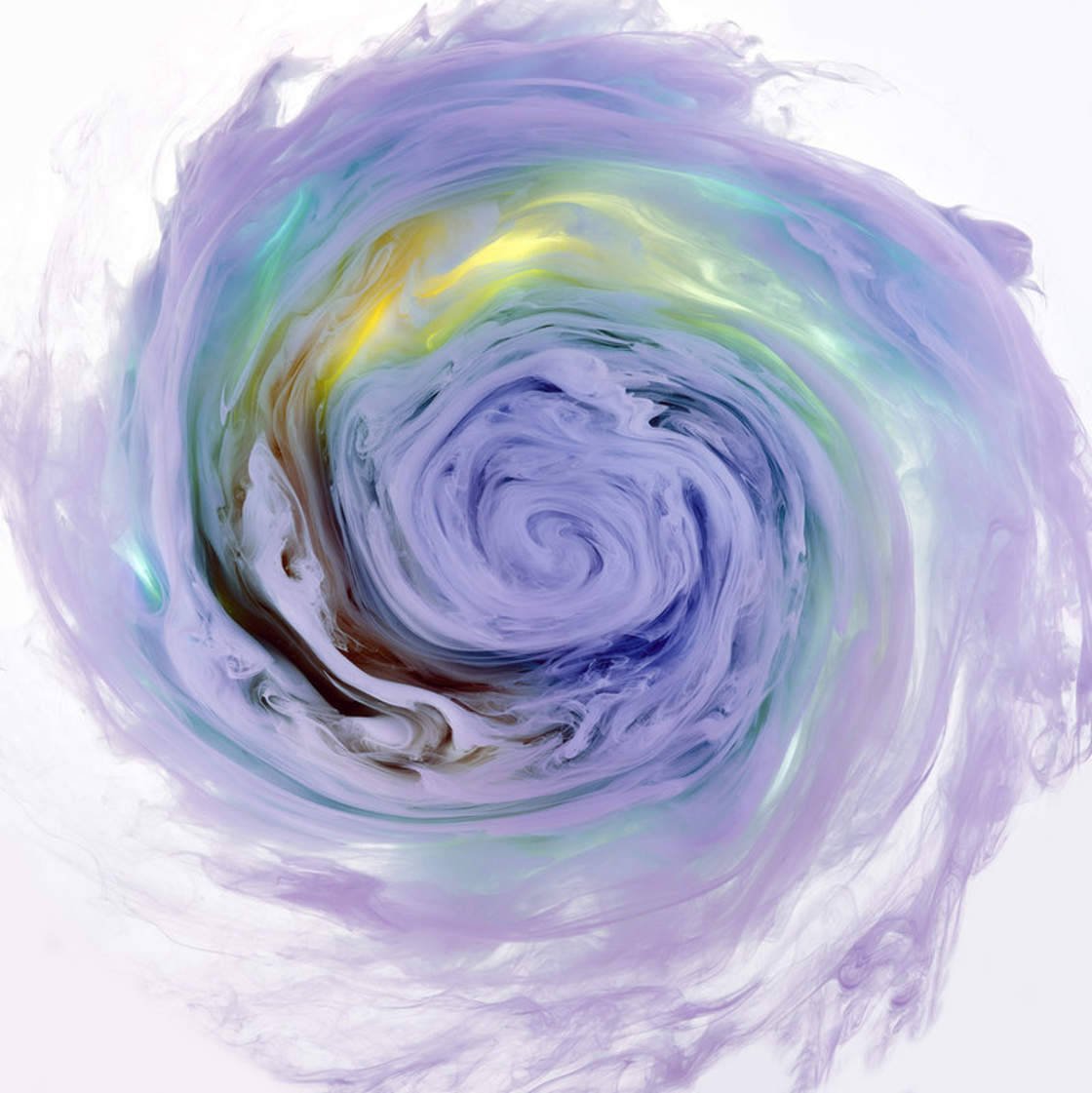
Graphene powder swirls in alcohol in this prize-winning photo from this year’s Engineering and Physical Sciences Research Council photography competition in the UK. The image was captured while producing graphene ink that can print circuits directly onto paper. According to the researcher’s description, this ink is forced through micrometer-sized capillaries at high pressure to rip the layers apart and produce a smooth, conductive ink in solution. In this photo, we seem to see more conventional mixing driven by the powder’s injection and the variations in surface tension due to the alcohol and its evaporation. The graphene leaves behind beautiful streaklines that highlight its path as it mixes. (Image credit: J. Macleod; via Discover)

Asperitas Sunset
Asperitas clouds, previously known as undulatus asperatus, are the most recently recognized cloud type. These clouds make the sky look like the ocean rolling in waves. Photographer Mike Olbinski, on a recent storm chase earlier this month, caught these spectacular asperitas clouds near sunset. The clouds’ effect is unusual under normal circumstances and completely surreal with this lighting. Check out the video for the full effect. Olbinski caught the clouds on the outskirts of a dying storm cell. That’s a common place to see these formations; despite their ominous appearance, they do not develop storms and are more often seen as storms are ending. (Video and image credit: M. Olbinski; h/t to Paul vdB)

Perijove
The Juno spacecraft continues to send back incredible photos of Jupiter’s atmosphere. This video animates images from the sixth close pass of Jupiter to give you a sense of what Juno sees as it swoops by our system’s largest planet. The trajectory passes from the north pole to the south, showing Jupiter’s whitish zones, dark belts, and massive storms. Up close Jupiter looks like an Impressionist painting, all vortices and shear instabilities. The large white spots you see are enormous counterclockwise rotating vortices known as anticyclones – many of them larger than our entire planet. (Video credit: NASA / SwRI / MSSS / G. Eichstädt / S. Doran)

Breaking Waves in the Sky
Under the right atmospheric conditions, clouds can form in a distinctive but short-lived breaking wave pattern known as a Kelvin-Helmholtz cloud. The animation above shows the formation and breakdown of such a cloud over the course of 9 minutes early one morning in Colorado’s Front Range region. Kelvin-Helmholtz instabilities occur when fluid layers with different velocities and/or densities move past one another. Friction between the two layers moving past creates shear and causes the curling rolls seen above.
In the background, you can also see a foehn wall cloud low to the horizon. This type of cloud forms downwind of the Rocky Mountains after warm, moist Chinook winds are forced up over the mountains, cool, and then condense and sink in the mountains’ wake. (Image credit and submission: J. Straccia, more info)

Ferrofluid Microlandscapes
Ferrofluids are an ever-fascinating topic. Consisting of ferromagnetic nanoparticles suspended in a carrier fluid, ferrofluids are known for their bizarre behaviors in the presence of a magnetic field, like their tendency to form pointed peaks reminiscent of Bart Simpson’s hair. In a new Concept Zero video, photographer Linden Gledhill creates fascinating micro-landscapes using ferrofluids suspended in solvents. Driven by magnetic fields, the ferrofluids take on many shapes that change as the solvent and eventually the ferrofluid’s carrier fluid evaporate. Check out the full video above and, if you’re looking for some new decorations for your walls, you can check out the project’s fine art gallery. (Video and image credit: L. Gledhill and Concept Zero; submitted by L. Gledhill)

Sky Glow
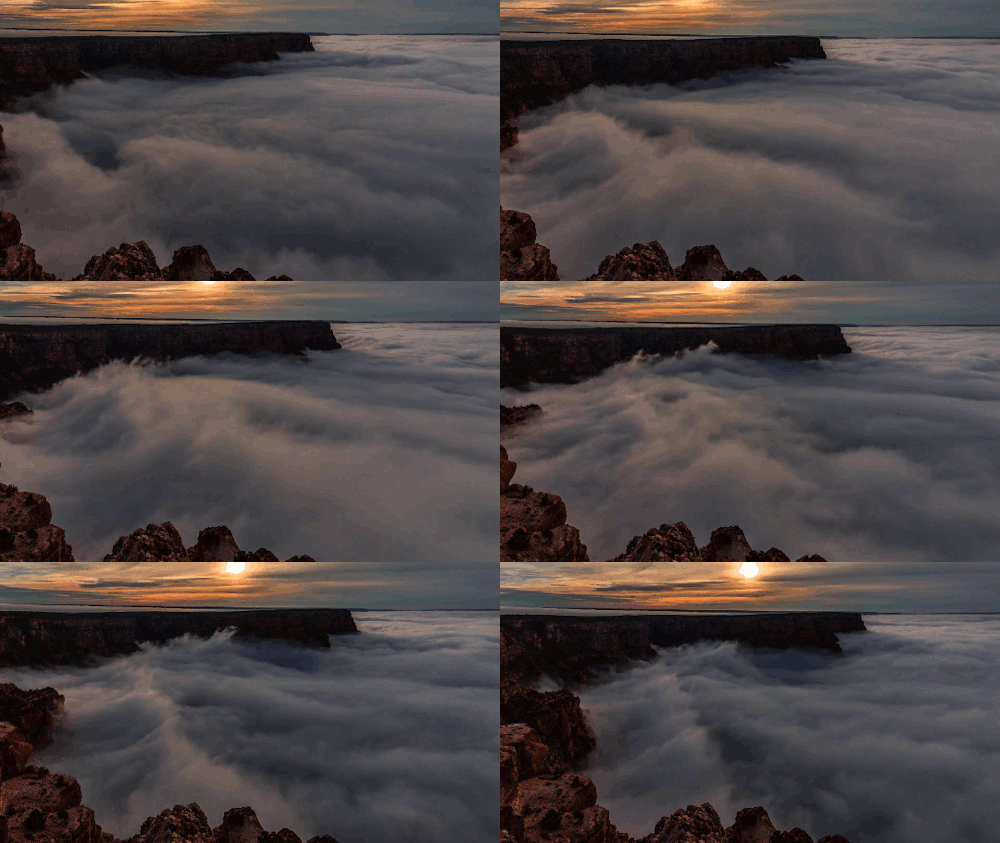
This short but spectacular timelapse video shows the Grand Canyon filled with fog. This phenomenon, known as a temperature inversion, occurs when a warm layer of air traps cold, moist air near the ground. As the inversion develops in the video, you can see wisps of clouds popping up in the canyon, seemingly out of nowhere, as moisture evaporated from the surface condenses in the cool air. Once fog fills the canyon, it flows and laps against the canyon’s sides, much like waves on the ocean. In fact, the physics here is quite similar, just at a much slower speed. (Video and image credit: H. Mehmedinovic / SKYGLOWPROJECT; via Gizmodo; submitted by Ian S.)

“Ink in Motion”
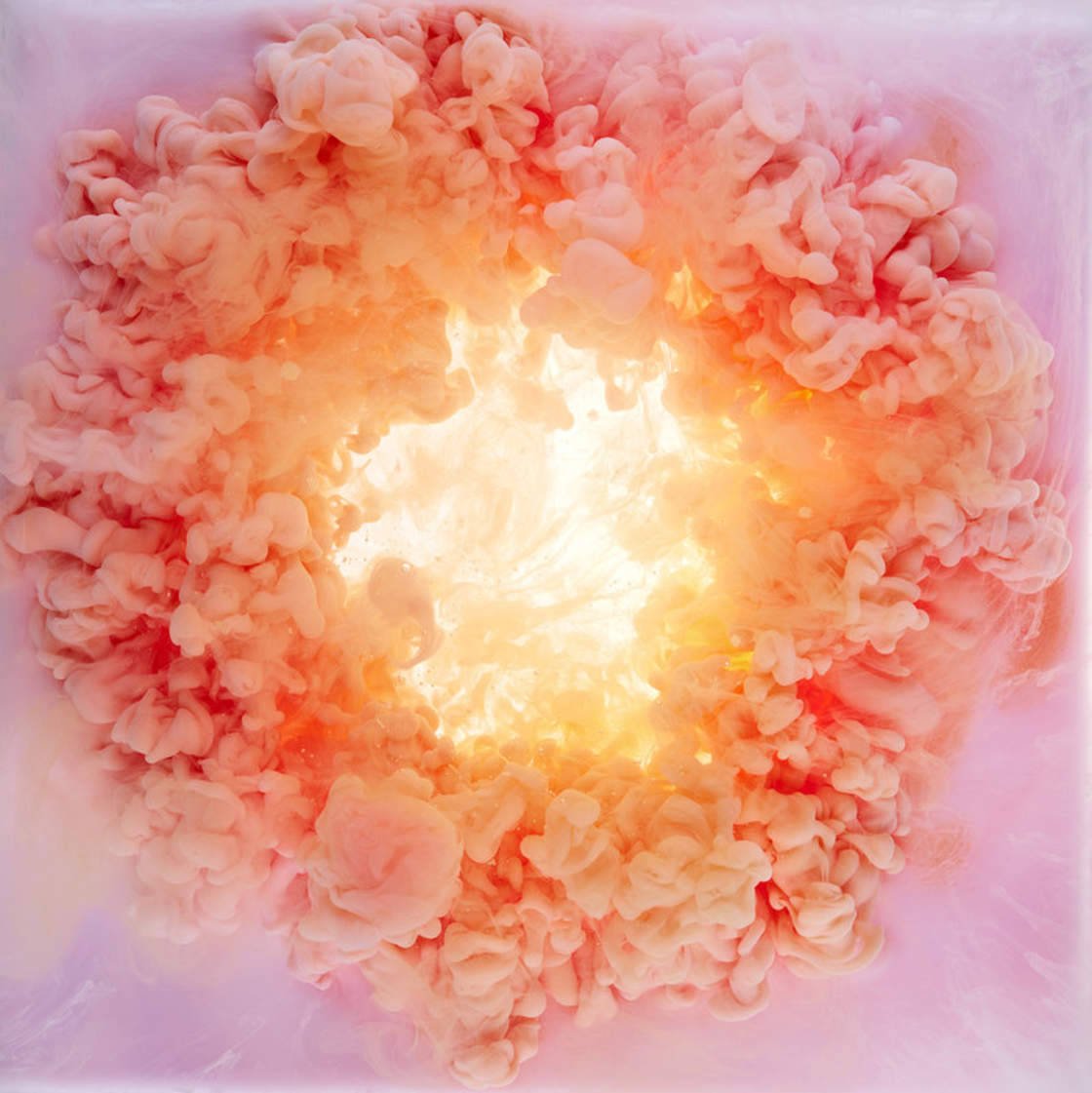
In this short film, the Macro Room team plays with the diffusion of ink in water and its interaction with various shapes. Injecting ink with a syringe results in a beautiful, billowing turbulent plume. By fiddling with the playback time, the video really highlights some of the neat instabilities the ink goes through before it mixes. Note how the yellow ink at 1:12 breaks into jellyfish-like shapes with tentacles that sprout more ink; that’s a classic form of the Rayleigh-Taylor instability, driven by the higher density ink sinking through the lower density water. Ink’s higher density is what drives the ink-falls flowing down the flowers in the final segment, too. Definitely take a couple minutes to watch the full video. (Image and video credit: Macro Room; via James H./Flow Vis)