Tag: fluid dynamics

  • Mimicking Insect Flight

    Mimicking Insect Flight

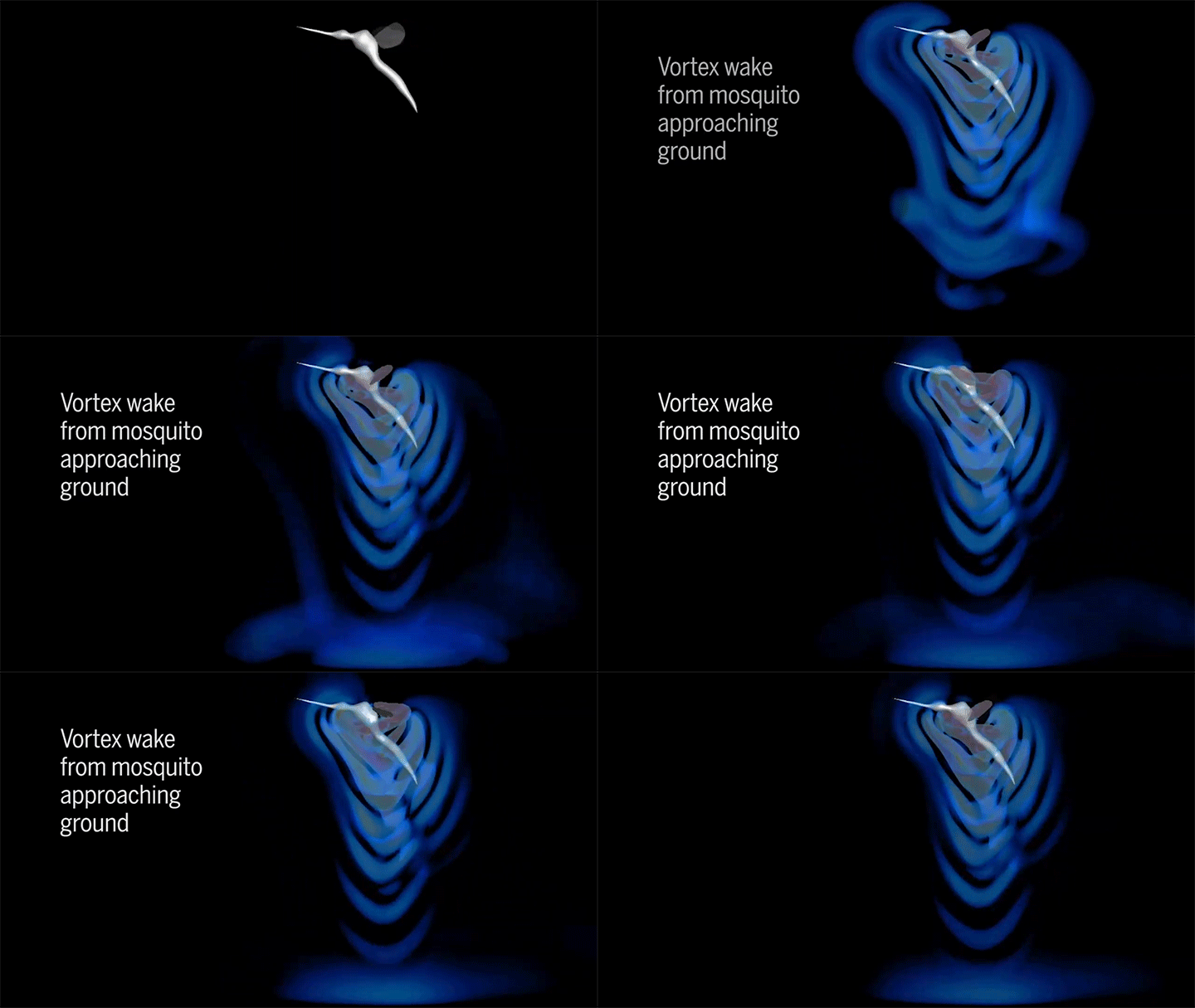
    There’s an oft-repeated tale that science cannot explain how a bumblebee flies. And while that may have been true 80 years ago, when engineers assumed they could apply their knowledge of fixed-wing aircraft to insects, it’s very far from the truth now.

    Being small, insects use aerodynamic tricks that are very different from the physics used by aircraft or even birds. Insects like fruit flies use a forward-and-backward sweeping motion at a very high angle of attack as they flap. This motion creates a vortex at the leading edge of the wing that provides the lift keeping the insect aloft. It still requires fast reflexes — most insects flap their wings hundreds of times a second — but the mechanism is robust enough to keep insects aloft and maneuverable. (Image credits: Robobee – K. Ma and P. Chirarattananon, simulation – F. T. Muijres et al., illustration – G. Lauder; via APS Physics)

  • Featured Video Play Icon

    Branching Light with Soap Bubbles

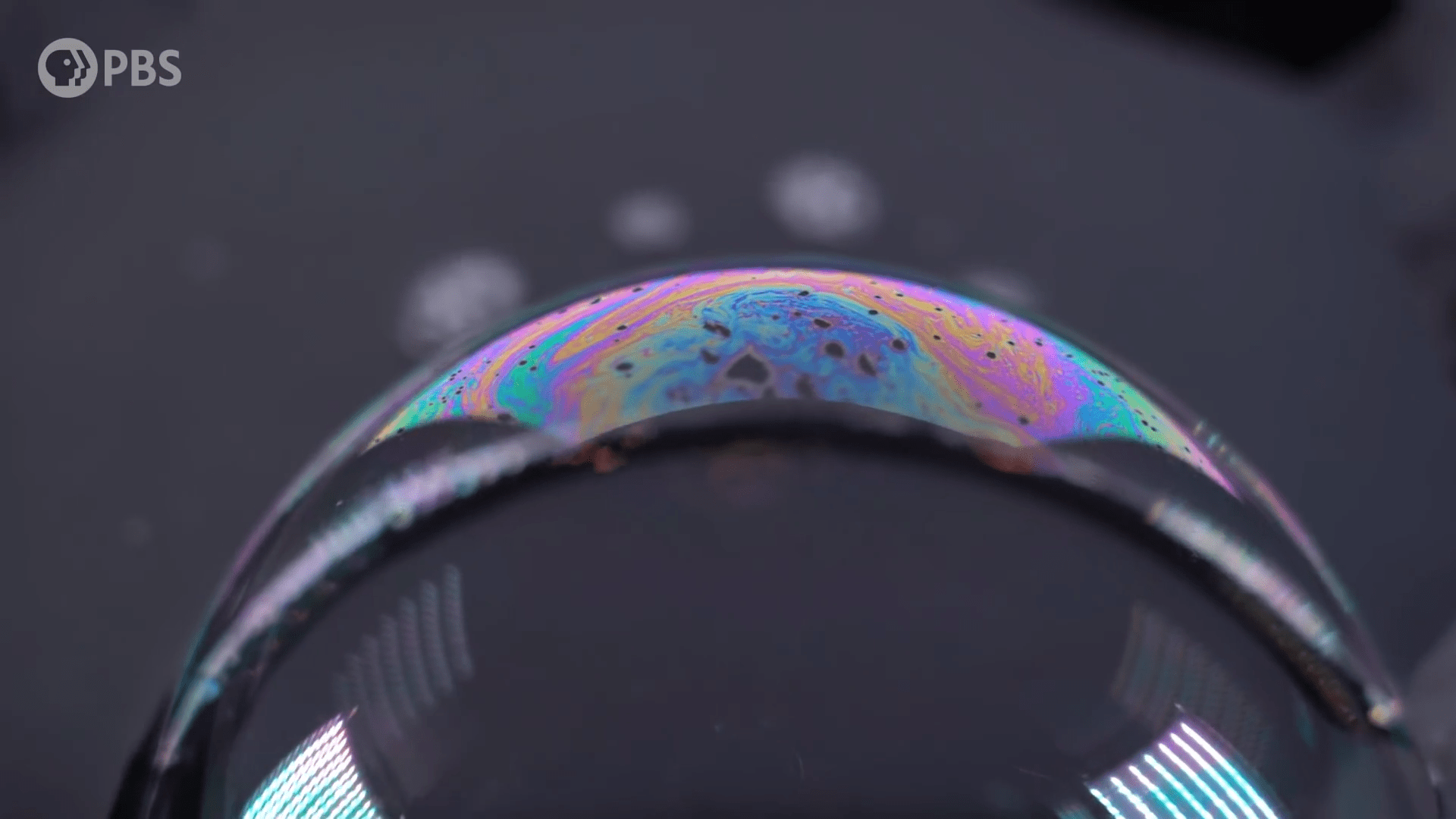
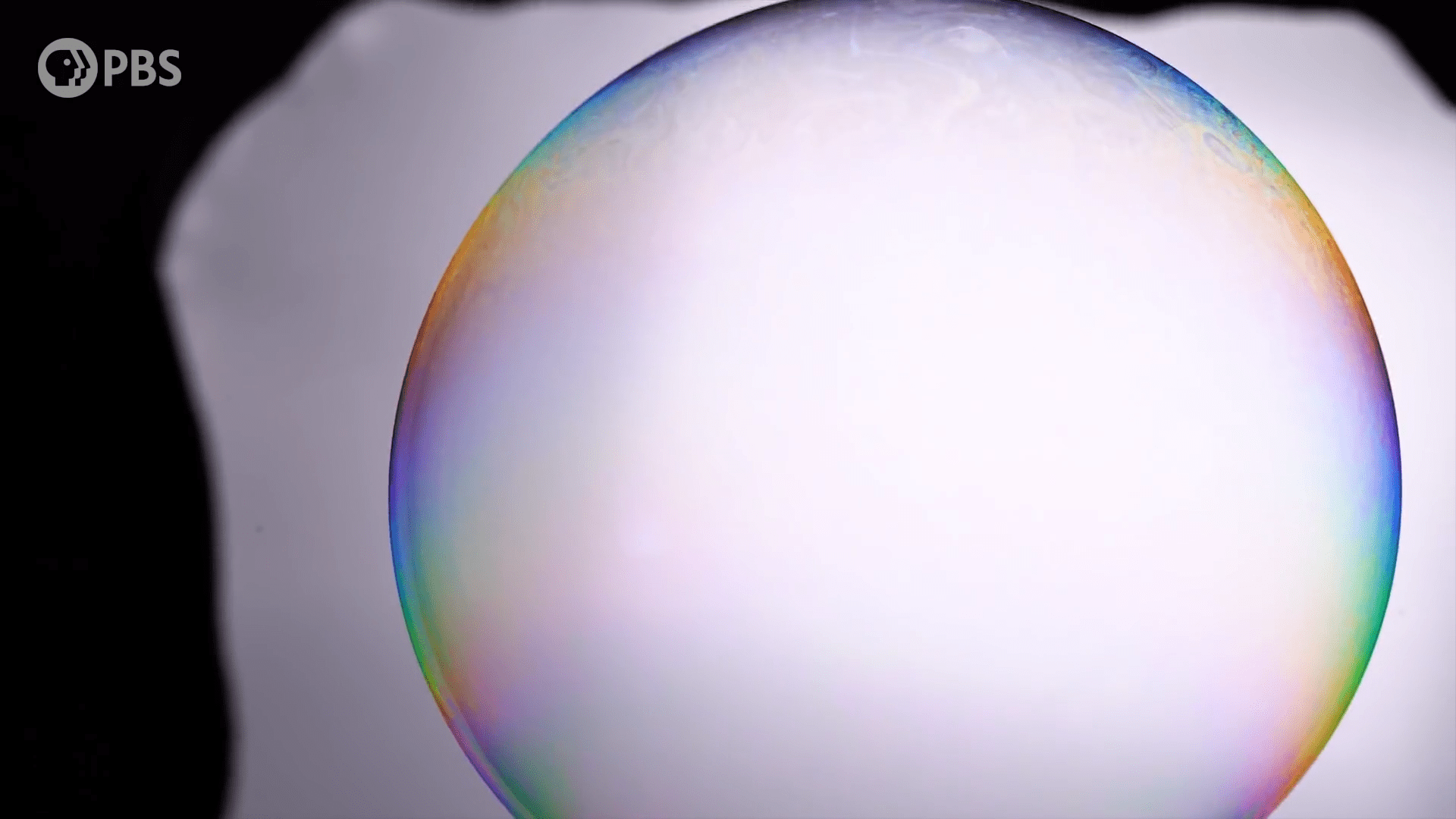
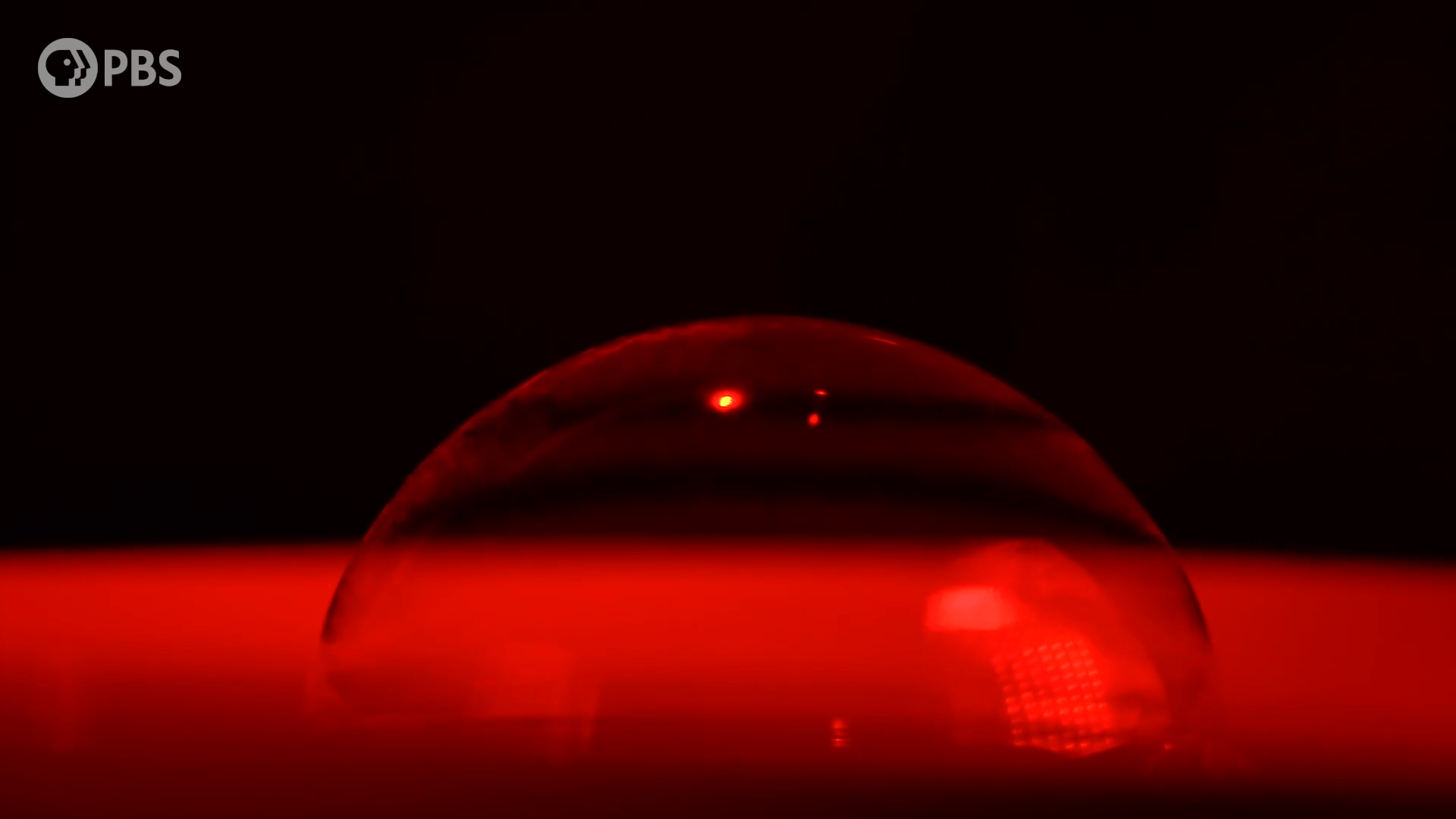
    By shining laser light through soap bubbles, researchers have demonstrated branching flow in light for the first time. This branching occurs when waves travel through a disordered medium where the typical size of the disordered regions is larger than the wave’s length. Previously, scientists had seen evidence of this phenomenon in electrons, sound waves, and even ocean waves.

    Soap bubbles serve as an excellent platform for branching in light because their exceptionally thin film varies in thickness thanks to the interplay of buoyancy, Marangoni effects, and evaporation. It’s also comparable to — but still slightly larger than — the wavelength of light. The experiment is far from simple, though. Lining the laser up with the soap bubble is tough, especially when your bubble is likely to pop! (Video credit: Nature; research credit: A. Patsyk et al.; submitted by Kam-Yung Soh)

  • Featured Video Play Icon

    “Waves”

    The “Waves” installation by artist Daniel Palacios appears deceptively simple, just a rope mounted between two motors. But once the motors start spinning, it is anything but. The installation shifts in response to those around it, creating varying numbers of steady, standing waves or even wildly chaotic ones that whistle through the air. It’s a neat visualization of one of the most commonly-measured quantities in physics: the changes in a wave with time. (Video and image credit: D. Palacios; via Flow Vis)

  • Featured Video Play Icon

    The Engineering of Culverts

    Manmade infrastructure often interferes with natural waterways, which is one reason civil engineers turn to culverts, those pipes and concrete tunnels you often see beneath roadways. As simple as they may seem, there’s a lot of engineering that has to go into these artificial waterways to keep flows from backing up and flooding roads. In this video from Practical Engineering, you’ll learn about some of those factors and see through demos just how they impact the flow. (Image and video credit: Practical Engineering)

  • Quantifying Bioluminescence

    Quantifying Bioluminescence

    Some single-celled organisms, like dinoflagellates, light up when disturbed. This bioluminescence is considered a defense mechanism, triggered by threats to the organism. Now researchers are quantifying just what it takes to light up a single dinoflagellate.

    Dinoflagellates respond both to stress caused by the fluid flow around them and to mechanical deformation — in other words, getting poked. Both methods involve bending and stretching the dinoflagellate’s cell wall, which stretches calcium-ion channels connected to bioluminescence. The researchers found that the intensity of the light produced depended both on the amount and speed of cell wall deformation.

    The model built from their observations should help scientists better understand what forces cause a specific response. That means dinoflagellates could be used as a non-invasive means of understanding fluid flow around swimmers like dolphins or sea lions! (Image and research credit: M. Jalaal et al.; via APS Physics)

  • Tornadoes of the Sea

    Tornadoes of the Sea

    This dramatic image shows a waterspout formed off the coast of Florida. Waterspouts come in two varieties: tornadic and fair-weather. Both types can be dangerous to anyone caught up in them, though the tornadic variety, which are usually associated with severe thunderstorms, is generally worse. Tornadic waterspouts can form top-down from a thunderstorm or when a tornado moves from land to water. Fair-weather waterspouts, on the other hand, typically form from the bottom, in a similar fashion to dust devils and other fair-weather vortices. (Image credit: J. Mole; via APOD)

  • Featured Video Play Icon

    Pumping Through Liquid Tubes

    As the tubes carrying a liquid get smaller, it becomes harder and harder to keep fluids flowing. Friction between the fluid and the wall brings flow there to a standstill and means that moving fluid through tiny tubes requires enormous forces. To alleviate this issue, a new study uses a clever arrangement of magnets to create a tube with ferrofluid walls instead of solid ones.

    The researchers call their liquid-walled pipes “antitubes” and show off just how useful they can be. Because the ferrofluid allows liquid to slip by it, flow through the antitubes is nearly frictionless. As seen in the last animation, honey flows about as easily through the antitube as it does with no tube in place at all!

    The antitubes are also easy to modify into valves and pumps just by applying (and/or moving) a magnet (Images 1 and 2). Combined with their low friction, these features make antitubes perfect for applications like pumping blood outside the human body without damaging delicate cells. You can see a demonstration of that in the video above. (Video, image, and research credit: P. Dunne et al.; via Physics World; submitted by Kam-Yung Soh)

  • Featured Video Play Icon

    A Hand in Hot Oil

    In this video, Dianna from Physics Girl demonstrates a feat no one should try at home: dipping her hand into boiling oil. To stay safe, she’s relying on the Leidenfrost effect, the tendency of liquids exposed to temperatures well above their boiling point to vaporize and create a layer of gas that insulates against further heat transfer.

    We’ve seen a lot of cool behaviors from Leidenfrost droplets, like surfing on herringbone surfaces, digging through sand, vibrating like a star, and, well, violently exploding. We know a lot about what can happen in this Leidenfrost state, but there are also some major unknowns, like exactly what the Leidenfrost temperature is for many liquids. That’s part of what makes Dianna’s demo so dangerous; the temperature needed to see the Leidenfrost effect — even just for water — varies wildly depending on the experimental set-up. (Video and image credit: Physics Girl)

  • Audubon Photography Awards

    Audubon Photography Awards

    Several of this year’s Audubon-Photography-Award-winning photos feature birds interacting with fluids. The Grand Prize Winner, by Joanna Lentini, features a diving double-crested cormorant. Like many other species, these cormorants launch themselves into shallow waters from above and endure some incredible forces to do so. They’re no slackers underwater, either; when I encountered a flightless cormorant while snorkeling in the Galapagos, it outswam me in an instant.

    The other prize winners above are a little more splashy. The American dipper’s splash curtain comes from sticking its head underwater in search of prey. The Anna’s hummingbird seen in the last image is playing in the spray of a fountain and showing off its aerial agility while doing so! (Image credits: cormorant – J. Lentini, dipper – M. Fuller-Morris, hummingbird – B. Ghosh; via DPReview; submitted by Kam-Yung Soh)

  • Shedding Light on Martian Dust Storms

    Shedding Light on Martian Dust Storms

    In 2018, Mars was enveloped by a global dust storm that lasted for months. Although such storms had been seen before, the 2018 storm offered an unprecedented opportunity for observation from five orbiting spacecraft and two operating landers. As researchers comb through that data, they’re gaining new insights into the mechanisms that drive these extreme events.

    At NASA Ames, a team of researchers used observations of dust columns as input to a simulation of Mars’ global climate, then watched as the digital storm unfolded. Simulations like these have an important advantage over observations: the simulations allow scientists to track the transport of dust from one region to another.

    That dust tracking is critical for some of the team’s results. They found feedback patterns between dust lifting and deposition in different regions. For example, early in the storm dust was largely supplied from the Arabia/Sabaea regions, but once that dust was deposited in the Tharsis region, it kicked off a massive lifting event from Tharsis that put twice as much dust into the atmosphere as had landed there. Later, dust deposited back in Arabia by the Tharsis lofting generated new dust uplifts. As long as more dust got lifted than deposited, the intense storms continued. (Image credits: NASA, T. Bertrand/A. Kling/NASA Ames; research credit: T. Bertrand et al.; see also JGR Planets and AGU; submitted by Kam-Yung Soh)