Tag: fluid dynamics

  • 10 Years of FYFD

    10 Years of FYFD

    10 years. 2,590 posts. 21 original videos. 378,000+ followers. Countless hours spent blogging and more than 1,000 journal articles read. When I started FYFD ten years ago as a PhD student, I never imagined the impact the blog would have on my life, my career, or my field. It’s been a wild ride, and I’d like to take a moment today to thank each and every one of you for contributing to this journey, whether it’s by supporting on Patreon, liking a post, sharing content, submitting ideas, leaving a comment, sending an email, or saying hi at an event. FYFD would have petered out long ago if not for your support!

    Ten years seems like a good time for a little retrospective, so I went back through the archive in search of the most popular post (based on Tumblr’s notes) from each of those ten years. Here’s what I found:

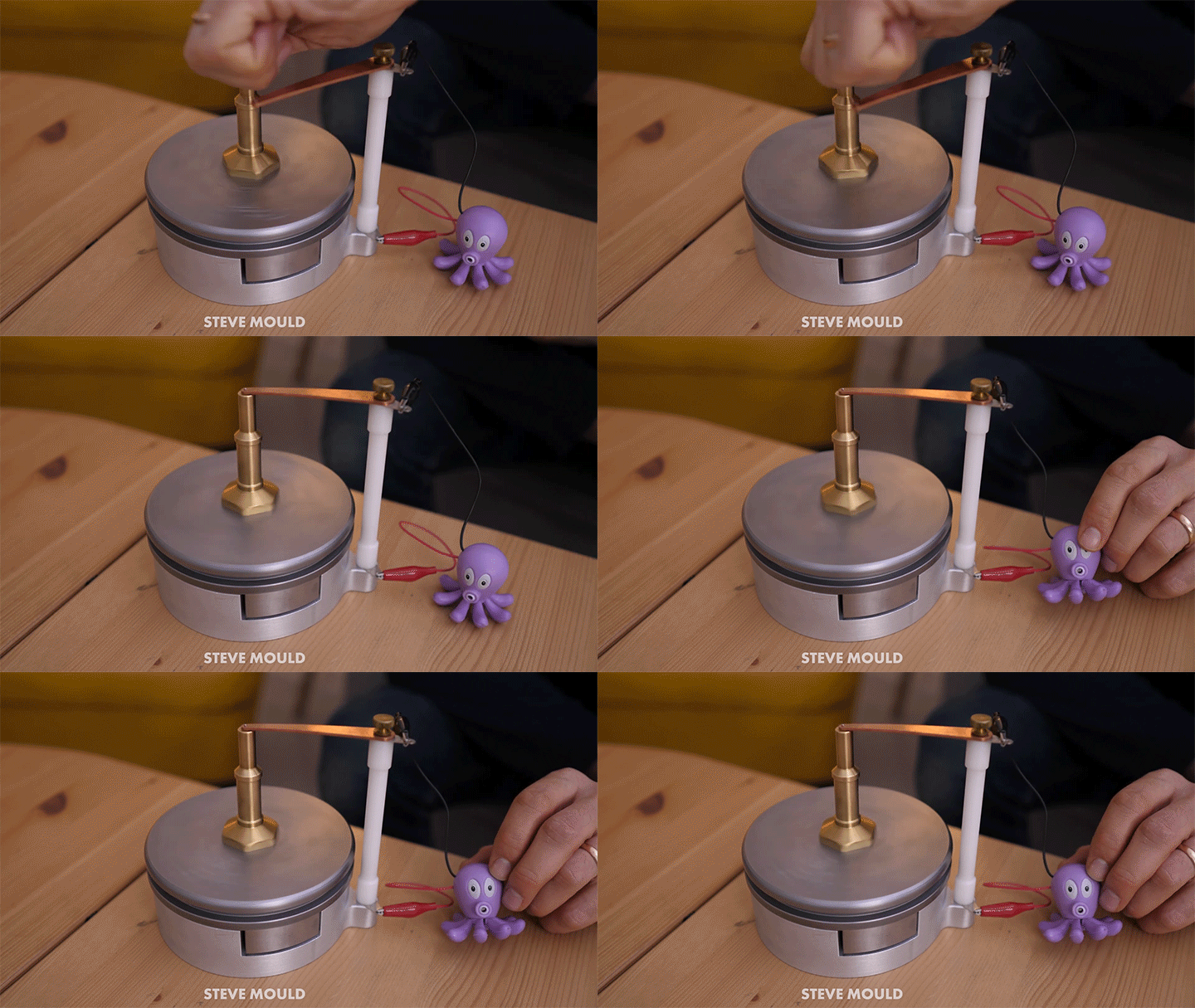
    Year 1: The Vortex Street
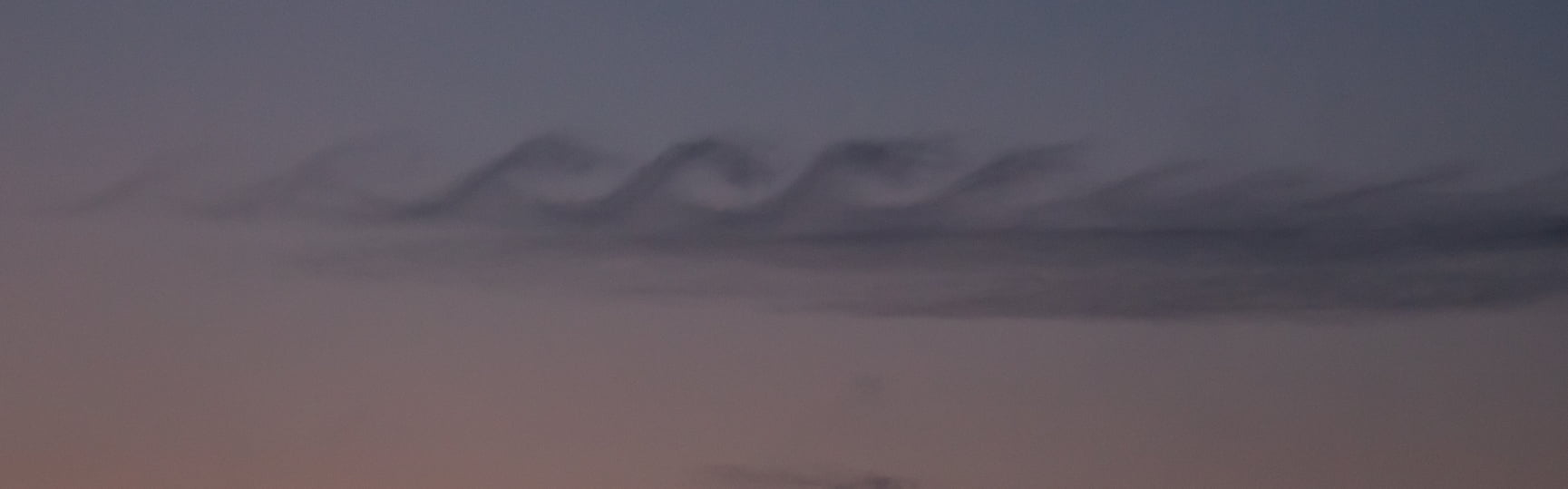
    Year 2: Wave Clouds Over Alabama
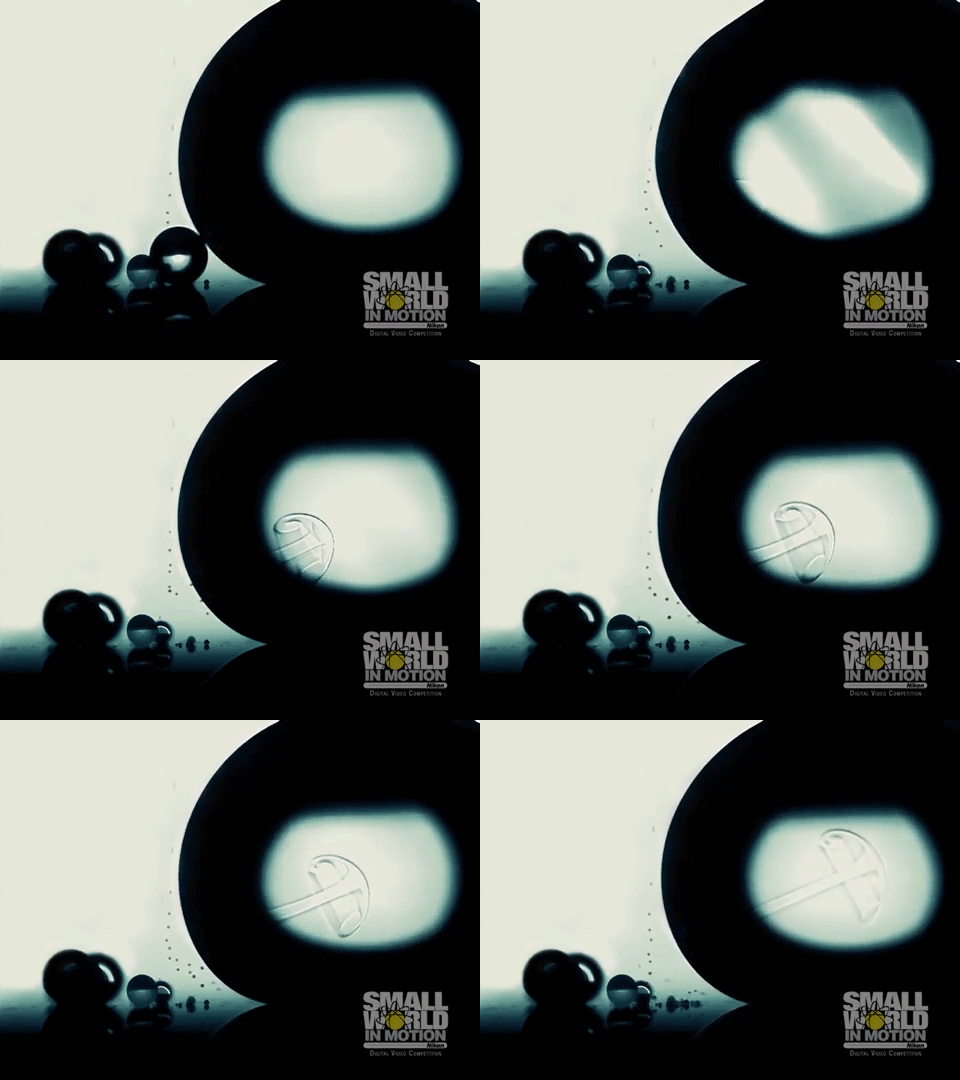
    Year 3: Surface Tension in Action
    Year 4: Why Honeycomb is Hexagonal
    Year 5: Bioluminescence
    Year 6: Self-Pouring Fluids
    Year 7: Watching Radiation
    Year 8: The Swimming of a Dead Fish
    Year 9: Seeing the Song
    Year 10: Collective Catfish Convection

    If you’d rather enjoy something random rather than something “popular”, you can always use the shortcut https://fyfluiddynamics.com/random to explore posts in the archive.

    And in case you’re more interested in watching videos, here are the top FYFD videos (by YouTube views):

    (Wow, my editing and production skills have evolved since some of those earlier vids!)

    So what are your favorite FYFD memories and posts? Let me know in the comments! (Image and video credits: N. Sharp)

  • The Tolling of the Atmosphere

    The Tolling of the Atmosphere

    Strum a musical instrument and you create a host of vibrations at many different frequencies. The same is true of our atmosphere, which rings at frequencies far too low for us to hear. The first theoretical descriptions of this atmospheric ringing date back two centuries to Pierre-Simon Laplace. A new study provides the first experimental evidence of this atmospheric ringing by analyzing 38 years’ worth of hourly atmospheric data.

    The authors found good agreement with the structures predicted by classical theory, but they point out that understanding the mechanisms that drive the ringing requires more research. Since studies of vibrations in the Earth and sun have revealed new dynamics in those systems, it’s likely analyses like these can teach us much more about how our atmosphere functions. (Image credit: NASA; research credit: T. Sakazaki and K. Hamilton; submitted by K. Hamilton)

  • Featured Video Play Icon

    How N95 Masks Work

    You might imagine N95 masks as essentially a strainer intended to catch small particles, but as Minute Physics shows in this video, what these masks do is actually much more clever. A dense, strainer-like mask with tiny openings to block microscopic particles would be very tough to breathe through. Instead, N95 masks take advantage of one of the characteristics of tiny things: they’re very sticky. Thanks to van der Waals forces particles that touch a fiber will stick there.

    By creating an array of fibers between the particle and a person’s mouth, N95 masks do an excellent job of catching both large particles and tiny ones. They have a harder time with medium-sized particles because airflow around the fibers helps these particles avoid them.

    But, luckily, N95 masks have a solution for that problem, too. The fibers of the mask have an electric charge, which helps them attract particles of all sizes and capture them. Of course, as with all masks, they’ll work when worn as intended. (Video and image credit: Minute Physics)

  • Featured Video Play Icon

    “Oooh !! My Delicious Coffee”

    I’m not a coffee person, but Thomas Blanchard’s “Oooh !! My Delicious Coffee” manages to capture my favorite part of the beverage – watching cream and coffee mix. From feathery flows driven by surface tension to droplets floating like miniature cappuccinos, the short film features many of the fantastical landscapes we find when staring into a coffee cup. But don’t get too eager to drink it; Blanchard used a combination of coffee, oil, and paint to achieve those effects! (Image and video credit: T. Blanchard)

  • Crocodilian-Inspired Aerodynamics

    Crocodilian-Inspired Aerodynamics

    Inspired by crocodilians, young scientist Angela Rofail designed attachments to reduce wind loads on high-rise buildings. When crocodilians swim, the ridges on their back help hide their motion from observation above the surface. Rofail wondered whether similar ridges would reduce the wind-induced swaying of high-rise buildings. Using a scale-model and crocodile-inspired knobs, the Year 10 student (read “high-school freshman” for U.S. readers) conducted wind tunnel tests that showed her modifications reduced drag on the model and kept it from moving in windy conditions. (Image credit: H. Roettger; video credit: CSIRO; via CSIRO; submitted by Kam-Yung Soh)

  • The Challenges of Being Small

    The Challenges of Being Small

    For juvenile fish, feeding is a challenge. Their small size — often less than 5 mm in length — makes hydrodynamically capturing prey much harder because of viscosity’s relatively larger effect on them. But size may not be the only factor in determining their success, as a new study shows.

    Researchers studied feeding behaviors of two, equally-sized species’ larvae: zebrafish and guppies. The biggest difference between these two species is their developmental time prior to beginning to hunt on their own. Guppies develop five times longer than zebrafish larvae before they start feeding.

    Both fish have the same hydrodynamic limitations to overcome. If you look closely at the first image, you’ll see fluid being pushed ahead of the fish as it swims. The researchers refer to this as a bow wave, and it effectively announces to any prey that the fish is approaching. To sneak up on prey, the fish has to be able to generate enough suction force to pull its food in from beyond the bow wave’s reach. The experiments showed that guppies were able to do this reliably, while zebrafish could not. The subsequent difference in their feeding success was stark: the guppies’ success rate was almost five times that of the zebrafish! (Image and research credit: T. Dial and G. Lauder, source; via G. Lauder)

  • Searching For Solar Neutrinos

    Searching For Solar Neutrinos

    An experiment in Italy has reported new findings confirming a long-standing theory of nuclear fusion in our Sun. The researchers were able to detect neutrinos released by the relatively rare fusion of carbon and nitrogen. But catching those neutrinos took an impressive fluid dynamical feat.

    The Borexino solar-neutrino detector is essentially an enormous nylon balloon, filled with liquid hydrocarbons, immersed in water, and buried beneath a kilometer of rock. Most neutrinos fly through this milieu unhindered, but a few collide with hydrocarbon molecules, creating streaks of light picked up by the detector.

    The challenge in distinguishing solar carbon-nitrogen neutrinos comes from an isotope in the balloon’s nylon lining, which slowly leaks into the detector. The noise caused by the leaking isotope is easily confused with the true solar signal. To tamp down on that noise level, the researchers took elaborate steps to ensure that all 278 tonnes of liquid in the detector remained at exactly the same temperature, thereby eliminating convection in the detector. With only molecular diffusion to move the noisy isotopes, the researchers held the liquid incredibly still. One team member described the fluid as moving only tenths of a centimeter a month! (Image credit: NASA SDO; via Nature; submitted by Kam-Yung Soh)

  • When Shear Meets Slip

    When Shear Meets Slip

    One of the classic concepts students learn early in their fluids education is the no-slip condition. In essence, this idea says that friction between a solid object — say, a wall — and the fluid immediately next to it is such that no movement is possible where they meet. The fluid cannot “slip” along the surface, hence “no-slip”. It’s a simple concept, but one that can create a lot of complexity in practice.

    Imagine, for example, a fluid sandwiched between two surfaces: one stationary and one moving at a constant speed. This movement creates a shear flow, in which the velocity of the fluid varies from the speed of the moving plate all the way down to zero, the speed of the stationary plate. If we placed a little platelet in the middle of this flow, we’d expect it to rotate because of the faster flow on one side.

    But a new paper finds something rather different, at least when considering an extremely small nanoplatelet. With a tiny enough plate, individual molecules can slip along the surface, and when that happens, instead of rotating, the nanoplatelet aligns itself with the flow. That alignment means the added particle would disturb the flow less, creating a lower viscosity and better flowability. (Image and research credit: C. Kamal et al.; submitted by Simon G.)

  • Featured Video Play Icon

    Alien Eggs? A Virus?

    Nope, they’re hydrogel beads! The team at Chemical Bouillon seem to have once again coated them in something like paint before placing them in water. As the gel beads absorb water, they expand, tearing through their coating. The result is weirdly mesmerizing and kind of creepy. It’s no wonder that special effects artists have historically turned to fluids for sci-fi films! (Image and video credit: Chemical bouillon)

  • Featured Video Play Icon

    How Well Do Masks Work?

    Many mixed messages have been spread about the efficacy of masks in preventing transmission of COVID-19. Nevertheless, there is good evidence that they help, as discussed in this video from It’s Okay to Be Smart. Much of the video shows schlieren imaging of a (healthy) individual engaging in regular activities – like talking, breathing, and coughing — with and without a cloth mask.

    Now, it’s important to note that what you see in these images is airflow, not the droplets that can carry the virus. However, research has shown that these airflows play a significant role in transporting droplets. It follows that disrupting those airflows can disrupt transmission of diseases passed via droplet. This is one of the key reasons to wear a mask.

    Notice how far jets and plumes of air fly from a maskless person’s mouth and nose. We cannot even observe how far momentum carries that air because the area visualized in this schlieren set-up is smaller than the full distance the air moves! But wearing a mask breaks up that flow structure. It reduces the air’s momentum, and it forces any air that does escape to move in smaller, less efficient structures. Even without considering any filtering effects or the fact that masks catch large droplets coming out of the wearer’s mouth, it’s clear that mask-wearing keeps others nearby safer. (Video and image credit: It’s Okay to Be Smart; references)