In “Water III,” filmmaker Morgan Maassen explores the ocean from above and below. I love the sheer variety of fluid phenomena; yes, there are classic breaking barrel waves for surfing, but there are also rib vortices and bubble plumes and churning turbulence that wouldn’t be out of place in a stormy Midwestern sky. Enjoy! (Image and video credit: M. Maassen)
Tag: bubbles

The Odd Air Bubbles
Though it looks like a strange underwater panorama, this image by photographer Marek Miś actually captures air bubbles trapped beneath the slip cover of a microscope slide smeared with drying callus remover. According to Miś, “Callus remover is one of my favourite agents for taking micrographs. It can create unusual crystalline forms. This time I found on the slide these interesting air bubbles before the callus remover started to crystallise.” I confess that I wouldn’t have thought to use callus remover for art!
This image earned 3rd place in the Micro category of the Close-Up Photographer of the Year awards. See more winners here, and find more from Miś on the web and Instagram. (Image credit: M. Miś)

Making Yeast-Free Pizza
Yeast is a key ingredient in many pizza doughs; as the yeast ferment sugars in the dough, they produce carbon dioxide which bubbles into the dough, creating the light and airy texture necessary for a good crust. It’s a slow process, though, often requiring several hours for the dough to rise. Recently, researchers studied an alternative pizza-making method that generates bubbles in the dough via pressurization — with no yeast required.
The new technique is similar to the process used to carbonate sodas. The team mixed flour, water, and salt and placed the dough in an autoclave, which allowed them to control both temperature and pressure during baking. They dissolved gas into the dough at high pressure and then carefully released the pressure during baking, allowing the bubbles to grow. They used rheological measurements to compare the characteristics of yeasted and yeast-free doughs at various stages in the leavening and baking processes.
Now that they have the methodology down, they’ve purchased a food-grade autoclave and are looking forward to taste testing their yeast-free creations — none more so than their team member who has a yeast allergy! Since the pressures required for their method are quite mild, they hope it’s a technique that restaurants will take on. (Image credit: B. Huff; research credit: P. Avallone et al.)

When Bubbles Don’t Die
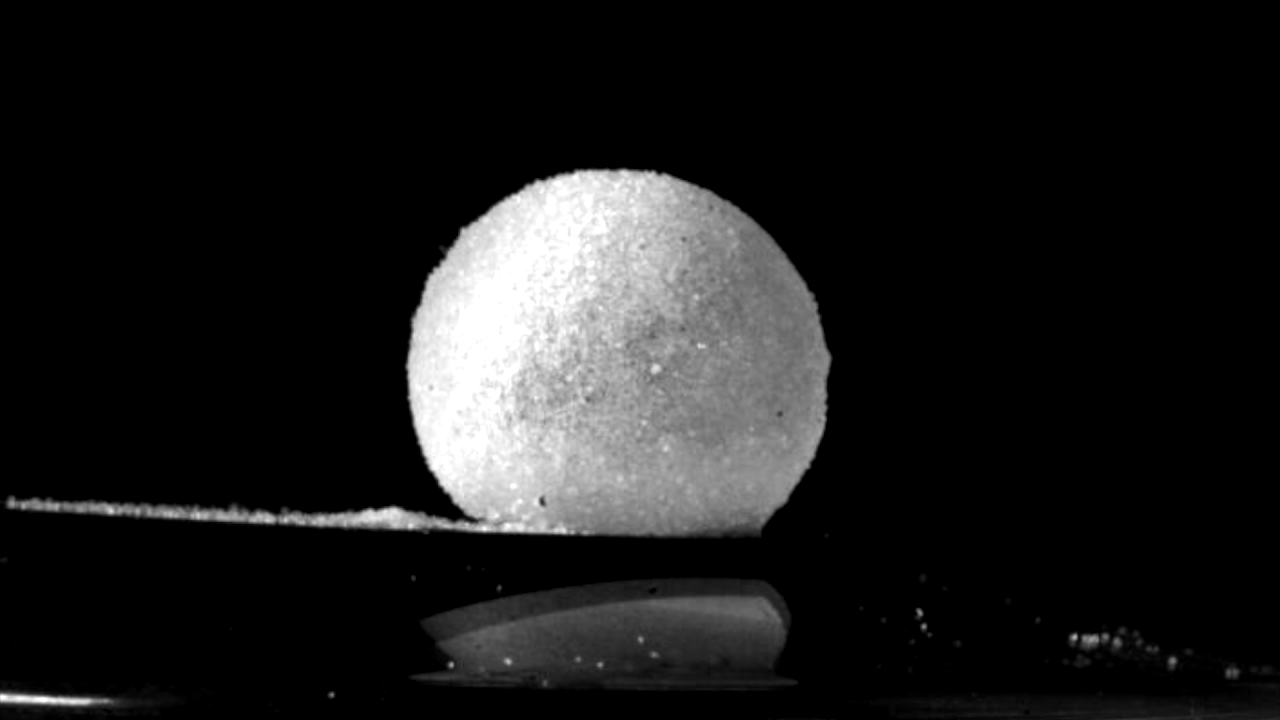
In a pure liquid, most bubbles pop almost immediately. But with a simple ingredient — a little heat — bubbles can live almost indefinitely. The mechanism is revealed in this video when the researchers use an infrared camera to watch a bubble on a heated pool. The top of the bubble is cooler than the rest of the liquid, forming colder, denser droplets that slide down. But the cooler liquid also has a higher surface tension, which draws warm liquid up the bubble, replenishing it. The result is a stable bubble that simply carries on. (Image and video credit: S. Nath et al.)

Backflipping Bubbles
Rising bubbles can backflip when they impact a tilted surface. As shown in this video, small bubbles will bounce off a titled surface, with each hop leading the bubble further up the incline. For slightly larger bubbles, though, things get a little more complicated. The bubble impacts the surface, bounces away, then circles back and makes its second impact behind the first before moving further up the plate. What drives this backflip? The researchers found that circulation around these bubbles is asymmetric, generating a lift force that drives the bubble’s backflip. (Image and video credit: A. Hooshanginejad et al.)

Everlasting Bubbles
Soap bubbles are delicate and ephemeral, always a breath away from collapse due to thinning driven by gravity or evaporation. But that frailty can be countered. Adding microparticles to the bubble’s shell in place of surfactants counters drainage and makes bubbles last for tens of minutes (left). Adding glycerol to the mix takes things a step further (right). The glycerol, which absorbs water from the surrounding air, counteracts the evaporation, allowing bubbles to remain intact — with no discernible change to their radius — almost indefinitely. So far the researchers have made such a bubble last for 465 days! (Image and research credit: A. Roux et al.; via APS Physics)

Sounds of Champagne
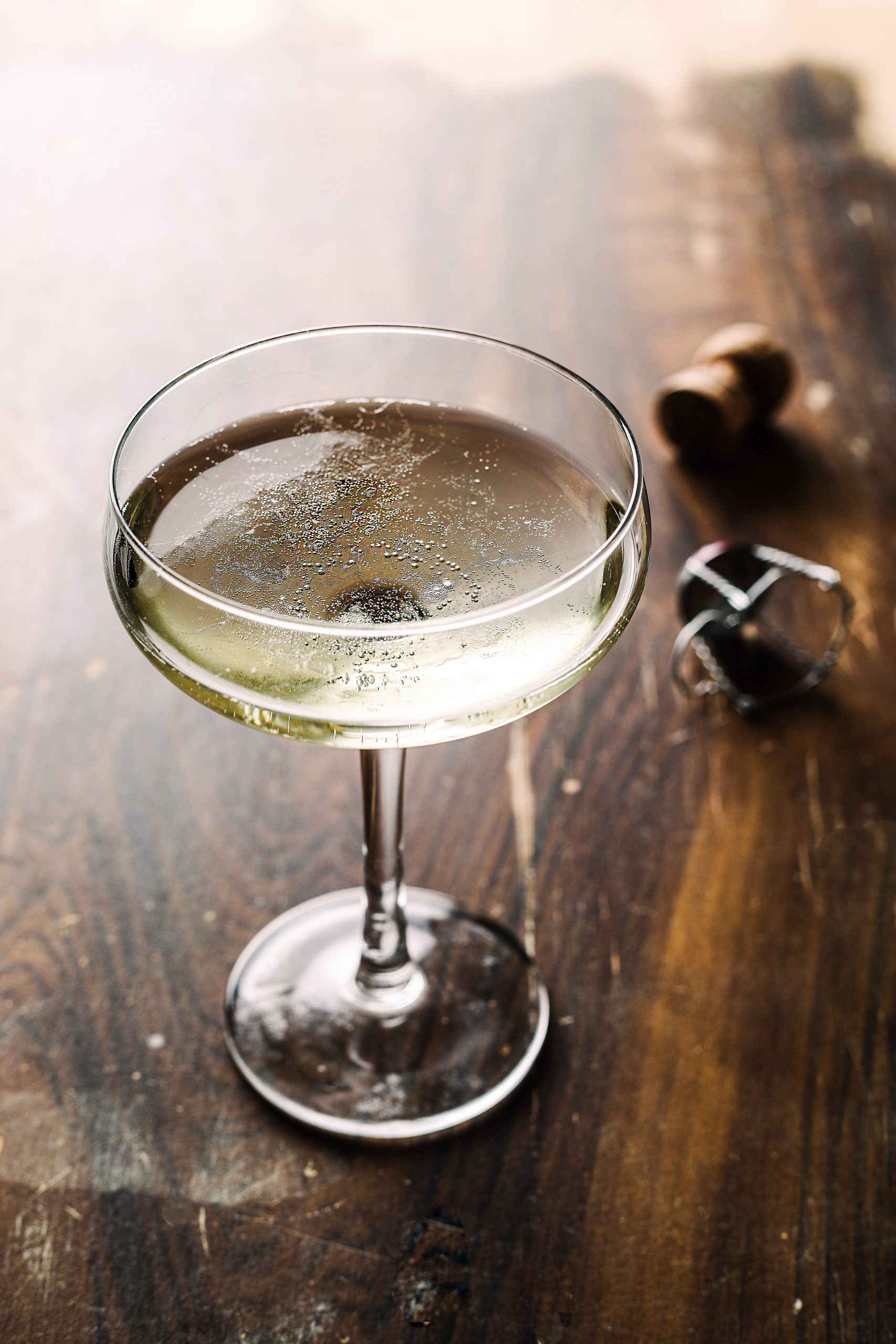
Lean in to a glass of champagne and you’ll hear a soft chorus of sound as the bubbles pop. Recently, researchers determined the specific mechanism in the process that’s responsible for that audible sound.
Bubbles pop when the thin film of liquid separating them from the atmosphere drains away. The moment the film opens corresponds to the start of the sound, as overpressurized air inside the bubble has a chance to escape. The researchers found that the bubble behaves like a open-ended Helmholtz resonator, and by the time the sound emission ends, the bubble’s collapse has barely begun. (Image credit: L. Lyshøj; research credit: M. Poujol et al.)

The Hot Chocolate Effect
Stir hot chocolate powder into milk or water, and you can recreate this bizarre acoustic phenomenon. Once the powder is mixed in, tapping the side of the cup creates a low pitch that steadily rises as you continue tapping. This is known as the hot chocolate, or allossonic, effect. When you stir, it creates tiny bubbles in the fluid, which changes the effective speed of sound. As the bubbles pop, the speed of sound goes up and the pitch of your tapping gets higher! Stirring the cup up again (even without adding more powder) should lower the pitch once more. (Video credit: C. Kalelkar)

Cavitation-Induced Microjets
In cavitation, tiny bubbles of vapor form and collapse in a liquid, often sending shock waves ricocheting. In most occurrences beyond the lab, cavitation bubbles aren’t a solo act; many bubbles can form and interact. This video takes a look at some of the effects of those interactions. When close together, two cavitation bubbles can act to focus the flow during collapse, generating a microjet strong enough to penetrate into nearby surfaces. Researchers hope this technique may one day be used for needle-free injections. (Image, video, and submission credit: A. Mishra et al.)