Tag: olympics

  • Paris 2024: Cycling in Crosswinds

    Paris 2024: Cycling in Crosswinds

    Wind plays a major role in cycling, since aerodynamic drag is the greatest force hampering a cyclist. In road racing, both individual cyclists and teams use tactics that vary based on the wind speed and direction. Crosswinds — when the apparent wind comes from the side in the cyclist’s point of view — are some of the toughest conditions to deal with. In races, groups will often form echelons to minimize the group’s overall effort in a crosswind. Alternatively, racers looking to tire their competitors out will position themselves on the road so that the rider behind them gets little to no shelter from the wind; this is known as guttering an opponent.

    In this study, researchers put a lone cyclist in a wind tunnel and measured the effects of crosswind from a pure headwind to a pure tailwind and every possible angle in between. From that variation, they were able to mathematically model the aerodynamic effects of crosswind on a cyclist from every angle. With rolling resistance (a cyclist’s second largest opposing force) included, they found relatively few conditions where a crosswind actually helped a cyclist. Most of the time — as any cyclist can tell you — hiding from the wind is beneficial. (Image credit: J. Dylag; research credit: C. Clanet et al.)

    Related topics: The physics of the Tour de France, how the peloton protects riders aerodynamically, track cycling physics, and a look inside wind tunnel testing bikes and cyclists

    Catch all of our ongoing Olympics coverage here.

  • Paris 2024: Coordinating the Front-Crawl

    Paris 2024: Coordinating the Front-Crawl

    Of all the swimming strokes humans have invented, none is faster or more efficient than the front-crawl. That’s why all competitors use it in freestyle events, and why it’s the only stroke that appears in races longer than 200 meters. But elite swimmers don’t perform the front-crawl the same way in a sprint as they do in a longer race. Instead, researchers found that swimmers use three different regimes of arm coordination.

    For long-distance races, elite swimmers adopt a stroke that has only one arm in the water at a time. Each stroke is followed by a glide phase with one arm stretched in front of them. Researchers compared this to the burst-and-coast method that fish use to minimize the energy they use. As a swimmer’s speed increases, they shorten the glide phase and begin to maximize the force produced with each propulsive stroke.

    In the third regime — the fastest one used by elite sprinters — the strokes of a swimmer’s arms are superposed, with both arms engaged in propulsion at the same time during parts of the cycle. This mode maximizes propulsive force but requires a lot of energy, so swimmers can only sustain it for a short while.

    Since researchers built their observations into a physical model that explains how and why elite swimmers do this, the model can actually be used to advise individual swimmers on how they can adapt their stroke based on their size, desired speed, and other physical characteristics. (Image credit: J. Chng; research credit: R. Carmigniani et al.)

    Related topics: More on swimming physics including why swimmers are faster underwater and how to design faster pools.

    Find all of our current and past Olympics coverage here.

  • Paris 2024: Bouncing and Spinning

    Paris 2024: Bouncing and Spinning

    Spin, or the lack thereof, plays a major role in many sports — including tennis, golf, football, baseball, volleyball, and table tennis — because it affects whether flow stays attached around a ball, as well as how much lift or side force a ball gets. A ball’s spin doesn’t stay constant, however. During flight, a ball’s spin decays at a rate proportional to its initial spin and velocity. Researchers have found that a ball’s moment of inertia, flow regime, and surface roughness all affect that decay, but which factor is the most significant varies by ball and by sport.

    Whether a ball bounces while spinning also matters. For compliant balls on a non-compliant surface — think tennis balls on a court — a bounce can actually change how much a ball spins. During impact, a tennis ball can: slide, decreasing its tangential velocity while increasing its topspin; roll, where the ball’s tangential velocity matches the tangential velocity of the surface; or over-spin, where the ball spins faster than it rolls. For a given impact angle and velocity, researchers found that stiffer and/or lighter balls were more likely to over-spin. Within tennis’s allowable range of ball stiffness and mass, manufacturers could create tennis balls that over-spin far more than conventional ones, creating another opportunity for deceptive tactics in the sport. (Image credit: J. Calabrese; research credit: T. Allen et al.)

    Related topics: How flow separates from a surface, and why turbulence is sometimes preferable

    Find all of our Olympics coverage — past and ongoing — here and every sports post here.

  • Paris 2024: Triathlon Swimming

    Paris 2024: Triathlon Swimming

    Unlike the swimming competition, Olympic triathletes complete their swim legs in open waters. There are no lane dividers and no rules against drafting off a fellow athlete. Curious to see how draft positioning could affect swimmers, researchers experimented with swimmer-shaped models in a water channel and a numerical simulation. They found that the most advantageous position is directly behind a lead swimmer, where the follower could enjoy a 40% reduction in drag. Another good position is near the leader’s hip, where waves off the leader provide a 30% reduction in drag.

    The worst place to swim, interestingly, is immediately side-by-side. With both swimmers neck-in-neck, drag is maximized, and each swimmer feels more drag than they would swimming by themselves! (Image credit: J. Romero; research credit: B. Bolan et al.)

    Related topics: Drafting in each triathlon stage and drafting effects in nordic skiing

    Join us all this week and next for more Olympics-themed stories.

  • Paris 2024: Swimsuit Tech

    Paris 2024: Swimsuit Tech

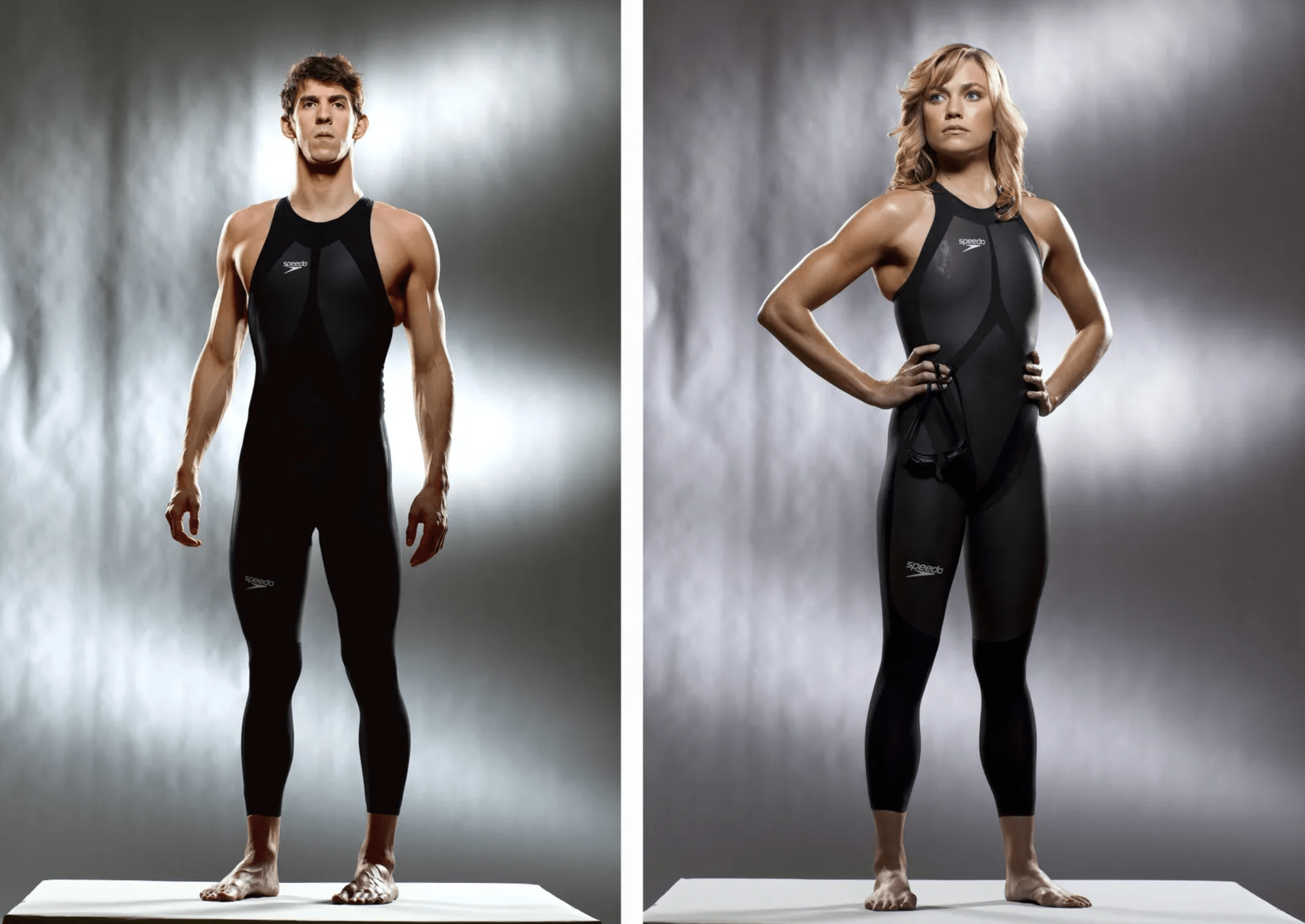
    The aughts were an exciting time to watch competitive swimming. Records were falling left and right, especially in 2008 and 2009. The first wave of improvements came around 2000, with the introduction of full-body swimwear. According to one analysis, men’s freestyle swimming performances improved by about 1% with that change. The next big leap came in 2008 when companies introduced polyurethane panels into the suits (most famously the LZR Razer suits pictured above) causing an additional 1.5-3.5% performance improvement. The panels were stiff, reducing the swimmer’s cross-sectional area and thereby reducing drag. Their effect was greatest in sprint events; long-distance swimmers saw fewer improvements, possibly because turning in the stiffer suits was tiring.

    The biggest leap came in 2009 with all polyurethane full-body swimsuits, which streamlined swimmers and gave them skin friction improvements that let them slip through the water more easily. Freestyle swimmers with those suits were showing a full 5.5% performance improvement on top of the 2000-era full-body suits.

    With so many records falling in 2008 and 2009 — largely to swimmers wearing the expensive new suits that some teams could not afford — swimming’s federation chose to ban the new technology, causing an immediate drop in performances to pre-polyurethane levels. Although sprint performances will likely improve little by little each year, no one is likely to break the sprint records of 2008-2009 in the next decade — not unless the federation establishes a “new rules” record the way officials did with the javelin after a major rule change. (Image credit: Getty Images; research credit: L. Foster et al.)

    Today kicks off our fluids-themed Olympics coverage. Stay tuned for more sports this week and next week. If that’s not enough sports physics for you, check out what we wrote in previous years.

  • Beijing 2022: Sliding on Snow

    Beijing 2022: Sliding on Snow

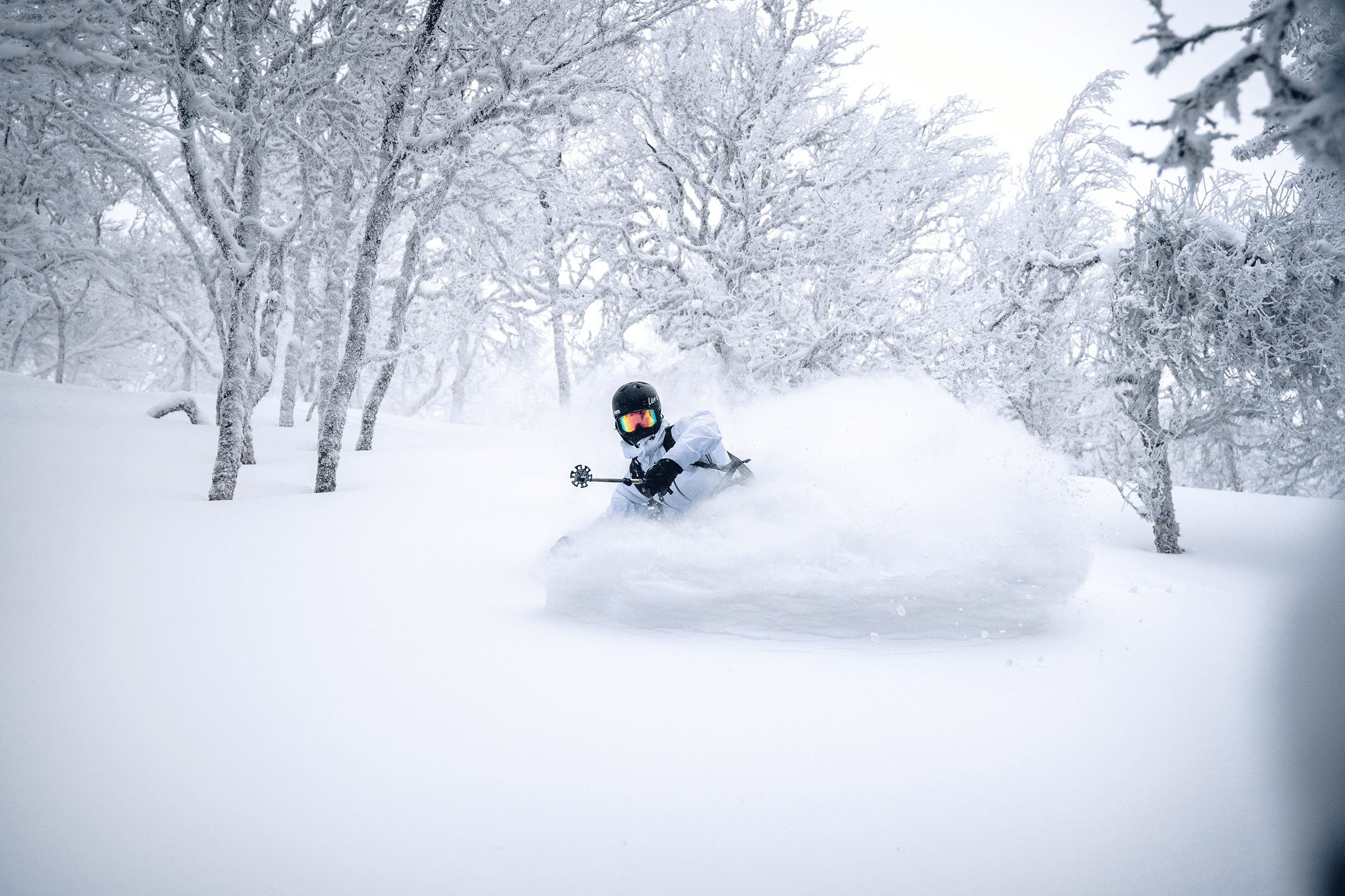
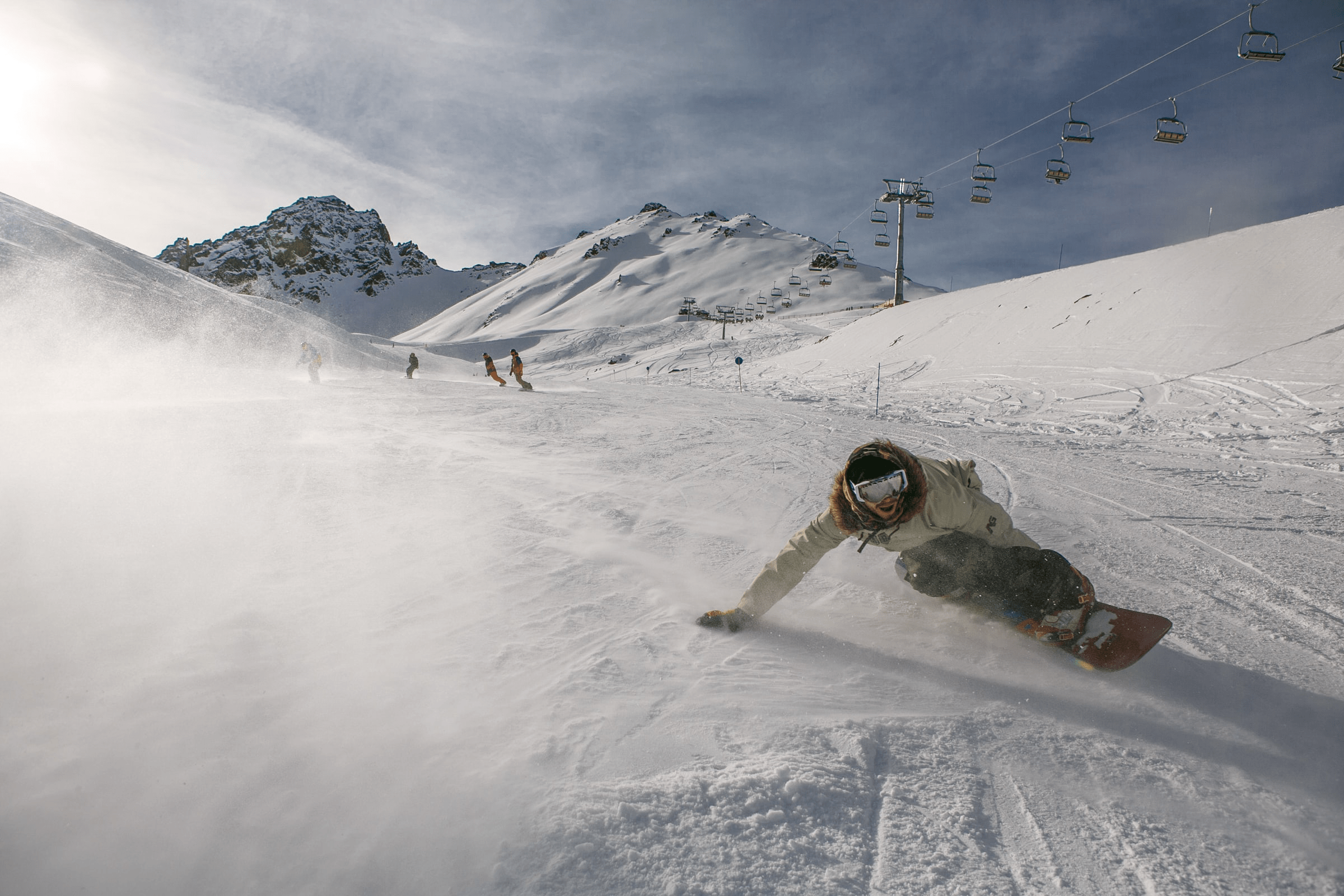
    Skiing and snowboarding events rely on the peculiar physics of sliding on snow. According to classical lubrication theory, that sliding shouldn’t be nearly as low in friction as what we observe. The key here is that snow is soft and porous; it’s compressible, but it can also trap air (or water) in the pores between flakes. Because the passage of a skier or snowboarder is so fast, the air doesn’t have the time to slip out of the pores. Instead, it gets pressurized, providing lift that keeps the slider’s friction low. In the end, it isn’t the snow holding the slider up, it’s the air trapped in the snow beneath them! (Image credit: skier in powder – J. Andersson, snowboarder – Visit Almaty, halfpipe – P. T’Kindt; research credit: Z. Zhu et al.)

  • Beijing 2022: Ice’s Slideability

    Beijing 2022: Ice’s Slideability

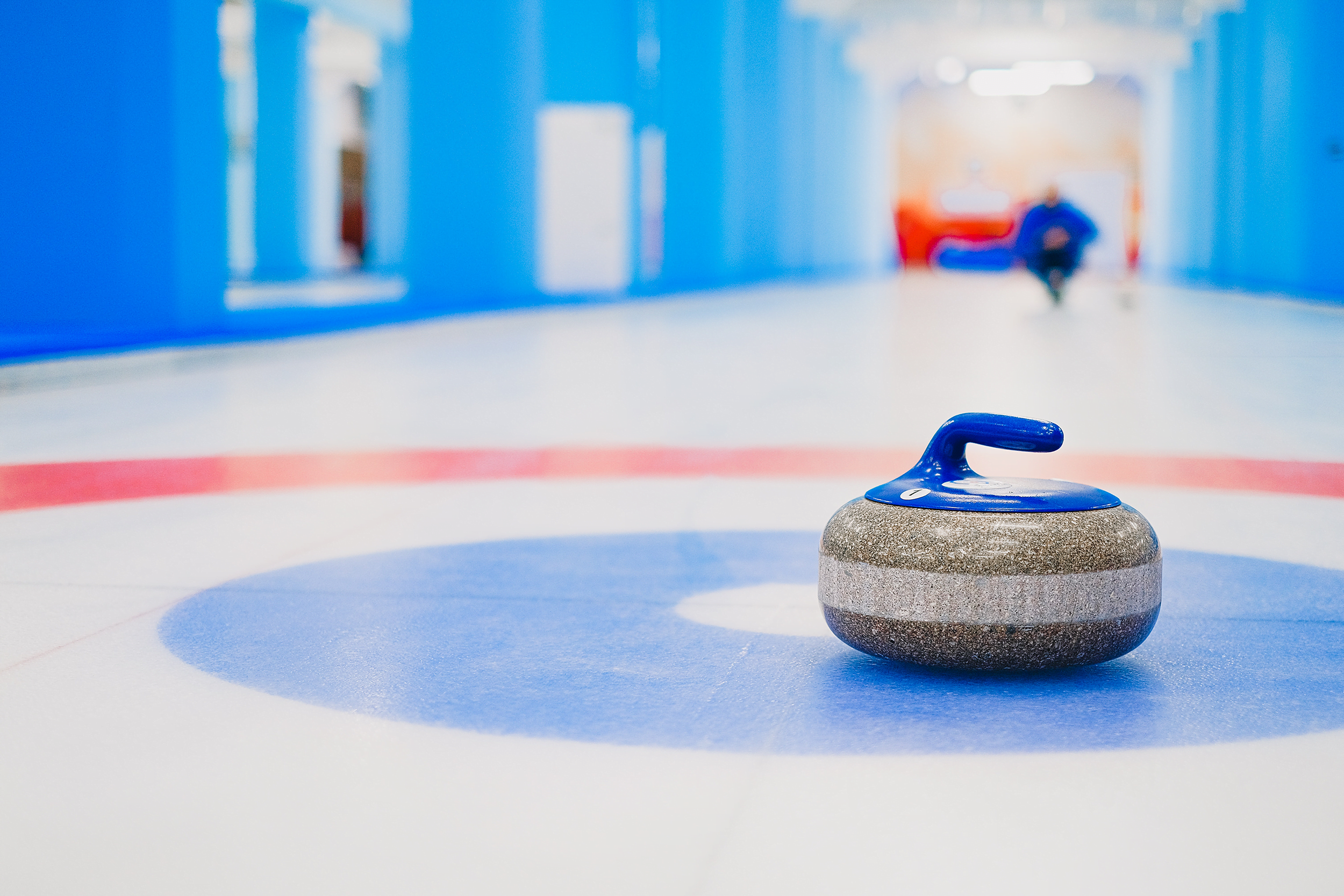
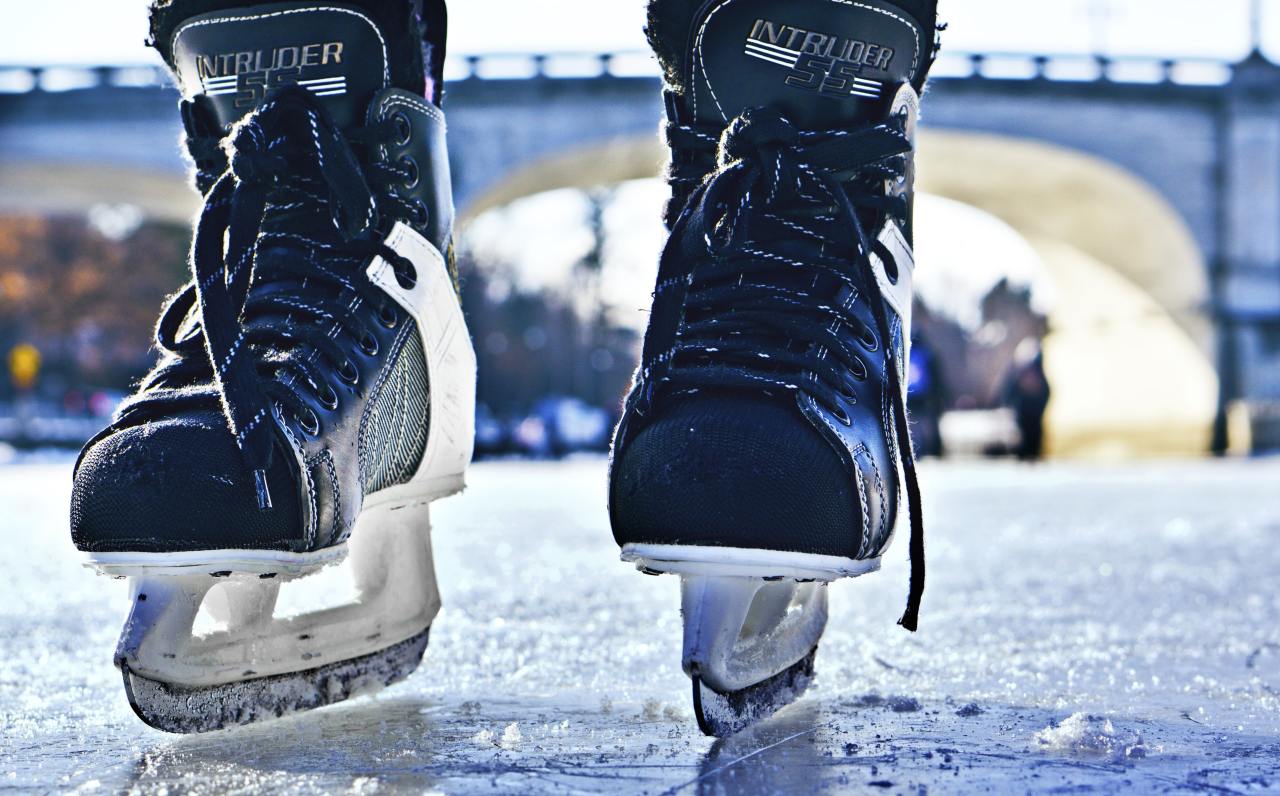
    As scientists continue to unravel the peculiarities of ice, they’ve found that ice’s friction depends both on the object sliding on it and the ice’s hardness. At extremely low temperatures, water molecules at the ice’s surface are held rigidly by the hard ice, resulting in high friction. At intermediate temperatures, however, water molecules at the surface were more mobile — especially with a quick-moving slider going by — so the friction decreased.

    But as the ice approached its melting point, the friction behavior shifted again. As the ice softened, sliding objects could begin to plough into the ice, dramatically increasing contact and friction. When ploughing begins depends on temperature, slider shape, contact pressure, slider speed, and ice hardness.

    Beyond the lab, researchers found that weather plays a role in slideability, too, since humidity and air temperature can affect the thickness of the liquid-layer at the ice’s surface. (Image credit: SHVETS Productions; research credit: R. Liefferink et al.; via APS Physics; submitted by Kam-Yung Soh)

  • Beijing 2022: Monobob

    Beijing 2022: Monobob

    Bobsleigh, as a discipline, has been dominated in recent years by teams seeking every aerodynamic advantage to shave hundredths of a second off their runs. So it’s fascinating that the newest event in the discipline — the women-only monobob — cuts away that secretive part of the sport by permitting sleds from only one manufacturer. Every athlete competes in an identical sled. Not only that, they swap sleds between runs based on their times! So the fastest athlete from the first run will switch sleds with whomever had the slowest time.

    The event’s rules refocus the competition on athletic performance and skill rather than incentivizing countries who can afford to spend more money on wind tunnel testing and F1 design companies. That’s a great step toward leveling the playing field. I can’t wait to watch! (Image credit: OIS)

  • Beijing 2022: Ski Jumping

    Beijing 2022: Ski Jumping

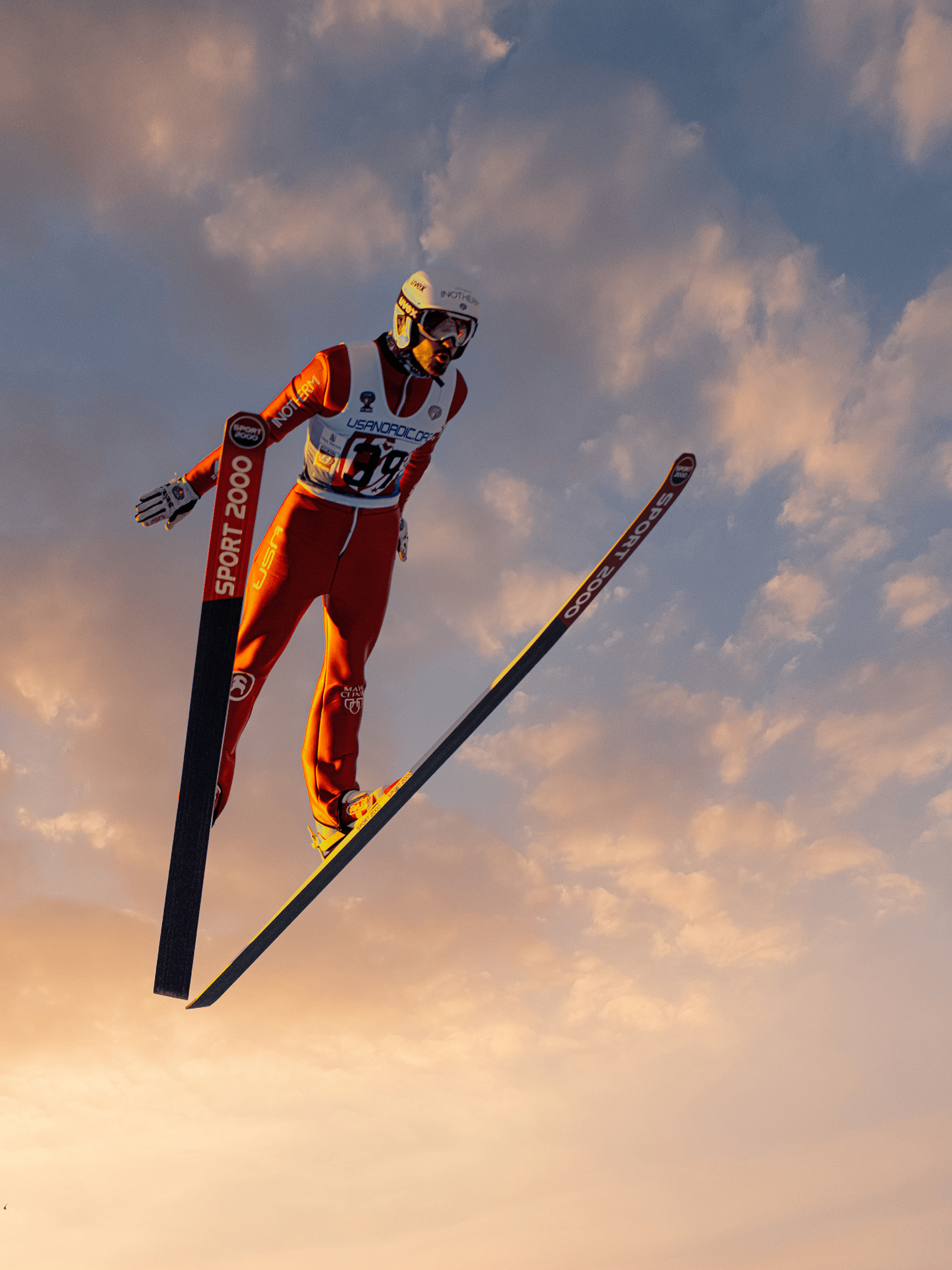
    In ski jumping, aerodynamics are paramount. Each jump consists of four segments: the in-run, take-off, flight, and landing. Of these, aerodynamics dominates in the in-run — where jumpers streamline themselves to minimize drag and maximize their take-off speed — and in flight. During flight, ski jumpers spread their skis in a V-shape and lift their arms to the sides to turn themselves into a glider. Their goal is to maximize their lift-to-drag ratio, so that the air keeps them aloft as long as possible. Because of the short flight time and high risk of taking jump after jump, many elite ski jumpers use wind tunnel time to practice and hone their flight positioning, as seen in the video below.

    Weather also plays a significant role in ski jumping; it’s one of the few sports where a headwind is an advantage to athletes. To try to adjust for wind effects, scoring for the sport uses a wind factor. (Image credit: T. Trapani; video credit: NBC News)

  • Beijing 2022: Why Are Ice and Snow Slippery?

    Beijing 2022: Why Are Ice and Snow Slippery?

    Although every Olympic winter sport relies on the slippery nature of snow and ice, exactly why those substances are so slippery has been an enduring mystery. Michael Faraday hypothesized in the nineteenth century that ice may have a thin, liquid-like layer at its surface, something that modern studies have repeatedly found.

    One recent study used an entirely new instrument to probe the characteristics of this lubrication layer and found that it is only a few hundred nanometers thick. But the fluid in this layer is nothing like the water we’re used to. Instead it has a viscosity more akin to oil and its response to deformation is shear-thinning and viscoelastic, more like the complex fluids in our kitchens and bodies than pure, simple water. They found that using a hydrophobic probe modified the interfacial viscosity even further, which finally provides a hint at the mechanism behind waxing skis and skates. 

    Fortunately for us, we’ve found plenty of ways to employ and enjoy water’s slipperiness, even as the mystery of it slowly gives way to understanding. (Image credit: M. Fournier; research credit: L. Canale et al.; via Physics World; submitted by Kam-Yung Soh)