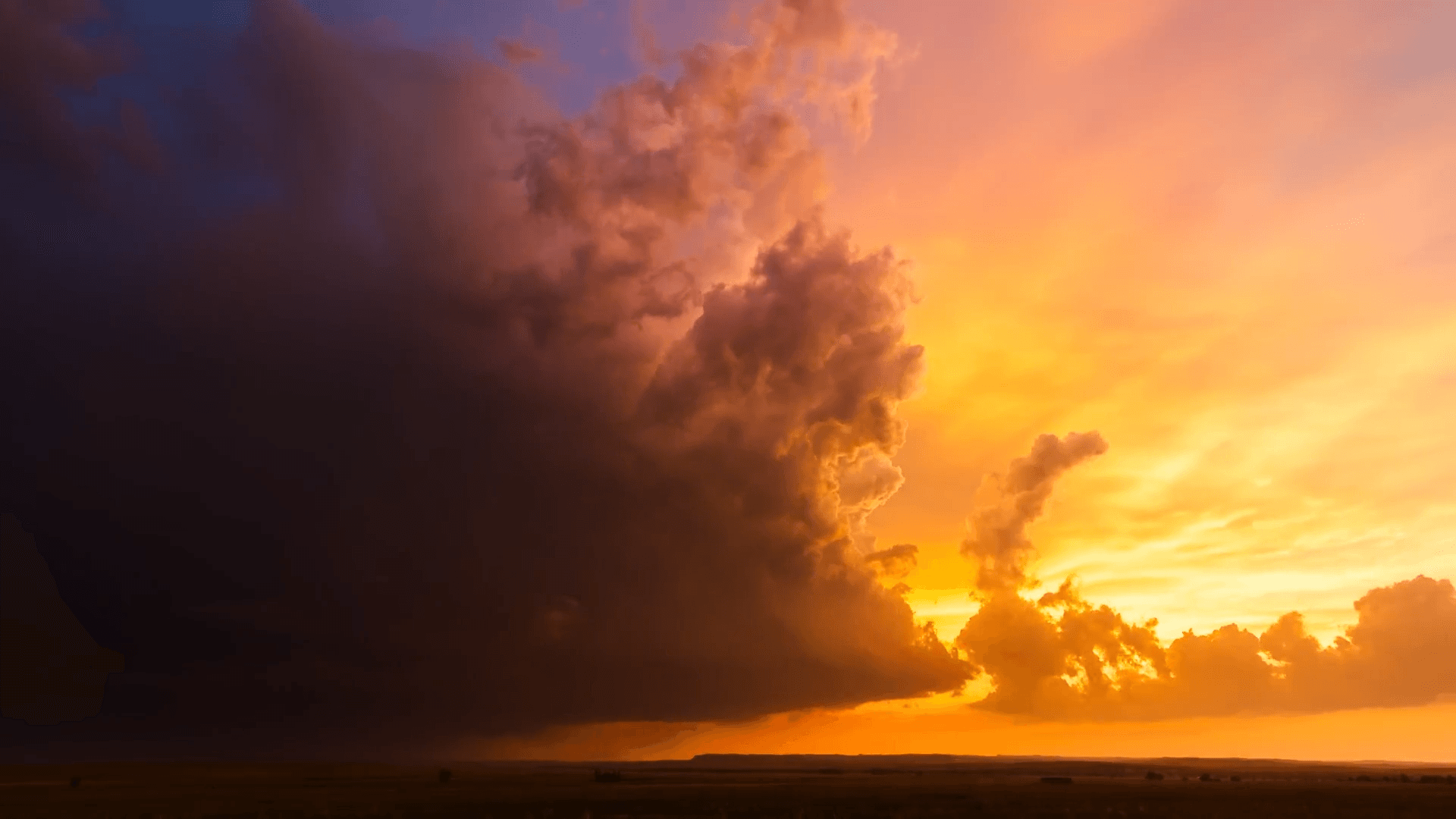
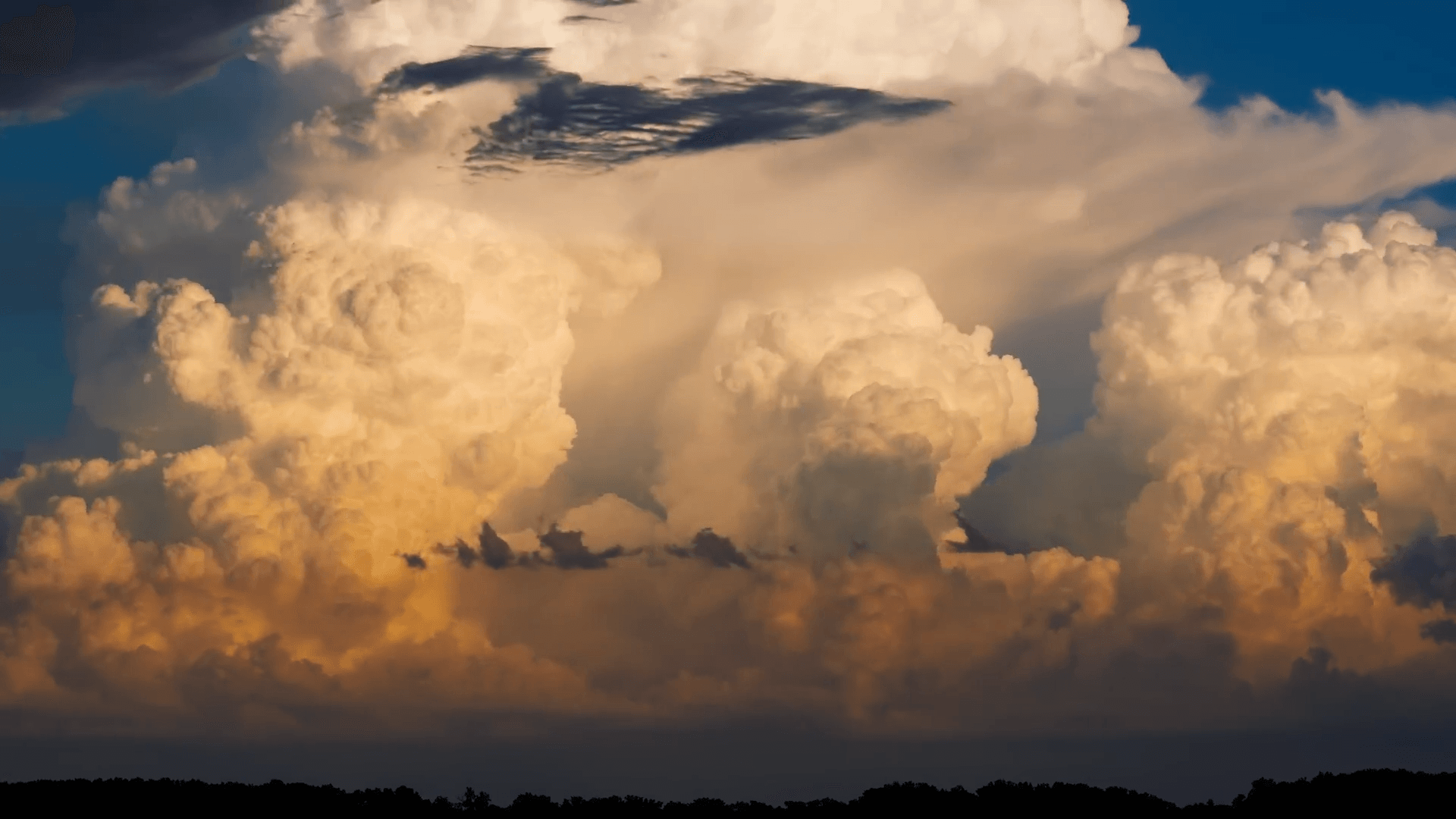
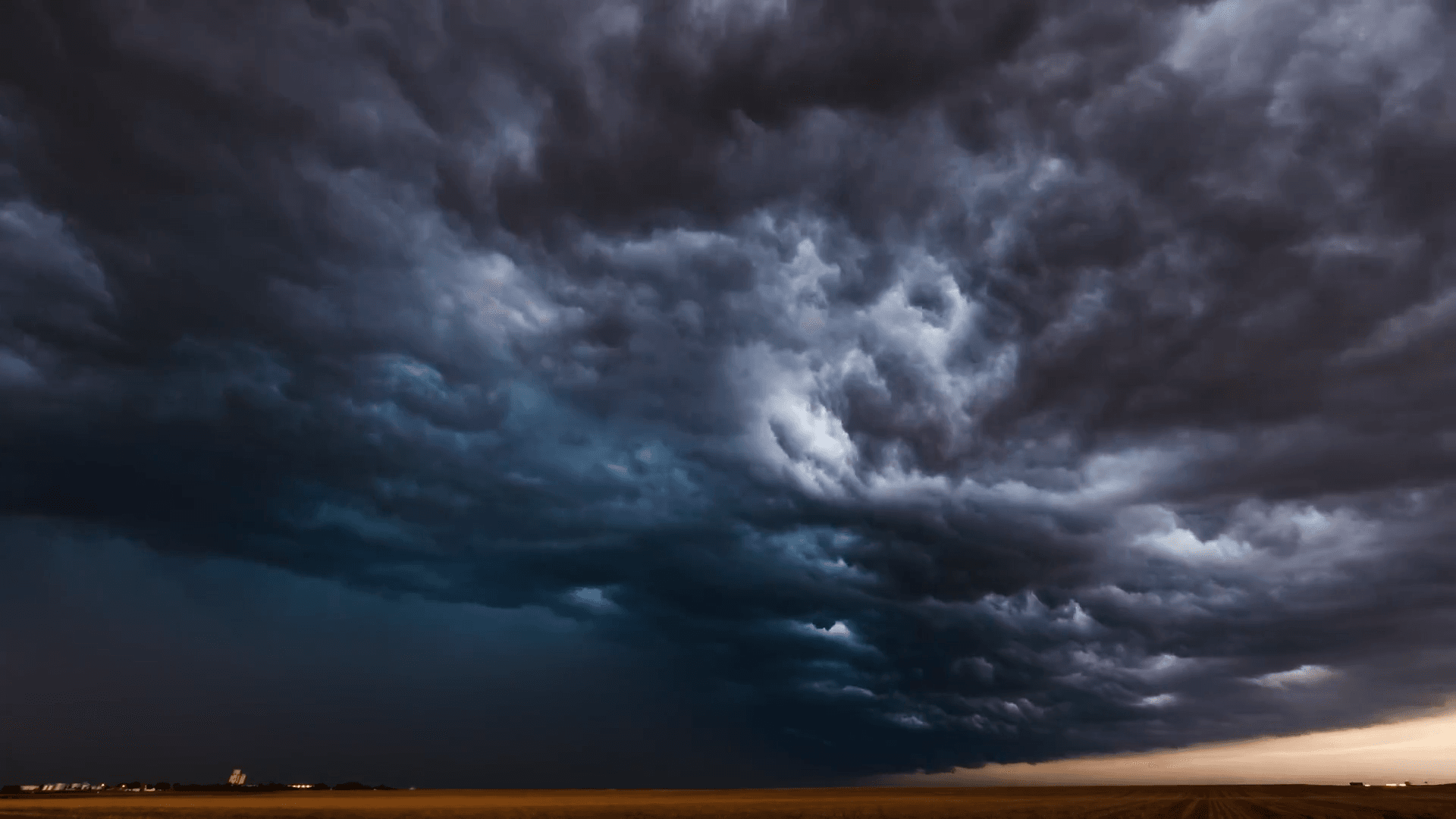
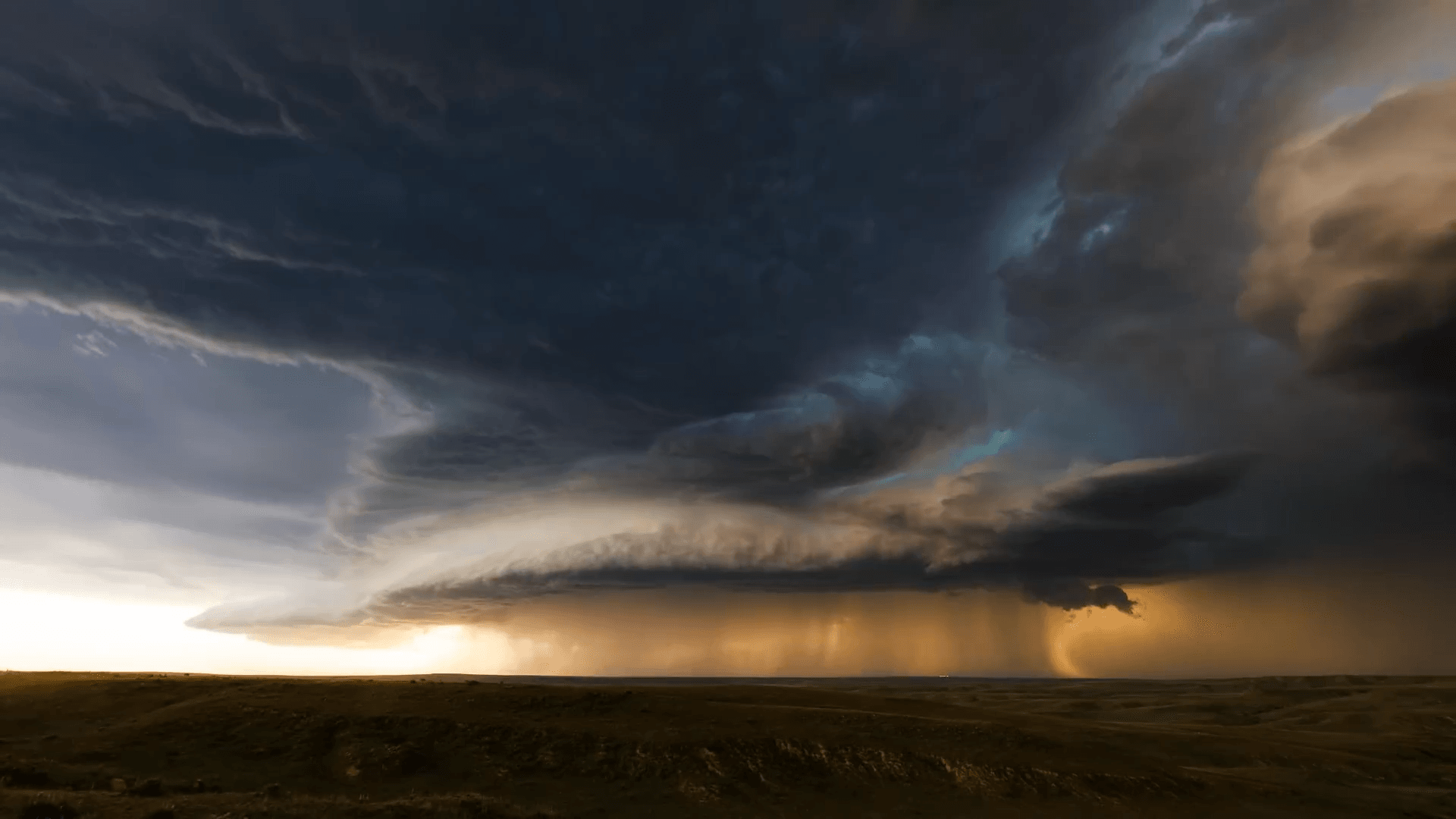
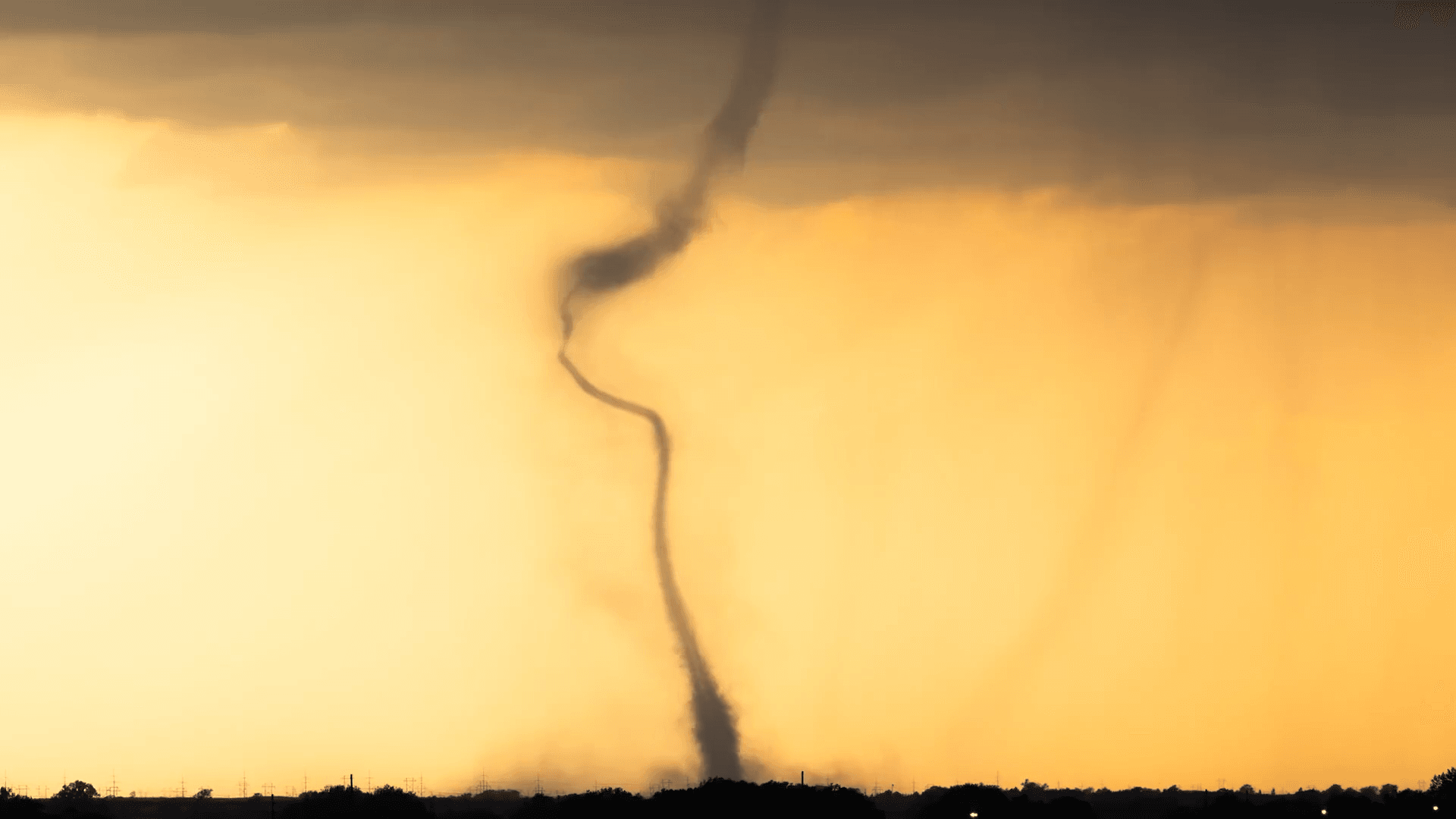
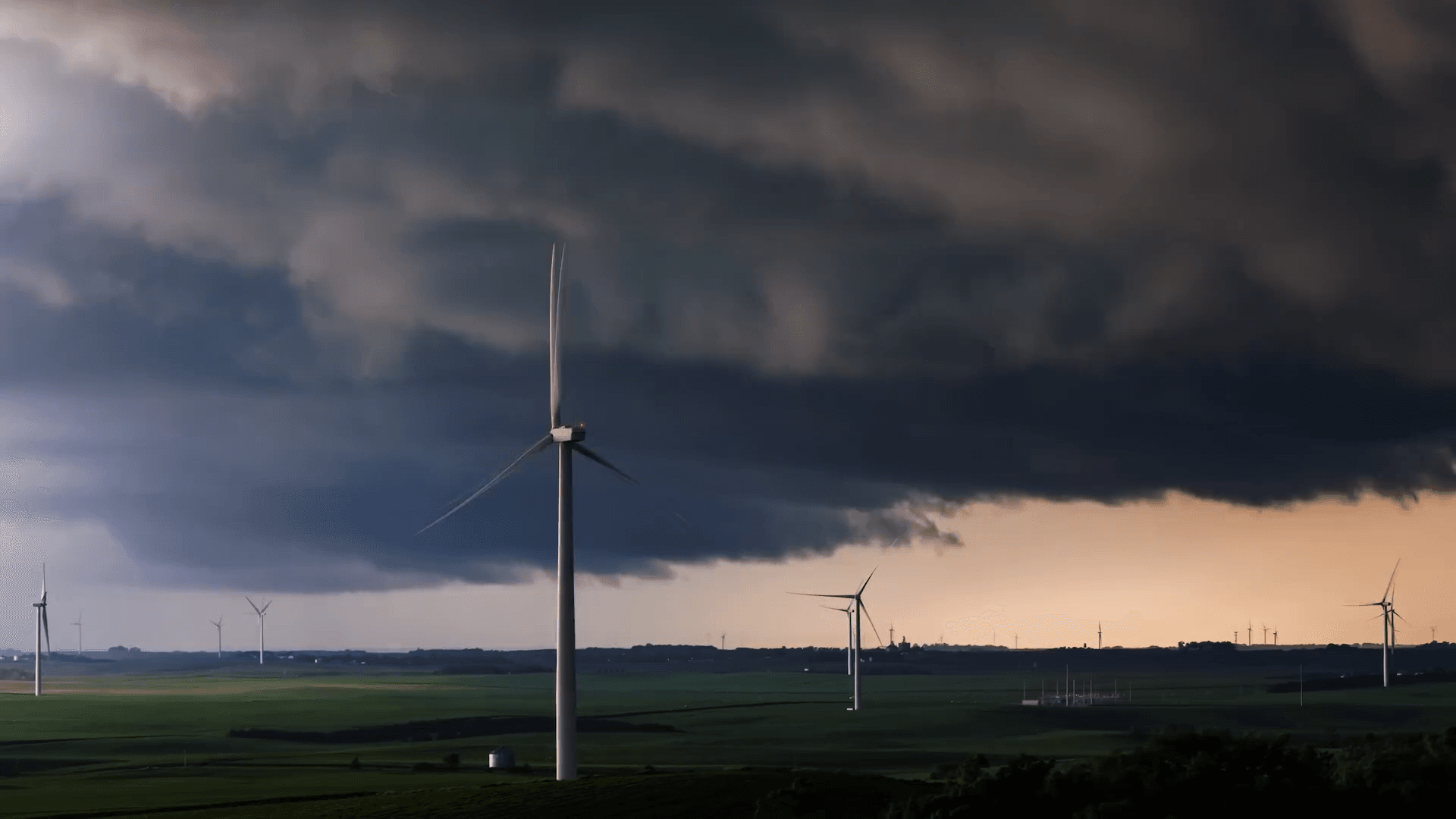
It’s time for another storm-chasing timelapse from photographer Mike Olbinski! “Vorticity 6” focuses on supercell thunderstorms and their tornadoes. There’s billowing turbulent convection, undulating asperitas, bulging mammatus, microbursts, and more. There’s nothing like timelapse to highlight the growth, rotation, and shear involved in these storms. (Video and image credit: M. Olbinski)
Photographer and stormchaser extraordinaire Mike Olbinski is back with the fifth volume in his “Vorticity” series. Shot over the 2022 and 2023 tornado seasons in the U.S. Central Plains, this edition has virtually everything: supercells, microbursts, lightning, tornadoes, and haboobs. There’s towering convection and churning, swirling turbulence. It’s a spectacular look at the power and grandeur of our atmosphere. (Video and image credit: M. Olbinski)
Mike Olbinski’s “Vorticity 3” is a stunning view of storm chasing in the American West. I’ve learned after years in Colorado to always look up because dramatic skies are common here, as is seeing rain falling miles away. Olbinski’s film captures all of that grandeur and more, giving all of us a glimpse inside the incredible storms that mark the summer months in this region. You’ll see spinning supercell thunderstorms, bulbous mammatus clouds, towering cumulus clouds, and more. (Video and image credit: M. Olbinski)
There’s no better way to appreciate our atmosphere than through timelapse, and photographer Mike Olbinski is a master at capturing the beauty and power of nature at work through this medium. In “Vorticity 2″, he highlights two full seasons of storm chasing in an incredible seven-and-a-half minutes. Prepare yourself for dramatic cloudscapes, torrential rains, and even twin tornadoes. This one deserves a watch on the biggest screen you have available. (Image and video credit: M. Olbinski; via Colossal)
Photographer Mike Olbinski is back with another storm-chasing timelapse entitled “Vorticity”. Like hispreviouswork, this film is a breath-taking example of physics in action. It is well worth taking a few minutes to watch in fullscreen, at high resolution, and with headphones. Olbinski’s timelapses beautifully capture the incredible dynamic motion of our atmosphere. Fittingly, “Vorticity” is all about the swirling, roiling motion of supercell thunderstorms and the tornadoes they can spawn, but the film also captures many other great phenomena from the convection that builds clouds to unusual formations like undulatus asperatus and mammatus clouds. (Video credit: M. Olbinski; submitted by Paul vdB)
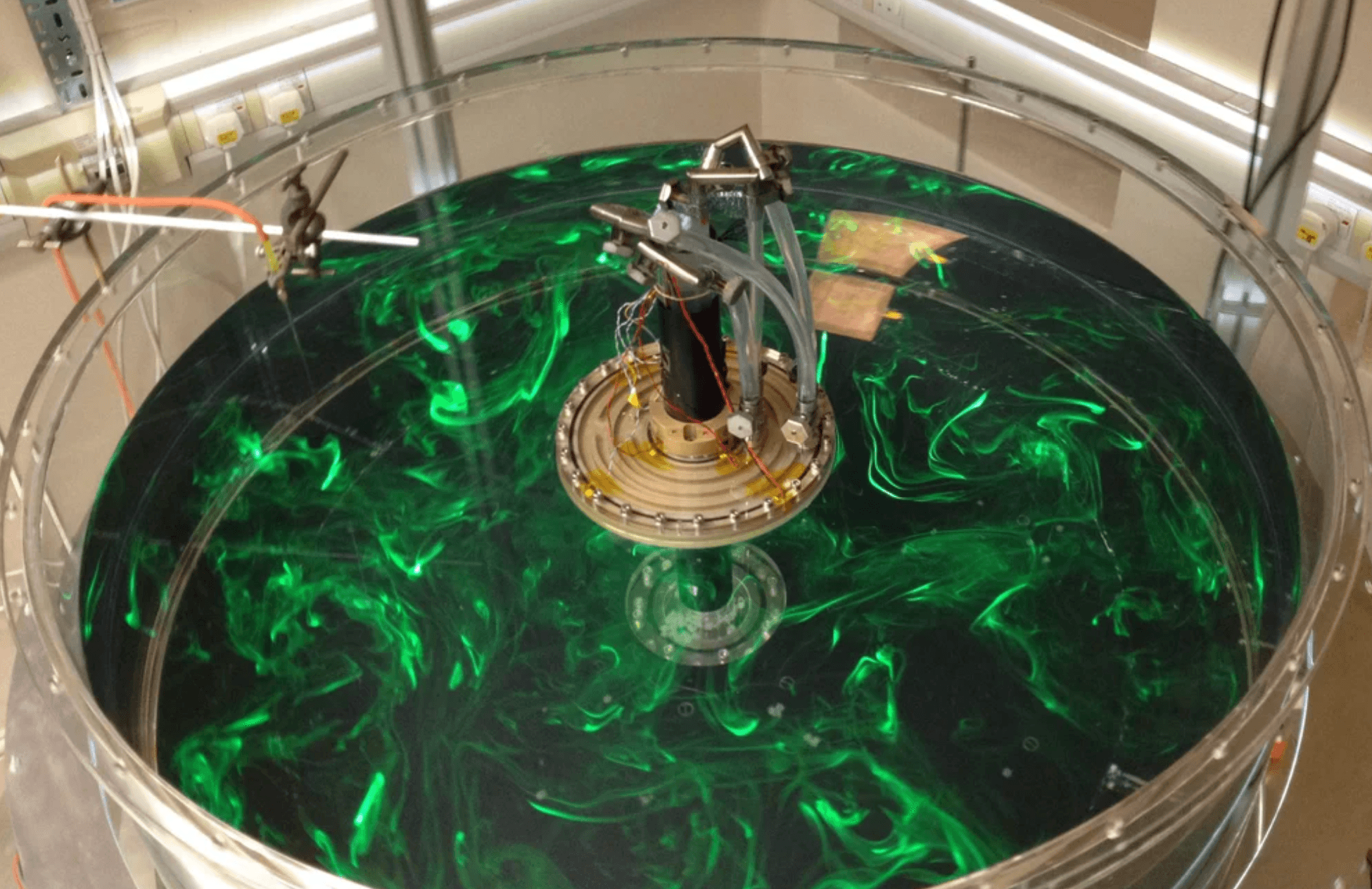
In planetary atmospheres, energy and vorticity can cascade from large scales to smaller ones, but the mechanics of this transfer remain somewhat elusive. In a recent experiment, researchers built a lab-scale representation of an atmosphere using a meter-scale rotating annular tank. The outer bottom edge of the tank gets heated–representing the sun’s warming at the equator–while a pipe in the center of the tank gets cooled near the tank surface, which mimics the chilling effect of the poles. Researchers filled the tank with a water-glycerol mixture and recorded how their artificial atmosphere responded at different rotation rates.
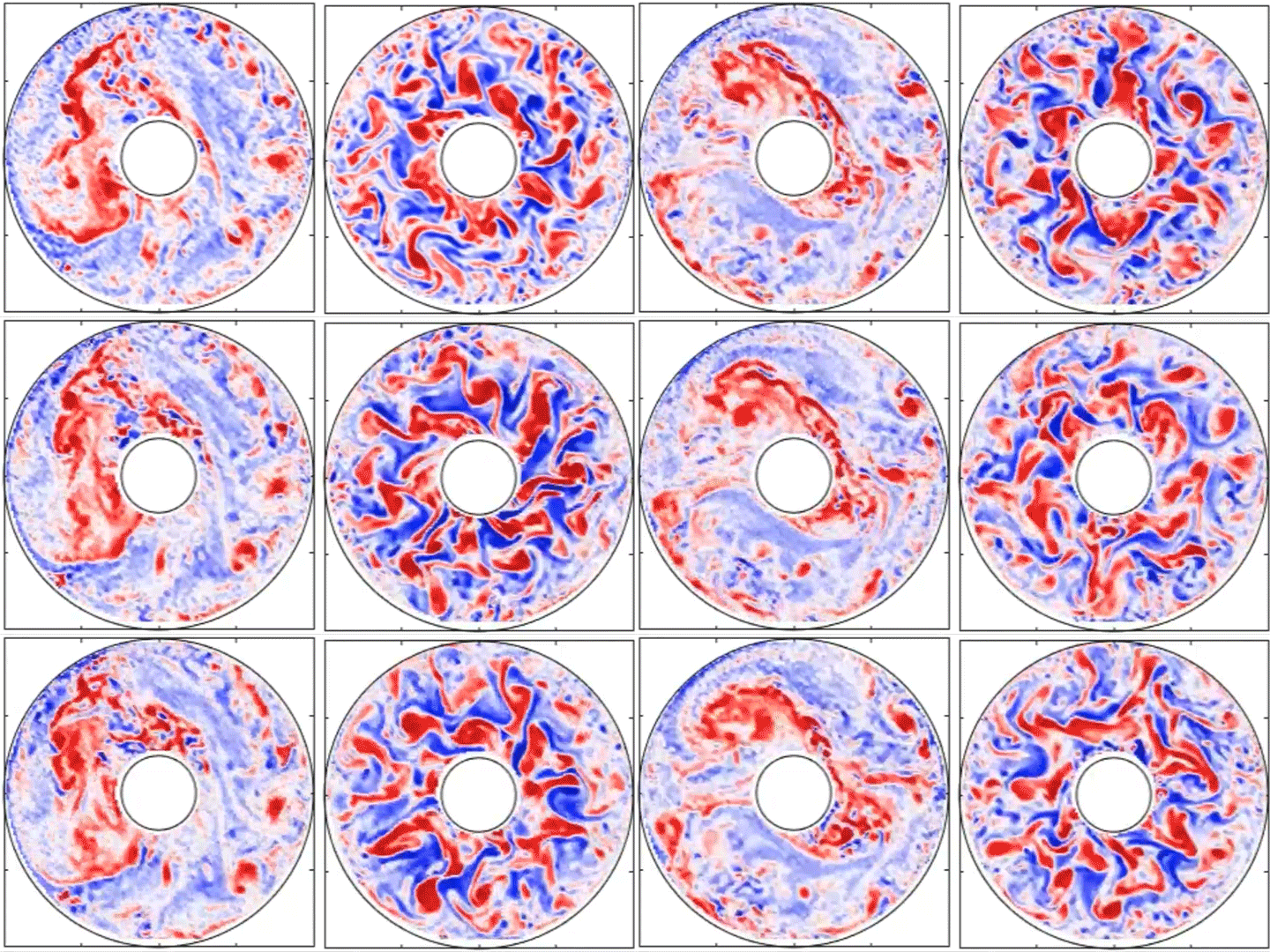
Two different rotating atmospheres, colored by vorticity (red clockwise, blue counterclockwise). The left version has a slower rate of rotation, and thus larger length scales.
The results show an energy spectrum that’s consistent with atmospheric observations–with a steep drop at large length scales and a flatter one at smaller scales. But interestingly, they also found that the cascade was temperature-dependent in ways that current models don’t predict. Untangling that effect could help us understand not only our atmosphere but those of other planets. (Image credit: tank – H. Scolan, animation – S. Ding et al.; research credit: S. Ding et al.; via APS)