Search results for: “viscous”

  • A Groovy Hovercraft

    A Groovy Hovercraft

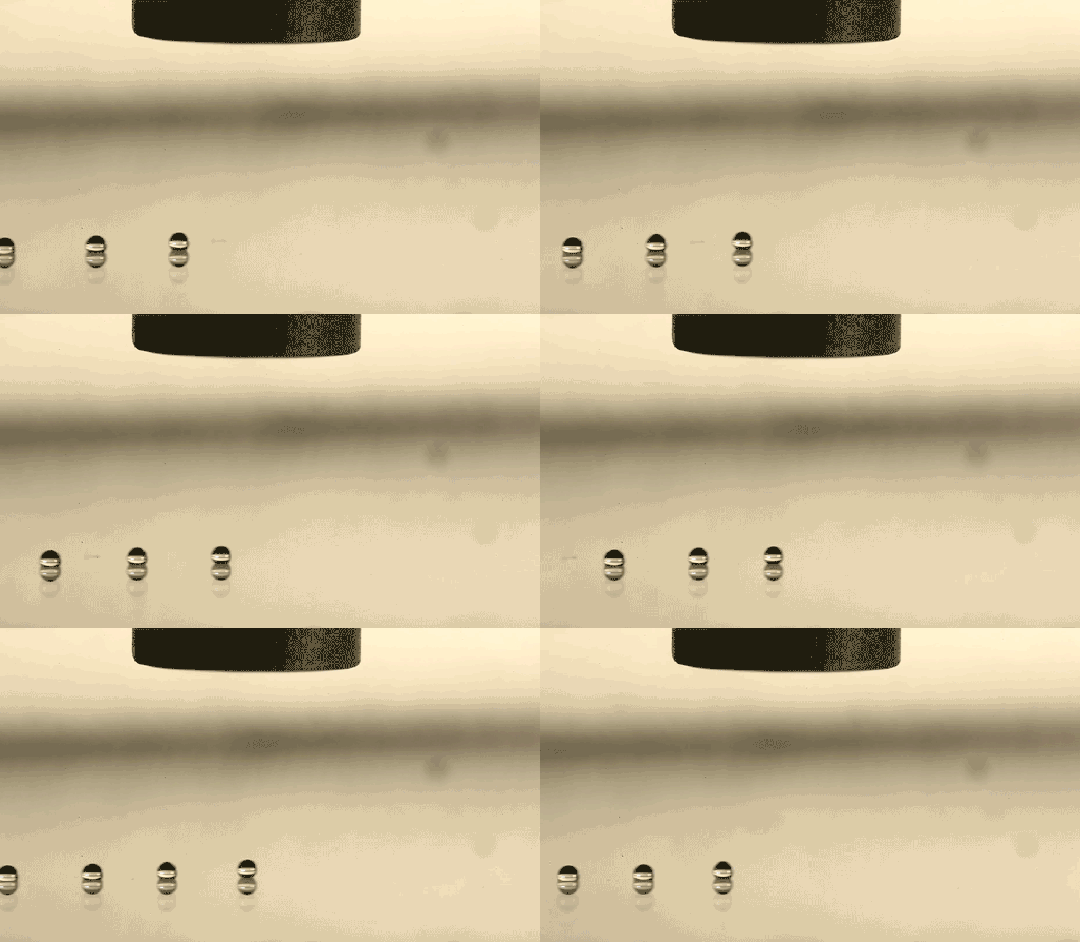
    Not long ago, researchers discovered that droplets hovering over a hot grooved surface would self-propel. The extension to this was to investigate a hovercraft on a grooved, porous surface (top half of animation)–think an air hockey table with grooves. In that case, air inside the grooves flows from the point toward the edges, and it drags the hovercraft with it, thanks to viscosity. So the hovercraft travels in the direction opposite the points. This raised an obvious question: what happens if the hovercraft is grooved instead of the surface?

    That’s the situation we see in the bottom half of the animation. Air flows from the table and interacts with the grooves on the bottom of the hovercraft. And this time, the hovercraft propels in the direction of the points. That means there’s a completely different mechanism driving this levitation. When the grooves are onboard the hovercraft, pressure dominates over viscous effects. The air still gets directed down the grooves, but now, like a rocket, the exhaust pushes the hovercraft in the other direction – toward the points. For more on this work, check out the mathematical model of the problem and our interview with one of the researchers in the video below. (Research credit: H. de Maleprade et al.; image and video credit: N. Sharp and T. Crawford)

  • Bubbling

    Bubbling

    Many chemical reactions produce gases as a stream of bubbles out of a solution. Here we see the electrolysis of an aqueous sodium hydroxide solution (NaOH), which produces hydrogen gas on the cathode (left) and oxygen gas on the anode (right). In timelapse, the gas bubbles nucleate on the electrode, slowly growing larger. Once the the bubbles are large enough to detach, though, they rise so quickly they look like they disappear! The large buoyant forces on them drive that brief journey to the surface. By contrast, the smaller bubbles rise slowly, held back by their lesser buoyancy and the viscous drag they experience. (Video and image credit: Beauty of Science)

  • Using Sound to Print

    Using Sound to Print

    Inkjet printing and other methods for directing and depositing tiny droplets rely on the force of gravity to overcome the internal forces that hold a liquid together. But that requires using a liquid with finely tuned surface tension and viscosity properties. If your fluid is too viscous, gravity simply cannot provide consistent, small droplets. So researchers are turning instead to sound waves

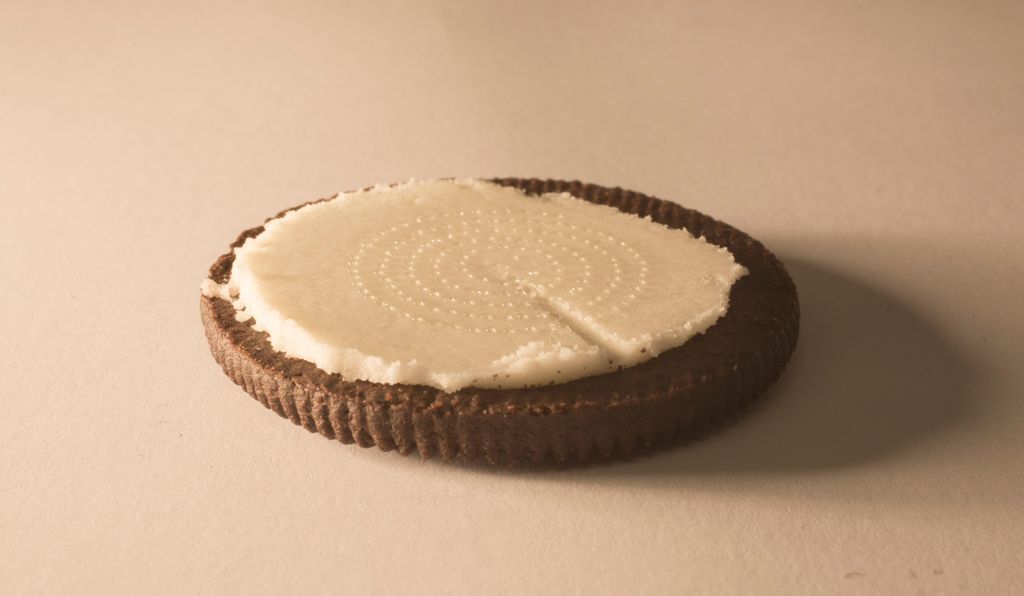
    Using an acoustic resonator, scientists are able to generate forces up to 100 times stronger than gravity, allowing them to precisely and repeatably form and deposit micro- and nano-sized droplets of a variety of liquids. In the images above, they’re printing tiny drops of honey, some of which they’ve placed on an Oreo cookie for scale. The researchers hope the technique will be especially useful in pharmaceutical manufacturing, where it could precisely dispense even highly viscous and non-Newtonian fluids. (Image and research credit: D. Foresti et al.; via Smithsonian Mag; submitted by Kam-Yung Soh)

  • The Jumping Flea

    The Jumping Flea

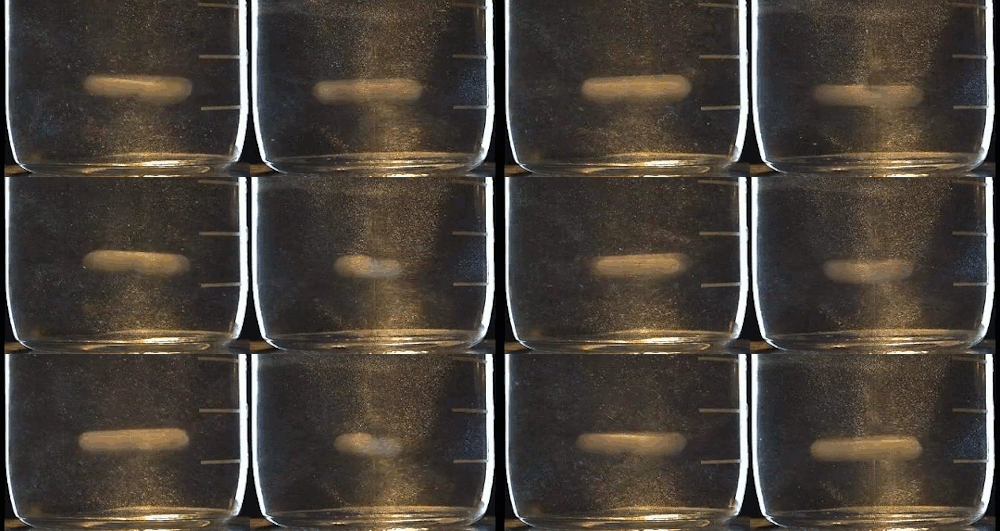
    Nearly every lab has a magnetic stirrer for mixing fluids, but this ubiquitous tool still holds some surprises, like its ability to unexpectedly levitate. Magnetic stirrers consist of two main parts, a driving magnet that creates a rotating magnetic field, and a bar magnet – commonly referred to as the flea – that is submerged in the fluid to be stirred. When the driver’s rotating field is active, the flea will spin at the bottom of its container, keeping its magnetic field in sync with the driver.

    But if you place the flea in a viscous enough fluid, the drag forces on the flea can pull it out of sync with the driver’s field. Above a certain speed, the flea will jump so that its field repulses the driver’s. That makes the flea levitate as it spins. Depending on the interplay of viscous and magnetic forces, that spin can be unstable (left) or stable (right). The researchers suggest that this peculiar behavior could help artificial swimmers propel themselves or lead to new methods for measuring fluid viscosity. (Image and research credit: K. Baldwin et al.; via APS; submitted by Kam-Yung Soh)

  • Featured Video Play Icon

    “Volumes”

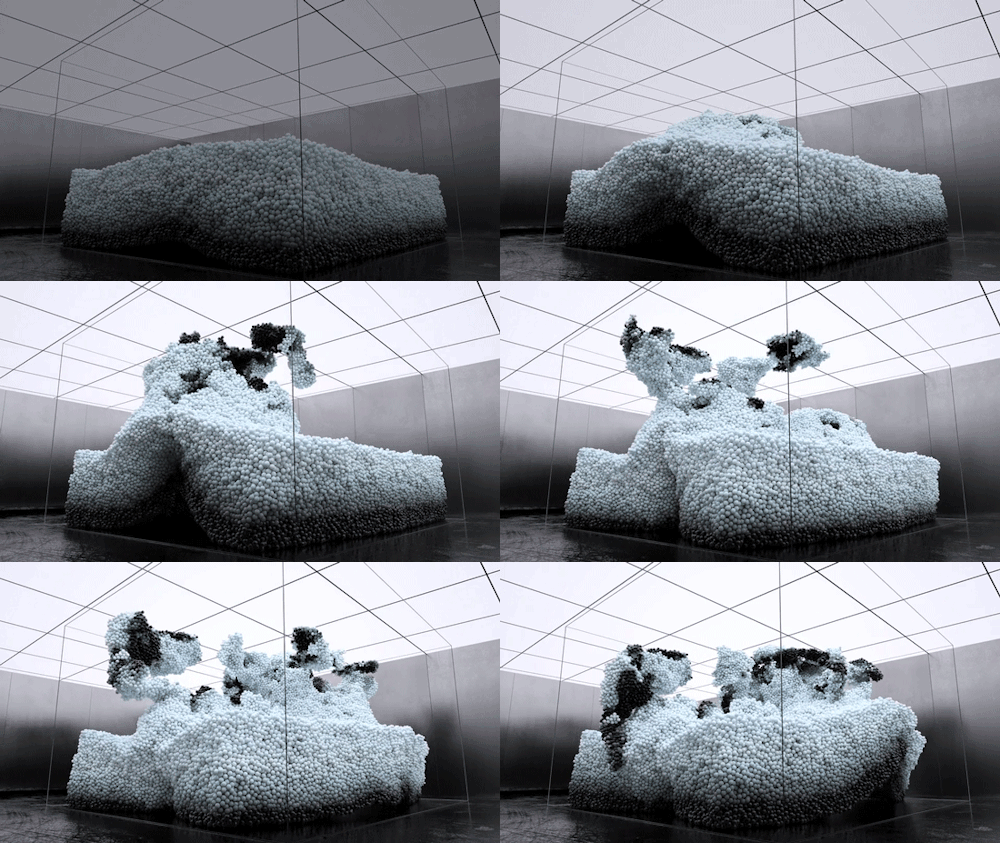
    “Volumes” is an experimental art film by Maxim Zhestkov using physics-based particle animation. Waves and unseen forces send billions of color-changing particles aloft in the film. The motions – especially the way the particles seem to tear themselves – are reminiscent of a complex fluid, like yogurt. These substances have both liquid-like (viscous) and solid-like (elastic) properties depending on the forces they experience. Zhestkov’s particles are similar; they move like a fluid but tear more like a solid.

    I particularly like the sequence beginning at 1:30. The upwelling of particles leaves behind a lower layer that looks like a snapshot of convection in a planetary mantle while the upper layer resembles the clash of ocean waves. The whole film is quite mesmerizing. Check it out! (Video and image credit: M. Zhestkov; GIFs via Colossal)

  • Featured Video Play Icon

    The Kaye Effect

    Allow a stream of shampoo to fall into a pile and you’ll catch a glimpse of the bizarre Kaye effect. A jet of shampoo will briefly rise up before becoming chaotic and falling. The key to this behavior is the shear-thinning of the shampoo. When the shampoo is just sitting on a surface, it’s quite viscous, but slide your hand across it, and the shampoo will become much less resistant to flowing.

    When the jet of falling shampoo hits the pile, it creates a little dimple. Sometimes the incoming jet hits that dimple and slips along it, thanks to a sudden decrease in viscosity. That can send an outgoing jet of shampoo riding off the dimple like a ramp. As the dimple deepens, the outgoing streamer rises up until it hits the incoming jet and becomes unstable. The shampoo streamer collapses, only to be restarted when a new dimple forms. (Image and video credit: S. Mould; h/t to Guillaume D.)

  • Folding Fluids

    Folding Fluids

    Highly viscous liquids – like cake batter, lava, or the spider silk above – fold as they fall. Several factors impact this instability including the fluid’s density, viscosity, surface tension, and how thin the falling sheet is. As with the coiling of falling honey, this behavior is actually a form of buckling. It’s also fascinating to watch how persistent the layers are. Even out near the edge of the puddle, you can still see individual folds. This is a sign of just how incredibly viscous the spider silk is. Imagine if this were cake batter instead: we’d see folding just like we do with the spider silk proteins, but the individual folds would quickly fade as the batter flowed to fill its container. The spider silk is more viscous, so it’s more resistant to flowing. (Image credit and submission: D. Breslauer, source)

  • Featured Video Play Icon

    The Fluid Dynamical Sewing Machine

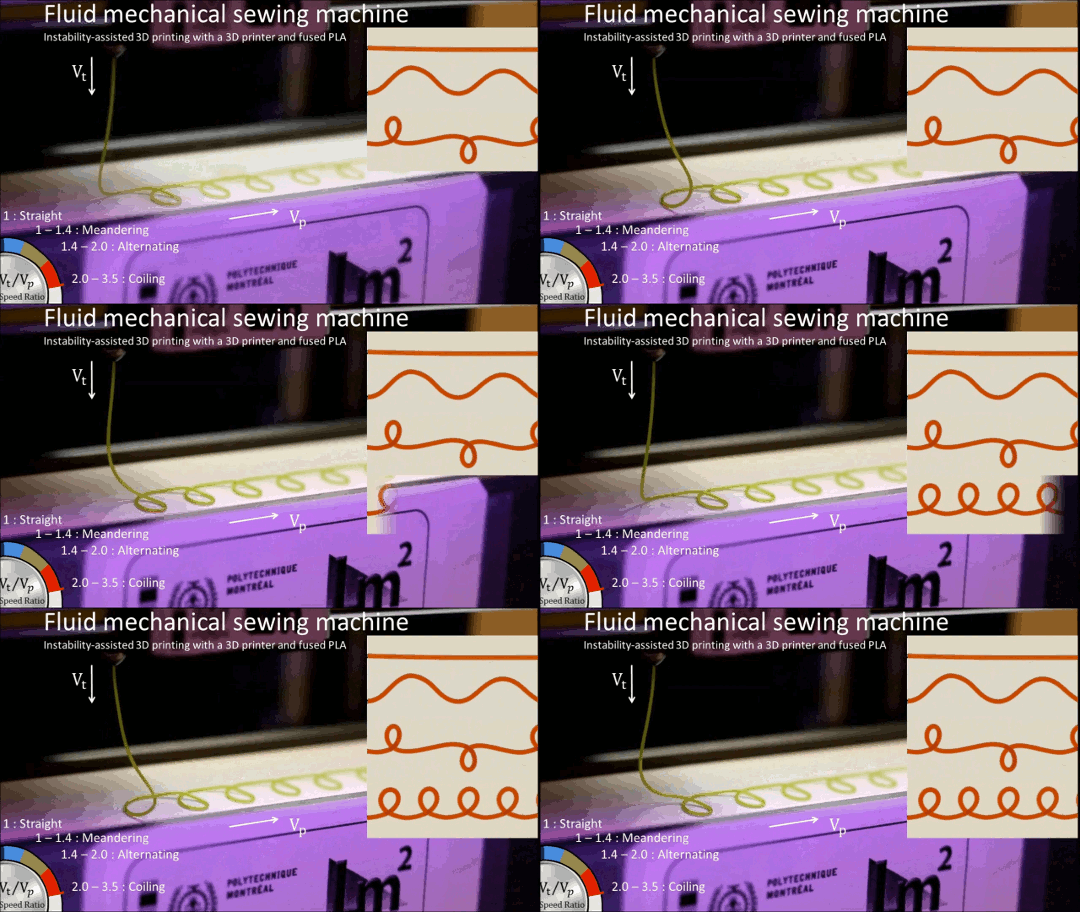
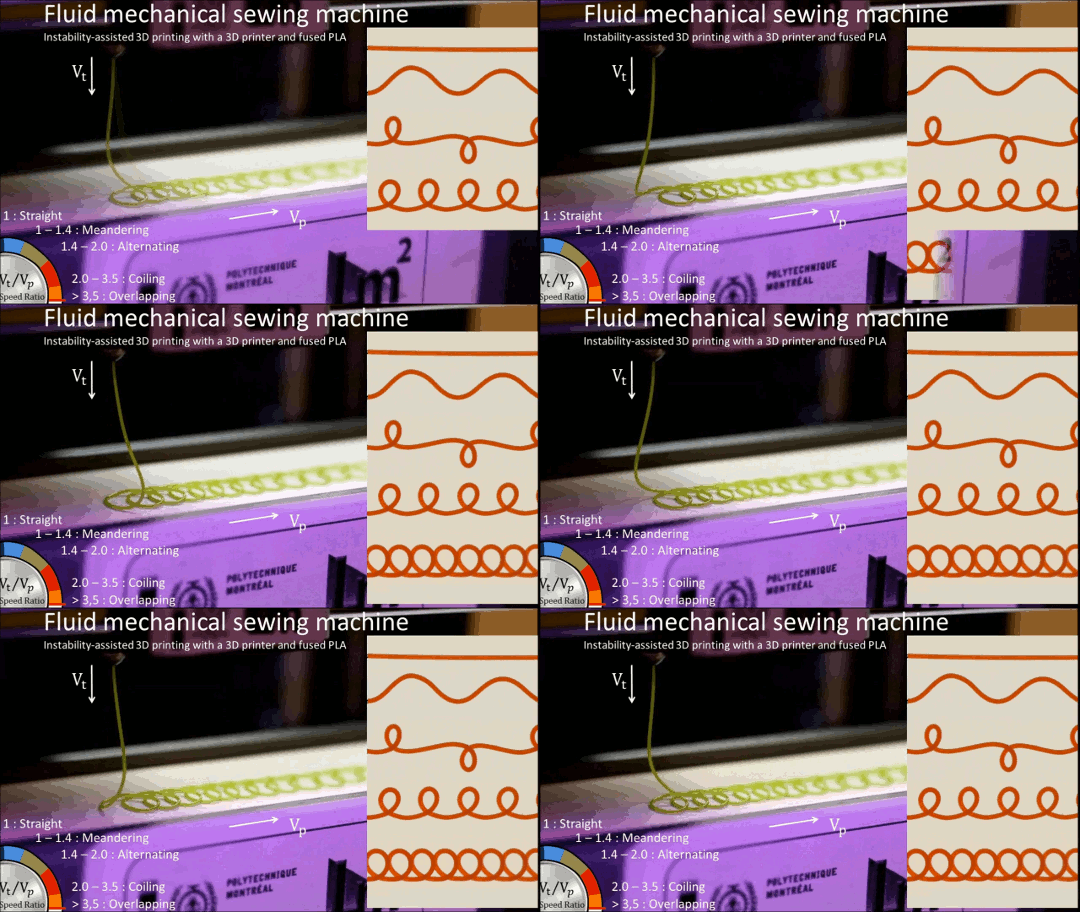
    If you’ve drizzled viscous liquids like honey or syrup, you’ve no doubt witnessed their ability to coil. Combine that coiling with a moving platform and you form a system known as the fluid dynamical sewing machine, which creates different consistent patterns of loops and curves depending on the speed at which the liquid falls and the velocity of the moving platform. The predictability of these patterns makes them especially useful for 3D printing. Previously a group at MIT developed a glass printer that could use the instability, and here a group from Montreal demonstrates how they can build solid coils at various scales. Their video also explores what the structural properties of such coils are after they solidify. (Image, video, and research credit: R. Passieux et al.)

  • Kilauea’s Lava Lake

    Kilauea’s Lava Lake

    Hawaii’s Kilauea Volcano continues to erupt, sending magma flowing through multiple fissures. The U.S. Geological Survey has sounded a warning, however, that the volcano could erupt more explosively. Hot spot volcanoes like Hawaii’s generally have more basaltic lava, which has a lower viscosity than more silica-rich magmas like those seen on continental plates. That makes Hawaii’s volcanoes less prone to explosive detonations like the 1980 Mt. St. Helens eruption. With less viscous lava, there’s less likelihood of plugging a magma chamber and causing a deadly buildup of pressure from toxic gases.

    But that doesn’t mean that there’s no risk. In particular, officials are concerned by the rapid draining of a lava lake near Kilauea’s summit. As illustrated below, if the lava level drops below the water table, that increases the likelihood of steam forming in the underground chambers through which lava flows. The rapid drainage has destabilized the walls around the lava lake, causing frequent rockfalls into the chamber. If those were to plug part of the chamber and cause a steam buildup, then there could be an explosive eruption that releases the pressure. To be clear: even if this were to happen, it would be nothing like the explosiveness of Mt. St. Helens. But it would include violent expulsions of rock and widespread ash-fall. (Image credits: USGS, source; via Gizmodo)

  • Fractal Fingers

    Fractal Fingers

    Dyed isopropyl alcohol atop a thin layer of acrylic medium spreads in a fractal fingering pattern. Although the shapes are reminiscent of the viscous fingers seen in in the Saffman-Taylor instability, these patterns are most likely a result of surface tension. The lower surface tension of the alcohol causes Marangoni forces to pull it outward. The branching shapes indicate an instability, likely driven by surface tension, but the details of the mechanism behind it are unclear. (Image credits: J. Nahabetian)