Search results for: “surface tension”

  • Making Waves in Cold Atoms

    Making Waves in Cold Atoms

    If you take a glass of water and tap on the side of it, you’ll generate waves on the water’s surface. The form of the waves depends on surface tension and gravity, and viscosity governs how quickly the waves fade away. In a recent experiment, researchers performed an equivalent tap for a container of ultra-cold atoms, and the results they found were odd indeed.

    The researchers used lithium-6 atoms chilled so close to absolute zero that they could form a superfluid. The “glass” they were contained in consisted of intersecting laser beams, and the “tap” came from toggling the intensity of one of the lasers. This created rippling waves through the atoms that the group could observe.

    Measuring at various temperatures, the group found that the waves in the atoms always decayed the way one expects for a classical fluid like water. Even when the atoms transitioned into a superfluid, the wave decay did not change. Since superfluids are considered to have zero viscosity, you’d expect their waves to decay more slowly, but it turns out, that’s not the case! (Image credit: F. Mittermeier; research credit: M. Zwierlein et al., see also; via Physics; submitted by Kam-Yung Soh)

  • Featured Video Play Icon

    The Actual Shape of Raindrops

    If you imagine the shape of a raindrop, you probably think of a tear drop shape, but the reality of rain is much more complicated. It’s Okay to Be Smart has a great primer on the subject that takes a look at the forces on a raindrop and shows you the actual shape they take, which depends largely on their size.

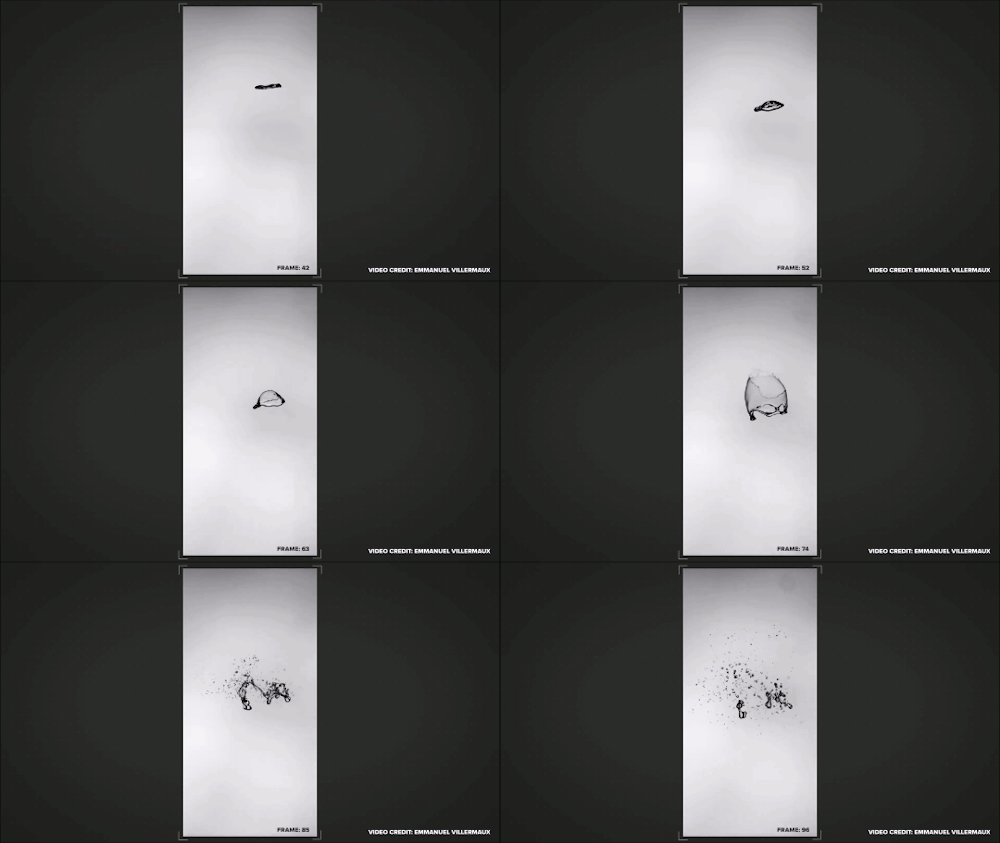
    Small raindrops tend to coalesce together over time and get larger and progressively flatter. When the drop’s volume gets too large (below), it balloons up like a parachute. Researchers call this a bag. Stretched into a film, the drop’s surface tension is no longer able to win its fight against aerodynamic forces, and the drop shreds into smaller droplets. (Video and image credit: It’s Okay to Be Smart)

  • Wheeling Drops

    Wheeling Drops

    Leidenfrost drops – which skitter almost frictionlessly across extremely hot surfaces on a thin layer of their own vapor – are notoriously mobile. We’ve seen numerous methods of controlling their propulsion, often using specially-shaped surfaces. But it turns out that some Leidenfrost drops can self-propel even on a smooth, flat surface (top image). 

    Internally, large Leidenfrost drops have complicated, but symmetric flows that are driven by temperature and surface tension variations across the drop. But as the drop evaporates, that symmetry eventually gets broken, leaving behind a single large circulating flow. 

    Beneath the drop, that internal circulation affects the vapor layer. It causes the layer to take on an overall tilt, and the rotation, along with that slight angle in the vapor layer, causes the Leidenfrost drop to roll away like a wheel. (Image and research credit: A. Bouillant et al.; via NYTimes)

  • Using Sound to Print

    Using Sound to Print

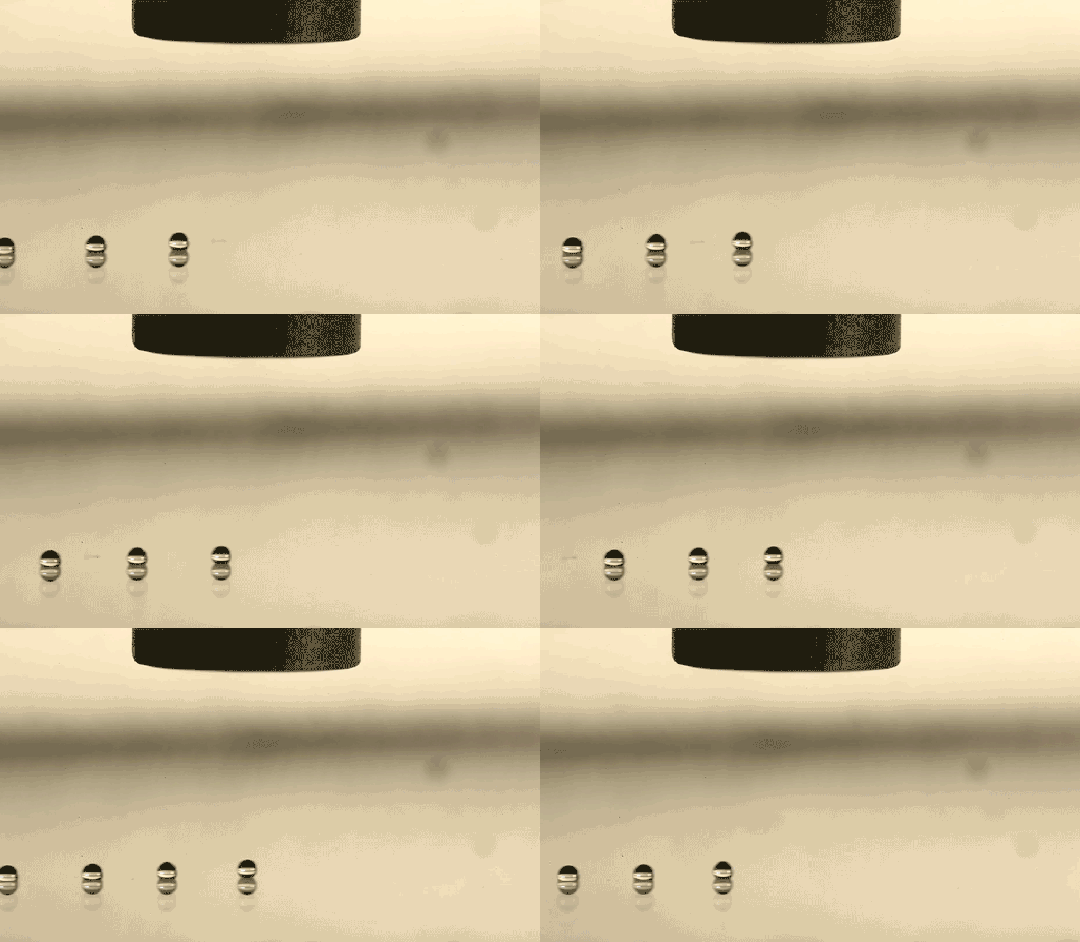
    Inkjet printing and other methods for directing and depositing tiny droplets rely on the force of gravity to overcome the internal forces that hold a liquid together. But that requires using a liquid with finely tuned surface tension and viscosity properties. If your fluid is too viscous, gravity simply cannot provide consistent, small droplets. So researchers are turning instead to sound waves

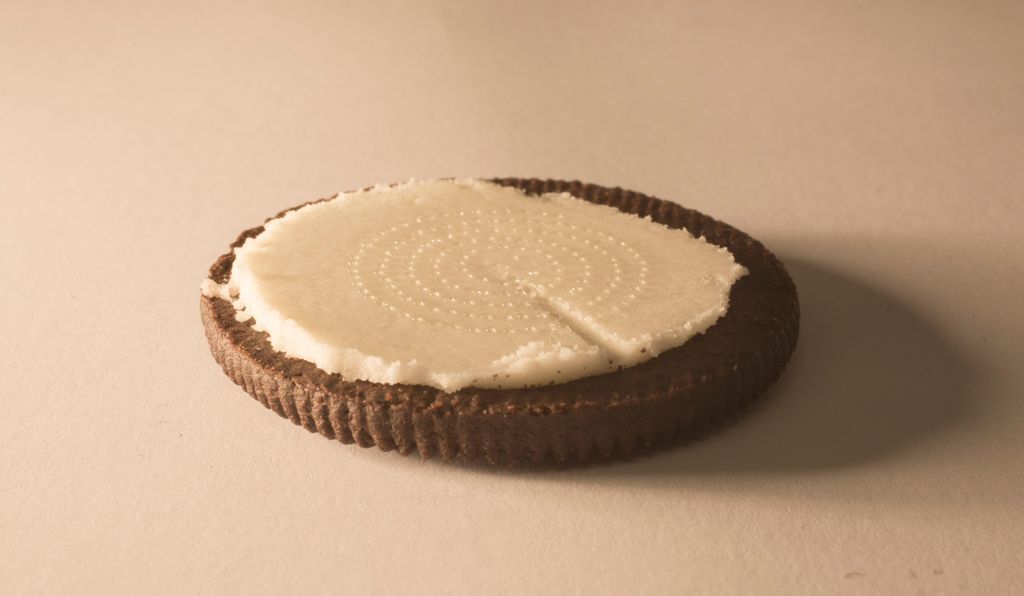
    Using an acoustic resonator, scientists are able to generate forces up to 100 times stronger than gravity, allowing them to precisely and repeatably form and deposit micro- and nano-sized droplets of a variety of liquids. In the images above, they’re printing tiny drops of honey, some of which they’ve placed on an Oreo cookie for scale. The researchers hope the technique will be especially useful in pharmaceutical manufacturing, where it could precisely dispense even highly viscous and non-Newtonian fluids. (Image and research credit: D. Foresti et al.; via Smithsonian Mag; submitted by Kam-Yung Soh)

  • Inside a Bubble Wall

    Inside a Bubble Wall

    Schlieren photography has an almost magical feeling to it because it enables us to see the invisible – like shock waves and the tiny currents of heat that rise from our skin. But it can also reveal new perspectives on things that aren’t invisible. Here we see soap bubbles viewed through the lens of a schlieren set-up. Schlieren is sensitive to small changes in density, so instead of appearing in their usual rainbow iridescence, the bubbles look glass-like and filled with tiny currents and bubbles. What we’re seeing are some of the many tiny flow variations across the surface of a soap bubble. They’re driven by a combination of forces – gravity, temperature, and surface tension variations, to name a few. Seen in video, you can really appreciate just how dynamic a thin soap film is! (Image credit and submission: L. Gledhill, video version, more stills)

  • Soap Film Filter

    Soap Film Filter

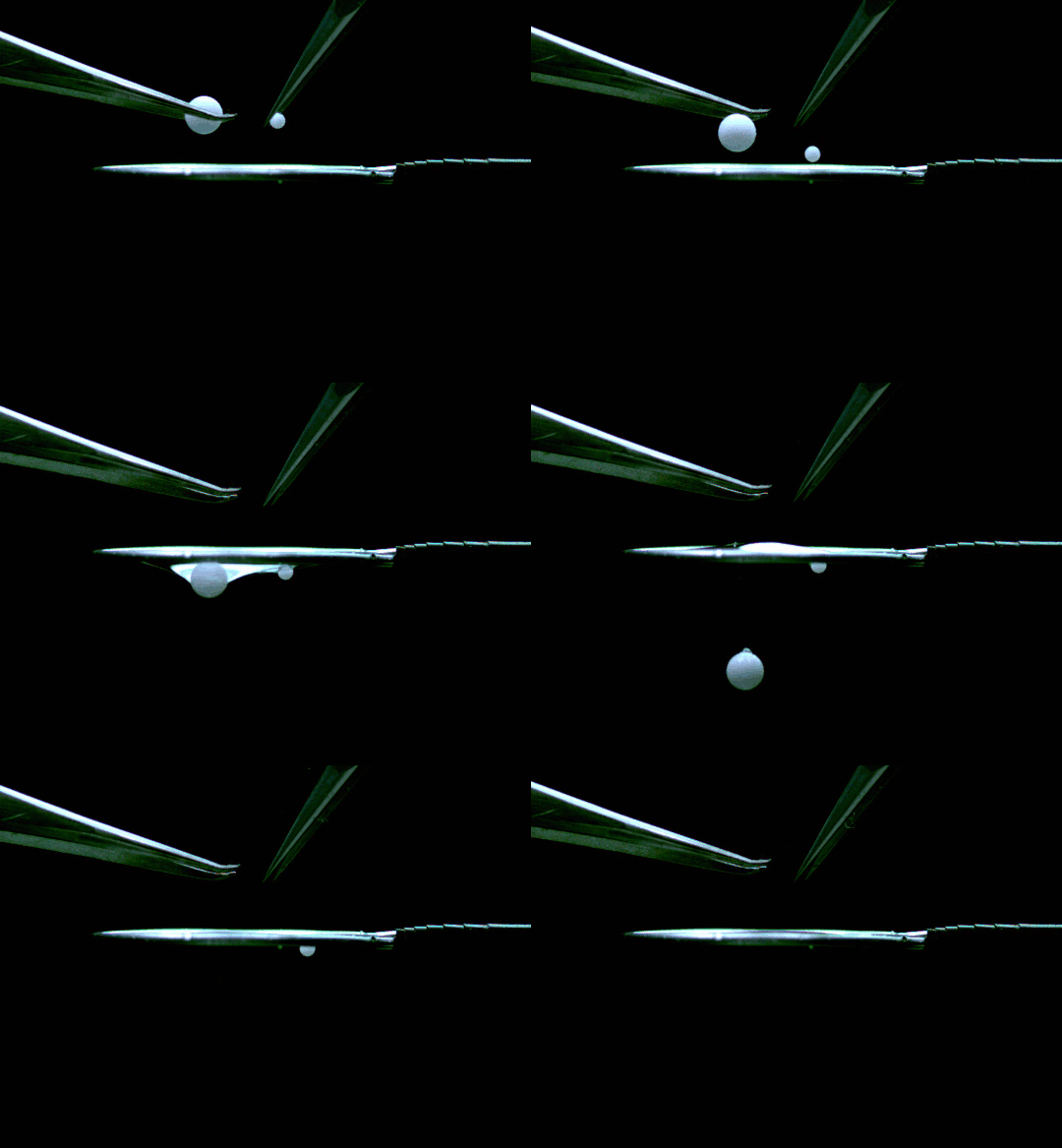
    Inspired by the self-healing properties of soap films, scientists have created a liquid filter capable of trapping small particles while allowing larger ones to pass through. Instead of filtering particles by size, as conventional filters do, this liquid membrane filters particles by kinetic energy; only large, fast-moving objects  pass through while slower and smaller ones get trapped. The membrane is a mixture of deionized water and sodium dodecyl sulfate, which allows researchers to finely tune the membrane’s surface tension and, therefore, how the filter behaves. Unlike soap films, the membrane is quite long-lived and robust. The team poked one for more than 3 hours without rupturing it.

    The researchers envision some pretty neat applications for these membranes, including a surgical membrane that would keep out dust and bacteria while doctors work or a membrane in a waterless toilet that could trap odors inside. (Image and research credit: B. Stogin et al.; video credit: Science; submitted by Kam-Yung Soh)

  • The Driver of Hydraulic Jumps

    The Driver of Hydraulic Jumps

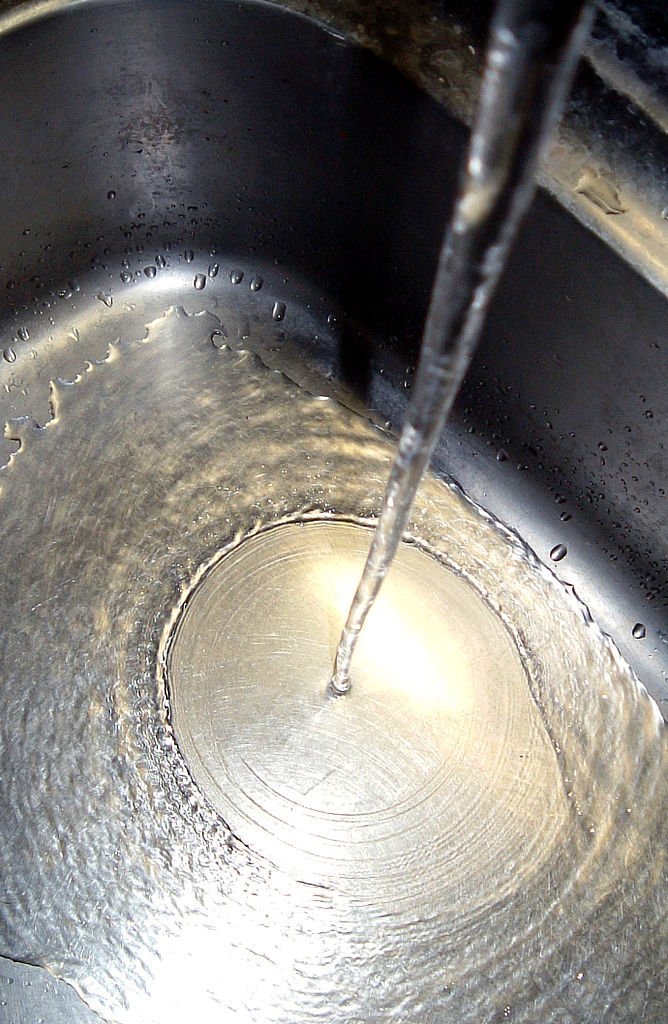
    You’ve seen it a million times. When you turn on your kitchen faucet, the falling water forms a distinctive ring – known as a hydraulic jump – in the bottom of your sink. First described by Leonardo da Vinci, this phenomenon has been studied for centuries, and, for nearly all of that time, scientists assumed that gravity played a major role, even in kitchen-sink-sized hydraulic jumps. But that’s not the case.

    A newly published study shows that gravity can’t be a major player in setting the radius of these small-scale hydraulic jumps because they form the same whether the jet impinges from above, below, or sideways. Instead, the researchers found that surface tension and viscosity are the parameters that determine the jump’s formation. It’s not every day that you get to overturn a centuries-old theory in physics! (Image credit: J. Kilfiger; research credit: R. Bhagat et al.; via Silicon Republic; submitted by Patrick D.)

  • Coalescence

    Coalescence

    Simple acts like the coalescence of two droplets sitting on a surface can be beautiful and complex. As the droplets come together, they form a thin neck between them, and the curvature of that surface causes capillary forces that drive fluid into the neck. For two dissimilar droplets, like the ones above, there can be additional forces. Here, the upper drop is pure water, but the lower one has added surfactants, which reduce its surface tension. That difference in surface tension creates a Marangoni flow that tends to pull fluid away from the neck. The result is that full coalescence takes longer. Depending on other factors in this tug-of-war between capillary action and Marangoni flow, the process of coalescence can look very different. In this example, there’s a fingering instability that occurs as the neck spreads. Change the circumstances slightly and the drops may chase each other instead of merging or will merge with a perfectly smooth contact front. (Image and research credit: M. Bruning et al.)

  • Convection Without Heat

    Convection Without Heat

    We typically think of convection in terms of temperature differences, but the real driver is density. In the animations above, cream sitting atop a liqueur is undergoing solutal convection – no temperature difference needed! The alcohol in the liqueur mixes with the cream to form a lighter mixture that rises to the surface. The lower surface tension of the alcohol is also good at breaking up the cream, forming little cells. As the alcohol in those cells evaporates, the cream gets heavier and sinks down into the liqueur, where it can pick up more alcohol, rise back to the surface, and begin the cycle again. (Image credit: J. Monahan et al., source)

  • A Viscous Splash

    A Viscous Splash

    The splash of a drop may be commonplace, but it is still a mesmerizing and fertile phenomenon. When it comes to splashing, scientists are still learning how to predict the outcome. Here a drop of silicon oil impacts a film of silicon oil with an even higher viscosity. The momentum of that impact creates a crater and a splash curtain that rises and expands from the initial point of impact. Because the film viscosity is higher than the drop’s, the evolution of the corona slows down. Eventually, surface tension and gravity start pulling the splash curtain back down as the crater collapses. Meanwhile at the top of the splash, capillary forces pull fluid into the rim, which becomes unstable and grows cusps that eventually eject a cloud of smaller droplets. (Image and research credit: H. Kittel et al., source)