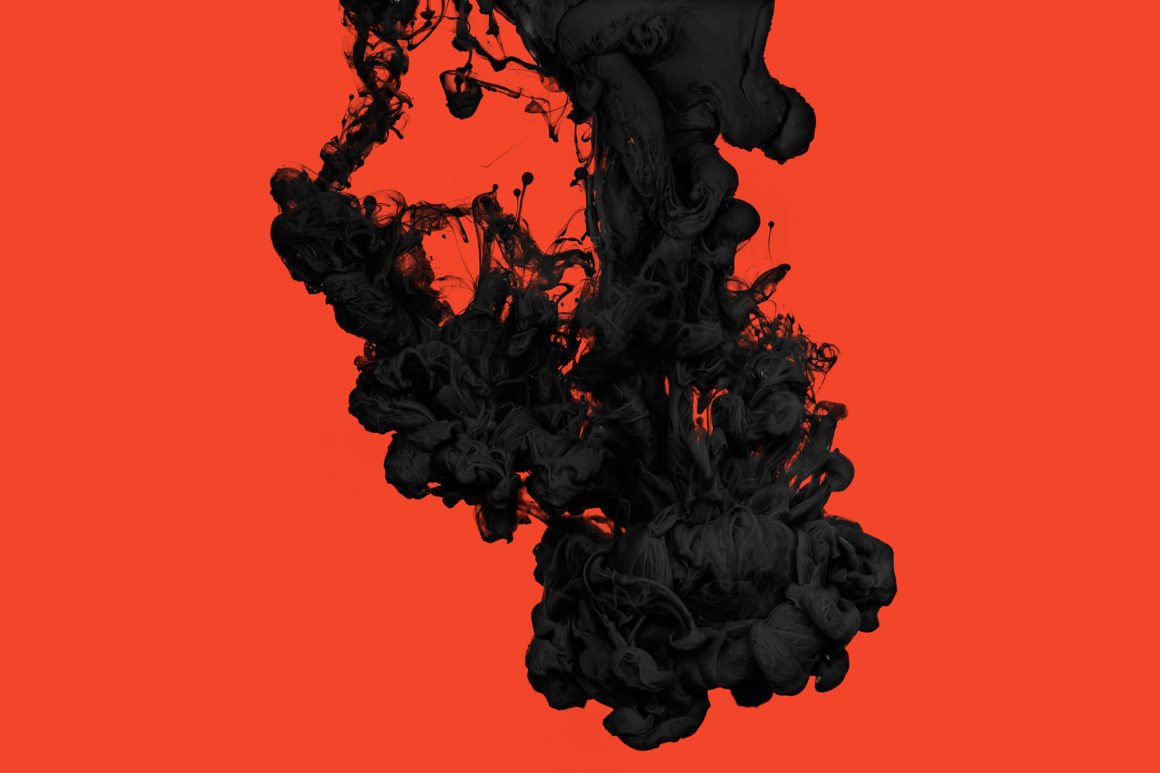
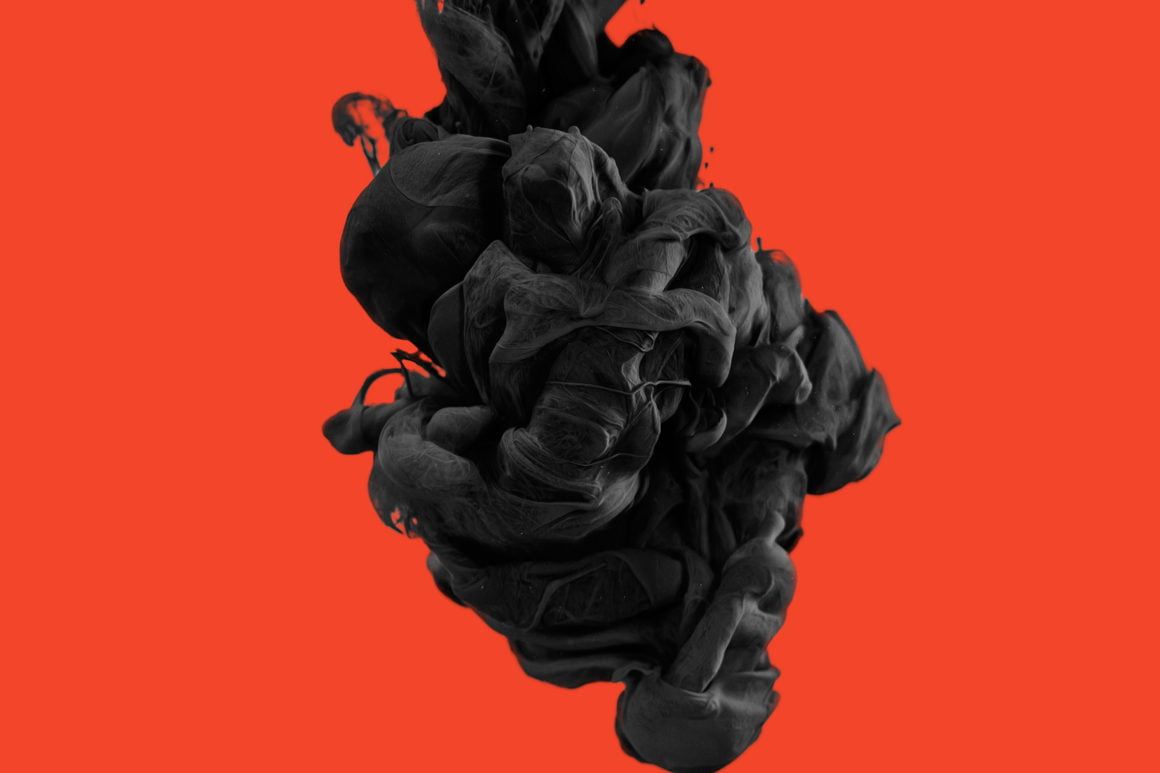
In “Dark Matter” photographer Alberto Seveso captures billowing black pigment against a bright red backdrop. Seveso excels at capturing the developing turbulence in sinking fluids. I’m always blown away by the texture in his images; it almost makes the fluid look fabric-like and solid. Look closely in some of these images and you can catch a few tiny Rayleigh-Taylor instabilities, too, as the denser pigment sinks through water. (Image credit: A. Seveso)
Search results for: “rayleigh taylor”

“Turbulence”
In his recent short film, artist Roman De Giuli explores turbulence using metallic paints and inks in a fishtank. The effects are beautiful: sparkling pigments dispersing in clouds, mushroom- and umbrella-shaped Rayleigh-Taylor instabilities, and lots of swirling eddies. It’s exactly the kind of eyecandy to kick off your weekend with! (Image and video credit: R. De Giuli)

“Art of Paint”
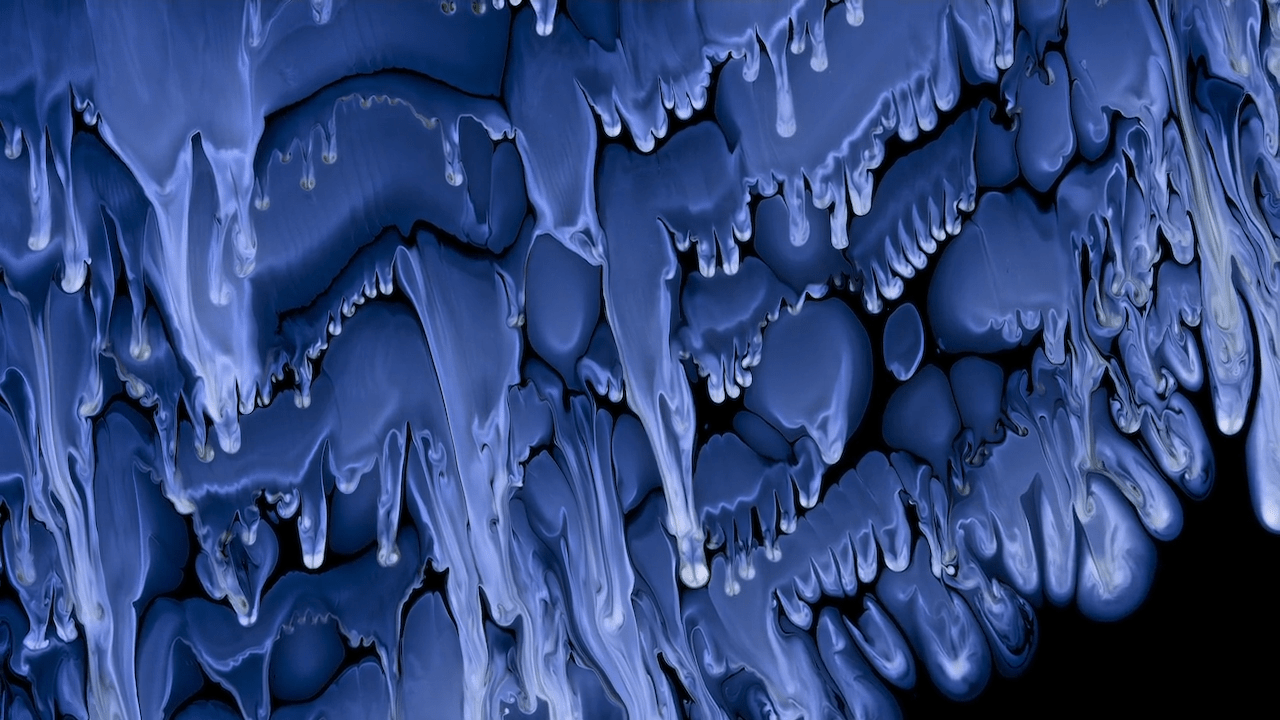
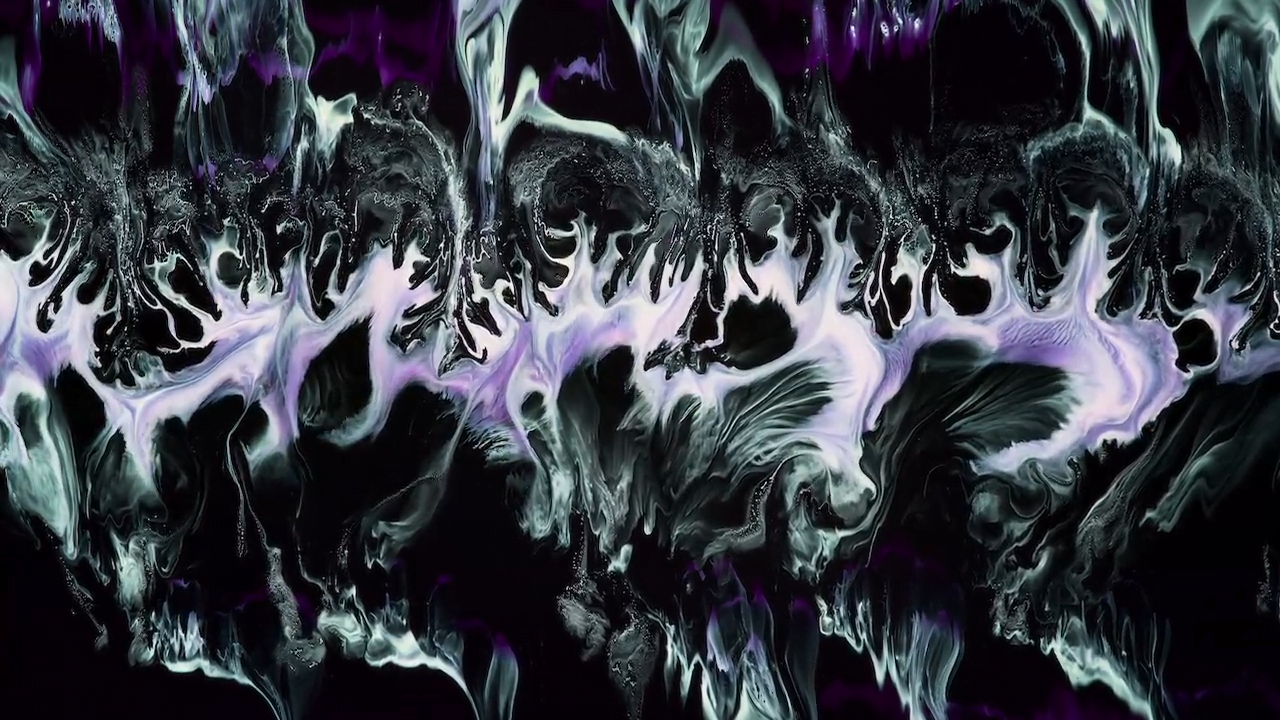
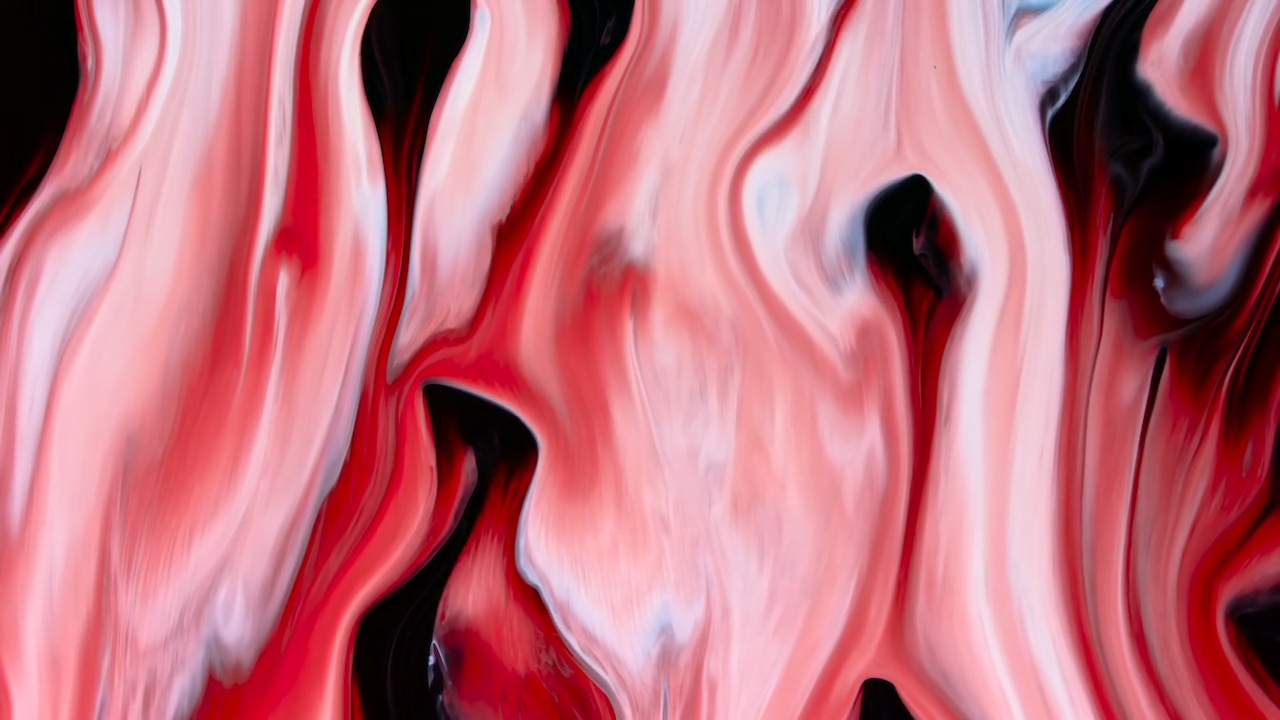
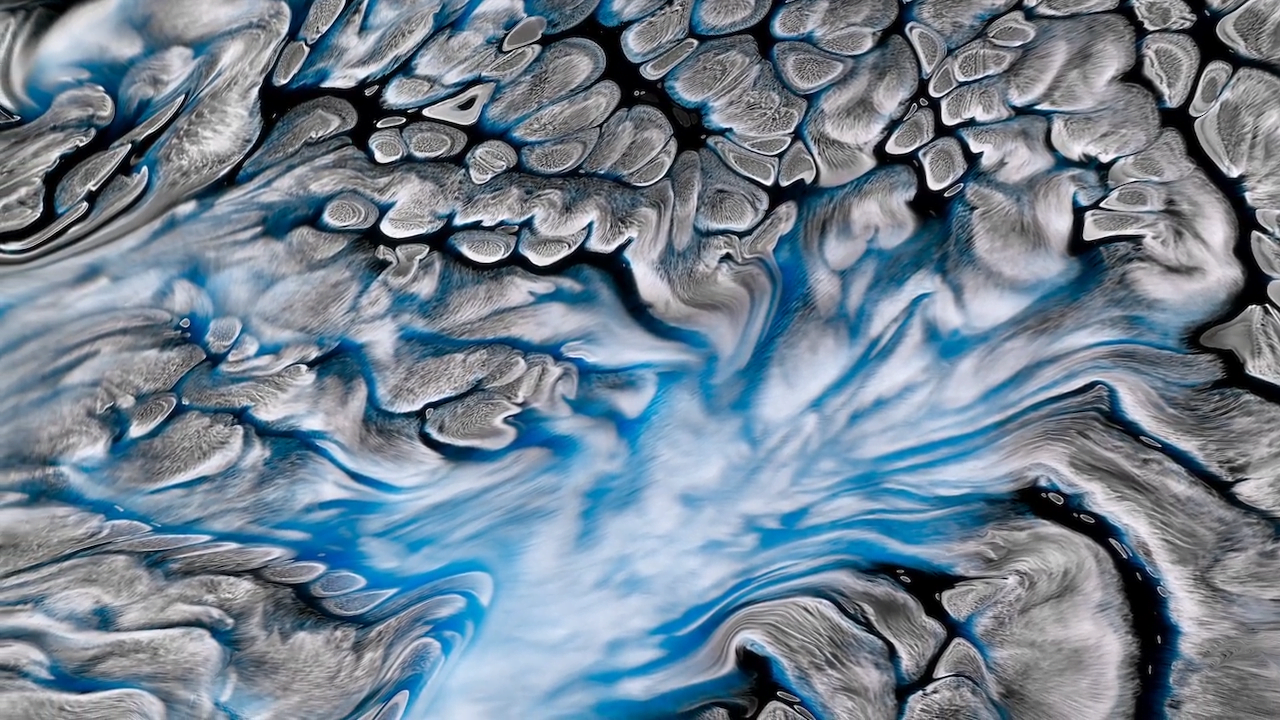
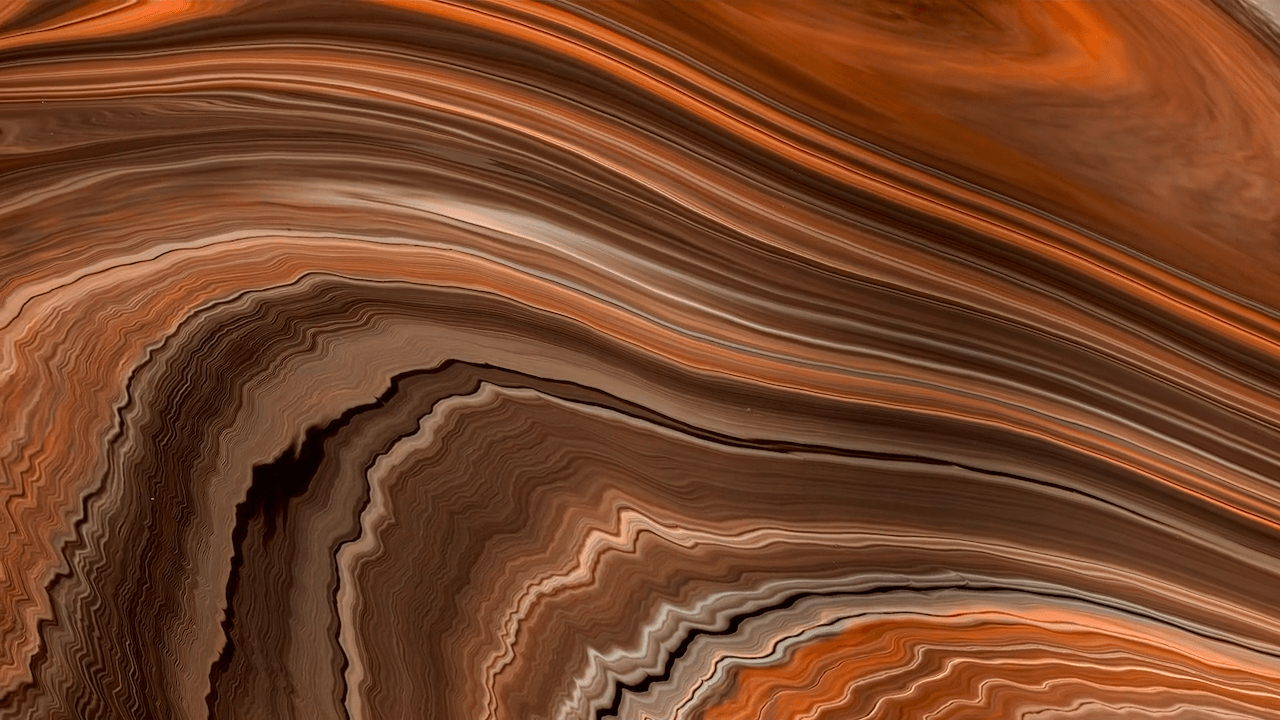
Filmmaker Roman De Giuli is always coming up with spectacular and visually fascinating new ways to manipulate ink and other liquids. In “Art of Paint,” he applies thin layers atop a custom plate that can be tilted in any direction. The results sometimes resemble acrylic paint pours, sometimes Marangoni flows, and sometimes look more like salt fingers or Rayleigh-Taylor instabilities. The extreme variety of forms is quite unique among these sorts of films and is well worth taking the time to view in fullscreen. (Image and video credit: R. De Giuli)

Aqueous Chandeliers
Colorful dyes falling through water form chandelier-like, branching shapes. These formations are the result of a slight density difference between the heavier dyes and the surrounding water. As the dye falls, Rayleigh-Taylor instabilities cause the mushroom-like blobs and their branches. With creativity and photographic skill, Mark Mawson turns these ephemeral shapes into bold liquid sculptures, frozen in time. See more of his work in these previous posts, on his website, and on Instagram. (Image credit: M. Mawson)

Asperitas Formation
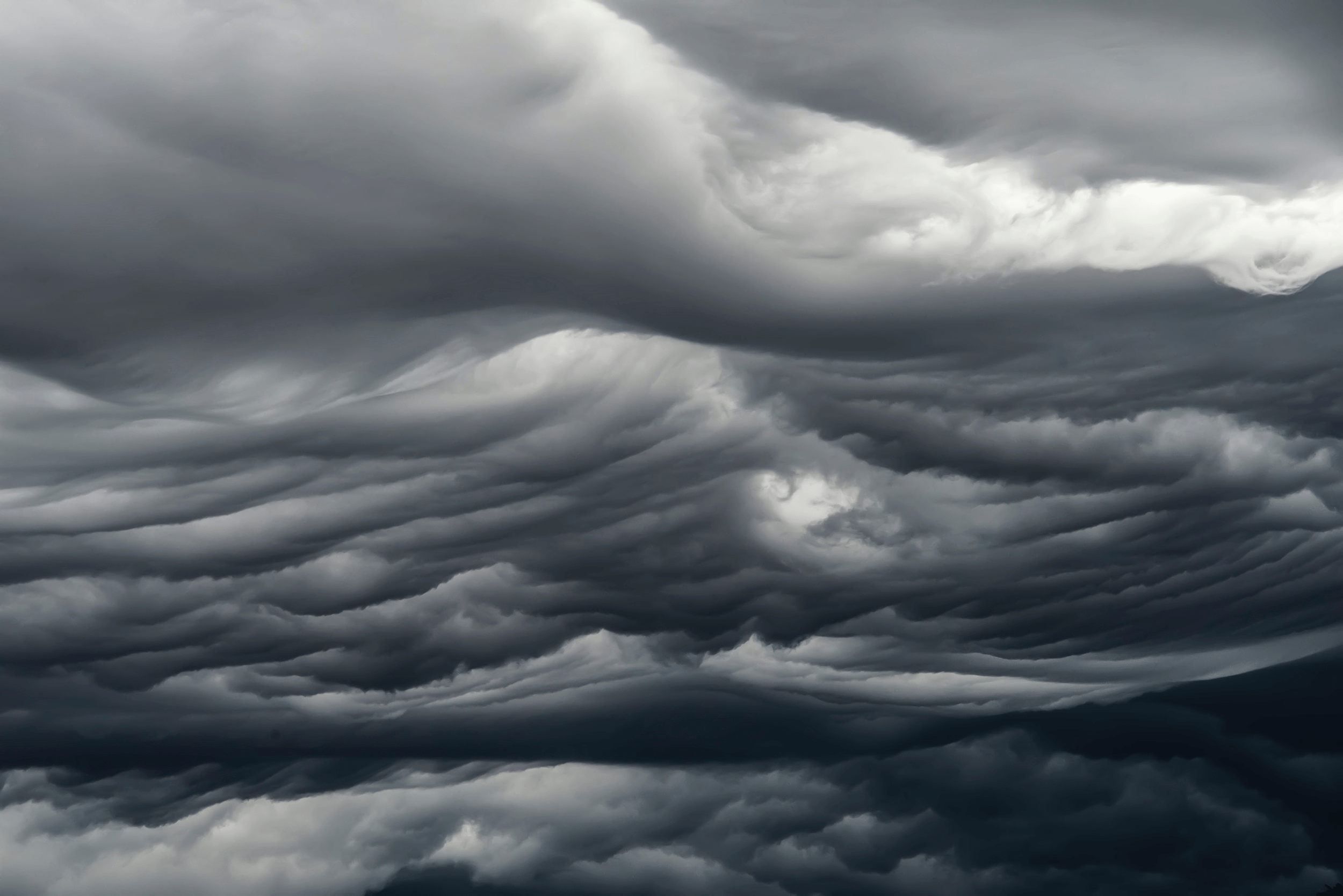
In 2017, the World Meteorological Organization named a new cloud type: the wave-like asperitas cloud. How these rare and distinctive clouds form is still a matter of debate, but this new study suggests that they need conditions similar to those that produce mammatus clouds, plus some added shear.
Using direct numerical simulations, the authors studied a moisture-filled cloud layer sitting above drier ambient air. Without shear, large droplets in this cloud layer slowly settle downward. As the droplets evaporate, they cool the area just below the cloud, changing the density and creating a Rayleigh-Taylor-like instability. This is one proposed mechanism for mammatus clouds, which have bulbous shapes that sink down from the cloud.
When they added shear to the simulation, the authors found that instead of mammatus clouds, they observed asperitas ones. But the amount of shear had to be just right. Too little shear produced mammatus clouds; too much and the shear smeared out the sinking lobes before they could form asperitas waves. (Image credit: A. Beatson; research credit: S. Ravichandran and R. Govindarajan)

The Bubbly Escape
Sometimes experiments don’t work as planned and, instead of answers, they lead to more questions. In this video, we see an experiment looking at an air bubble trapped beneath a cone. It’s the same situation you get by holding a mug upside-down in a sink full of water but with inclined walls. As the cone moves downward, it squeezes the trapped air bubble. A film of air gets pushed along the walls of the cone, eventually forming finger-like bubbles that wrap around the edge of the cone and get entrained into the vortex ring outside the cone.
Clearly, there is some kind of instability that drives the air bubble to form these fingers rather than spreading uniformly. But the big question is which one? Is this a density-driven Rayleigh-Taylor instability caused by air getting pushed into water? Or is it a Saffman-Taylor instability causes by the less viscous air forcing its way into the more viscous water? What do you think? (Image and submission credit: U. Jain)


Precipitation
Chemistry and fluid dynamics often go hand-in-hand. Here chemical reactions produce visible precipitates as one chemical drops into the other. The shapes that form are distinctly fluid dynamical, with vortex rings, plumes, and instabilities all appearing.
In many applications, chemical reactions and fluid dynamics are tied inextricably to one another because the rate of chemical reaction depends on local concentrations driven by fluid dynamics, and the fluid motion is itself influenced by those concentration gradients. This is why reacting flows, like those found in combustion, are among the hardest topics in fluids. (Image and video credit: Beauty of Science)

Ghostly Chandeliers

Under a black light, highlighter fluid creates ghostly trails as it drips through water. The vortices that form and break into this chandelier-like shape are the result of density differences between the ink and water. Since ink is heavier than water, it sinks, but as the two fluids flow past, they shear one another, forming elaborate shapes. Formally, this is known as the Rayleigh-Taylor instability. While you may be most familiar with it from pouring cream into coffee, it’s also a key to mixing in the ocean and the explosions of supernovas. (Image credit: S. Adams et al.; via Flow Vis)

Mimicking Supernovas
The Hubble archives are full of incredible swirls of cosmic gas and dust, many of which were born in supernovas. Predicting the forms these massive explosions will generate is extremely difficult, thanks in large part to the complicated fluid dynamics generated by their blast waves. But new lab-scale experiments may help shed light on those underlying processes.
Researchers mimic supernovas in the lab by launching blast waves through an interface between a dense gas (shown in white) and a lighter one (which appears black). As the blast wave passes, it drives the dense fluid into the lighter one, triggering a series of instabilities. Notice how any initial perturbations in the interface quickly grow into mushroom-like spikes that rapidly become turbulent. This behavior is exactly what’s seen in supernovas (and in inertial confinement fusion)! (Video credit: Georgia Tech; research credit: B. Musci et al.; submitted by D. Ranjan)

Coke and Butane Rockets
Rocket science has a reputation for being an incredibly difficult subject. But while there’s complexity in the execution, the concept behind rockets is pretty simple: throw mass out the back really fast and you’ll move forward. Whether you’re talking about a Saturn V or these Coke-and-butane-powered bottles, the basic principle is the same.
These rockets get their kick mostly from the added butane, which has a very low boiling point. When the bottle is flipped, the lighter butane is forced to rise through the Coke. With a large surface area of liquid butane exposed to the warmer Coke, the butane becomes gaseous. That sudden increase in volume forces a liquid-Coke-and-gaseous-butane mixture out of the bottle, which has a helpful nozzle shape to further increase the propellant’s speed. Once the phase change is underway, the rocket quickly takes off! (Image and video credit: The Slow Mo Guys)