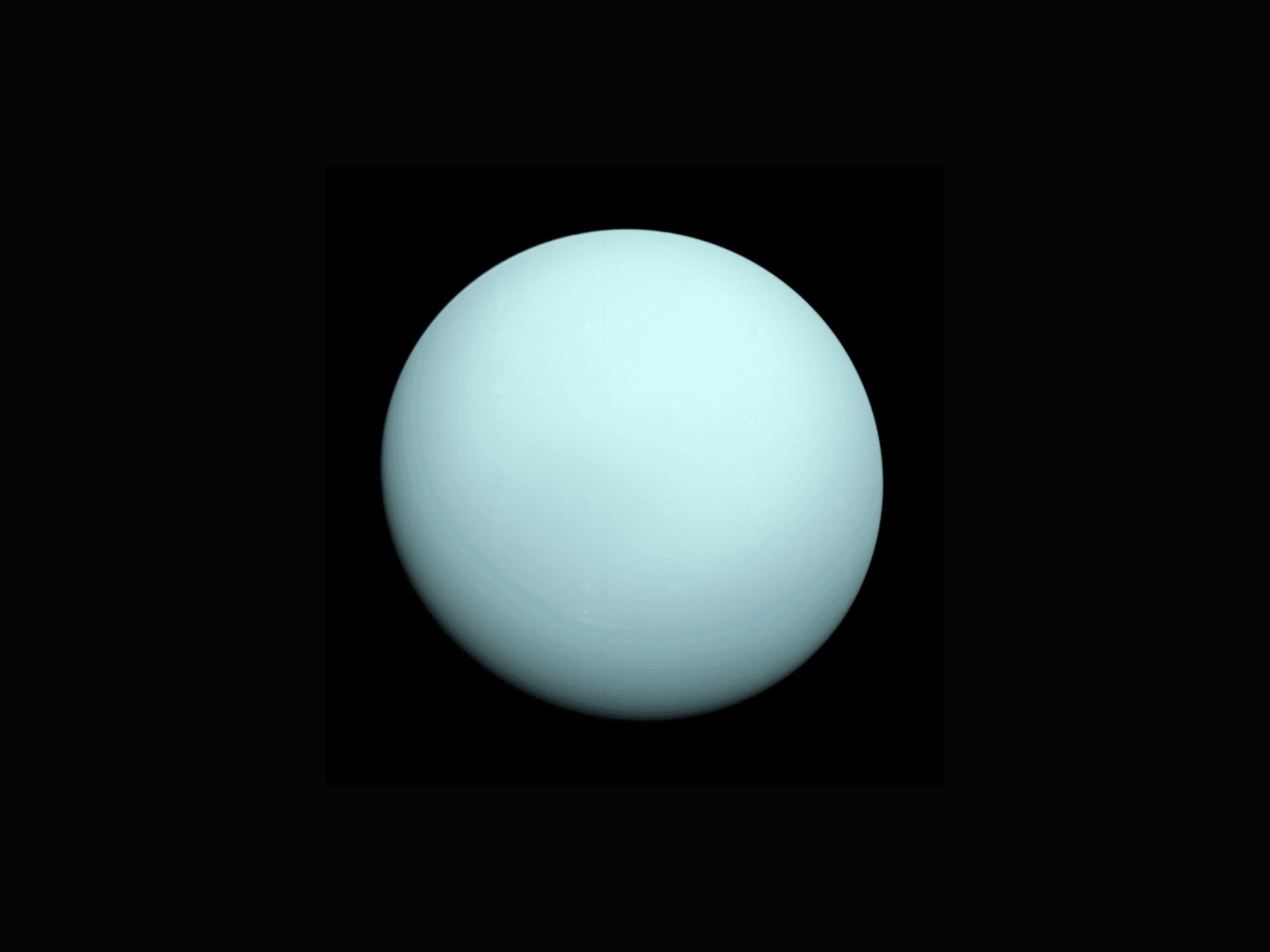
Uranus and Neptune–known as our system’s ice giants–are our least explored planets. Both have received exactly one flyby, from the Voyager 2 spacecraft. The data from those flybys remain our primary source of knowledge about each planet. The traditional model for each planet’s interior (dating back to before the flybys) consists of three layers: a rocky core; an icy mantle made up of water, ammonia, and methane; and a hydrogen/helium-rich atmosphere. That structure is one way to match the limited measurements we have from these planets, but, as today’s preprint study points out, it’s not the only way.
The authors suggest an alternative structure, in which a hydrogen-rich atmosphere overlays a supercritical magma ocean capable of dissolving hydrogen into heavier, metallic elements. Their suggestion is motivated by several factors. First, objects in the outer solar system–including Kuiper Belt objects–have less icy material than originally assumed, which suggests that Uranus and Neptune’s progenitors wouldn’t have been so ice-rich, either. Second, our understanding of how “rocky” materials respond at the temperatures and pressures found in these planet interiors has evolved. In particular, silicate, hydrogen, and iron are actually miscible at these conditions. That means that discrete sub-layers separated by material type are not as likely.
Using the magma ocean model, the team found compositions for both Uranus and Neptune that conformed well to our limited data about their gravitational and magnetic field properties. Time–and more data–will tell as to which interior model best describes these enigmatic giants. (Image credit: NASA; research credit: E. Young et al. (preprint); via Gizmodo)






Leave a Reply