Search results for: “jet”

  • “Fusion of Helios”

    “Fusion of Helios”

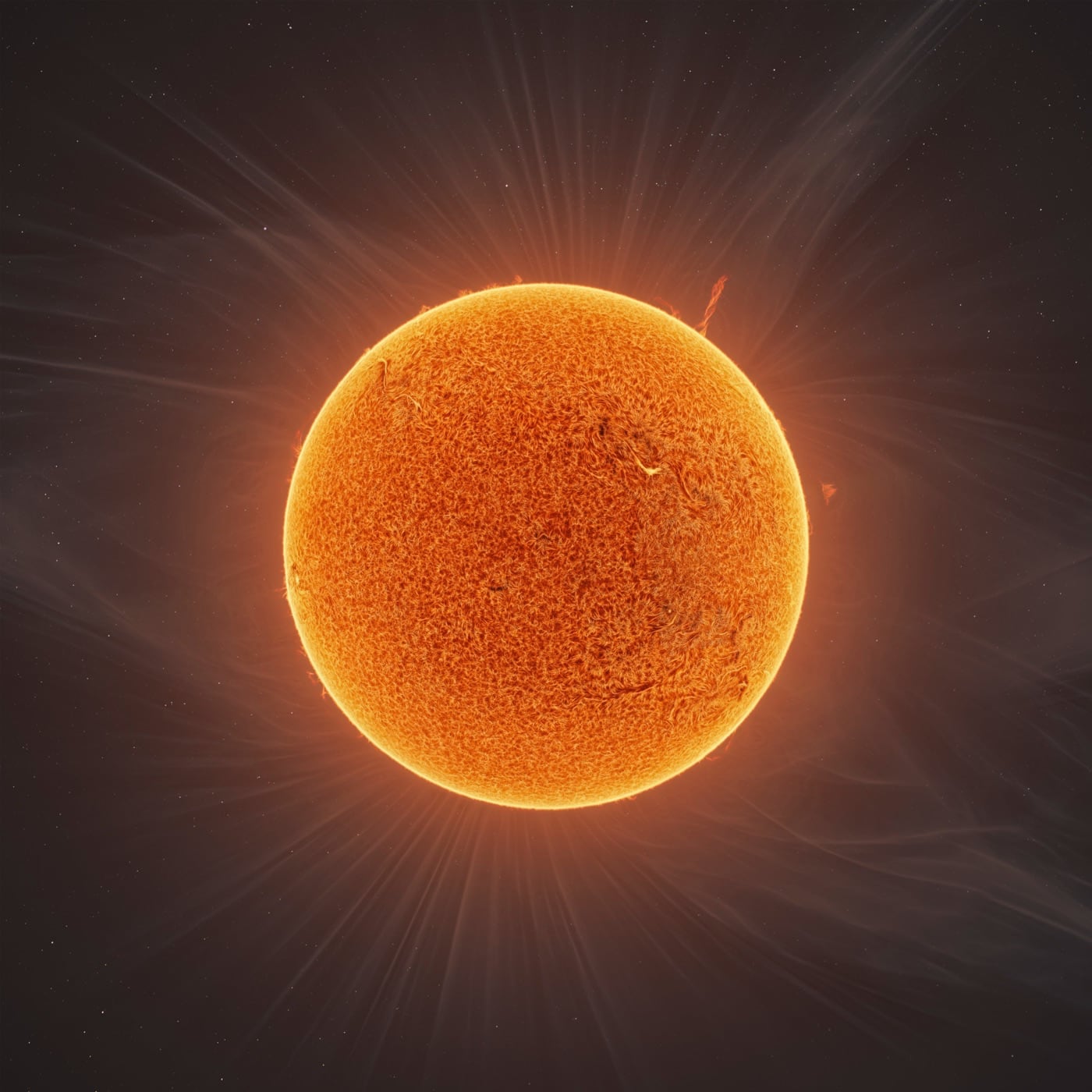
    Built from approximately 90,000 individual images, “Fusion of Helios” reveals the wisp-like corona of our Sun. Astrophotographers Andrew McCarthy and Jason Guenzel joined forces to combine eclipse images with data from NASA to build this fusion of art and science. Jets of plasma, known as spicules, dot the sun’s surface, and a towering tornado of plasma shoots off one side. For scale, that vortex stretches as far as 14 Earths stacked atop one another. (Image credit: A. McCarthy and J. Guenzel; via Colossal)

  • Oil-Covered Bubbles Popping

    Oil-Covered Bubbles Popping

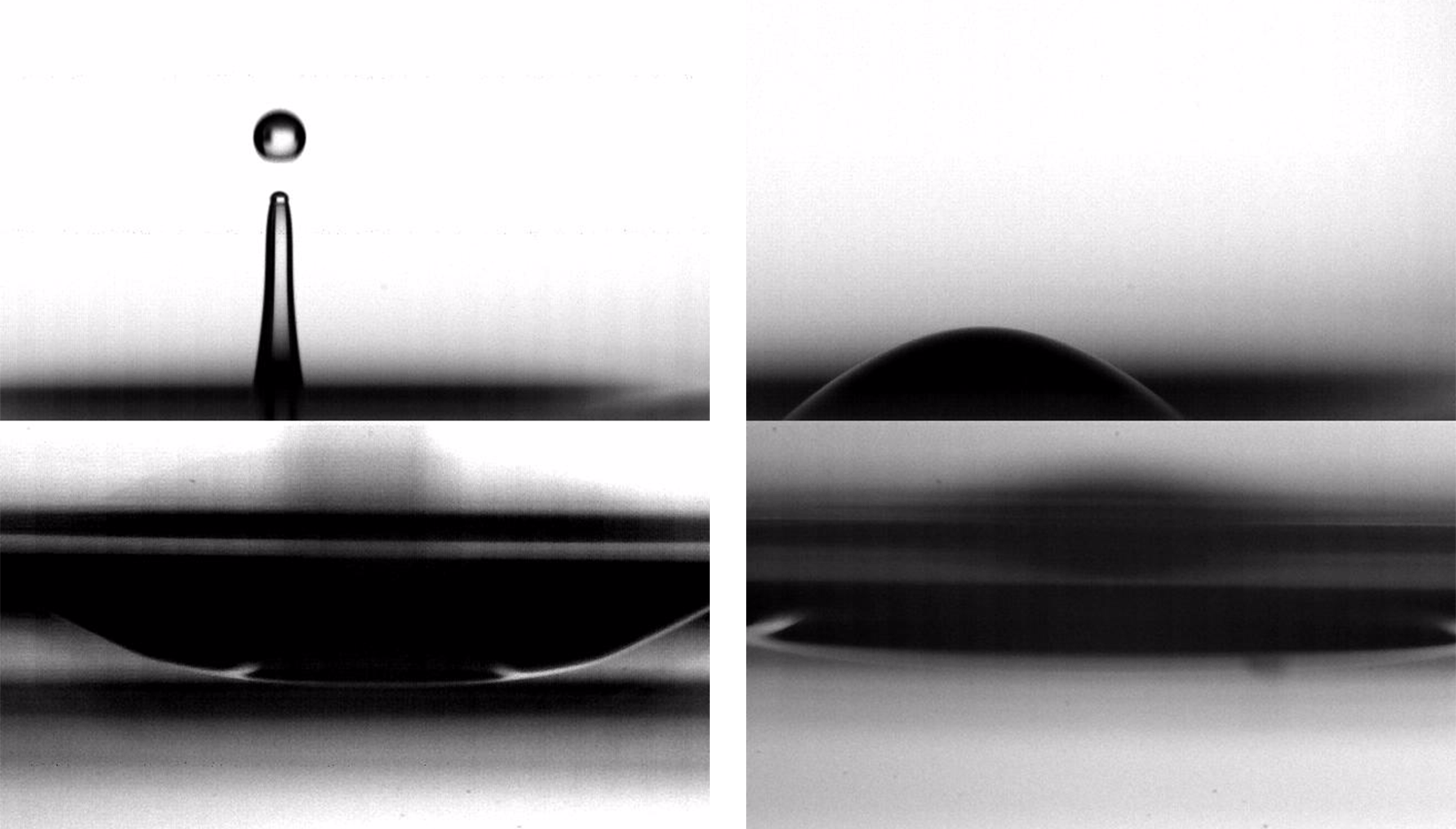
    When bubbles burst, they release smaller droplets from the jet that rebounds upward. Depending on their size, these droplets can fall back down or get lofted upward on air currents that spread them far and wide. Thus, knowing what kind of bubbles produce small, fast droplets is important for understanding air pollution, climate, and even disease transmission.

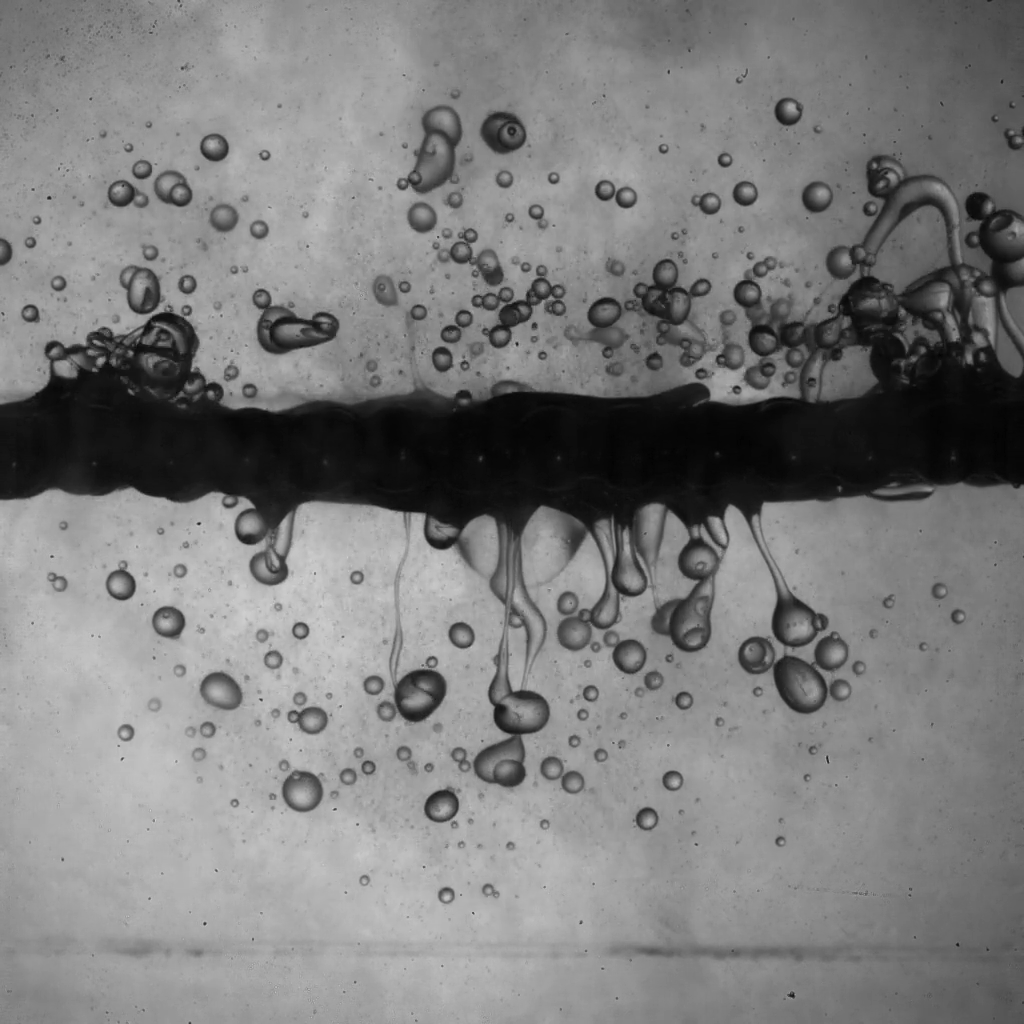
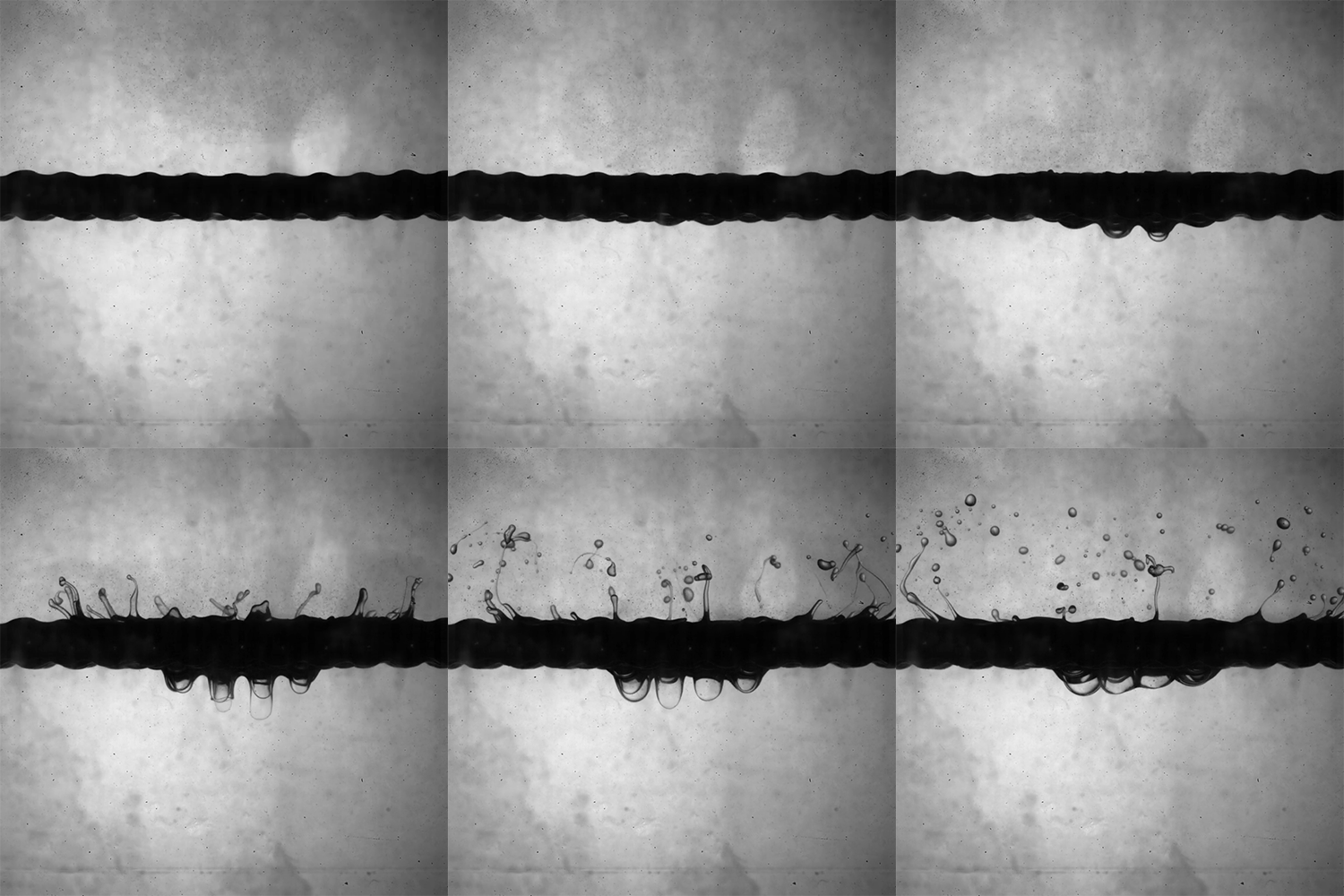
    The jet from a bubble of clean water.
    The jet from a bubble of clean water is broad and slow, releasing fewer and larger drops.

    In a recent study, researchers compared droplets made by clean, water-only bubbles, and the ones generated from water bubbles with a thin layer of oil coating them. The clean bubbles created jets that were broad and relatively slow moving; this motion produced a few large drops that quickly fell back down.

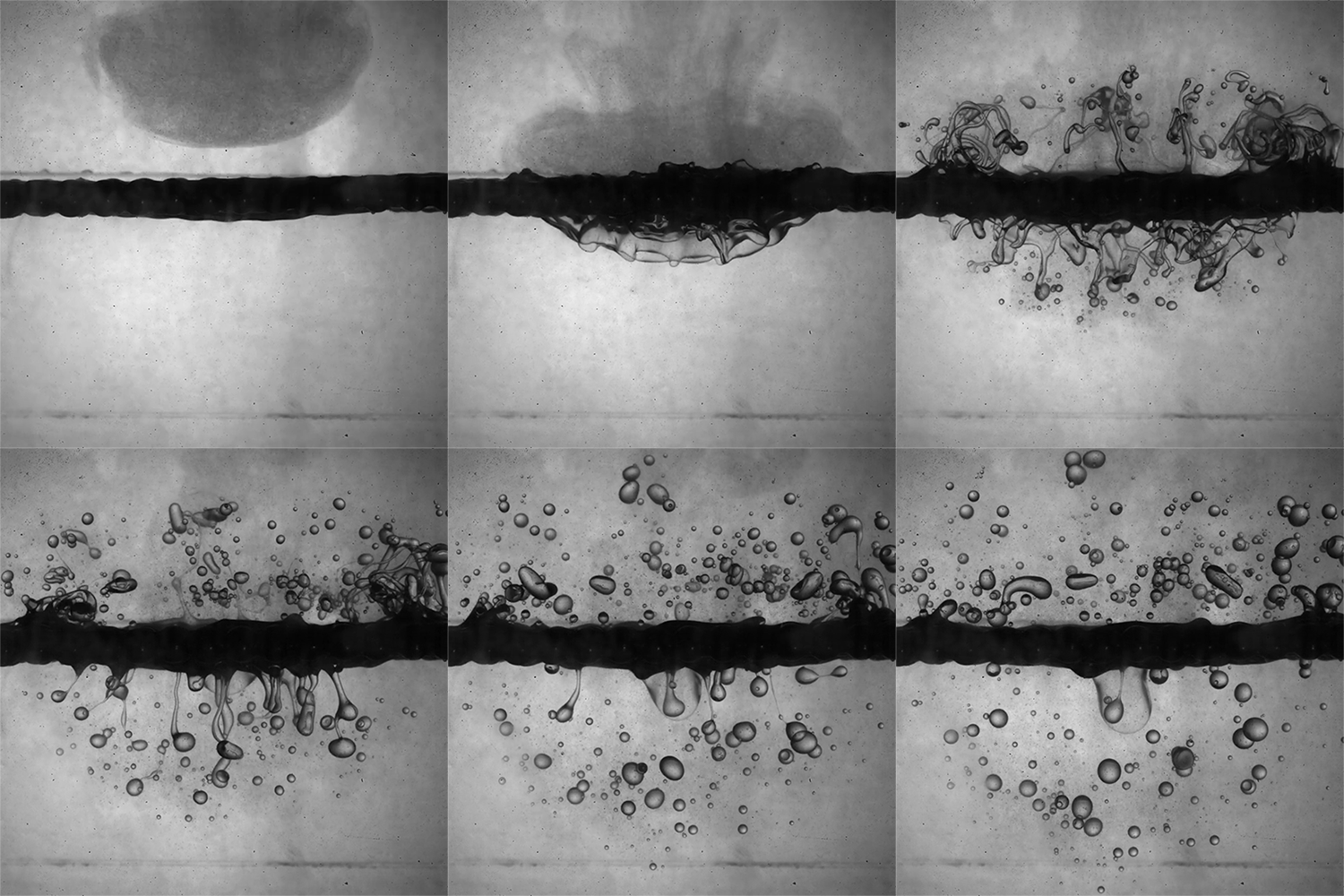
    The jet from an oil-covered bubble.
    The jet from an oil-covered bubble is skinny and fast-moving. It produces many small droplets.

    In contrast, the oil-slicked bubbles made a narrow, fast-moving jet that broke into many small droplets. These droplets could stay aloft for longer periods, indicating that contaminated water can produce more aerosols than clean. (Image credit: top – J. Graj, bursting – Z. Yang et al.; research credit: Z. Yang et al.; submitted by Jie F.)

  • Featured Video Play Icon

    Pee-Flinging Sharpshooters

    The tiny glassy-winged sharpshooter feeds exclusively on nutrient-poor sap from plant xylem. Since the sap is 95% water, the insects have to consume massive amounts, necessitating lots of urination — up to 300 times their body weight each day! With so much urine to get rid of and so little energy to spare, the sharpshooter has developed an ingenious, low-energy method to expel its waste. The insect forms a droplet on its anal stylus and flings it. A recent study reveals just how clever the insect’s method is.

    Researchers found that sharpshooters fling their droplets 40% faster than their stylus moves. This superpropulsion is only possible because the stylus’s motion is finely tuned to the droplet’s elasticity. Essentially, the insects achieve single-shot resonance with every throw. The energy-savings for the insects is substantial; researchers estimate that making a jet of urine instead would cost four to eight more times energy. (Video credit: Georgia Tech; image and research credit: E. Challita et al.; via Ars Technica; submitted by Kam-Yung Soh)

  • The Physics of Clogging

    The Physics of Clogging

    Clogging is one of those phenomenons that we encounter constantly, from overflowing storm drains to the traffic jam at the door when a lecture ends. It happens at all scales, too; ink-jet cartridges and microfluidic circuits can jam up just as thoroughly as a grain silo. Although there are many complexities to clogging, the basic mechanisms fall into three categories: sieving, bridging, and aggregation.

    Of these, sieving is the most familiar; it occurs when a particle too large for the constriction gets stuck. That includes both a rock too large to fit down a storm drain and a leaf that gets caught in the wrong orientation.

    Bridging, on the other hand, occurs when too many small particles reach a constriction at the same time. Although each one is small enough to fit on its own, their simultaneous arrival means that they jam together into a bridge that blocks the constriction. Given time, all flow comes to a stand still, as seen in the images below.

    Sequence of images showing the formation of a particle bridge and subsequent clogging of the entire constriction.
    Sequence of images showing the formation of a particle bridge and subsequent clogging of the entire constriction.

    The last mechanism, aggregation, is a more gradual blockage, formed as individual particles begin sticking to a surface, making the constriction progressively smaller. Think of those hard-water buildups that eventually block your shower head.

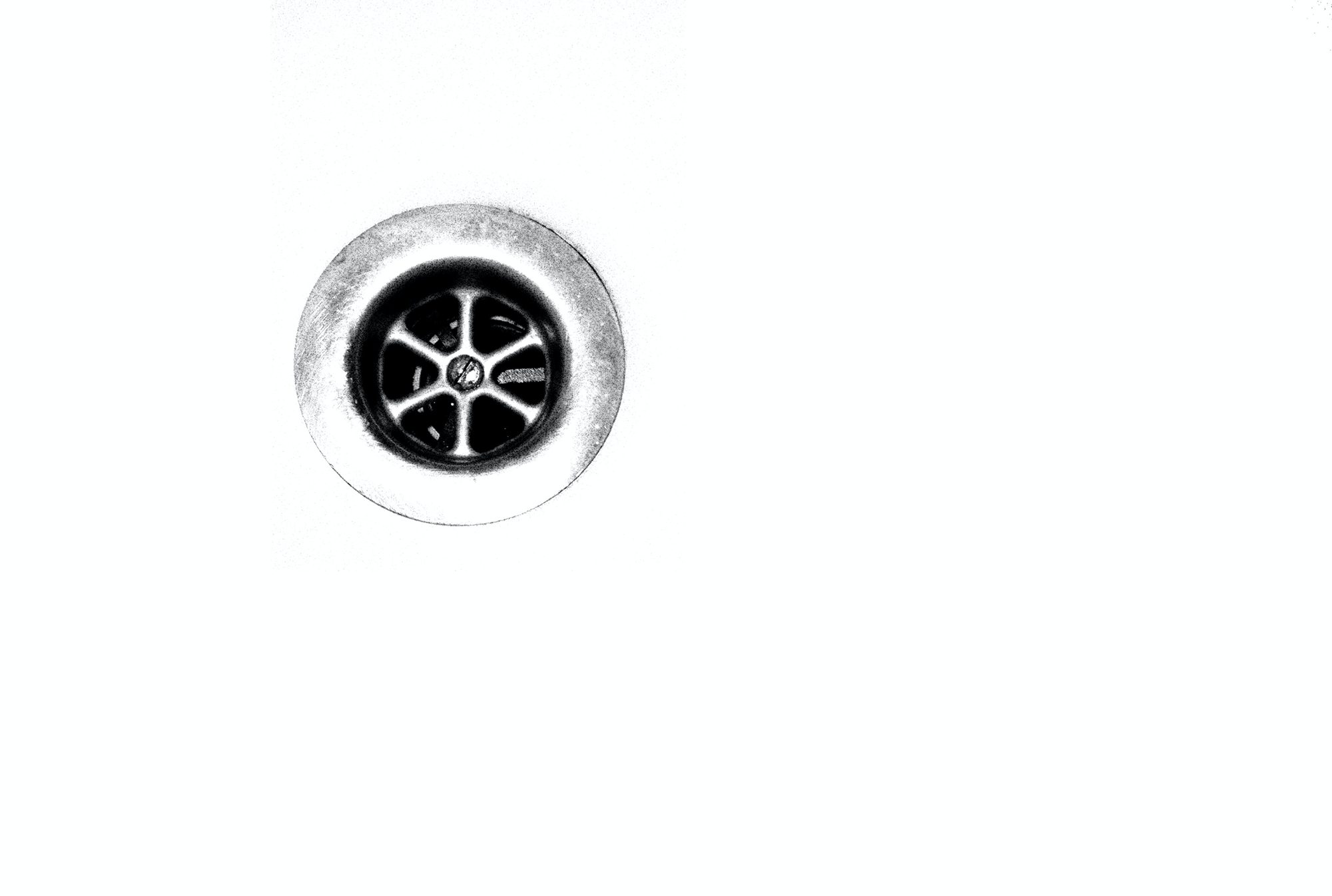
    Some of these mechanisms are easier to prevent or clear than others, but researchers are making progress. For an overview of the field’s current standing, check out this Physics Today article. (Image credit: drain – R. Rampsch, bridging – D. Jeong et al.; see also B. Dincau et al. at Physics Today)

  • Exploding a Bubble

    Exploding a Bubble

    In this high-speed video, artist Linden Gledhill ignites a mixture of oxygen and hydrogen contained within a soap bubble. As neat as the video is, I decided to take a closer look at the initial detonation with this animation:

    The ignition sequence within the bubble, slowed down further.
    The ignition sequence within the bubble, slowed down further.

    Even here, it’s hard to appreciate just how fast ignition is; it lasts only a handful of frames, despite filming at 40,000 frames per second. But we can still pick out some very neat physics. The ignition begins with a spike-like jet but immediately forks into three ignition fronts that pierce the soap bubble. You can see the shadowy mist of the bubble bursting as the flame front expands. Watch the background carefully, and you can see a shock wave flying away from that moment of detonation.

    Once the soap bubble is gone, the expanding flames begin to wrinkle and deform. Turbulence takes shape, eddying through the flames at a much slower speed than the initial detonation. This is where most of combustion takes place, with turbulence mixing the hydrogen and oxygen together to better enable burning. (Image and video credit: L. Gledhill)

  • Featured Video Play Icon

    Surfactants and Waves

    In the ocean, waves often curl over and trap air, becoming plunging breakers. How do surfactants like soap or oil affect this process? That’s the question behind this video, where researchers visualize breaking waves with differing amounts of added surfactant. In the case of pure water, the wave forms a smooth jet that curls over and traps air when the wave breaks. As more and more surfactant gets added, the shape of that jet and cavity change. In one case, they become irregular. In another, they disappear entirely, and with the most surfactant added, the wave suddenly looks just like the water-only case.

    The key to these behaviors, it turns out, is not how much surfactant there is, but how much the concentration of surfactant varies along the length of the wave. When there are significant changes in the surfactant concentration along the wave, local Marangoni flows try to even out the surface tension, causing the wave to break up in an irregular fashion. (Image and video credit: M. Erinin et al.)

  • Turning the Beach Pink

    Turning the Beach Pink

    Lab experiments and numerical simulations can only take us so far; sometimes there’s no substitute for getting out into the field. That’s why a beach in San Diego turned pink this January and February, as researchers released a safe, non-toxic dye into an estuary. The goal is to understand how small freshwater sources mix with colder, saltier ocean waters when they meet in the surf zone. Differences in temperature and salinity both affect the waters’ density and, therefore, how they’ll combine, especially in the face of the turbulent surf. Using drones, distributed sensors, and a specially-outfitted jet ski, the researchers collect data about how the dye (and therefore the estuary’s water) spreads over the 24 hours following each dye release. Check out their experiment’s site to learn more. (Image credits: E. Jepsen/A. Simpson/UC San Diego; via SFGate; submitted by Emily R.)

  • Beneath the Cavity

    Beneath the Cavity

    When a drop falls into a pool of liquid, it creates a distinctive cavity, followed by a jet. From above the surface, this process is well-studied. But this poster offers us a glimpse of what goes on beneath the surface, using particle image velocimetry. This technique follows the paths of tiny particles in the fluid to reveal how the fluid moves.

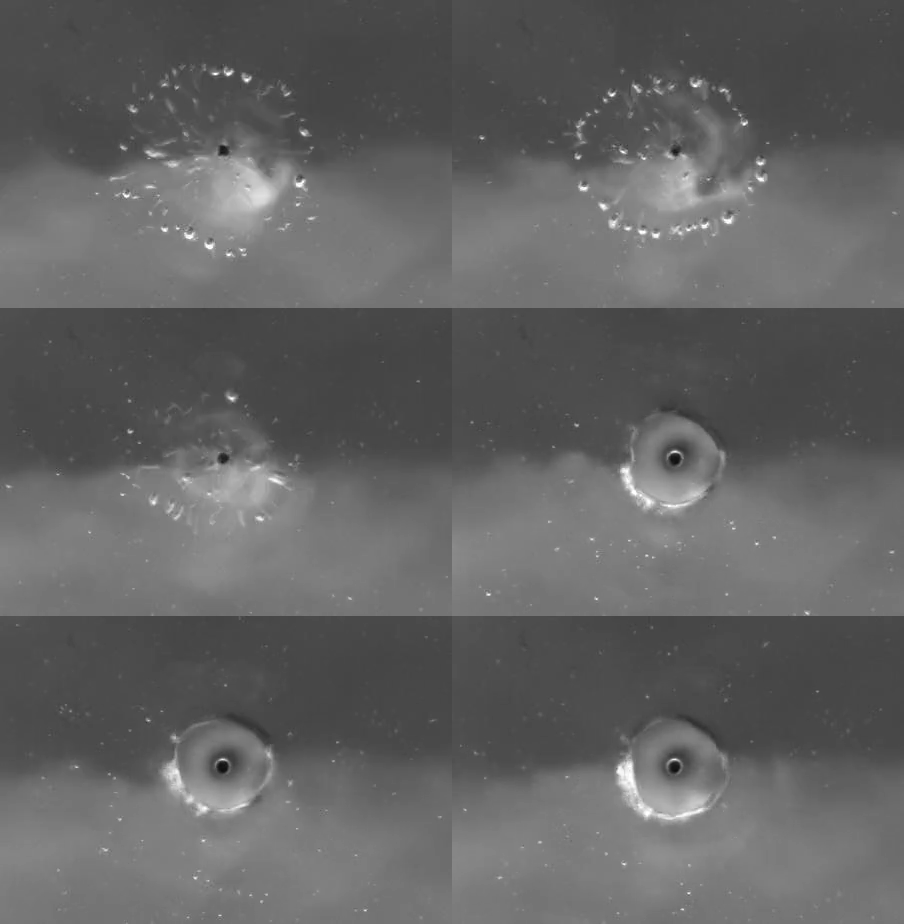
    As the cavity grows, fluid is pushed away. But the cavity’s reversal comes with a change in flow direction. The arrows now point toward the shrinking cavity — and they’re much larger, indicating a strong inward flow. It’s this convergence that creates the Worthington jet that rebounds from the surface. And, as the jet falls back, its momentum gets transferred into a vortex ring that drifts downward from the point of impact. (Image credit: R. Sharma et al.)

  • A Starry Nursery

    A Starry Nursery

    This mountain of interstellar gas and dust lies in the picturesque Eagle Nebula. Though it appears solid in this near-infrared image from JWST, the density of the structure is actually quite low. Jets and solar winds from the glowing, young stars inside the region sculpt the pillar’s shape. Over the next 100,000 years, the stars’ energetic jets, solar winds, and destructive supernovas will destroy the dusty nursery. (Image credit: NASA/ESA/CSA/STScI/M. Özsaraç)

  • Founts of Enceladus

    Founts of Enceladus

    In its exploration of Saturn, Cassini discovered that the moon Enceladus is home to icy eruptions. Beneath its shell of ice, Enceladus has a global ocean of salty liquid water. The average thickness of the ice is 20 kilometers, putting the ocean seemingly out of reach — except at the moon’s southern pole, where icy plumes of ocean water jet out.

    Here, where the ice is thinnest, the tidal forces Enceladus experiences from Saturn and its fellow moon Dione break through the ice. As the cracks open and close, liquid from the ocean sprays out, freezing into plumes that Cassini measured. Plans are underway for new missions that prioritize further sampling of Enceladus’ ocean. For now, we can only imagine what hides in its interior ocean. (Image credit: NASA/JPL-Caltech/SSI; for more, see M. Manga and M. Rudolph)