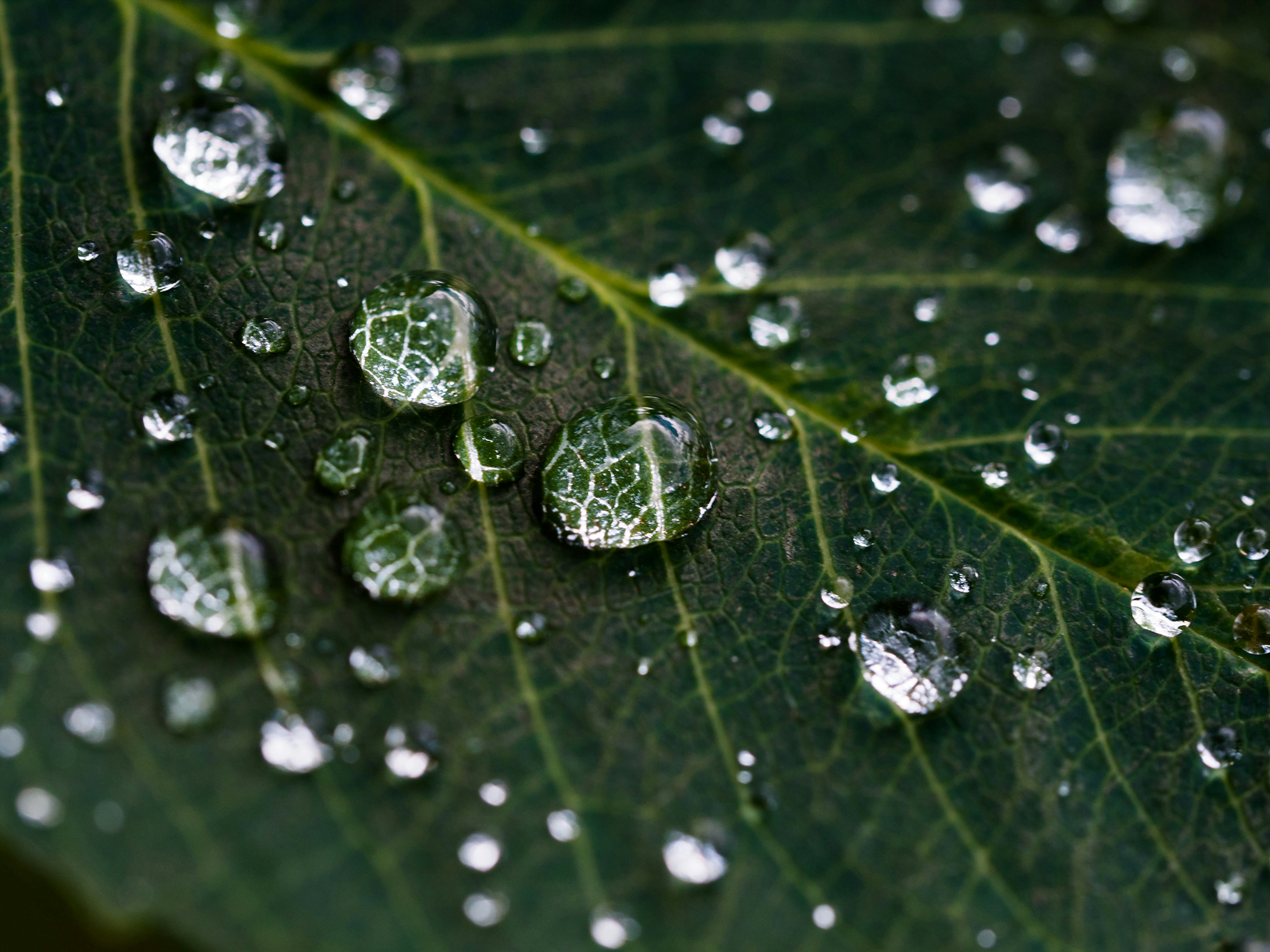
In our collective imagination, a raindrop is pendant shaped, wide at the bottom and pointed at the top. But, in fact, a falling raindrop experiences much more complicated shapes. Here, researchers blow a jet of air onto a still droplet, a good facsimile for a raindrop falling through the atmosphere. The jet of air first squishes the drop, then inflates it into a shape known as a bag. The thin sides of the bag stretch and eventually break, spraying tiny droplets. As the disintegration continues, the thick rim of the bag breaks up into big droplets. As the video demonstrates, viscosity and viscoelasticity can affect the break-up, too. (Image and video credit: I. Jackiw and N. Ashgriz)
In this ASMR video, black ink diffuses in water. When the video starts, the ink is so diffuse that it’s not apparent the video is playing backward. It’s only as specific structures — things like Rayleigh-Taylor instabilities, plumes, and jets — coalesce from the background that we recognize the time reversal. Though it’s probably unintentional, this makes for a neat, subtle commentary on the nature of isotropic turbulence. (Video and image credit: Wryfield Lab)
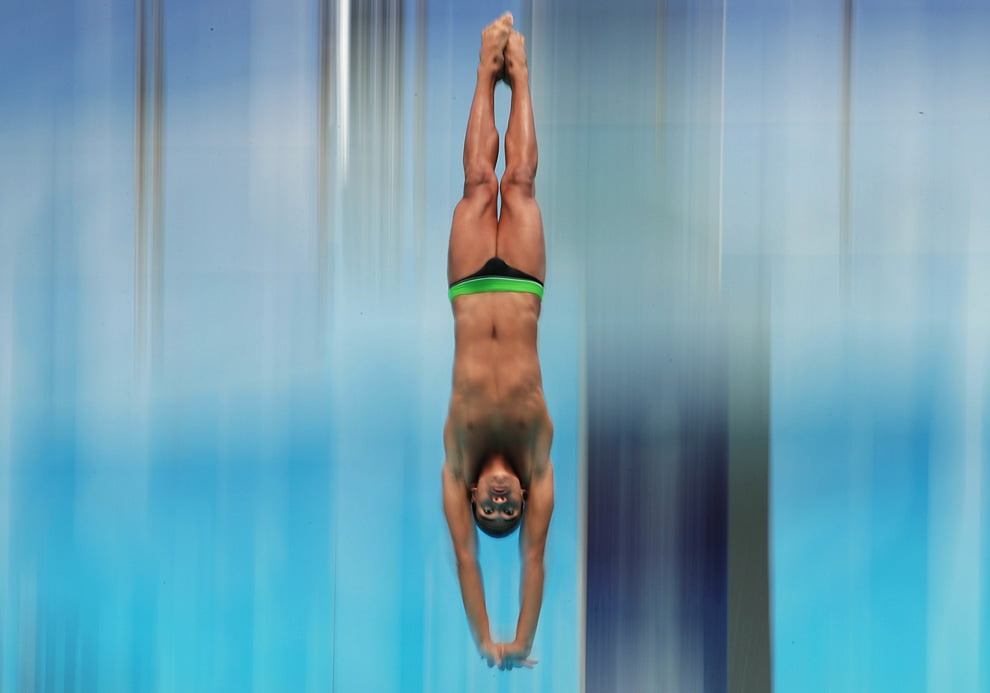
In competition diving, athletes chase a rip entry, the nearly splash-less dive that sounds like paper tearing. Part of a successful rip dive comes in the impact, where divers try to open a small air cavity with their hands that their entire body then enters. But the other key component happens below the surface, where divers bend at the hips once underwater. This maneuver enlarges the air cavity underwater and disrupts the formation of a jet that would typically shoot back upwards. Done properly, the result is an entry with little to no splash at the surface and a panel full of pleased judges. (Image credits: top – A. Pretty/Getty Images, other – E. Gregorio; research credit: E. Gregorio et al.; via Science News; submitted by Kam-Yung Soh)
Sequence of images showing a synthetic diver bending underwater to disrupt splash formation.
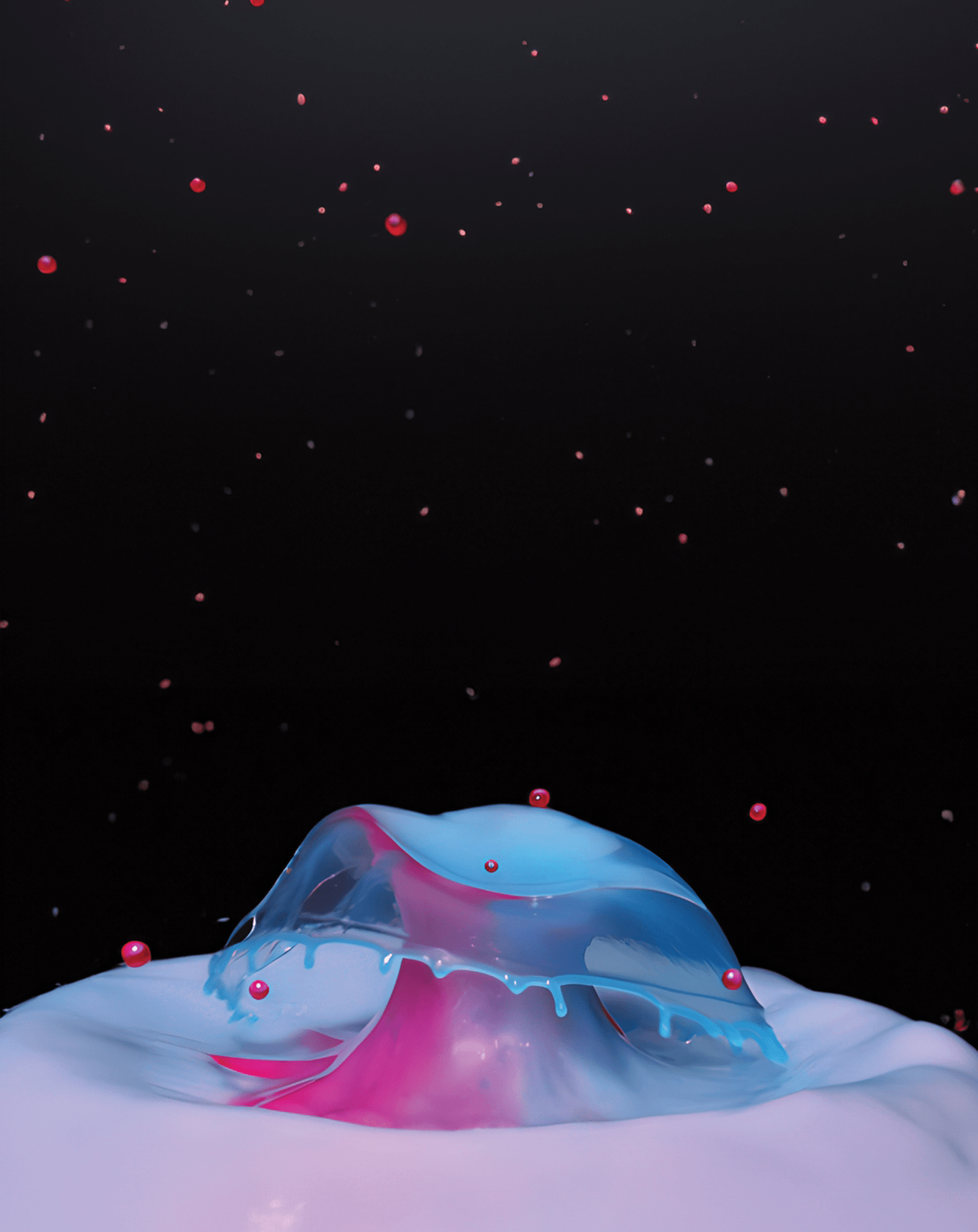
Since Harold Edgerton’s experiments with stroboscopic photographs in the 1930s, we’ve been fascinated by the shape of splashes. These days students and artists can take advantage of programmable external flashes to capture this split-second moment of impact. Here, a pink-dyed drop of ethanol strikes a jet rising from a pool of glycerin, milk, and food coloring. The resulting splash is umbrella-like, with a thickened rim that shows tiny ligaments of fluid — an early sign of the instability that will ultimately detach droplets from the splash. This image was taken by students in a course that connects art and fluid mechanics. (Image credit: L. Sharpe et al.; via Physics Today)
Rubbing a balloon on your hair can build a significant electrical charge. Water droplets have the same issue when they slide across a hydrophobic, electrically-insulated surface. A new study models why these charges build up and tests the model both experimentally and through simulation. They focused their theory on three effects that determine how much charge builds up. The first is a two-way chemical reaction that continuously creates charge at the interface, with positive charge building in the drop. Secondly, the drop’s contact angle with the surface sets how many protons can build up at the contact line, thereby affecting the electrical field they generate. And, finally, fluid motion at the rear of the drop deflects protons upward, shifting the electrical field. In particular, their model predicts that the higher contact angles of hydrophobic surfaces should increase charge build-up and faster sliding velocities should slow charge build-up, both of which agree with experiments.
The model should help researchers understand various charging scenarios, like those found on self-cleaning surfaces, in inkjet printing, and in semiconductor manufacturing. In the last scenario, rinsing semiconductor wafers in ultrapure water can build up charges in the kilovolt range, which is enough to damage the product. (Image credit: D. Carlson; research credit: A. Ratschow et al.; via APS Physics)
After multiple high-profile injuries caused by atmospheric turbulence, you might be wondering whether airplane rides are getting rougher. Unfortunately, the answer is yes, at least for clear-air (i.e., non-storm-related) turbulence in the North Atlantic region. It seems that climate change, as predicted, is increasing the bumpiness of our atmosphere. There are a couple of mechanisms at play here.
The first is that warming temperatures fuel thunderstorms. When ground-level temperatures and water temperatures are warmer, that provides more warm, moist air rising up and feeding atmospheric convection. Especially in the summertime, that translates into stronger, more frequent thunderstorms; even with flights avoiding the storms themselves, there’s greater turbulence surrounding them.
The second mechanism relates to wind, specifically in the mid-latitudes. In general, a temperature difference between two regions causes stronger winds. (Think about the windy conditions that accompany an incoming cold front.) At the mid-latitudes, the difference between cold polar regions and warmer equatorial ones creates a strong wind, known as the jet stream. Now, as temperature gradients increase at cruising altitudes, the jet stream gets stronger, which means bigger changes in wind speed with altitude. And its those wind speed differences at different heights that drive turbulence.
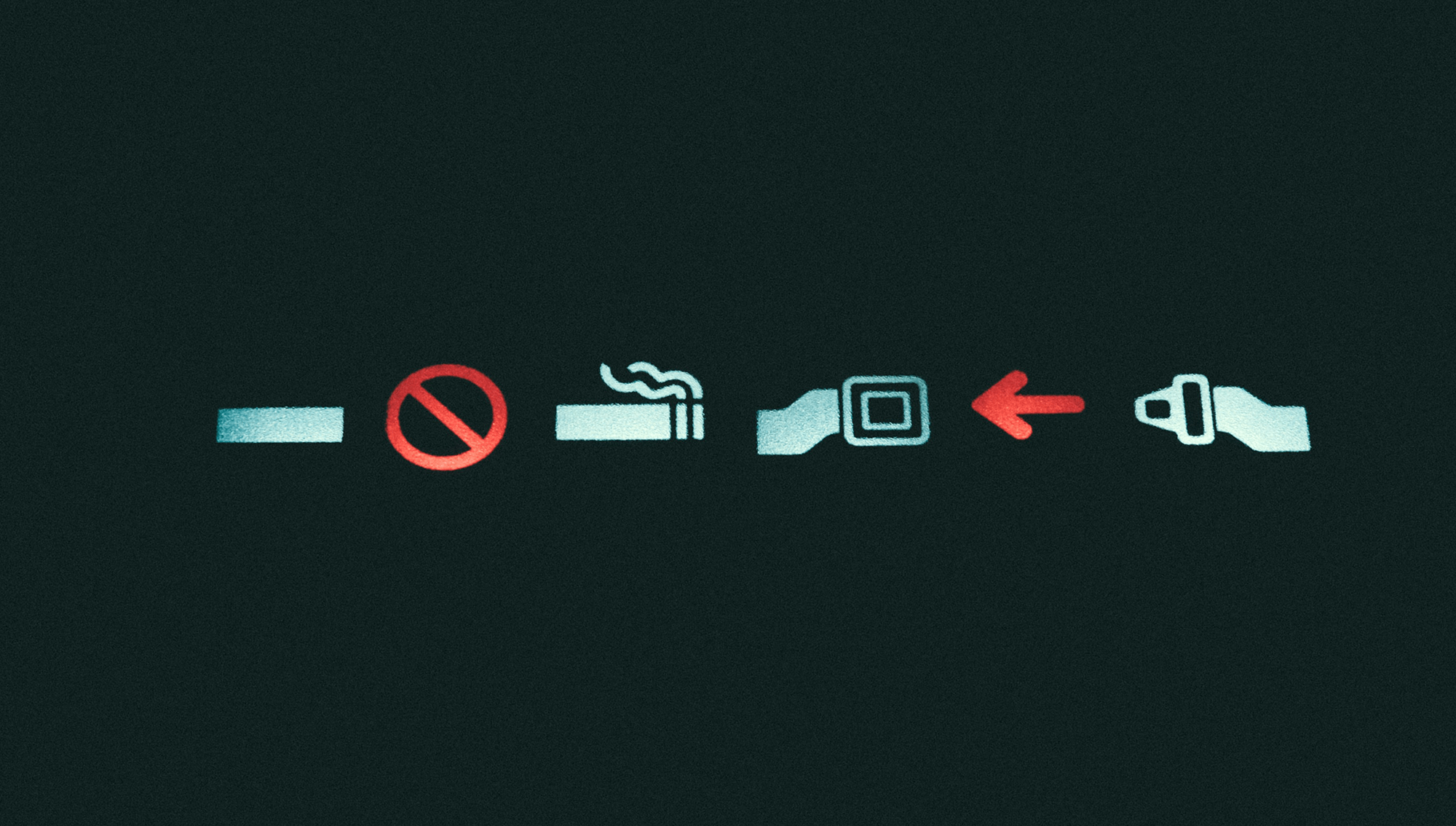
So, yes, we’re likely to see more turbulent flights now and in the future. But, fortunately, there’s a simple way to avoid injuries from that bumpiness: buckle up! If you keep your seat belt fastened while you’re seated, you can avoid getting tossed around by unexpected G-forces. (Image credit: G. Ruballo; see also Gizmodo)
Spiking natural gas power plants with hydrogen could help them burn cleaner as we transition away from carbon power. But burners in power plants and jet engines can be extremely finicky, thanks to thermoacoustic instabilities. As a flame burns, it can sputter and fluctuate in its heat output. That creates pressure oscillations (which we sometimes hear as sound waves) that reflect off the burner’s walls and return toward the flame, causing further fluctuations. This feedback loop can be destructive enough to explode combustion chambers.
Adding hydrogen to a burner designed purely for natural gas can trigger these instabilities (above image), but researchers hope that by exploring fuel-mixtures and their effect at lab-scale, they can help designers find safe ways to adapt industrial burners for the cleaner fuel mixture. (Image and research credit: B. Ahn et al.; via APS Physics)
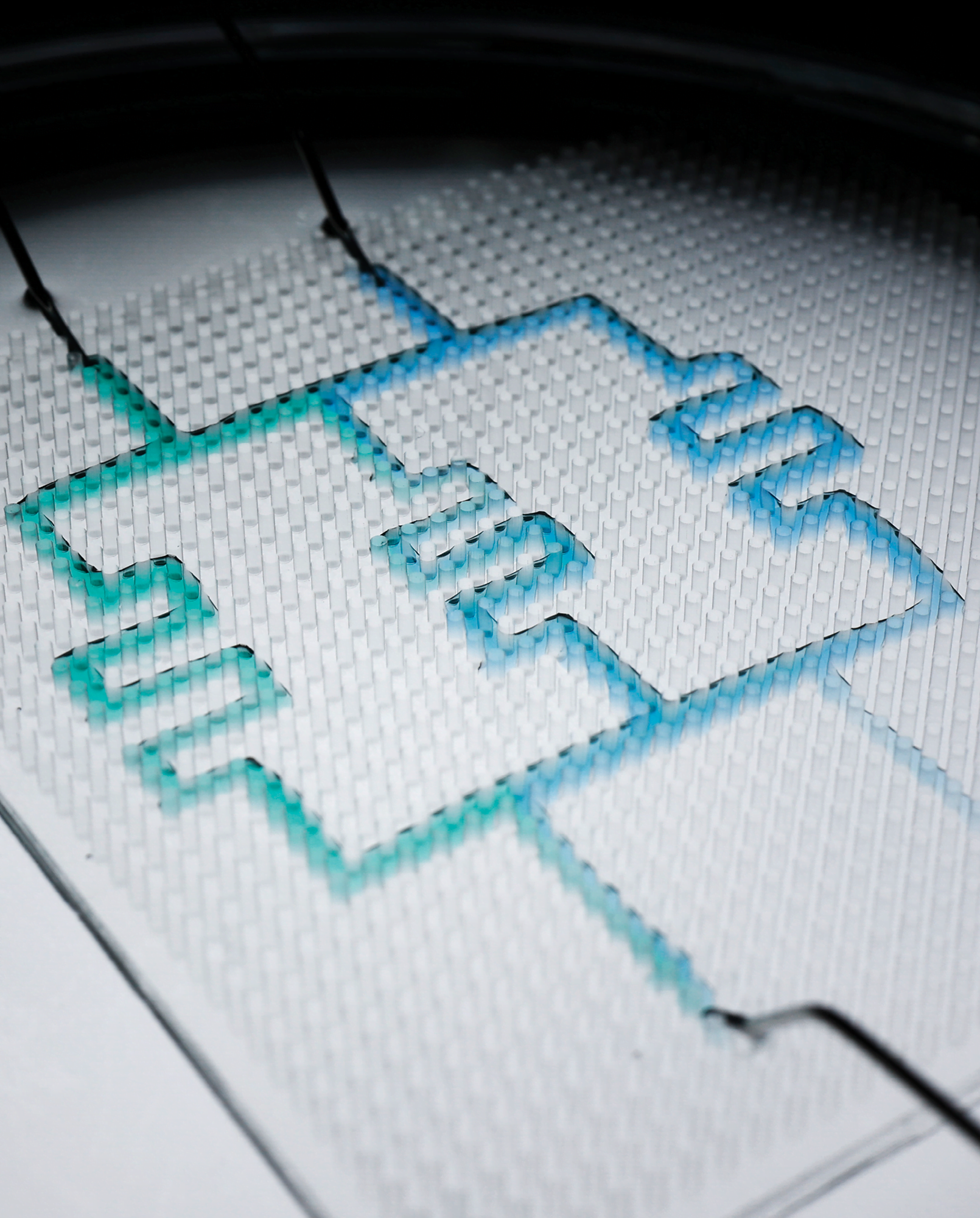
Microfluidic circuits are key to “labs on a chip” used in medical diagnostics, inkjet printing, and basic research. Typically, channels in these circuits are printed or etched onto solid surfaces, making it difficult to reconfigure them. A group in China developed an alternative design, inspired by reconfigurable toys like Lego blocks. Their set-up, shown above, uses a pillared surface immersed in oil. To create the channels, they pipette water — one droplet at a time — into the space between pillars. The combination of oil and pillars traps the drop. With multiple drops linked together, they get channels, like the ones above that mix two fluids. When the time comes to reconfigure the channels, they just pipette the water out and cut the channel with a sheet of coated paper. (Image and research credit: Y. Zeng et al.; via Physics Today)
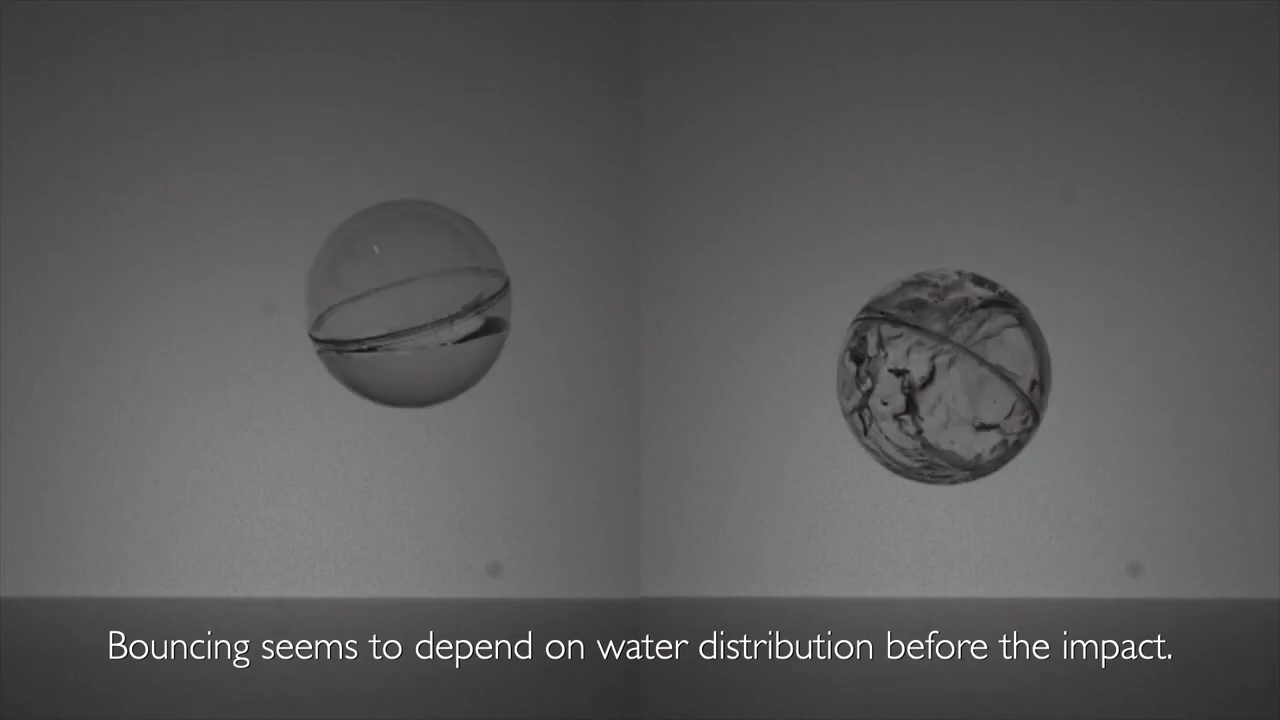
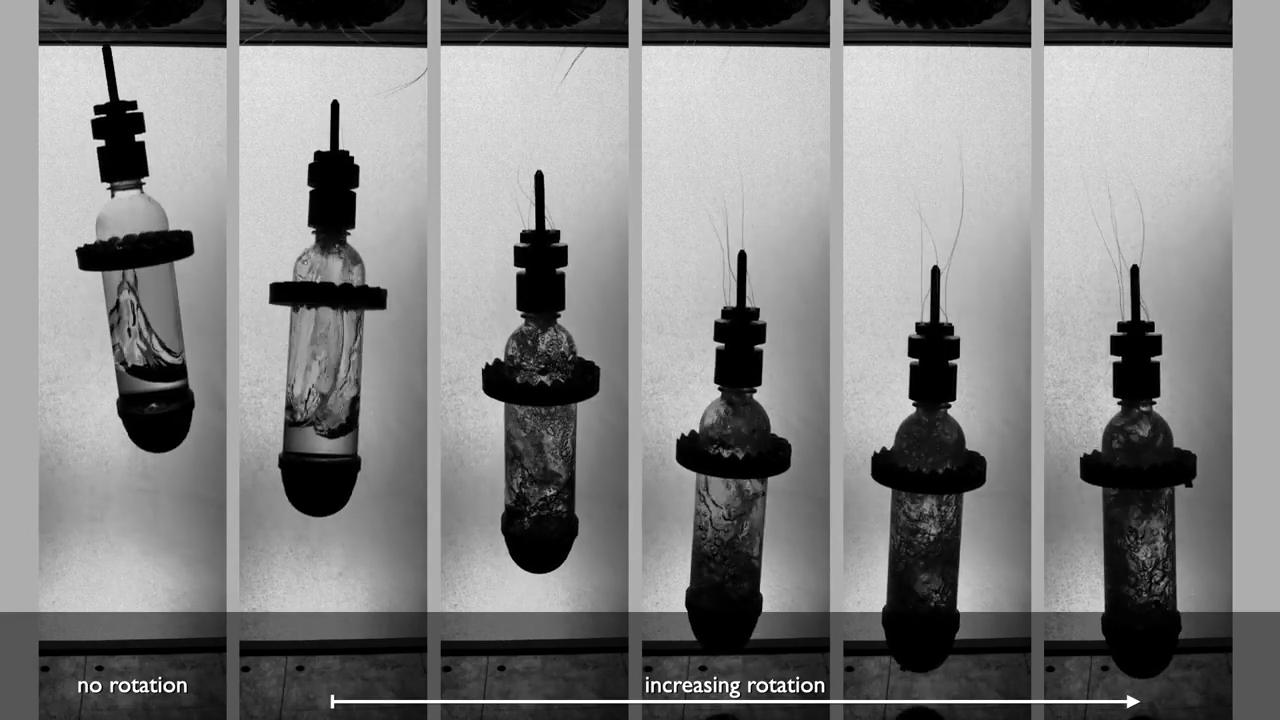
Drop a ball that’s partially filled with water and it may or may not bounce. Why the difference? It all comes down to where the water is before impact. The more distributed the water is along the walls, the less likely a container will bounce. Researchers found they could control the bounce by spinning the bottles before they dropped. Centrifugal force flings the water all over the walls of the spinning bottle, and, when impact happens, the water concentrates into a central jet. For the spinning bottles, that jet is wide, messy, and swirling; it breaks up quickly, expending energy that could otherwise go into a bounce. In effect, the spinning bottle’s jet forms quickly enough to “stomp” the rebound. (Video and image credit: A. Martinez et al.; research credit: K. Andrade et al.)
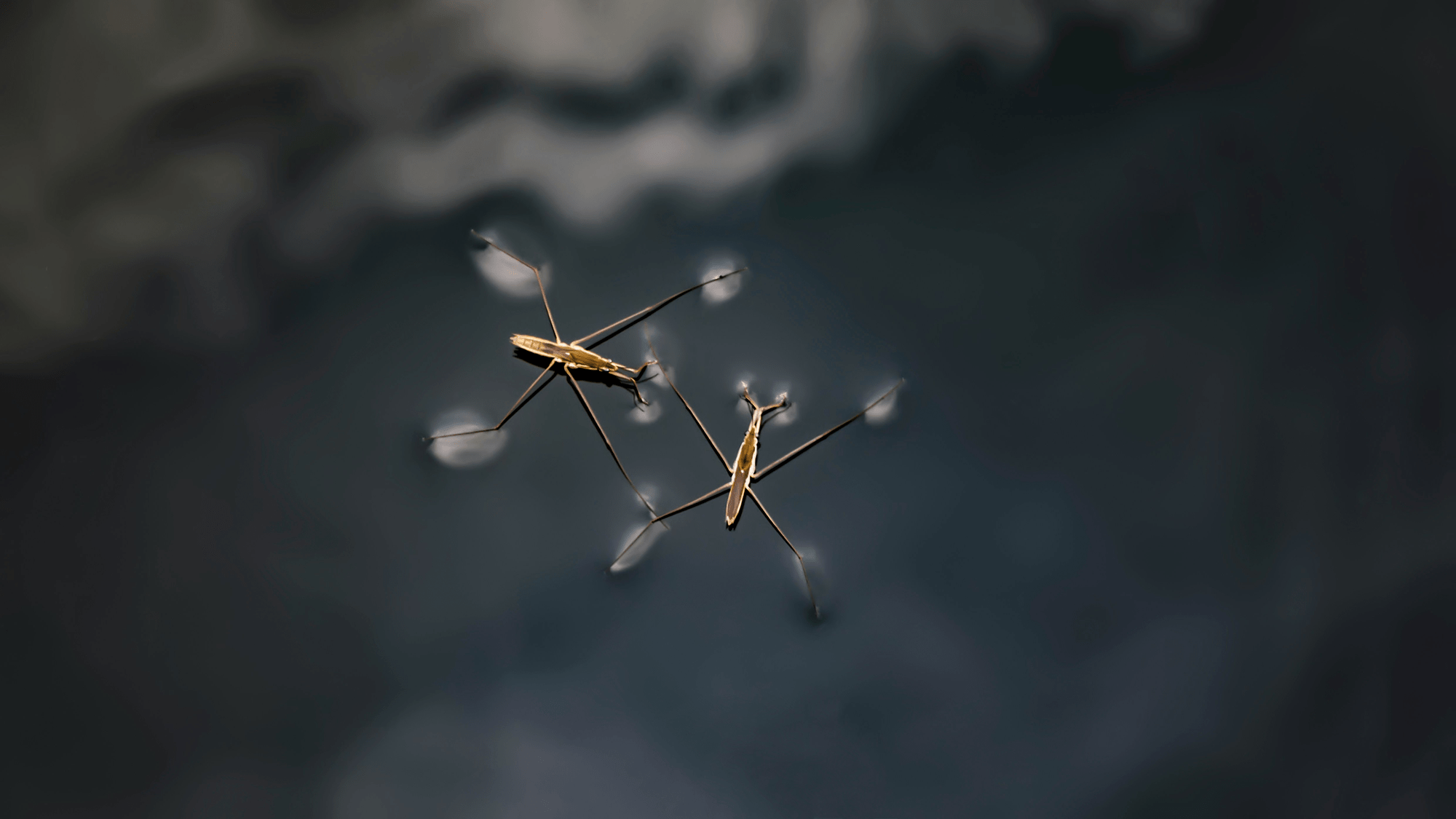
Water striders spend their lives at the air-water boundary, skittering along this interfacial world. But what happens when falling rain destroys their flat existence? That’s the question that motivated today’s research study, which looks water striders subjected to artificial rain.
Although the water drops themselves are far heavier than the insects, the water doesn’t strike hard enough to injure the insects. Neither a direct impact nor the forces from a neighboring impact, the researchers found, were enough to pose a problem for the water strider’s exoskeleton. Instead, they’re more likely to get flung or submerged, as follows:
The initial impact of a raindrop creates a large crater. Depending on the position of the insect relative to the point of impact, this may fling the insect away or pull it down into the cavity.
When the drop hits, it creates a big crater in the water’s surface. Insects to the outside of the splash get flung outward, while those closer to the point of impact ride the crater wall downward. As the crater collapses, it forms a thick jet that pushes nearby water striders up with it.
As the initial cavity collapses, it creates a large jet that can push the strider into the air.
As that initial jet collapses, it forms a second crater, which — being smaller and narrower — collapses much faster than the first one. That action, researchers found, often submerges a water strider caught in the crater.
The first jet’s collapse creates a second crater, and it’s this one that tends to trap and submerge the water strider underwater.
Fortunately for the insect, their water-repellent nature means they’re covered in a thin bubble of air that lets them survive several minutes underwater. That’s time enough for the water strider to rescue itself. (Image credit: top – H. Wang, animations – D. Watson et al.; research credit: D. Watson et al.; via APS Physics)