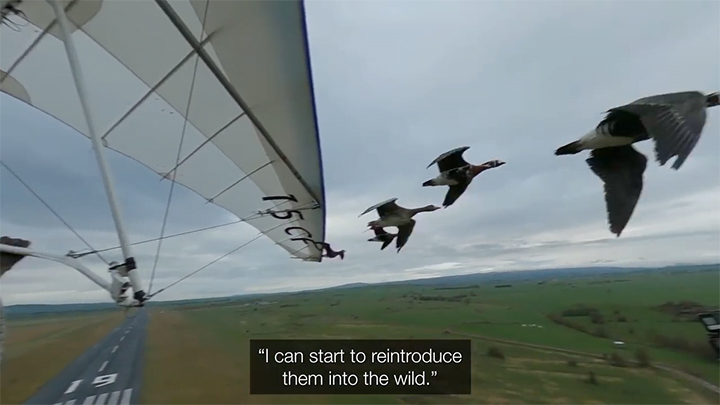
Some people fly with geese to train them for wind tunnel tests, and some people fly with them to teach them safer migratory paths. Today’s video focuses on the latter, specifically conservationist Christian Moullec, who has spent decades living and flying with lesser white-fronted geese as part of an effort to save the threatened species. He flies with them using an ultralight aircraft, exercising daily to prepare for the cross-continental migration. To help fund the effort, he offers passengers a spot on his short flights, letting people fly with the birds! (Image and video credit: T. Scott; via Colossal)
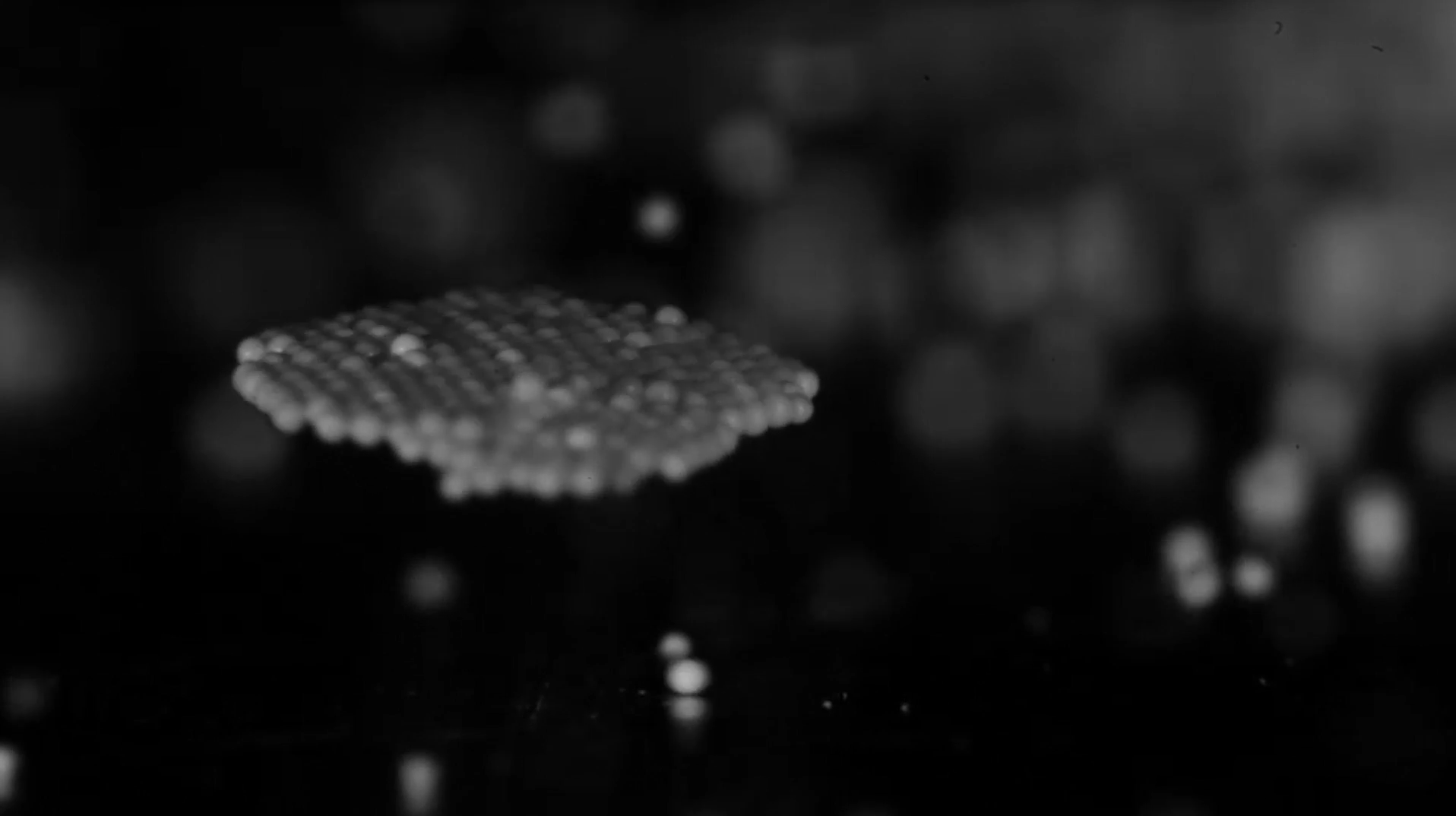
In nature, objects like asteroids, black holes, and atomic nuclei can get distorted when spinning rapidly. Researchers are exploring these objects using a new model platform: particle raftslevitated by sound. The individual particles are less than a millimeter wide and tend to clump together due to the scattering of sound waves off neighboring particles. This effect provides a cohesive force — similar to surface tension or the effects of gravity — that draws the particles together. With the right frequency, the sound waves can also make the granular rafts spin, setting up a tug-of-war between cohesion and centrifugal force.
Using sound waves for levitation, particles slowly rise and clump together. Particles are approximately 190 micrometers each, and the video is drastically slowed down from real-time.
As the rafts spin, they distort, pull apart, and come back together. Interestingly, the cohesive force a raft experiences increases with the raft’s size. That makes the attractive force unlike surface tension (which is the same whether you have a bucket of water or a lake) and more like gravity (which is stronger with more material.) Because of this size dependence, the team hopes their granular rafts could be a new way to study the formation of rubble-pile asteroids and similarly granular systems.
As the raft’s rotation increases, it’s pulled apart by centrifugal forces, but the pieces later reconnect. Video is slowed down by a factor of 60.
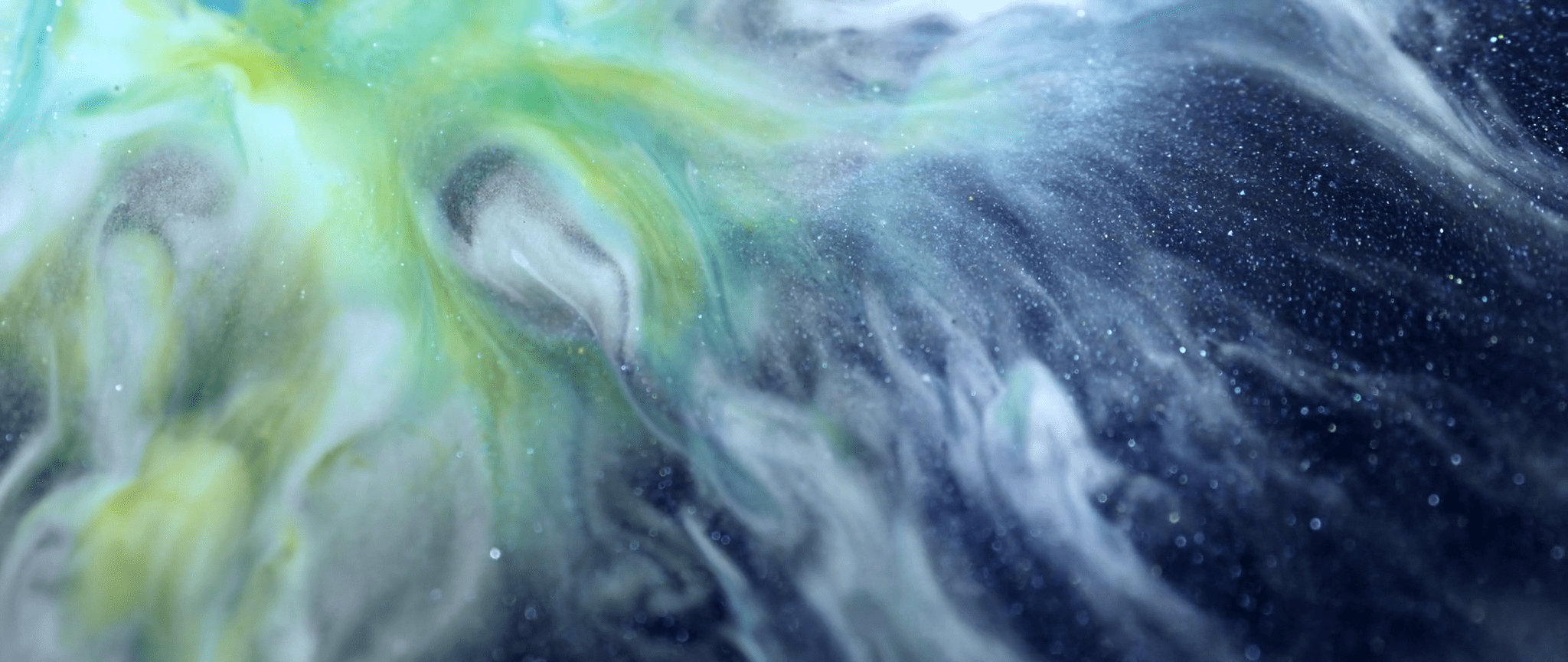
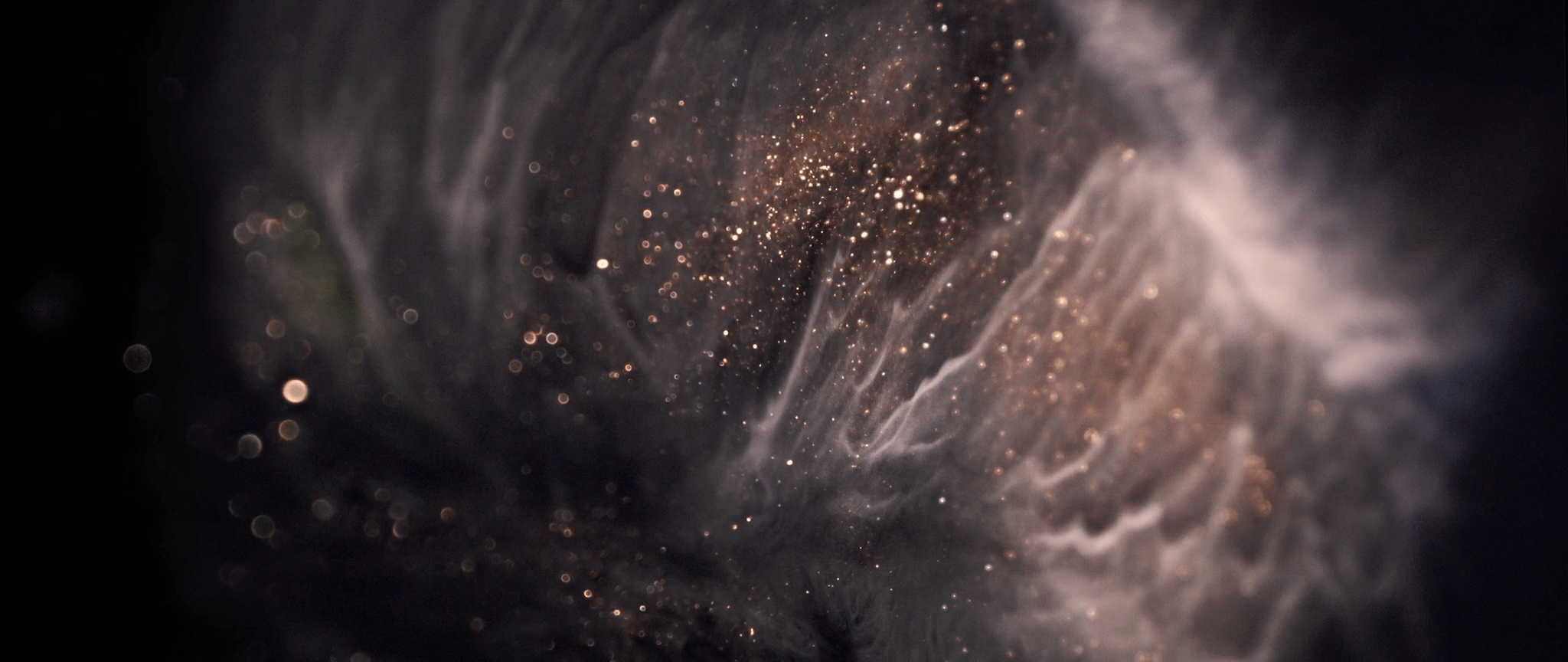
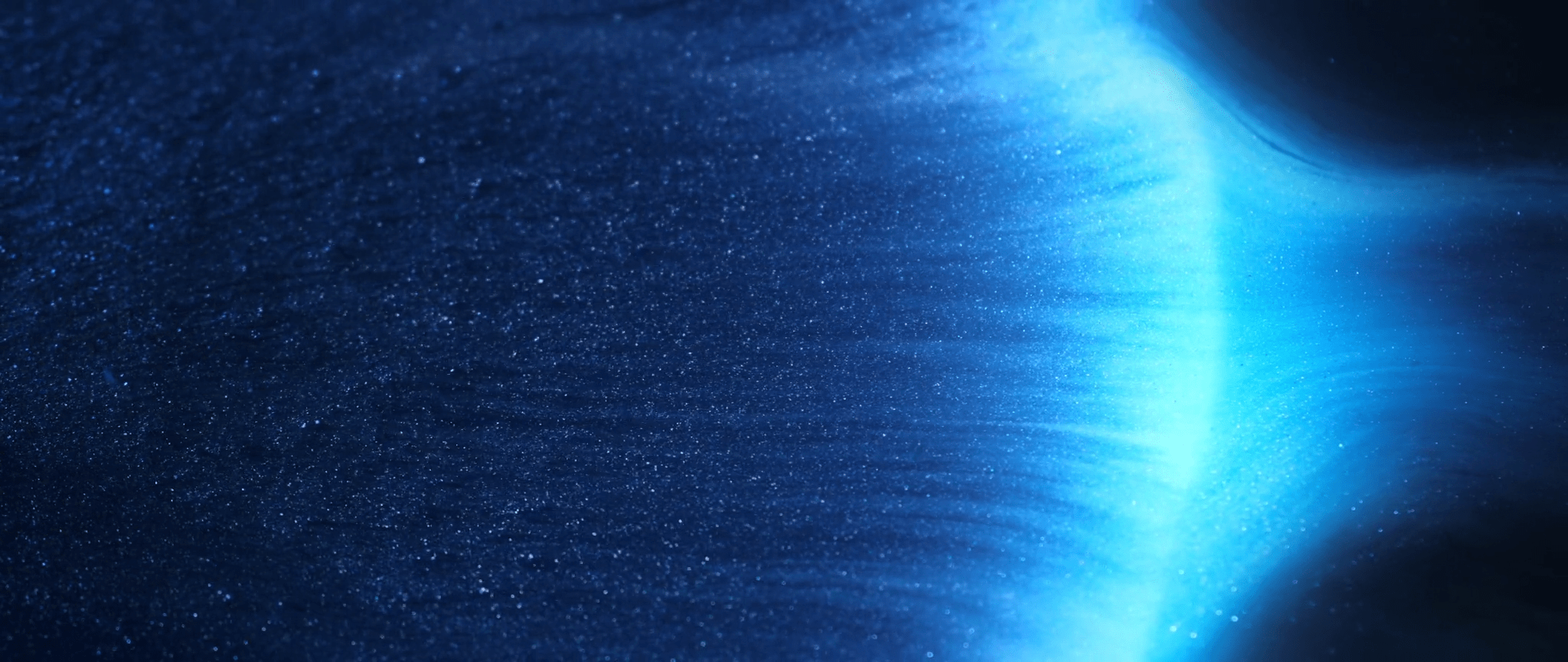
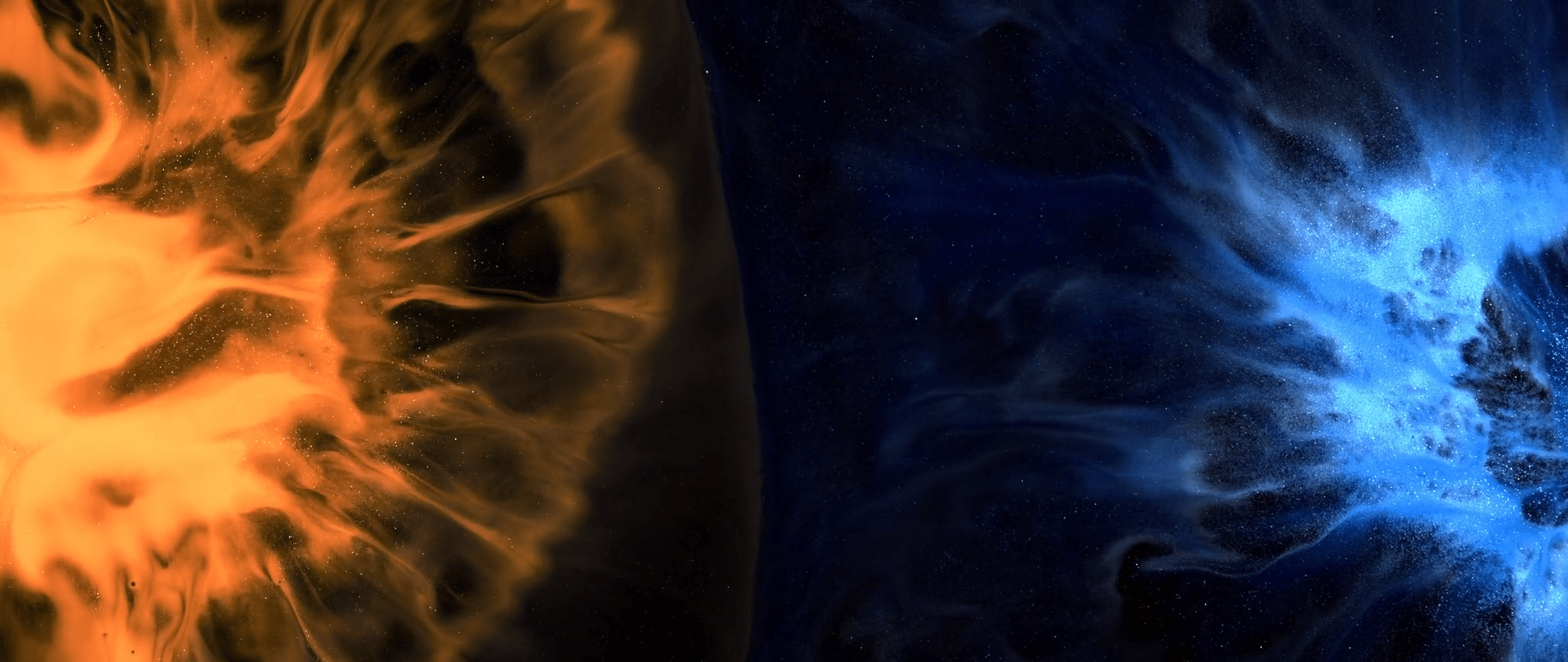
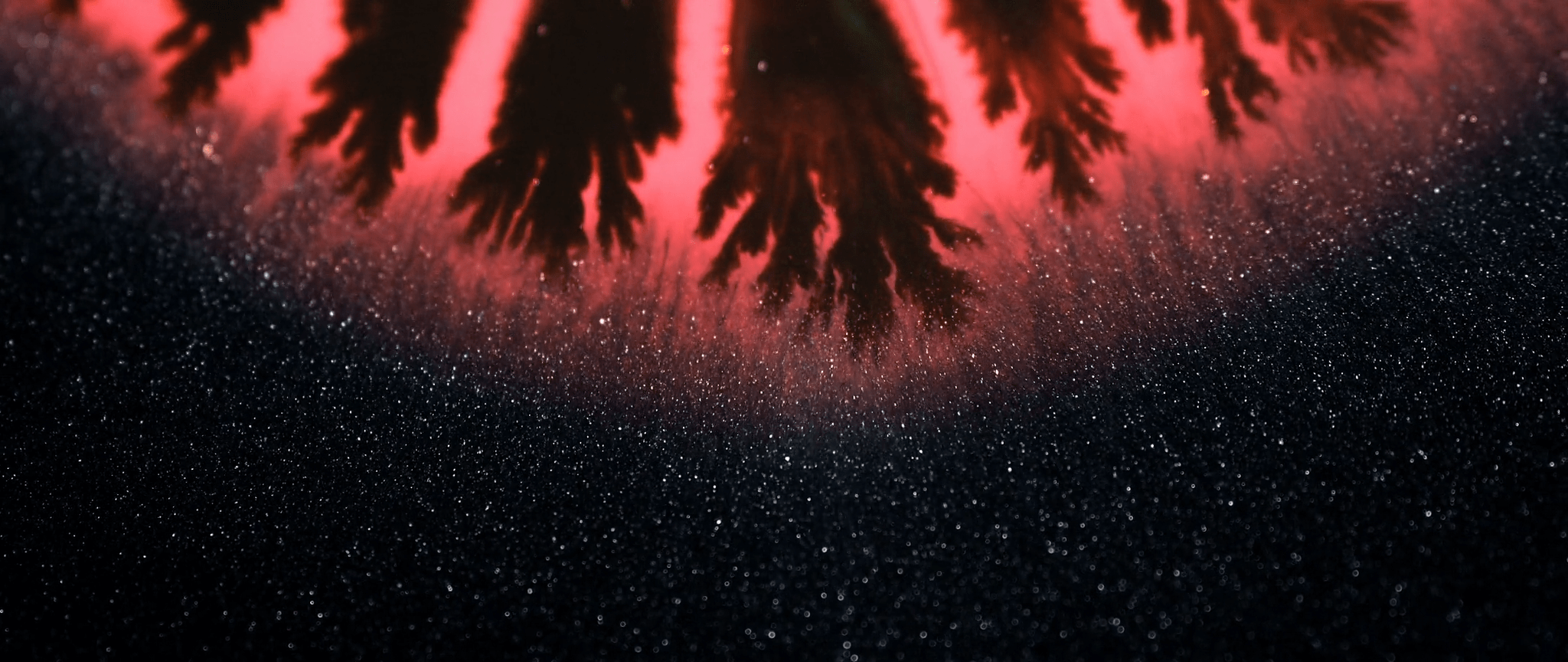
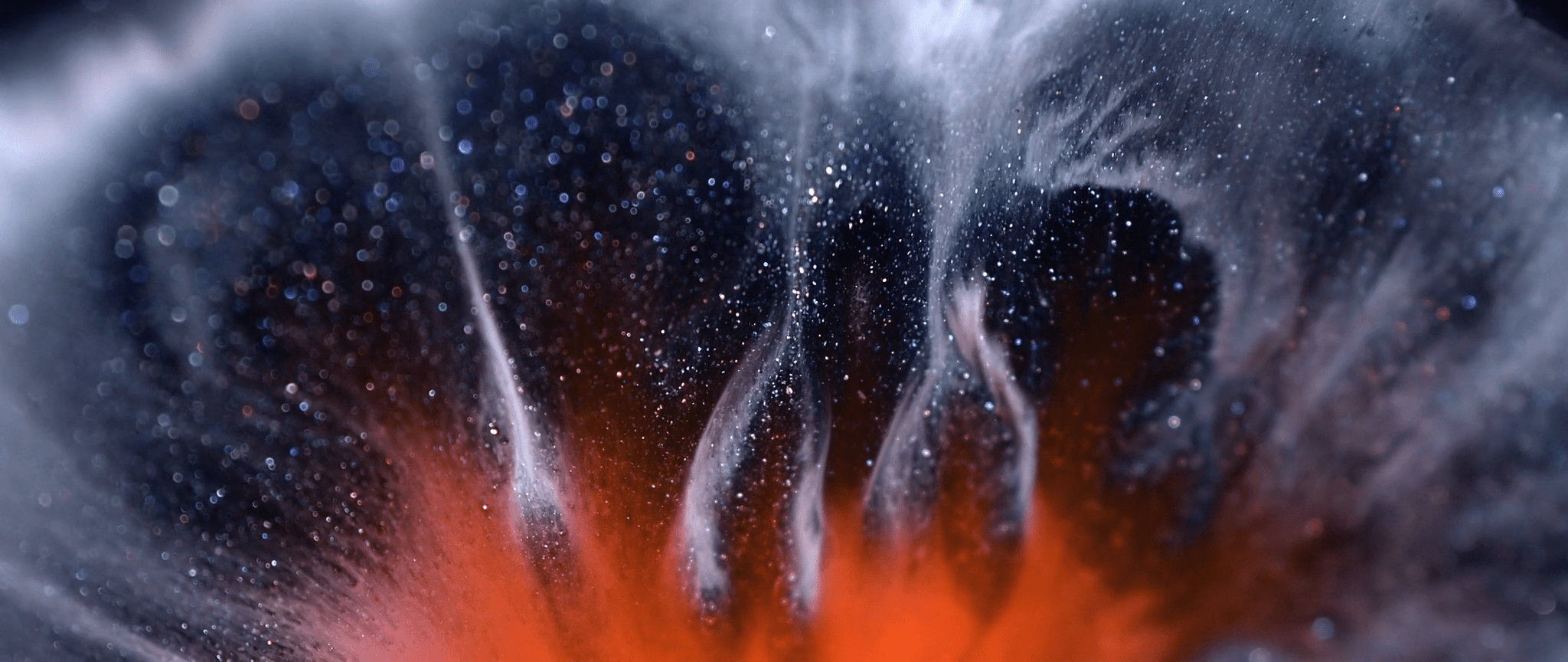
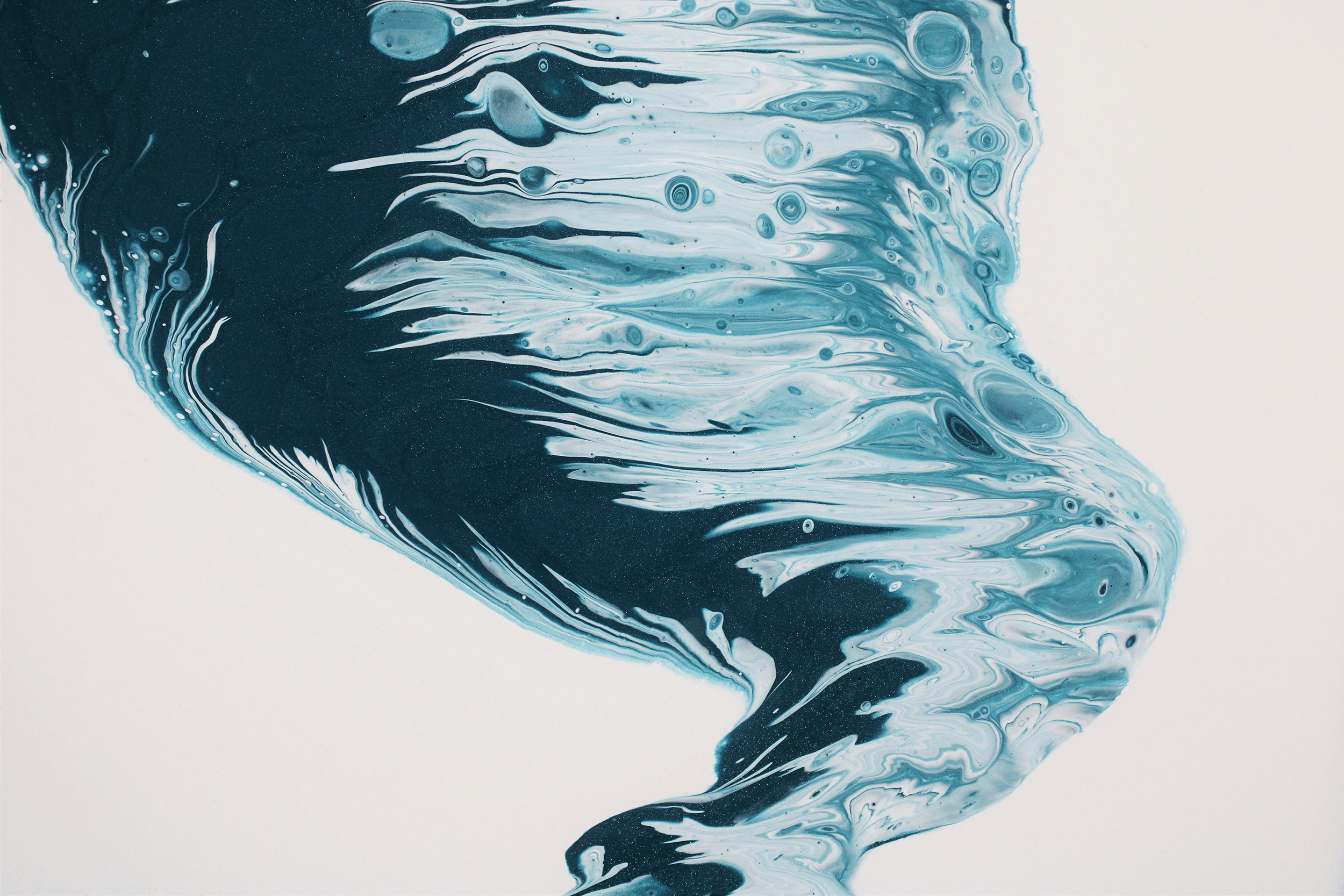
In this short film by Vadim Sherbakov, macro shots of glittery ink and pigments look like astronomical vistas. The title of the film, “Velocity,” is spot on; every shot is full of flow and motion driven by the mixture of ink, alcohol, soap, and other fluids. That means lots of surface-tension-driven flow, and the glitter particles act as excellent tracers, giving a real sense of depth and direction for our gaze to follow. Watching films like this, I always want to pull out some odds and ends and try it for myself, but I’m certain my results would pale in comparison! (Video and image credit: V. Sherbakov; via Colossal)
A word of warning: today’s post includes visuals of digestion taking place in (non-human) embryonic intestines.
Our bodies rely on waves driven by muscle contractions to move both fluids and solids, whether through the esophagus, the ureter, the fallopian tubes, or the intestines. In areas where mixing is unnecessary, those waves move in a single direction, transporting the contents one-way. But in the intestines, mixing is critical to enhancing nutrient absorption, so mammal intestines have wave trains that move both forwards and backwards.
The majority of waves move downstream, carrying waste toward its exit (Images 1 and 2). But occasionally, upstream waves collide with their downstream counterparts to force material together, both mixing and delaying progress in order to allow better nutrient uptake along the intestinal walls (Image 3). (Image credits: top – S. Bughdaryan, others – R. Amedzrovi Agbesi and N. Chavalier; research credit: R. Amedzrovi Agbesi and N. Chavalier; via APS Physics)
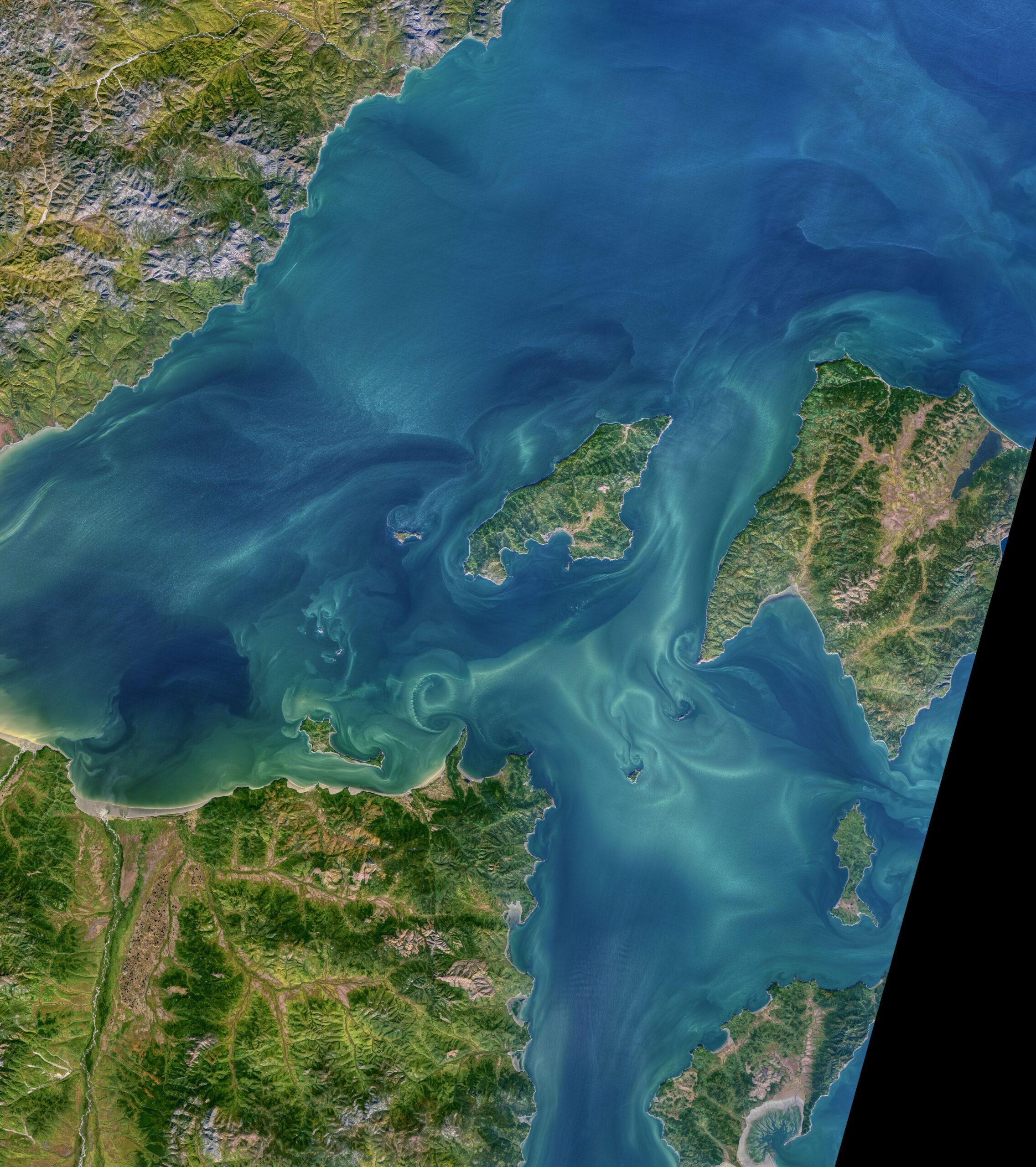
Local topography in the Sea of Okhotsk funnels water to create some of the largest diurnal tides in the world — nearly 14 meters! The currents rushing past islands and outcrops create swirling vortices like the ones seen in this natural-color satellite image. In some places, you can even see multiple vortices, strung together into a von Karman vortex street. At high tide, the vortex streets stretch westward, but at low tide they point east. (Image credit: N. Kuring/NASA/USGS; via NASA Earth Observatory)
When birds come in for a landing, they pitch back and heave their wings as they come to a stop in a perching maneuver. Some birds, researchers noticed, partially fold their wings during the move, creating what’s known as a swept wing. Curious as to the effect of this sweep, the team recreated the wing motion of a perching bird using two flat plates — one rectangular and one swept — and measured the flow around them during the maneuver. They found that the swept wing had greater lift, thanks to a spanwise flow inherent to swept wings that helped stabilize the leading-edge vortex. (Image credit: D. George; research credit: D. Adhikari et al.; via APS Physics)
As ocean waves crash, they generate aerosols — tiny liquid and solid particulates — that interact with the atmosphere. Curious about the chemistry of these tiny drops, researchers set out to measure their acidity. That’s easier said than done. Over time, aerosol droplets acidify as they interact with acidic gases in the atmosphere and capturing fresh aerosols in the field is next to impossible.
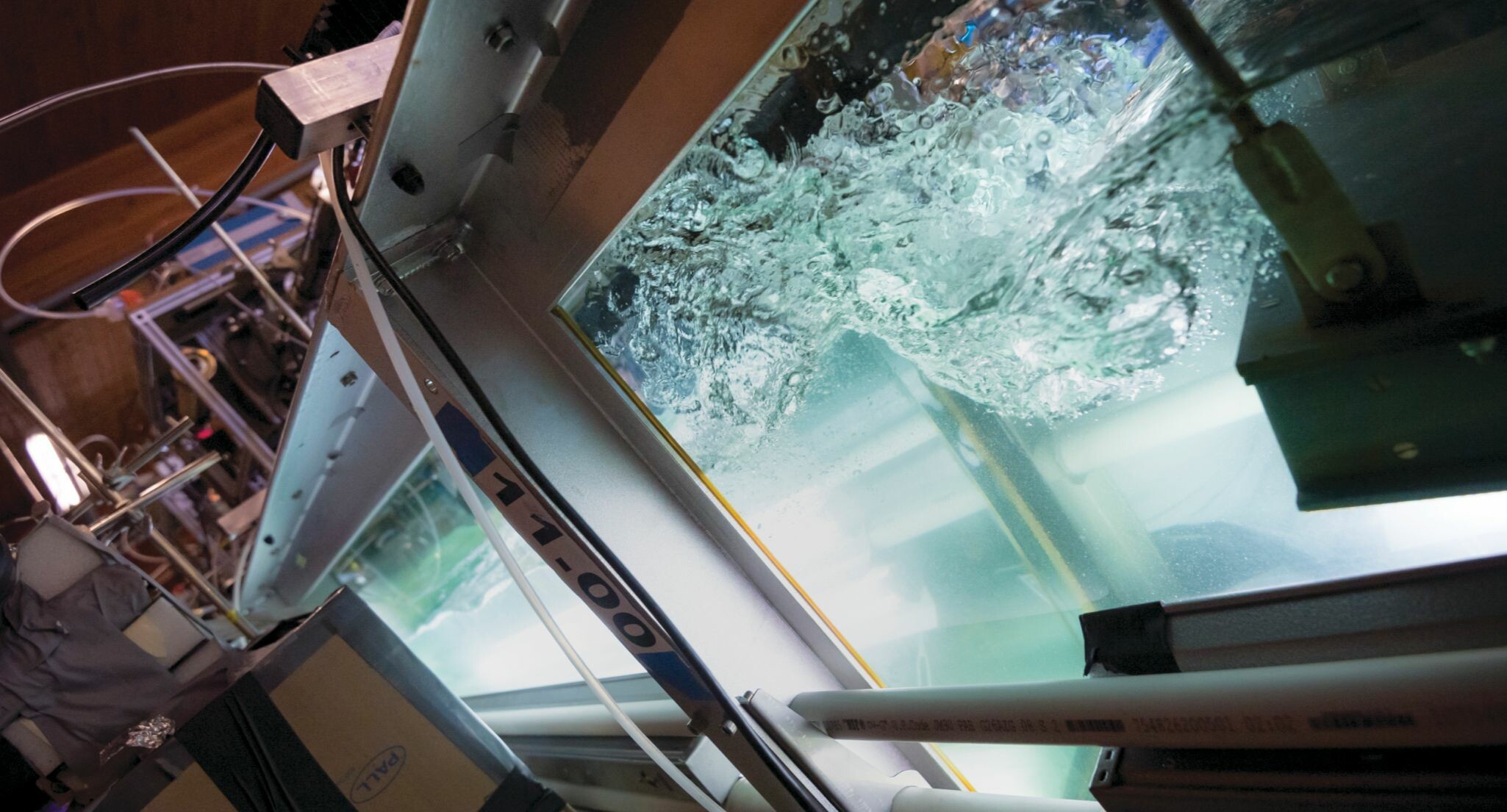
To tackle these challenges, researchers instead moved the aerosols to the laboratory, filling a wave channel with seawater and agitating it to generate aerosols they could then measure. They found that the smallest aerosols become a million times more acidic than the bulk ocean in only two minutes! Find out more about their experiment and its implications over at Physics Today. (Image credit: E. Jepsen; research credit: K. Angle et al.)
The mathematics of fluid dynamics still have many unknowns, which makes them an attractive playground for mathematicians of all stripes. One perennial area of interest is the Euler equations, which describe an ideal (i.e., zero viscosity), incompressible fluid. Mathematicians suspect that these equations may produce impossible answers — vortices with infinite velocities, for example — under just the right circumstances, but so far no one has been able to prove the existence of such singularities.
A recent Quanta article delves into this issue and the race between researchers using traditional methods and those using new deep learning techniques. Will the singularities be found and who will get there first? It’s well worth a read, whether theoretical mathematics is your thing or not. (Image credit: S. Wilkinson; see also Quanta; submitted by Jo V.)
During the summer months, the Barents Sea between Norway and Russia is streaked with blue and teal swirls. These beautiful patterns are the result of a phytoplankton bloom, as viewed by earth-observing satellites (with a little color enhancement). Although each cell in the bloom is only nanometers across, their collective presence is visible from space! They also act as tracers in the water, revealing the swirling flow patterns present there. (Image credit: J. Stevens/NASA Earth Observatory)
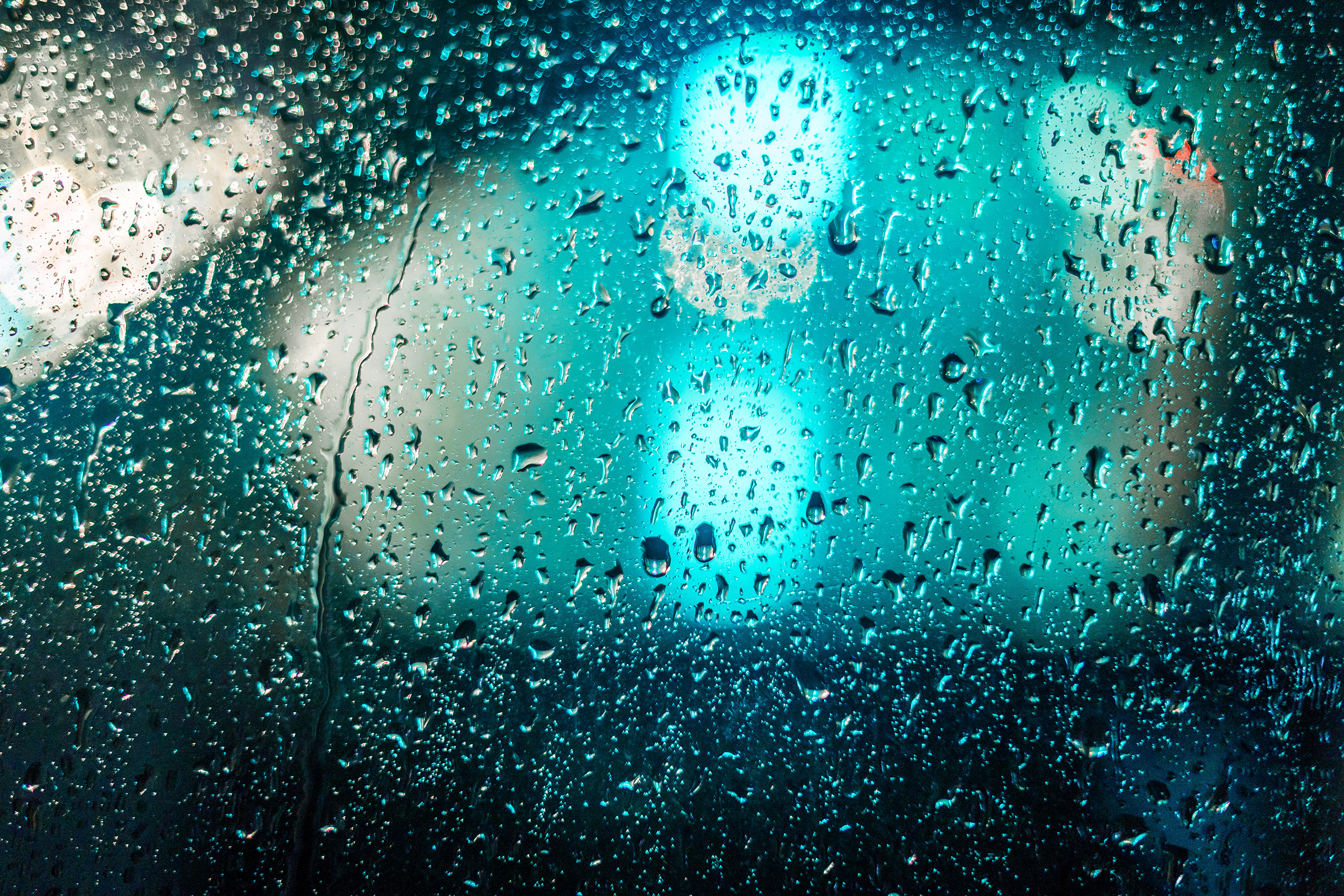
When I was a child, I was fascinated by the raindrops that shimmied along the windshield of our car. Some would slide up the glass. Some would run down. And some just seemed to wiggle in place, until the car’s speed changed. As common as this sight is, the physics of these droplets is quite complicated and not completely understood.
Each droplet has a host of forces on it: gravity flattening it or pulling it down an incline; a drag force from the wind flowing over it; and friction between the drop and the surface trying to pin it in place. Recently, scientists have developed a new mathematical model that captures some of the behaviors behind these drops. The work describes the wind speed necessary to move a drop of a given size sitting on a flat surface. The authors also explored how that critical wind speed changes when a drop sits on a tilted surface aligned or against the wind. (Image credit: P. Gupta; research credit: A. Hooshanginejad and S. Lee; via Science News; submitted by Kam-Yung Soh)