Search results for: “art”

  • Dune Fields From Space

    Dune Fields From Space

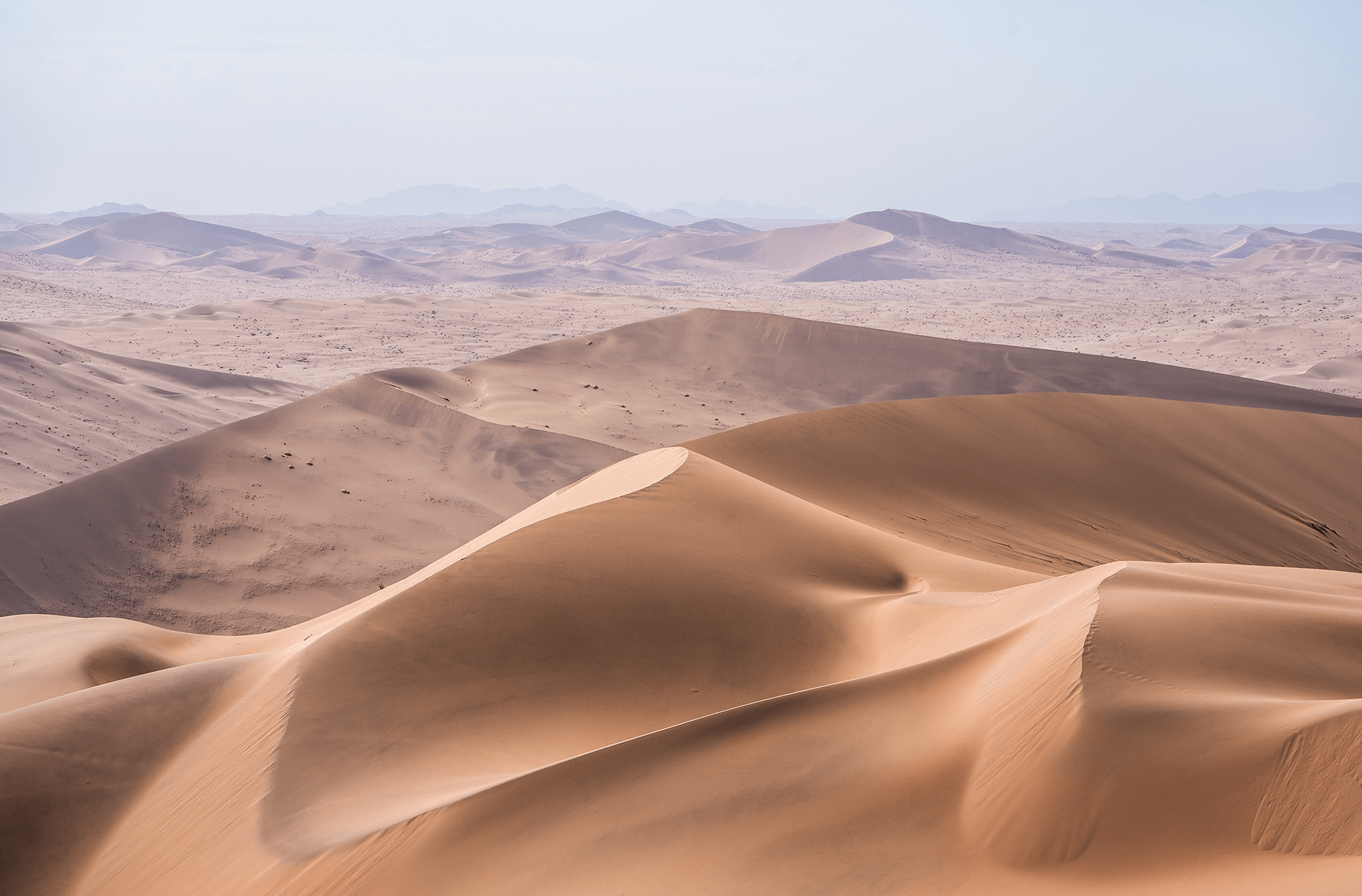
    An astronaut captured this image of the Oyyl Dune Field in Kazakhstan from the International Space Station. To the south and east of the dune field (right and lower parts of image) there are fluvial floodplains, sources of sediment that feed the dunes. With sufficient wind and sand sources, the dune field has grown in a topographic low spot roughly 90 meters lower than the surrounding steppes. Dark specks scattered across the sands are clusters of vegetation, a sign that the dunes may get anchored rather than continue to shift in the wind. (Image credit: NASA; via NASA Earth Observatory)

  • Dance of the Coral Polyps

    Dance of the Coral Polyps

    Coral reefs are made of up small organisms, called coral polyps, that live together in a colony. Individual polyps can expand, contract, and wave in the flow around them, and, in a recent study, researchers looked at whether changing conditions in temperature and light wavelength can affect polyp movement. To do so, they built a little flow control tank around a coral nubbin containing several polyps.

    Under normal light and temperature conditions, they found the polyps’ motions are correlated. (Scientists don’t know why this is the case, but it could help with foraging or photosynthesis for the organisms.) When temperatures rise and light levels shift to bluer wavelengths — simulating warmer and rising oceans — the polyps lose their coordination. Without knowing the purpose behind the motion, scientists can’t yet say what that lack of coordination means, but the team believes their experimental methods can be adapted to help answer those questions, perhaps even in natural, rather than lab-created, circumstances. (Image credit: S. Ravaloniaina; research credit: S. Li et al.; via APS Physics)

  • Featured Video Play Icon

    “Haut”

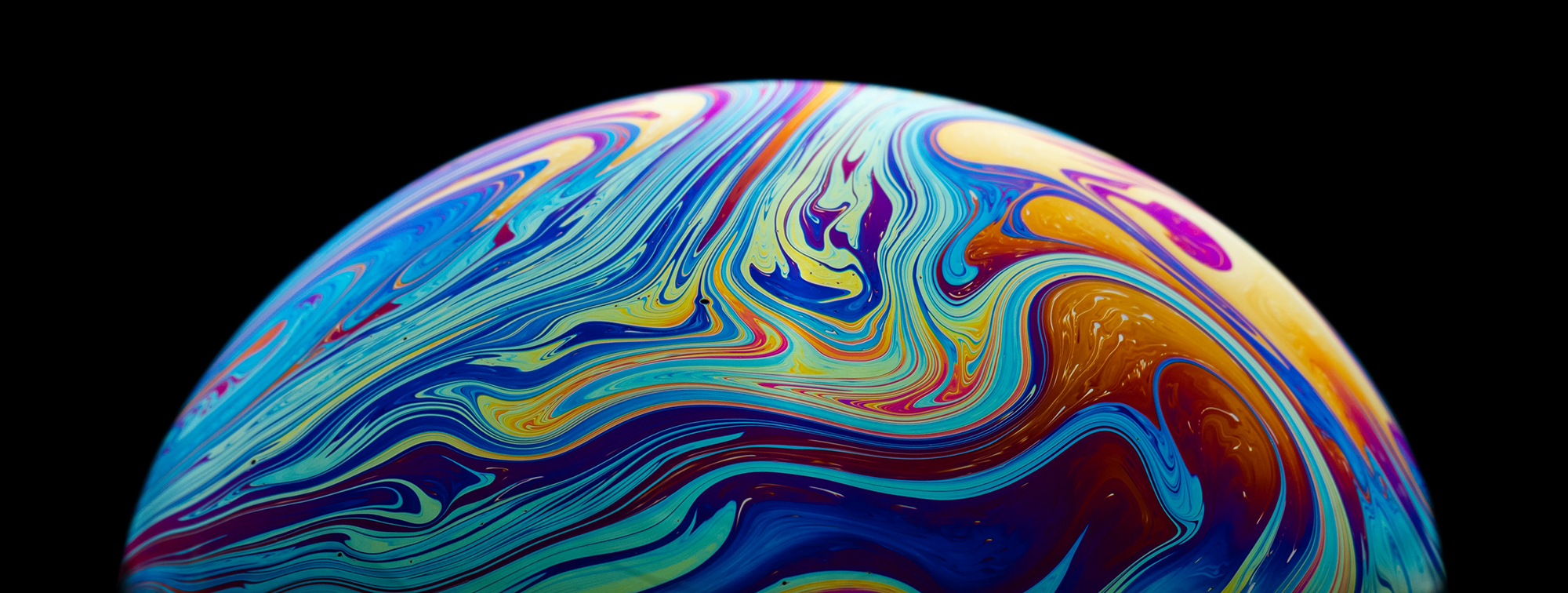
    In Susi Sie’s “Haut” the camera seems to fly over ever-shifting landscapes. In reality, these are macro images, created (I think) by dyes and patterns atop a water bath. But they look like vistas we could find on Earth or Mars — giant dune fields, calving glaciers, and river-divided canyons. For something similar in color, check out Roman De Giuli’s “Geodaehan.” (Video credit: S. Sie)

  • Cloud Streets

    Cloud Streets

    Parallel lines of cumulus clouds stream over the Labrador Sea in this satellite image. These cloud streets are formed when cold, dry winds blow across comparatively warm waters. As the air warms and moistens over the open water, it rises until it hits a temperature inversion, which forces it to roll to the side, forming parallel cylinders of rotating air. On the rising side of the cylinder, clouds form while skies remain clear where the air is sinking. The result are these long, parallel cloud bands. (Image credit: J. Stevens; via NASA Earth Observatory)
  • Predicting Alien Ice

    Predicting Alien Ice

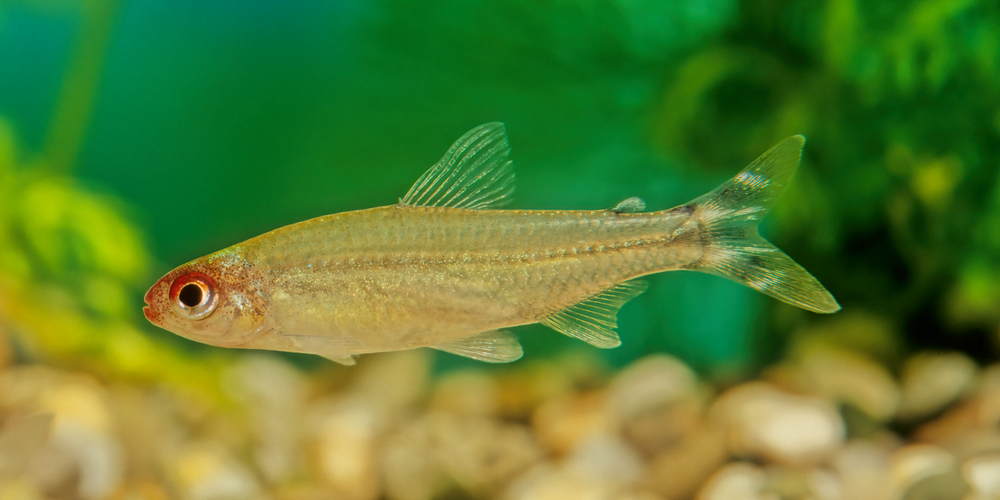
    Europa is an ocean world trapped beneath an ice shell tens of kilometers thick. To better understand what we might find in those oceans, researchers turn to analogs here on Earth, looking at Antarctica’s ice shelves. Beneath those shelves, ice forms via two mechanisms: the first, congelation ice, freezes directly onto the existing ice-water interface. The second, frazil ice, forms crystals in supercooled water columns, which drift upward in buoyant currents and settle on the ice shelf like upside-down snow (pictured above).

    Based on Europa’s conditions, the researchers conclude that congelation ice would gradually thicken the ice shell as the moon’s interior cools. But in areas where the shell is thinned by local rifts and Jovian tidal forces, frazil ice is likely to form. (Image credit: H. Glazer; research credit: N. Wolfenbarger et al.; via Physics World)

  • Diving Together

    Diving Together

    Two spheres dropped into water next to one another form asymmetric cavities. A single ball’s cavity is perfectly symmetric, and so are two spheres’, provided they are far enough apart. But for close impacts, the spheres influence one another, creating a mirror image. The same asymmetric cavity also forms when a sphere is dropped near a wall. In fluid dynamics, this trick — using two mirrored objects in place of a wall — is used to make calculating certain flows easier! (Image credit: A. Kiyama et al.)

  • Blooms in the Black Sea

    Blooms in the Black Sea

    The Black Sea gains its name from its dark waters, but those waters don’t stay dark year-round. In this natural color satellite image, streaks of milky blue bloom through the summer waters, thanks to the presence of a species of phytoplankton armored with white calcium carbonate. Despite their microscopic size, the phytoplankton’s presence is visible from space. During other parts of the year, like the spring, another species of phytoplankton dominates the Black Sea, turning its waters darker. (Image credit: J. Stevens; via NASA Earth Observatory)

  • Featured Video Play Icon

    “Titan”

    Saturn’s moon Titan is a fascinating foil to our planet. It’s the only other body in our solar system with liquid bodies — lakes and seas — on its surface. But where Earth’s oceans are filled with water, Titan’s frigid lakes are liquid hydrocarbons. This video, “Titan,” is a short film inspired by the moon’s seas and is made up of various liquids and chemical reactions filmed under magnification. Sit back and enjoy the flow! (Image and video credit: S. Bocci/Julia Set Lab)

  • Eroding Grains

    Eroding Grains

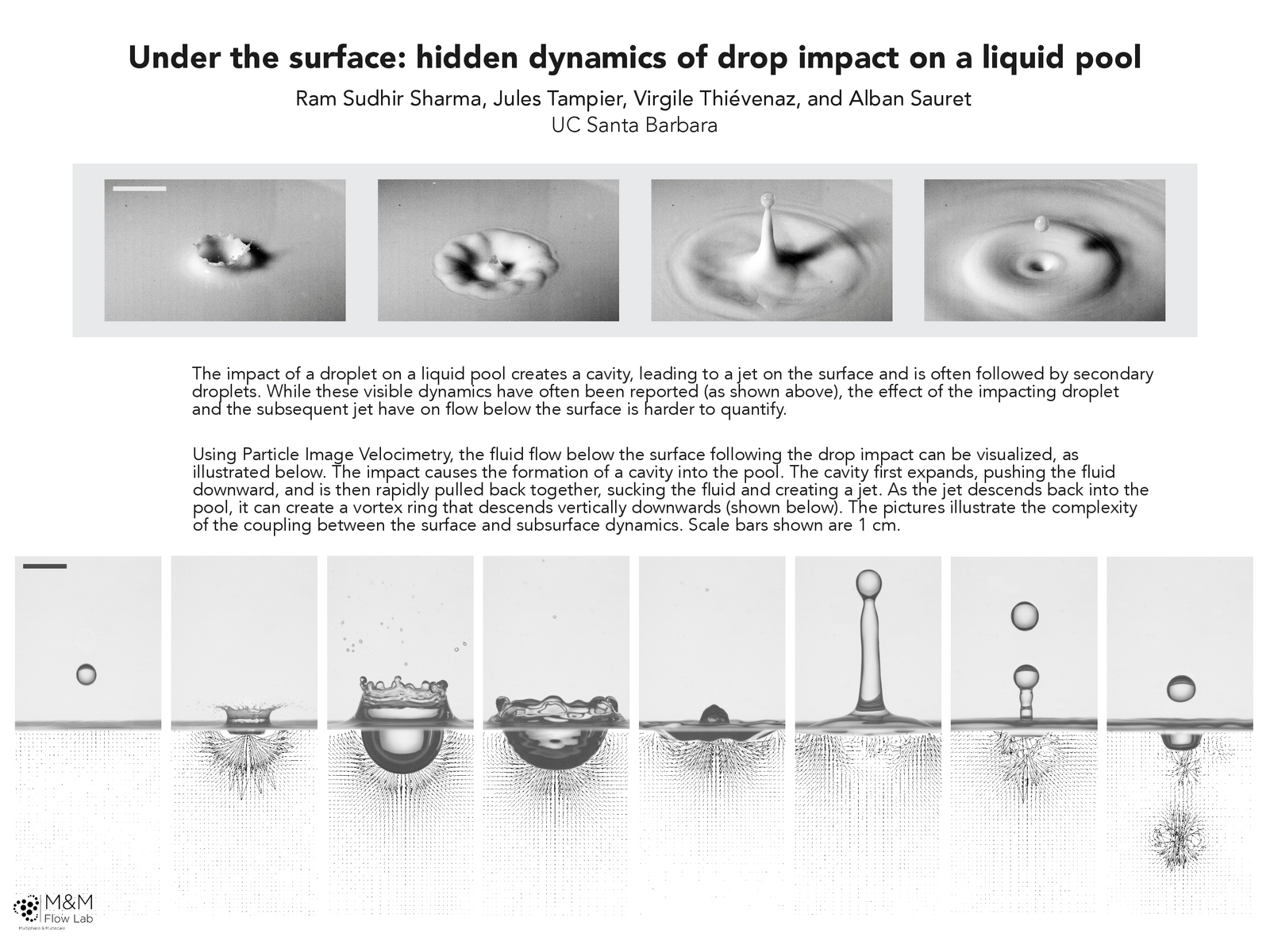
    When a spacecraft comes in for a landing (or a tag similar to what OSIRIS-REx did), there’s a turbulent jet that points straight into a bed of particles. How those particles react — how they erode and the crater that forms — depends on many factors, including the cohesion between particles. In these experiments, researchers investigated such a jet (in air) and its impact on particles with differing amounts of cohesion.

    When there is little cohesion between particles, erosion takes place a single particle at a time (Image 1). Once there’s some cohesion, the jet’s velocity has to be higher to trigger erosion (Image 2). Once erosion does begin, it includes both singular and clumped particles. In highly cohesive beds, velocities must be even higher to create erosion, which takes place with large clusters of particles flying off together (Image 3). (Image and research credit: R. Sharma et al.)

  • Featured Video Play Icon

    Peering Into the Gap

    This video offers a glimpse into turbulence developing in a classic flow set-up, a Taylor-Couette cylinder. The apparatus consists of two upright, concentric cylinders; the outer cylinder is fixed, and the inner one rotates. This video shows the gap between the cylinders, and it’s rotated so that the inner cylinder is at the bottom of the frame. Gravity points from left to right in the video. The fluid in the 8-cm gap between the cylinders is water, seeded with rheoscopic particles to visualize the flow.

    The video begins as the inner cylinder has just begun to rotate, dragging nearby fluid with it. A thin, laminar boundary layer forms at the bottom of the frame, growing as time goes on. A few seconds in, the boundary layer transitions to turbulence; look closely and you’ll see hairpin-shaped vortices appear. Just after that, the boundary layer becomes entirely turbulent and continues to slowly move upward to take over the full gap. The video is available in a full 4K resolution if you really want to get lost in the flow. (Video credit: D. van Gils)