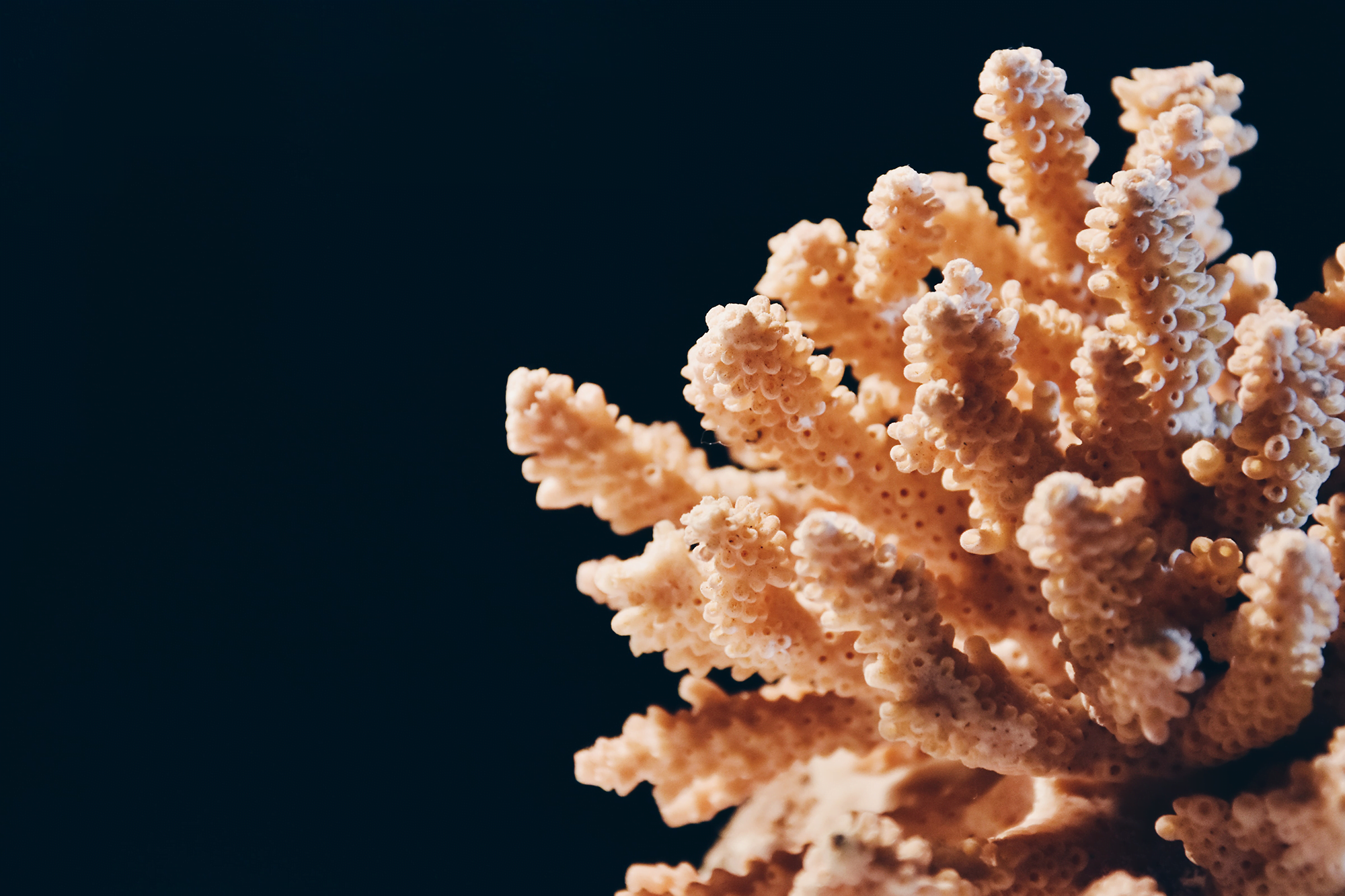
Coral reefs are made of up small organisms, called coral polyps, that live together in a colony. Individual polyps can expand, contract, and wave in the flow around them, and, in a recent study, researchers looked at whether changing conditions in temperature and light wavelength can affect polyp movement. To do so, they built a little flow control tank around a coral nubbin containing several polyps.
Under normal light and temperature conditions, they found the polyps’ motions are correlated. (Scientists don’t know why this is the case, but it could help with foraging or photosynthesis for the organisms.) When temperatures rise and light levels shift to bluer wavelengths — simulating warmer and rising oceans — the polyps lose their coordination. Without knowing the purpose behind the motion, scientists can’t yet say what that lack of coordination means, but the team believes their experimental methods can be adapted to help answer those questions, perhaps even in natural, rather than lab-created, circumstances. (Image credit: S. Ravaloniaina; research credit: S. Li et al.; via APS Physics)
Leave a Reply