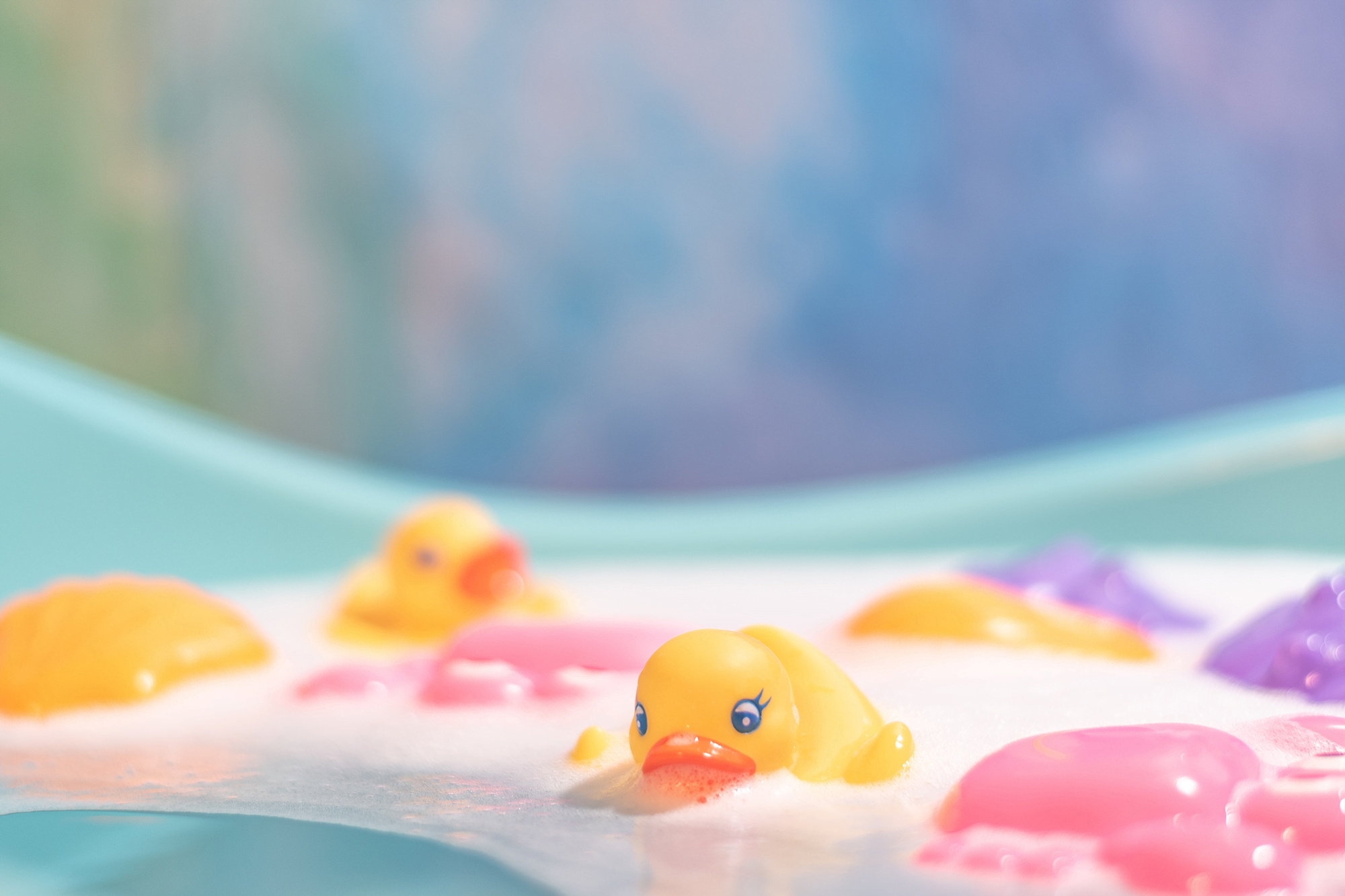
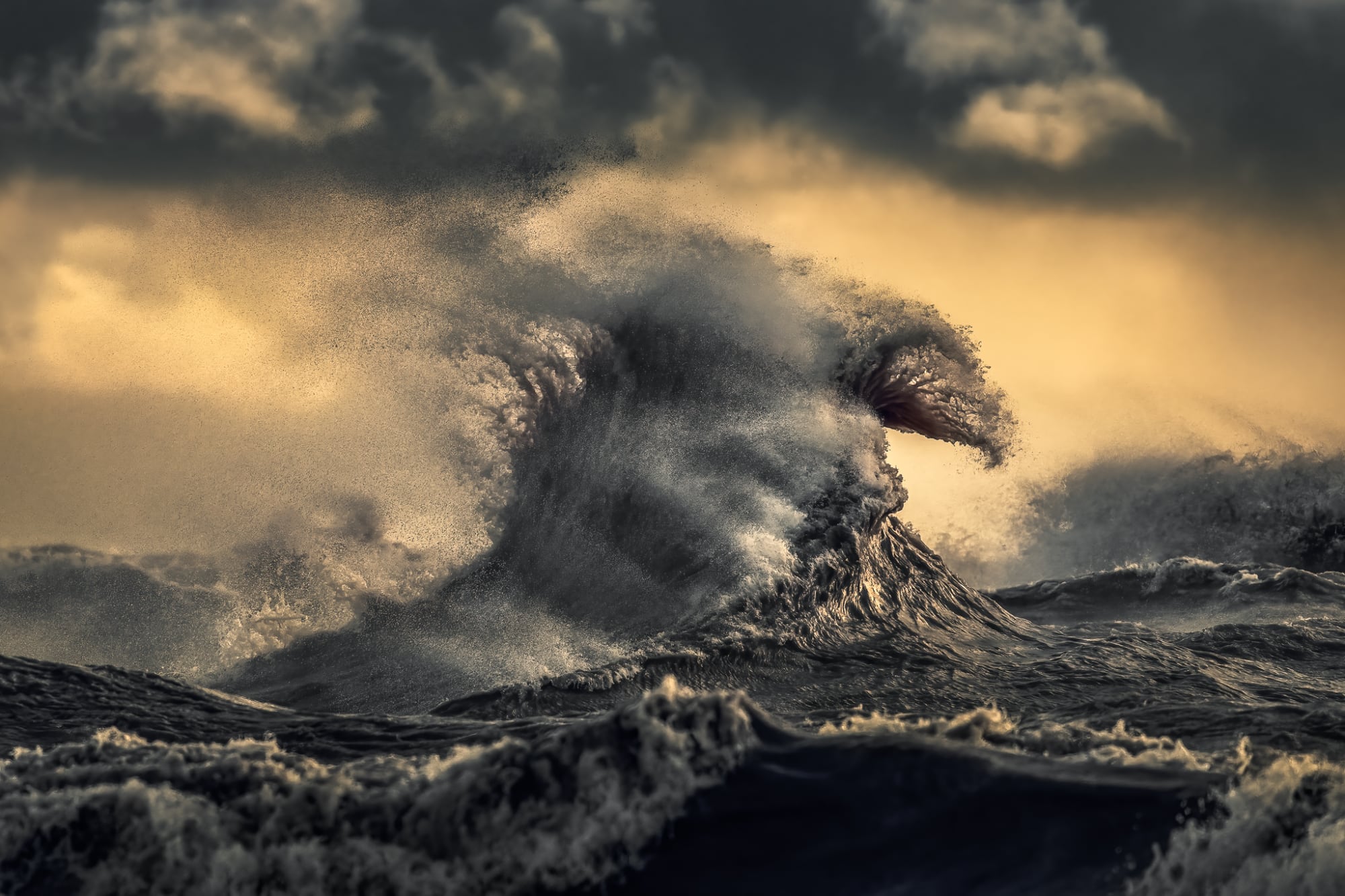
Snapshots of splashes are nothing new, but few have mastered the art of freezing incredible shapes in water the way Markus Reugels has. His splash photography is mind-boggling, especially knowing that he uses Photoshop only for minor corrections like contrast and removing sensor noise. Fortunately, he’s generous in sharing his expertise. Check out lots more incredible photos and plenty of how-to guides (mostly in German) over at his site. (Image credits: M. Reugels)
Search results for: “art”

Florida’s Keys
Stretching from the southern tip of Florida, a chain of low-lying islands, known as keys or cays, formed underwater during a warm interglacial period some 125,000 years ago. Originally coral reefs and sand bars, the islands hardened and fossilized when sea levels dropped during an ice age. These natural-color satellite images hint at the keys’ impressive ecosystems. The bright blue streak is a giant coral reef separating the deeper waters of the Atlantic from the shallow waters and sea-grass beds lying between the islands. Formations like these, along with mangrove forests, are part of nature’s way to mitigate the damage and flooding caused by hurricanes. Unfortunately, warmer seas and rising sea levels now threaten the keys. (Image credit: L. Dauphin/USGS; via NASA Earth Observatory)

Encapsulating Drops
Sometimes a droplet needs a little protection while it’s traveling to its destination. When that’s the case, we often try to encapsulate it in a layer of material that won’t be affected by whatever environment the drop is traveling through. In this study, researchers aimed to give their drops not one but two layers of protection — in as simple a way as possible.
The team began with three layers of liquid. The lowest layer was water, the middle layer was an oil, and the top layer was a mixture of water and isopropyl alcohol. Next, they added glass particles that were denser than the alcohol, but less dense than the oil. This caused the particles to form a clump — a granular raft — along the interface between the alcohol and the oil (not shown). When the layer of particles became heavy enough, it began to sink into the oil, carrying some of the alcohol with them. This conglomeration formed the initial droplet of alcohol mixture encased in an armor of glass beads.
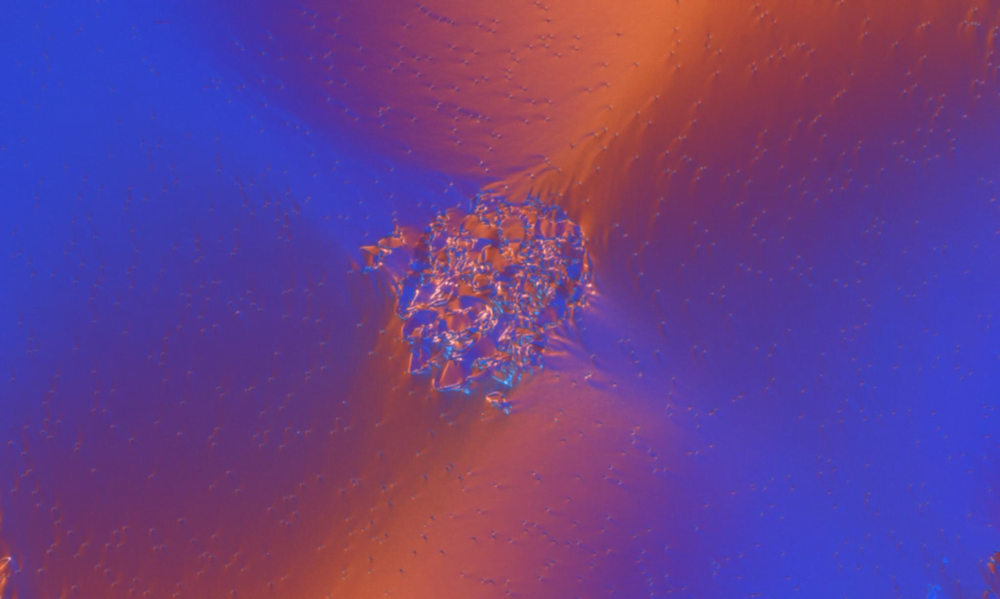
As this armored droplet sank, it approached the second interface: the oil-water interface. At this juncture, the team observed three different outcomes. When the glass particles were small or light, the armored drop would come to a rest at the oil-water interface. As the drop deformed, water would pierce the armor, causing the whole drop to rupture (Image 1).
In the second case, heavier particles caused the armored drop to sink through the oil-water interface, but a low oil viscosity meant that the oil film drained from the bottom of the drop before the drop was fully encapsulated. Once again, this let the water through and ruptured the droplet (Image 2).
In the final case, armored drops with just the right bead density and oil viscosity would sink through the oil-water interface until the oil pinched off behind the drop. This pinch-off allowed the oil to redistribute around the drop, encapsulating it in layers of both oil and particles, thereby protecting it as it continued its journey (Image 3). (Image credits: top – Girl with red hat, experiment – A. Hooshanginejad et al.; research credit: A. Hooshanginejad et al.)

When Reservoirs Run Dry
With the ongoing megadrought in the U.S. Southwest, more and more reservoirs are reaching historic low water levels. So it’s worth asking: what happens when a reservoir runs dry? And what, exactly, does a reservoir do in the first place? In this Practical Engineering video, Grady tackles both questions and takes a look at the many disciplines — beyond just civil engineering — that go into making a functional reservoir. (Image and video credit: Practical Engineering)

Slow to Relax
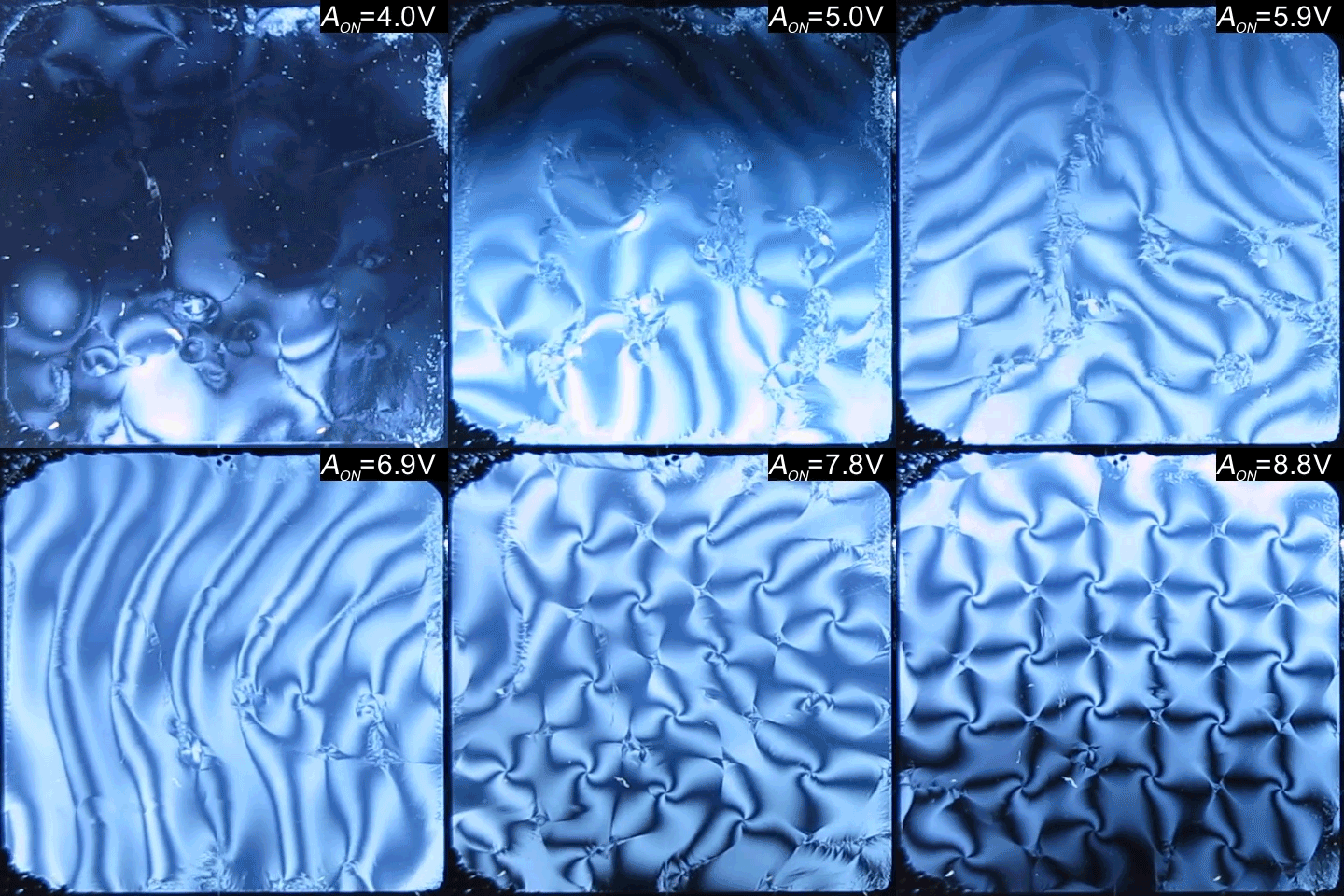
Oobleck is a decidedly weird substance. Made from a dense suspension of cornstarch in water, oobleck is known for its mix of liquid-like and solid-like properties, depending on the force that’s applied. In a recent study, researchers took a look at what happens when you really push oobleck to the extreme. When the force applied to oobleck is small or slowly added, the water between cornstarch particles helps keep the particles apart and free of contact. It’s when the force is large that those particles start jamming up against each other and having friction between them, and then the oobleck suddenly acts like a solid. But what happens once that force is removed?
When the force is gone, we expect the particles to repel and for water to squeeze back into the spaces between them, breaking up the friction and allowing the oobleck to relax back to a liquid-like form. But the team found that sometimes the oobleck doesn’t relax as easily as expected; instead, it seems to retain some memory of its solid-like state, due to persisting friction between particles. (Image credit: T. Cox; research credit: J. Cho et al.)

Actinoform Clouds
Flower-shaped actinoform clouds, like those seen on the left side of this satellite image, were only discovered in the 1960s once satellite imagery allowed meteorologists to identify cloud structures that were too large to recognize from the ground. Often appearing over the ocean, these clouds can stretch over hundreds of kilometers, bringing drizzling rain.
This particular set of actinoform clouds have some distinctive neighbors in the right side of the image, where V-shaped slashes through the cloud cover mark the origins of two von Karman vortex streets. The vortex streets appear downwind of two rocky islands, Alejandro Selkirk Island and Robinson Crusoe Island. (Image credit: L. Dauphin; via NASA Earth Observatory)

“Timedrift II”
As a teenager, I climbed Mount Kilimanjaro. The final ascent began around midnight, and we climbed through the dark, through sunrise, and into the early morning. I remember pausing at one point, just as the sun was rising, and looking out at the clouds thousands of meters below. From that height, they looked like an ocean, rippled with lavender waves. Timelapse films like this one, by filmmaker Martin Heck, remind me of that morning and the sense that I had of the sky as an ocean, flowing, crashing, and surging in ways we cannot appreciate until we slow down and look closer. (Image and video credit: M. Heck/Timestorm Films)

Neptune’s Seasonal Changes
Ice giant Neptune orbits our sun once every 165 years, meaning that each season on the planet lasts about 41 years here on Earth. Currently, the side of Neptune facing us is entering early summer, but a recent survey of atmospheric measurements show that Neptune’s stratosphere is experiencing some unexpected changes. Between 2003 and 2018, the team found that global stratospheric temperatures actually decreased by 8 degrees Celsius. Even more dramatically, Neptune’s southern pole warmed by a full 11 degrees Celsius between 2018 and 2020. Both results hint that atmospheric patterns on the planet may be far more complex than current models assume. (Image credit: NASA/JPL; research credit: M. Roman et al.; via Physics World)

“Metamorphe”
A smoke-like haze drifts over surreal landscapes in the “Metamorphe” series by Reuben Wu and Jenni Pasanen. Though fluidic in appearance, these pieces are a merger between Wu’s drone light photography and Pasanen’s AI-assisted digital creations. Even so, the images are extremely evocative of fluid motion, connected as they are to human senses (like smell, hearing, and touch) that often rely directly on fluid dynamics. For more, check out the artists’ sites and Instagram. (Image credits: R. Wu and J. Pasanen; via Colossal)

How Dunes Form
On its face, the idea that sand and wind can come together to form massive mountainous dunes seems bizarre. But dunes — and their smaller cousins, ripples — are everywhere, not just on Earth but on other planetary bodies where fine particles and atmospheres interact. In this video, Joe Hanson gives a great overview of sand dynamics, beginning with what sand is, how it moves, and what it can ultimately form. It’s well worth a watch, even if you know a little about dunes already; I know I learned a thing or two! (Image and video credit: Be Smart)