Inside each of us is a remarkable and constant flow, driven by a muscle that’s always at work. As blood circulates through our bodies, it goes through a surprisingly varied journey. In the heart, as seen above, blood flow is very unsteady and quite turbulent, due to the beating pulse of the heart. As valves open and close and the muscle walls constrict and relax, the rushing blood moves in eddy-filled spurts. In the outer reaches of our capillaries, however, the nature of the flow is quite different. Thanks to smaller vessel sizes and other factors, capillary blood flow is much steadier and more laminar. Viscosity becomes more important, as do the non-Newtonian properties of components in our blood. (Image credit: mushin111/YouTube, source; via Science; submitted by Gary N.)
Category: Phenomena

Atmospheric Aerosols
Recently, NASA Goddard released a visualization of aerosols in the Atlantic region. The simulation uses real data from satellite imagery taken between August and October 2017 to seed a simulation of atmospheric physics. The color scales in the visualization show concentrations of three major aerosol particles: smoke (gray), sea salt (blue), and dust (brown). One of the interesting outcomes of the simulation is a visualization of the fall Atlantic hurricane season. The high winds from hurricanes help pick up sea salt from the ocean surface and throw it high in the atmosphere, making the hurricanes visible here. Fires in the western United States provide most of the smoke aerosols, whereas dust comes mostly from the Sahara. Tiny aerosol particles serve as a major nucleation source for water droplets, affecting both cloud formation and rainfall. With simulations like these, scientists hope to better understand how aerosols move in the atmosphere and how they affect our weather. (Image credit: NASA Goddard Research Center, source; submitted by Paul vdB)

Building with Sand
Sand and water make a remarkable team when it comes to building. But the substrate – the surface you build on – makes a big difference as well. Take a syringe of wet sand and drip it onto a waterproof surface (bottom right), and you’ll get a wet heap that flows like a viscous liquid. Drop the same wet sand onto a surface covered in dry sand (bottom left), and the drops pile up into a tower. Watch the sand drop tower closely, and you’ll see how new drops first glisten with moisture and then lose their shine. The excess water in each drop is being drawn downward and into the surrounding sand through capillary action. This lets the sand grains settle against one another instead of sliding past, giving the sand pile the strength to hold its weight upright. (Video and image credit: amàco et al.)


Turbulent Volcanic Plumes

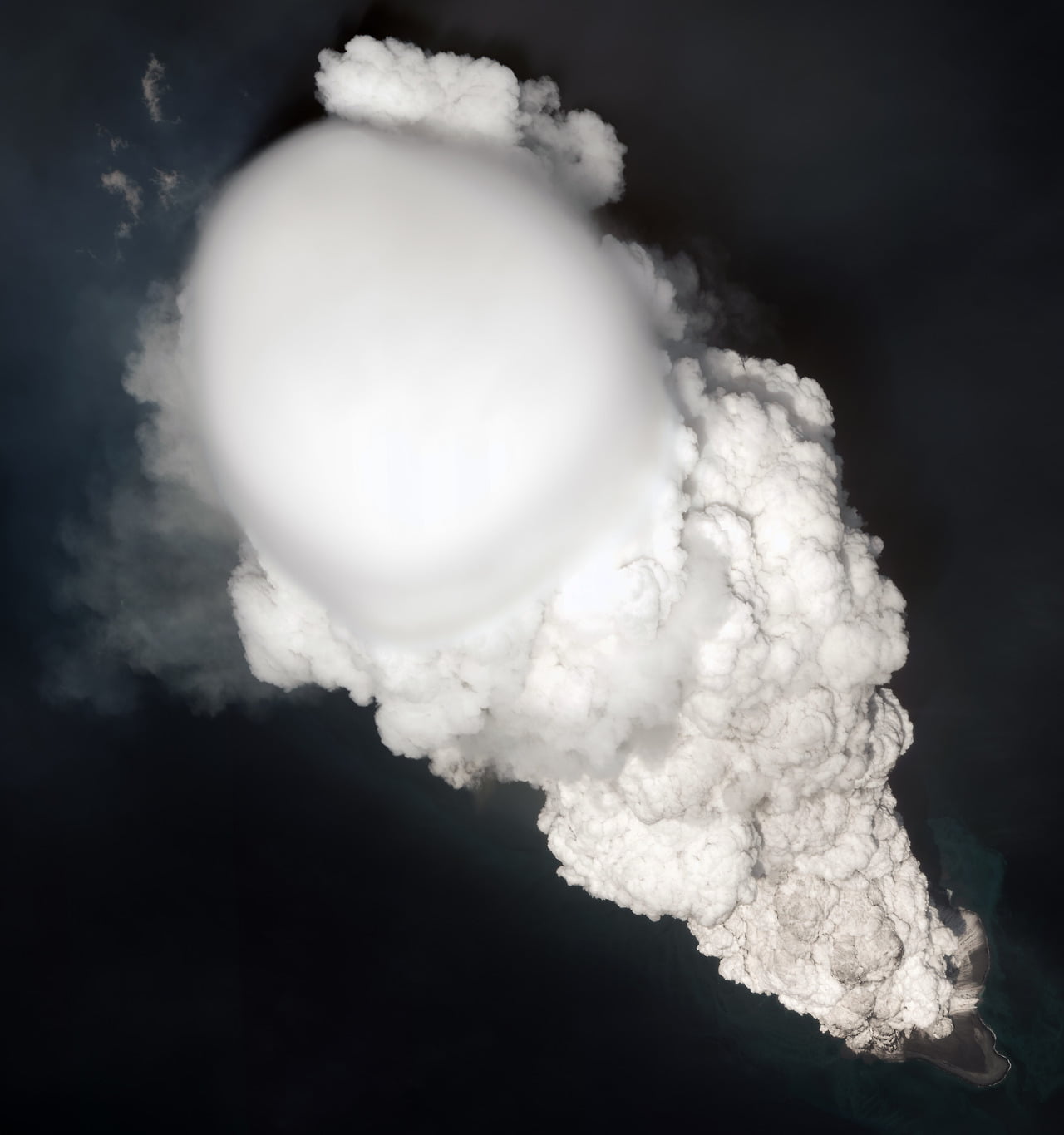
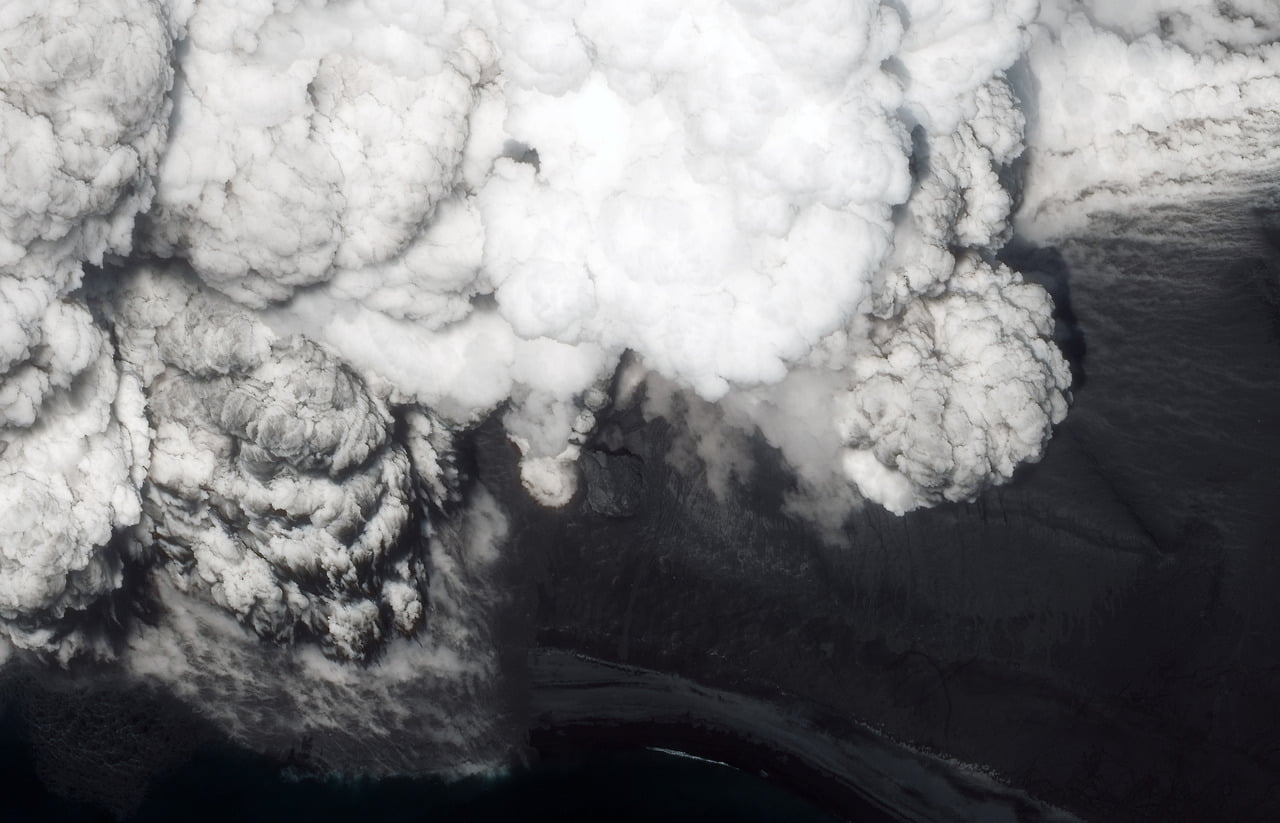
Volcanic eruptions produce some of the largest flows on Earth. These towering ash clouds were imaged from orbit in May 2017 as an eruption began on Alaska’s Bogoslof Island. The clouds are a beautiful example of a turbulent flow. Turbulence is characterized by its many length scales. Some features in the plume are tens or hundreds of meters across, yet there are also coherent motions down at the centimeter or millimeter scale. In a turbulent flow, energy cascades from these very large scales down to the smallest ones, where viscosity is significant enough to dissipate it. This is part of the challenge of modeling turbulence; to fully describe it, you have to capture what happens at every scale. (Image credit: DigitalGlobe, via Apollo Mapping; submitted by Mark S.)
Microfluidic Chips in Action
Earlier this year, The Lutetium Project explored how microfluidic circuits are made, and now they are back with the conclusion of their microfluidic adventures. This video explores how microfluidic chips are used and how microscale fluid dynamics relates to other topics in the field. Because these techniques allow researchers very fine control over droplets, there are many chemical and biological possibilities for microfluidic experiments, some of which are shown in the video. Microfluidics in medicine are also already more common than you may think. For example, test strips used by diabetic patients to measure their blood glucose levels are microfluidic circuits! (Video and image credit: The Lutetium Project; submitted by Guillaume D.)
Plate Tectonics
We don’t typically think of the ground beneath our feet as anything but solid, but over geologically long time scales, even mountains can flow. Buoyant convection inside the Earth’s mantle is thought to drive the plate tectonics that have shaped the Earth as we know it. The video above explains some of the major processes and events that shaped the modern North American continent, including collisions, subduction, volcanism, and erosion. (Video credit: Ted-Ed)
Blowing Bubbles in Space
Blowing bubbles in your fruit juice is a bad idea when you’re in space, as astronaut Jack Fischer demonstrates. On Earth, gravity dominates water’s behavior, except when things are very small. But in microgravity, a liquid’s other characteristics become more obvious. Adhesion between the straw and juice guides it up and onto Fischer’s face. Surface tension is strong enough to hold the expanding juice bubble together. Capillary action, the ability of fluids to climb up narrow spaces, is far more apparent in microgravity as well, although it’s not important for this demo. We sometimes forget how powerful these forces can be, but microgravity is a good reminder that fluids are more complicated than we think. (Image credit: J. Fischer, source)

Lagoon Flows
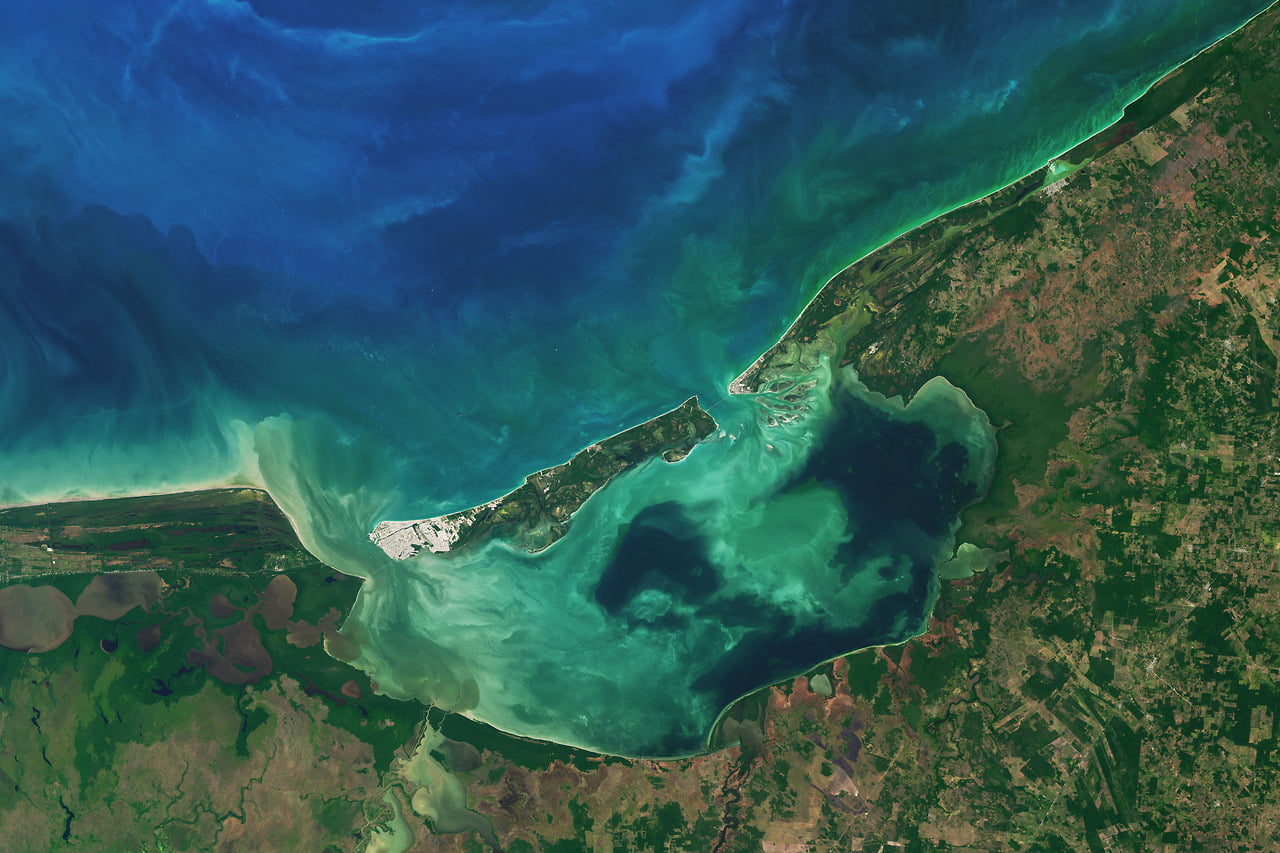
The meeting of land and sea often creates a rich and colorful environment. This satellite image shows Mexico’s Laguna de Términos, a coastal lagoon off the Gulf of Mexico. A skinny barrier island forms the lagoon’s two connections to the ocean; the eastern side is the usual inlet (right), while the western side forms an outlet. Rivers feed freshwater into the lagoon from the south and southwest. These introduce sediments that cause some of the lighter swirls in the image. Winds and tides also contribute to this turbidity. The sheltered nature of the lagoon allows fresh and salt water to mix gradually, providing harbor for many forms of life. Oyster beds thrive in the river mouths; seagrasses prefer the calmer, saltier waters, and mangrove trees line the shore, slowly desalinating water for themselves as their roots shelter young fish and shrimp. (Image credit: NASA Earth Observatory)
Oceans of Clouds
One of the most amazing things about fluid dynamics, in my opinion, is that the same rules apply across an incredible array of situations. The equations of motion are the same whether your fluid is water, air, or honey. Your flier can be a Cessna airplane or a fruit fly; again, the equations are the same. This is part of the reason that patterns in flows are repeated whether in the laboratory or out in nature – and it’s the reason why a timelapse of fog clouds can look just like ocean waves. Ultimately, the physics is the same; clouds just move slower than ocean waves! (Image credit: L. Leber, source; via James H.)

Oil Splatters
Most cooks have experienced the unpleasantness of getting splattered with hot oil while cooking. Here’s a closer look at what’s actually going on. The pan is covered by a thin layer of hot olive oil. Whenever a water drop gets added – from, say, those freshly washed greens you’re trying to saute – it sinks through the oil due to its greater density. Surrounded by hot oil and/or pan, the water heats up and vaporizes with a sudden expansion. This throws the overlying oil upward, creating long jets of hot oil that break into flying droplets. These are what actually hit you. This is a small-scale demonstration, but it gets at the heart of why you don’t throw water on an oil fire. (Image credit: C. Kalelkar and S. Paul, source)