Category: Art

  • Liquid Sculptures

    Liquid Sculptures

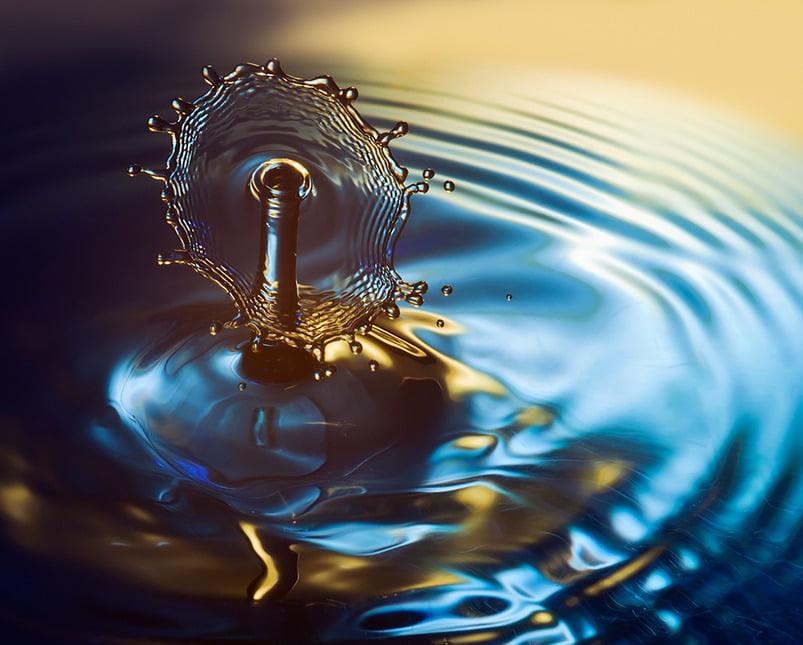
    Water droplet art celebrates the infinite forms created from the impact of drops with a pool and rebounding jets. It’s a still life captured from split second interactions between inertia, momentum, and surface tension. These examples from photographer Markus Reugels are among some of the most complex shapes I’ve seen captured. Be sure to check out his website for more beautiful examples of liquids frozen in time. (Photo credits: Markus Reugels; via Photigy)

  • Featured Video Play Icon

    Skittering Droplets

    Water splattered onto a a hot skillet will skitter and skip across the surface on a thin layer of vapor due to the Leidenfrost effect. The partial vaporization of the droplet provides a low-friction cushion for the droplet to glide on and acts as an insulating layer that delays the vaporization of the rest of the droplet. Modernist Cuisine shows us how serene this common and sometimes explosive effect looks at 3,000 frames per second. (On the topic of cooking, you can use the Leidenfrost effect to see if your skillet is hot enough when making pancakes. If a few droplets of water skitter across the pan before sizzling away, then your pan is ready for batter!) (Video credit: Modernist Cuisine; submitted by Eban B.)

  • Colorful Spirals

    Colorful Spirals

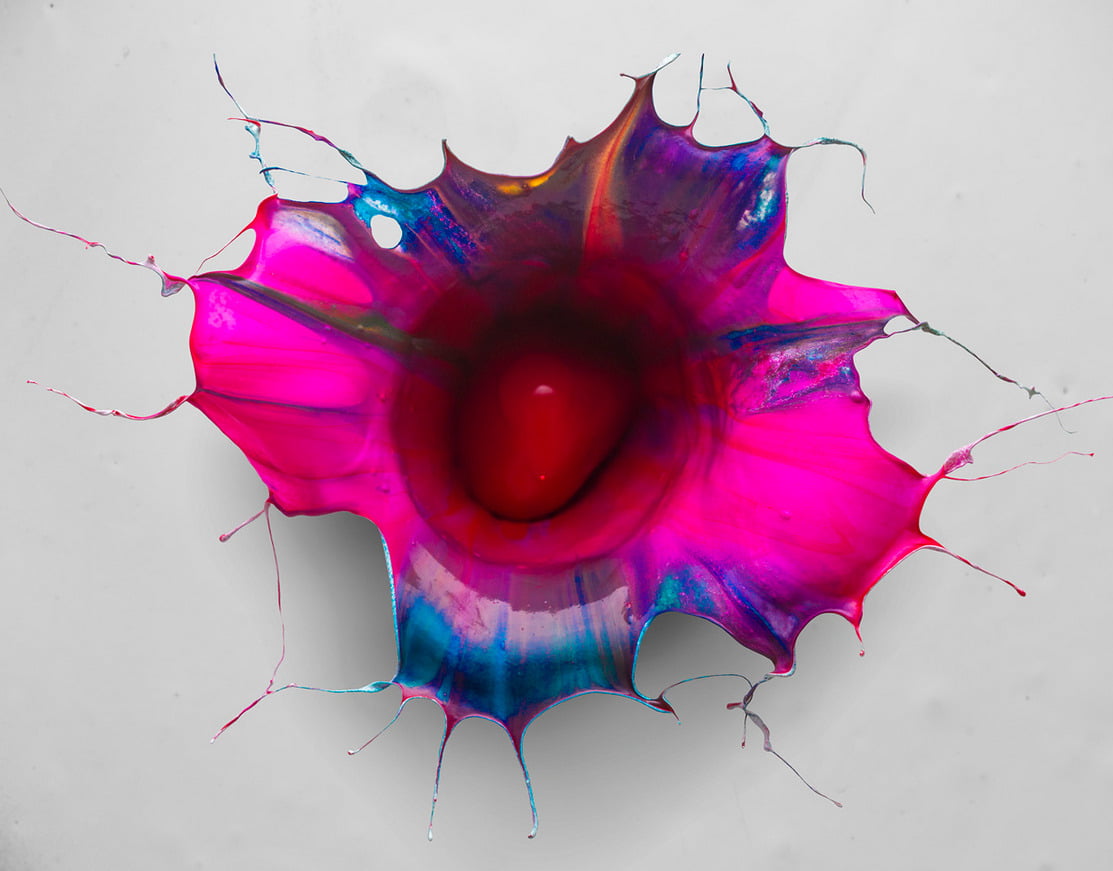
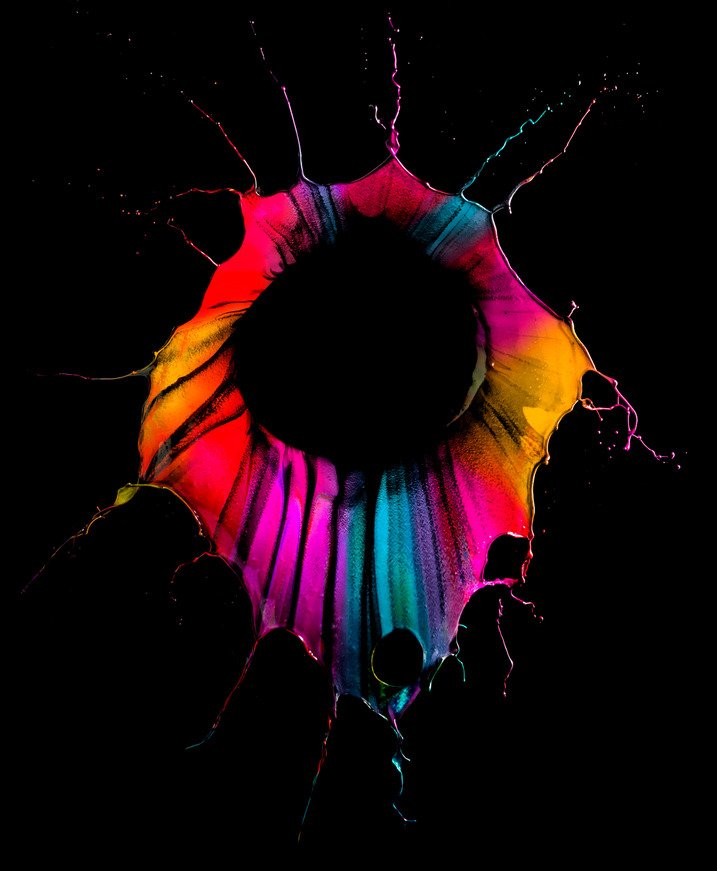
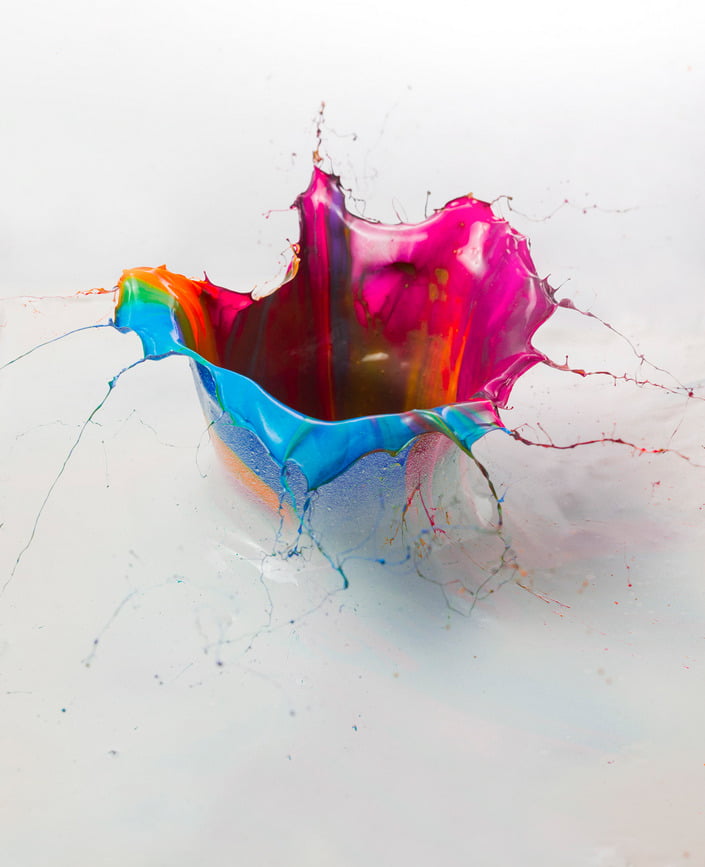
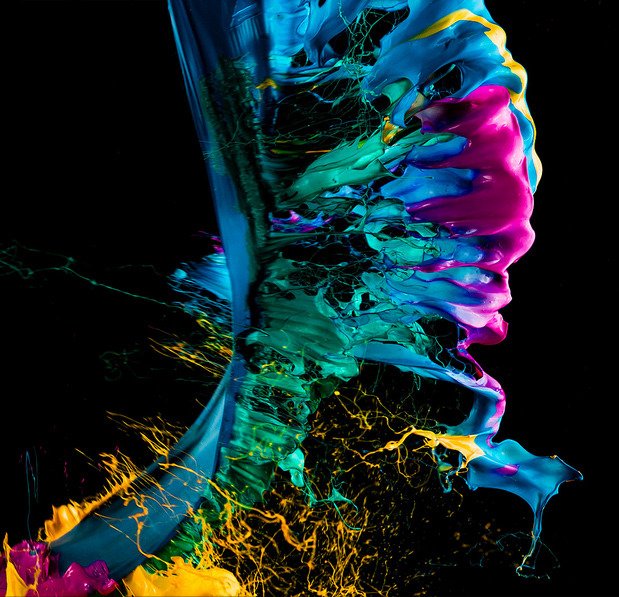
    Artist Fabian Oefner captures these colorful portraits of fluid instability by dripping acrylic paints onto a metal rod, which is connected to a drill. When the drill is switched on, paint is flung away from the rod, creating these snapshots of centripetal force and surface tension. Note how droplets gather at the ends of the spiral arms like in a Plateau-Rayleigh or a rimming instability. For more, check out Oefner’s webpage, which includes a video showing how the images are made, or his previously featured work, “Millefiori”. (Photo credit: F. Oefner; submitted by Stephen D.)

  • Under the Waves

    Under the Waves

    When I was a kid, I liked to dive underwater in the pool and sit at the bottom, looking up at the peculiar dancing sky the water made overhead. Photographer Mark Tipple takes it further, capturing images of the ocean from below the surface as waves roll in. His photos show swimmers and surfers diving to escape a roiling wave that, from below, bears a surreal similarity to the underside of a thundercloud in a summer storm. This is part of the beauty of fluid dynamics. Despite their differences, water and air obey the same physics. (Photo credits: Mark Tipple; via io9)

  • Featured Video Play Icon

    “Frozen” Water Stream

    We saw previously how vibrating a falling stream of water and filming it with a matching camera frame rate appears to “freeze” the falling liquid. This video shows the same illusion, now with a 24 Hz sine wave, which the falling water mimics. Vibrating the speaker that drives the water stream slightly slower or slightly faster than the camera frame rate makes the water appear to slowly fall or rise relative to its “frozen” wave state. This is a beat effect caused by the slight difference in frequency between the water and the camera.  (Video credit: brusspup; via BoingBoing; submitted by many readers)

  • Featured Video Play Icon

    Tuning Fork Fluids

    This high-speed video shows a liquid crystal fluid vibrating on a tuning fork. As the surface moves, tiny jets shoot upward, sometimes with sufficient energy that the fluid column is stretched beyond surface tension’s ability to keep it intact, resulting in droplet ejection. The jets and surface waves create a mesmerizing pattern of fluid motion. (Video credit: J. Savage) 

  • Turbulent Flames

    Turbulent Flames

    The flames surrounding a burning tree stump flicker and billow in this image from photographer Serdar Ozturk. The chaotic motion of the flames is indicative of turbulence, a state of fluid flow known for its many scales. Note the range of lengthscales and structures in the fire. In turbulent flows, kinetic energy cascades from large scales, like the width of the top of the plume, down to the small scales, which may be even smaller than the wisps of flame at the edges of the fire. At the largest scales, the structures and behaviors we observe are all flow- and geometry-dependent, but theory predicts that, at the smallest scales, all turbulent flows look the same. (Photo credit: trashhand/Serdar Ozturk)

  • Liquid Sculptures

    Liquid Sculptures

    Artist Corrie White uses dyes and droplets to capture fantastical liquid sculptures at high-speed. The mushroom-like upper half of this photo is formed when the rebounding jet from one droplet’s impact on the water is hit by a well-timed second droplet, creating the splash’s umbrella. In the lower half of the picture, we see the remains of previous droplets, mixing and diffusing into the water via the Rayleigh-Taylor instability caused by their slight difference in density relative to the water. There’s also a hint of a vortex ring, likely from the droplet that caused the rebounding jet. (Photo credit: Corrie White)

  • Spiraling Ferrofluid

    Spiraling Ferrofluid

    Here a ferrofluid climbs a spiral steel structure sitting on an electromagnet. Magnetic field lines emanating from the sculpture’s edges tend to push the ferrofluid out into long spikes–part of the normal field instability–but surface tension resists. The short, somewhat squat spikes we see are the balance struck between these opposing forces. Though known for their wild appearance, ferrofluids appear many in common applications, including hard drives, speakers, and MRI contrast agents. Researchers have also recently suggested they might help understand the behavior of the multiverse. (Photo credit: P. Davis et al.)

  • Featured Video Play Icon

    Ink Drops

    This super high resolution video (check the original on YouTube) by filmmaker Jacob Schwarz features slow motion diffusion of ink into water. The subtle differences in density between the ink and the water promote instabilities such as the Rayleigh-Taylor instability and its distinctive cascade of mushroom- or umbrella-like shapes. The mixing of two fluids seems like a simple concept, but the reality is beautiful, complex, and always fascinating. (Video credit: J. Schwarz; submitted by Rebecca S.)