Year: 2012

  • Featured Video Play Icon

    Homemade Hybrid Rocket Engine

    In this video, Ben Krasnow details and demos a small hybrid rocket engine he built in his workshop. Hybrid rockets utilize propellants that are two different states of matter, in this case gaseous oxygen as the oxidizer and solid acrylic as the fuel. Krasnow’s verbal explanation of a convergent-divergent nozzle, used to accelerate flow to supersonic speeds is not quite right. In reality, a compressible fluid like air reaches the sonic point (i.e. Mach 1) at the narrowest point of the nozzle, also called the throat. The divergent portion of the nozzle causes the compressible fluid to expand in volume, which drops the temperature and pressure while the velocity increases beyond the speed of sound.

    Krasnow says he did no calculations for his rocket, but I decided to have a little fun by doing some myself. Supersonic flow through the nozzle is only achieved if the flow is choked, meaning that the mass flow rate through the nozzle will not increase if the downstream pressure is decreased further relative to the upstream pressure. For Krasnow’s rocket, the downstream pressure is atmospheric pressure (14.7 psi) and the upstream pressure is provided by the oxygen canister, which he notes was at most 80 psi. Fortunately, the upstream pressure necessary to choke the nozzle is only 27.8 psi, so even with the ball valve partially closed, Krasnow’s rocket is definitely capable of supersonic speeds.

    The Mach number achievable by any given supersonic nozzle is related to the ratio of the nozzle throat to its exit diameter (#). Krasnow gives the throat diameter as ¼-inch and the exit diameter as 5/8-inch. This means that the Mach number at the exit of the nozzle, assuming choked supersonic flow, is about Mach 3.4. (Video credit: Ben Krasnow; via Universe Today; submitted by jshoer)

  • Featured Video Play Icon

    Atomizing

    High-speed video reveals the complexity of fluid instabilities leading to atomization–the breakup of a liquid sheet into droplets. A thin annular liquid sheet is sandwiched between concentric air streams. As the velocity of the air on either side of the liquid sheet varies, shear forces cause the sheet to develop waves that result in mushroom-like shapes that break down into ligaments and droplets. Quick breakup into droplets is important in many applications, most notably combustion, where the size and dispersal of fuel droplets affects the efficiency of an engine. (Video credit: D. Duke, D. Honnery, and J. Soria)

  • Shark-Tooth Instability

    Shark-Tooth Instability

    A viscous fluid inside a horizontally rotating circular cylinder forms a shark-tooth-like pattern along the fluid’s free surface. This is one of several patterns observed depending on the fluid’s viscosity and surface tension and the rotational rate of the cylinder. (Photo credit: S. Thoroddsen and L. Mahadevan; for more, see Thoroddsen and Mahadevan 1996 and 1997)

  • Formula 1 Aerodynamics

    [original media no longer available]

    Computational fluid dynamics (CFD) and the advent of supercomputing have forever changed the way engineers design. Here the use of CFD in the design of Formula 1 racing cars is discussed. Although CFD is used by many companies in place of wind tunnel testing, each method has its advantages.  CFD provides information about all flow quantities at all points in the flow but can only do so with an accuracy dependent on the grid and models used.  It remains impossible to solve the equations of motion exactly for any problem of practical application because the computational cost is simply too high; instead software packages like FLUENT utilize turbulence models that approximate the physics.  Wind tunnel testing, on the other hand, is physically accurate but typically yields only limited data and flow quantities due to the difficulty of instrumentation. (Video credit: BBC News; submitted by carhogg)

    (Source: /)
  • Featured Video Play Icon

    Acoustic Levitation

    Researchers at Argonne National Laboratory are using acoustic levitation of droplets to further pharmaceuticals. By placing two precisely aligned speakers opposite one another, a standing wave can be created. At nodes along the standing wave, there is no net transfer of energy, but the acoustic pressure is sufficient to cancel the effect of gravity, allowing light objects like droplets to levitate. This is why, in the video, you see the droplets are placed at equally spaced distances and if one is slightly off the node, it vibrates noticeably. The benefit of this levitation to pharmaceutical research comes at the molecular level; drugs formed from solutions kept in a solid container are likely to be crystalline in structure and thus less efficiently absorbed by the body. If the drug can instead be kept in an amorphous state by evaporating the solution without a container, then the resulting drug may be effective at a lower dosage than its crystalline counterpart. (Video credit: Argonne National Laboratory, via Laughing Squid, submitted by @__pj)

  • Ferrofluid Drop

    Ferrofluid Drop

    A drop of ferrofluid is shaped by seven small circular magnets sitting beneath the glass and paper. Ferrofluids are made up of nanoscale ferromagnetic particles suspended in a carrier liquid. Under the influence of magnetic fields, they can take on fantastic shapes, including sharp-tipped droplets and labyrinthine mazes. This image is taken from the National Academy of Science’s book Convergence, focused on the intersection between science and art. (Photo credit: Felice Frankel)

  • Featured Video Play Icon

    Boiling Without Bubbles

    Water droplets sprinkled on a sufficiently hot frying pan will skitter and skate across the surface on a thin layer of vapor due to the Leidenfrost effect. When a solid object is much warmer than a liquid’s boiling temperature, the surface is surrounded by a vapor cloud until the solid cools to the point that the vapor can no longer be sustained. Then the vapor breaks down in an explosive boiling full of bubbles.  Unless, as researchers have just published in Nature, the solid is treated with a superhydrophobic coating. The water-repellent surface prevents the bubbling, even as the sphere cools. The technique could be used to reduce drag in applications like the channels of a microfluidic device. (Video credit: I. Vakarelski et al.; see also Nature News; submitted by Bobby E)

  • Featured Video Play Icon

    The Veil Nebula

    There is no grander scale for the observation of fluid dynamics than that of the astronomical. Here Hubble astronomers discuss the formation of the Veil Nebula, a supernova remnant formed some 5,000-10,000 years ago.  Wisps of gas and plasma remain, creating stunning astronomical landscapes that are the result of shock waves, turbulence, diffusion, and other processes familiar to us here on Earth. (Video credit: ESA/Hubble)

  • Featured Video Play Icon

    Liquid Logic Gates

    Researchers have built logic gates–a physical implementation of Boolean logic–using droplets on a superhydrophobic surface.  The video above demonstrates their flip-flop memory gate.  Incoming droplets travel on a single track, striking a stationary “memory droplet” which then goes into one of the two output tracks according to its memory state. The memory state of the droplet relies on its position; the droplet sits on an infinity-shaped depression.  When the incoming droplet strikes the sitting one, the droplet will exit via the track closest to its depression.  The droplet that struck it will, as a result of the momentum transfer of the collision, rebound the opposite direction into the other depression, thereby storing the opposite memory state. See here for videos demonstrating other logic gates. (Video credit: H. Mertaniemi et al.; submitted by L. Buss)

  • Chronoscapes

    Chronoscapes

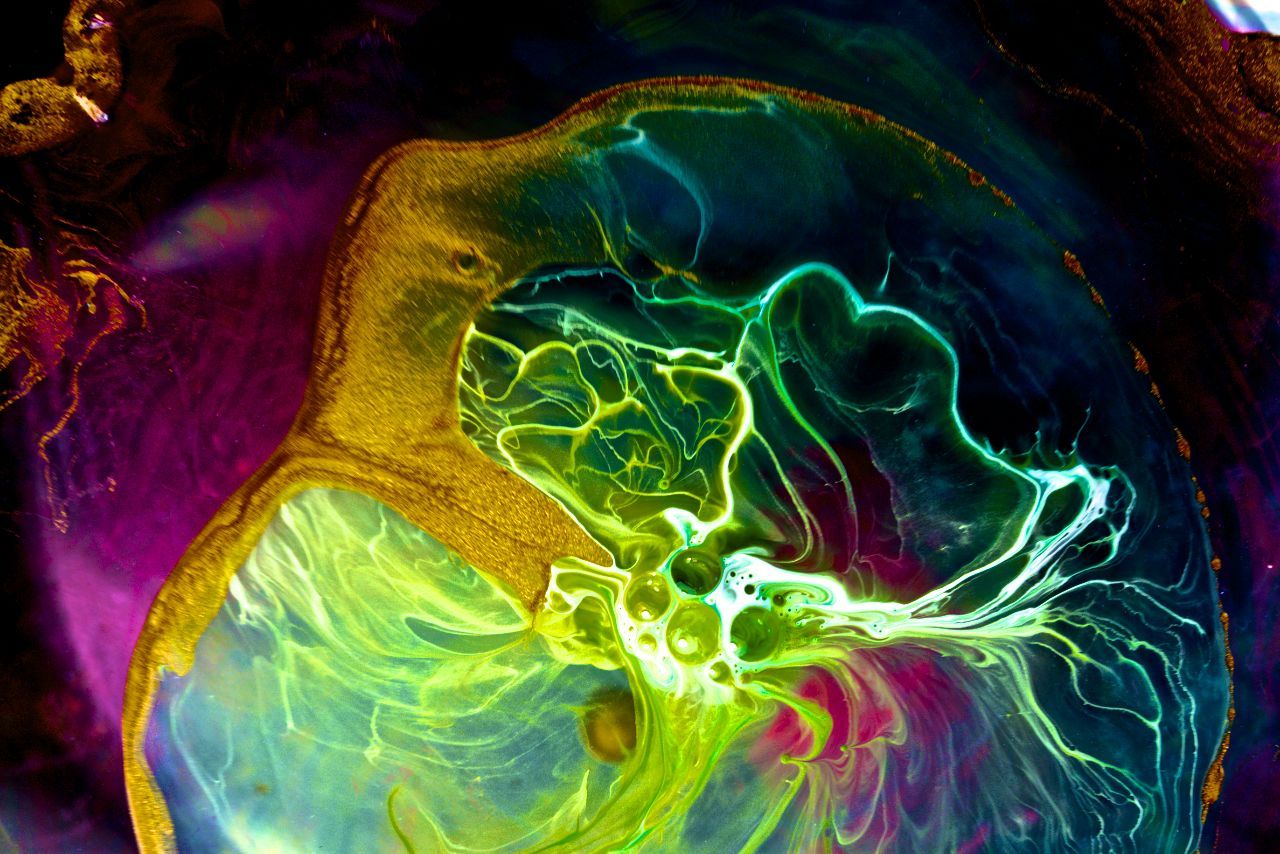
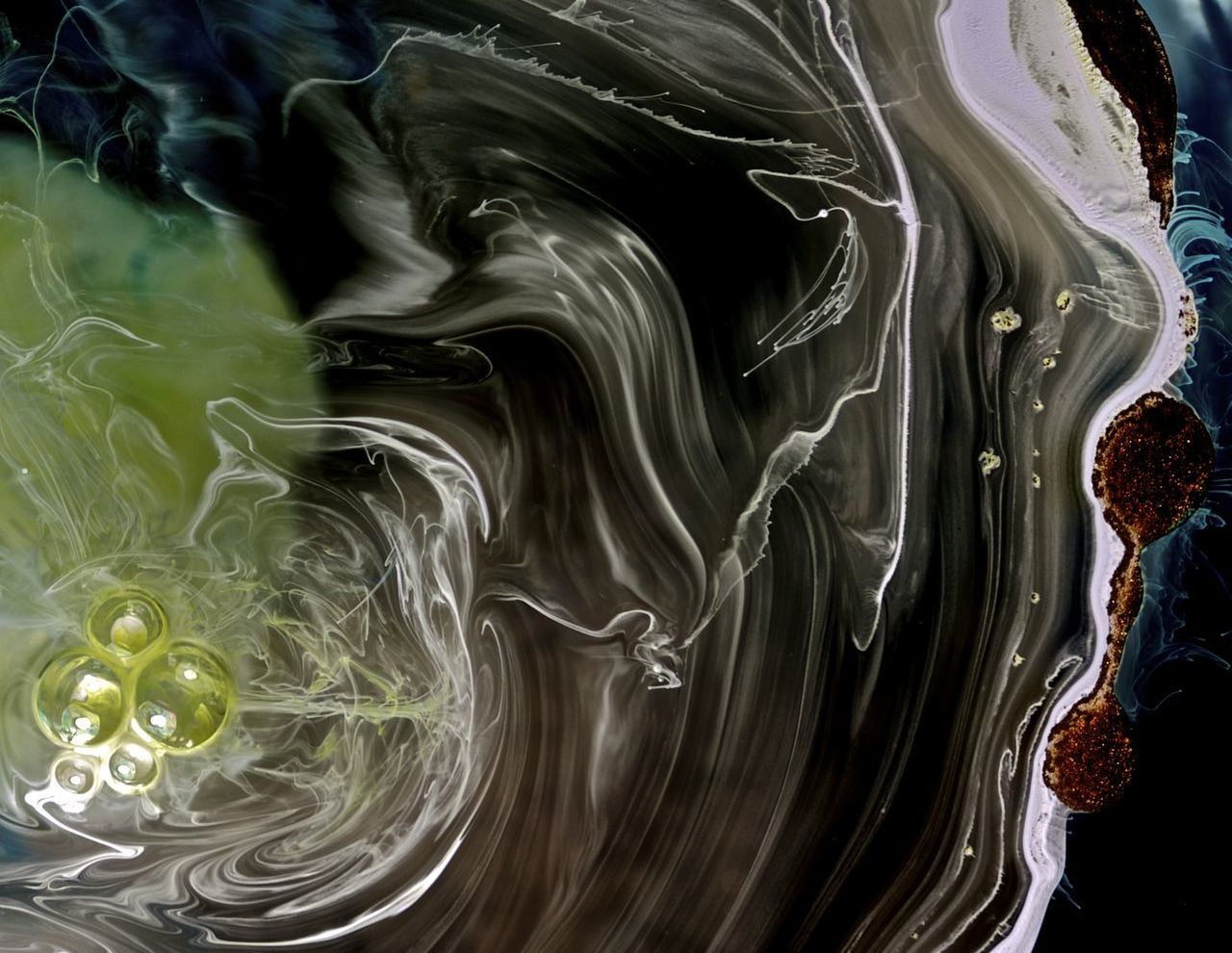
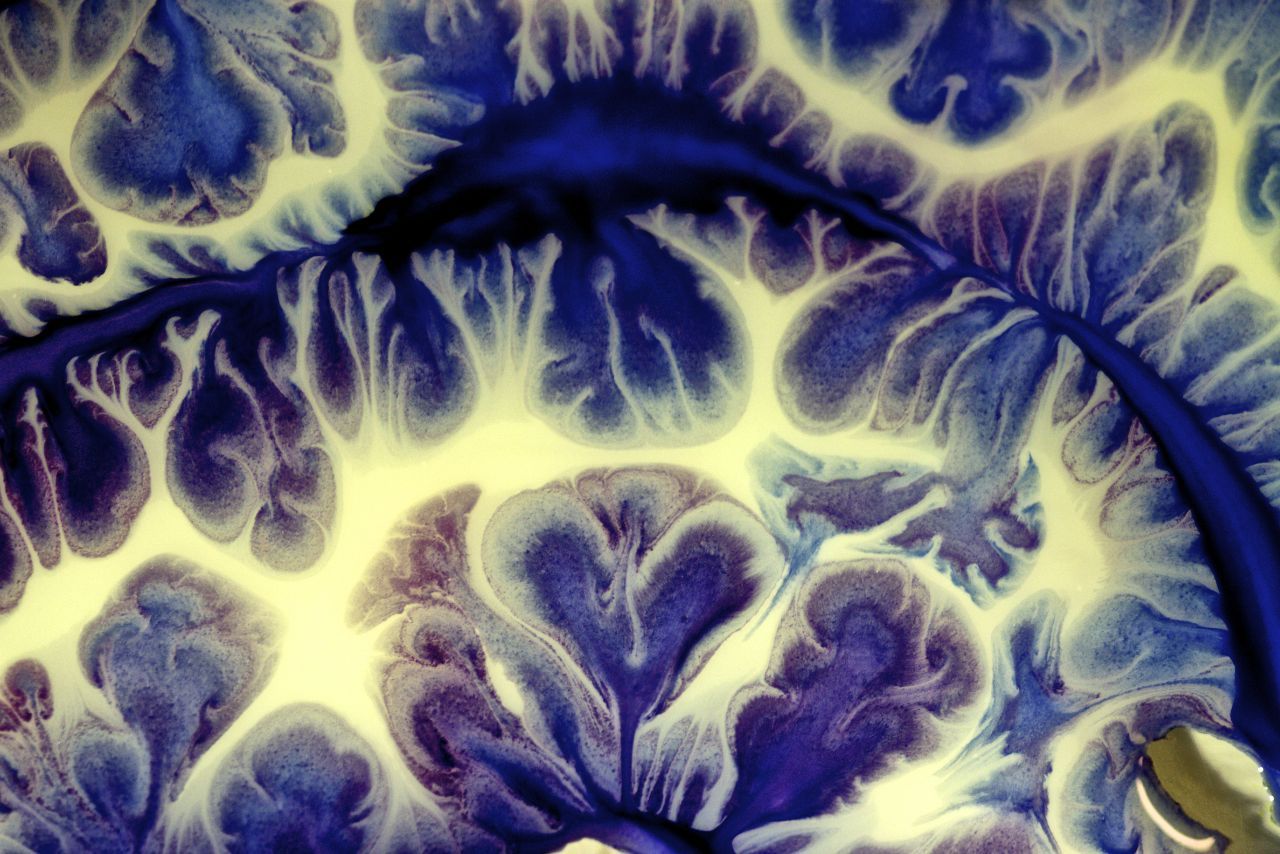
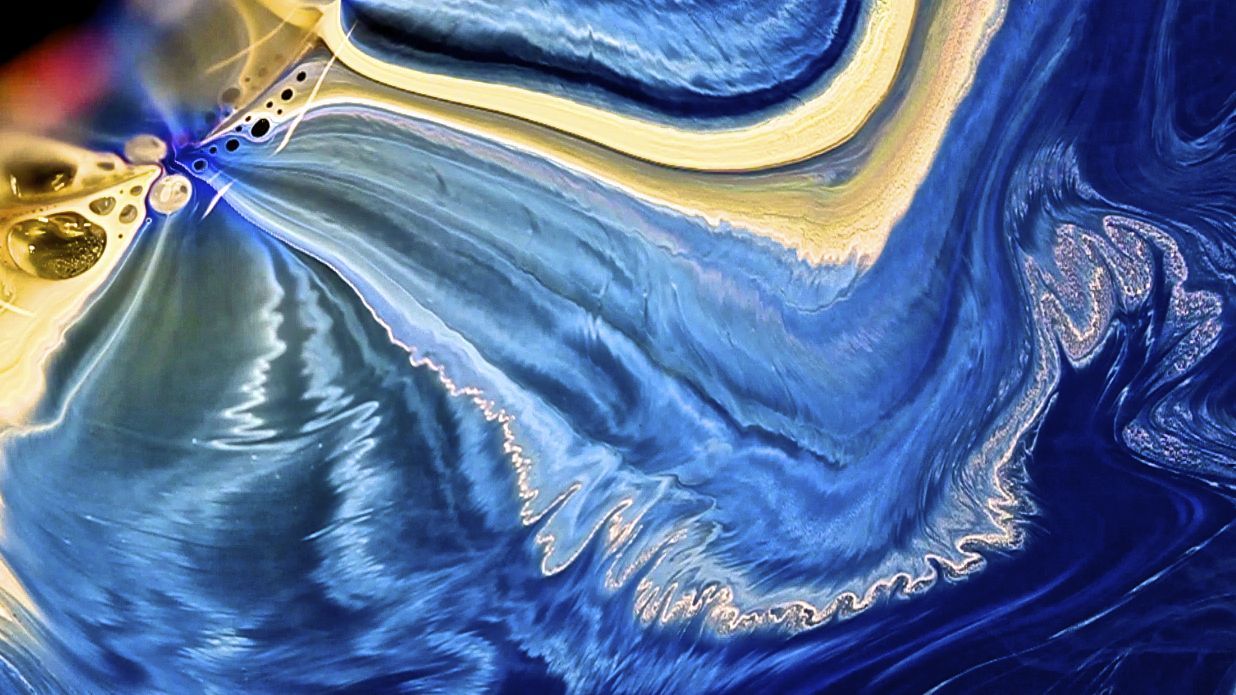
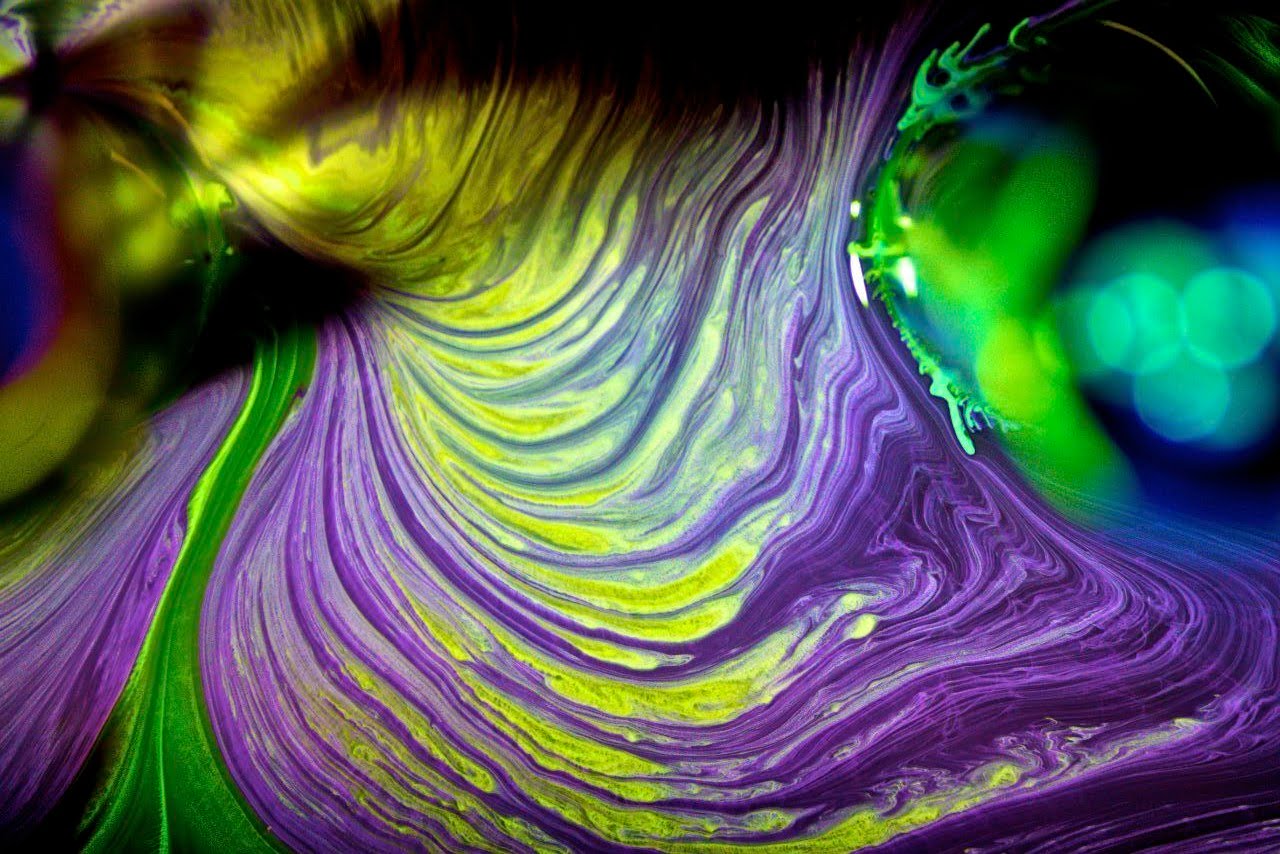
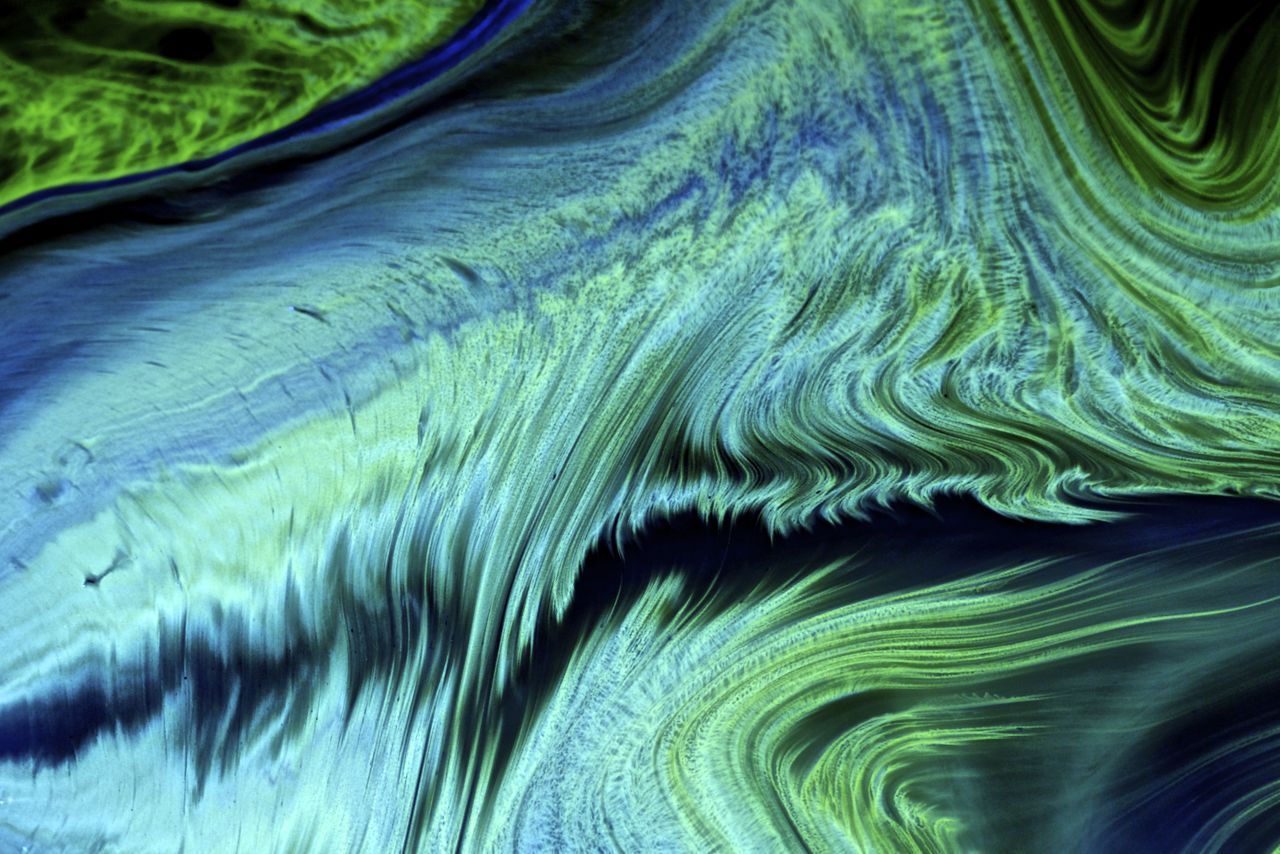
    Exeter University artist-in-residence Pery Burge uses ink, water, soap films, and other fluids to create her spectacular “artistic flow visualization”. Looking closely, one sees the influence of bubbles, vortices, diffusion, and many fluid instabilities, all combined to create psychedelic and dream-like landscapes. For more on her work and additional galleries, see her website Chronoscapes. (Photo credit: Pery Burge)