Smoke issuing from a round jet undergoes transition from laminar to turbulent flow. As the smoke moves past the unmoving ambient air, the friction between these two layers creates shear and triggers a Kelvin-Helmholtz instability, recognizable by the formation and roll up of vortices along the edges of the jet. Those vortices then roll together in pairs, detach, and devolve into a generally turbulent flow. Because turbulence is far more efficient at mixing than a laminar flow is, the smoke seems to disappear.
Tag: viscosity

Flow Vis

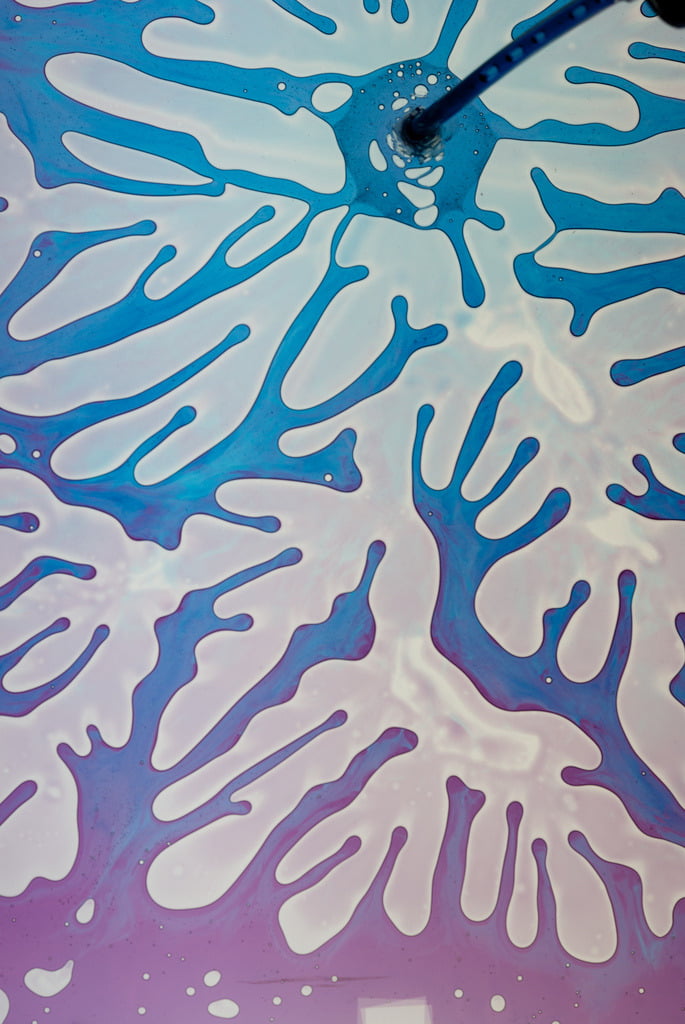
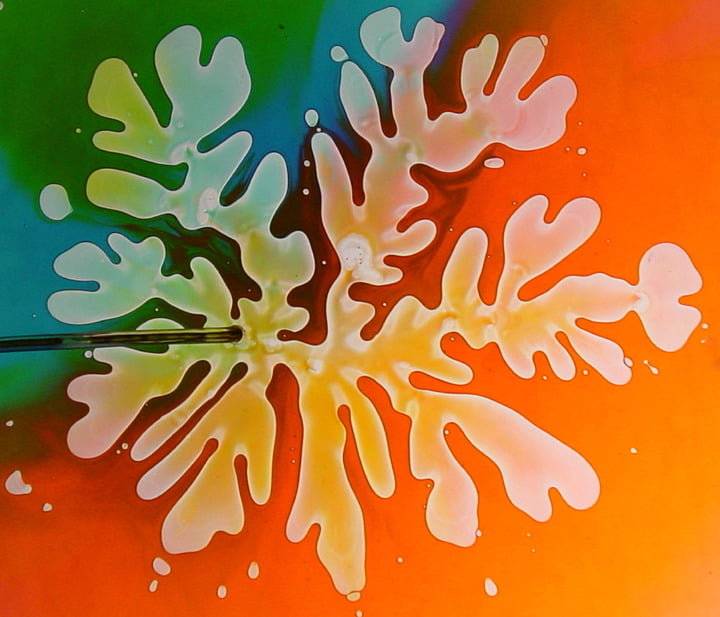
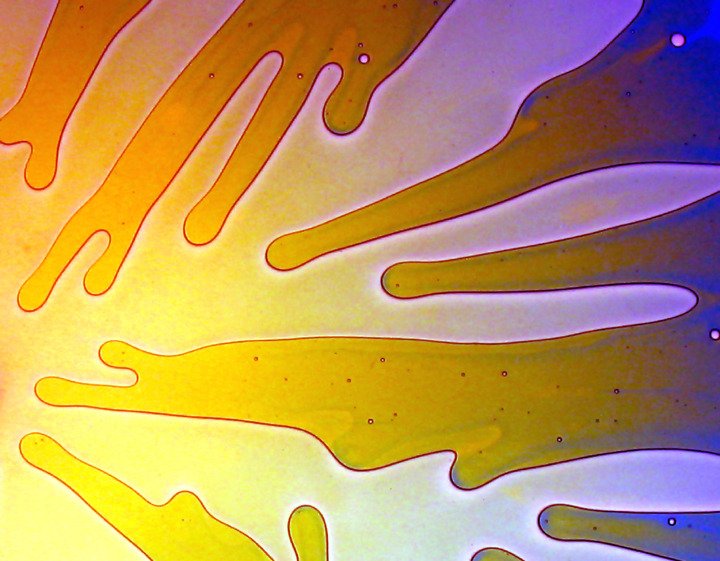
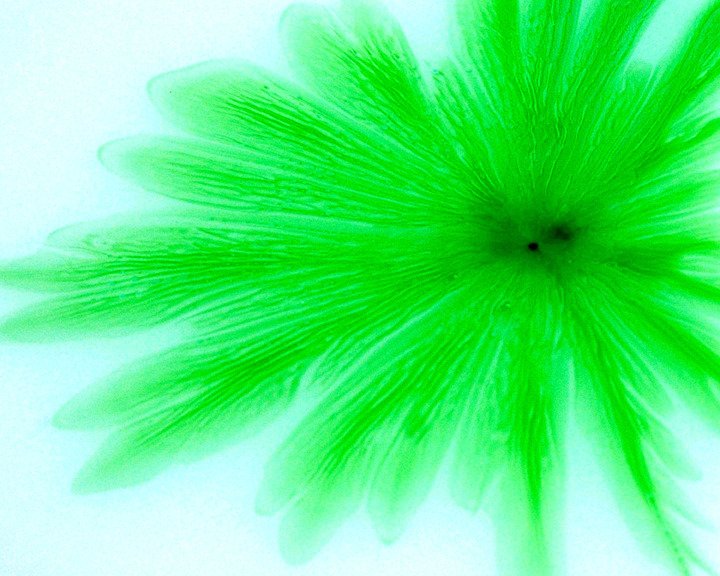
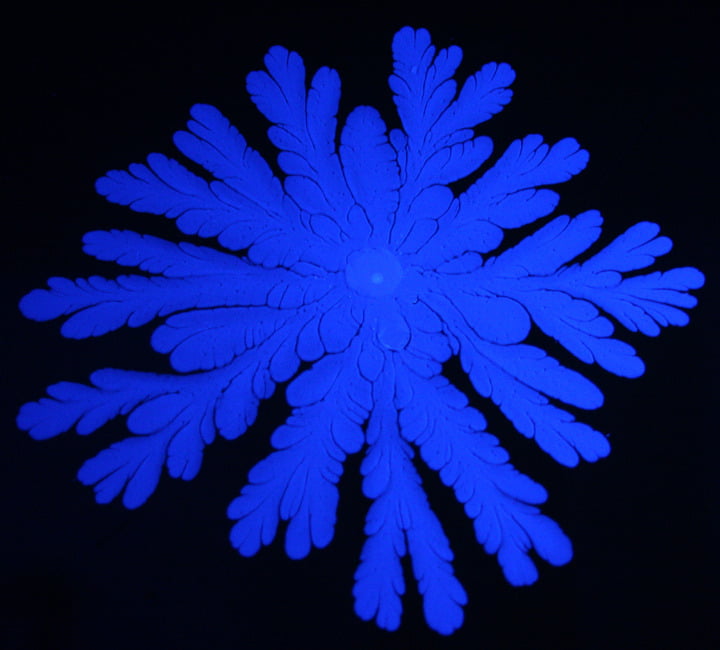
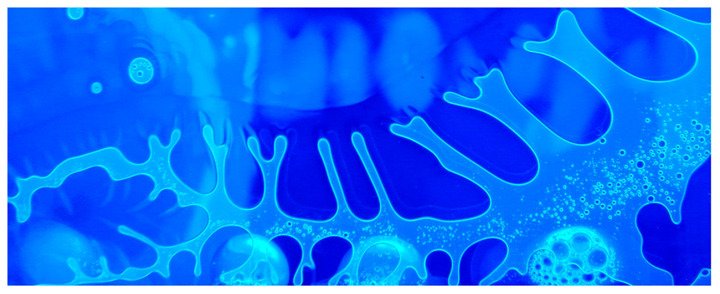
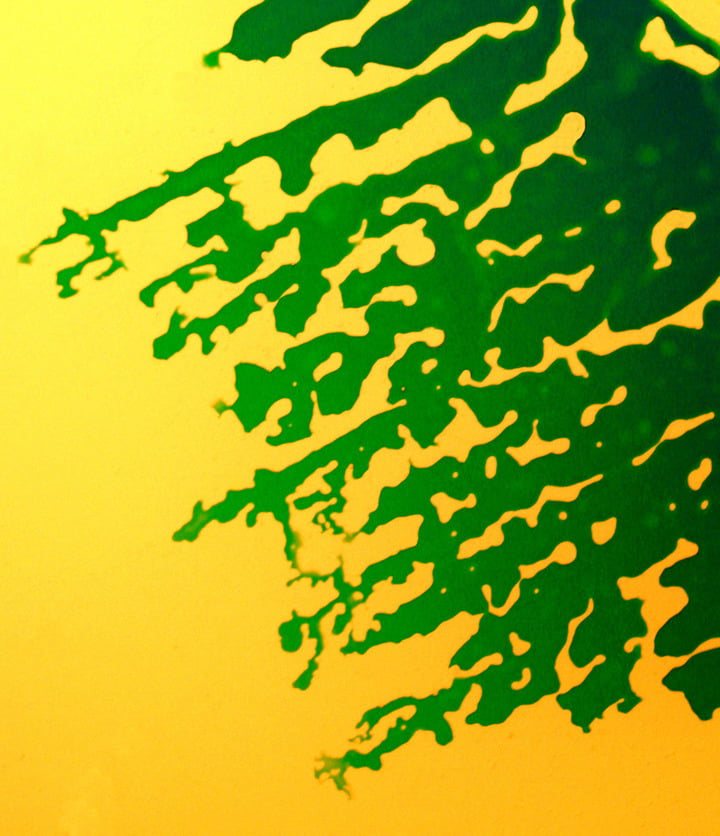
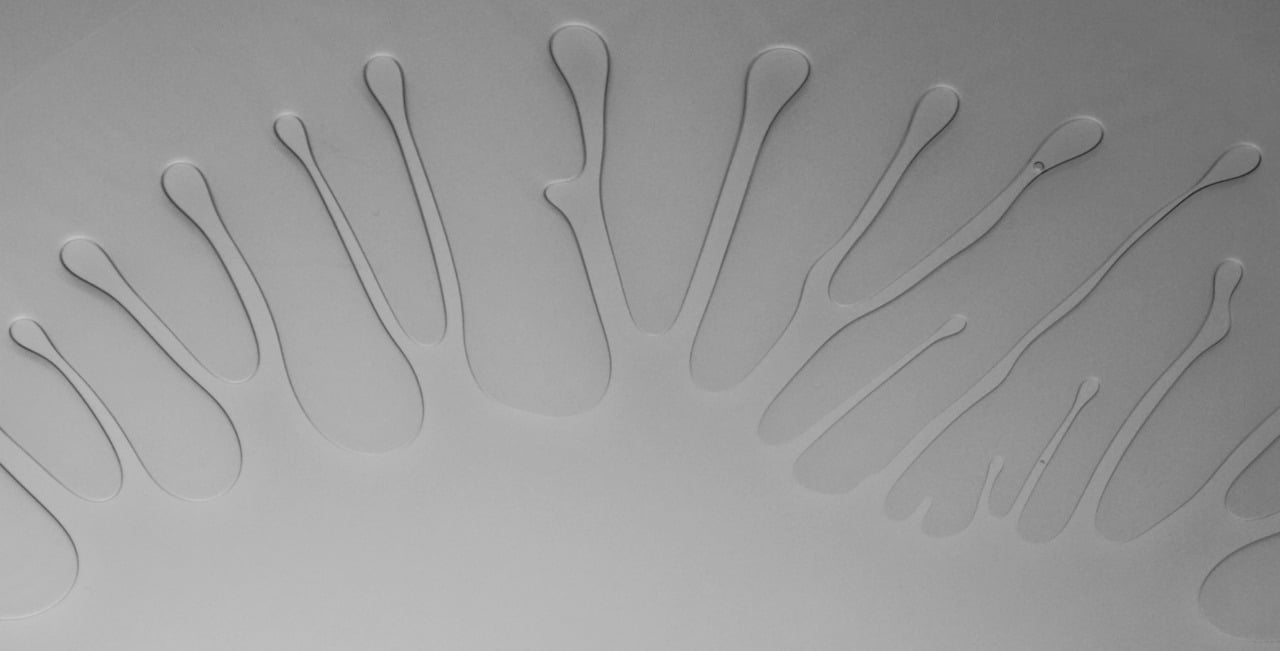
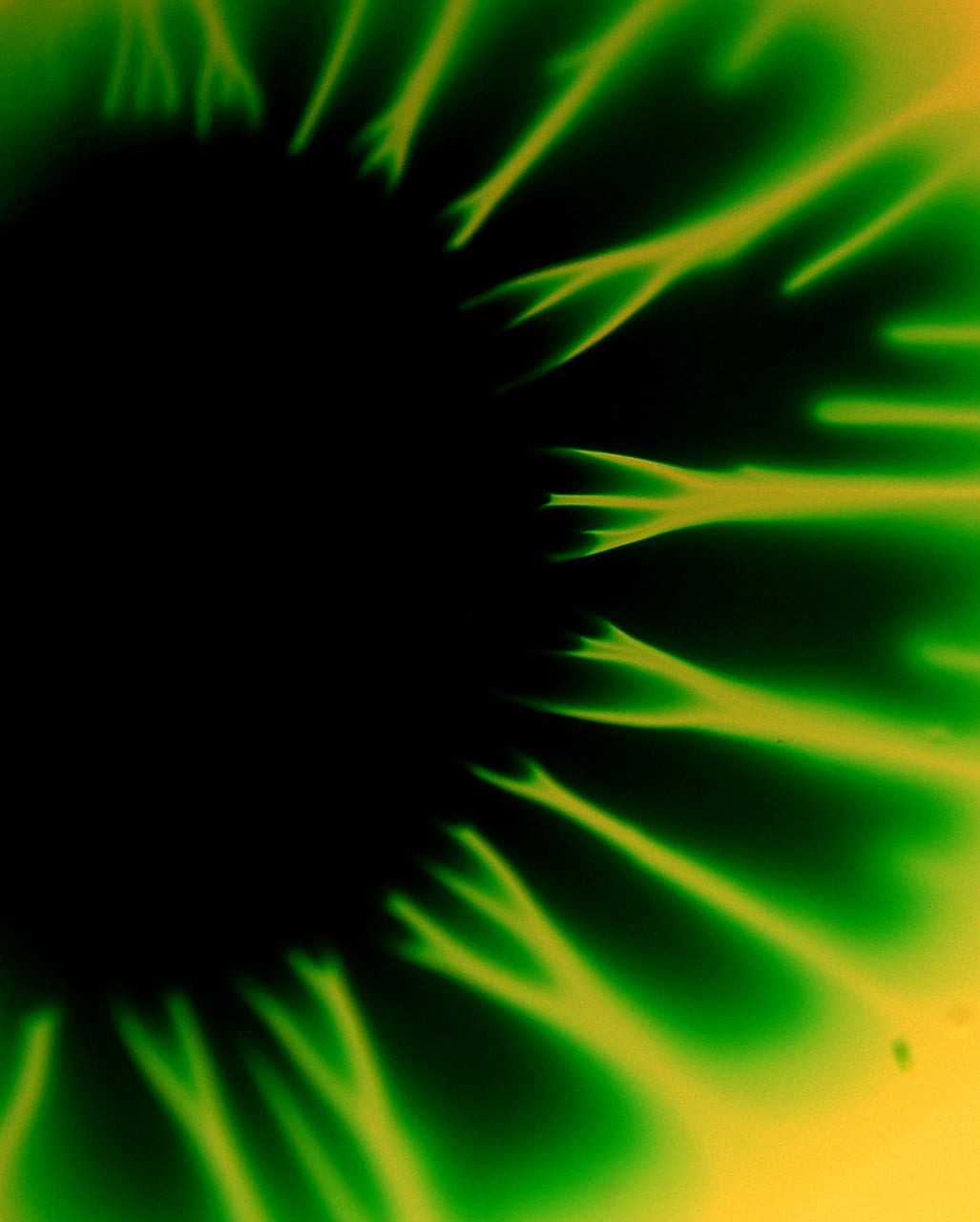
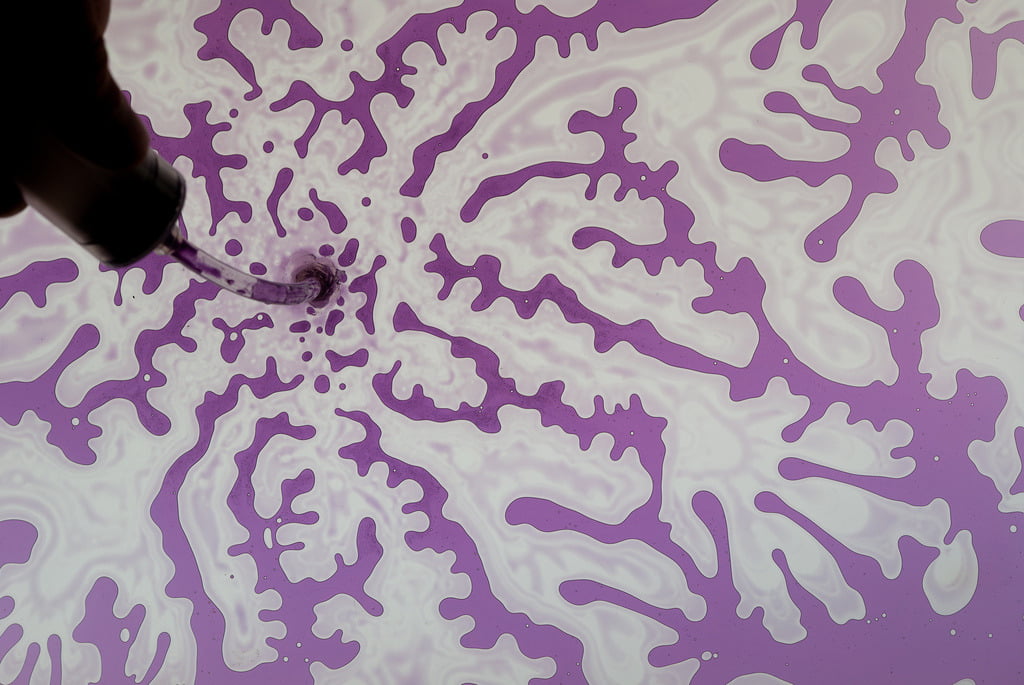
Place a viscous fluid in the gap between two plates of glass and you have created a Hele Shaw cell. If a less viscous fluid is then injected between the plates, a fascinating pattern of finger-like protrusions results. This is known as the Saffman-Taylor instability. Because of the relative simplicity of the set-up, it’s possible to create such experiments at home using common household fluids like glycerin, dish soap, dyed water, or laundry detergent. (Photo credits: Jessica Rosencranz, Jessica Todd, Laurel Swift et al, Andrea Fabri et al, Tanner Ladtkow et al, Mike Demmons et al, Trisha Harrison, Justin Cohee, and Erik Hansen)

Shear-Thickening Oobleck
Oobleck is a commonly utilized fluid in demonstrations of non-Newtonian behavior. Rather than being linearly viscous with respect to shear, oobleck is shear thickening, meaning that it becomes more viscous the more that it is sheared. This is what causes crazy formations when it’s vibrated, makes it useful as liquid armor, and enables people to run across pools full of it. Yet it flows readily when undisturbed. #

Paint Vibrations
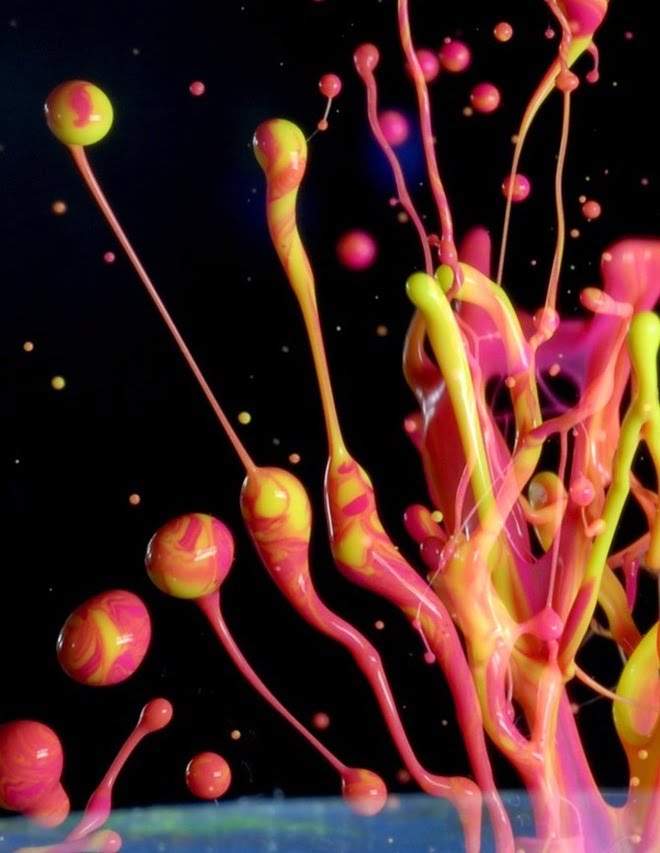
Paint vibrated on a loud speaker explodes in multi-colored jets and droplets. Most paints are shear-thinning non-Newtonian fluids (like ketchup, shampoo, or whipped cream), meaning that their viscosity decreases as they are sheared. This allows them to flow more readily once they are perturbed. #
High Hopes
This gorgeous high-speed video captures bubbles, droplets, wakes, cavitation, coalescence, jets, and lots of surface tension at 7000 fps. The authors unfortunately haven’t indicated whether this is air in water or something more viscous, but regardless there are some great phenomena on display here. # (via Gizmodo)
Shear-Thinning at Home
Shear-thinning isn’t just confined to canned whipped cream. It’s also a feature of such non-Newtonian fluids as ketchup, shampoo, latex paint, and blood. The NASA research on shear-thinning the video author refers to is here and comes from the Critical Viscosity of Xenon-2 (CVX-2) experiment flown on the final mission of Columbia. Surprisingly, almost all of the experimental data was recovered from the crash. #
Liquid Rope Coiling
Some liquids, when falling in a stream into a pool, tend to coil into a liquid rope. This video shows honey, but the effect can also be observed in syrups and silicone oil. The rate of coiling is dependent on the height from which the liquid falls. Other factors governing coiling include viscosity, density, and flow rate.
Viscous Fingers
The Saffman-Taylor instability occurs when a less viscous fluid is injected into a more viscous one, usually in a Hele-Shaw cell. Here oil paint and mineral spirits were painted onto flat surfaces that were pressed together before being pulled apart. The result is viscous fingering of the fluids. #
How Dogs Drink
Not long ago, researchers showed that cats use friction to their advantage when drawing liquids into their mouths. New research shows that dogs rely on the same mechanism–they’re just far less efficient with it. The dog touches its backwards-curled tongue to the surface of the water; when it draws the tongue back, friction causes a column of fluid to follow. The dog then closes its jaws around the water. Some water also gets picked up by the back of the tongue, but since dogs have no cheeks, it spills out the sides, creating a mess familiar to dog owners. #

Venom Properties
Most venomous snakes deliver venom to their prey via grooves in their fangs, rather than through a pressurized bolus through hollow fangs. New research shows that these venoms are shear-thinning non-Newtonian fluids. The surface tension of the venom is such that a drop of venom will tend to flow into and down the groove. Once moving, the shear-thinning properties of the venom decrease the venom’s viscosity, increasing its flow rate down the fang and into the snake’s prey. (via Scientific American; Photo: green mamba, banded snake fang)