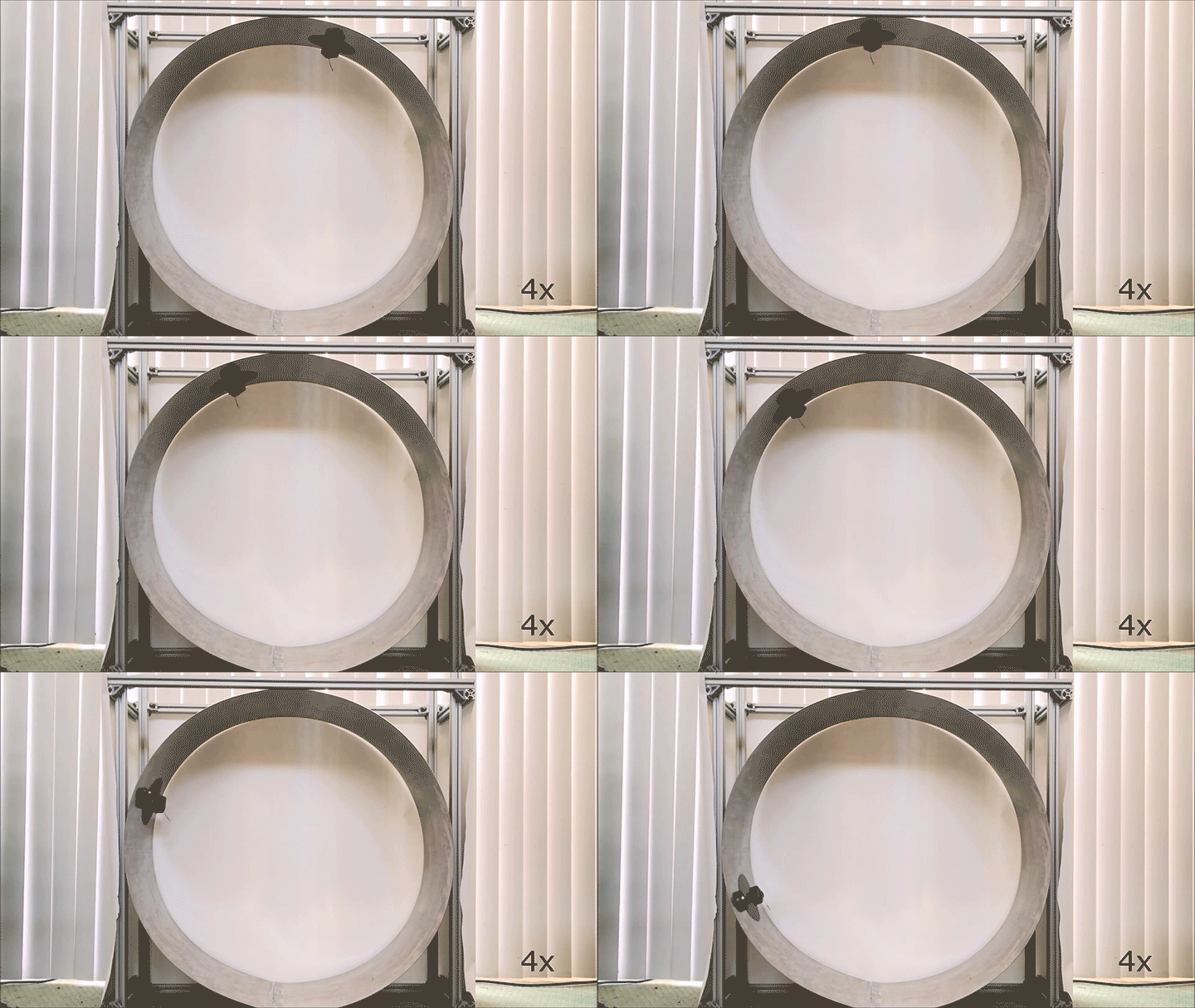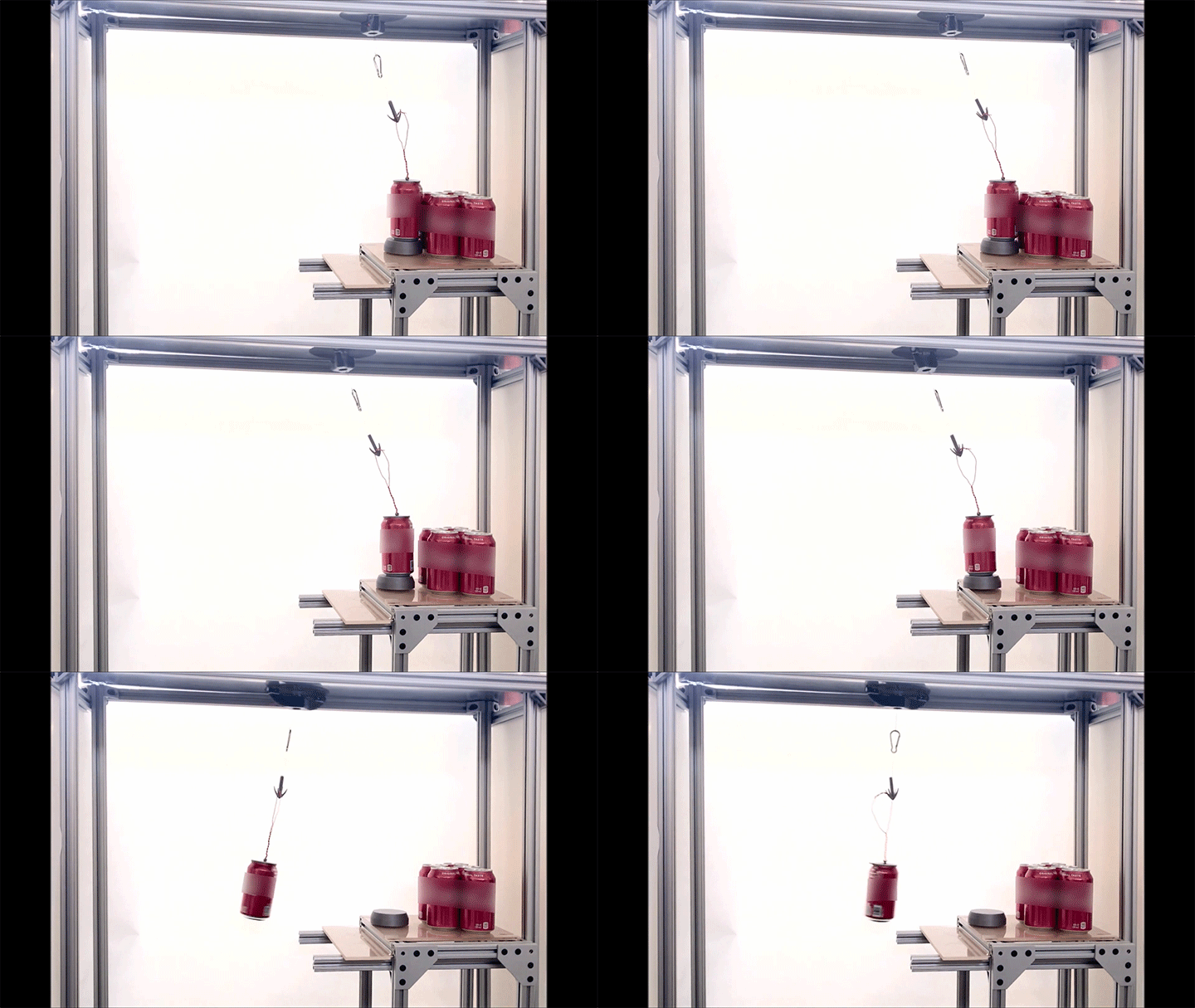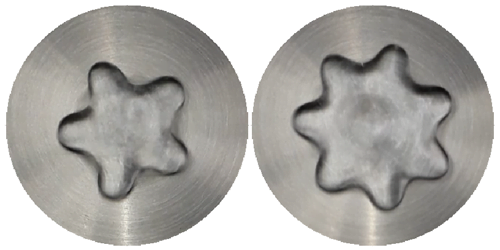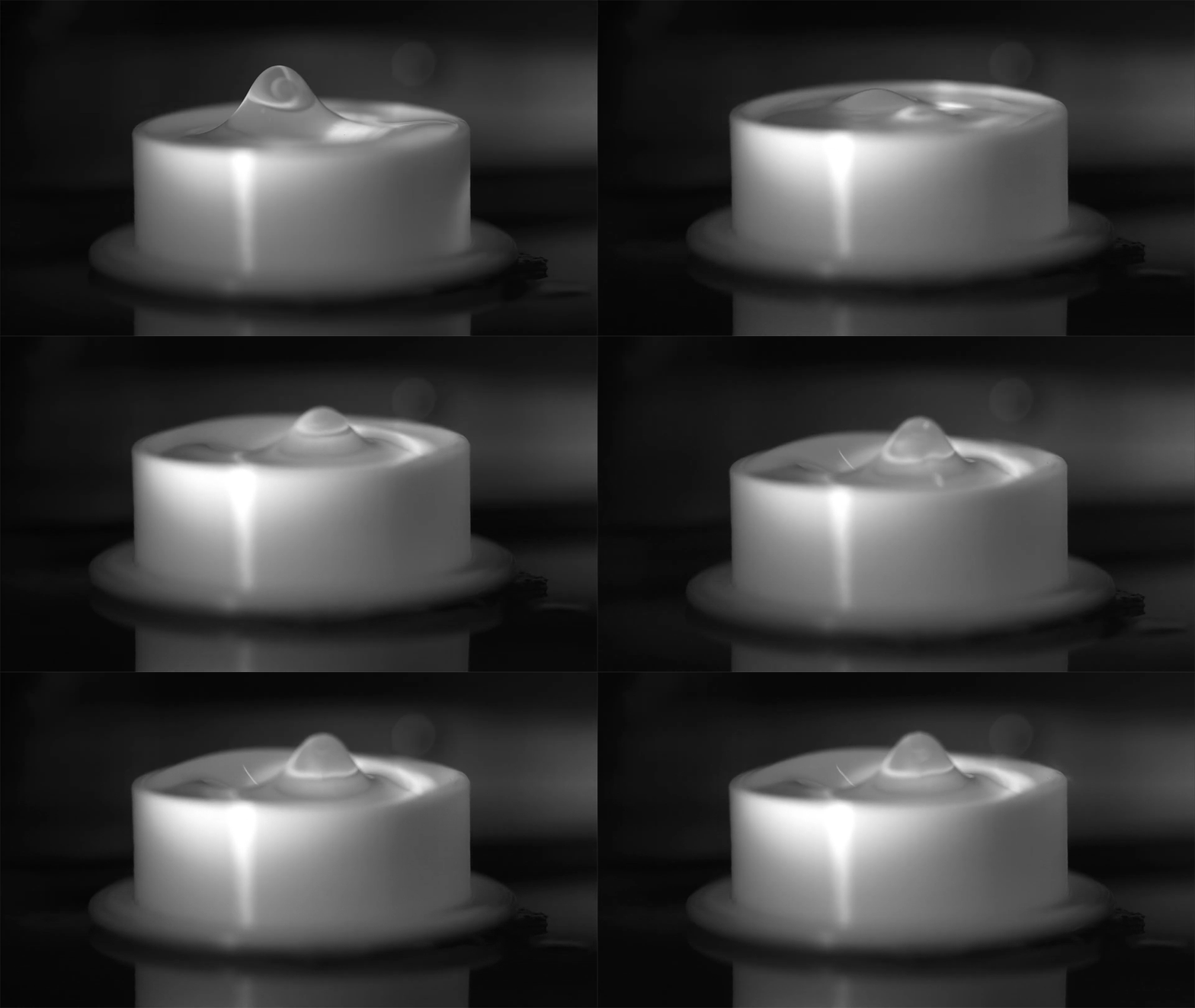
On a hot surface, droplets can float on a layer of their own vapor and vibrate in star-like shapes. These so-called Leidenfrost stars also make noise, with distinct beats that match the oscillations of the vapor layer beneath them. Researchers found that the frequency of the sound shifts with droplet size, increasing as the drop size decreases. Physically, the droplets act much like a wind instrument! (Image and research credit: T. Singla and M. Rivera; via APS Physics)
Tag: vibration

Ultrasonic Vibrations
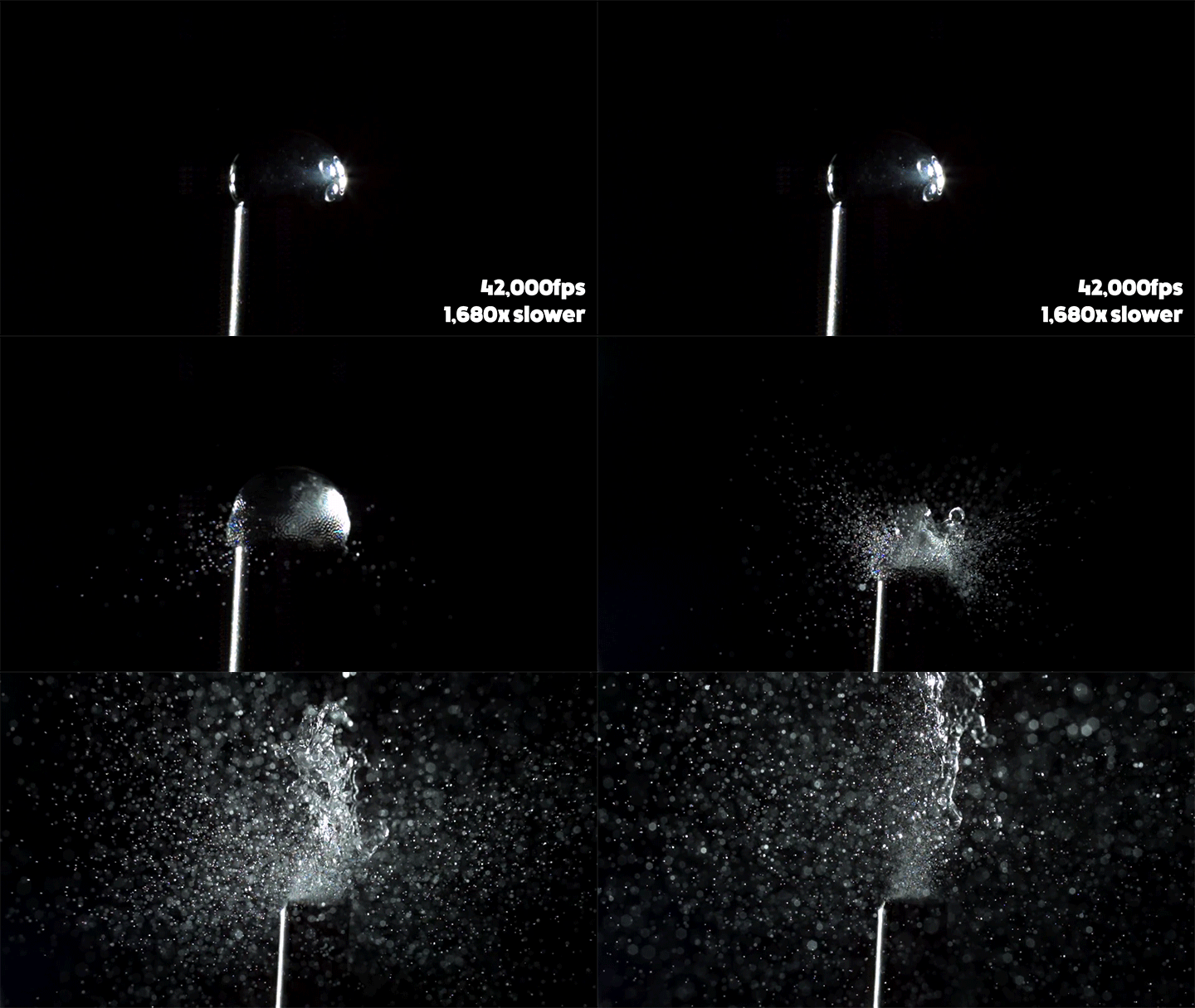
Ultrafast vibrations can break up droplets, mix fluids, and even tear voids in a liquid. Here, the Slow Mo Guys demonstrate each of these using an ultrasonic homogenizer, a piece of lab equipment capable of vibrating 30,000 times a second. At that speed generating cavitation bubbles is trivial, and the flow induced by that cavitation is well-suited to emulsifying otherwise immiscible liquids like oil and water. They also show how a lone droplet gets torn into many microdroplets, a process formally known as atomization. (Image and video credit: The Slow Mo Guys)

Hedgehogs Atop Waves
Since Michael Faraday, scientists have watched the curious patterns that form in a vibrating liquid. By adding floating particles to such a system, researchers have discovered spiky, hedgehog-like shapes that form near the surface. At low amplitudes, the surface patterns resemble the typical smooth rounded lobes one would expect, but as the wave amplitude increases, spikes form in the tracers, driven by the motion of the waves. (Image and research credit: H. Alarcón et al.; via APS Physics)
Freezing Waves
Vibrate a liquid, and you’ll get a pattern of standing waves known as Faraday waves. In this project, artist Linden Gledhill adds a twist to the usual view of these waves by capturing them in plastic. As the polymer liquid vibrates, Gledhill uses a flash of UV light to cure the polymer, freezing the wave pattern. Check out the original video for an even better look. (Image, video, and submission credit: L. Gledhill, 1, 2, 3, 4)

Floating in Levitating Liquids
When it comes to stability, nature can be amazingly counter-intuitive, as in this case of flotation on the underside of a levitating liquid. First things first: how is this liquid layer levitating? To answer that, consider a simpler system: a pendulum. There are two equilibrium positions for a pendulum: hanging straight down or pointing straight up. We don’t typically observe the latter position because it’s unstable; the slightest disturbance from that perfectly vertical situation will make it fall. But it’s possible to stabilize an inverted pendulum simply by shaking it up and down. The vibration creates a dynamic stability.
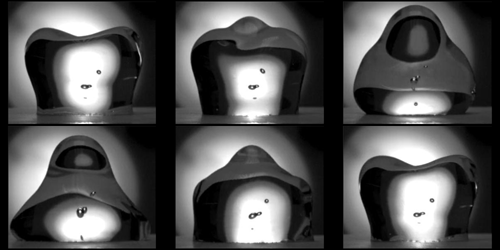
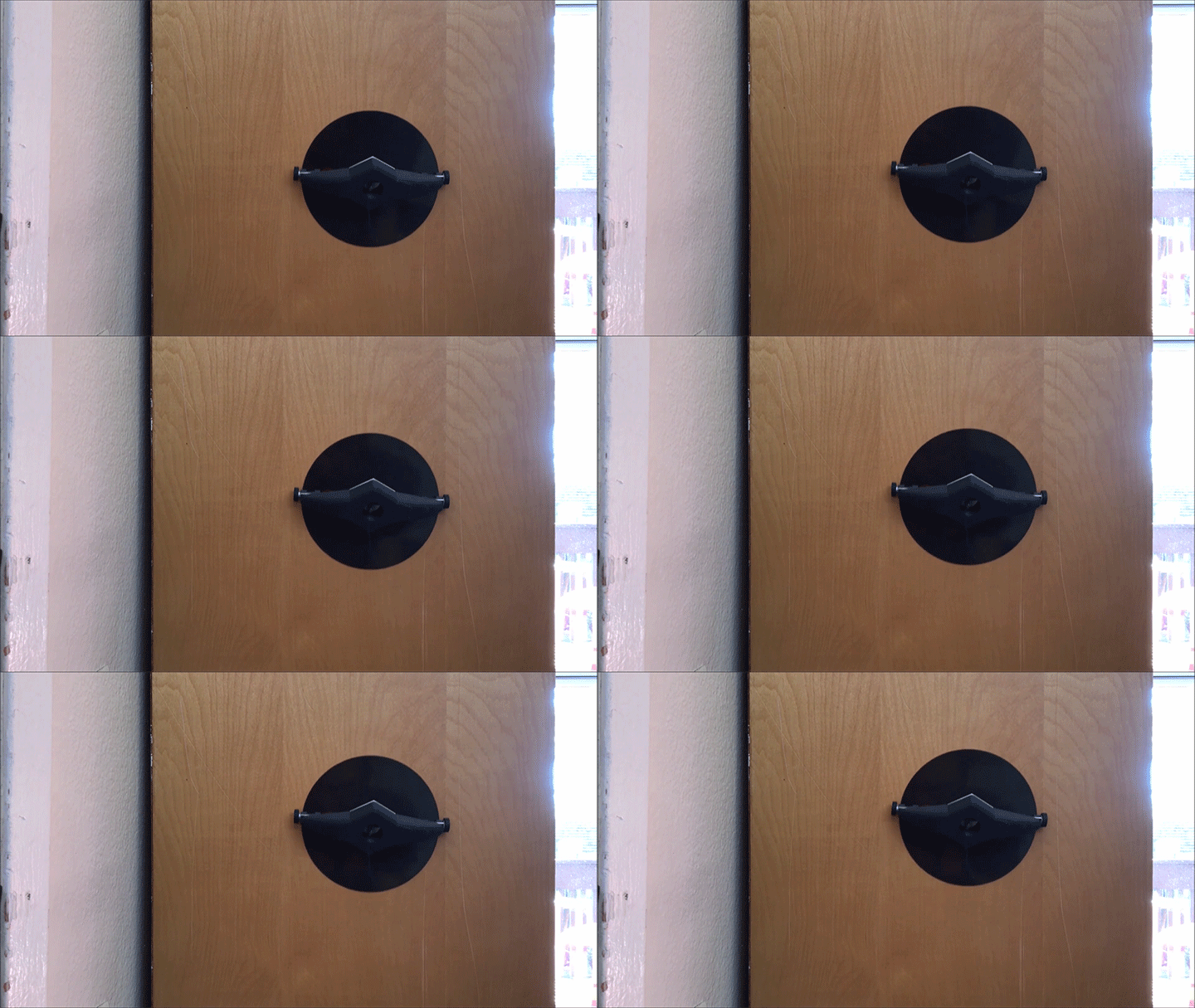
The same physics, it turns out, holds for a layer of viscous fluid. With the right vibration, the denser fluid can levitate stably over a layer of air. Inside this vibrating layer, the rules of buoyancy are a little different because the vibration modifies the effects of gravity. As a result, bubbles deep in the liquid layer sink (Image 1). The researchers used this behavior to create their levitating layer (Image 2). The shaking also serves to stabilize objects floating on the underside of the liquid layer, allowing the boat in Image 3 to float upside down! (Image and research credit: B. Apffel et al.; via NYTimes; submitted by multiple sources)

Hot Ice, Buoyancy Tricks, and More DIY Fun
Here’s a smorgasbord of DIY experiments from Dianna at Physics Girl. Some are fluidsy, some aren’t, but all of them give you a chance to stretch your science muscles at home. Personally, I think she saved the best for last with her laser-acoustics demo! (Video credit: Physics Girl)

Shear in Shaken Sands
The dynamics inside a shaken granular material, like sand, are fascinatingly complex. In this study, researchers used x-ray radiograms to peer inside a horizontally-shaken container of sand. They found that the sand soon formed bands of lower density (seen as yellow in the radiogram) near the center of the container. Because these bands show a lot of horizontal movement between grains, they’re known as shear bands.
The shear bands don’t simply stay still, though. One remains more or less stationary at the center, but others split and rise through the upper half of the container. The researchers suggest this migration happens due to gravity; because the shear band is less dense than the material above, it cannot support the weight. Sand sinks into the void, making the less dense region effectively migrate upward. They also suggest that these moving shear bands are responsible for the fluctuations in sand height seen at the surface. (Image credit: beach – RAMillu, radiogram – J. Kollmer et al.; research credit: J. Kollmer et al.)

“Waves”
The “Waves” installation by artist Daniel Palacios appears deceptively simple, just a rope mounted between two motors. But once the motors start spinning, it is anything but. The installation shifts in response to those around it, creating varying numbers of steady, standing waves or even wildly chaotic ones that whistle through the air. It’s a neat visualization of one of the most commonly-measured quantities in physics: the changes in a wave with time. (Video and image credit: D. Palacios; via Flow Vis)

The Tolling of the Atmosphere
Strum a musical instrument and you create a host of vibrations at many different frequencies. The same is true of our atmosphere, which rings at frequencies far too low for us to hear. The first theoretical descriptions of this atmospheric ringing date back two centuries to Pierre-Simon Laplace. A new study provides the first experimental evidence of this atmospheric ringing by analyzing 38 years’ worth of hourly atmospheric data.
The authors found good agreement with the structures predicted by classical theory, but they point out that understanding the mechanisms that drive the ringing requires more research. Since studies of vibrations in the Earth and sun have revealed new dynamics in those systems, it’s likely analyses like these can teach us much more about how our atmosphere functions. (Image credit: NASA; research credit: T. Sakazaki and K. Hamilton; submitted by K. Hamilton)

Shake It!
Vibrate a pool of water, and you’ll get Faraday waves, ripple-like excitations that form their own distinctive pattern compared to the driving vibration. But you don’t have to vibrate a pure liquid to see Faraday waves. A recent study observed them in vibrated earthworms!
Odd as this may sound, the results make sense. When anesthetized (as they were in the experiments), earthworms are essentially a liquid wrapped in an elastic membrane, which is not so different from a droplet held together by surface tension.
But why vibrate earthworms in the first place? It turns out earthworms are a good model organism for studies of vertebrate neural systems, so observing how vibrations propagate through them can provide insight into how our own nervous systems transmit information. (Image, research, and submission credit: I. Maksymov and A. Pototsky)