Tag: numerical simulation

  • Thermal Tides Drive Venusian Winds

    Thermal Tides Drive Venusian Winds

    Venus is a world of extremes. A full rotation of the world takes 243 Earth days, but winds race around the planet at a speed that makes a Category 5 hurricane look sedate. Just what drives these winds has been an ongoing question for planetary scientists. A recent study suggests that tides are a major contributor to this superrotation.

    Unlike Earth’s tides, Venus’s are not gravitational in origin. Instead, Venusian tides are thermal, driven by heating in the sunward side of the atmosphere. This creates a diurnal tide, which cycles once per Venusian day and pumps momentum toward the tops of Venus’s clouds. The new analysis–rooted in both observations and numerical simulation–finds that diurnal tides are the primary driver behind the planet’s incredibly fast winds. (Image credit: NASA/JPL-Caltech; research credit: D. Lai et al.; via Eos)

    Fediverse Reactions
  • Featured Video Play Icon

    ExaWind Simulation

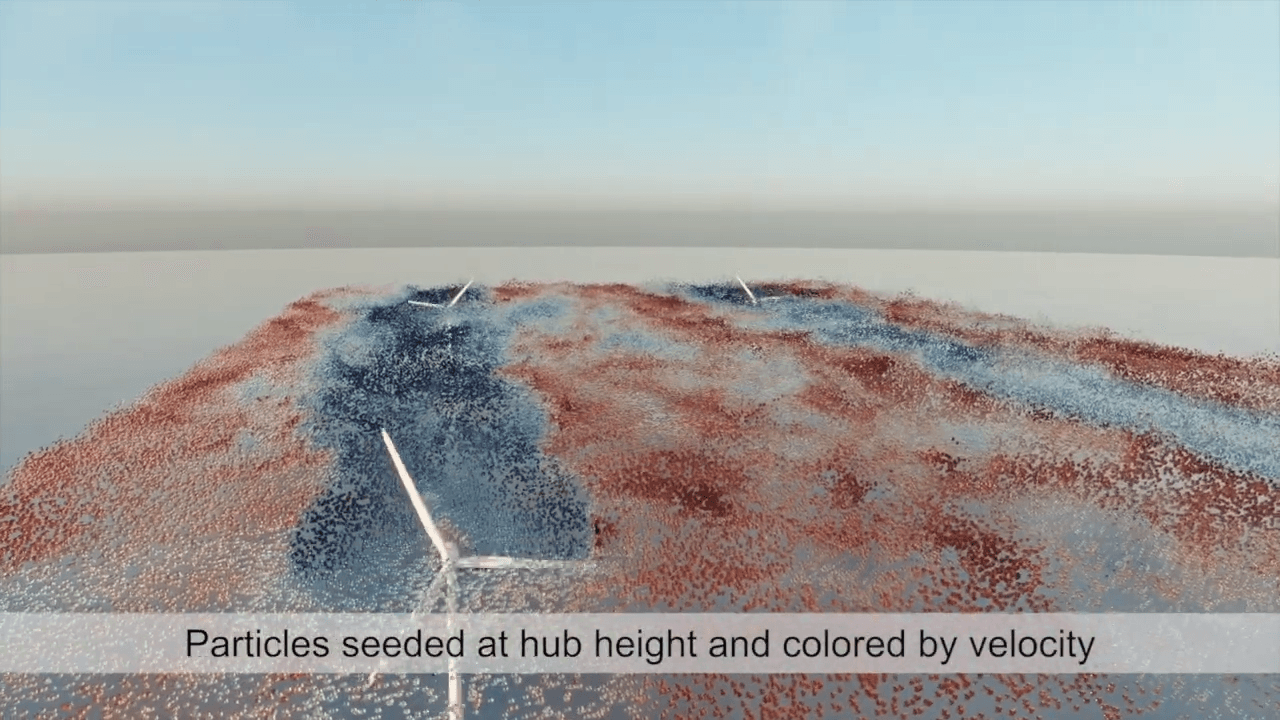
    Large-scale computational fluid dynamics simulations face many challenges. Among them is the need to capture both large physical scales–like those of Earth’s atmospheric boundary layer–and small scales–like those of tiny eddies moving around a wind-turbine blade. Capturing all of these scales for a problem like four wind turbines in a wind farm requires using the full computing power of every processor in a large supercomputer. That’s the level of power behind the simulation visualized in this video. The results, however, are stunning. (Video and image credit: M. da Frahan et al.)

    Fediverse Reactions
  • Oceans Could “Burp” Out Absorbed Heat

    Oceans Could “Burp” Out Absorbed Heat

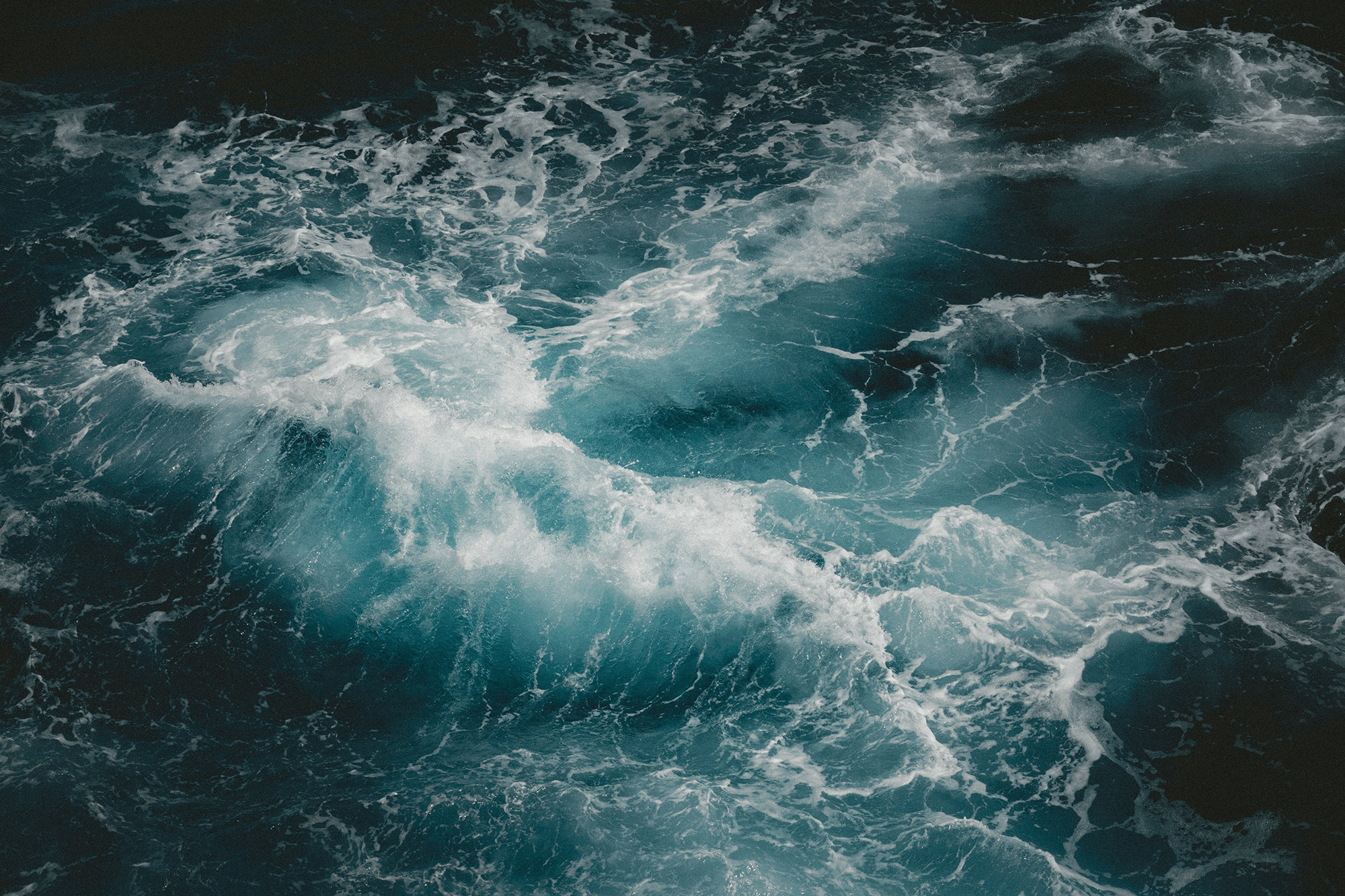
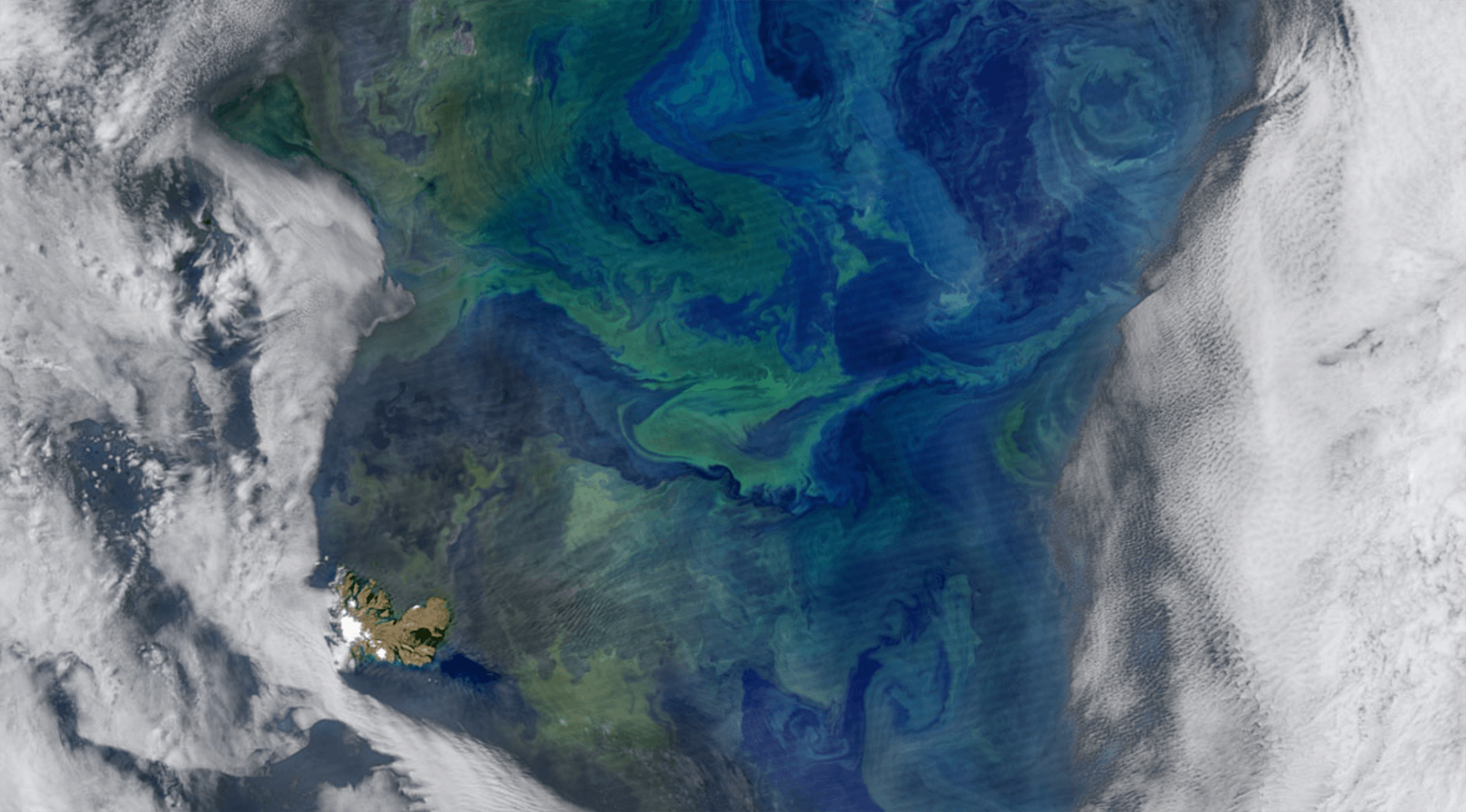
    Earth’s atmosphere and oceans form a complicated and interconnected system. Water, carbon, nutrients, and heat move back and forth between them. As humanity pumps more carbon and heat into the atmosphere, the oceans–and particularly the Southern Ocean–have been absorbing both. A new study looks ahead at what the long-term consequences of that could be.

    The team modeled a scenario where, after decades of carbon emissions, the world instead sees a net decrease in carbon–which could be achieved by combining green energy production with carbon uptake technologies. They found that, after centuries of carbon reduction and gradual cooling, the Southern Ocean could release some of its pent-up heat in a “burp” that would raise global temperatures by tenths of a degree for decades to a century. The burp would not raise carbon levels, though.

    The research suggests that we should continue working to understand the complex balance between the atmosphere and oceans–and how our changes will affect that balance not only now but in the future. (Image credit: J. Owens; research credit: I. Frenger et al.; via Eos)

    Fediverse Reactions
  • Tracing the Origins of Ocean Waters

    Tracing the Origins of Ocean Waters

    The Sub-Antarctic Mode Waters (SAMW) lie in the southern Indian Ocean and the east and central Pacific Ocean, where they serve as an important sink for both heat and carbon dioxide. Scientists have long debated the origins of the SAMW’s waters, and a new study may have an answer.

    Researchers combined data from ocean observations with a model of the Southern Ocean to essentially trace the SAMW’s ingredients back to their respective origins. The results showed that about 70% of the Indian Ocean’s SAMWs came from subtropical waters, but those waters contributed to only about 40% of the Pacific’s SAMWs. Pacific SAMWs had their largest contributions from upwelling circumpolar waters.

    Understanding where a SAMW’s waters came from helps scientists predict how those waters will mix and how much heat and carbon they can absorb. (Image credit: NASA; research credit: B. Fernรกndez Castro et al.; via Eos)

    Fediverse Reactions
  • Roll Waves in Debris Flows

    Roll Waves in Debris Flows

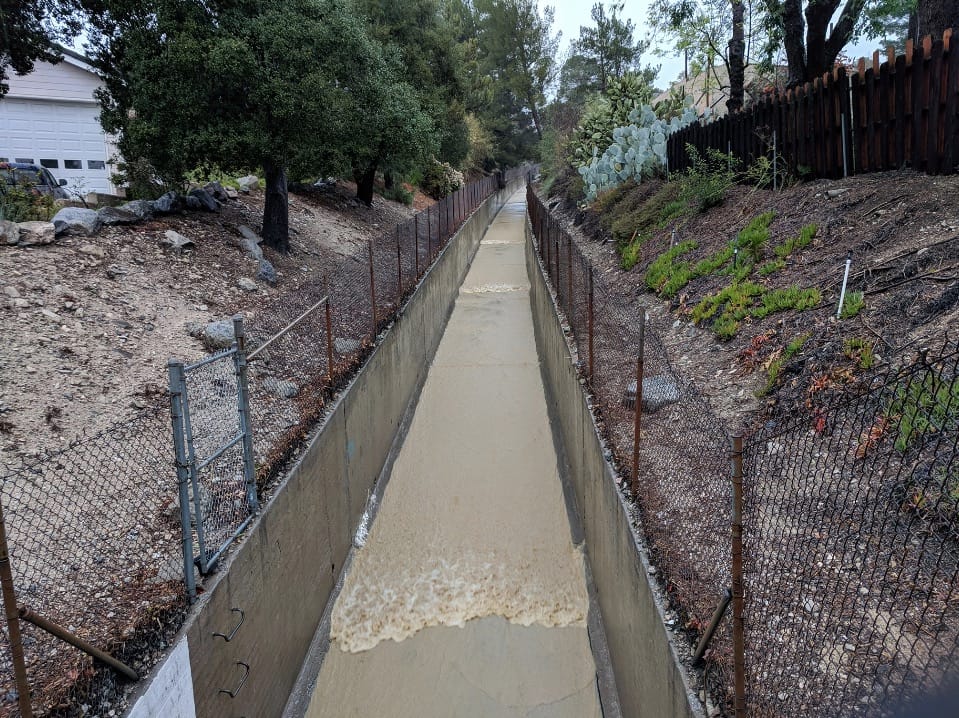
    When a fluid flows downslope, small disturbances in the underlying surface can trigger roll waves, seen above. Rather than moving downstream at the normal wave speed, roll waves surge forward — much like a shock wave — and gobble up every wave in their way.

    Such roll waves are fairly innocuous when flowing down a drainage ditch but far more problematic in the muddy debris flows of a landslide. Debris flows are harder to predict, too, thanks to their combined ingredients of water, small grains, and large debris.

    A new numerical model has shed some light on such debris flows, after showing good agreement with a documented landslide in Switzerland. The model suggests that roll waves get triggered in muddy flows at a higher flow speed than in a dry granular flow but a lower flow speed than is needed in pure water.

    For a great overview of roll waves, complete with videos, check out this post by Mirjam Glessner. (Image credit: M. Malaska; research credit: X. Meng et al.; see also M. Glessmer; via APS)

    Fediverse Reactions
  • Bow Shock Instability

    Bow Shock Instability

    There are few flows more violent than planetary re-entry. Crossing a shock wave is always violent; it forces a sudden jump in density, temperature, and pressure. But at re-entry speeds this shock wave is so strong the density can jump by a factor of 13 or more, and the temperature increase is high enough that it literally rips air molecules apart into plasma.

    Here, researchers show a numerical simulation of flow around a space capsule moving at Mach 28. The transition through the capsule’s bow shock is so violent that within a few milliseconds, all of the flow behind the shock wave is turbulent. Because turbulence is so good at mixing, this carries hot plasma closer to the capsule’s surface, causing the high temperatures visible in reds and yellows in the image. Also shown — in shades of gray — is the vorticity magnitude of flow around the capsule. (Image credit: A. รlvarez and A. Lozano-Duran)

    Fediverse Reactions
  • Stunning Interstellar Turbulence

    Stunning Interstellar Turbulence

    The space between stars, known as the interstellar medium, may be sparse, but it is far from empty. Gas, dust, and plasma in this region forms compressible magnetized turbulence, with some pockets moving supersonically and others moving slower than sound. The flows here influence how stars form, how cosmic rays spread, and where metals and other planetary building blocks wind up. To better understand the physics of this region, researchers built a numerical simulation with over 1,000 billion grid points, creating an unprecedentedly detailed picture of this turbulence.

    The images above are two-dimensional slices from the full 3D simulation. The upper image shows the current density while the lower one shows mass density. On the right side of the images, magnetic field lines are superimposed in white. The results are gorgeous. Can you imagine a fly-through video? (Image and research credit: J. Beattie et al.; via Gizmodo)

  • Escape From Yavin 4

    Escape From Yavin 4

    In an ongoing tradition, let’s take another look at some Star Wars-inspired aerodynamics. This year it’s the TIE fighter’s turn. Here, researchers simulate the spacecraft trying to escape Yavin 4’s atmosphere at Mach 1.15. The research poster’s blue contours show pressure contours, with darker colors connoting higher pressures. The bright low pressure region immediately behind the craft suggests a difficult, high-drag ascent and a turbulent, subsonic wake despite the craft’s supersonic velocity. (Image credit: A. Martinez-Sanchez et al.)

    Fediverse Reactions
  • Kolmogorov Turbulence

    Kolmogorov Turbulence

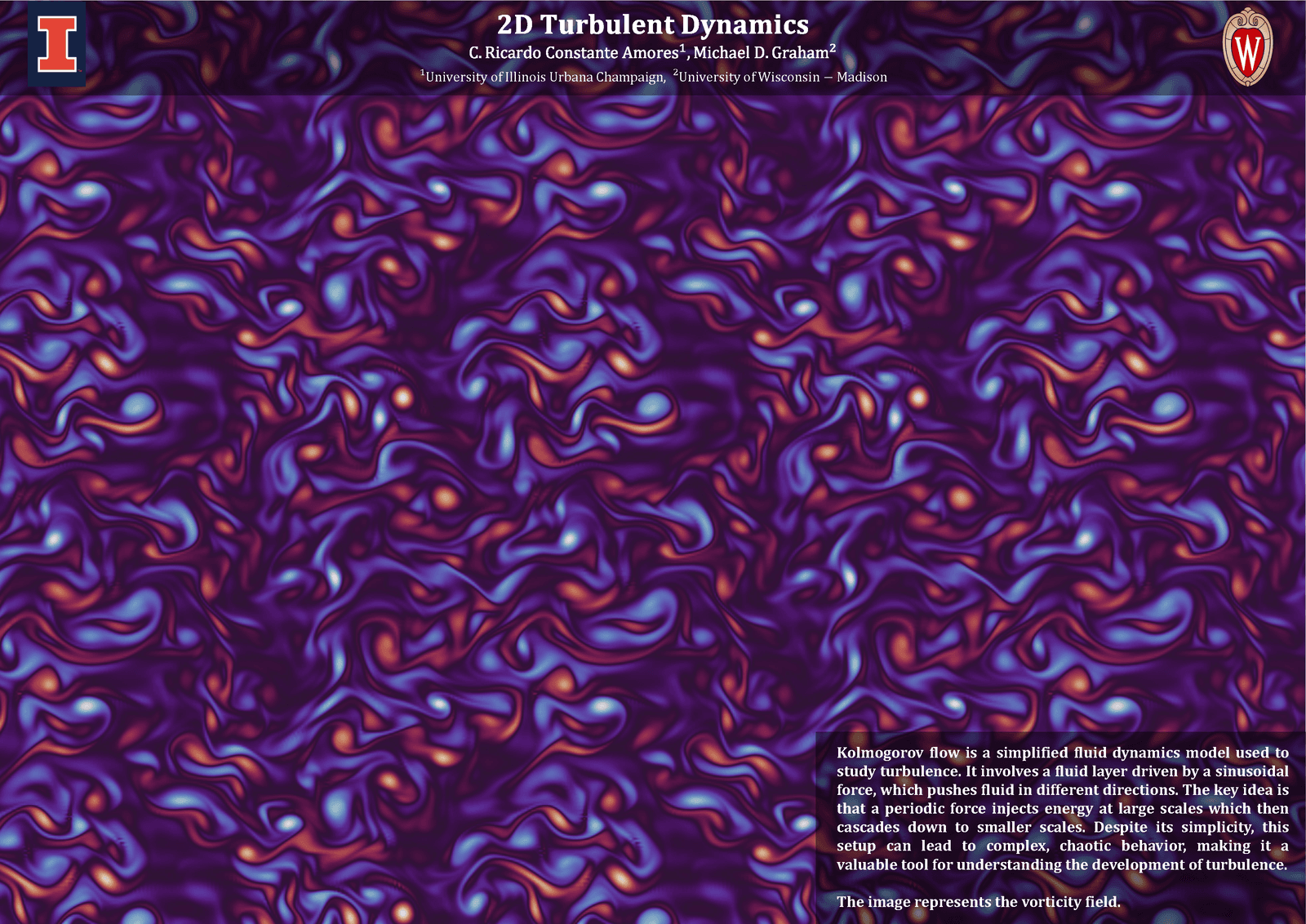
    Turbulent flows are ubiquitous, but they’re also mindbogglingly complex: ever-changing in both time and space across length scales both large and small. To try to unravel this complexity, scientists use simplified model problems. One such simplification is Kolmogorov flow: an imaginary flow where the fluid is forced back and forth sinusoidally. This large-scale forcing puts energy into the flow that cascades down to smaller length scales through the turbulent energy cascade. Here, researchers depict a numerical simulation of a turbulent Kolmogorov flow. The colors represent the flow’s vorticity field. Notice how your eye can pick out both tiny eddies and larger clusters in the flow; those patterns reflect the multi-scale nature of turbulence. (Image credit: C. Amores and M. Graham)

    Fediverse Reactions
  • Featured Video Play Icon

    Galloping Bubbles

    A buoyant bubble rises until it’s stopped by a wall. What happens, this video asks, if that wall vibrates up and down? If the vibration is large enough, the bubble loses its symmetry and starts to gallop along the wall. Using numerical simulations, the team determined the flow around the bubble. They also demonstrate several possible applications for this behavior: sorting bubbles by size, traversing mazes, and cleaning a surface. (Video and image credit: J. Guan et al.)

    Fediverse Reactions