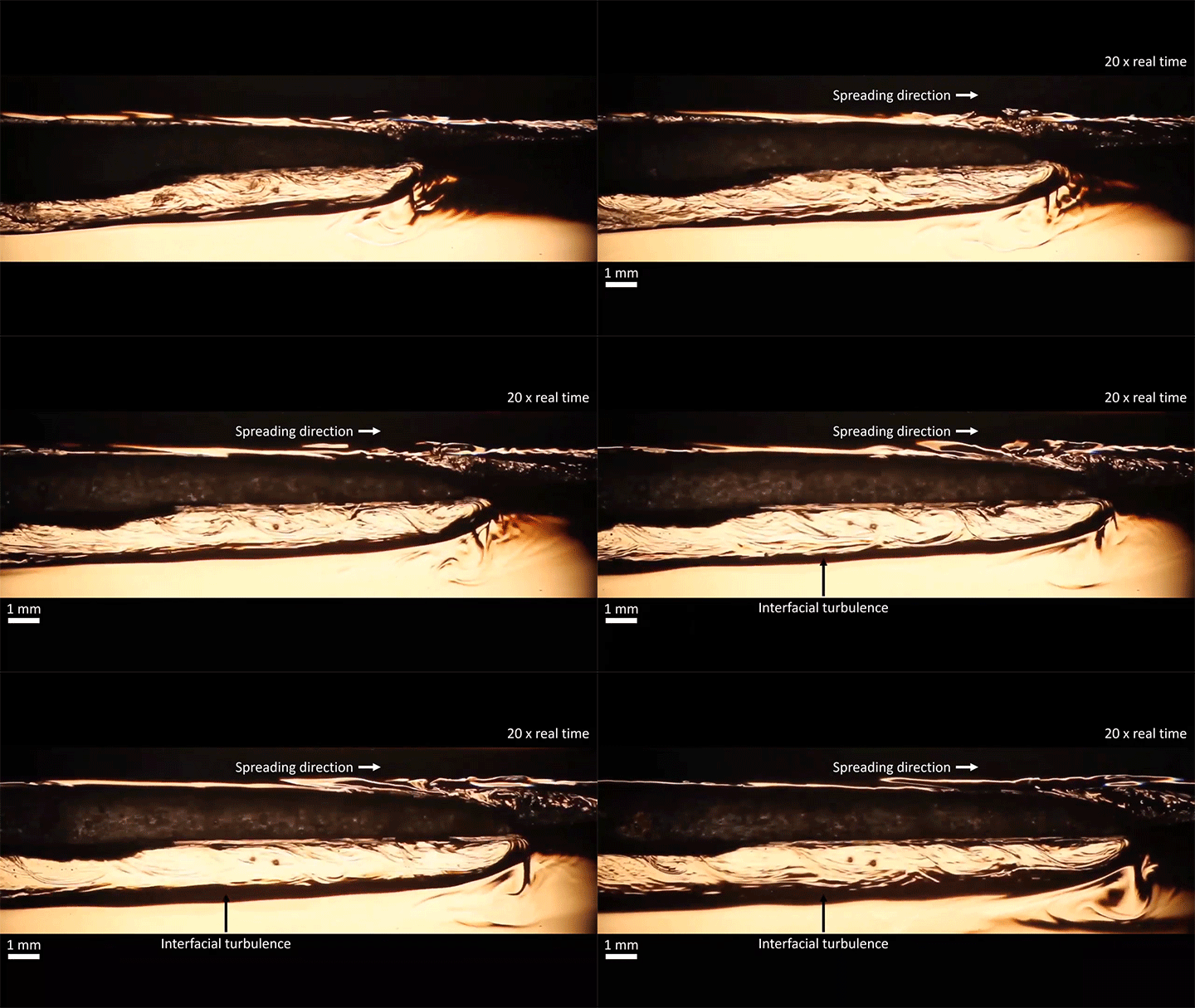
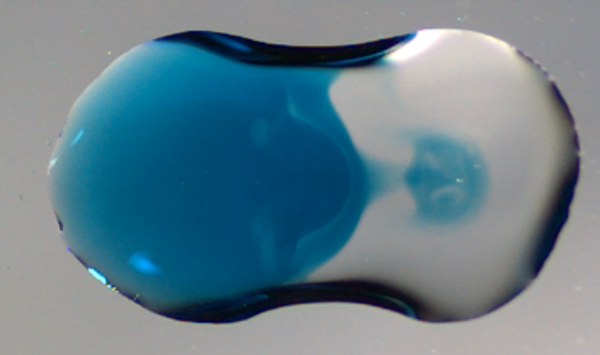
“Liquid Skies” by Roman De Giuli is full of colorful but nebulous fluid imagery. The visuals consist of liquids like paint, ink, and alcohol filmed in macro atop paper. You can catch a behind-the-scenes glimpse of De Giuli at work here. (Image and video credit: R. De Giuli)
Tag: marangoni effect

Why Food Sticks to Nonstick Pans
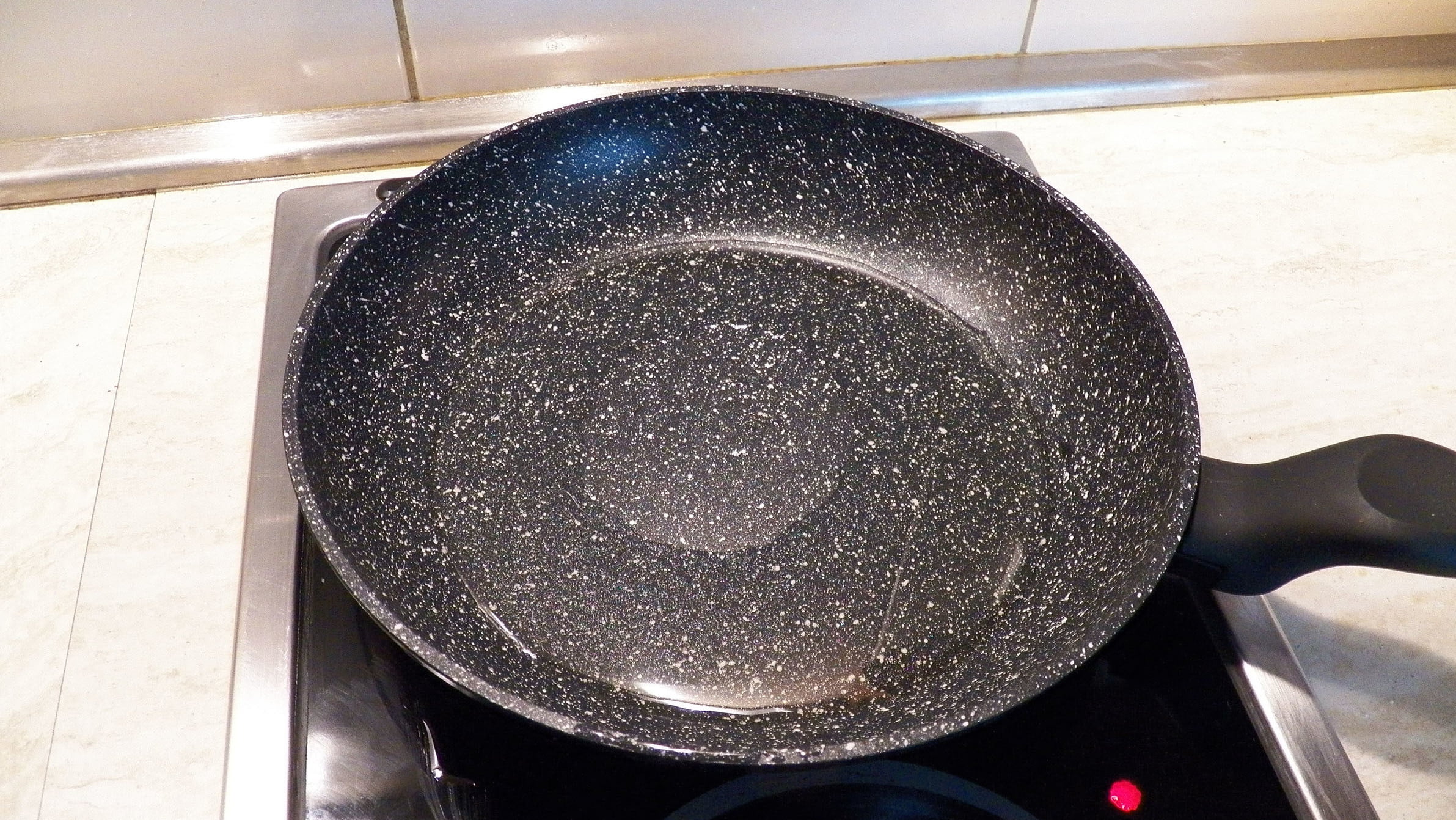
Whether you’re cooking with ceramic, Teflon, or a well-seasoned cast iron pan, it seems like food always wants to stick. It’s not your imagination: it’s fluid dynamics.
As the thin layer of oil in your pan heats up, it doesn’t heat evenly. The oil will be hotter near the center of the burner, which lowers the surface tension of the oil there. The relatively higher surface tension toward the outside of the pan then pulls the oil away from the hotter center, creating a hot dry spot where food can stick.
To avoid this fate, the authors recommend a thicker layer of oil, keeping the burner heat moderate, using a thicker bottomed pan (to better distribute heat), and stirring regularly. (Image and research credit: A. Fedorchenko and J. Hruby)

“Oooh !! My Delicious Coffee”
I’m not a coffee person, but Thomas Blanchard’s “Oooh !! My Delicious Coffee” manages to capture my favorite part of the beverage – watching cream and coffee mix. From feathery flows driven by surface tension to droplets floating like miniature cappuccinos, the short film features many of the fantastical landscapes we find when staring into a coffee cup. But don’t get too eager to drink it; Blanchard used a combination of coffee, oil, and paint to achieve those effects! (Image and video credit: T. Blanchard)

The Vortex Beneath a Drop
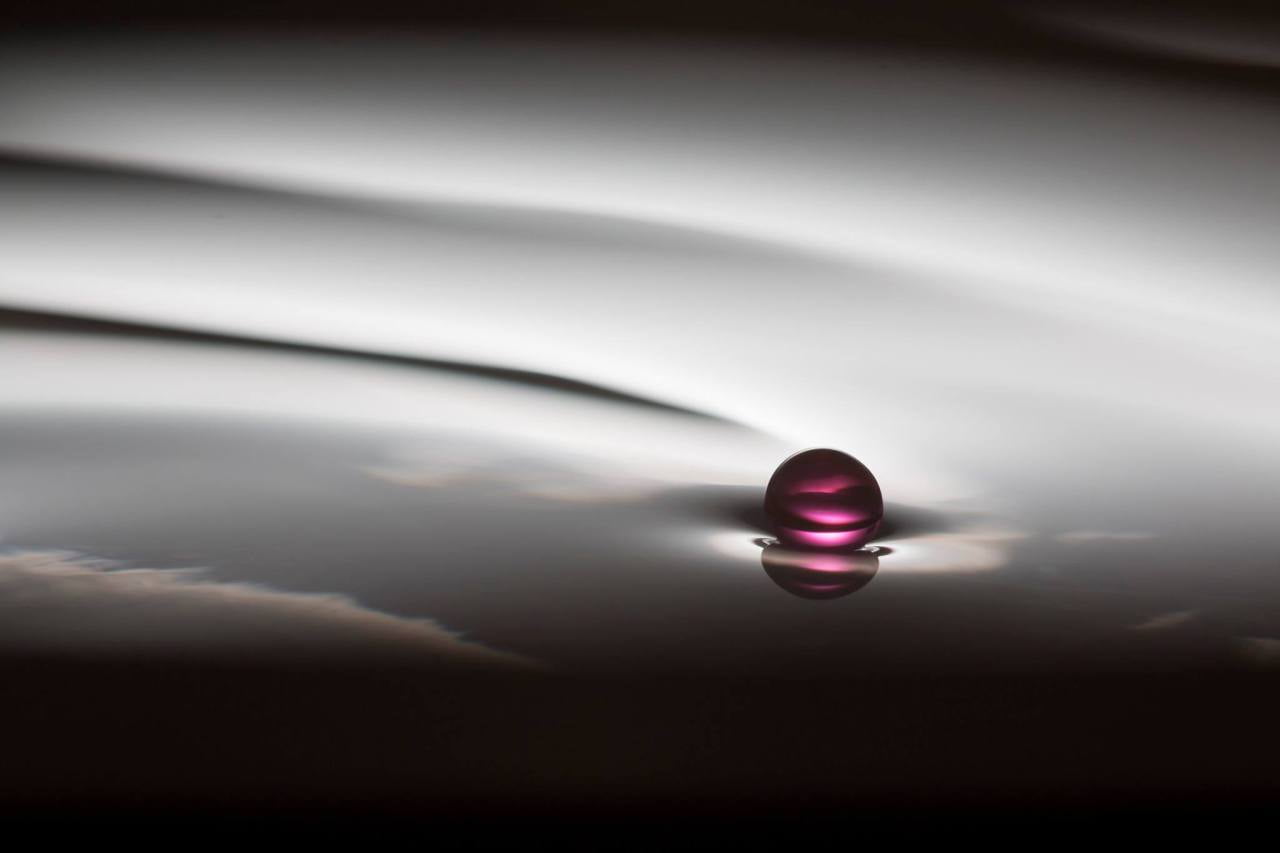
While we’re most used to seeing levitating Leidenfrost droplets on a solid surface, such drops can also form above a liquid bath. In fact, the smoothness of the bath’s surface, combined with mechanisms discussed in a new study, means that drops will levitate at a cooler temperature over a liquid than they will over a solid surface.
Researchers found that a donut-shaped vortex forms in the bath beneath a levitating droplet, but the direction of the vortex’s circulation is not always the same. For some liquids, the flow moves radially outward from beneath the drop. In this case, researchers found that the dominant force was shear stress caused by the vapor escaping from under the droplet.
With other droplet liquids, the flow direction instead moved inward, forming a sinking plume beneath the center of the drop. In this situation, researchers found that evaporative cooling dominated. As the liquid beneath the droplet cooled, it became denser and sank. At the same time, the lower temperature changed the bath’s local surface tension, creating the inward surface flow through the Marangoni effect. (Image credit: F. Cavagnon; research credit: B. Sobac et al.)

Marangoni Bursting
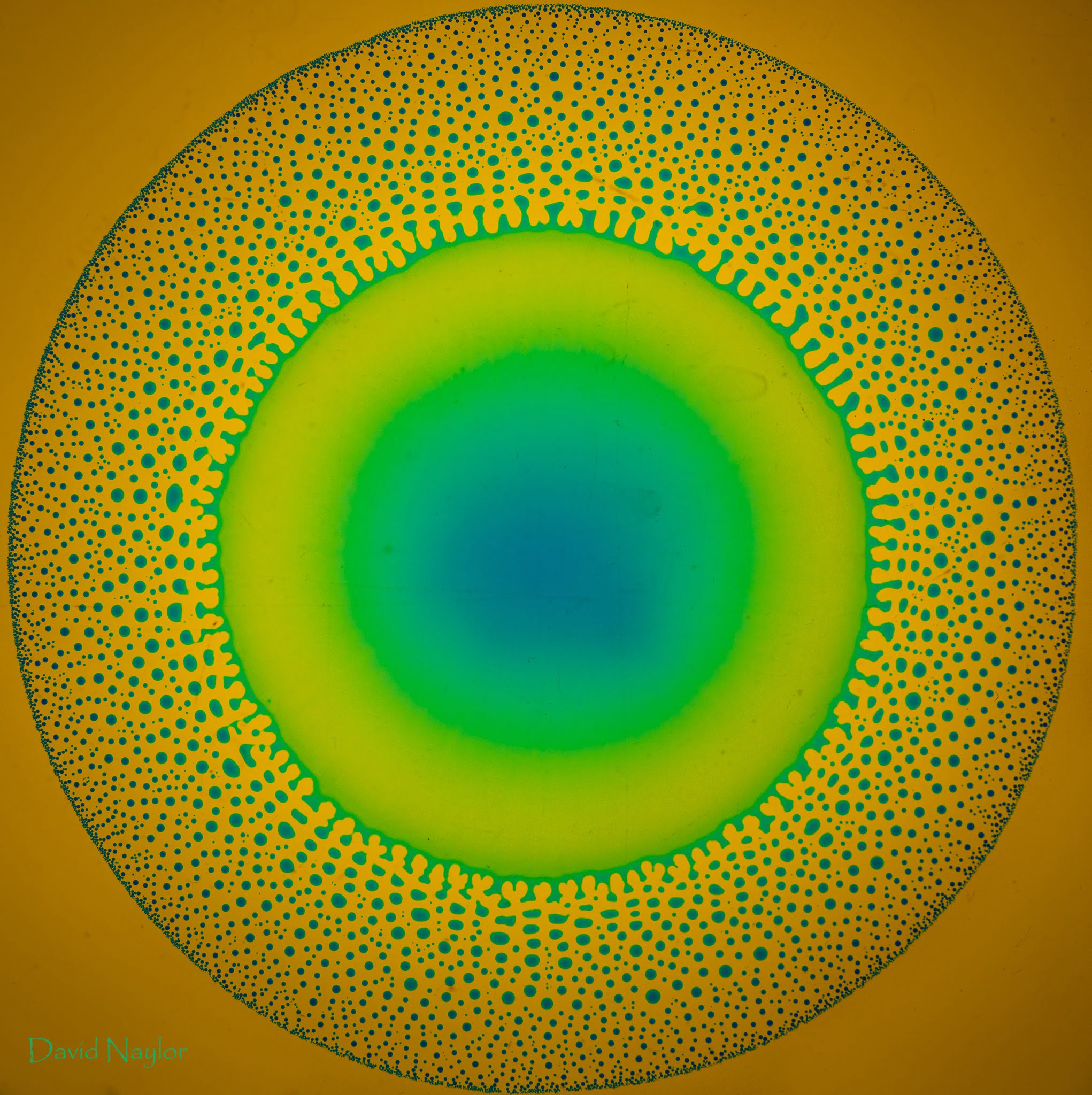
Placing a mixture of alcohol and water atop a pool of oil creates a stunning effect that pulls droplets apart. The action is driven by the Marangoni effect, where variations in surface tension (caused in this case by the relative evaporation rates of alcohol and water) create flow. David Naylor captures some great stills of the flow, including the only example of a double burst I’ve seen so far. For more on the science behind the effect, check out this previous post or the original research paper. (Image credit: D. Naylor; see also this previous post)

Growing Metal Fingers
Eutectic gallium-indium alloy is a room-temperature liquid metal with an extremely high surface tension. Normally, that high surface tension would keep it from spreading easily. But once the metal oxidizes, the surface tension drops. When that oxidation is combined with an electric field, the metal spreads into fingers. The higher the voltage, the more complex the fingering patterns. (Image and video credit: K. Hillaire et al.)

The Birth of a Liquor
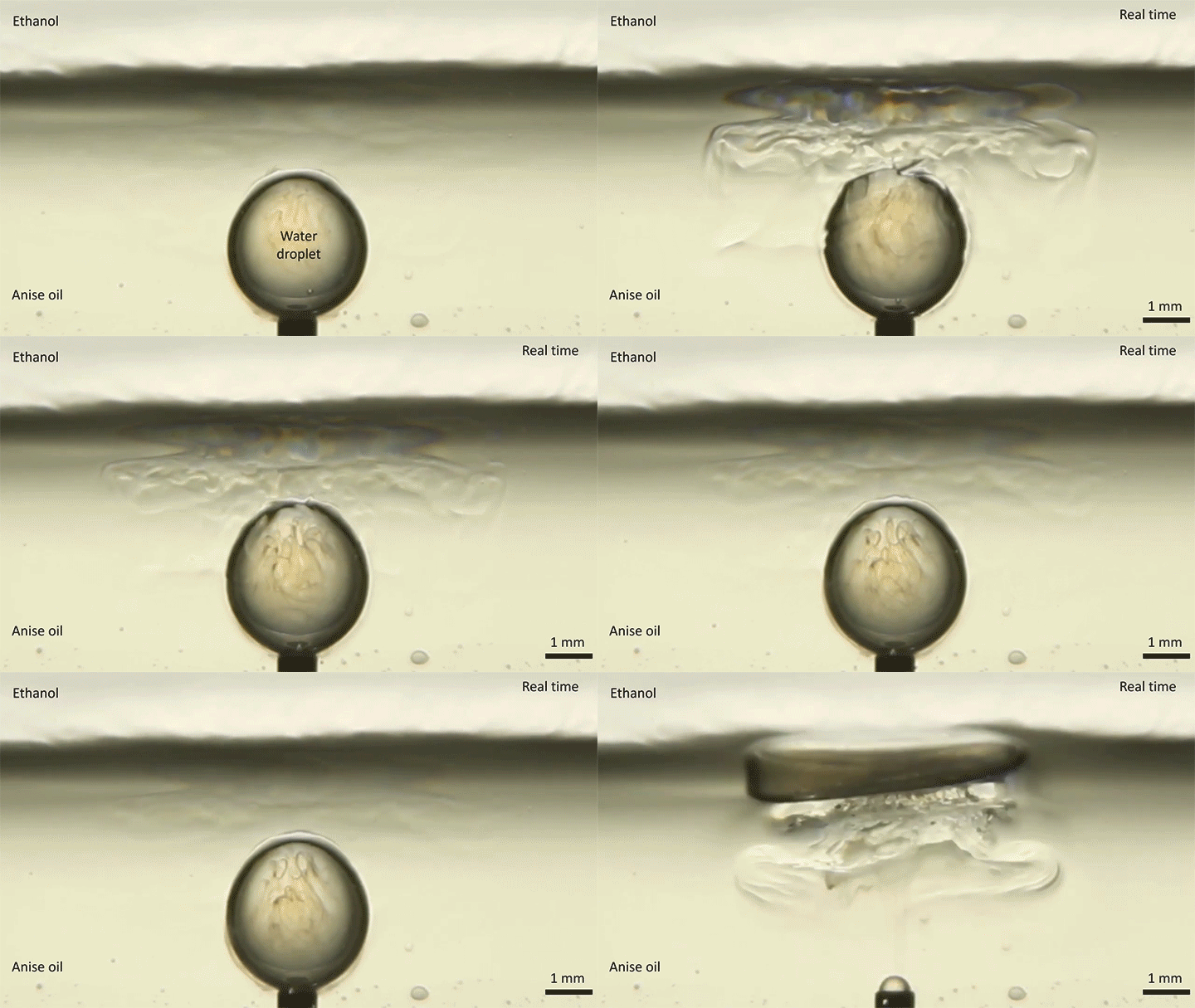
A water droplet immersed in a mixture of anise oil and ethanol displays some pretty complicated dynamics. Its behavior is driven, in part, by the variable miscibility of the three liquids. Water and ethanol are fully miscible, anise oil and ethanol are only partially miscible, and anise oil and water are completely immiscible. These varying levels of miscibility set up a lot of variations in surface tension along and around the droplet, which drives its stretching and eventual jump.
Once detached, the droplet takes on a flattened, lens-like shape that continues to spread. That spreading is driven by the mixing of ethanol and water, which generates heat and, thus, convection around the drop. This not only spreads the droplet, it causes turbulent behavior along the drop’s interface. (Image and video credit: S. Yamanidouzisorkhabi et al.)

Surface Jets in Coalescing Droplets
What goes on when droplets merge is tough to observe, even with a high-speed camera. There are many factors at play: any momentum in the droplets, surface tension, gravity, and Marangoni forces, to name a few. A new study that simultaneously records multiple views of coalescence is shedding some light on these dynamics.
The results are particularly interesting for droplets that are somewhat physically separated so that they only coalesce after one drop impacts near the other. In this situation, with droplets of equal surface tension, researchers observed a jet that forms after impact (Image 1) and runs along the top surface of the coalescing drops (Image 2). That location is a strong indication that the jet is created by surface tension and not other forces.
To test that further, the researchers repeated the experiment but with droplets of unequal surface tension. They found that when the undyed droplet’s surface tension was higher (Image 3), Marangoni forces enhanced the surface jet, as one would expect for a surface-tension-driven phenomenon. But if the dyed droplet had the higher surface tension (Image 4), it was possible to completely suppress the jet’s formation. (Image, research, and submission credit: T. Sykes et al., arXiv)

Whiskey Stains
Complex fluids leave behind fascinating stains after they evaporate. We’ve seen previously how coffee forms rings and whisky forms more complicated stains as surface tension changes during evaporation drive particles throughout the droplet. Now researchers are considering the differences between traditional Scottish whisky, which ages in re-used, uncharred barrels, and American whiskeys like bourbon, which are required to age in new, charred white oak barrels.
When diluted, the American whiskeys form web-like patterns – seen above – that vary from brand to brand, like a fingerprint. The charring of the barrels allows American whiskeys to pick up more water-insoluble molecules compared to whisky aged in uncharred barrels. Since the webbed patterns form in American whiskey but not Scotch whisky, it’s likely those molecules play an important role in the evaporation dynamics and subsequent staining. (Image credit: S. Williams et al.; research credit: S. Williams et al.; via APS Physics; submitted by Kam-Yung Soh)
Inside Tears of Wine
Pour wine or liquor into a glass, give it swirl, and you can watch as droplets form and dance on the walls. This well-known phenomena, often called “tears” or “legs” in wine, results from an interplay of surface tension and evaporation. Despite its common occurrence, researchers are still discovering interesting subtleties in the physics, as seen in new research on the subject.
Dianna walks you through the phenomenon step-by-step in this video. The key piece of physics is the Marangoni effect, the tendency of regions with high surface tension to pull flow from areas with lower surface tension. In the wine glass, evaporation creates this surface tension gradient by removing alcohol more quickly from the meniscus than the bulk. That sets up the gradient that lets the wine climb the glass. By preventing or delaying that evaporation, we can see other neat effects, too, like shock fronts that travel through the film. (Video credit: Physics Girl; research credit: Y. Dukler et al.)