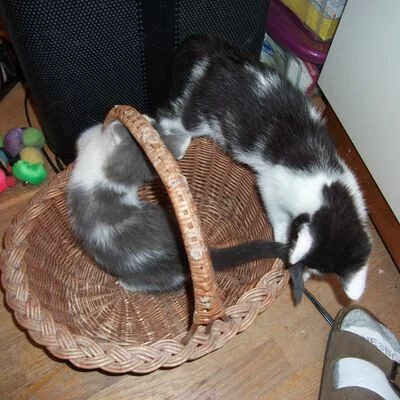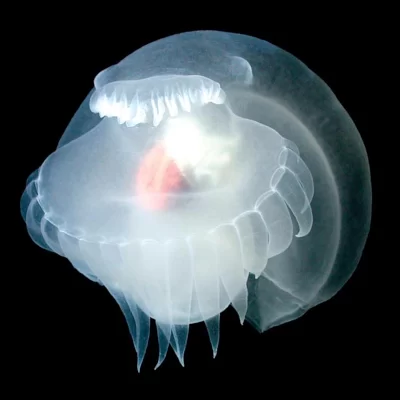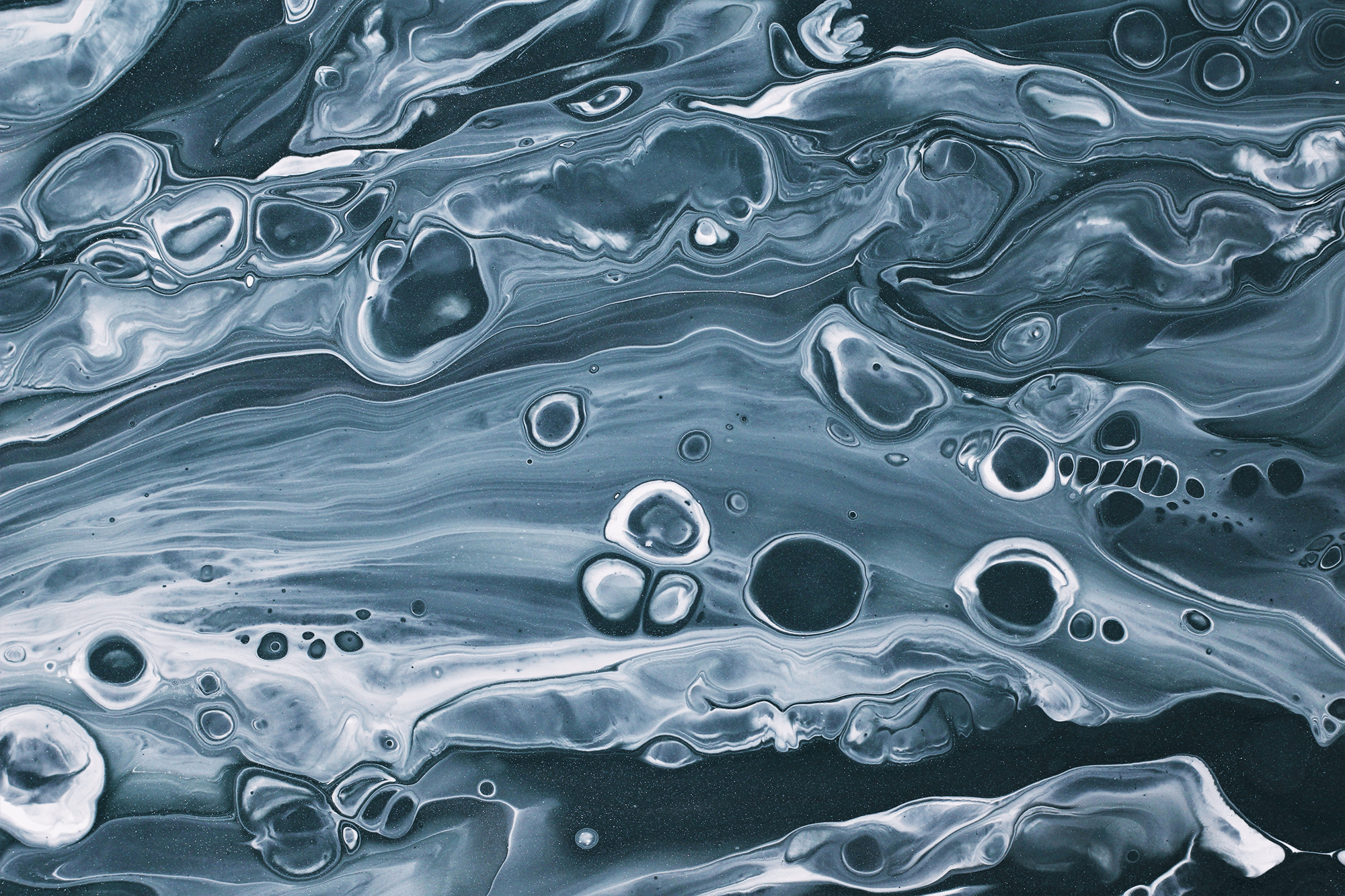
Adding just a little polymer to a pipe flow speeds it up by reducing drag near the wall. But the effects on turbulence away from the wall have been harder to suss out. A new experiment shows that added polymers suppress eddy formation in the flow and reduce how much energy is lost to friction and, ultimately, heat. In particular, the researchers found that polymer stress helped stabilize shear layers in the flow and prevent them from destabilizing into more turbulent flow. (Image credit: S. Wilkinson; research credit: Y. Zhang et al.; via APS)
Tag: instability

The Start of a Supernova
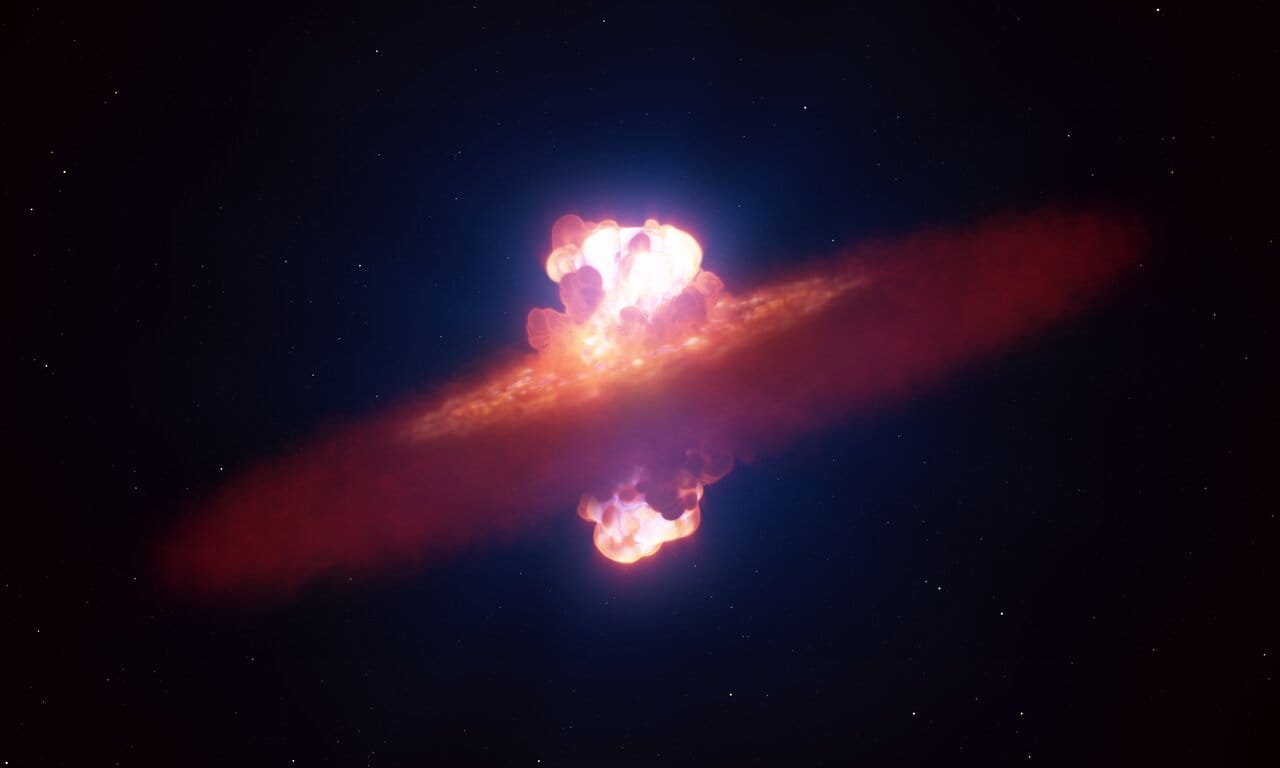
Stars about eight times more massive than our sun end their lives in supernovas, incredible explosions that rip the star apart. The earliest stages of this explosion are something we’ve never observed firsthand, until now. A new study reports observations of the supernova explosion SN 2024ggi, detected here on Earth on 10 April 2024. Only 26 hours later, researchers pointed the Very Large Telescope at it, capture data that revealed its oblong shape as the initial explosion reached the star’s surface.
What you see above and below are not the actual supernova. They are an artist’s conception of the event, based on the researchers’ observation data. That data is enough to rule out several existing supernova models and will no doubt guide new models of star death going forward. (Image credit: ESO/L. Calçada; research credit: Y. Yang et al.; via Gizmodo)
Fediverse Reactions
-

Quantum Rayleigh-Taylor Instability
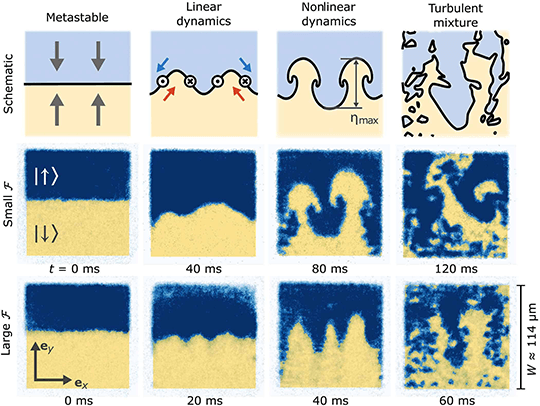
The Rayleigh-Taylor instability–typically marked by mushroom-shaped plumes–occurs when a dense fluid accelerates into a less dense one. But researchers have now demonstrated the effect at quantum scales, too.
For their experiment, the group used a Bose-Einstein condensate of sodium atoms and made the interface between them by exciting half of the atoms into a spin-up state and half into a spin-down one. With the interface is place, they reversed the magnetic field gradient, inducing a force on the atoms equivalent to the buoyant force seen in conventional Rayleigh-Taylor instabilities. As shown above, the interface first warped, then developed Rayleigh-Taylor mushrooms and eventually became turbulent. (Image and research credit: Y. Geng et al.; via Physics World)
Fediverse Reactions
-

“Re:Birth”


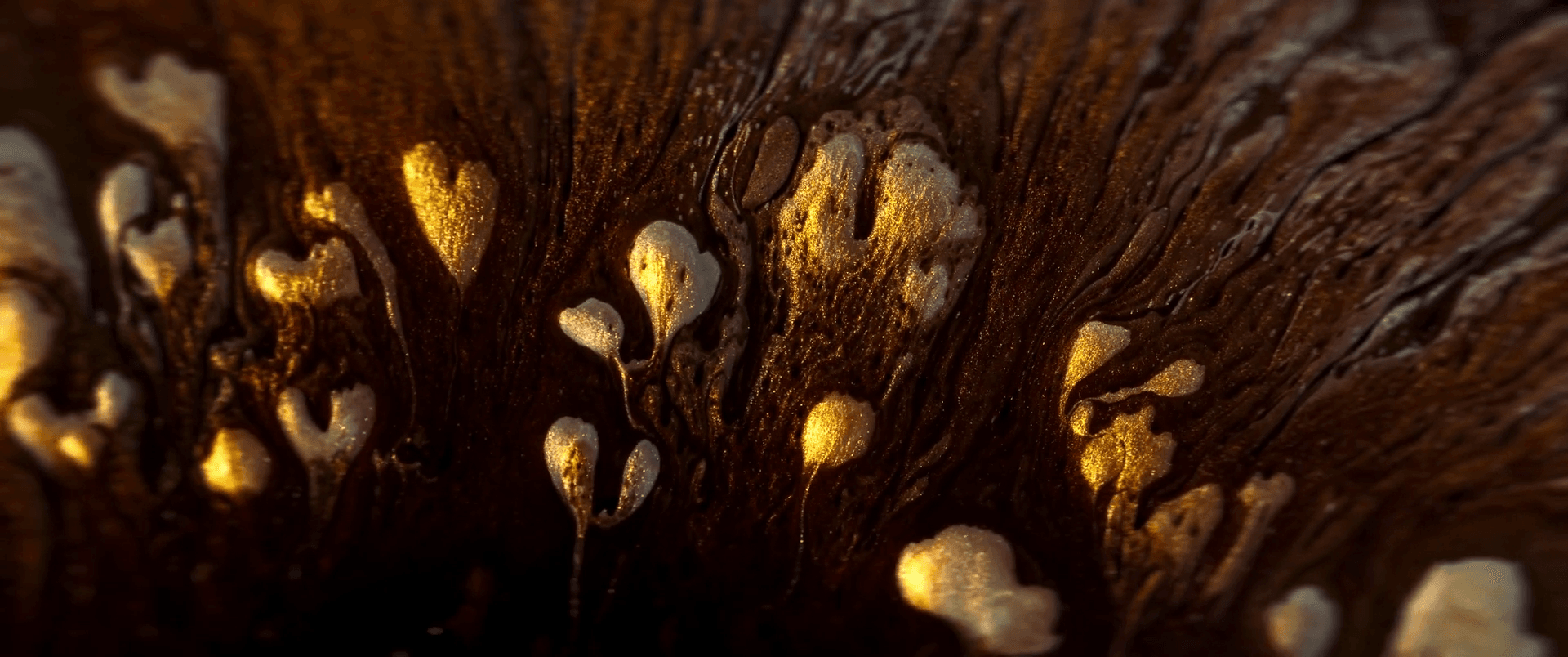

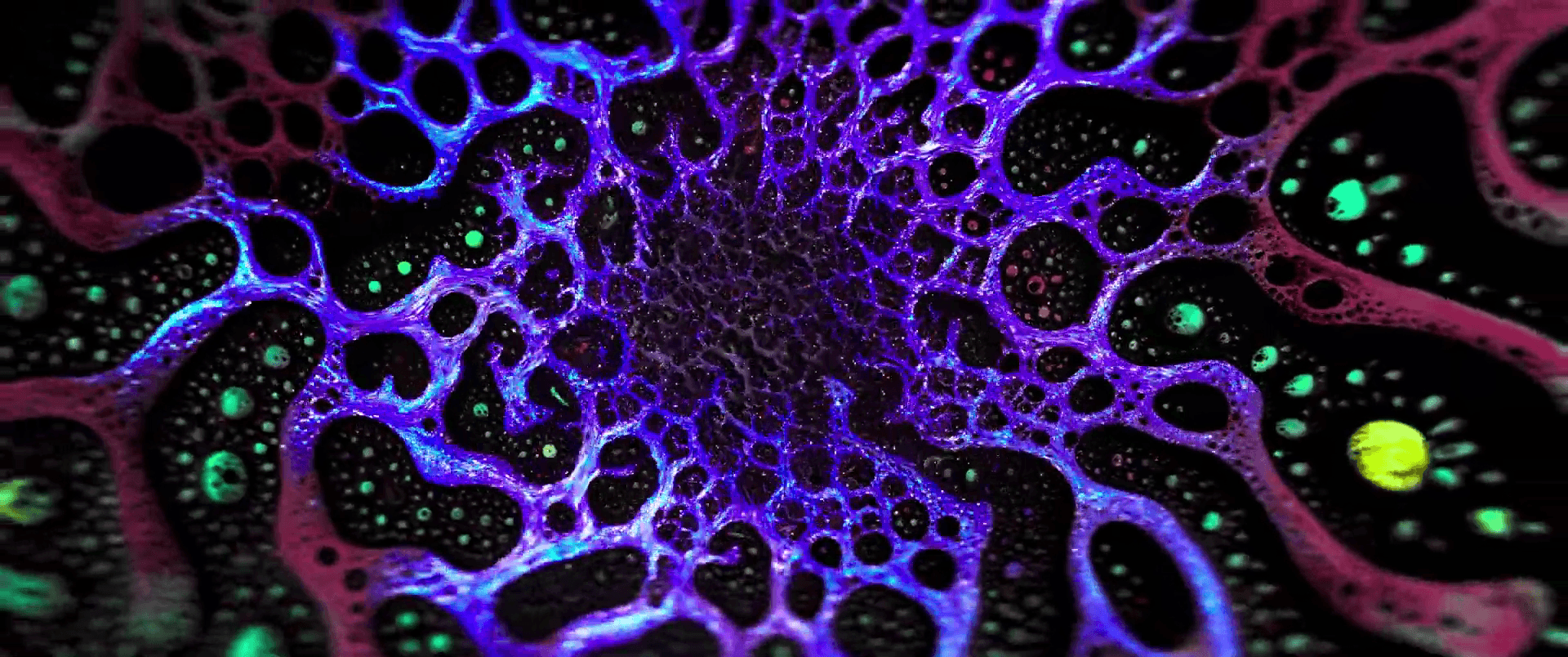
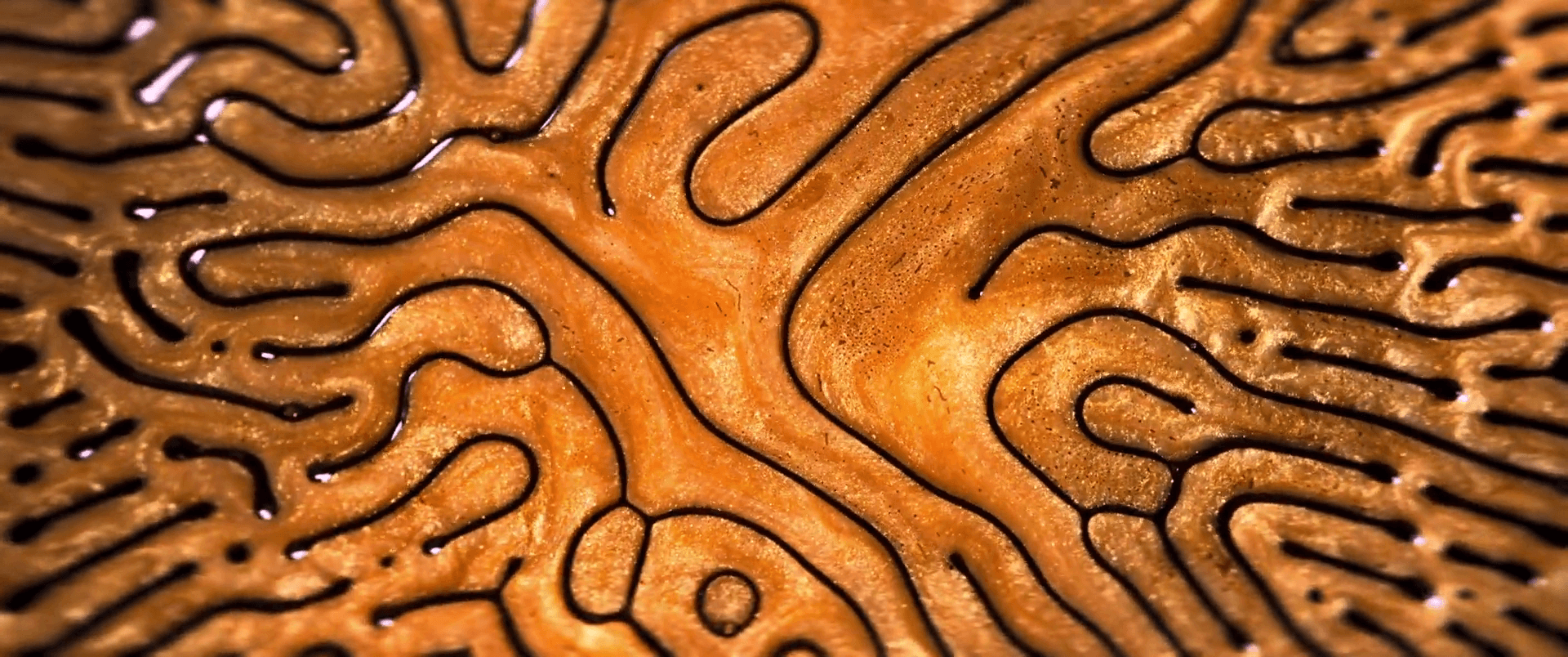
In “Re:Birth,” videographer Vadim Sherbakov explores the fascinating patterns of ferrofluids, which suspend tiny ferrous particles in another liquid, often oil. When this magnetic liquid is mixed with ink or paint, its black lines take on a labyrinthine appearance. The result is rather psychedelic, especially with Sherbakov’s bold colors. (Video and image credit: V. Sherbakov)

Cooling Tower Demolition
As part of the demolition of a decommissioned coal-fired power plant in Nottinghamshire, workers simultaneously demolished eight cooling towers. The video is here. As the towers collapse, smoke and dust gets blown both out of the base and up each tower. The flow details are fascinating. The plumes have rings in them, perhaps related to how the blast’s waves reflect in the tower or how the structure itself fails. Vortex rings curl up as the rising plumes mix with the surrounding air. If you’re anything like me, you’ll have to replay it several times! (Image credit: BBC; submitted by jshoer)
Fediverse Reactions
-

Salty Swirls
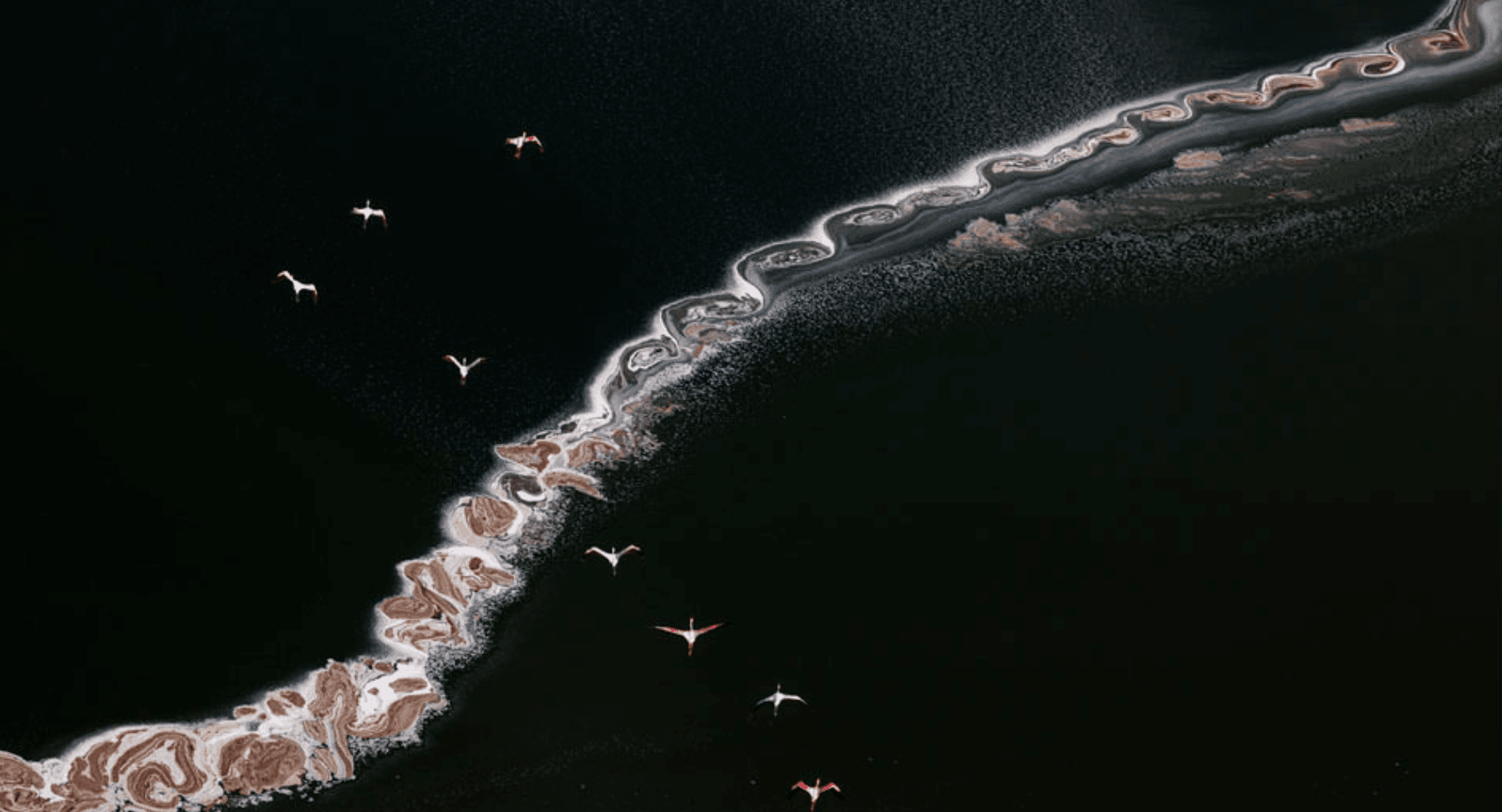
Flamingos soar over swirls of salt and algae in a lake in Kenya’s Rift Valley. Shaped by winds, currents, physics, and chemistry these eddies reflect the motion of the water, evaporation patterns, and more. Without more information, it’s hard to say exactly what shapes the pattern, but it does appear reminiscent of a Kelvin-Helmholtz instability in places. (Image credit: B. Hayden/IAPOTY; via Colossal)
Fediverse Reactions
-
“Sensations”


Beautiful colors, subtle flows, and sudden fractals animate Thomas Blanchard’s “Sensations,” which, like his other short films, is entirely CGI-free. It’s a lovely exploration of droplets, liquid lenses, Marangoni effects, and fingering instabilities. (Video and image credit: T. Blanchard)
Fediverse Reactions
-

Crown Splash
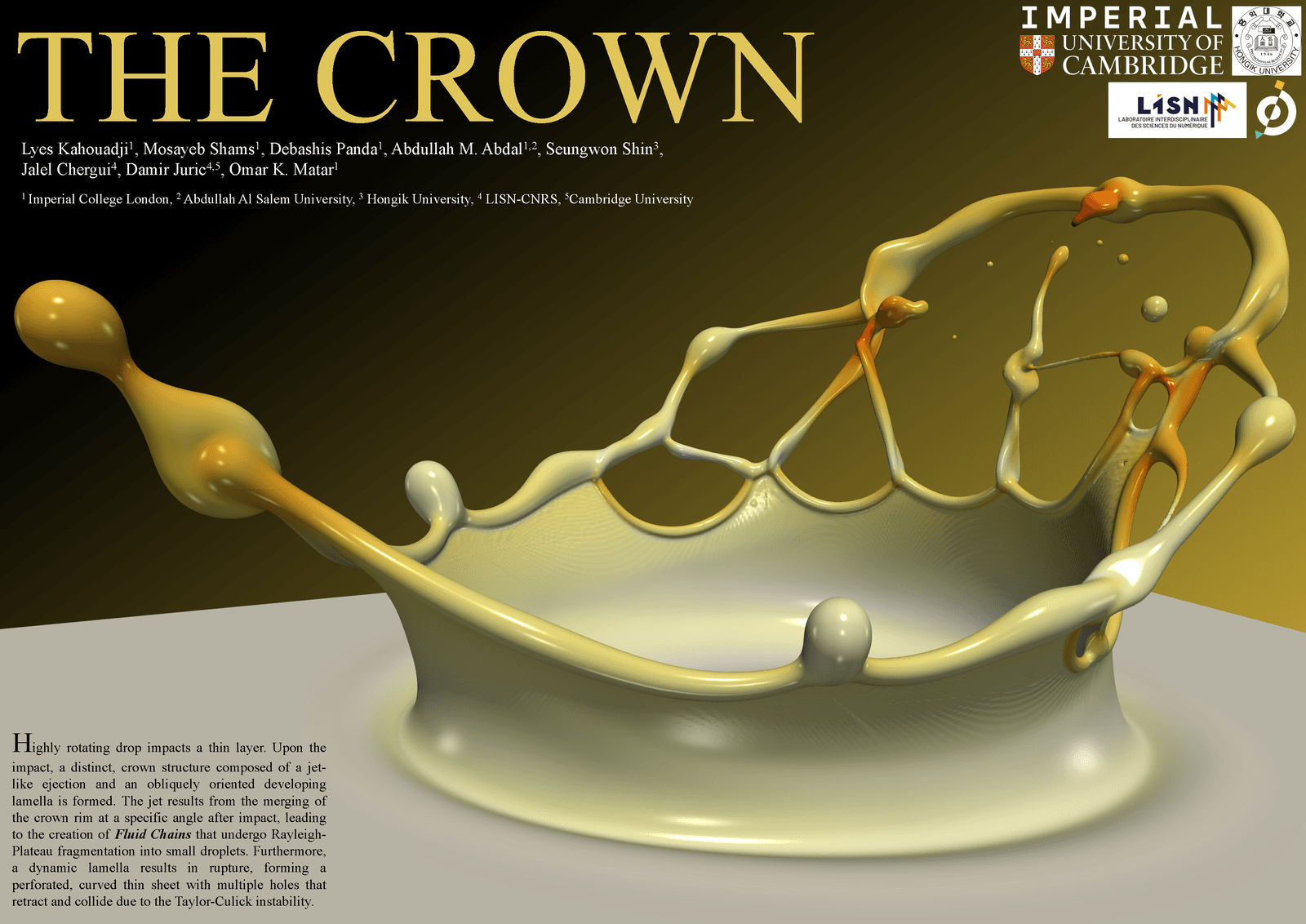
When a falling drop hits a thin layer of water, the impact sends up a thin, crown-shaped splash. This research poster shows a numerical simulation of such a splash in the throes of various instabilities. The crown’s thick edges are undergoing a Rayleigh-Plateau instability, breaking into droplets much the way a dripping faucet does. On the far side, the crown has rapidly expanding holes that pull back and collide. The still-intact liquid sheet at the base of the crown shows some waviness, as well, hinting at a growing instability there. (Image credit: L. Kahouadji et al.)
Fediverse Reactions
-
See the Solar Wind
After a solar prominence erupts, strong solar winds flow outward from the sun, carrying energetic particles that can disrupt satellites and trigger auroras if they make their way toward us. In this video, an instrument onboard the ESA/NASA’s Solar Orbiter captures the solar wind in the aftermath of such an eruption. The features seen here extended 3 solar radii and lasted for hours. The measurements give astrophysicists their best view yet of this post-eruption relaxation period, and the authors report that their measurements are remarkably similar to results of recent magnetohydrodynamics simulations, suggesting that those simulations are accurately capturing solar physics. (Video and image credit: ESA; research credit: P. Romano et al.; via Gizmodo)
Fediverse Reactions
-

Bow Shock Instability
There are few flows more violent than planetary re-entry. Crossing a shock wave is always violent; it forces a sudden jump in density, temperature, and pressure. But at re-entry speeds this shock wave is so strong the density can jump by a factor of 13 or more, and the temperature increase is high enough that it literally rips air molecules apart into plasma.
Here, researchers show a numerical simulation of flow around a space capsule moving at Mach 28. The transition through the capsule’s bow shock is so violent that within a few milliseconds, all of the flow behind the shock wave is turbulent. Because turbulence is so good at mixing, this carries hot plasma closer to the capsule’s surface, causing the high temperatures visible in reds and yellows in the image. Also shown — in shades of gray — is the vorticity magnitude of flow around the capsule. (Image credit: A. Álvarez and A. Lozano-Duran)
Fediverse Reactions
-