Tag: geophysics

  • Geoengineering Trials Must Consider Unintended Costs

    Geoengineering Trials Must Consider Unintended Costs

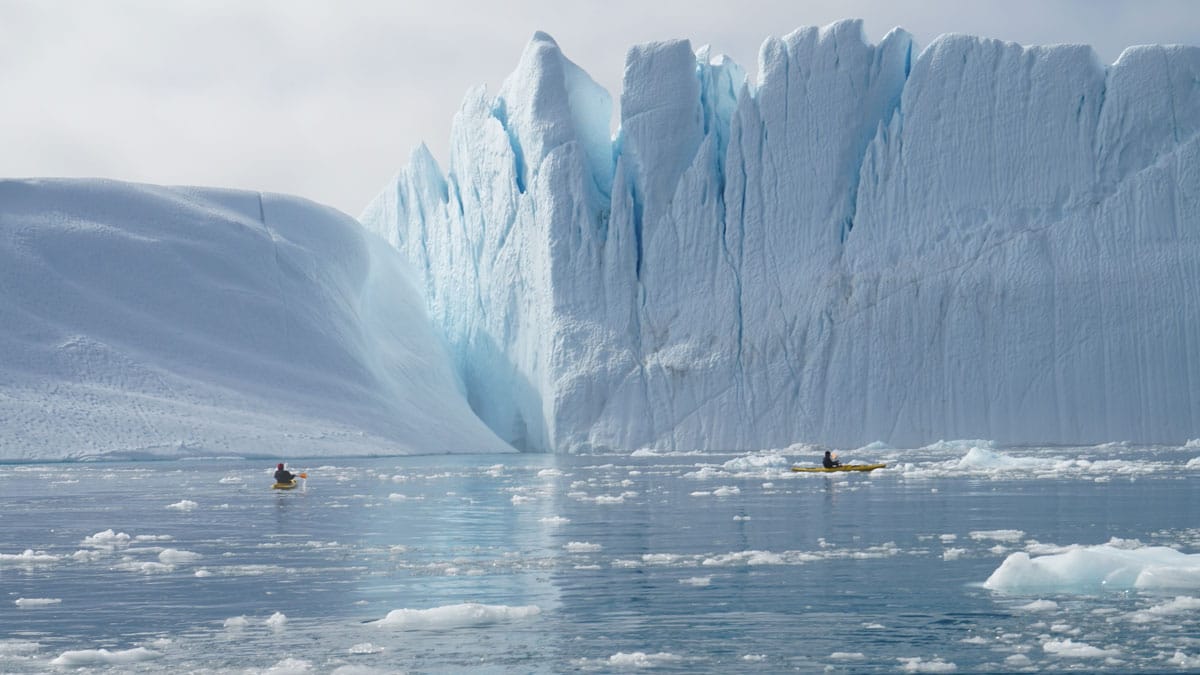
    As the implications of climate change grow more dire, interest in geoengineering–trying to technologically counter or mitigate climate change–grows. For example, some have suggested that barriers near tidewater glaciers could restrict the inflow of warmer water, potentially slowing the rate at which a glacier melts. But there are several problems with such plans, as researchers point out.

    Firstly, there’s the technical feasibility: could we even build such barriers? In many cases, geoengineering concepts are beyond our current technology levels. Burying rocks to increase a natural sill across a fjord might be feasible, but it’s unclear whether this would actually slow melting, in part because our knowledge of melt physics is woefully lacking.

    But unintended consequences may be the biggest problem with these schemes. Researchers used existing observations and models of Greenland’s Ilulissat Icefjord, where a natural sill already restricts inflow and outflow from the fjord, to study downstream implications. Right now, the fjord’s discharge pulls nutrients from the deep Atlantic up to the surface, where a thriving fish population supports one of the country’s largest inshore fisheries. As the researchers point out, restricting the fjord’s discharge would almost certainly hurt the fishing industry, at little to no benefit in stopping sea level rise.

    Because our environment and society are so complex and interconnected, it’s critical that scientists and policymakers carefully consider the potential impacts of any geoengineering project–even a relatively localized one. (Research and image credit: M. Hopwood et al.; via Eos)

    Fediverse Reactions
  • Waves Over Sand Ripples

    Waves Over Sand Ripples

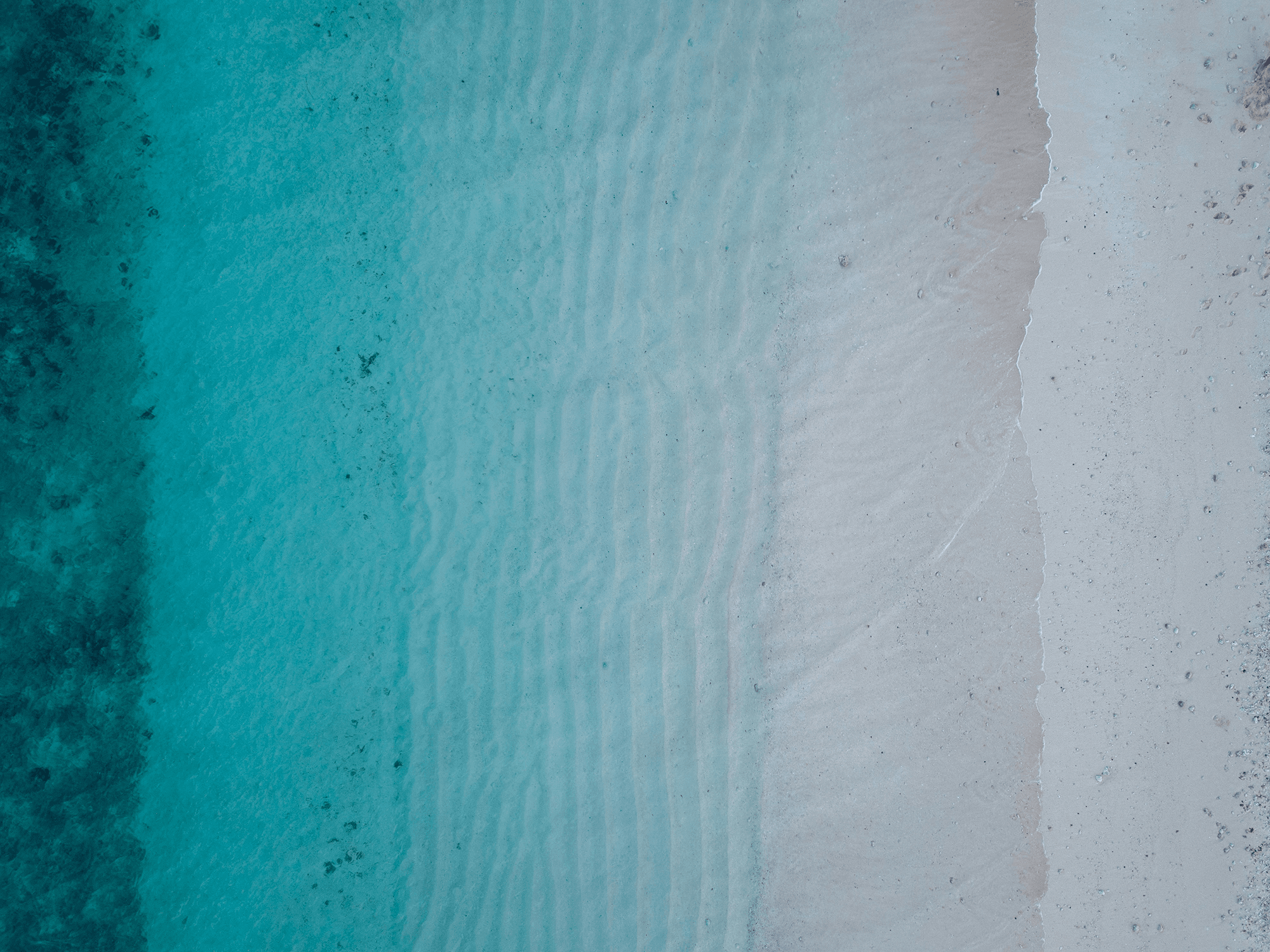
    Look beneath the waves on a beach or in a bay, and you’ll find ripples in the sand. Passing waves shape these sandforms and can even build them to heights that require dredging to keep waterways passable to large ships. To better understand how the sand interacts with the flow, researchers build computer models that couple the flow of the water with the behavior of individual sand grains. One recent study found that sand grains experienced the most shear stress as the flow first accelerates and then again when a vortex forms near the crest of the ripple. (Image credit: D. Hall; research credit: S. DeVoe et al.; via Eos)

    Fediverse Reactions
  • Sand Dikes Can Date Earthquakes

    Sand Dikes Can Date Earthquakes

    When a strong earthquake causes liquefaction, sand can intrude upward, leaving behind a feature that resembles an upside-down icicle. Known as a sand dike, researchers suspected that these intrusions could help us date ancient earthquakes. A new study shows how and why this is possible.

    Using optically stimulated luminescence, researchers had already dated quartz in sand dikes and found that it appeared to be younger than the surrounding rock formations. But that information alone was not enough to tie the sand dike’s age to the earthquake that caused it.

    The final puzzle piece fell into place when researchers showed that, during a sand dike’s formation, friction between sand grains could raise the temperature higher than 350 degrees Celsius. That temperature is high enough to effectively “reset” the age that luminescence dates the quartz to. Since the quartz likely wouldn’t have had another reset since the earthquake that put it in the sand dike, this means scientists can date the sand dikes themselves to determine when an earthquake occurred. (Image credit: Northisle/Wikimedia Commons; research credit: A. Tyagi et al.; via Eos)

    Fediverse Reactions
  • Featured Video Play Icon

    Liquefaction in Earthquakes

    In an earthquake, sand and soil particles get jostled together, forcing any water between them up toward the surface. The result is liquefaction, a state where once-solid ground starts to behave much like a liquid. Buildings can tip over and pipelines get pushed toward the surface. In this video, a geologist shows off some great demonstrations of the effect, including ones that can be easily done in a classroom with younger kids. (Video credit: California Geological Survey)

    Fediverse Reactions
  • Icelandia

    Icelandia

    Photographer Rosita Dimitrova describes Iceland as “an absolute heaven” for aerial photography like this featured image. This plethora of images from Dimitrova and fellow IAPOTY finalists backs up that sentiment. The landscape wears its influences openly; it is shaped by water, ice, wind, and lava into stunning abstract shapes like these. (Image credit: Various/IAPOTY; via Colossal)

    Fediverse Reactions
  • A Braided River

    A Braided River

    The Yarlung Zangbo River winds through Tibet as the world’s highest-altitude major river. Parts of it cut through a canyon deeper than 6,000 meters (three times the depth of the Grand Canyon). And other parts, like this section, are braided, with waterways that shift rapidly from season to season. The swift changes in a braided river’s sandbars come from large amounts of sediment eroded from steep mountains upstream. As that sediment sweeps downstream, some will deposit, which narrows channels and can increase their scouring. The river’s shape quickly becomes a complicated battle between sediment, flow speed, and slope. (Image credit: M. Garrison; animation credit: R. Walter; via NASA Earth Observatory)

    Animation of the changing waterways of a braided river.
    Fediverse Reactions
  • Earth’s Core is Leaking

    Earth’s Core is Leaking

    In Earth’s primordial days, liquid iron fell through the ball of magma that was our planet, collecting elements–like ruthenium-100–that are attracted to iron. All of that material ended up in Earth’s outer core, a dense sea of liquid metal that geoscientists assumed was unable to cross into the lighter mantle. But recent observations suggest instead that core material is making its way to the surface.

    Measurements from volcanic rocks in the Galapagos Islands, Hawai’i, and Canada’s Baffin Island all contain ruthenium isotopes associated with that primordial core material, indicating that that magma came from the core, not the mantle. Separately, seismic analyses suggest that this material could be crossing through continent-sized blobs of warm, large-grained crystals caught deep below Africa and the Pacific, at the boundary between the mantle and the outer core. For more, check out this Quanta Magazine article. (Image credit: B. Andersen; research credit: N. Messling et al. and S. Talavera-Soza et al.; via Quanta)

    Fediverse Reactions
  • Roll Waves in Debris Flows

    Roll Waves in Debris Flows

    When a fluid flows downslope, small disturbances in the underlying surface can trigger roll waves, seen above. Rather than moving downstream at the normal wave speed, roll waves surge forward — much like a shock wave — and gobble up every wave in their way.

    Such roll waves are fairly innocuous when flowing down a drainage ditch but far more problematic in the muddy debris flows of a landslide. Debris flows are harder to predict, too, thanks to their combined ingredients of water, small grains, and large debris.

    A new numerical model has shed some light on such debris flows, after showing good agreement with a documented landslide in Switzerland. The model suggests that roll waves get triggered in muddy flows at a higher flow speed than in a dry granular flow but a lower flow speed than is needed in pure water.

    For a great overview of roll waves, complete with videos, check out this post by Mirjam Glessner. (Image credit: M. Malaska; research credit: X. Meng et al.; see also M. Glessmer; via APS)

    Fediverse Reactions
  • Uranus Emits More Than Thought

    Uranus Emits More Than Thought

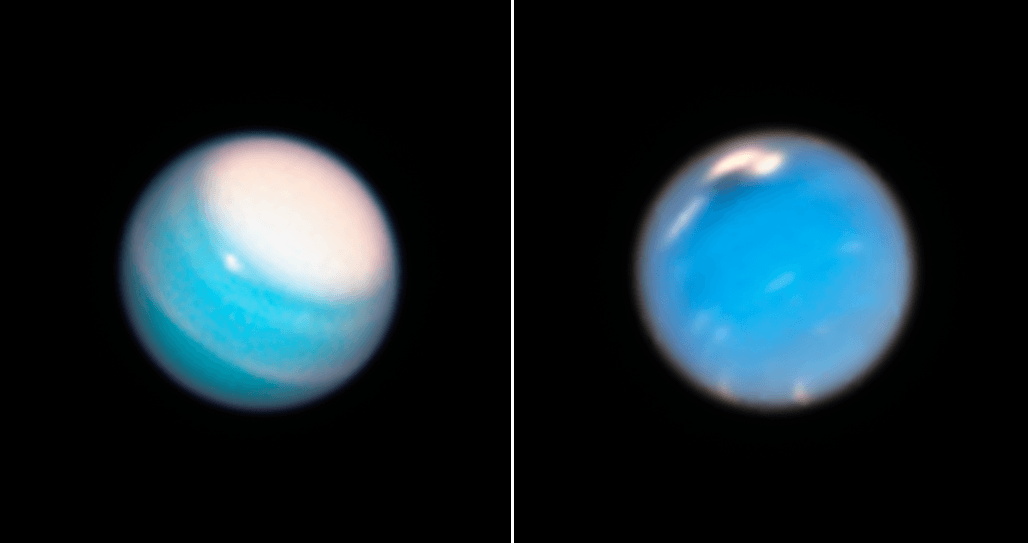
    Since Voyager 2 visited Uranus in 1986, scientists have debated the odd ice giant’s heat balance. The other giant planets of our solar system — Jupiter, Saturn, and Neptune — all emit much more heat than they absorb from the sun, indicating that they have strong internal heat sources. Voyager 2’s measurements from Uranus indicated only weak heat emissions.

    But a new study indicates that Uranus does, in fact, have an internal heat source contributing to its heat flux. The study combined observations with a global model of Uranus across the planet’s full 84-year orbit and concluded that Uranus emits 12.5% more internal heat than it absorbs from the sun. That suggests that Uranus may not be so different from its fellow giants, but the planet’s large seasonal variations and differences across hemispheres raise plenty of questions about the planet’s interior structure. (Image credit: NASA; research credit: X. Wang et al.; via Gizmodo)

    Fediverse Reactions
  • What Makes a Dune?

    What Makes a Dune?

    Wind and water can form sandy ripples in a matter of minutes. Most will be erased, but some can grow to meter-scale and beyond. What distinguishes these two fates? Researchers used a laser scanner to measure early dune growth in the Namib Desert to see. They found that the underlying surface played a big role in whether sand gathered or disappeared from a given spot. Surfaces like gravel, rock, or moistened sand were better for starting a dune than loose sand was. Each of these surface types affected how much sand the wind could carry off, as well as whether grains bounced or stuck where they landed. Every trapped sand grain made the surface a little rougher, increasing the chances of trapping the next sand grain. Over time, the gathering sand forms a bump that affects the wind flow nearby, further shaping the proto-dune. As long as the wind isn’t strong enough to scour the surface clean, it will keep gathering sand as the process continues. (Image credit: M. Gheidarlou; research credit: C. Rambert et al.; via Eos)
    Fediverse Reactions