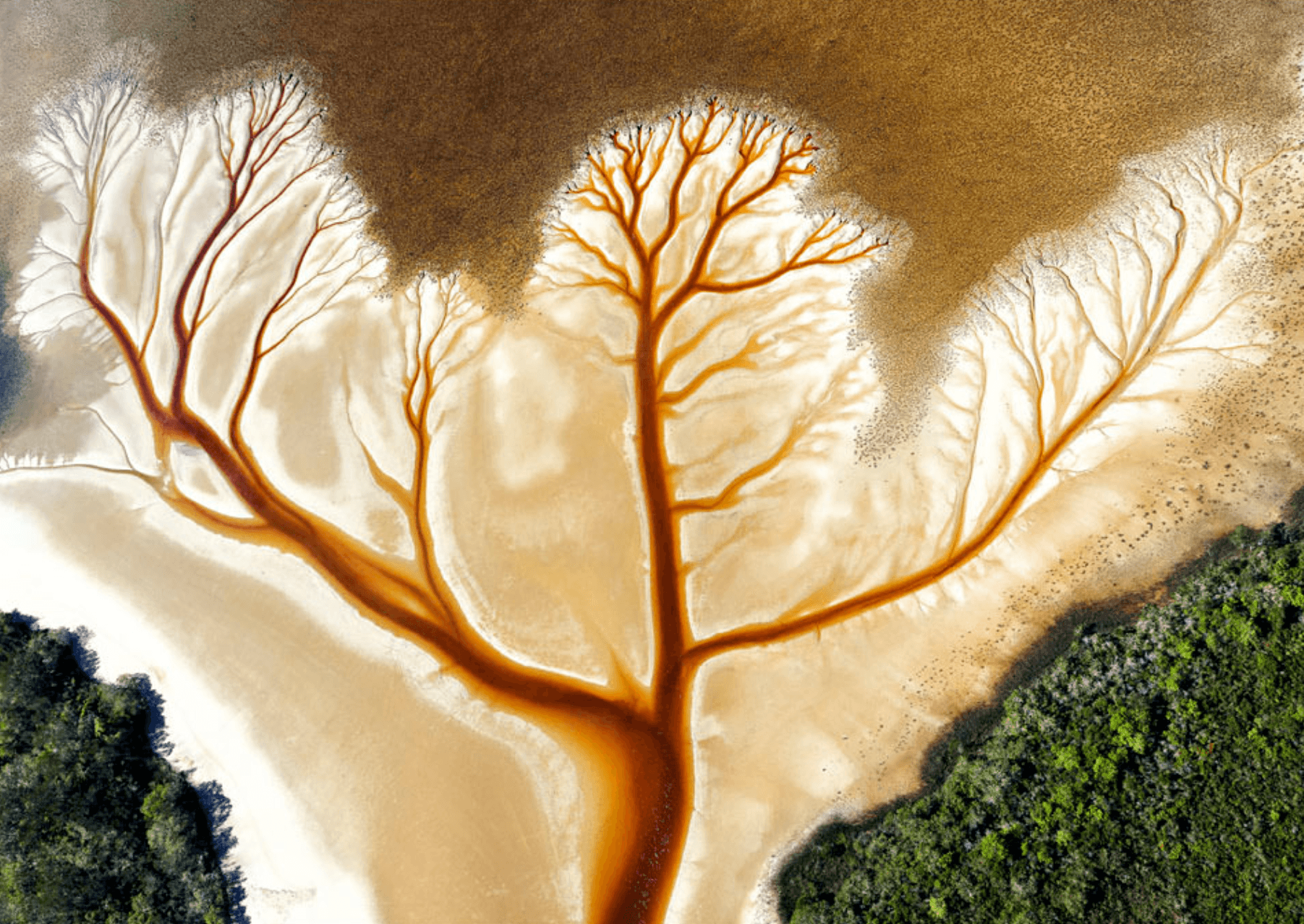
This award-winning aerial image by photographer Stuart Chape shows a tidal creek in Lake Cakora, New South Wales, Australia. At first glance, it looks much like any river delta, with branching dendritic paths that split into smaller and smaller waterways. That’s deceptive, though, because very different forces shape this creek. Because tides move in and out, a tidal creek is home to flows that move both directions — toward and away from the branches. That also means that flow speeds can change rapidly as the tides shift, which in turn changes which sediments get lifted, dropped, and moved around the creek bed. (Image credit: S. Chape/IAPOTY; via Colossal)
Tag: geophysics

Capturing River Waves
Rainfall, ice jams, and dam breaks create surges of high flow that make their way down a river in a wave that stretches tens to thousands of kilometers in length. Traditionally, scientists monitor such flow waves using river gauges, which measure river height at specific locations. But gauges are few and far between on many rivers, so a group of researchers are supplementing that data with the SWOT (Surface Water and Ocean Topography) spacecraft. SWOT bounces microwaves off the water to precisely measure the water’s height, giving researchers a glimpse of the flow wave’s shape along the entire river.
In their paper, the team identify and describe flow waves on three different rivers — the Yellowstone, Colorado, and Ocmulgee rivers — ranging in height up to 9 meters and stretching up to 400 kilometers. (Image credit: CNES; research credit: H. Thurman et al.; via Gizmodo)
Fediverse Reactions
-

Lava Meets Leidenfrost
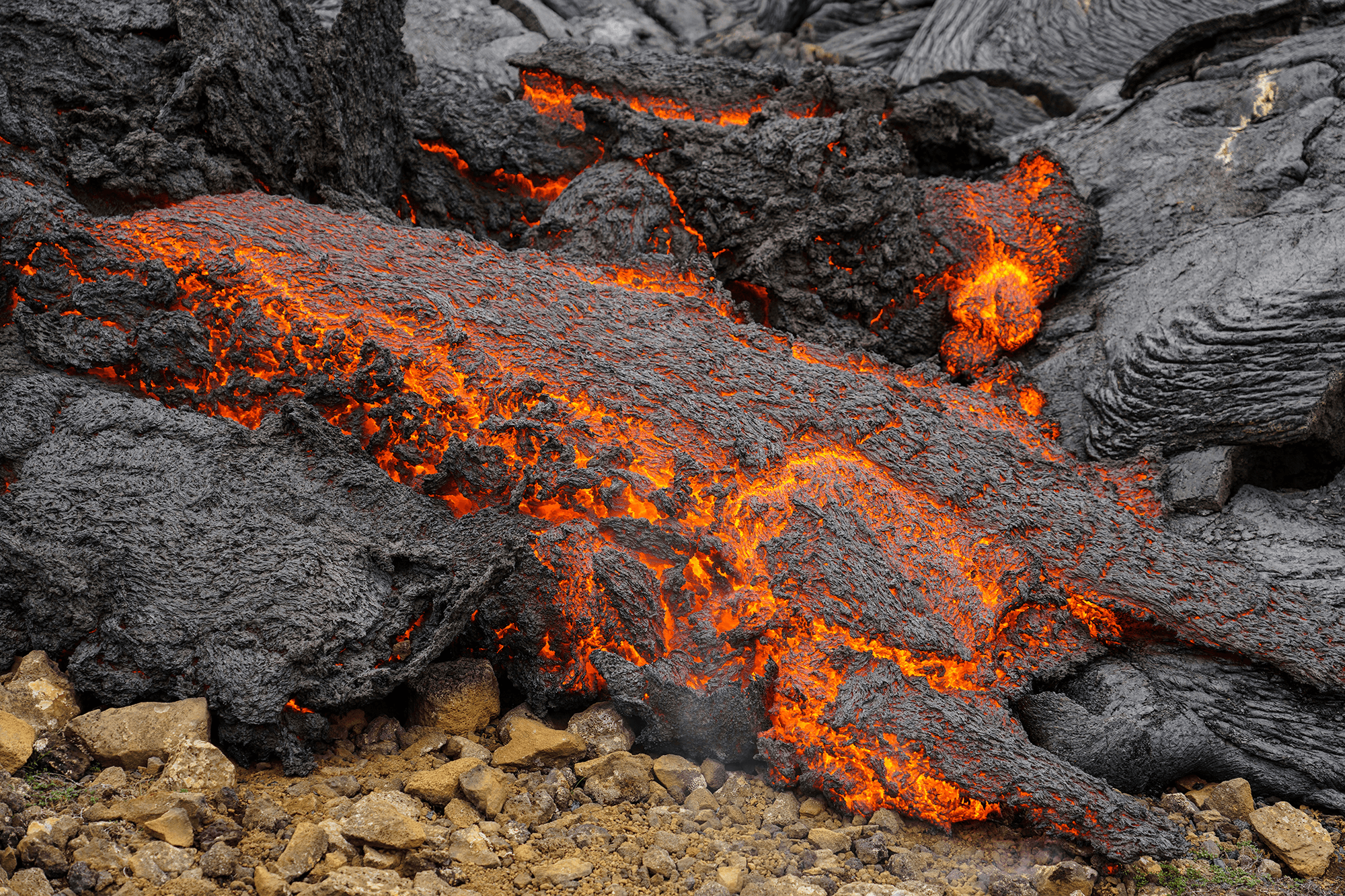
Drop water on a surface much hotter than its boiling point, and the liquid will bead up and skitter over the surface, levitated on a cushion of its own vapor. In addition to making the drop hypermobile, this vapor layer insulates it from the heat of the surface, allowing it to survive longer than it would at lower temperatures. Known as the Leidenfrost effect, this phenomenon can show up in lava flows, as well.
Pillow lava is a smooth, bulbous rock formed when lava breaks out underwater. The exiting lava is incandescent and, therefore, incredibly hot — hot enough to vaporize a layer of water surrounding it. The lava can continue to expand until it cools too much to sustain the vapor layer. An elastic skin builds up over the cooling lava. Eventually, a new pillow will bud off, possibly due to a surge in the lava flow or a weak point in the developing skin. (Image credit: J. de Gier; research credit: A. Mills; via LeidenForce)
Fediverse Reactions
-
La Grande Dune du Pilat
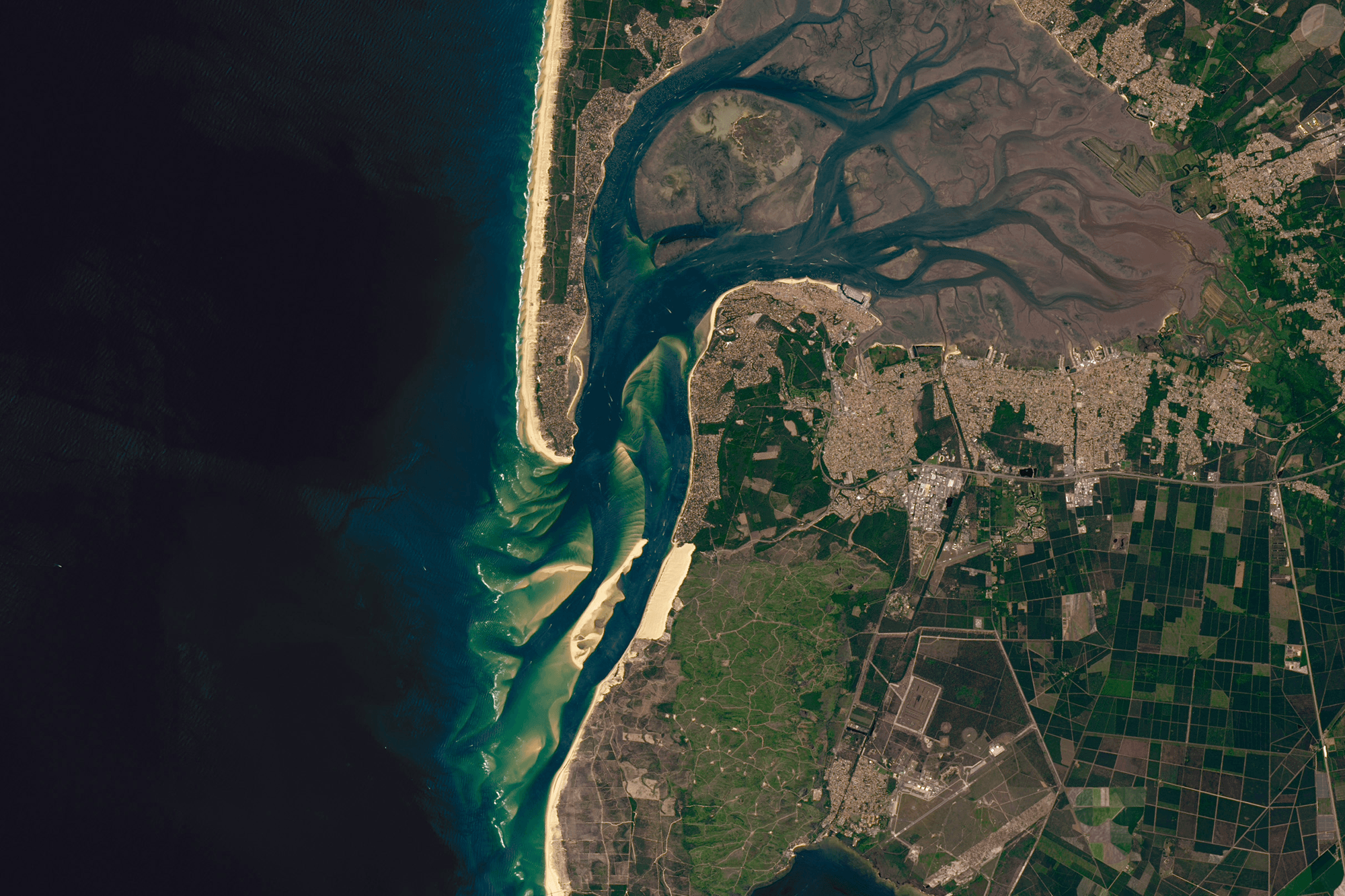
Southwest of Bordeaux in France stands Europe’s tallest sand dune, La Grande Dune du Pilat. Some 2.7 kilometers long and over 100 meters high, this dune took shape here over thousands of years. It moves inland a few meters every year as winds blowing from the Atlantic push sand up its shallow seaward side to the dune’s crest. There, sand will avalanche down the steeper leeward side, advancing the dune little by little. The dune’s accumulation has not been steady; during cooler and drier times, sand has collected there, but it took warmer and wetter climes to grow the forests that have helped stabilize the soil and build the dune higher. Humanity has played a role as well, at times introducing new tree species to stabilize the dune. (Image credit: W. Liang; via NASA Earth Observatory)
Fediverse Reactions
-

Martian Streaks Are Dry
Dark lines appearing on Martian slopes have triggered theories of flowing water or brine on the planet’s surface. But a new study suggests that these features are, instead, dry. To explore these streaks, the team assembled a global database of sightings and correlated their map with other known quantities, like temperature, wind speed, and rock slides. By connecting the data across thousands of streaks, they could build statistics about what variables correlated with the streaks’ appearance.
What they found was that streaks didn’t appear in places connected to liquid water or even frost. Instead, the streaks appeared in spots with high wind speeds and heavy dust accumulation. The team included that, rather than being moist areas, the streaks are dry and form when dust slides down the slope, perhaps triggered by high winds or passing dust devils.
Although showing that the streaks aren’t associated with water may seem disappointing, it may mean that NASA will be able to explore them sooner. Right now, NASA avoids sending rovers anywhere near water, out of concern that Earth microbes still on the rover could contaminate the Martian environment. (Image credit: NASA; research credit: V. Bickel and A. Valantinas; via Gizmodo)
Fediverse Reactions
-

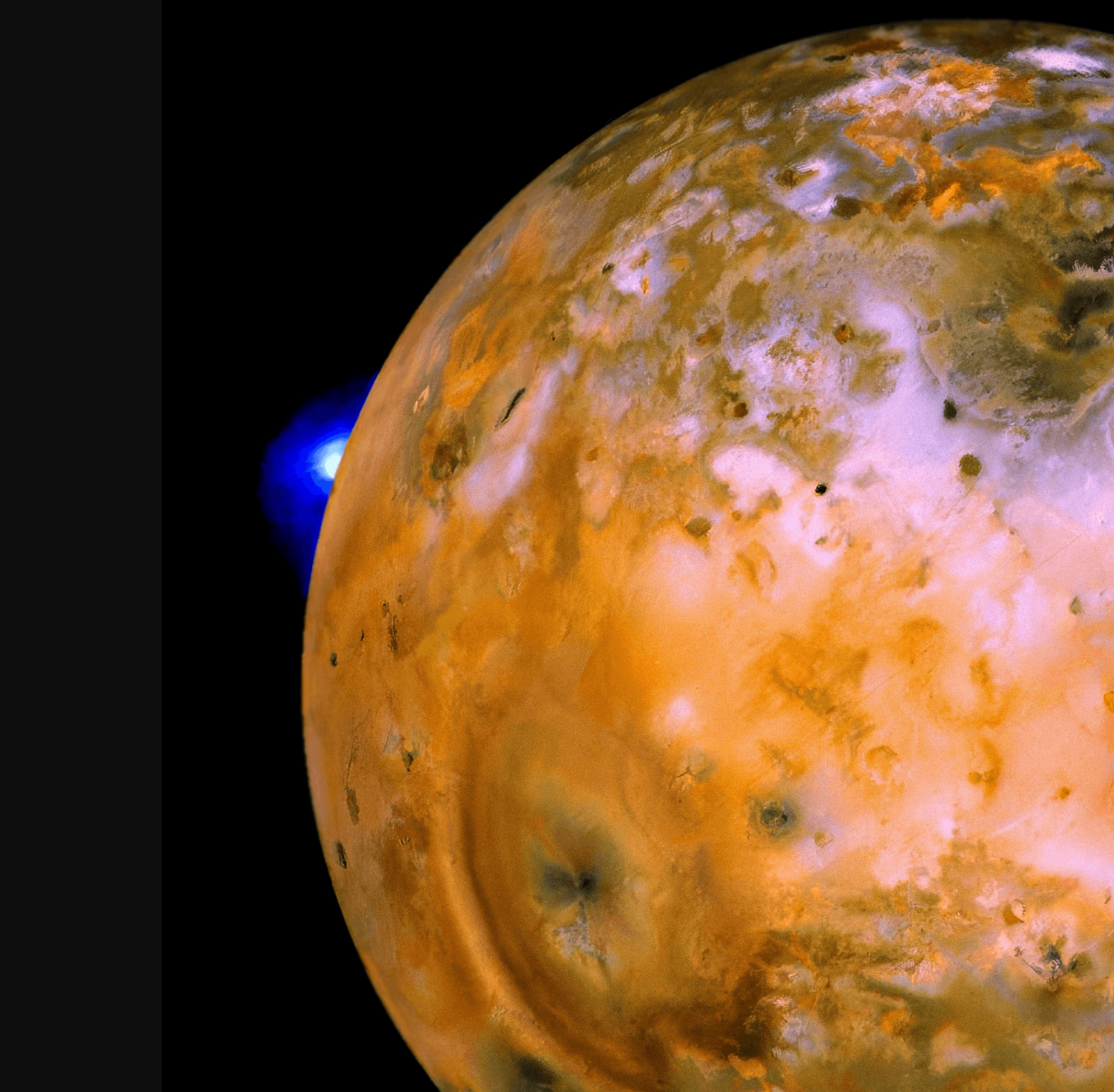
Io’s Missing Magma Ocean
In the late 1970s, scientists conjectured that Io was likely a volcanic world, heated by tidal forces from Jupiter that squeeze it along its elliptical orbit. Only months later, images from Voyager 1’s flyby confirmed the moon’s volcanism. Magnetometer data from Galileo’s later flyby suggested that tidal heating had created a shallow magma ocean that powered the moon’s volcanic activity. But newly analyzed data from Juno’s flyby shows that Io doesn’t have a magma ocean after all.
The new flyby used radio transmission data to measure any little wobbles that Io caused by tugging Juno off its expected course. The team expected a magma ocean to cause plenty of distortions for the spacecraft, but the effect was much slighter than expected. Their conclusion? Io has no magma ocean lurking under its crust. The results don’t preclude a deeper magma ocean, but at what point do you distinguish a magma ocean from a body’s liquid core?
Instead, scientists are now exploring the possibility that Io’s magma shoots up from much smaller pockets of magma rather than one enormous, shared source. (Image credit: NASA/JPL/USGS; research credit: R. Park et al.; see also Quanta)
Fediverse Reactions
-
Ponding on the Ice Shelf
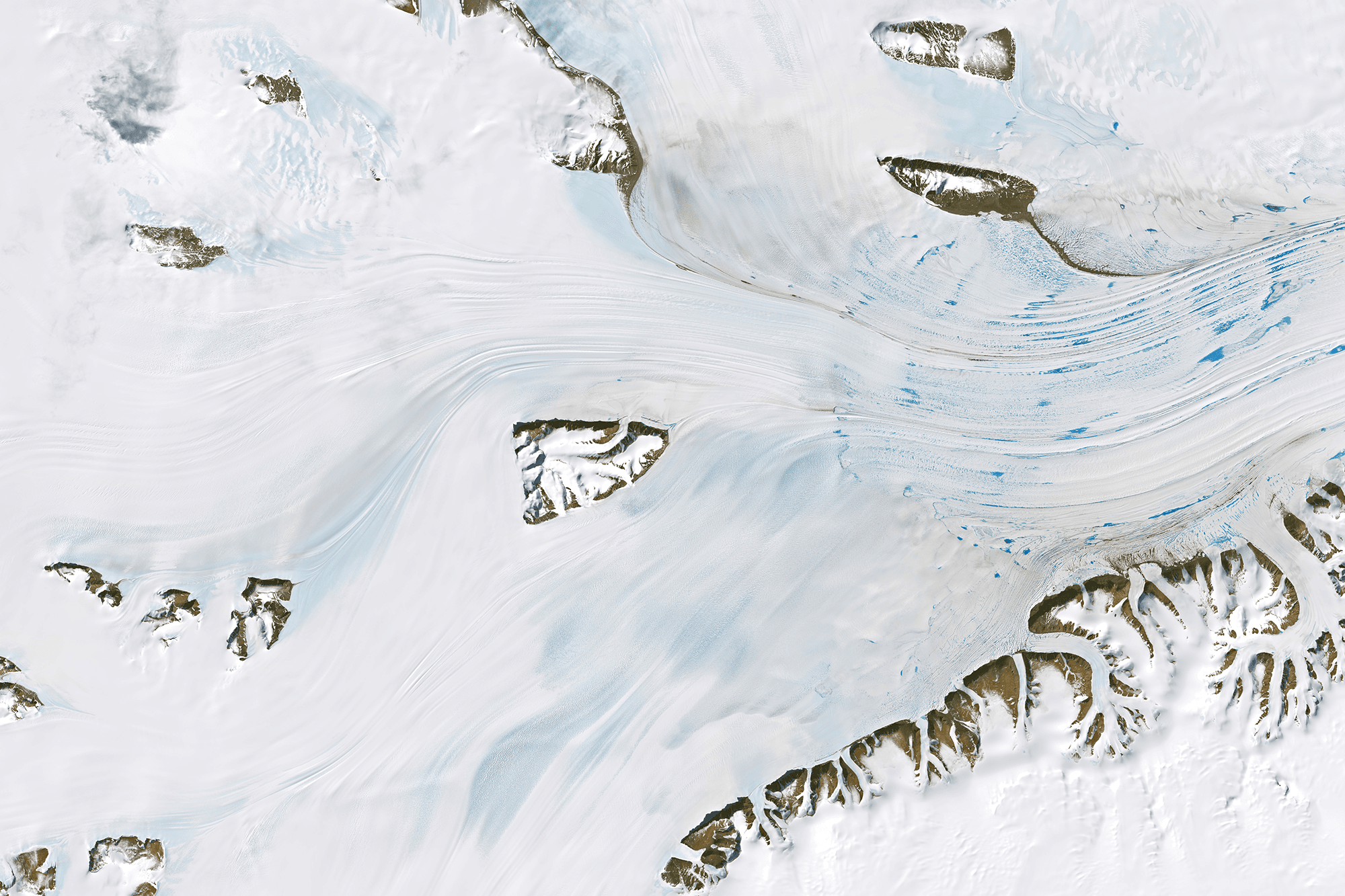
Glaciers flow together and march out to sea along the Amery Ice Shelf in this satellite image of Antarctica. Three glaciers — flowing from the top, left, and bottom of the image — meet just to the right of center and pass from the continental bedrock onto the ice-covered ocean. The ice shelf is recognizable by its plethora of meltwater ponds, which appear as bright blue areas. Each austral summer, meltwater gathers in low-lying regions on the ice, potentially destabilizing the ice shelf through fracture and drainage. This region near the ice shelf’s grounding line is particularly prone to ponding. Regions further afield (right, beyond the image) are colder and drier, often allowing meltwater to refreeze. (Image credit: W. Liang; via NASA Earth Observatory)
Fediverse Reactions
-

Non-Newtonian Effects in Magma Flows
As magma approaches the surface, it forces its way through new and existing fractures in the crust, forming dikes. When a volcano finally erupts, the magma’s viscosity is a major factor in just how explosive and dangerous the eruption will be, but a new study shows that what we see from the surface is a poor predictor of how magma actually flows within the dike.
Researchers built their own artificial dike using a clear elastic gelatin, which they injected water and shear-thinning magma-mimics into. By tracking particles in the liquids, they could observe how each liquid followed on its way to the surface. All of the liquids formed similar-looking dikes at a similar speed, but within the dike, the liquids flowed very differently. Water cut a central jet through the gelatin, then showed areas of recirculation along the outer edges. In contrast, the shear-thinning liquids — which are likely more representative of actual magma — showed no recirculation. Instead, they flowed through the dike in a smooth, fan-like shape.
The team cautions that surface-level observations of developing magma dikes provide little information on the flow going on underneath. Instead, their results suggest that volcanologists modeling magma underground should take care to include the magma’s shear-thinning to properly capture the flow. (Image credit: T. Grypachevska; research credit: J. Kavanagh et al.; via Eos)
Fediverse Reactions
-

On the Mechanics of Wet Sand


Sand is a critical component of many built environments. As most of us learn (via sand castle), adding just the right amount of water allows sand to be quite strong. But with too little water — or too much — sand is prone to collapse. For those of us outside the construction industry, we’re most likely to run into this problem on the beach while digging holes in the sand. In this Practical Engineering video, Grady explains the forces that stabilize and destabilize piled sand and where the dangers of excavation lie. (Video and image credit: Practical Engineering)
Fediverse Reactions
-

Martian Mud Volcanoes
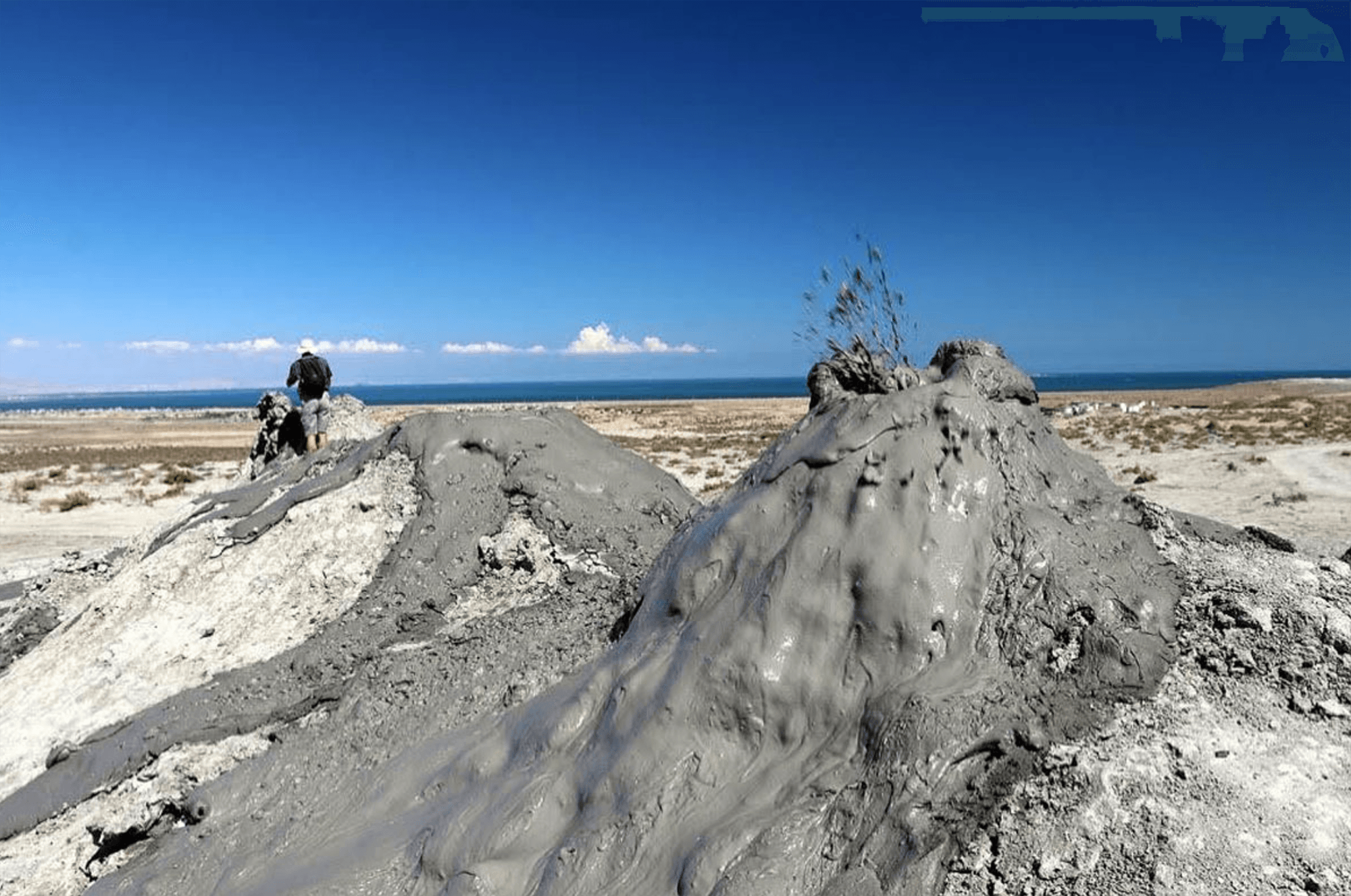
Mars features mounds that resemble our terrestrial mud volcanoes, suggesting that a similar form of mudflow occurs on Mars. But Mars’ thin atmosphere and frigid temperatures mean that water — a prime ingredient of any mud — is almost always in either solid or gaseous form on the planet. So researchers explored whether salty muds could flow under Martian conditions. They tested a variety of salts, at different concentrations, in a low-pressure chamber calibrated to Mars-like temperatures and pressures. The salts lowered water’s freezing point, allowing the muds to remain fluid. Even a relatively small amount of sodium chloride — 2.5% by weight — allowed muds to flow far. The team also found that the salt content affected the shape the flowing mud took, with flows ranging from narrow, ropey patterns to broad, even sheets. (Image credit: P. Brož/Wikimedia Commons; research credit: O. Krýza et al.; via Eos)
Fediverse Reactions
-





























































.JPG)