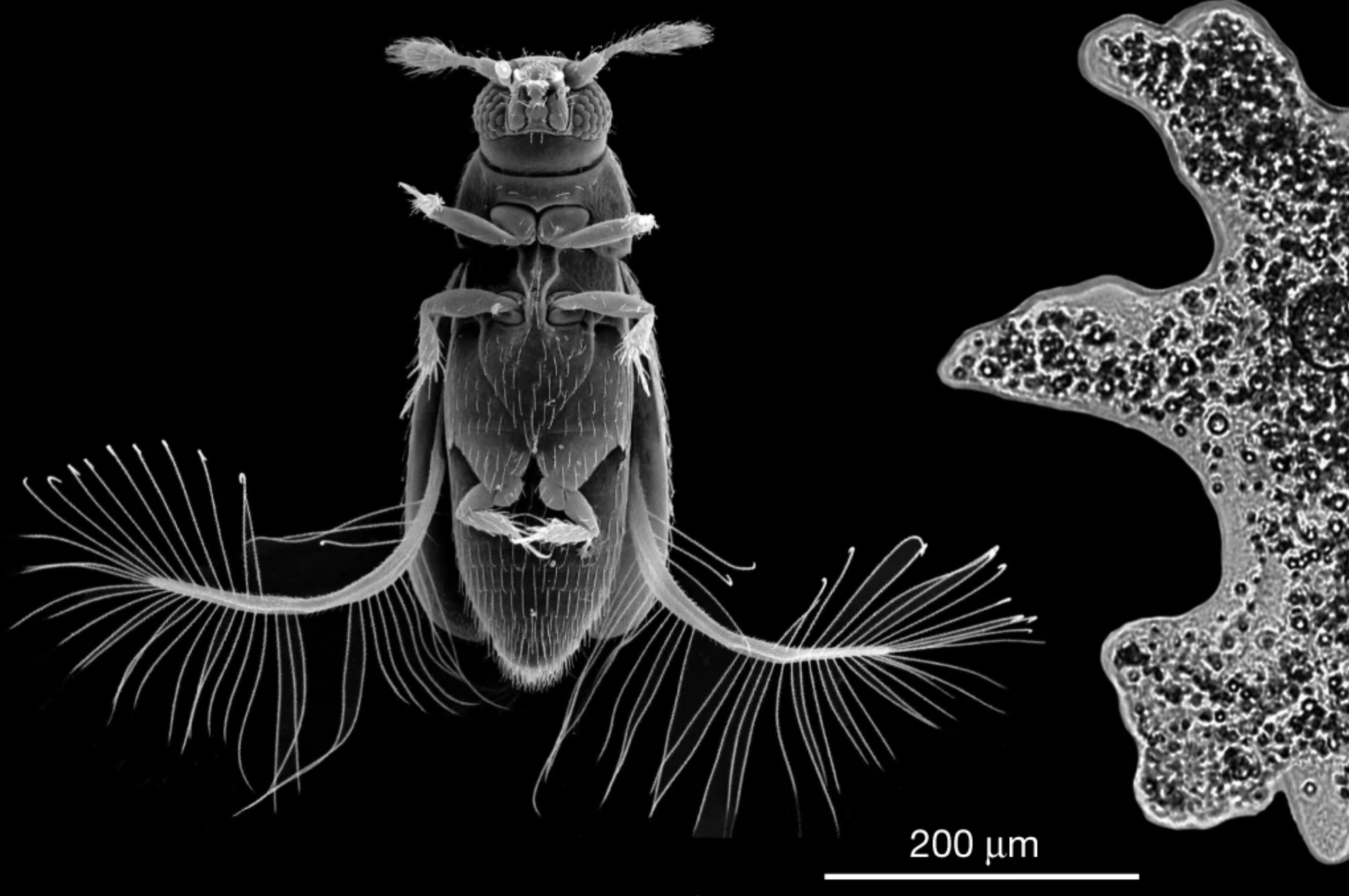
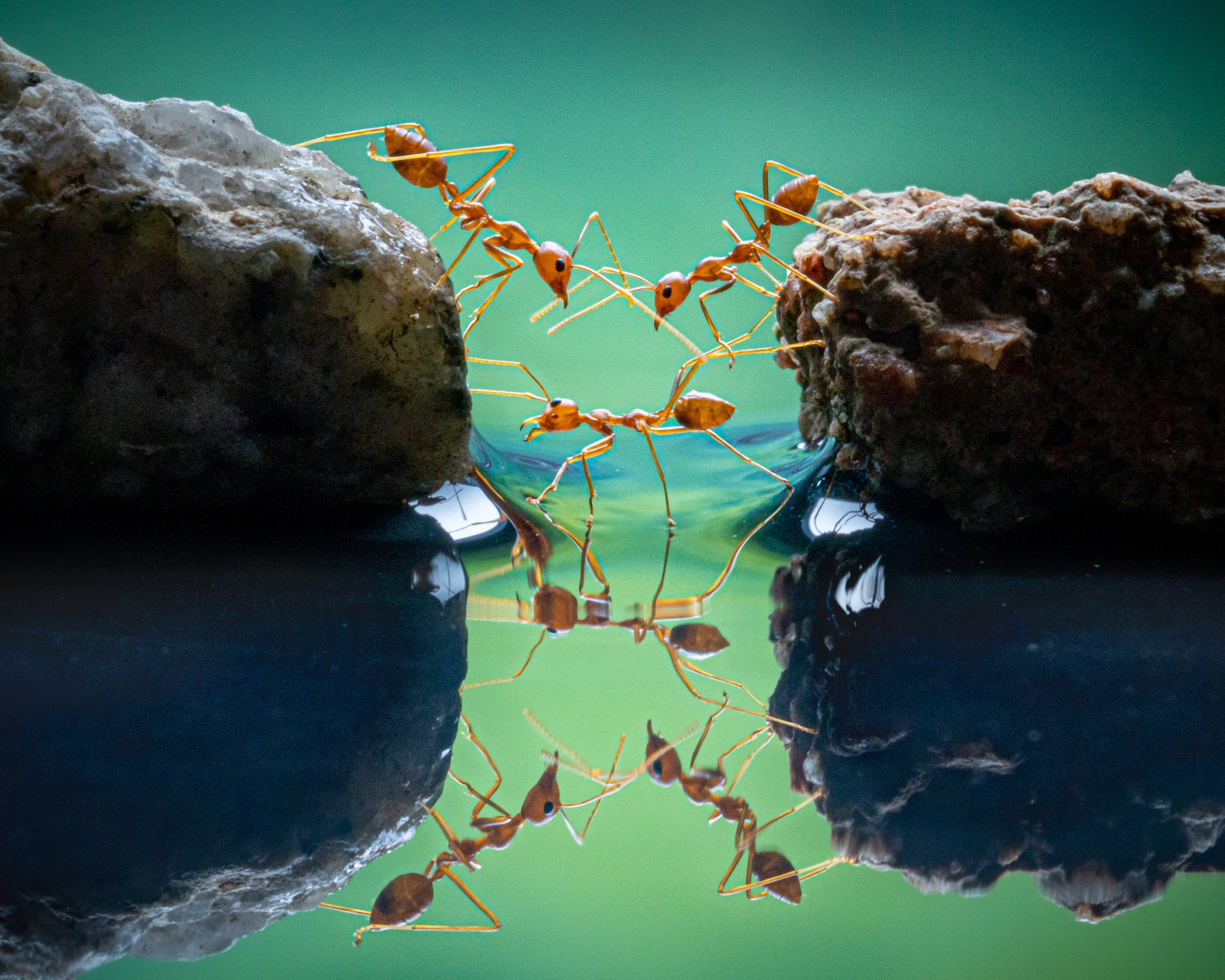
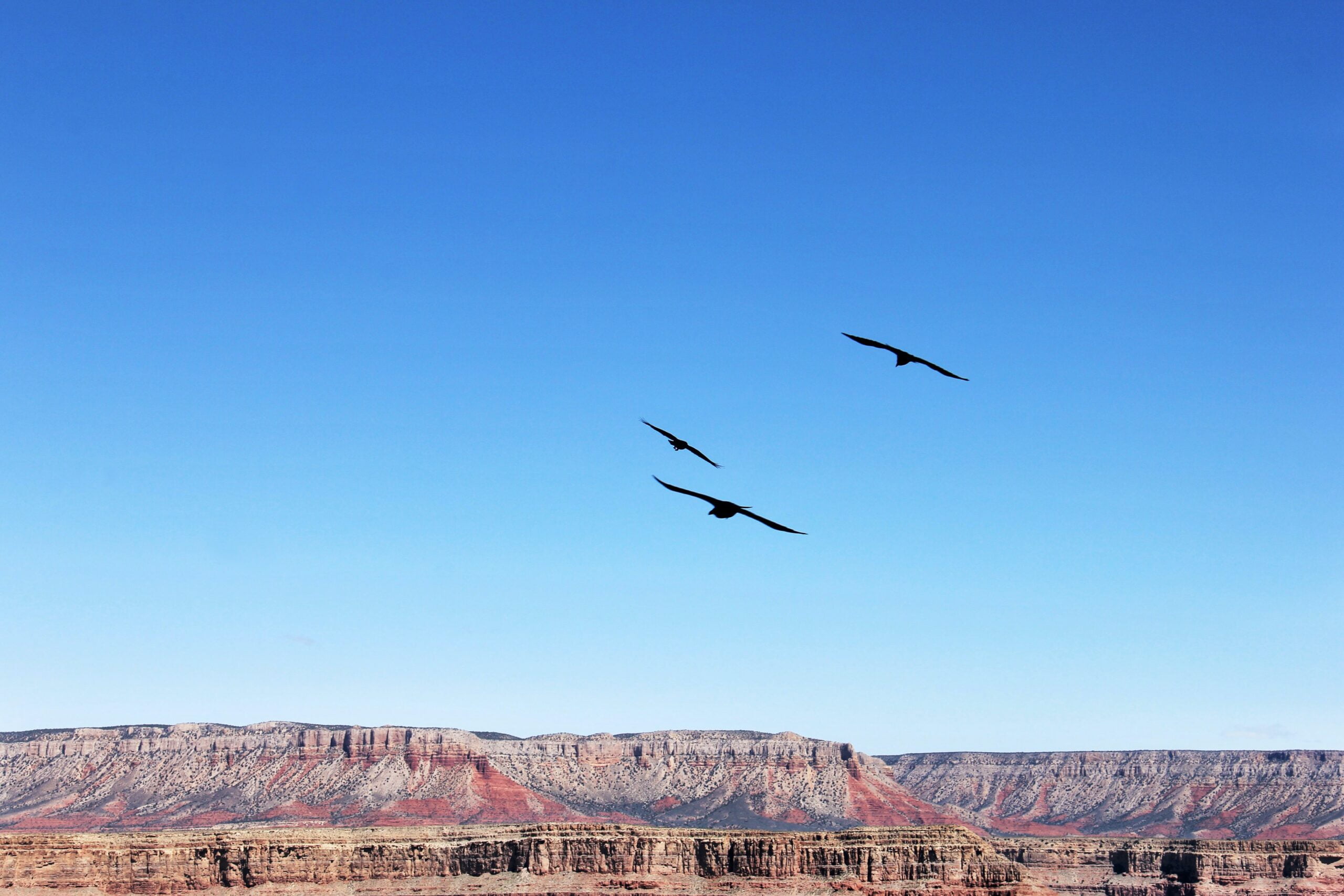
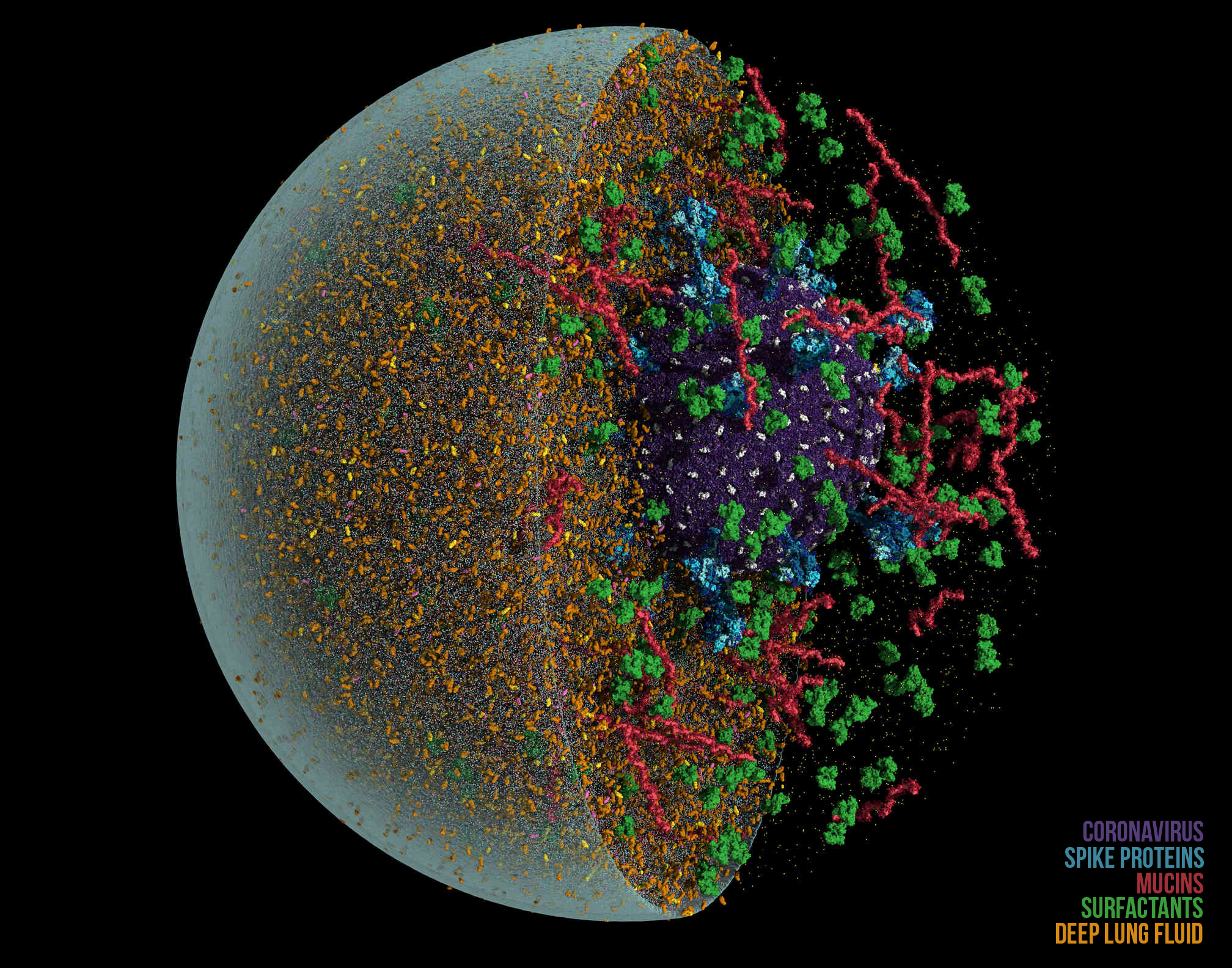
As student engineers, we often use fixed-wing aircraft to build our intuition for flight, but nature has so many other incredible examples to offer. Here we see high-speed video of seven different moth species taking off, and understanding fixed-wing flight won’t help you here at all! These moths have small, rough, and incredibly flexible wings — all characteristics an aircraft designer typically avoids. Yet these insects are agile, fast, and capable fliers at a scale that continues to thwart engineers. Some of the earliest pioneers of flight watched birds for inspiration; for small crafts, there’s no better teacher than insects. (Image and video credit: A. Smith/AntLab)
Tag: biology

Sea Sponge Hydrodynamics
The Venus’s flower basket is a sea sponge that lives at depths of 100-1000 meters. Its intricate latticework skeleton has long fascinated engineers for its structural mechanics, but a new study shows that the sponge’s shape benefits it hydrodynamically as well.
The sea sponge’s skeleton is predominantly cylindrical, with tiny gaps that allow water to flow through it and helical ridges alongside its outer surface to strengthen it against the deep-sea currents surrounding it. Through detailed numerical simulations, researchers found that both of these features — the holes and the ridges — serve fluid mechanical purposes for the sponge. The porous holes of the sea sponge drastically reduce flow in the sponge’s wake (third image), which provides major drag reduction for the sea sponge. That drag reduction makes it easier for the sponge to stay rooted to the ocean floor.
The helical ridges, on the other hand, create low-speed vortices within the sea-sponge’s body cavity (second image). Such vortices increase the time water spends inside the sponge, likely helping it to filter-feed more efficiently. The additional vorticity comes at the cost of slightly increased drag but not enough to outweigh the savings from its porosity. (Image and research credit: G. Falcucci et al.; via Nature; submitted by Kam-Yung Soh)

The Froghopper’s Incredible Suction
The tiny froghopper feeds on the sap in xylem, a feat that requires overcoming more than a megapascal of negative pressure. Plants, as you may recall, transport water and nutrients from their roots to their leaves through negative pressure, essentially pulling on the water as if it were a rope. So drinking that sap is not as simple as making a hole and waiting for sap to flow. Instead, froghoppers must generate even more suction than the plant. Some scientists have been so skeptical that such a feat is even possible that they’ve disputed whether plants are truly at such high negative pressures.
But a new study shows that froghoppers can, indeed, generate immense suction – up to nearly 1.5 megapascals. (By comparison, humans generate less than a tenth of that suction, even on a stubborn milkshake.) The researchers used two complementary methods to prove the insects’ ability. First, they studied the anatomy of the pumplike structure in the froghoppers’ heads, where the suction is generated, and determined the insects’ sucking potential from a simple calculation of force divided by area. Then, they observed feeding froghoppers in a chamber where they could measure their metabolic rates through carbon dioxide output. As the froghoppers fed, their metabolic rates spiked to 50 – 85% higher than when at rest. Only when the xylem tensions exceeded the theoretical biomechanical limits for froghopper suction did the tiny insects seem to stop feeding. (Image and research credit: E. Bergman et al.; via Science News; submitted by Kam-Yung Soh)

“The Goblet of Fire”
Sometimes the mundane events of life hide extraordinary phenomena. This award-winning photograph by Sarang Naik shows yellow-brown spores streaming off a mushroom during monsoon season. The plume is abstract and beautiful; you could easily mistake it for the flames of an Olympic torch. But common as they are, the lowly mushroom hides interesting depths. To get their spores to travel further, mushrooms actually generate their own breezes! (Image credit: S. Naik; via Big Picture Competition)
With the Olympics kicking off today, FYFD will follow our usual tradition of Olympic-themed posts for the next couple weeks, so be sure to come back each day for the latest featured sport!

Unusual Insects Taking Off
What do you do when you’re an insect researcher with a high-speed camera? Why, film all sorts of unusual insects from your backyard as they take off and fly! Here Dr. Adrian Smith of Ant Lab shows us a slew of insects that are not unusual for their rarity — you can probably find many of these in your own yard — but they are rarely seen in insect flight research. Like many of the species we’ve seen before, lots of these fliers use a figure-8 wingstroke to stay aloft. But one feature that really struck me as I watched was how amazingly flexible many of their wings were. For many of them, parts of their wings actually curl back on themselves during parts of the stroke. As engineers, our first instinct would be to avoid that kind of complexity, but I expect that it must give the insects some kind of benefit — otherwise nature would have eliminated it. (Image and video credit: Ant Lab/A. Smith; via Colossal)

How Frogs Block Unwanted Noise
In a crowded room, it can be hard to pick out the one conversation you want to hear. This so-called “cocktail party problem” is one animals have to contend with, too, when a noisy landscape can obscure the calls of potential mates. American green tree frogs have a clever solution to the problem: inflating their lungs to dampen out other frog species’ calls.
This method works because frogs have a direct anatomical connection between their lungs and their eardrums. Researchers found that when these frogs inflate their lungs, there’s a pronounced drop in their sensitivity to sound in the 1.4 – 2.2 kHz frequency band. That frequency range falls between the green tree frog’s peak mating call frequencies, but it coincides with the frequencies of other frogs living in the same regions. So rather than using their lungs to make themselves louder, these clever amphibians use them to make other frogs quieter! (Image credit: B. Gratwicke; research credit: N. Lee et al.; via Physics Today)

When Squids Fly
Some species of squid fly at speeds comparable to a motorboat for distances of 50 meters. The cephalopods get into the air the same way they swim underwater: by expelling a jet of water through the center of their body. Once aloft, the squids spread their tentacles to form a semi-rigid wing-like surface for lift. They can also use fins on their mantle as a canard for additional lift or control of their altitude. Researchers suspect the squids use flight as an escape mechanism to put distance between themselves and predators, but it could also be a low-energy migration strategy since a single pulse carries a squid farther in air than in water. (Video and image credit: TED-Ed)

Flamingo Filter-Feeding
Flamingoes are strange and ungainly creatures, but their hooked bills make much more sense when you see them eating underwater. The birds are filter feeders, and they suck water, mud, and silt in through the front of their bills and pump it back out the sides. In between hairy structures called lamellae help them separate algae, brine shrimp and other food from the mix. Be sure to turn the sound up on the video so that you can hear the sound of flamingoes at work. (Image and video credit: San Diego Zoo; via Colossal)

“Columbia”
“Columbia” is a music video illustrated with fluid dynamics, chemistry, and biology by the Beauty of Science team. It’s got everything from precipitation to crystallization, from infrared imagery of wakes to timelapses of growing molds. How many phenomena can you identify? (Video and image credit: Beauty of Science)

Loopy Networks and Bird Lungs
When mammals breathe, air flows back and forth inside our lungs. But in birds that inhale and exhale get transformed into one-directional flow inside their lungs. To figure out how, researchers built loopy networks of pipes that turn oscillating flow into unidirectional flow.
The simplest structure that does this is shown above. The main loop is driven by a pump that oscillates back and forth. A second loop connects through two T-junctions, oriented at 90-degrees to one another. Watch the particles in each loop carefully. Those in the bottom loop move back and forth, driven by the oscillating pump. But the particles in the upper loop only move in one direction! The key to this, the researchers found, are vortices that form at the T-junctions (last image). When the flow in the main loop changes direction, it creates vortices that block flow along one arm of the T-junction, thereby isolating the upper loop. (Image credit: bird – A. Mckie, others – Q. Nguyen et al.; research credit: Q. Nguyen et al.; via APS Physics; submitted by Kam-Yung Soh)