Search results for: “water droplet”

  • Featured Video Play Icon

    Molten Thermite

    This glowing, molten liquid captured by the Slow Mo Guys is thermite. The chemical reaction behind thermite is highly exothermic, hence its intense glow. There’s some great fluid dynamics hiding in this video. First, there’s the dripping thermite (Image 1), which breaks up into droplets via the Plateau-Rayleigh instability before shattering when it hits the ground.

    Then there are the sequences (Images 2 and 3) of thermite dripping into water. The heat of the reacting thermite vaporizes a layer of water around it, creating a bubble that completely envelops the thermite. In other words, the falling thermite is supercavitating! That layer of air significantly reduces drag on the thermite and it insulates the thermite from the cooler temperature of the water. (Video and image credit: The Slow Mo Guys)

  • Featured Video Play Icon

    Popping an Oil Balloon

    Oil and water don’t mix — or at least they won’t without a lot of effort! In this video, we get to admire just how immiscible these fluids are as oil-filled balloons get burst underwater.

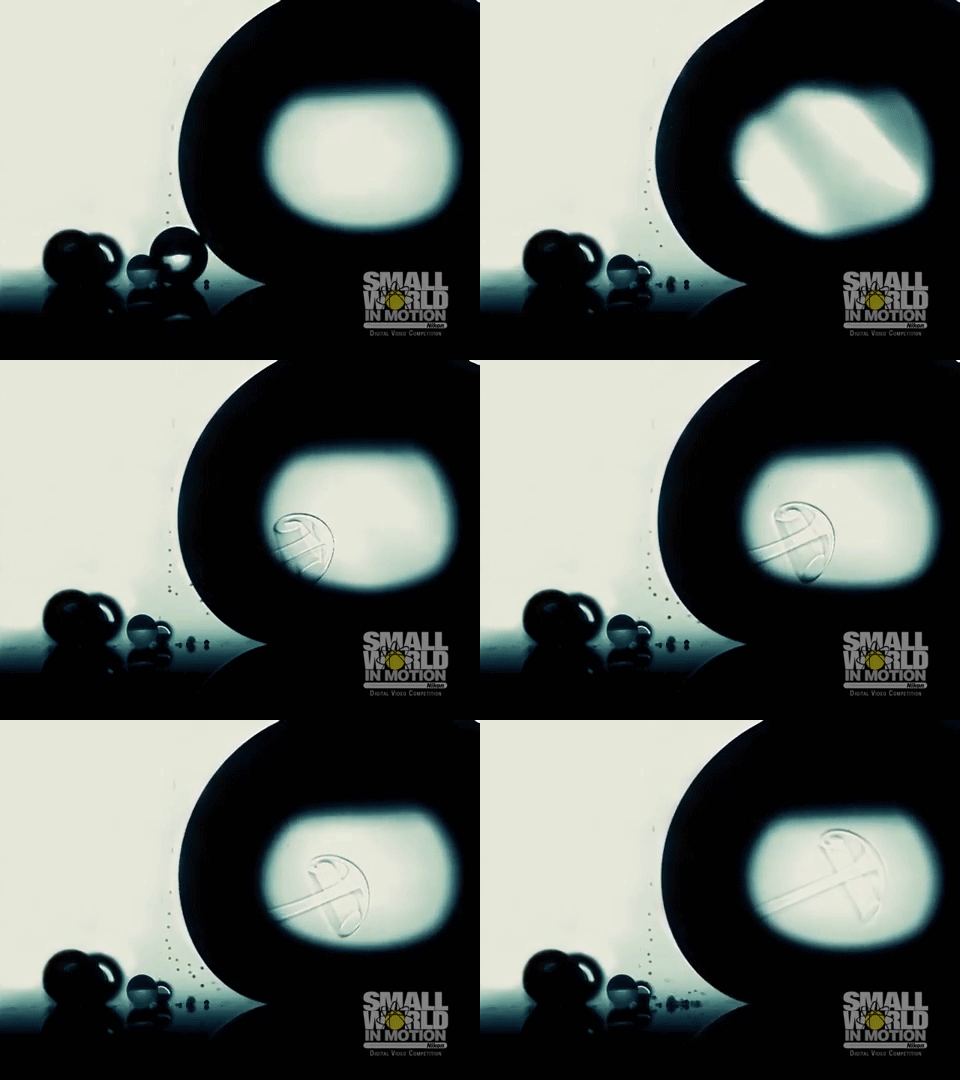
    Visually, the two bursts are quite spectacular. In the first image, the initial balloon has a sizeable air bubble at the top, which rises even more rapidly than the buoyant oil, creating a miniature, jelly-fish-like plume that reaches the surface first. The large oil plume follows, behaving similarly to the balloon burst without an added air bubble.

    The last of the oil in both cases comes from a cloud of smaller droplets formed near the bottom of the balloon. Being smaller and less buoyant, these drops take a lot longer to rise to the surface and remain much closer to spherical as they do. I suspect these smaller droplets form due to the forces created by the fast-moving elastic as it tears away. (Video and image credit: Warped Perception)

  • Featured Video Play Icon

    A Hand in Hot Oil

    In this video, Dianna from Physics Girl demonstrates a feat no one should try at home: dipping her hand into boiling oil. To stay safe, she’s relying on the Leidenfrost effect, the tendency of liquids exposed to temperatures well above their boiling point to vaporize and create a layer of gas that insulates against further heat transfer.

    We’ve seen a lot of cool behaviors from Leidenfrost droplets, like surfing on herringbone surfaces, digging through sand, vibrating like a star, and, well, violently exploding. We know a lot about what can happen in this Leidenfrost state, but there are also some major unknowns, like exactly what the Leidenfrost temperature is for many liquids. That’s part of what makes Dianna’s demo so dangerous; the temperature needed to see the Leidenfrost effect — even just for water — varies wildly depending on the experimental set-up. (Video and image credit: Physics Girl)

  • Shake It!

    Shake It!

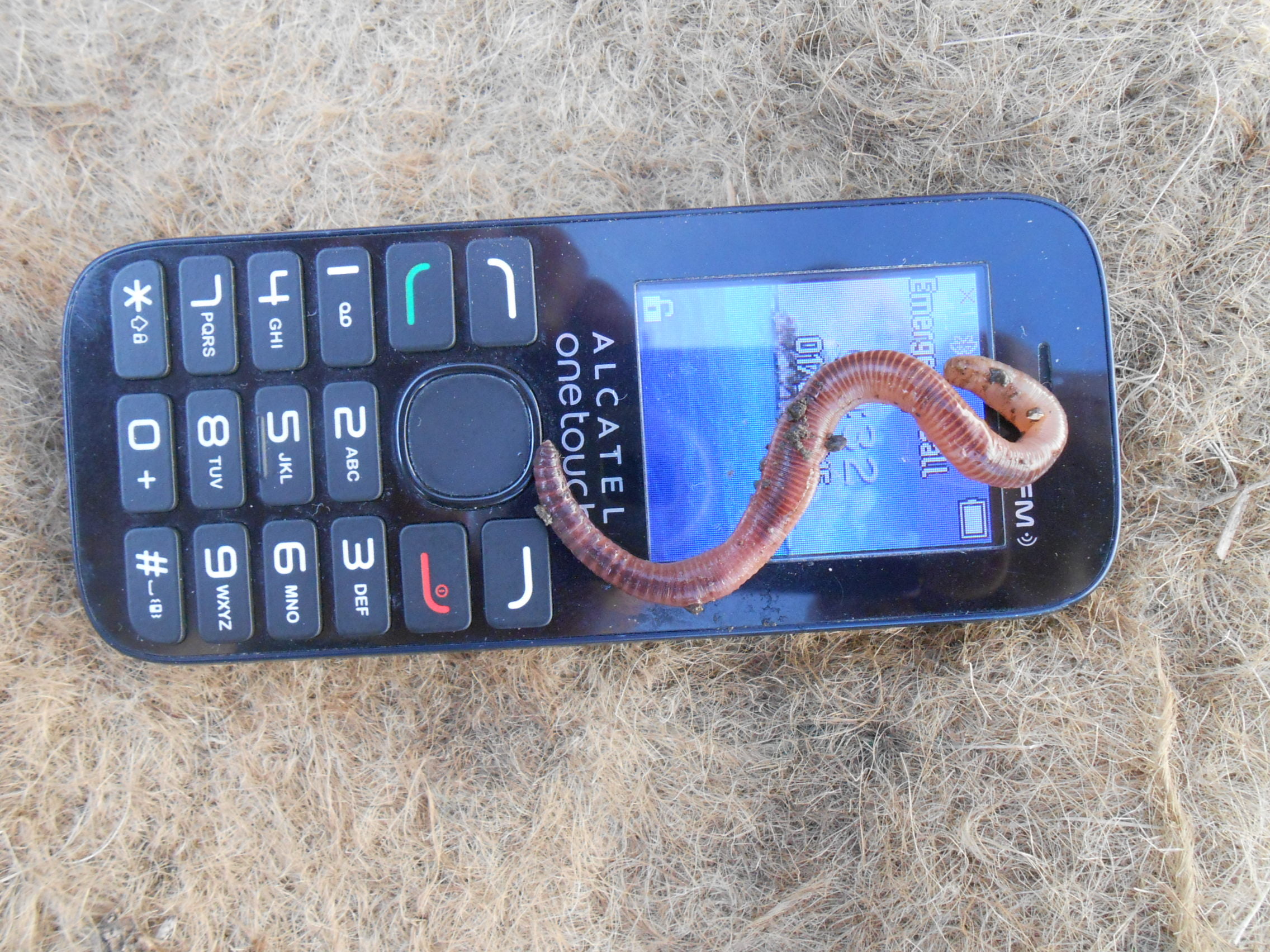
    Vibrate a pool of water, and you’ll get Faraday waves, ripple-like excitations that form their own distinctive pattern compared to the driving vibration. But you don’t have to vibrate a pure liquid to see Faraday waves. A recent study observed them in vibrated earthworms!

    Odd as this may sound, the results make sense. When anesthetized (as they were in the experiments), earthworms are essentially a liquid wrapped in an elastic membrane, which is not so different from a droplet held together by surface tension.

    But why vibrate earthworms in the first place? It turns out earthworms are a good model organism for studies of vertebrate neural systems, so observing how vibrations propagate through them can provide insight into how our own nervous systems transmit information. (Image, research, and submission credit: I. Maksymov and A. Pototsky)

  • Branching Sparks from Senko-hanabi

    Branching Sparks from Senko-hanabi

    Senko-hanabi are a Japanese firework, somewhat similar to a sparkler. But instead of being driven by burning powder, the senko-hanabi’s sparks come from bursting liquid droplets undergoing an exothermic reaction with air.

    Chemistry aside, the effect is similar to what goes on in soda water. As bubbles within the liquid nucleate and move to the surface, they burst, generating smaller droplets. As the researchers explain, the same cascade carries on in the smaller drops, creating the branching sparks the firework is known for.

    For more slow motion views of the fireworks and sparks, check out the video below or those produced by the researchers. (Image and research credit: C. Inoue et al. and C. Inoue et al.; video credit: NightHawkInLight; submitted by Jason C.)

  • Featured Video Play Icon

    How Animals Stay Dry in the Rain

    Getting wet can be a problem for many animals. A wet insect could quickly become too heavy to fly, and a wet bird can struggle to stay warm. But these animals have a secret weapon: tiny, multi-scale roughness on their wings, scales, and feathers that helps them shed water. Watch the latest FYFD video to learn how! (Image and video credit: N. Sharp; research credit: S. Kim et al.)

  • Measuring Contaminants in Drops and Bubbles

    Measuring Contaminants in Drops and Bubbles

    Rising bubbles and droplets are common in many chemical and industrial applications. But just a tiny concentration of contaminants on their surface can completely alter their behavior, disrupting coalescence and slowing down chemical reactions.

    Historically, it’s been hard to measure the level of contamination in these some drops and bubbles, but a new study outlines a way to measure these small concentrations by perturbing the drops and watching how they deform. By analyzing how the drop shimmies and shakes, they’re able to measure its surface tension and, ultimately, the concentration of contaminants. (Image credit: S. Sørensen; research credit: B. Lalanne et al.; via APS Physics)

  • Marangoni Bursting

    Marangoni Bursting

    Placing a mixture of alcohol and water atop a pool of oil creates a stunning effect that pulls droplets apart. The action is driven by the Marangoni effect, where variations in surface tension (caused in this case by the relative evaporation rates of alcohol and water) create flow. David Naylor captures some great stills of the flow, including the only example of a double burst I’ve seen so far. For more on the science behind the effect, check out this previous post or the original research paper. (Image credit: D. Naylor; see also this previous post)

  • Capsule Impact and Bursting

    Capsule Impact and Bursting

    Nature and industry are full of elastic membranes filled with a fluid, from red blood cells to water balloons. A new study looks at how these capsules deform — and sometimes burst — on impact. The researchers created custom elastic shells that they filled with various fluids like water, glycerol, and honey, then used the impacts to build a model of capsule deformation.

    They found that there’s significant overlap between droplet impacts and capsule impacts, with a few key differences; instead of surface tension, capsules resist deformation through their elastic shell’s surface modulus — a combination of its elasticity and thickness. Capsules, unlike droplets, can also burst. To study this, the researchers used water balloons, which they were able to pre-stretch more easily than their custom shells. They found that their model could accurately predict the conditions under which the balloons burst.

    The authors hope the model will be helpful both in designing capsules intended to burst — like a fire-fighting projectile — and in creating safety measures to prevent capsule burst — like car-crash standards that protect from organ damage. (Image and research credit: E. Jambon-Puillet et al.; via Physics World; submitted by Kam-Yung Soh)

  • Bouncing Off Hydrophilic Surfaces

    Bouncing Off Hydrophilic Surfaces

    Droplets typically bounce off hydrophobic surfaces due to air trapped beneath the liquid that prevents contact between the drop and surface. But even extremely smooth, hydrophilic surfaces can elicit a bounce under the right circumstances, as shown in a new study.

    The key is that the droplet must bounce at exactly the right speed. If the bounce has too much momentum, it will squeeze the nanometer-sized air cushion too thin, allowing contact. Too slow and the Van der Waals attraction between the droplet molecules and wall molecules will have time to act. But between those lies a sweet spot where the dimple and cushion of air beneath the drop keep it from impacting. (Image credit: droplets – klickblick, drop bounce – J. Kolinski, bounce sim – J. Sprittles et al.; research credit: M. Chubynsky et al.; submitted by James S.)