Search results for: “vortex”

  • Featured Video Play Icon

    Bubbly Tornadoes Aspin

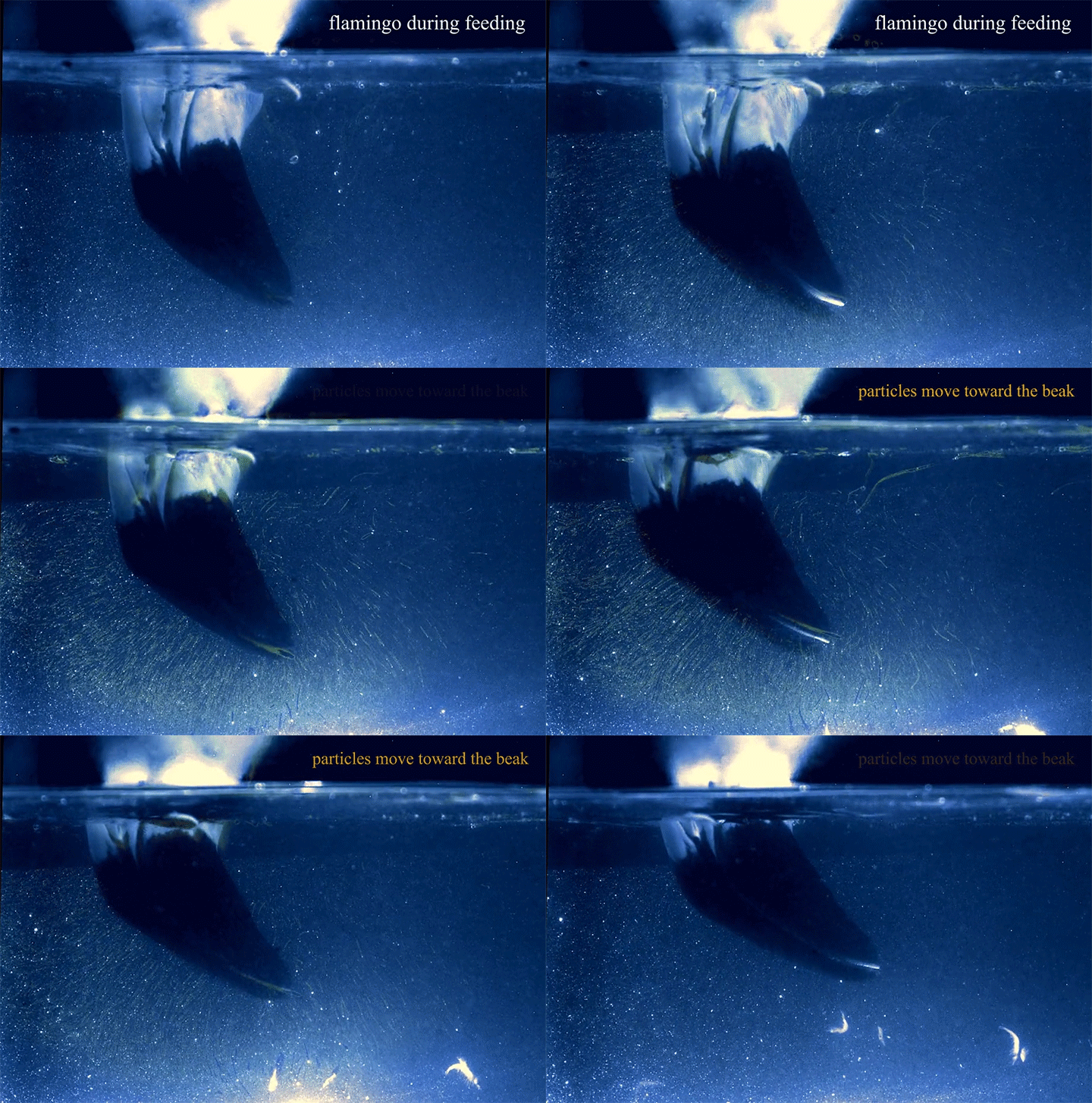
    Rotating flows are full of delightful surprises. Here, the folks at the UCLA SpinLab demonstrate the power a little buoyancy has to liven up a flow. Their backdrop is a spinning tank of water; it’s been spinning long enough that it’s in what’s known as solid body rotation, meaning that the water in the tank moves as if it’s one big spinning object. To demonstrate this, they drop some plastic tracers into the water. These just drop to the floor of the tank without fluttering, showing that there’s no swirling going on in the tank. Then they add Alka-Seltzer tablets.

    As the tablets dissolve, they release a stream of bubbles, which, thank to buoyancy, rise. As the bubbles rise, they drag the surrounding water with them. That motion, in turn, pulls water in from the surroundings to replace what’s moving upward. That incoming water has trace amounts of vorticity (largely due to the influence of friction near the tank’s bottom). As that vorticity moves inward, it speeds up to conserve angular momentum. This is, as the video notes, the same as a figure skater’s spin speeding up when she pulls in her arms. The result: a beautiful, spiraling bubble-filled vortex. (Video and image credit: UCLA SpinLab)

    Composite image showing far (left) and close (right) views of a bubbly vortex in a rotating water tank.
    Fediverse Reactions
  • “Kirigami Sun”

    “Kirigami Sun”

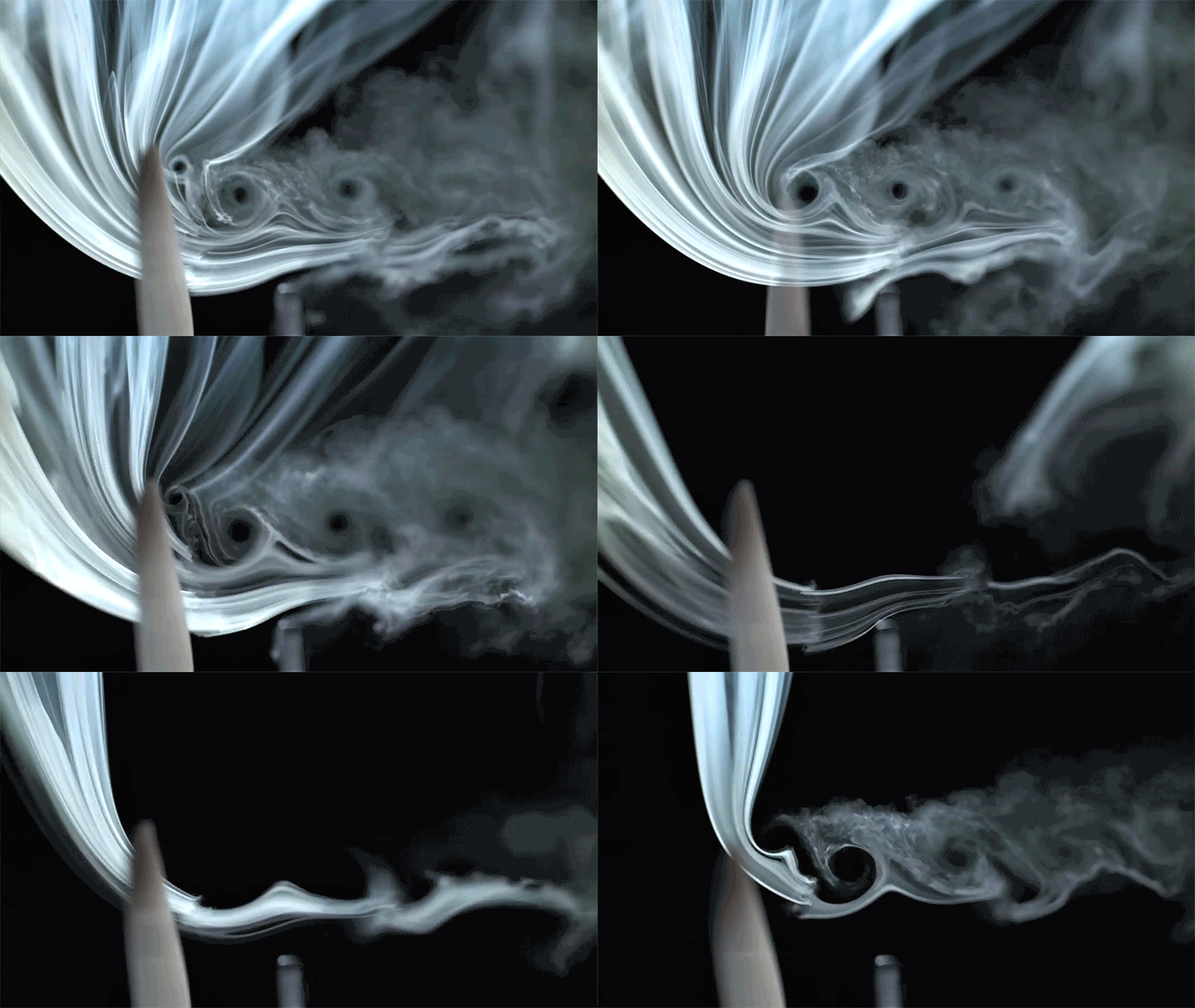
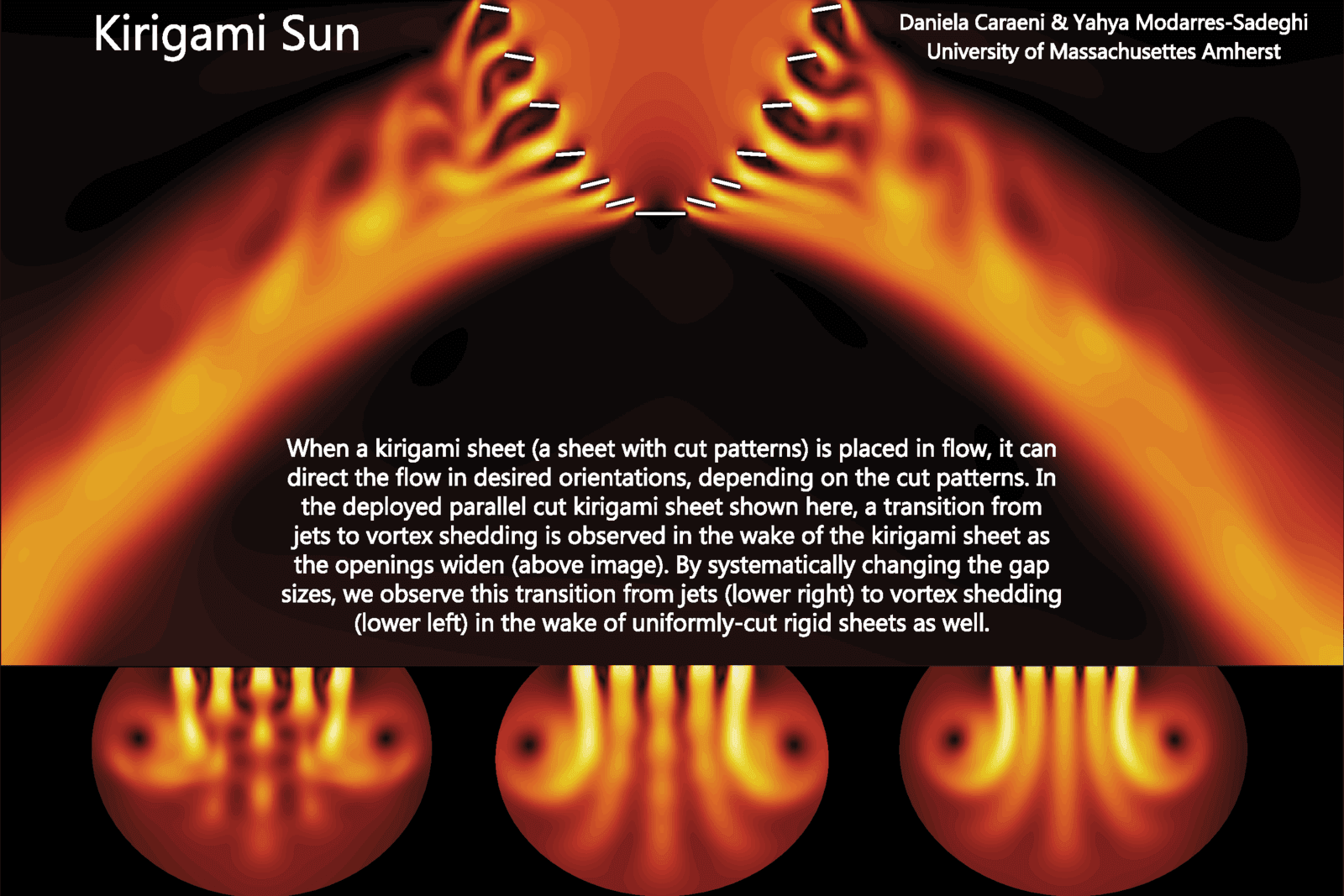
    Kirigami is a variation of origami in which paper can be cut as well as folded. Here, researchers look at flow through a cut kirigami sheet and how that flow changes with the cuts’ length. In the top central image, white lines mark the paper boundaries. As the cut gaps get larger, flow through them transitions from a continuous jet to swirling vortex shedding. Along the bottom, we see similar patterns emerge in the wake of uniformly-cut sheets, too. On the right, the flow comes through in jets; moving leftward, it transitions to an unsteady vortex shedding flow. (Image credit: D. Caraeni and Y. Modarres-Sadeghi)

    Fediverse Reactions
  • Featured Video Play Icon

    “Plants That Explode”

    We often think of plants as passive and stationary, but the truth is that some plants move faster than we can even see. In this “True Facts” video, Ze Frank takes a look at a whole host of fast-moving plants, including horsetail plant spores that walk and jump, trebuchet-like bunchberry dogwood, vortex-ring-shooting moss, and moisture-driven self-digging seeds. These plants all use clever mechanisms that leverage water to spread the plant’s reproductive material at little to no energy cost to the plant itself. (Video and image credit: Z. Frank)

  • Paris 2024: Beach Versus Indoor Volleyballs

    Paris 2024: Beach Versus Indoor Volleyballs

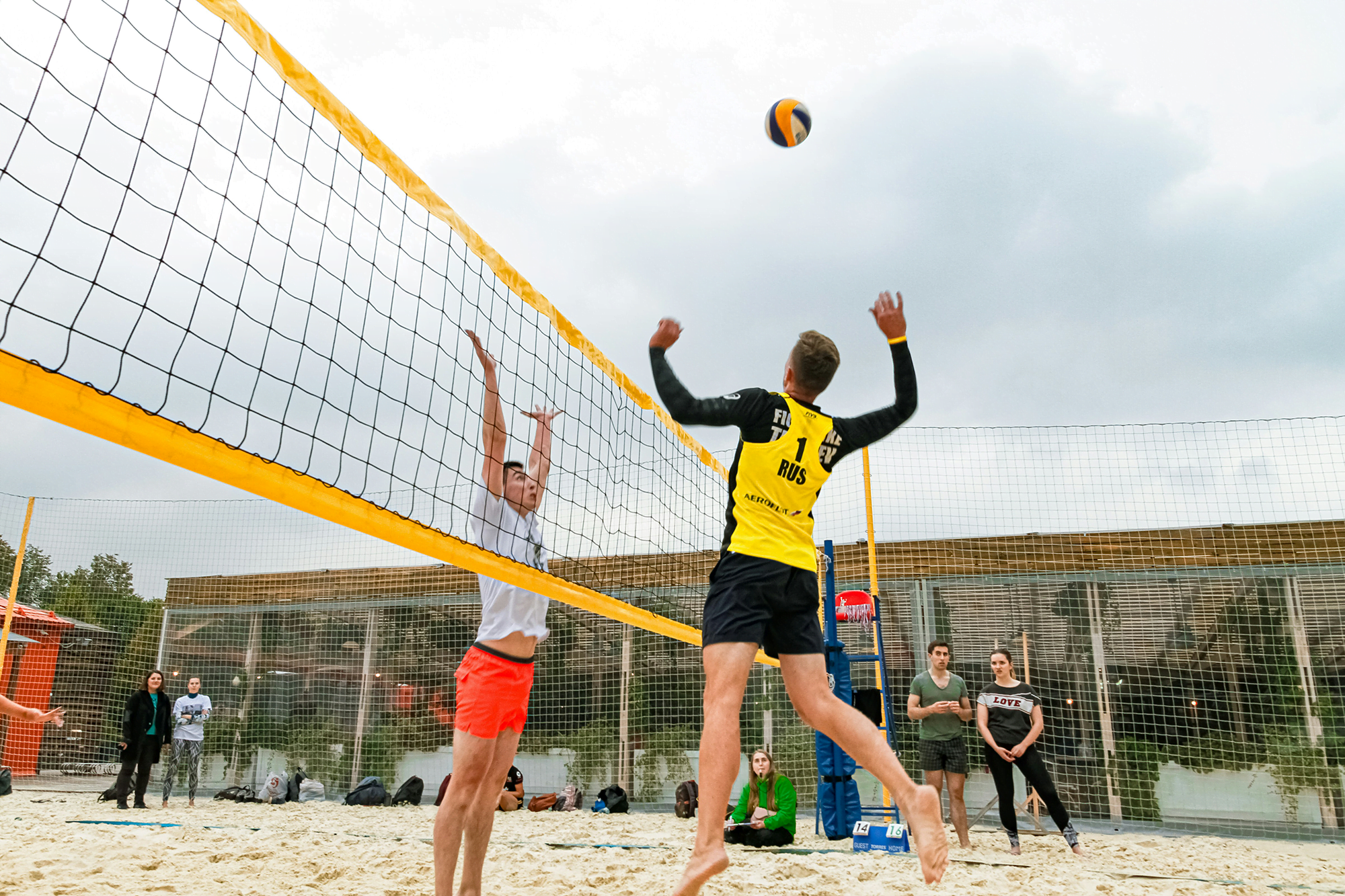
    Some of the differences between beach volleyball and indoor volleyball are obvious, like the number of players allowed — two versus six — and the courts — a smaller sand court versus a bigger indoor court. But there are subtle and significant differences in the balls themselves. Both beach and indoor volleyballs used for competition are required to weigh between 260 and 280 grams, but the expected diameter of the balls differs by about 1 centimeter, with beach volleyballs coming out slightly larger. The balls differ in their surface roughness, too, with indoor models being smoother, even before in-game wear.

    Although these differences seem minor, they can make a significant impact in the game. Volleyball regulations don’t specify a ball’s expected surface roughness or how many panels they should be made with. As in football, these seemingly cosmetic changes can strongly affect airflow around the ball and change its trajectory. Regulations require that all balls used in a given match be uniform, but that still requires athletes to potentially adjust to the behavior of a new ball at each competition. (Image credits: I. Garifullin, C. Chaurasia, C. Oskay, and M. Teirlinck)

    Related topics: How smoothness and panel design affect a football, volleyball aerodynamics, and vortex generators on cycling skinsuits

    For more ongoing and past Olympic coverage, click here.

  • Black Holes in a Blender

    Black Holes in a Blender

    Massive black holes drag and warp the spacetime around them in extreme ways. Observing these effects firsthand is practically impossible, so physicists look for laboratory-sized analogs that behave similarly. Fluids offer one such avenue, since fluid dynamics mimics gravity if the fluid viscosity is low enough. To chase that near-zero viscosity, experimentalists turned to superfluid helium, a version of liquid helium near absolute zero that flows with virtually no viscosity. At these temperatures, vorticity in the helium shows up as quantized vortices. Normally, these tiny individual vortices repel one another, but a spinning propeller — much like the blades of a blender — draws tens of thousands of these vortices together into a giant quantum vortex.

    Here superfluid helium whirls in a quantum vortex.
    Here superfluid helium whirls in a quantum vortex.

    With that much concentrated vorticity, the team saw interactions between waves and the vortex surface that directly mirrored those seen in black holes. In particular, they detail bound states and black-hole-like ringdown phenomena. Now that the apparatus is up and running, they hope to delve deeper into the mechanics of their faux-black holes. (Image credit: L. Solidoro; research credit: P. Švančara et al.; via Physics World)

  • Featured Video Play Icon

    Etna’s Blowing Rings

    Mount Etna has long been known for its smoke rings, but thanks to the opening of a new vent on the volcano’s southeast crater, it’s now making more rings than ever. Etna’s smoke rings are, more precisely, vortex rings — produced in the same way dolphins, swimmers, and whales make vortex rings: a sudden push of air through a roughly circular opening. It’s likely that Etna and other volcanoes make far more rings than those we see; we’re limited to noticing only the ones that entrain smoke and condensation to make them visible. (Video and image credit: The Straits Times; via Colossal)

  • Supernova Rings

    Supernova Rings

    Some 20,000 years ago, a massive star blew off a ring of dust and gas that expanded into the surrounding interstellar medium. Later, in 1987, the star exploded as supernova 1987A. That explosion lit the surrounding area, revealing a clumpy ring astronomers have struggled to explain. But a new team believes they have a fluid dynamical answer: the Crow instability.

    Closer to home, we see the Crow instability when an airplane’s contrails break up. It happens when two vortices that rotate in opposite directions are close to one another. Any wobble in one vortex is enhanced by the influence of its neighbor. Eventually, this breaks the original vortices apart and causes them to reform as a series of smaller vortex rings.

    A comparison between an image of SN 1987A and an illustration of the vortex rings thought to create that shape.
    A comparison between an image of SN 1987A and an illustration of the vortex ring interaction thought to create that shape.

    In the case of supernova 1987A, the researchers propose that the star originally blew off two vortex rings that, due to their mutual influence, broke down into a clumpy ring of vortices. (Image credits: NASA/ESA/CSA/M. Matsuura/R. Arendt/C. Fransson and NASA/ESA/A. Angelich + M. Wadas et al.; research credit: M. Wadas et al.; via APS Physics)

  • Featured Video Play Icon

    Visualizing Wingtip Vortices

    At the ends of an airplane‘s wings, the pressure difference between air on top of the wing and air below it creates a swirling vortex that extends behind the aircraft. In this video, researchers recreate this wingtip vortex in a wind tunnel, visualized with laser-illuminated smoke. The team shows the progression from no vortex to a strong, coherent vortex as the flow in the tunnel speeds up. Along the way, there are interesting asides, like the speed where the honeycomb used to smooth the upstream flow is suddenly visibly imprinted on the smoke! (Video and image credit: M. Couliou et al.)

  • Tornadoes in a Bucket

    Tornadoes in a Bucket

    In nature, some powerful tornadoes form additional tornadoes within their shear layer. These subvortices revolve around the main tornado, causing massive destruction in their wake. In the laboratory, researchers create a similar multi-tornado system with a spinning disk at the bottom of a shallow, cylindrical layer of water. Depending on how fast the disk spins, different numbers of subvortices form around the main vortex.

    In this poster, researchers show the transition from a 3-subvortex system to a 2-subvortex one. Starting at the 12 o’clock position and moving clockwise, we see 3 subvortices arranged in a triangle. A sudden change in the disk’s rotation speed destabilizes the system, causing the subvortices to break down and shift into a new 2-subvortex configuration. As this happens, material that was isolated in each subvortex (darker blue regions) is suddenly able to mix. That suggests that a real-world multiple vortex tornado might suddenly shed debris if it lost enough angular momentum. Back in the lab, though, the shift to a stable 2-subvortex system once again isolates material in individual subvortices and prevents it from mixing with the rest of the flow. (Image and research credit: G. Di Labbio et al. 1, 2)

  • Saharan Dust

    Saharan Dust

    In late January, dust from the Sahara blew westward toward the Cabo Verde archipelago before turning northward toward Europe. During winter and spring, Saharan dust tends to stay at lower altitudes, where it can be carried by the northeast trade winds. In contrast, from late spring to early fall, dust rises higher, carried westward by the Saharan Air Layer; there, the dust can help suppress both the formation and intensity of the Atlantic’s hurricanes.

    On the left side of the image scant clouds trace von Karman vortex streets behind the archipelago, marking the atmospheric disruption caused by the rocky islands. (Image credit: L. Dauphin; via NASA Earth Observatory)