Search results for: “surface tension”

  • A Soft Cell in Microgravity

    A Soft Cell in Microgravity

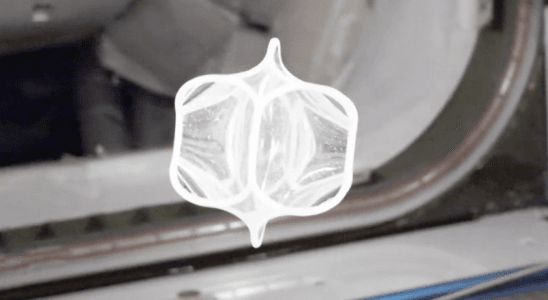
    There are many shapes that can be tiled to fill space, but nearly all of them have sharp corners. Last year, mathematicians identified a new class of shapes, known as “soft cells,” that feature curved edges and faces but very few sharp corners. Like traditional polyhedrals, soft cells can tile to fill a space completely without overlapping or gapping.

    Now the researchers, with some help from astronauts aboard the ISS, have brought one of their soft cells to life. Using an edge skeleton to guide the shape, astronaut Tibor Kapu filled the skeleton with water, which, in microgravity, formed a perfect soft cell, complete with faces curved by surface tension to their minimal area. See it in action below. (Image and video credit: HUNOR/NASA; research credit: G. Domokos et al.; via Oxford Mathematics)

    Fediverse Reactions
  • Featured Video Play Icon

    Marangoni Bursting With Surfactants

    A few years ago, researchers described how an alcohol-water droplet atop an oil bath could pull itself apart through surface tension forces. Dubbed Marangoni bursting, this phenomena has shown up several times since. Here, researchers explore a twist on the behavior by adding surfactants to see how they affect the bursting phenomenon. (Video and image credit: K. Wu and H. Stone; via GFM)

    Fediverse Reactions
  • The Balvenie

    The Balvenie

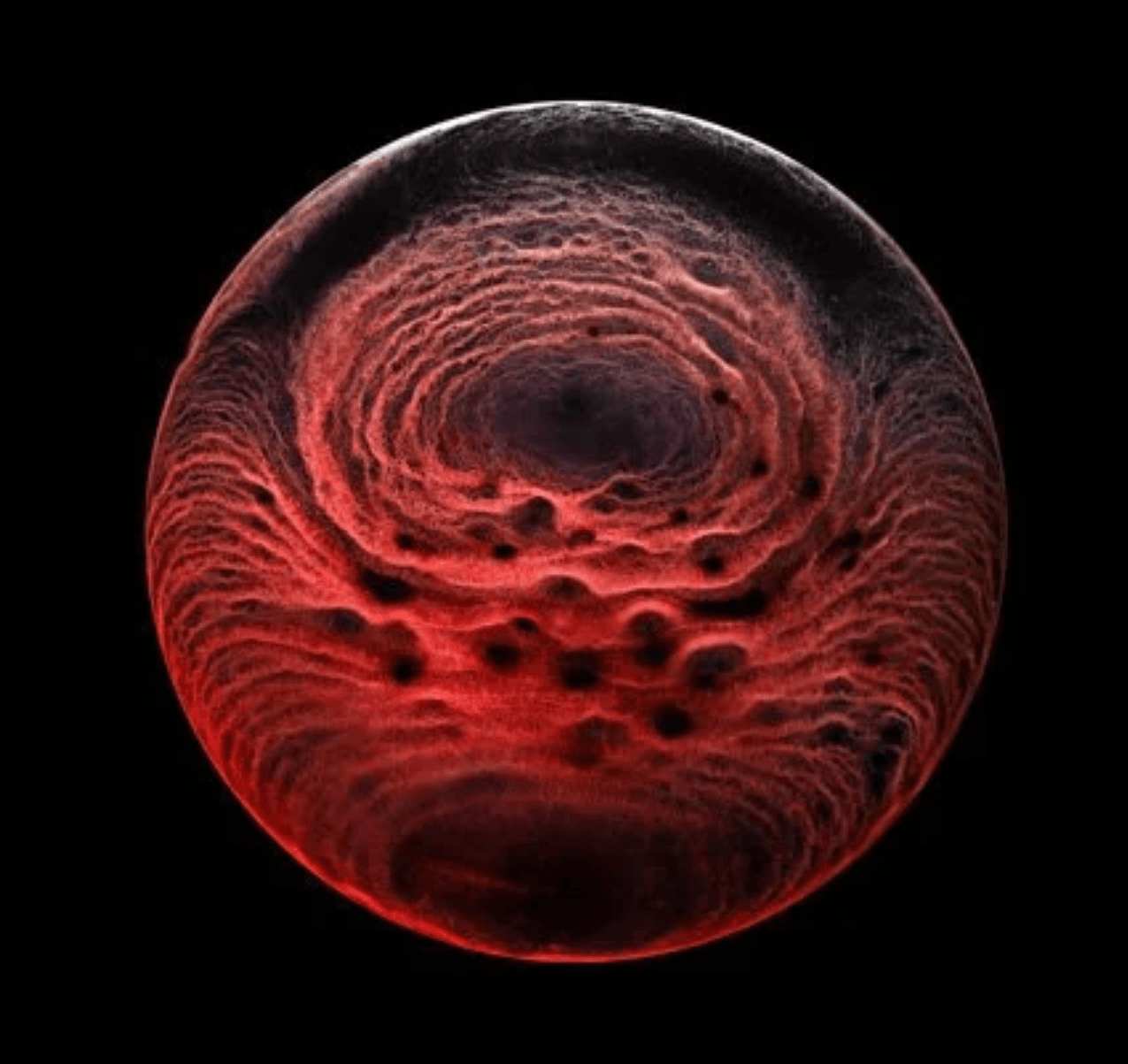
    Photographer Ernie Button explores the stains left behind when various liquors evaporate. This one comes from a single malt scotch whisky by The Balvenie. The stain itself is made up of particles left behind when the alcohol and water in the whisky evaporate. The pattern itself depends on a careful interplay between surface tension, evaporation, pinning forces, and internal convection as the whisky puddle dries out. (Image credit: E. Button/CUPOTY; via Colossal)

    Fediverse Reactions
  • Deep Breaths Renew Lung Surfactants + A Special Announcement

    Deep Breaths Renew Lung Surfactants + A Special Announcement

    Taking a deep breath may actually help you breathe easier, according to a new study. When we inhale, air fills our alveoli–tiny balloon-like compartments within our lungs. To make alveoli easier to open, they’re coated in a surfactant chemical produced by our lungs. Just as soap’s surfactant molecules squeezing between water molecules lowers the interface’s surface tension, our lung surfactants gather at the interface and lower the surface tension, making alveoli easier to inflate.

    But things are a little more complicated in our lungs than in our kitchen sink because of our constant cycle of breathing, which stretches and compresses our lungs’ surfaces and surfactant layers. Imagine a flat interface, lined with surfactant molecules; then stretch it. As the interface stretches, gaps open between the surfactant molecules and allowing molecules from the interior of the liquid to push their way to the newly stretched interface, changing the surface tension. If the interface gets compressed, some of the excess molecules will get pushed back into the liquid bulk.

    In looking at how lung surfactants respond to these cycles of compression and stretching, the researchers found that the lung liquid develops a microstructure during cycles of shallow breathing that makes the surface tension higher, thus making lungs harder to fill. In contrast, a deep breath like a sigh replenished the saturated lipids at the interface, lowering surface tension and making lungs more compliant. So a deep sigh actually can help you breathe easier. (Image credit: F. MΓΈller; research credit: M.. Novaes-Silva et al.; via Gizmodo)

    P.S.I’ve got a book (chapter)! Several years ago, I joined an amazing group of women to write two books (one for middle grades and one for older audiences) about our journeys as scientists. And they are out now! In fact, today we’re holding a “Book Bomb” where we aim for as many of us as possible to buy the book(s) on the same day. If you’d like to join (and get ahead on your gift shopping), here are (affiliate) links:

    Fediverse Reactions
  • Featured Video Play Icon

    Competing Time Scales

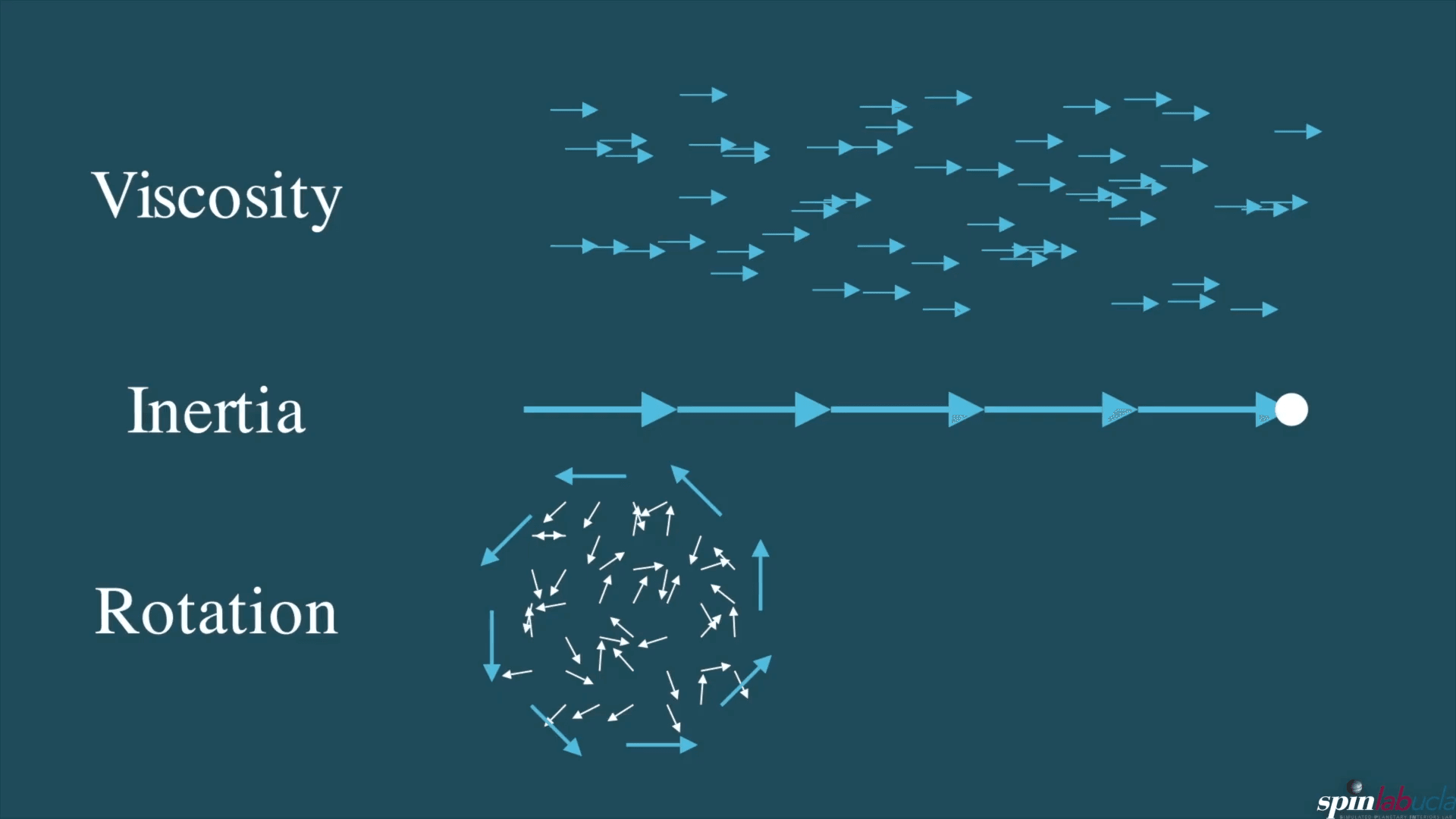
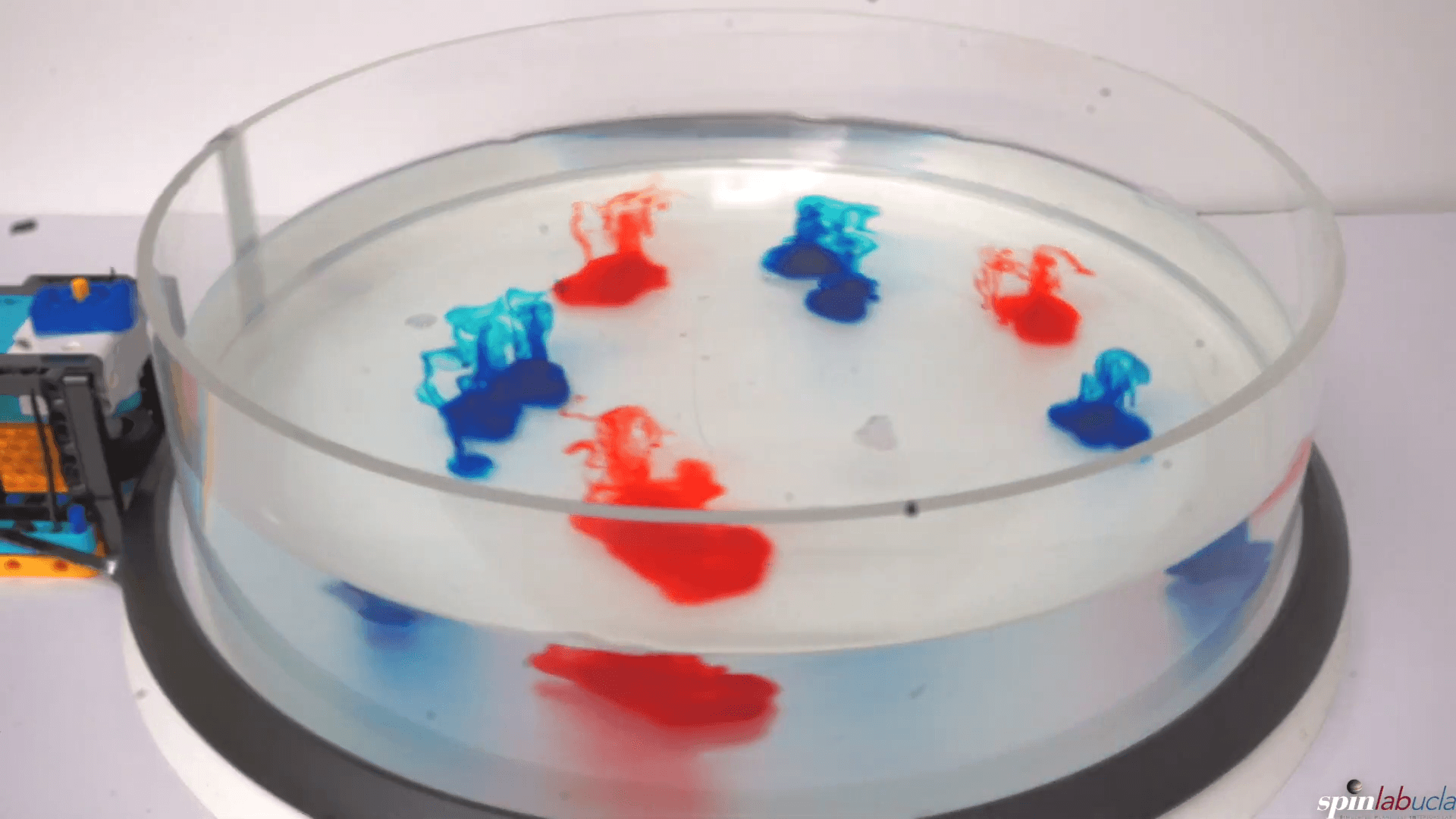
    Fluid dynamics often comes down to a competition between the different forces acting in a flow. Inertia, surface tension, viscosity, gravity, rotation — flows can be affected by all of these and more. In this video, researchers describe the three dominant forces in a rotating fluid like a planet’s atmosphere: viscosity, the fluid’s resistance to flowing; inertia, the fluid’s resistance to accelerating; and rotation, the overall spin of a fluid.

    As shown in the video, which of these three forces dominates will change depending on the speed at which the force acts. We quantify this concept using time scales; the force with the smallest time scale can act fastest and will, therefore, win the tug-of-war. (Video and image credit: UCLA SpinLab)

    Fediverse Reactions
  • Featured Video Play Icon

    Dissolution and Crystallization

    A colorful assortment of salts dissolve and recrystallize in this microscopic timelapse video by retired engineer Jay McClellan. Every step is a gorgeous rainbow of color as the cobalt, copper, and sodium chlorides dissolve, mix, and change. Though we don’t see what’s going on in the water, fluid dynamics are a critical component of both dissolution and crystallization. In the former, concentration gradients change the water’s density, driving buoyant flows. For the latter, crystallization comes out of evaporation, where surface tension often determines where solid particles get left behind. (Video and image credit: J. McClellan; via Colossal)

  • Ice Discs Surf on Herringbones

    Ice Discs Surf on Herringbones

    Inspired by the roaming rocks of Death Valley, researchers went looking for ways to make ice discs self-propel. Leidenfrost droplets can self-propel on herringbone-etched surfaces, so the team used them here, as well. On hydrophilic herringbones, they found that meltwater from the ice disc would fill the channels and drag the ice along with it.

    But on hydrophobic herringbone surfaces, the ice disc instead attached to the crest of the ridges and stayed in place–until enough of the ice melted. Then the disc would detach and slingshot (as shown above) along the herringbones. This self-propulsion, they discovered, came from the asymmetry of the meltwater; because different parts of the puddle had different curvature, it changed the amount of force surface tension exerted on the ice. Thus, when freed, the ice disc tried to re-center itself on the puddle.

    The team is especially interested in how effects like this could make ice remove itself from a surface. After all, it requires much less energy to partially melt some ice than it does to completely melt it. (Image and research credit: J. Tapochik et al.; via Ars Technica)

    Fediverse Reactions
  • Dancing Metal Droplets

    Dancing Metal Droplets

    Droplets of a gallium alloy are liquid at room temperature. When spiked with aluminum grains and immersed in a solution of NaOH, the droplets change shape and move in a random fashion. This video delves into the phenomenon, describing how a chemical reaction with the aluminum grains changes the local surface tension and creates Marangoni flows that make the droplets move. To get the droplet motion, you need to have the aluminum concentration just right. With too little, there’s not enough Marangoni flow. With too much, the hydrogen gas produced in the chemical reaction disrupts the droplet motion. (Video and image credit: N. Kim)

    Fediverse Reactions
  • Charged Drops Don’t Splash

    Charged Drops Don’t Splash

    When a droplet falls on a surface, it spreads itself horizontally into a thin lamella. Sometimes — depending on factors like viscosity, impact speed, and air pressure — that drop splashes, breaking up along its edge into myriad smaller droplets. But a new study finds that a small electrical charge is enough to suppress a drop’s splash, as seen below.

    Video showing three different droplets, each with a different electrical charge, impacting an insulated surface. From left to right, the charges are: 0.0 nC, 0.08 nC, and 0.1 nC. The uncharged drop splashes, the low charge drop splashes less, and the final charged droplet spreads without splashing.

    The drop’s electrical charge builds up along the drop’s surface, providing an attraction that acts somewhat like surface tension. As a result, charged drops don’t lift off the surface as much and they spread less overall; both factors inhibit splashing.* The effect could increase our control of droplets in ink jet printing, allowing for higher resolution printing. (Image and research credit: F. Yu et al.; via APS News)

    *Note that this only works for non-conductive surfaces. If the surface is electrically conductive, the charge simply dissipates, allowing the splash to occur as normal.

    Fediverse Reactions
  • Hot Droplets Bounce

    Hot Droplets Bounce

    In the Leidenfrost effect, room-temperature droplets bounce and skitter off a surface much hotter than the drop’s boiling point. With those droplets, a layer of vapor cushions them and insulates them from the hot surface. In today’s study, researchers instead used hot or burning drops (above) and observed how they impact a room-temperature surface. While room-temperature droplets hit and stuck (below), hot and burning droplets bounced (above).

    In this case, the cushioning air layer doesn’t come from vaporization. Instead, the bottom of the falling drop cools faster than the rest of it, increasing the local surface tension. That increase in surface tension creates a Marangoni flow that pulls fluid down along the edges of the drop. That flow drags nearby air with it, creating the cushioning layer that lets the drop bounce. In this case, the authors called the phenomenon “self-lubricating bouncing.” (Image and research credit: Y. Liu et al.; via Ars Technica)

    A room temperature droplet strikes and sticks to a scratched glass surface.