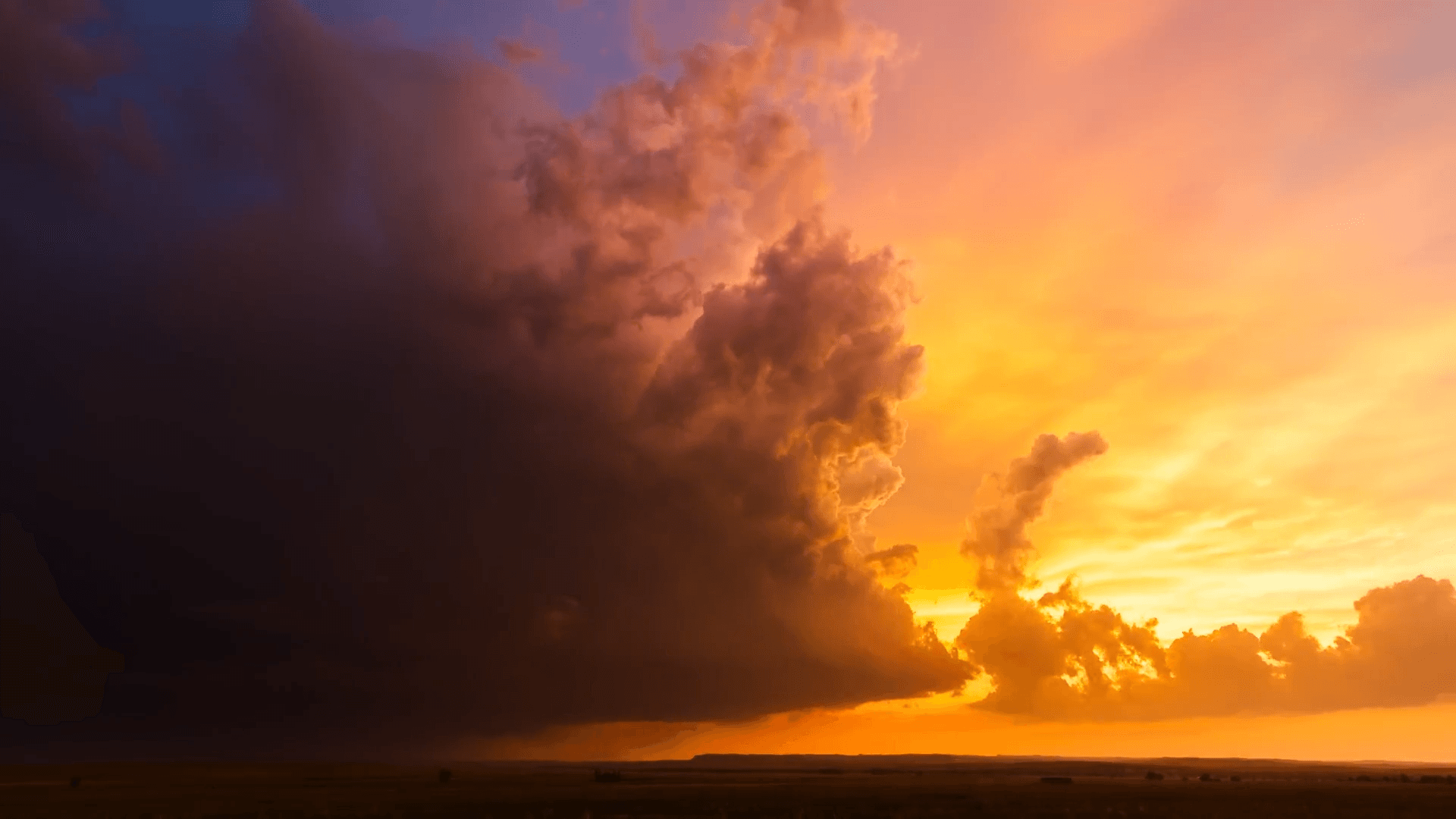
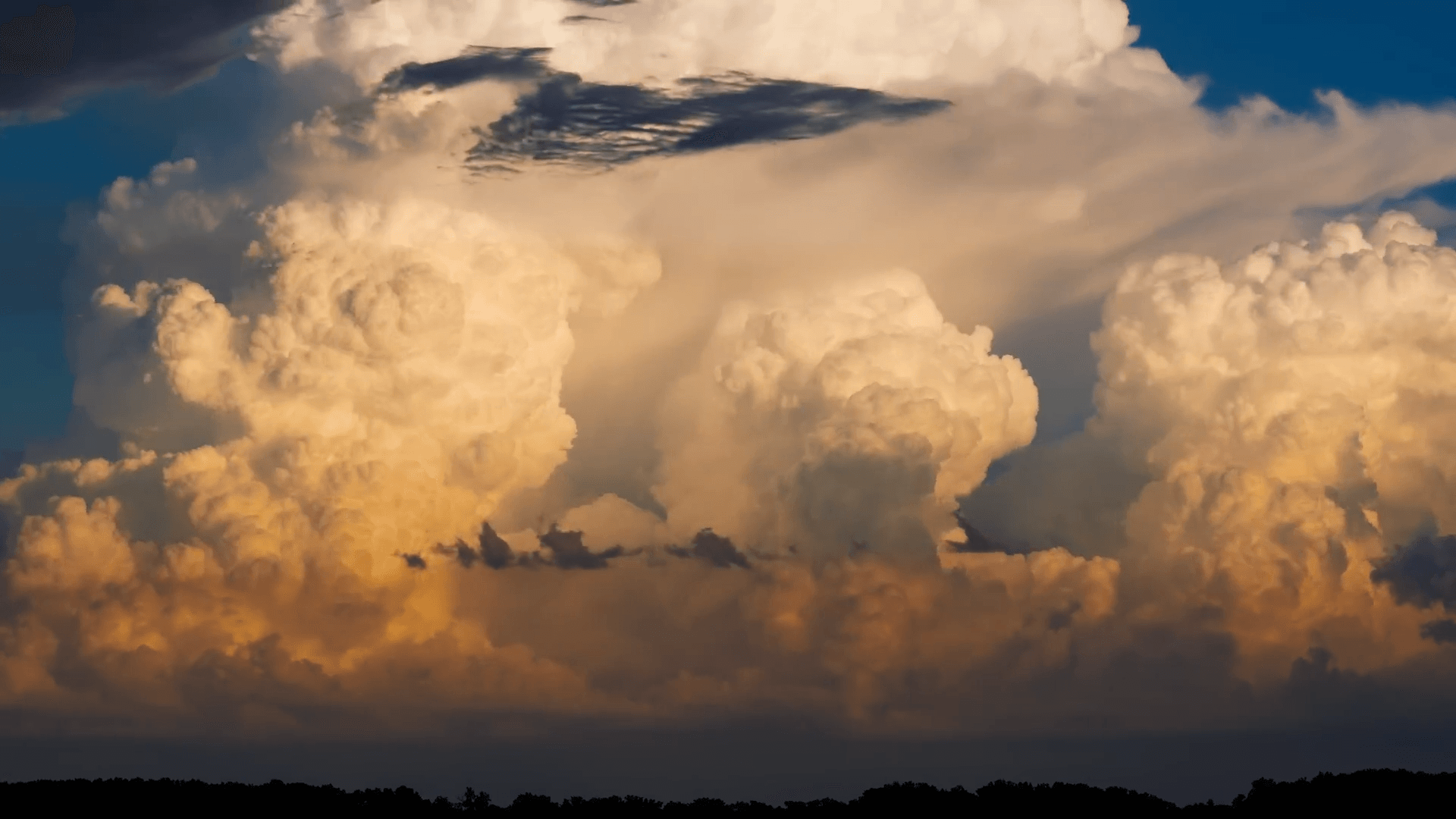
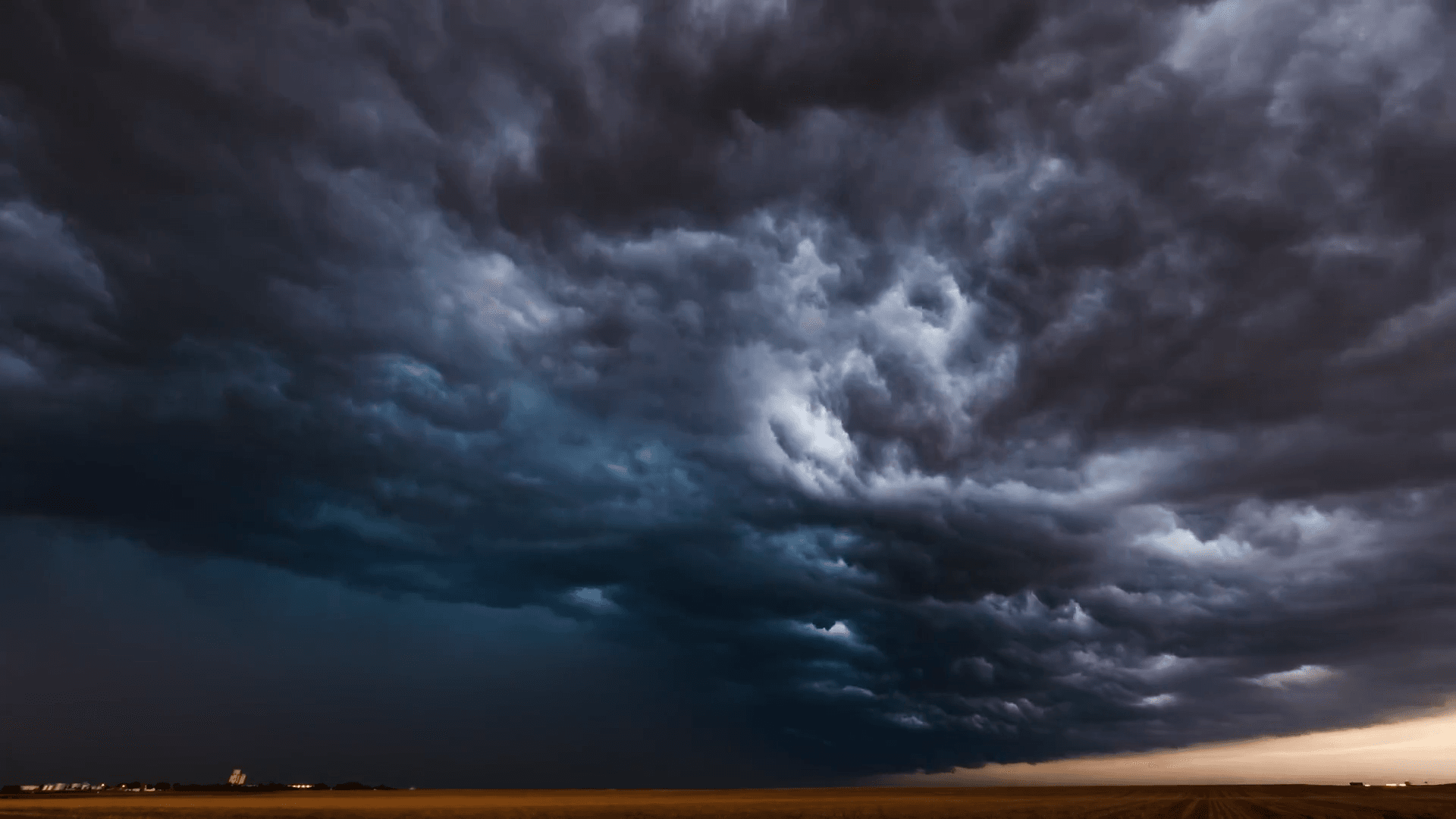
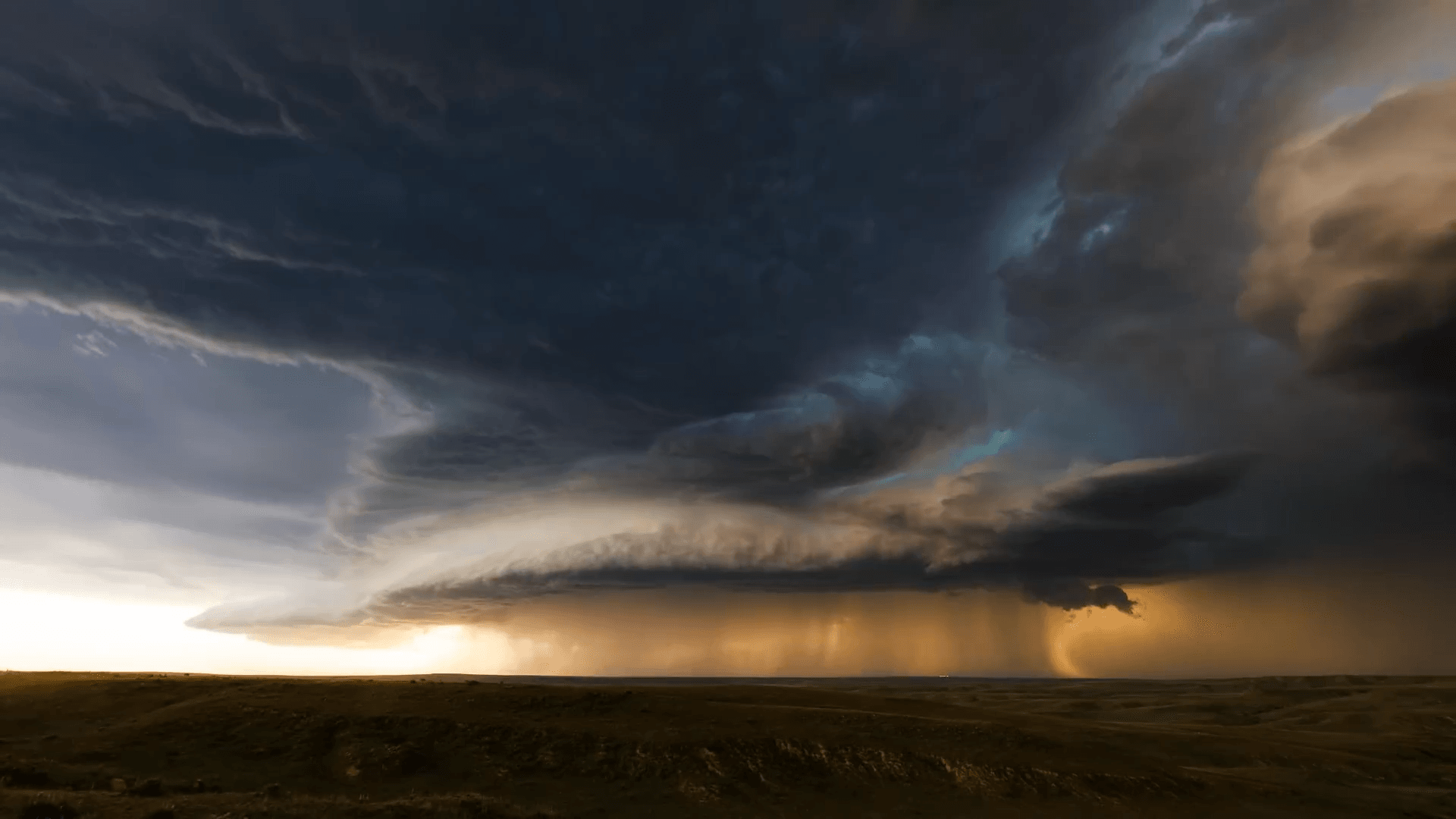
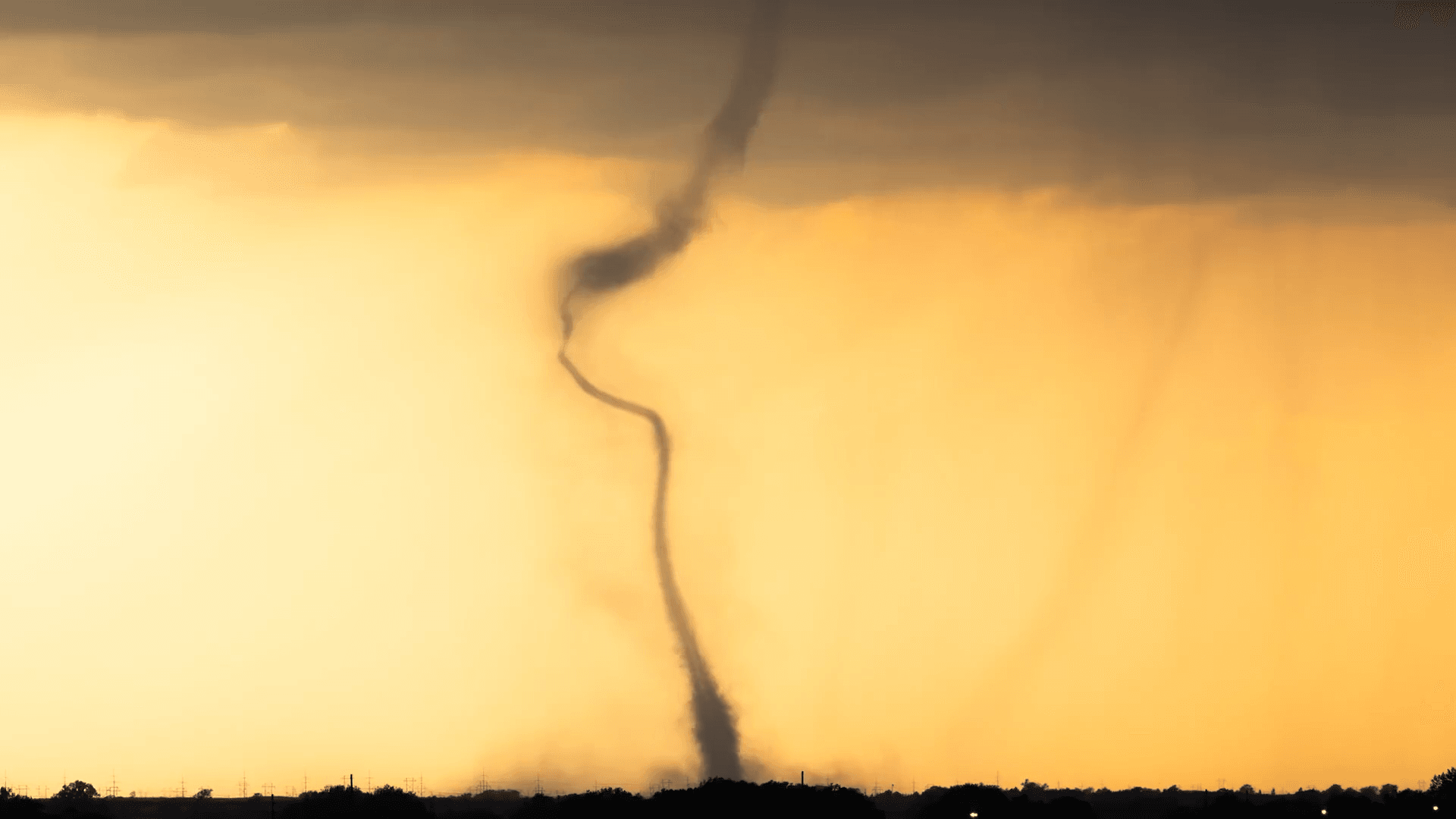
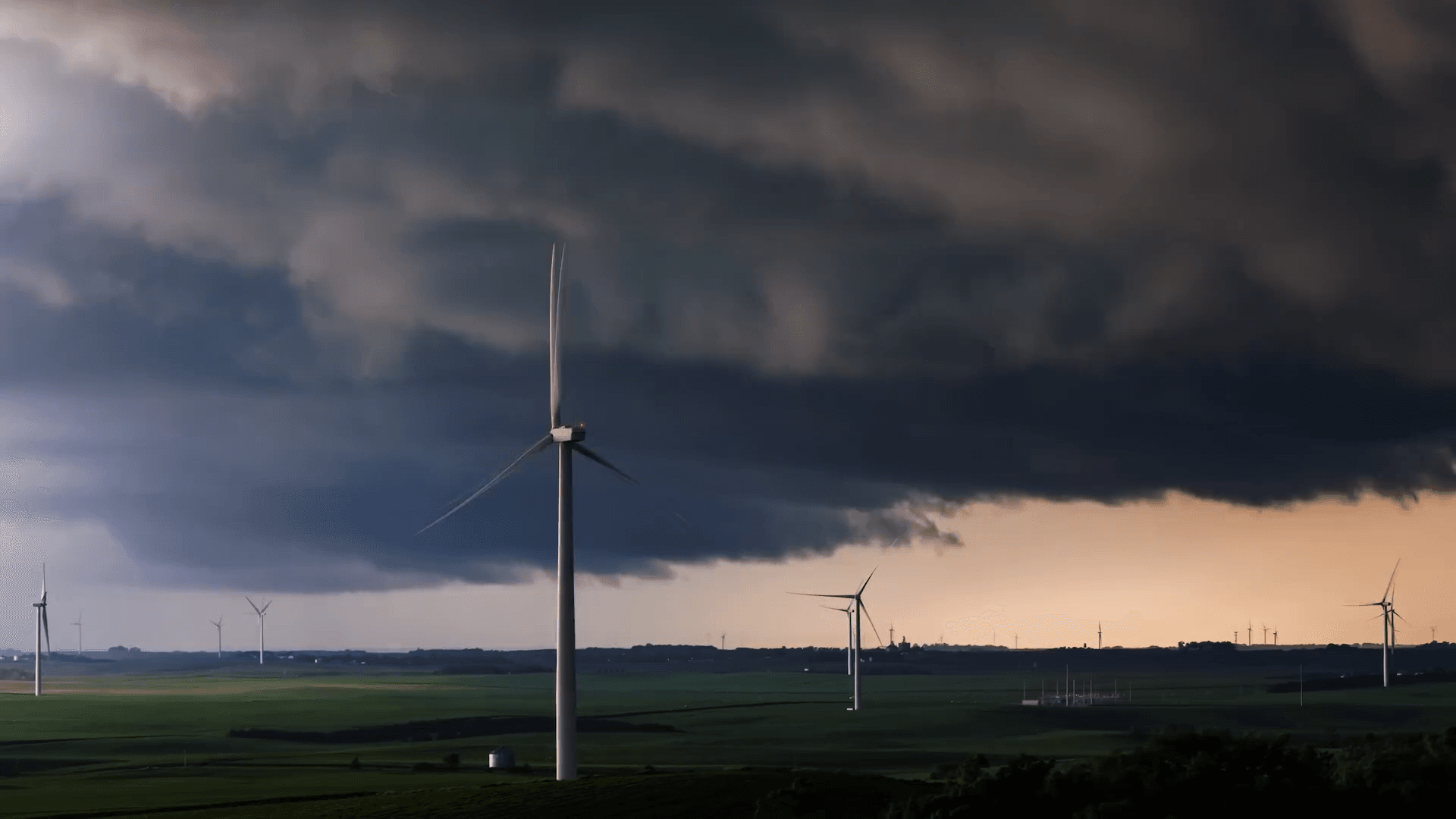
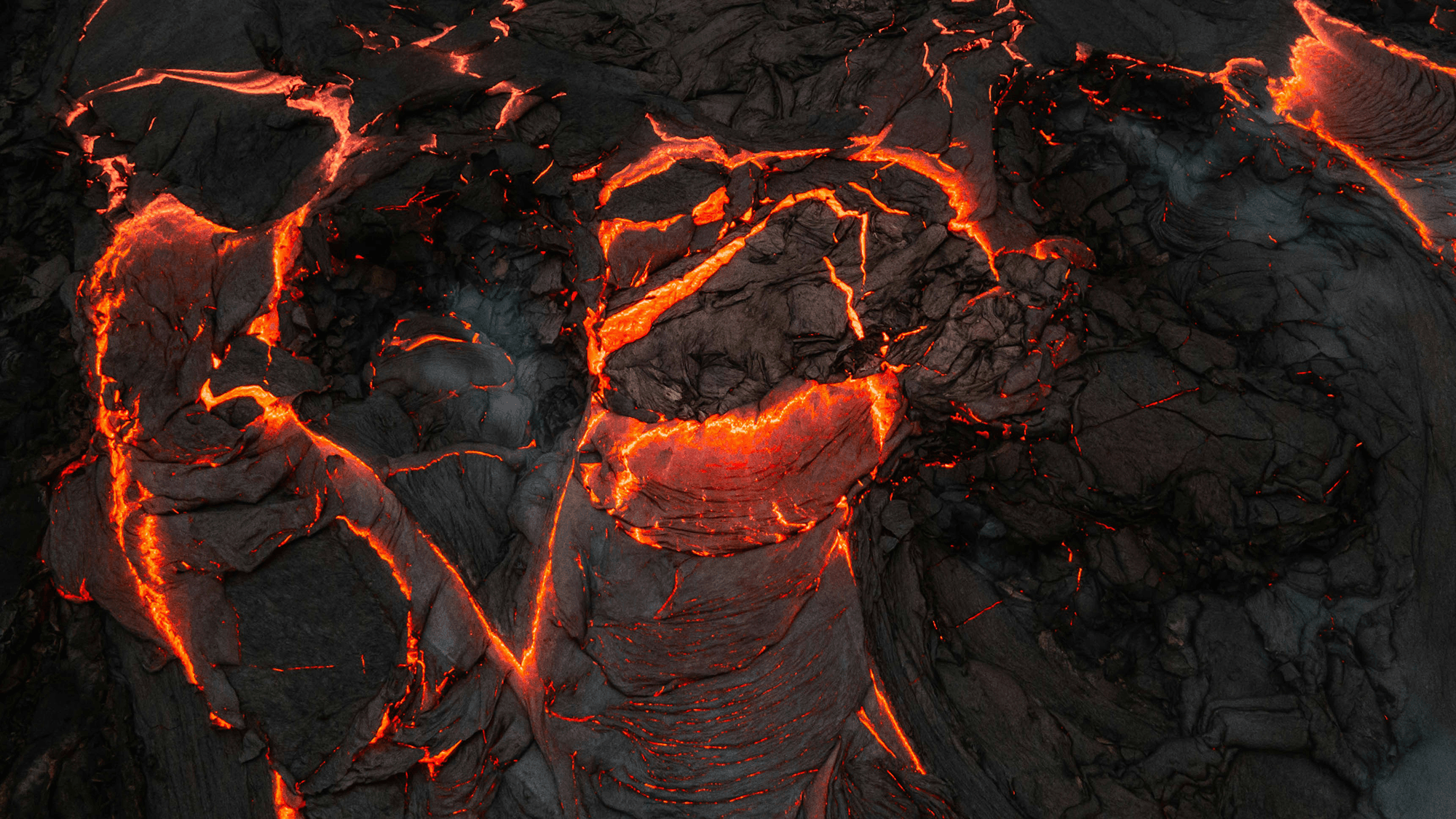
It’s time for another storm-chasing timelapse from photographer Mike Olbinski! “Vorticity 6” focuses on supercell thunderstorms and their tornadoes. There’s billowing turbulent convection, undulating asperitas, bulging mammatus, microbursts, and more. There’s nothing like timelapse to highlight the growth, rotation, and shear involved in these storms. (Video and image credit: M. Olbinski)
Search results for: “shear”

Non-Newtonian Effects in Magma Flows
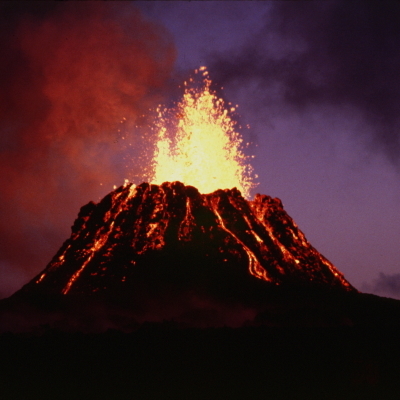
As magma approaches the surface, it forces its way through new and existing fractures in the crust, forming dikes. When a volcano finally erupts, the magma’s viscosity is a major factor in just how explosive and dangerous the eruption will be, but a new study shows that what we see from the surface is a poor predictor of how magma actually flows within the dike.
Researchers built their own artificial dike using a clear elastic gelatin, which they injected water and shear-thinning magma-mimics into. By tracking particles in the liquids, they could observe how each liquid followed on its way to the surface. All of the liquids formed similar-looking dikes at a similar speed, but within the dike, the liquids flowed very differently. Water cut a central jet through the gelatin, then showed areas of recirculation along the outer edges. In contrast, the shear-thinning liquids — which are likely more representative of actual magma — showed no recirculation. Instead, they flowed through the dike in a smooth, fan-like shape.
The team cautions that surface-level observations of developing magma dikes provide little information on the flow going on underneath. Instead, their results suggest that volcanologists modeling magma underground should take care to include the magma’s shear-thinning to properly capture the flow. (Image credit: T. Grypachevska; research credit: J. Kavanagh et al.; via Eos)

Baseball’s Mysterious Rubbing Mud
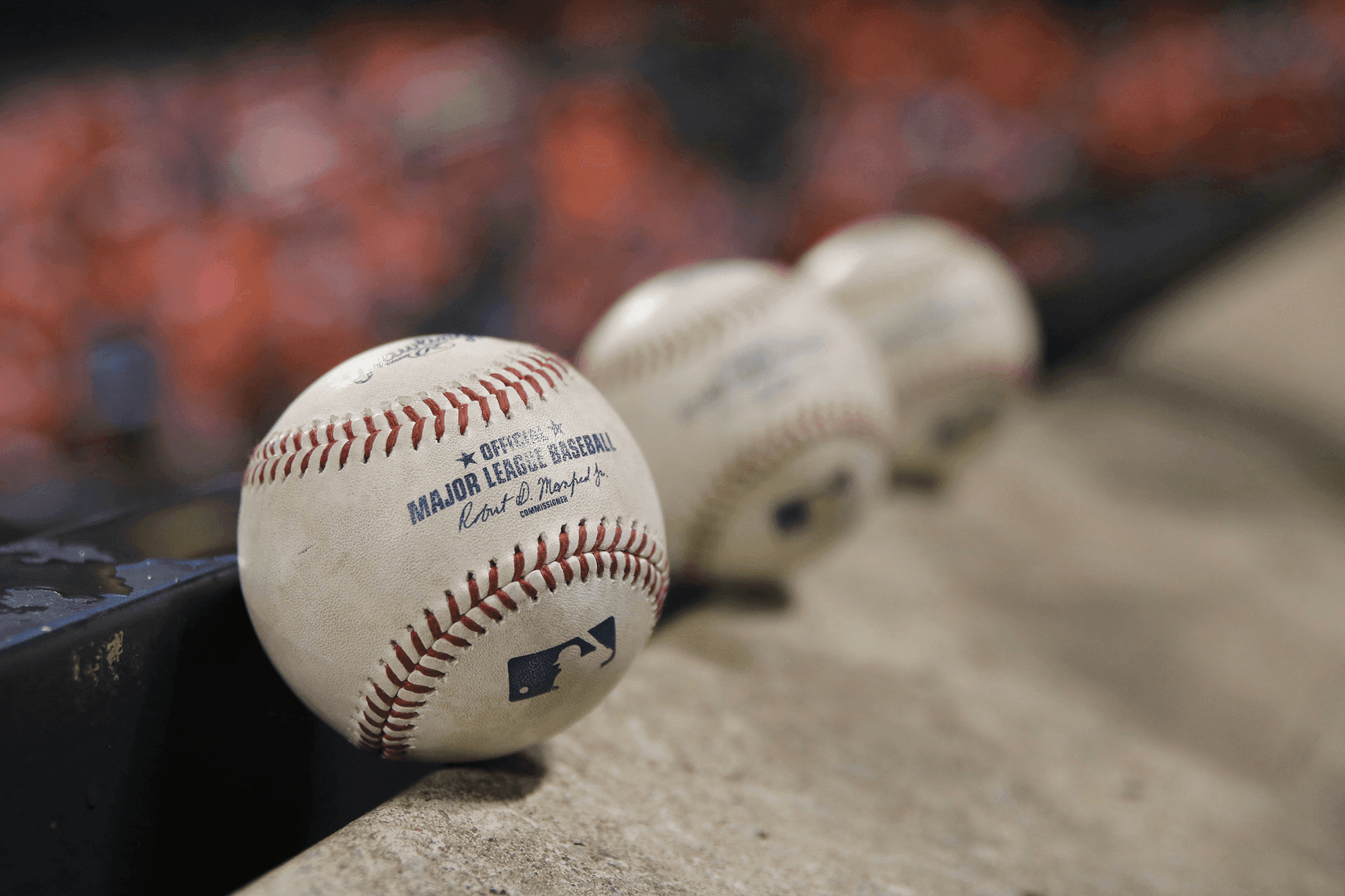
Since 1938, every ball in Major League Baseball has been covered in a special “rubbing mud” harvested from a secret location in New Jersey. Although the league has tried in the past to replace the mud with an alternative, it’s never stuck. Researchers wondered just what makes this mud so special, so naturally, they brought some to the lab to study its composition and rheology.
The mud consists of clay, silt, and sand with a smattering of organic particles. The make-up was pretty typical of river mud in the region, although researchers noted a drop-off in large particle sizes that probably indicates some sieving. In terms of rheology, the mud is shear-thinning, meaning it behaves a bit like lotion. It sits solidly in the hand until it’s deformed, at which point it smoothly coats the surface as a liquid would.
So how does the mud change the baseballs? The researchers found three effects. First, the mud’s shear-thinning allowed it to fill in any pores or imperfections in the ball’s surface, creating a more uniform surface. Second, the dried mud’s residue doubled the ball’s contact adhesion. And, finally, the occasional large sand particles glued to the ball by the dried mud added friction. As the researchers put it, the rubbing mud “spreads like skin cream and grips like sandpaper.” (Image credit: L. Juarez; research credit: S. Pradeep et al.; via EOS)

“One”
A 4-minute, unedited one-shot video of colorful paint sliding down a sheet? Yes, please.
Beautiful visuals aside, there are some really interesting physics involved here. It’s unclear whether the there’s any change in the speed at which paint gets deposited at the top of the incline over the course of the video, yet we see huge changes in the visual patterns. This happens, in part, because the layer of paint is getting thicker and heavier over time, changing the dynamics of its slide under gravity. There may even be some shear-thinning going on, given that paint is usually non-Newtonian. I can imagine some connections to landslides, avalanches, and other gravity currents with non-Newtonian fluids. (Video and image credit: R. De Giuli)

Warming Temperatures Increase Turbulence
After multiple high-profile injuries caused by atmospheric turbulence, you might be wondering whether airplane rides are getting rougher. Unfortunately, the answer is yes, at least for clear-air (i.e., non-storm-related) turbulence in the North Atlantic region. It seems that climate change, as predicted, is increasing the bumpiness of our atmosphere. There are a couple of mechanisms at play here.
The first is that warming temperatures fuel thunderstorms. When ground-level temperatures and water temperatures are warmer, that provides more warm, moist air rising up and feeding atmospheric convection. Especially in the summertime, that translates into stronger, more frequent thunderstorms; even with flights avoiding the storms themselves, there’s greater turbulence surrounding them.
The second mechanism relates to wind, specifically in the mid-latitudes. In general, a temperature difference between two regions causes stronger winds. (Think about the windy conditions that accompany an incoming cold front.) At the mid-latitudes, the difference between cold polar regions and warmer equatorial ones creates a strong wind, known as the jet stream. Now, as temperature gradients increase at cruising altitudes, the jet stream gets stronger, which means bigger changes in wind speed with altitude. And its those wind speed differences at different heights that drive turbulence.
So, yes, we’re likely to see more turbulent flights now and in the future. But, fortunately, there’s a simple way to avoid injuries from that bumpiness: buckle up! If you keep your seat belt fastened while you’re seated, you can avoid getting tossed around by unexpected G-forces. (Image credit: G. Ruballo; see also Gizmodo)

Building In a Stingless Hive
Honeybees, with their stingers, get lots of attention, but the Americas have plenty of stinger-less honeymakers, too. These stingless bees are native to Mexico, where beekeepers cultivate them for pollination. Without stingers and venom, the bees use their building prowess to keep out unwanted visitors. Much of the hive — from the entrance’s nightly gate to the pods where young are stored — is built from cerumen, a substance the bees create by mixing wax with resins they collect from nearby trees. Just as they do with pollen, worker bees collect drops of resin and store them on their hind legs before flying back to the hive. The viscous fluid sticks well, until a swipe of a leg shears it enough to lower its viscosity and slide it off. (Video and image credit: Deep Look)

Evolving Fingers
If you sandwich a viscous fluid between two plates and inject a less viscous fluid, you’ll get viscous fingers that spread and split as they grow. This research poster depicts that situation with a slight twist: the viscous fluid (transparent in the image) is shear-thinning. That means its viscosity drops when it’s deformed. In this situation, the fingers formed by the injected (blue) fluid start out the way we’d expect: splitting as they grow (inner portion of the composite image). But then, the tip-splitting stops and the fingers instead elongate into spikes (middle ring). Eventually, as the outer fluid’s viscosity drops further, the fingers round out and spread without splitting (outer arc of the image). (Image credit: E. Dakov et al.; via GoSM)

Dendritic Painting Physics
In the art of Akiko Nakayama, colors branch and split in a tree-like pattern. In studying the process, researchers found the physics intersected art, soft matter mechanics, and statistical physics. In dendritic painting, the process starts with an underlying layer of acrylic paint, diluted with water. Atop this wet layer, you place a drop of acrylic ink mixed with isopropyl alcohol.
The combination of both layers is key. The alcohol-acrylic drop on a Newtonian substrate will show spreading, driven by Marangoni forces, but no branching. It’s the slightly shear-thinning nature of the diluted acrylic paint substrate that allows dendrites to form. As the overlying drop expands, it shears the underlayer, changing its viscosity and allowing the branches to form. You can see video of the process here. (Image credit: A. Nakayama; research credit: S. Chan and E. Fried; via Physics World)

Tornadoes in a Bucket
In nature, some powerful tornadoes form additional tornadoes within their shear layer. These subvortices revolve around the main tornado, causing massive destruction in their wake. In the laboratory, researchers create a similar multi-tornado system with a spinning disk at the bottom of a shallow, cylindrical layer of water. Depending on how fast the disk spins, different numbers of subvortices form around the main vortex.
In this poster, researchers show the transition from a 3-subvortex system to a 2-subvortex one. Starting at the 12 o’clock position and moving clockwise, we see 3 subvortices arranged in a triangle. A sudden change in the disk’s rotation speed destabilizes the system, causing the subvortices to break down and shift into a new 2-subvortex configuration. As this happens, material that was isolated in each subvortex (darker blue regions) is suddenly able to mix. That suggests that a real-world multiple vortex tornado might suddenly shed debris if it lost enough angular momentum. Back in the lab, though, the shift to a stable 2-subvortex system once again isolates material in individual subvortices and prevents it from mixing with the rest of the flow. (Image and research credit: G. Di Labbio et al. 1, 2)

Vortex Below
When a drop of ethanol lands on a pool of water, surface tension forces draw it into a fast-spreading film. Evenly-spaced plumes form at the edges of the film, then the film stops spreading and instead retracts. All of this takes place in about 0.6 seconds. But, as the image above shows, there’s more that goes on beneath the surface. A vortex ring forms and spreads under the film, driven by the shear layer under the edge of the plumes. Here, the vortex ring is visible in the swirling particles near the water surface. (Image and research credit: A. Pant and B. Puthenveettil)