Shear-thinning isn’t just confined to canned whipped cream. It’s also a feature of such non-Newtonian fluids as ketchup, shampoo, latex paint, and blood. The NASA research on shear-thinning the video author refers to is here and comes from the Critical Viscosity of Xenon-2 (CVX-2) experiment flown on the final mission of Columbia. Surprisingly, almost all of the experimental data was recovered from the crash. #
Search results for: “shear”
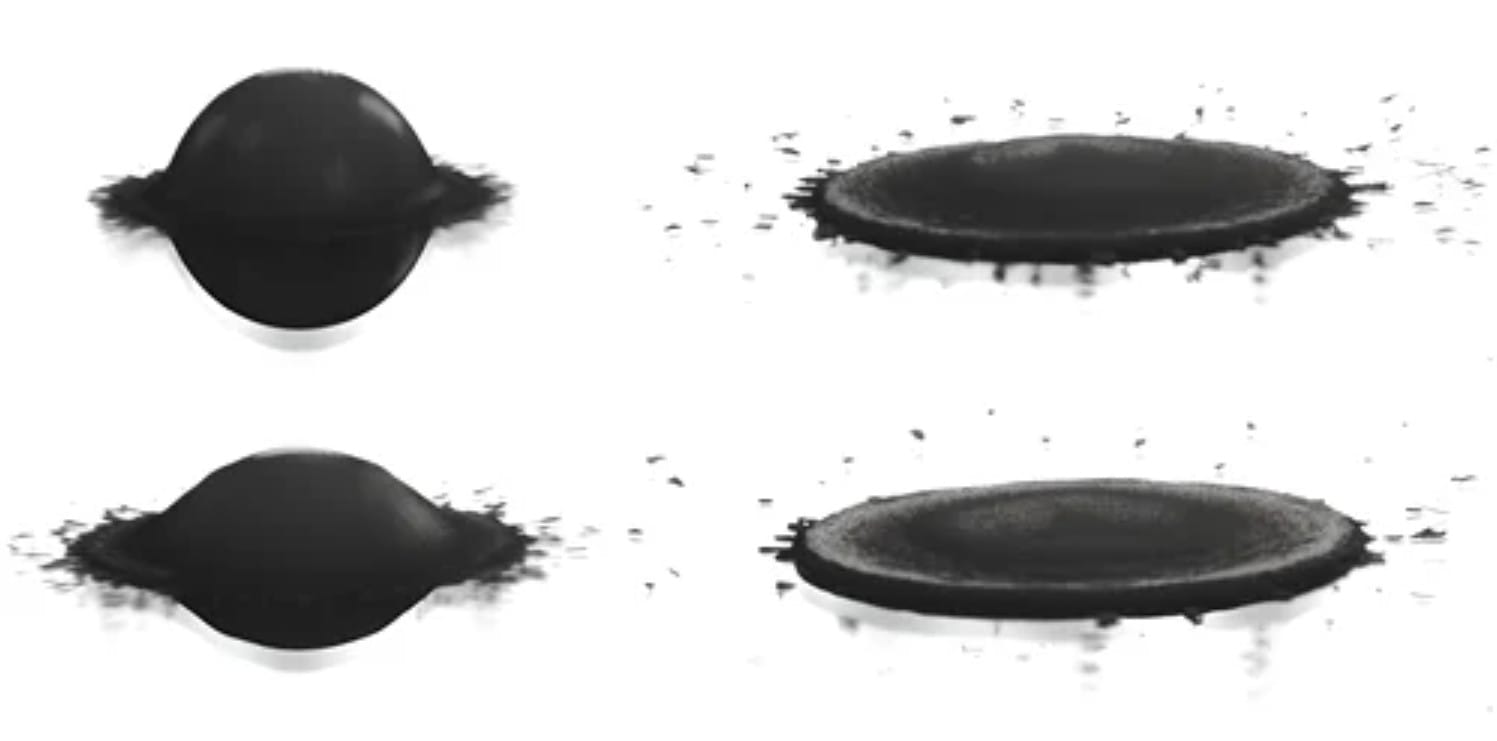
Dropping Oobleck
Oobleck is a peculiar substance. Formed from a suspension of cornstarch particles in water, it can flow like a liquid at low shear rates or jam into a solid under impact. Here, researchers explore what happens to a droplet of oobleck impacting a surface. As they expected, the team found that dilute drops could spread like a normal liquid during impact (top), and denser suspensions could impact like a solid would (below). But at the right conditions, they found that cornstarch-rich droplets could show liquid-like behavior at high shear rates and transition to solid-like behavior once the shear rate slowed down. (Image and research credit: A. Mobaseri et al.; via APS)


“Inferno”
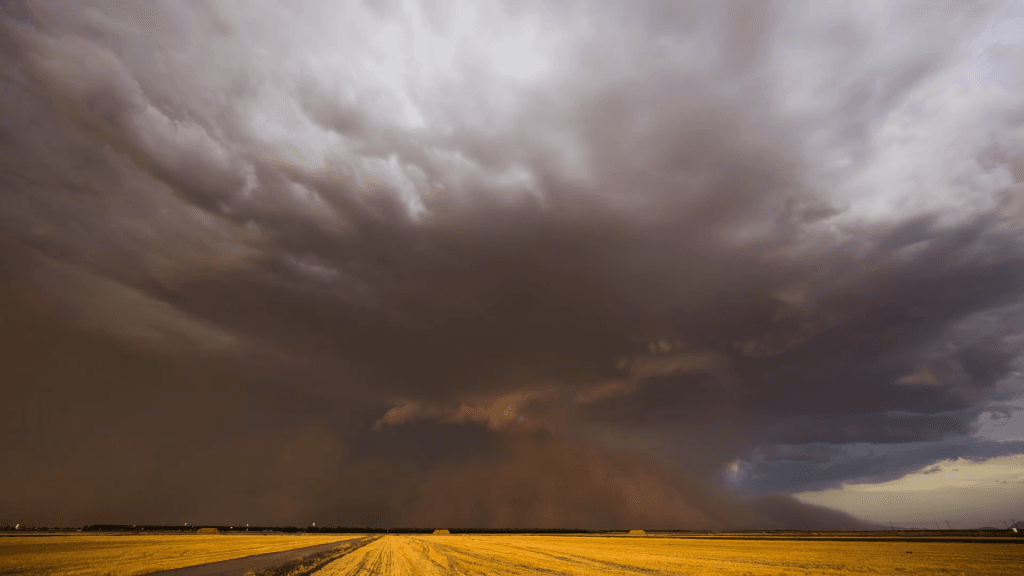
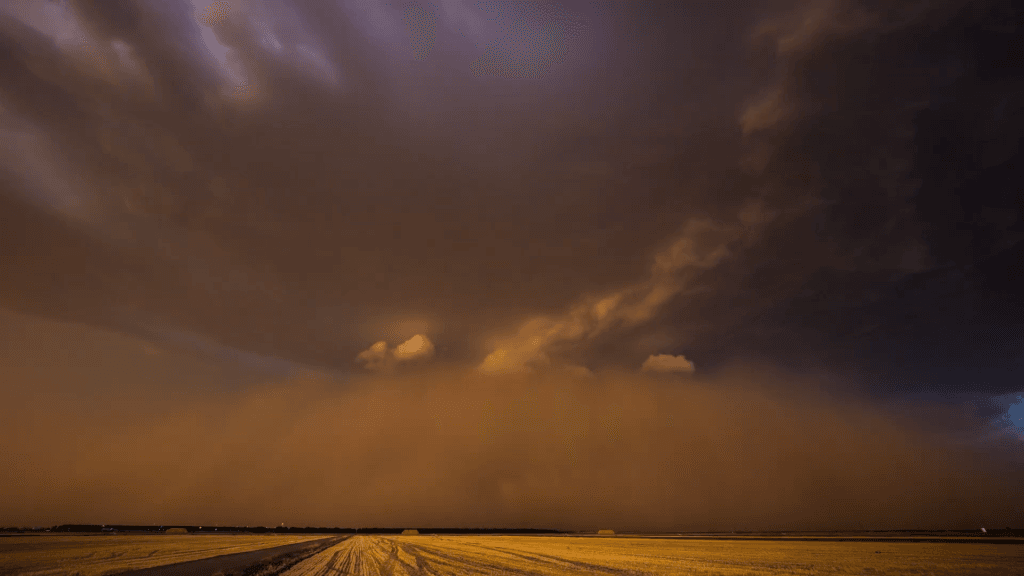
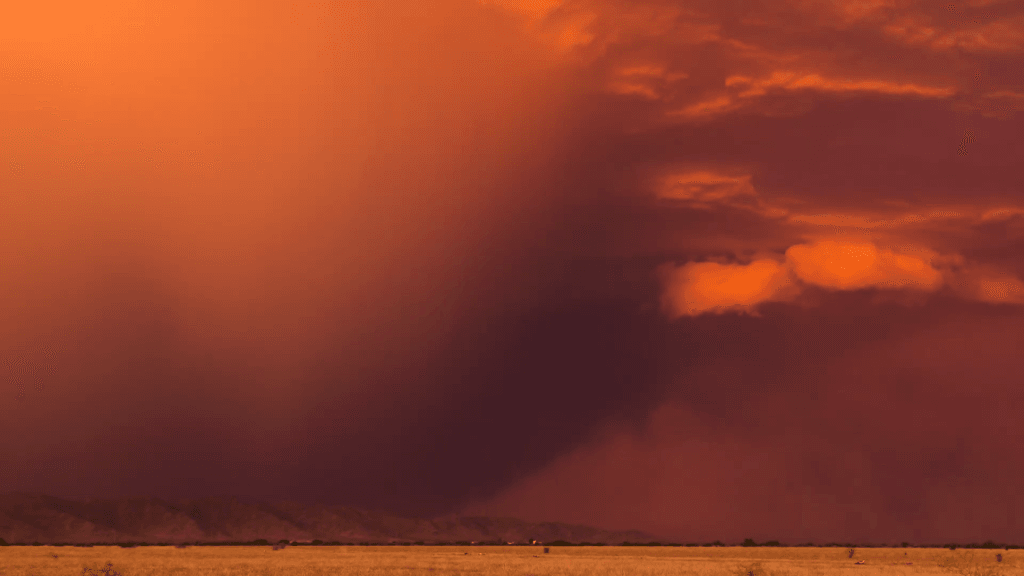
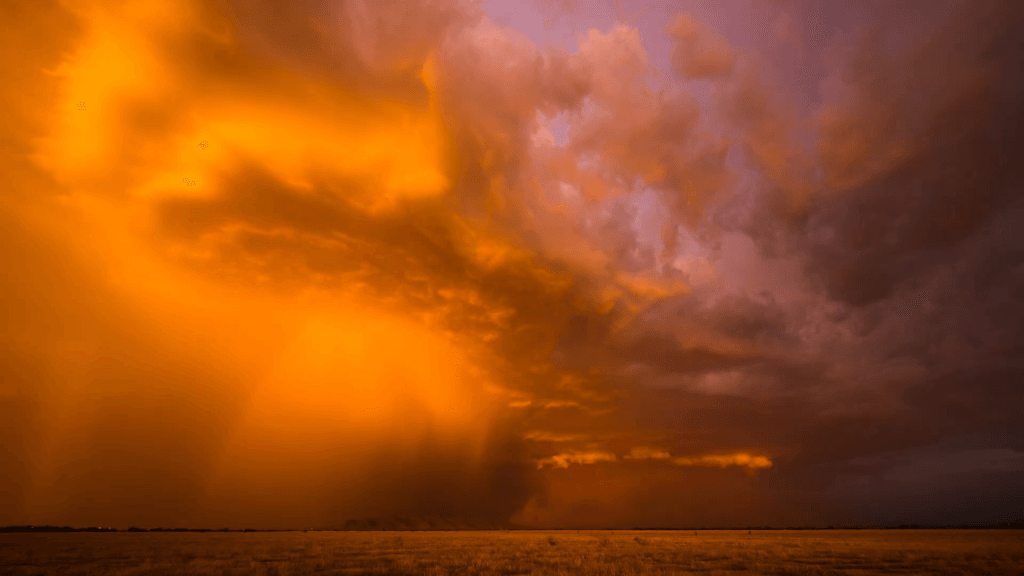
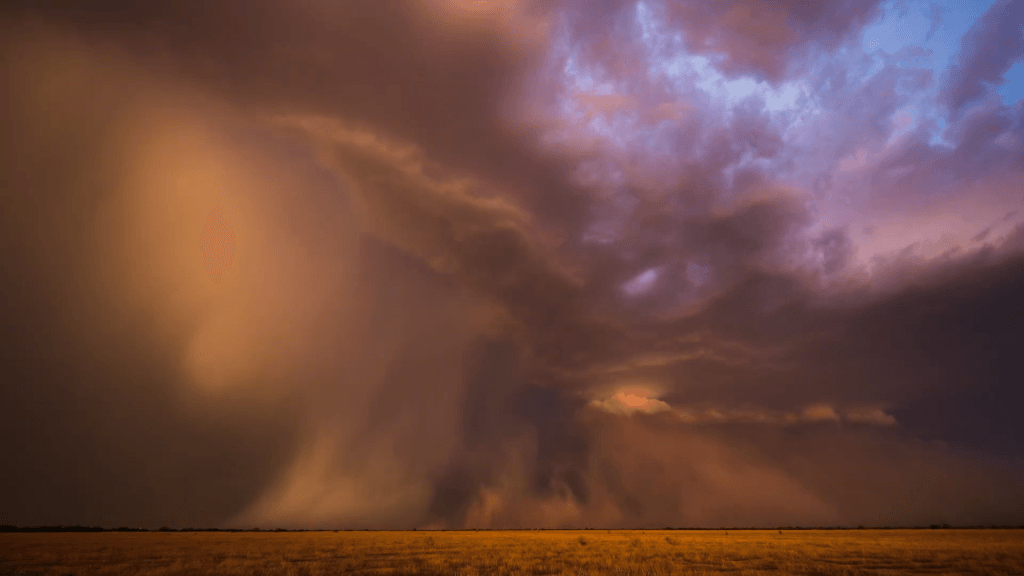
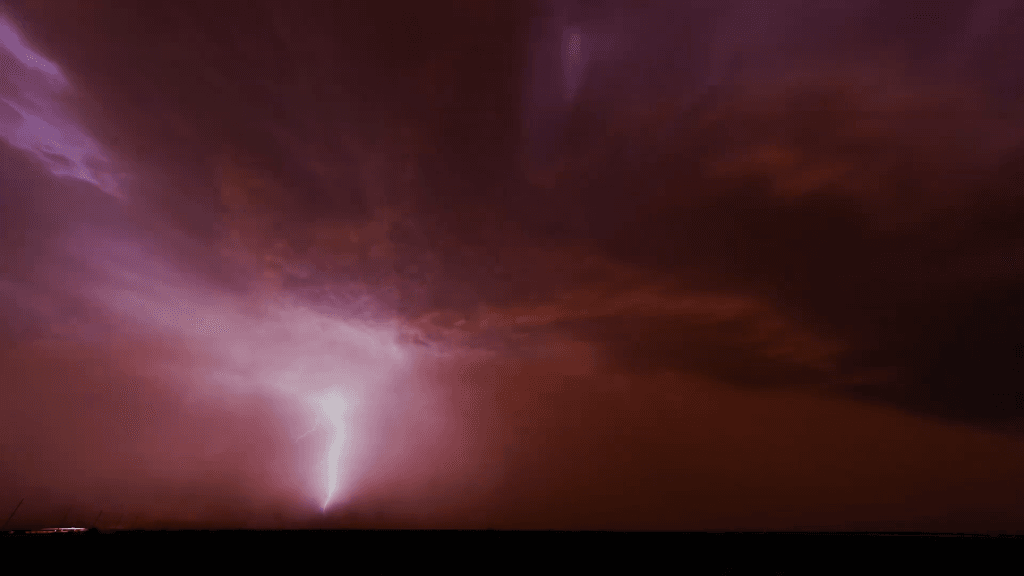
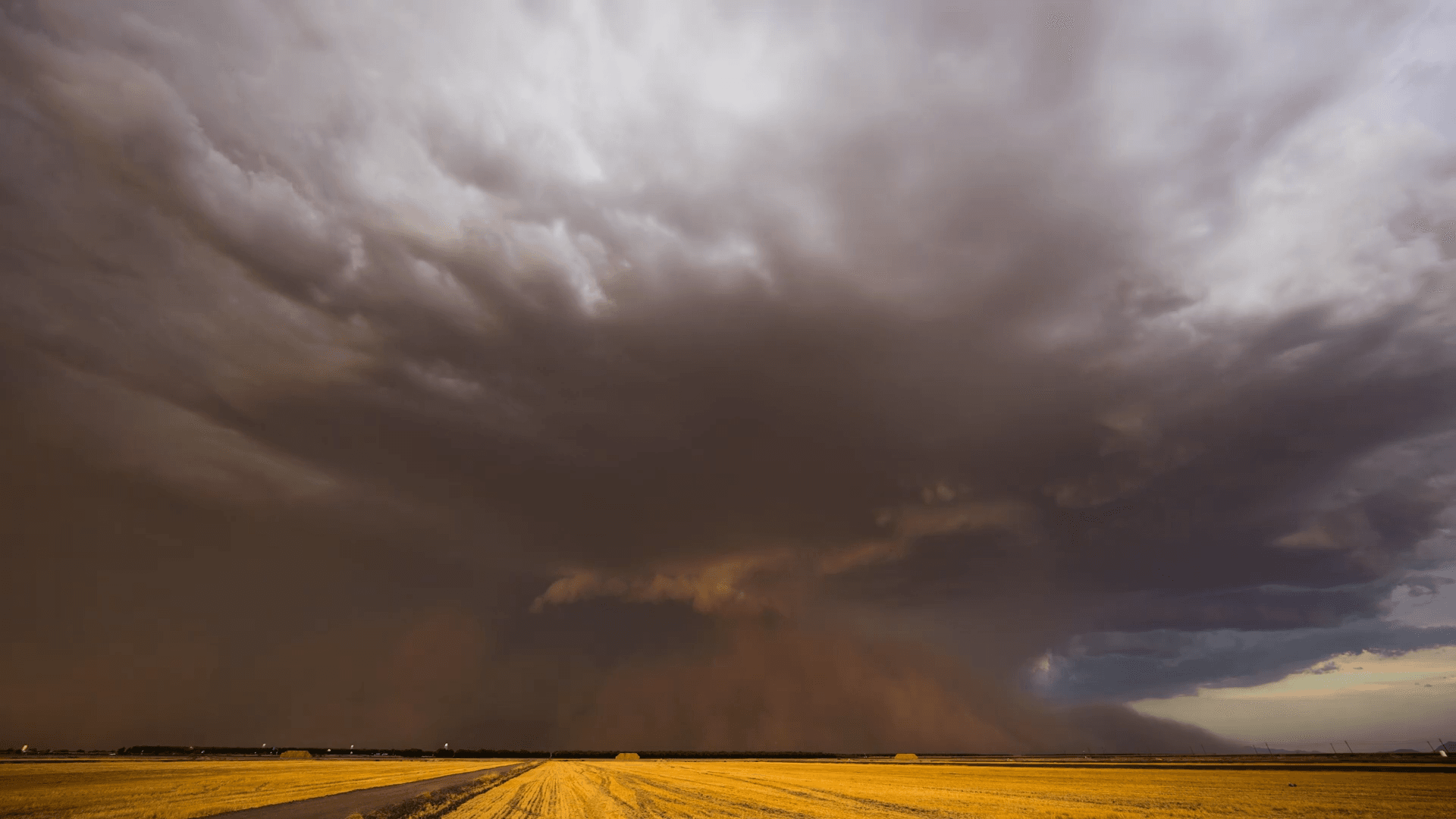
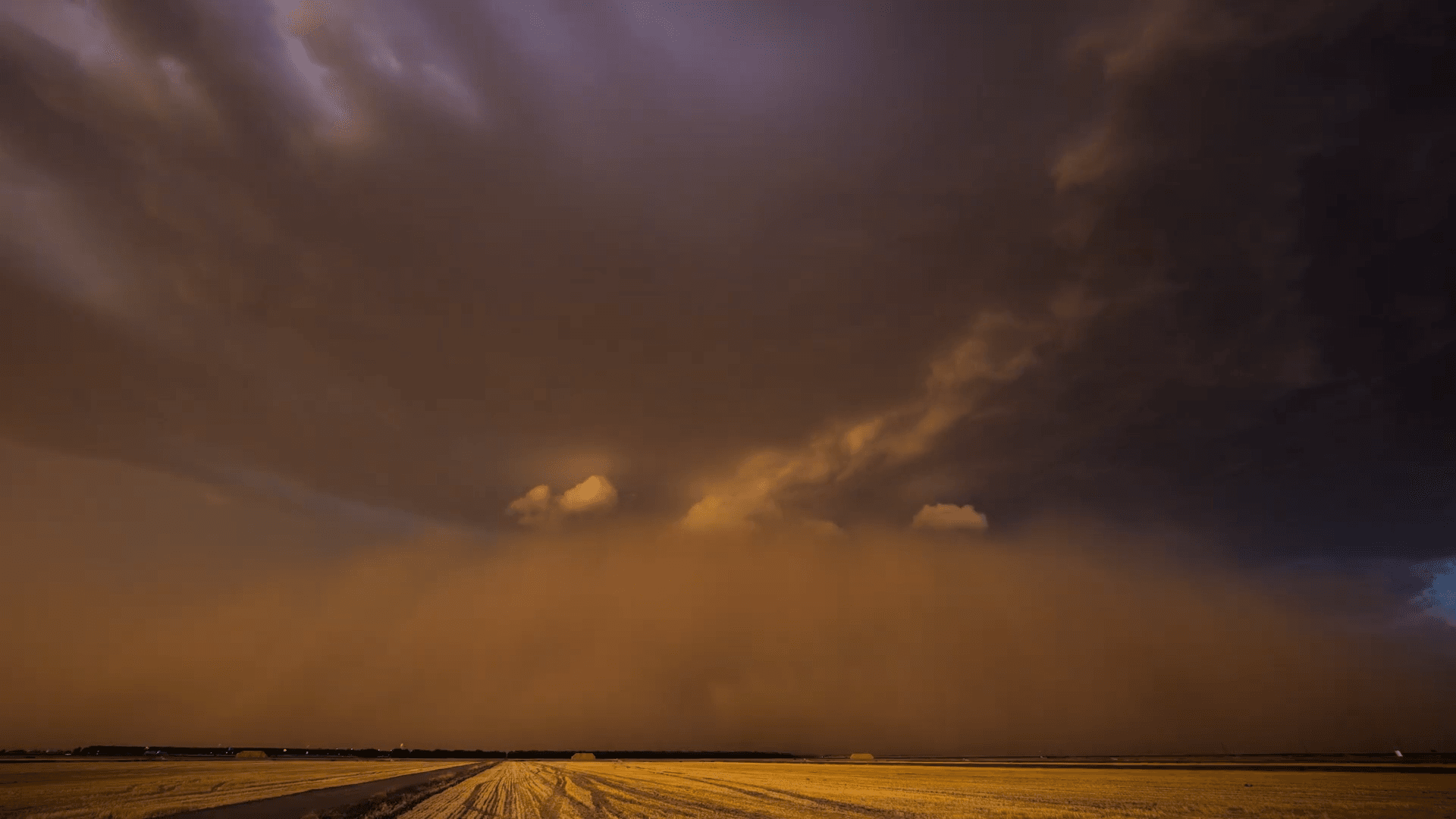
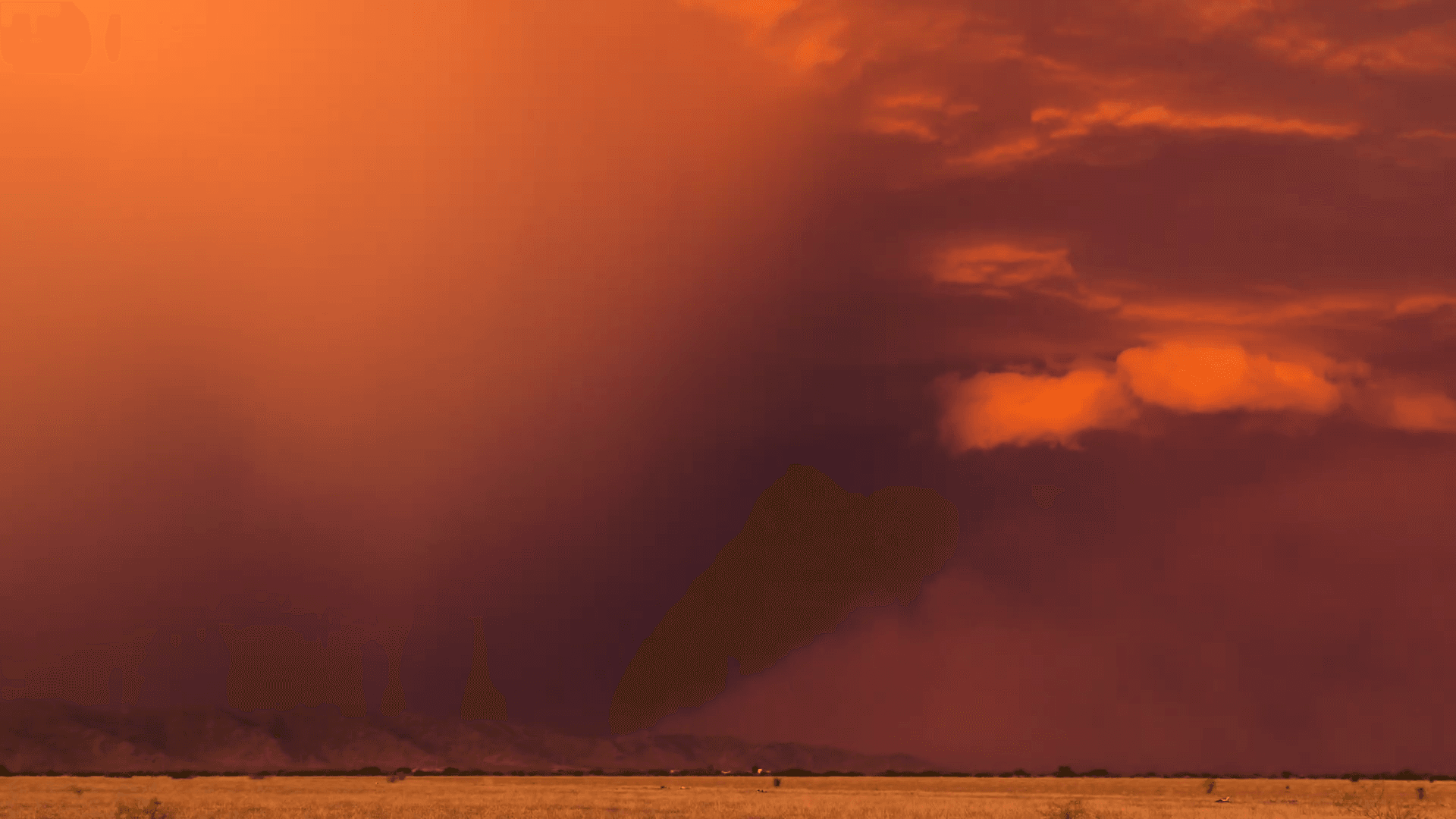
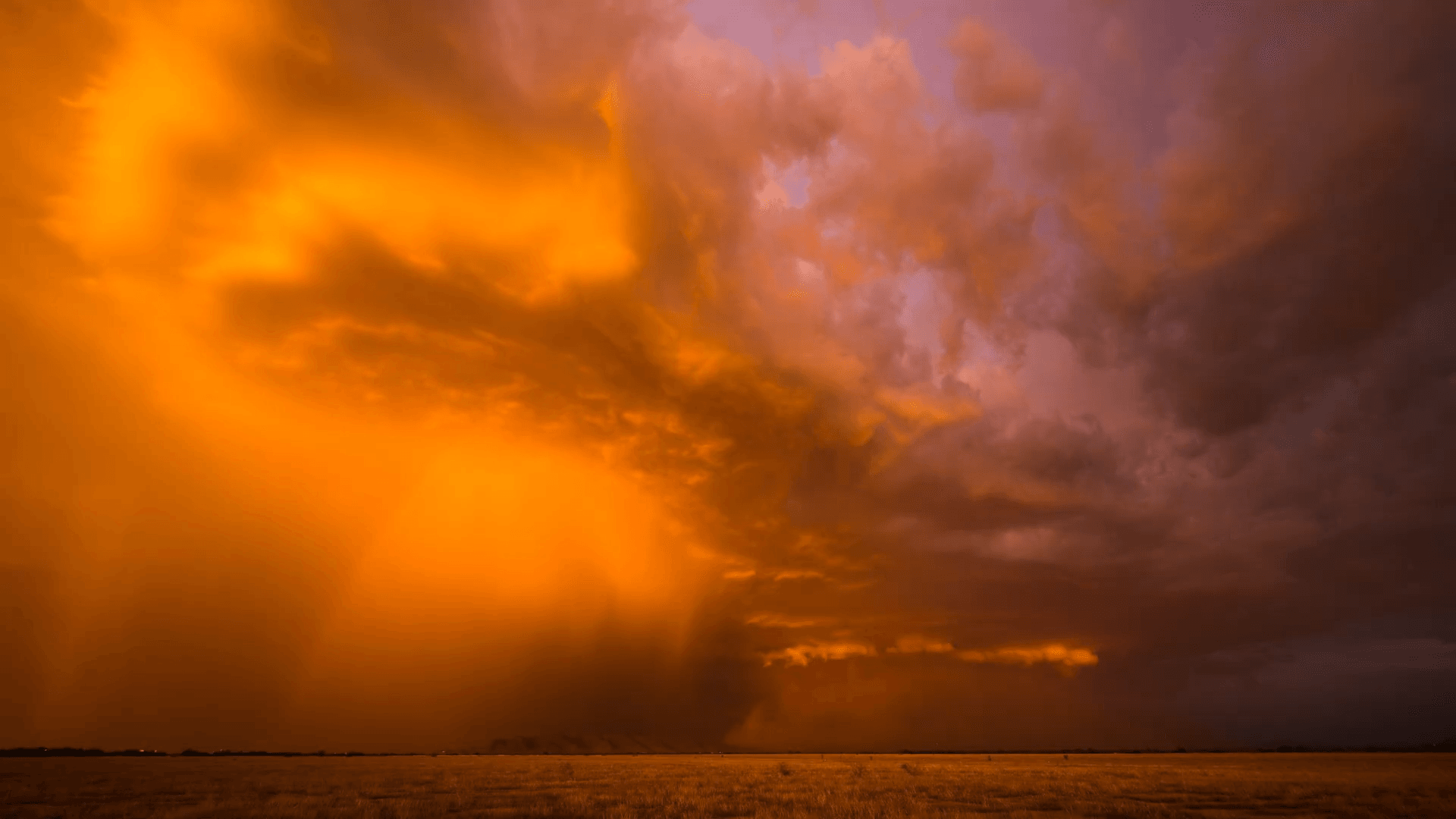
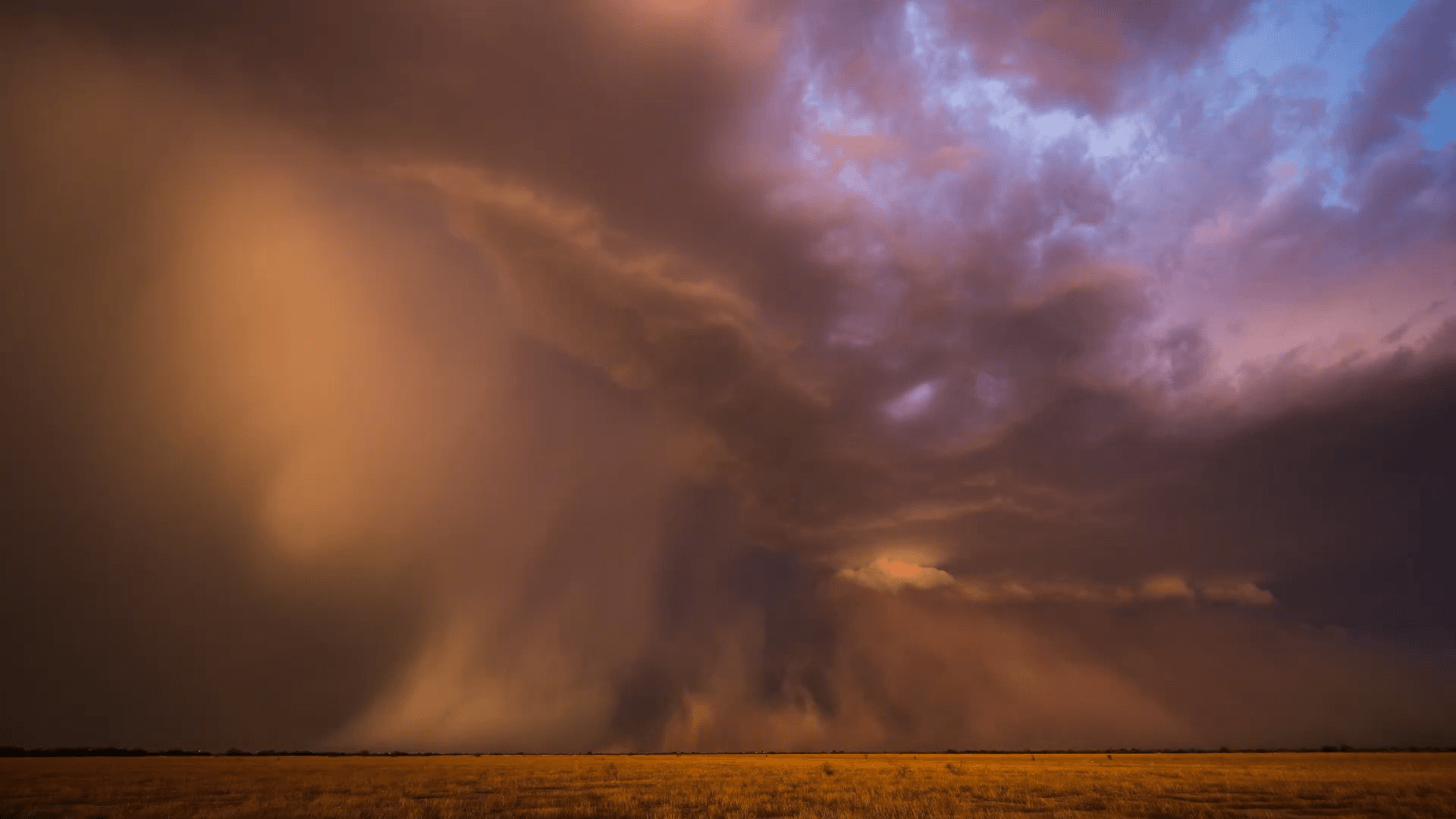
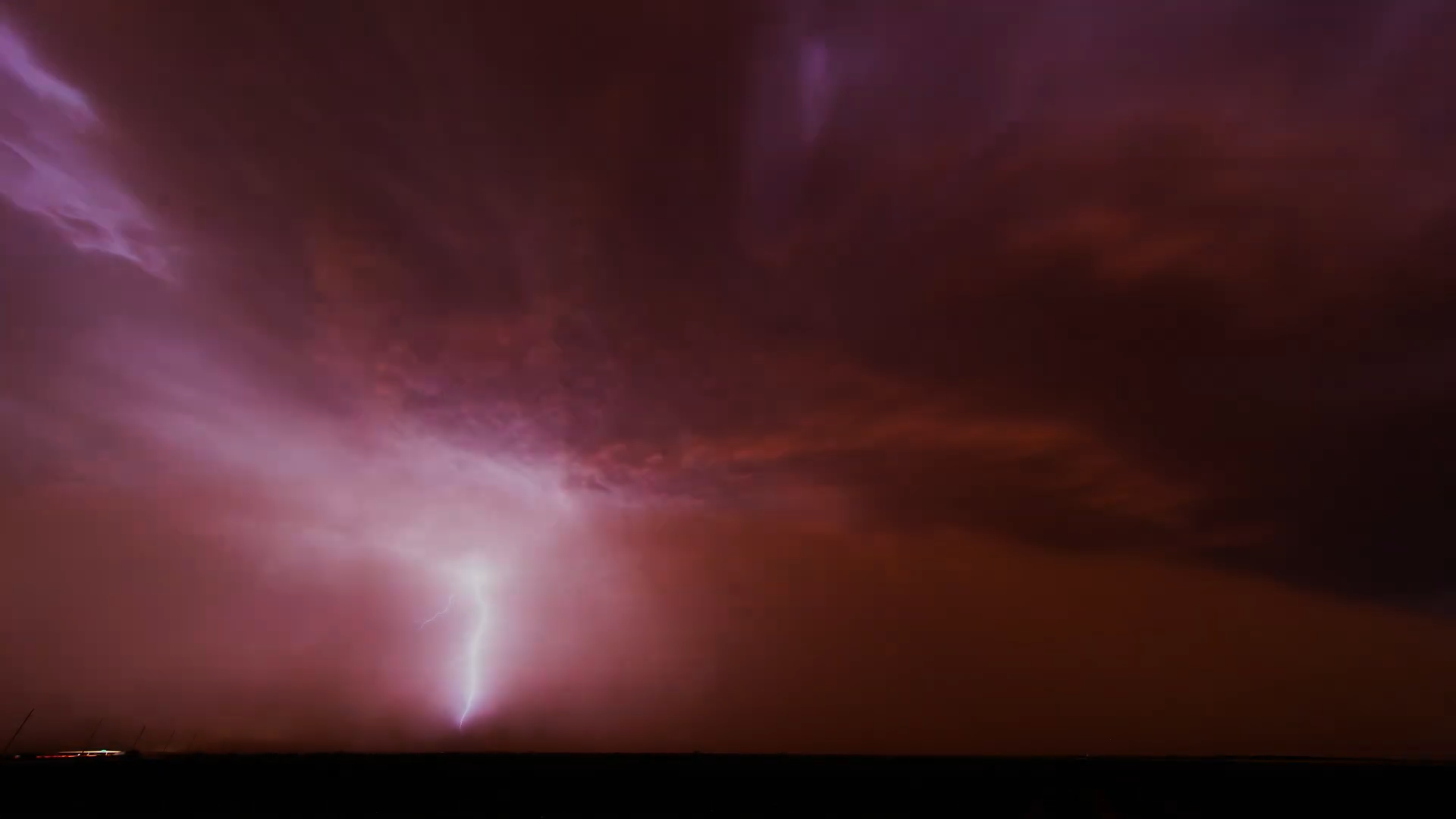
Nothing showcases the incredible power of our atmosphere like storms, and no one does stormchase photography like Mike Olbinski. In this vignette, he shows a stunning line of supercells caught near sunset on July 17, 2022. The high shear–combined with the setting sun–put on an incredible show. Dust blown up in a haboob, microbursts and downpours in the distance, and lots of churning, roiling turbulence. (Video and image credit: M. Olbinski)
Fediverse Reactions
-
Waves on Other Planets
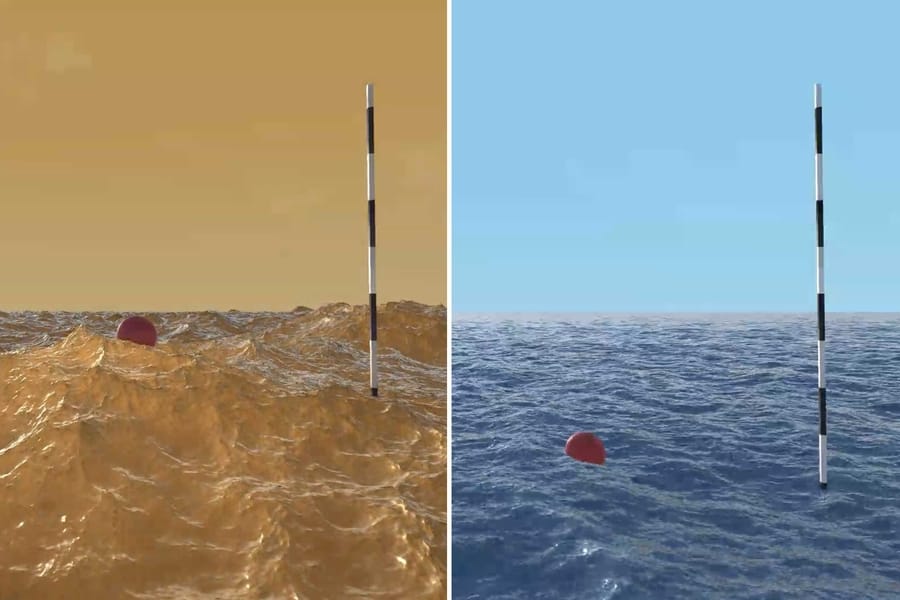
On Earth, most waves form when wind blows across the water. The shear and added energy from the wind ripples the surface, eventually building up waves (through the Kelvin-Helmholtz instability). The same process should happen anywhere else where wind and open liquid surfaces meet–even on other planets. To explore this, researchers built a new model, PlanetWaves, that predicts the waves based on a planet’s gravity, atmospheric conditions, and the density, viscosity, and surface tension of its surface liquid.
After validating the model with conditions on Earth, the team explored wave conditions for Titan, ancient Mars, and several exoplanets. They found that Titan’s lighter gravity and liquid ethane (which is less dense than water) combined to make waves on Titan much taller than those generated at the same wind speed on Earth (top image). You can watch them in action in the video below. Standing in a light breeze on Titan, you’d watch giant 3-meter waves rolling in.
The team also found that waves on Mars would have gotten shorter as Mars lost its atmosphere and the air pressure dropped. Over time, the same wind speed would have elicited smaller and smaller waves. Wave action has a big effect on a landscape’s erosion, so understanding how waves look on other planets will help us parse their geography. (Video, image, and research credit: U. Schneck et al.; via MIT News; submitted by Joseph S.)
Fediverse Reactions
-
Liquid Pulleys and Gears
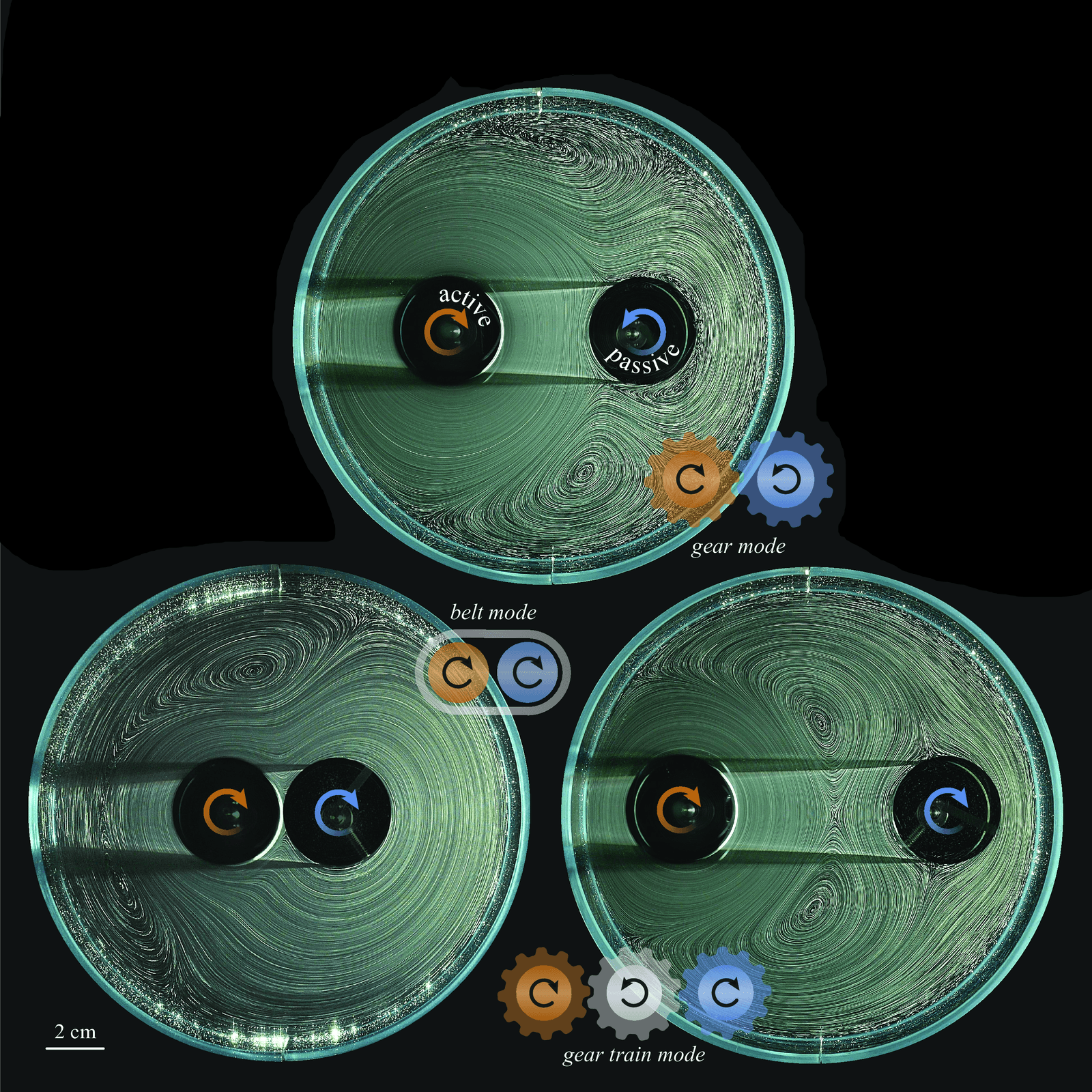
In mechanical systems, gears and pulleys transmit rotation from one location to another. Here, researchers explore a fluid dynamical version of such systems. The set-up consists of two rotors contained in a cylindrical corral filled with a water-glycerin mixture. One of the rotors is active, marked here with orange; the other (blue) one is passive, meaning that it can rotate due to the forces on it but it is not actively driven by a motor.
The three flow visualizations illustrate different configurations the rotors can take on, depending on their separation distance. In the top image, the rotors have a moderate separation distance and the passive one rotates opposite of the active one. That rotation direction is set by the high-shear flow on its inner side. If the rotors are close together (left image), they rotate in the same direction, aided by strong shear on the outside edge of the passive rotor; this mimics being linked with a belt. And, finally, if the rotors are widely separated, they also corotate, with the fluid in between acting like a virtual gear linking them. (Image credit: J. Smith et al.)
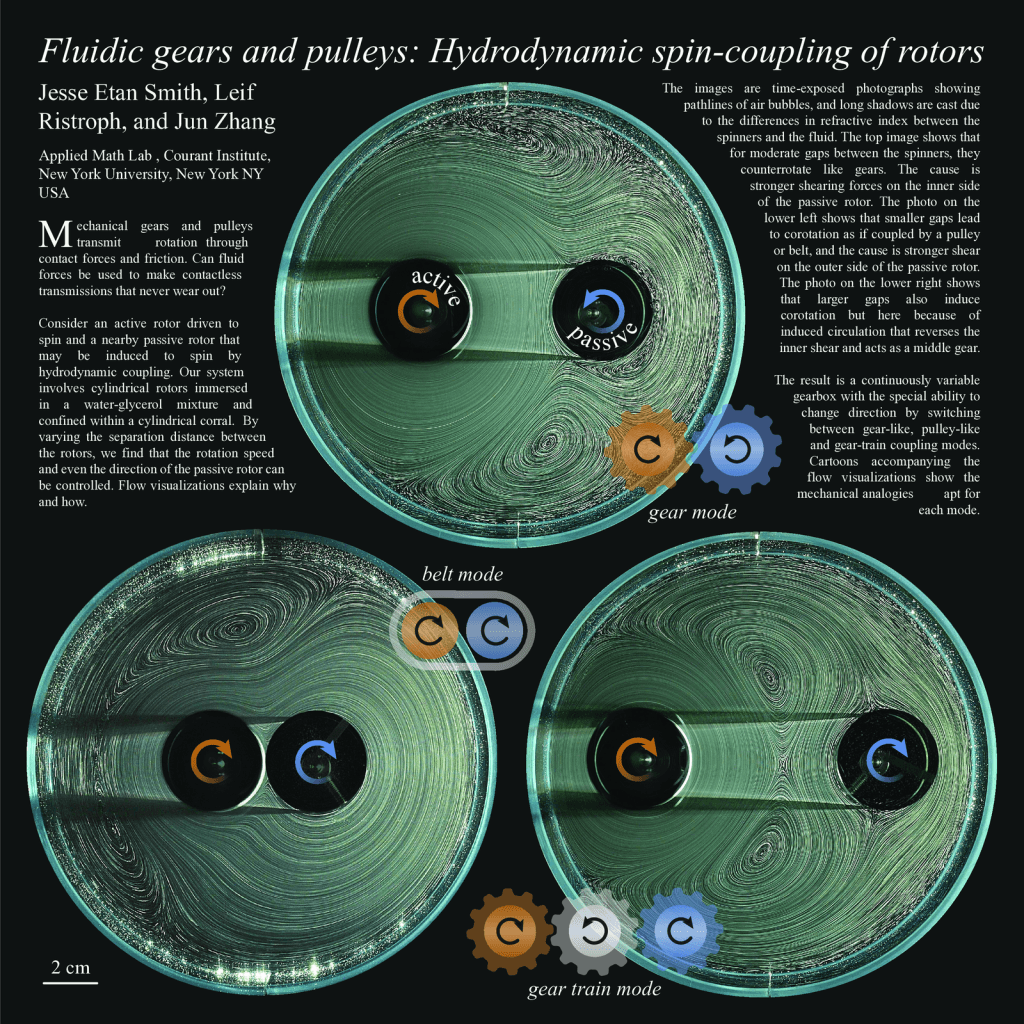
Research poster showing how an active and a passive rotor can be paired through hydrodynamic interactions. Fediverse Reactions
-
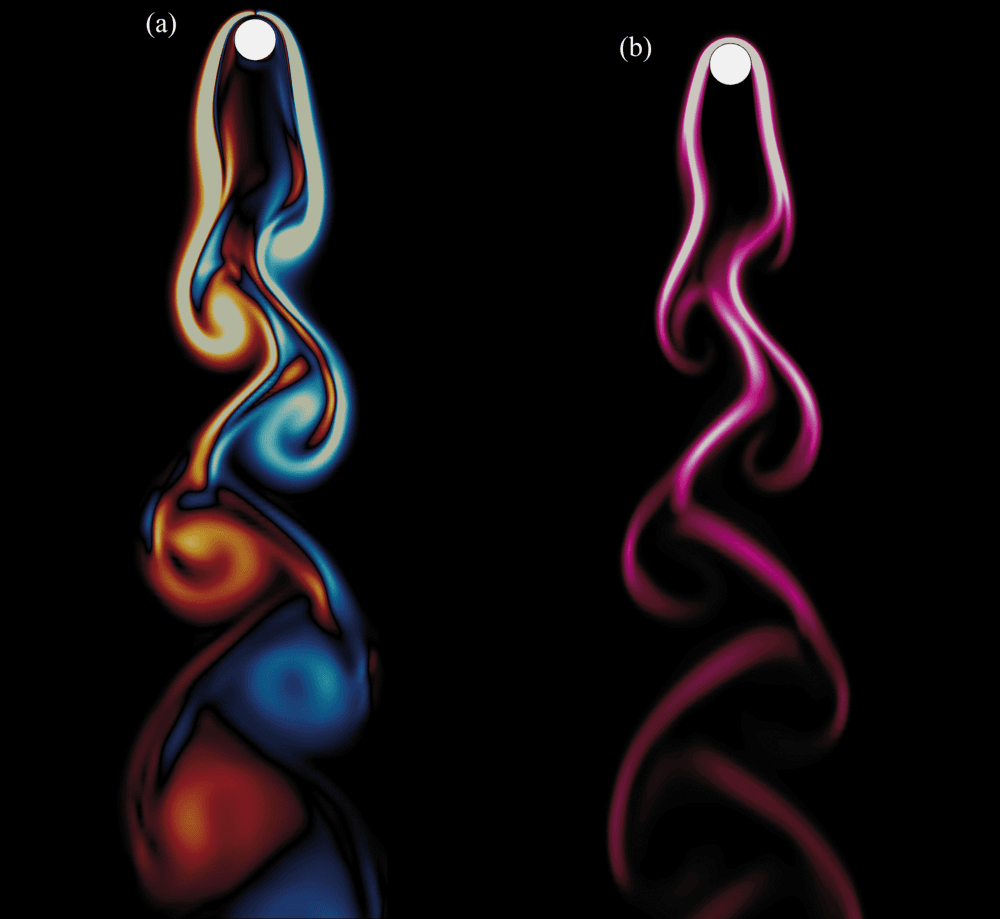
Viscoelastic Vortex Street
When flow moves past a cylinder, vortices get shed in its wake. Known as a von Karman vortex street, this distinctive pattern is seen behind flags, islands, and even behind starships. Here, researchers are simulating flow of a viscoelastic fluid, where–unlike water or other Newtonian fluids–elastic stresses can build up.
As the flow hits the leading edge of the cylinder, the polymers in the fluid compress and then get stretched as the flow moves around the cylinder. The left image shows vorticity in the flow; the right shows elastic stresses. The large swirls are primary vortices–those shed off the cylinder. But look closely and you’ll see smaller secondary vortices curled up beside the primaries. These form when the elastic stresses in the fluid pull some of the shear layer into the wake. (Image and research credit: U. Patel et al.)
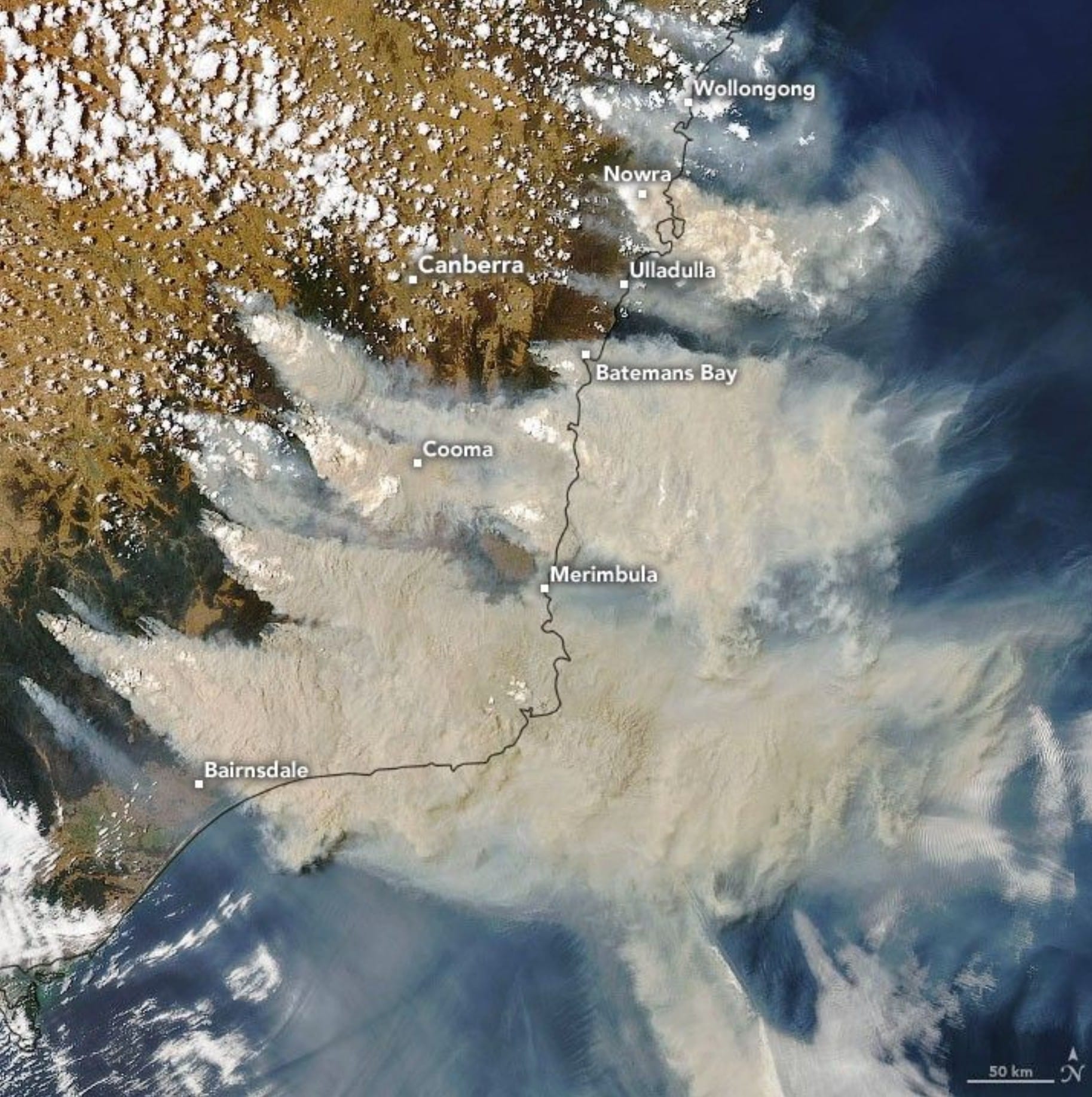
Explaining the Swirl of Wildfire Smoke
In recent years, smoke from powerful wildfires has raised questions among atmospheric scientists by always swirling in the same direction. The confounding structures were observed in the stratosphere, where smoke injected at around 15 kilometers in altitude absorbed sunlight and rose further, up to about 35 kilometers of altitude. The rising column of fluid would stretch, causing any residual rotation to get stronger and form vortices.
None of this was a surprise. What was surprising is that all of the observed vortices were anticyclones, when theory–at least for a heat-driven vortex from a stationary heating source–called for a cyclone-anticyclone pair.
Researchers looked at how a self-heating (and, therefore, moving) source would rotate. They concluded that this, too, would create a pair of vortices–one cyclonic and one anticyclonic–but the anticyclone would be stronger than the cyclone that trailed behind it. By further considering the vertical shear the vortex pair would encounter, the researchers found that the trailing cyclone could get stripped away, leaving behind only the anticyclone–matching our wildfire observations. (Image credit: J. Stevens/NASA Earth Observatory; research credit: K. Shah and P. Haynes 1, 2; via APS)
Fediverse Reactions
-
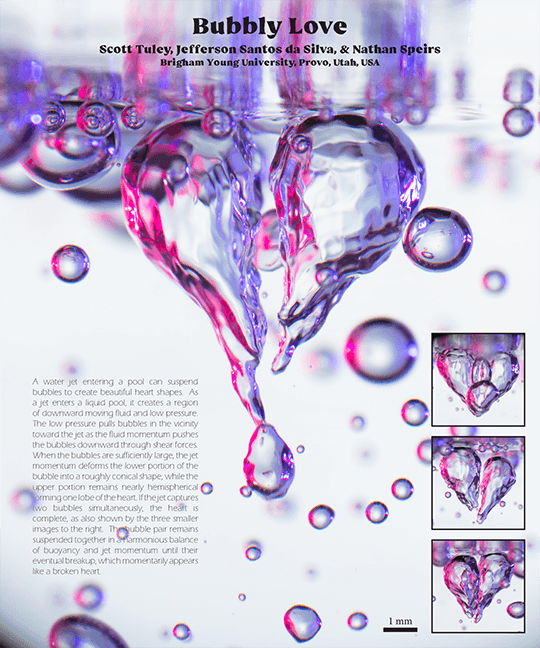
A Bubbly Heart
Next time you fill your water bottle, watch closely and see if you can spot a bubble heart like these. When a jet falls into a pool, it pulls air in with it. The low pressure of the jet pulls bubbles inward, even as shear pulls the bubbles downward with the sinking liquid. If the bubbles are large and there’s enough momentum in the jet, the lower portion of the bubble will get pulled into a conical shape, while the upper portion remains a hemisphere. That forms one lobe of the heart. The other half requires a second bubble. But with a little patience and luck, you can form a complete heart. Happy Valentine’s Day! (Image credit: S. Tuley et al.)
Fediverse Reactions
-
Instabilities in a Particle Flow


![Composite image of bed layers for 4 different particle density ratios. Text reads, "The wave amplitude and growth rate increase with particle density ratio but only if [the density of large particles is greater than the smaller particle density]."](https://fyfluiddynamics.com/wp-content/uploads/KHbed3-1024x576.png "Composite image of bed layers for 4 different particle density ratios. Text reads, \"The wave amplitude and growth rate increase with particle density ratio but only if [the density of large particles is greater than the smaller particle density].\"")


![Composite image of bed layers for 4 different particle density ratios. Text reads, "The wave amplitude and growth rate increase with particle density ratio but only if [the density of large particles is greater than the smaller particle density]."](https://fyfluiddynamics.com/wp-content/uploads/KHbed3.png)
Even though particles are not (strictly speaking) a fluid, they often behave like one. Here, researchers investigate what happens when two layers of particles–with different size and density–slide down an incline together. The video is tilted so that the flow instead appears from left to right.
When the larger, denser particles sit atop a layer of smaller, lighter particles, shear between the two layers causes a Kelvin-Helmholtz instability that runs in the direction of the flow. This creates a wavy interface that lets some small particles work upward while large particles shift downward.
At the same time, a slice across the flow shows that plumes of small particles are pushing up toward the surface, driven by a Rayleigh-Taylor instability. The researchers also look at what happens when the particles are fluidized by injecting a gas able to lift the particles. (Video and image credit: M. Ibrahim et al.; via GFM)
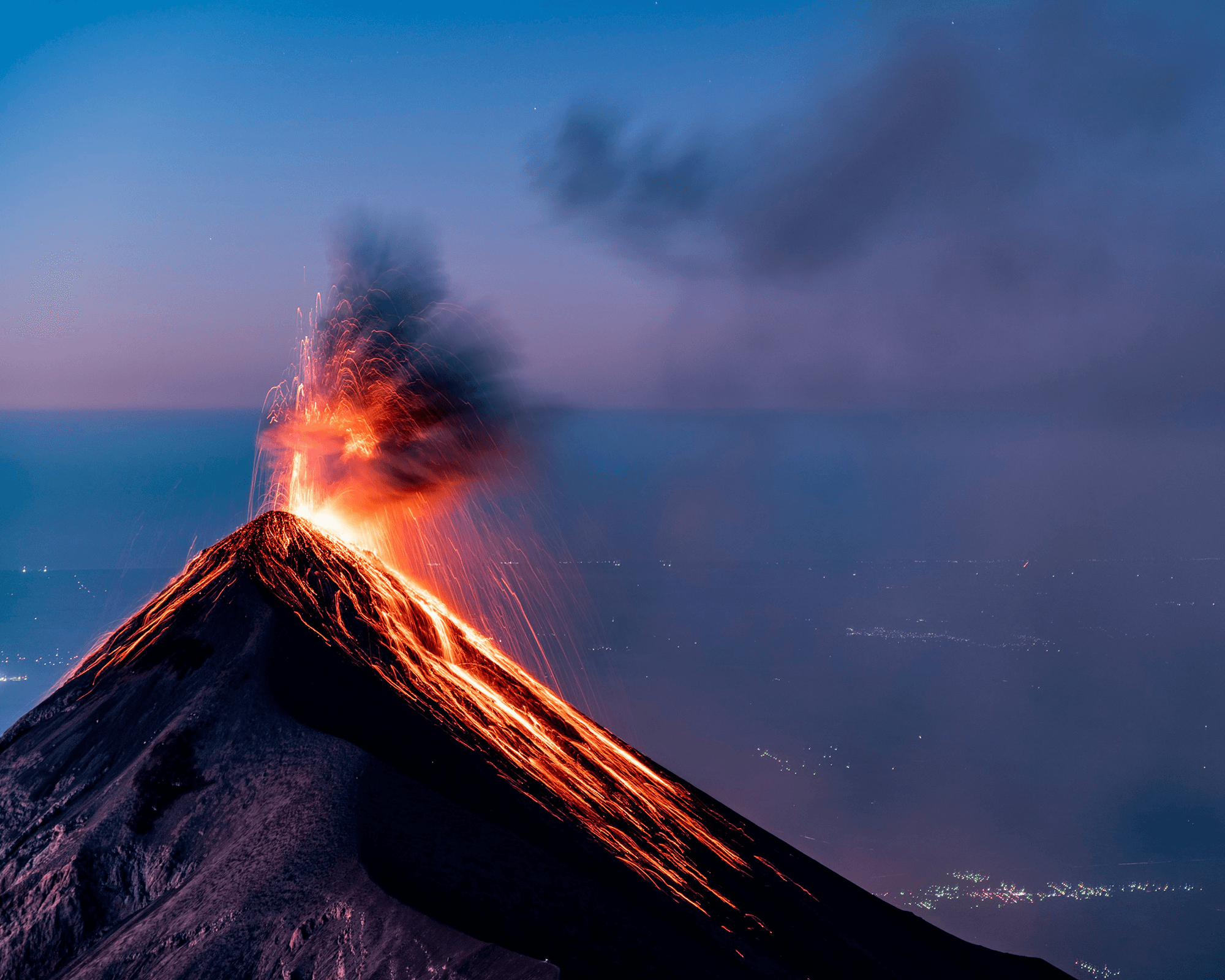
Making Bubbles in Magma
When bubbles form in magma deep below the earth, volcanic eruptions follow. Scientists believe this happens when decompression of the magma allows volatile compounds to come out of solution and form bubbles–just as opening a bottle of seltzer allows carbon dioxide to bubble out. But a new study indicates that decompression may not be the only source of bubbles.
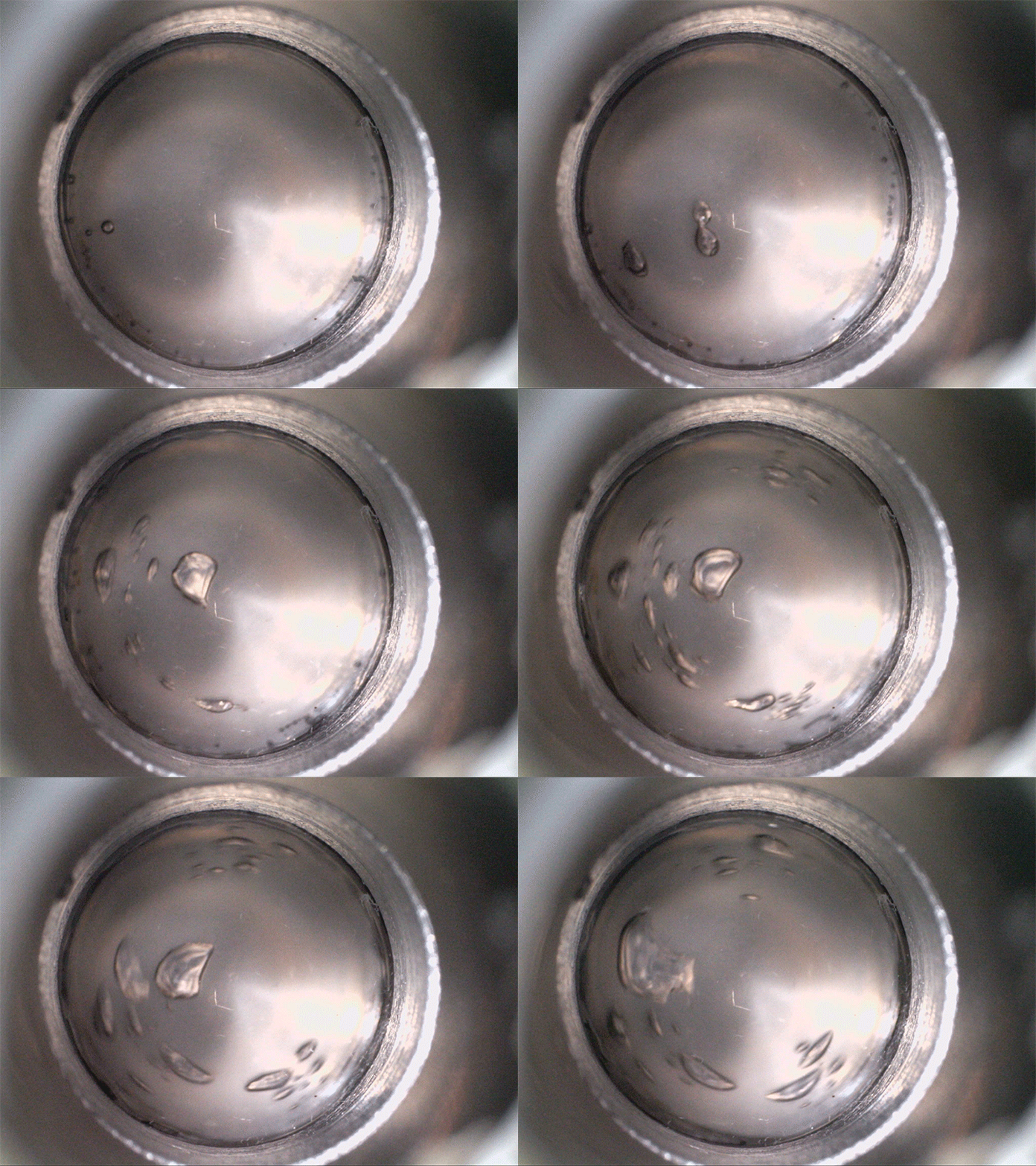
The team found that supersaturated fluids can nucleate bubbles when they’re sheared–even without decompression. They demonstrated this in the lab, not with magma but with a low-temperature magma analog, seen above. The more saturated with volatiles the fluid is, the less shear is needed to trigger bubbles.
Viscous shear is everywhere for magma, so this bubble formation mechanism is likely common. Better understanding how and when bubbles form in magma directly affects predictions for eruptions–especially for determining whether they’re likely to be explosive or effusive. (Image credit: volcano – A. Bonnerdeaux, experiment – O. Roche et al.; research credit: O. Roche et al.; via Physics World)
Fediverse Reactions
-