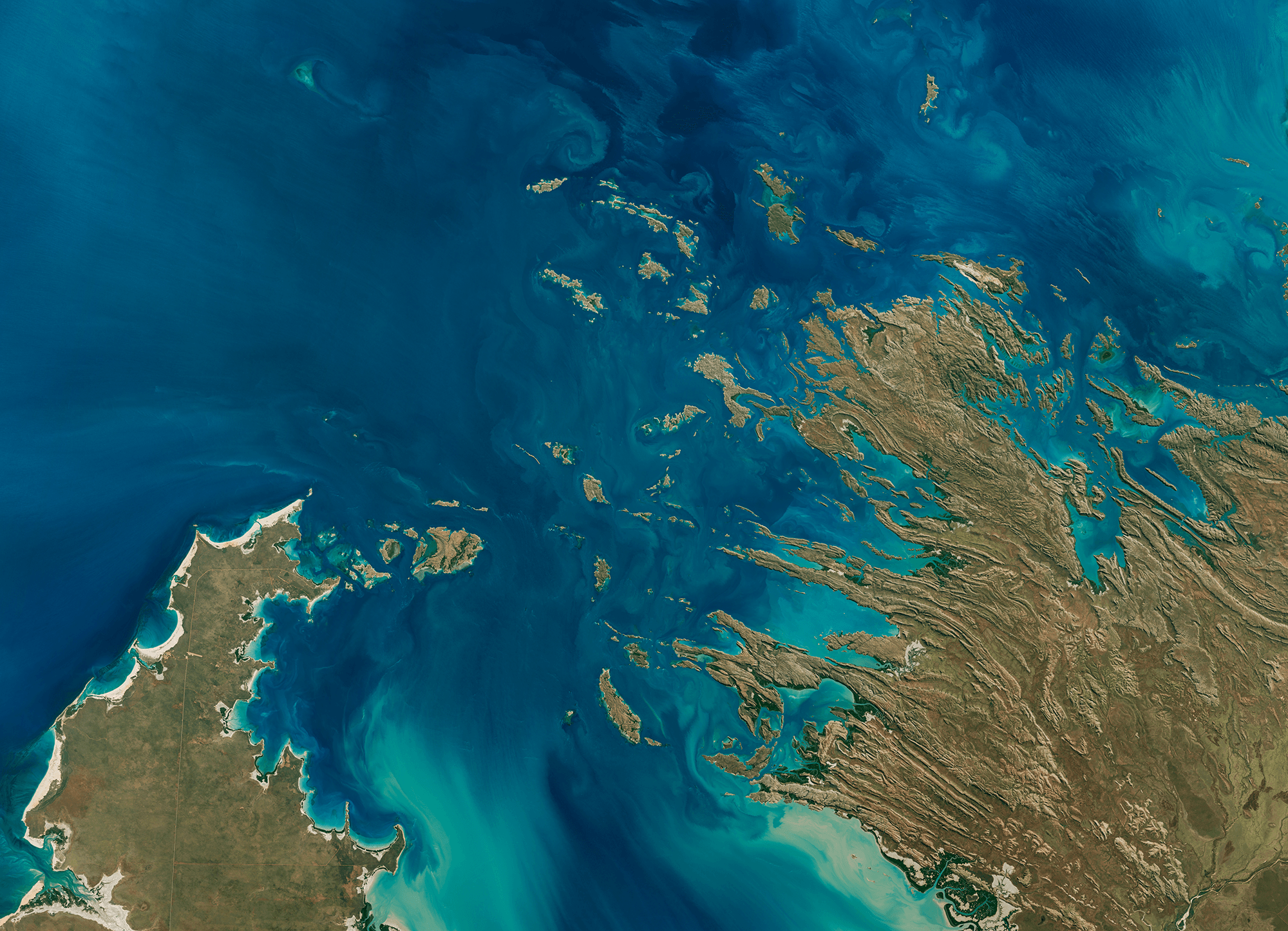
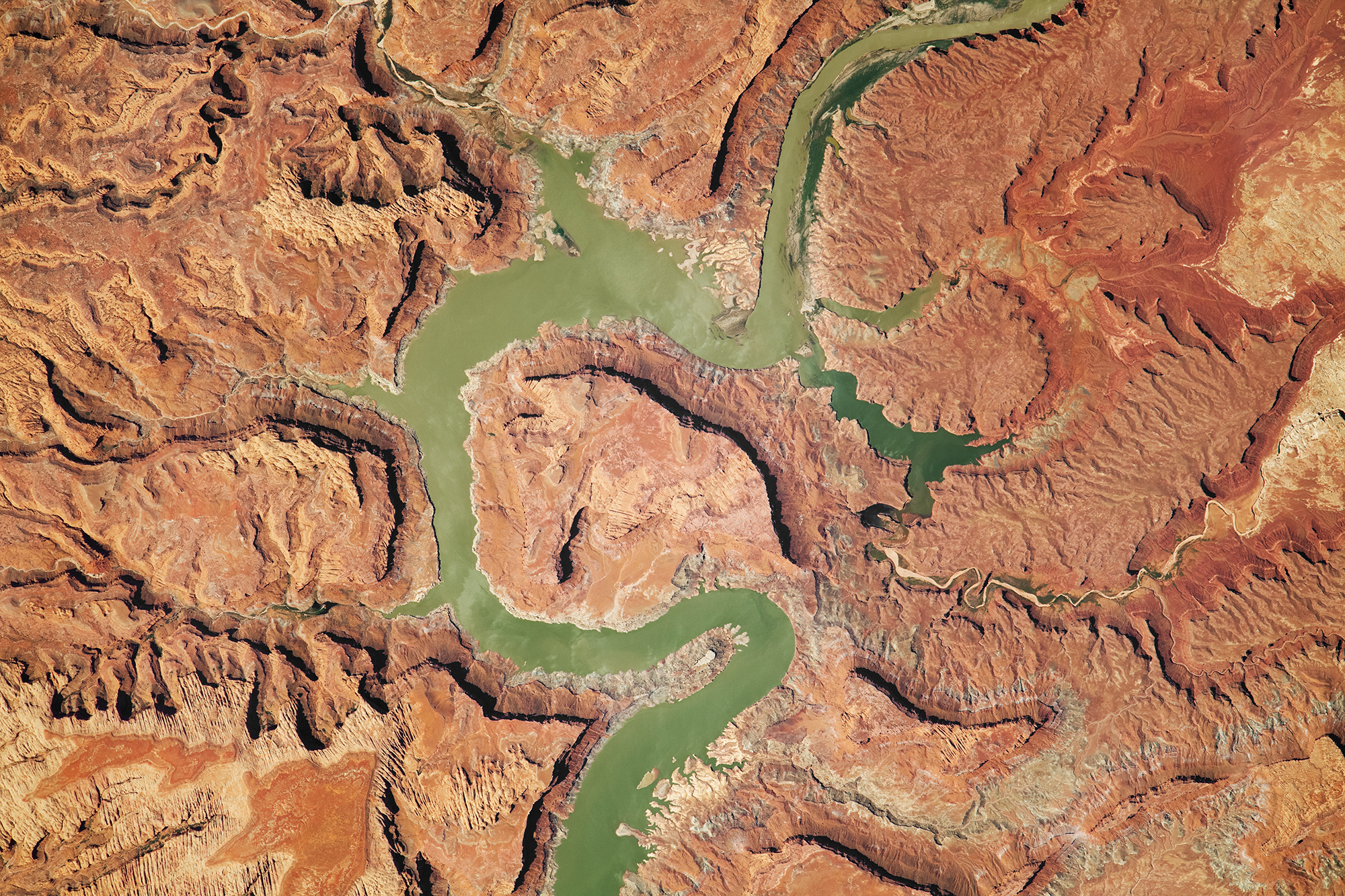
Over the millennia, the Colorado River has carved some of the deepest and most dramatic canyons on our planet. This astronaut photo shows the river near its dam at Lake Powell. The strip of white edging the lake is the “bathtub ring” that shows how the water level has varied over the years. The deep canyons — over 400 meters from the Horn in the center of the photo to the river beside it — throw shadows across the landscape. To reach these depths, the Colorado River incised its path into bedrock that was tectonically uplifted. (Image credit: NASA; via NASA Earth Observatory)
Search results for: “lift”

Branching Dendrites
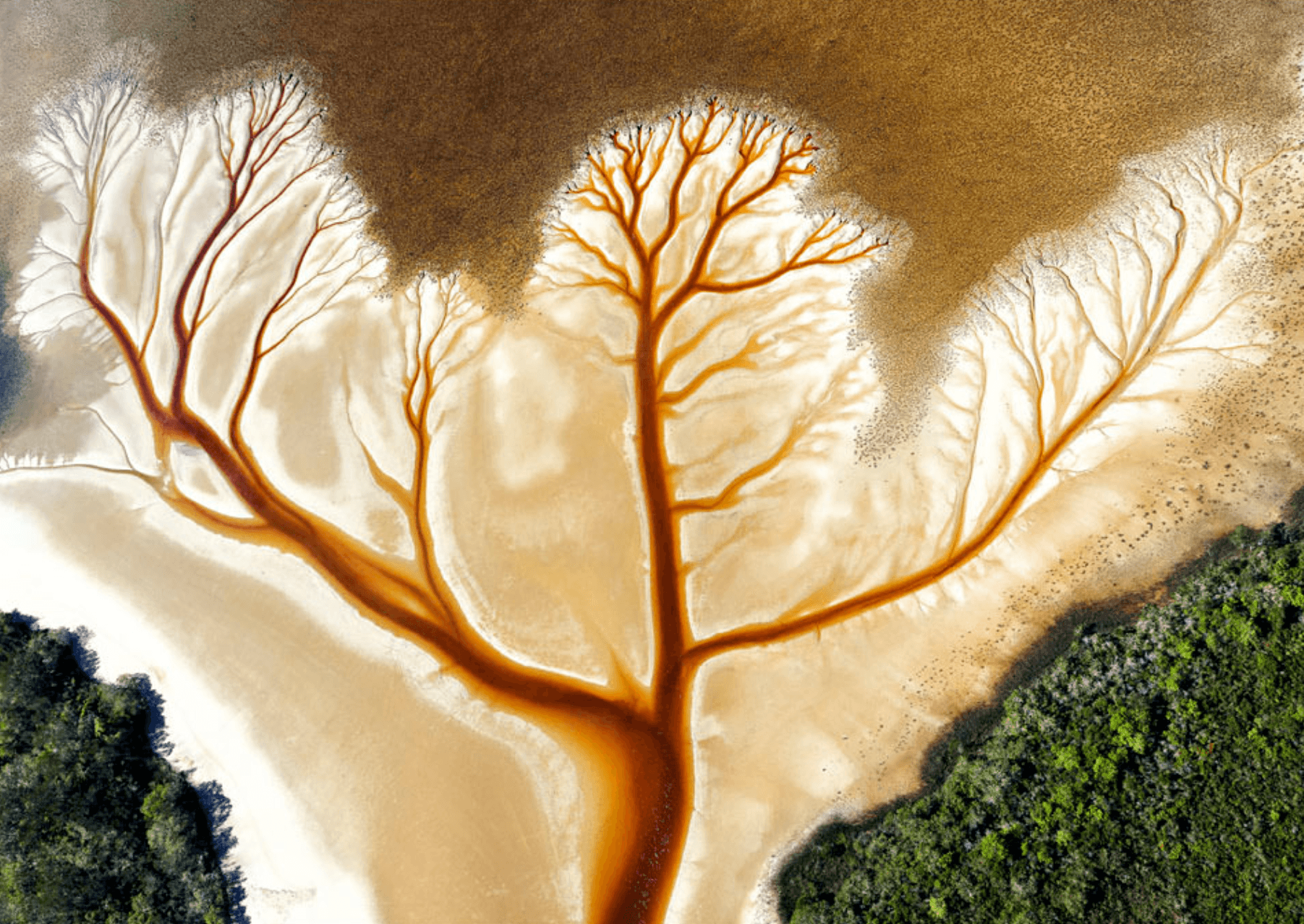
This award-winning aerial image by photographer Stuart Chape shows a tidal creek in Lake Cakora, New South Wales, Australia. At first glance, it looks much like any river delta, with branching dendritic paths that split into smaller and smaller waterways. That’s deceptive, though, because very different forces shape this creek. Because tides move in and out, a tidal creek is home to flows that move both directions — toward and away from the branches. That also means that flow speeds can change rapidly as the tides shift, which in turn changes which sediments get lifted, dropped, and moved around the creek bed. (Image credit: S. Chape/IAPOTY; via Colossal)

Flying Foxes
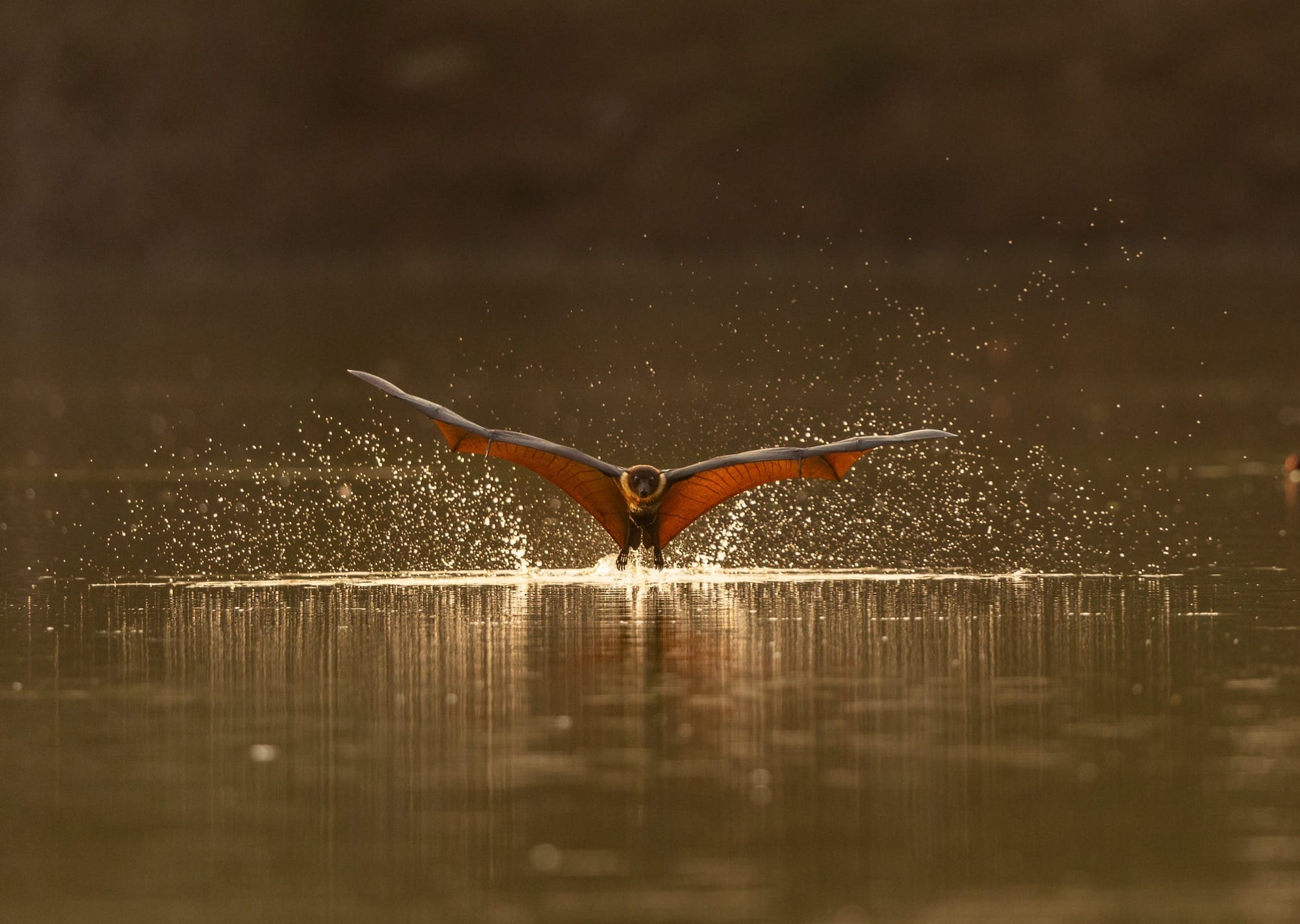
A sweltering day in India brought out the local giant fruit bats (also called Indian flying foxes) to keep cool in the river. Normally nocturnal, they made a rare daytime appearance to beat the heat. Wildlife photographer Hardik Shelat was lucky enough to catch these awesome images of the bats in flight. True to their name, the animals have wingspans ranging from 1.2 to 1.5 meters, which should give them some impressive lift, even when gliding down near the water. (Image credit: H. Shelat; via Colossal)

Seeing the Sun’s South Pole For the First Time
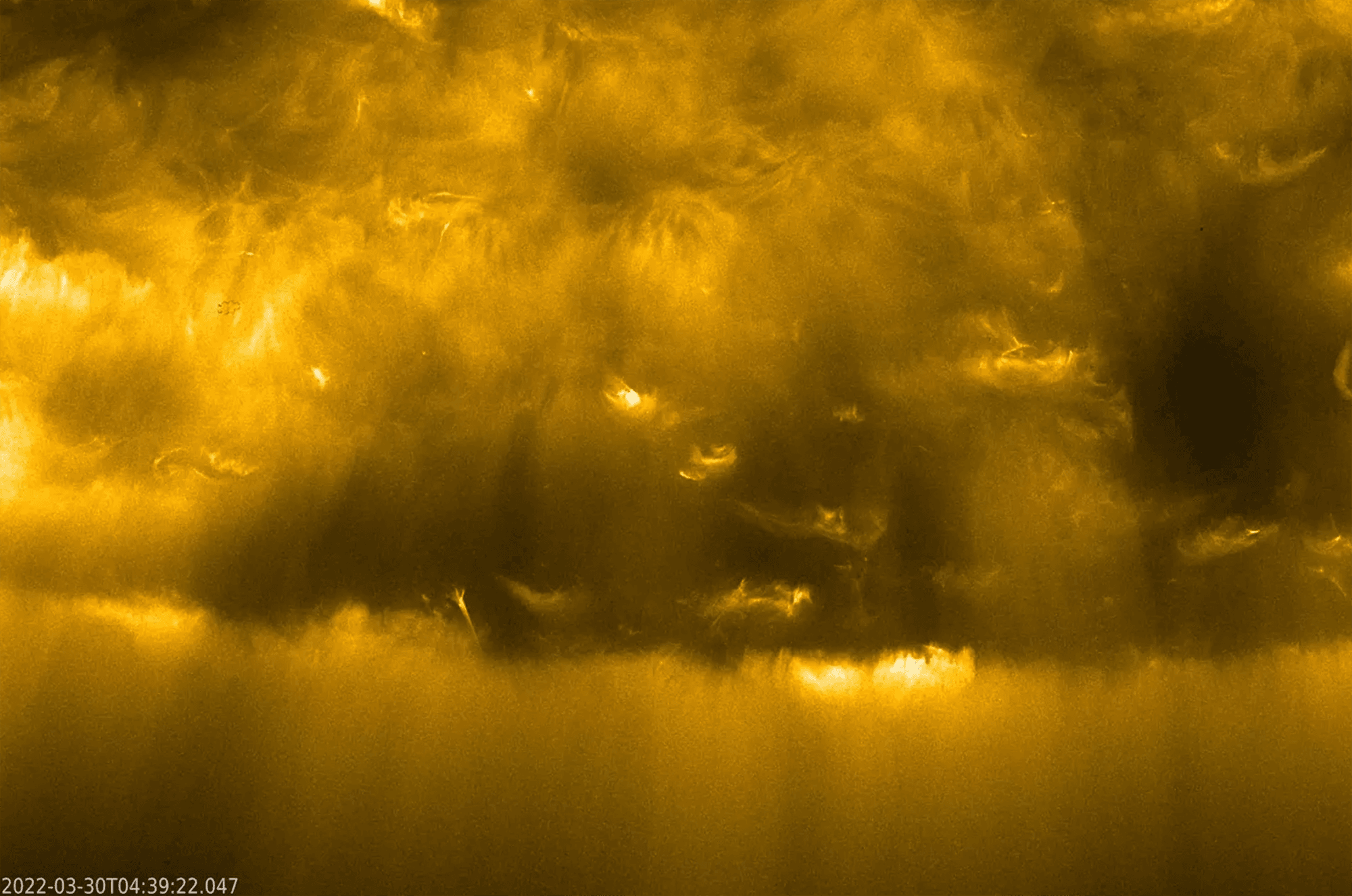
The ESA-led Solar Orbiter recently used a Venus flyby to lift itself out of the ecliptic — the equatorial plane of the Sun where Earth sits. This maneuver offers us the first-ever glimpse of the Sun’s south pole, a region that’s not visible from the ecliptic plane. A close-up view of plasma rising off the pole is shown above, and the video below has even more.
Solar Orbiter will get even better views of the Sun’s poles in the coming months, perfect for watching what goes on as the Sun’s 11-year-solar-cycle approaches its maximum. During this time, the Sun’s magnetic poles will flip their polarity; already Solar Orbiter’s instruments show that the south pole contains pockets of both positive and negative magnetic polarity — a messy state that’s likely a precursor to the big flip. (Image and video credit: ESA & NASA/Solar Orbiter/EUI Team, D. Berghmans (ROB) & ESA/Royal Observatory of Belgium; via Gizmodo)

Flamingo Fluid Dynamics, Part 2: The Game’s a Foot
Yesterday we saw how hunting flamingos use their heads and beaks to draw out and trap various prey. Today we take another look at the same study, which shows that flamingos use their footwork, too. If you watch flamingos on a beach, in muddy waters, or in a shallow pool, you’ll see them shifting back and forth as they lift and lower their feet. In humans, we might attribute this to nervous energy, but it turns out it’s another flamingo hunting habit.

As a flamingo raises its foot, it draws its toes together; when it stomps down, its foot spreads outward. This morphing shape, researchers discovered, creates a standing vortex just ahead of its feet — right where it lowers its head to sample whatever hapless creatures it has caught in this swirling vortex. And the vortex, as shown below, is strong enough to trap even active swimmers, making the flamingo a hard hunter to escape. (Image credit: top – L. Yukai, others – V. Ortega-Jimenez et al.; research credit: V. Ortega-Jimenez et al.; submitted by Soh KY)


Flamingo Fluid Dynamics, Part 1: A Head in the Game
Flamingos are unequivocally odd-looking birds with their long skinny legs, sinuous necks, and bent L-shaped beaks. They are filter-feeders, but a new study shows that they are far from passive wanderers looking for easy prey in shallow waters. Instead, flamingos are active hunters, using fluid dynamics to draw out and trap the quick-moving invertebrates they feed on. In today’s post, I’ll focus on how flamingos use their heads and beaks; next time, we’ll take a look at what they do with their feet.

Feeding flamingos often bob their heads out of the water. This, it turns out, is not indecision, but a strategy. Lifting its flat upper forebeak from near the bottom of a pool creates suction. That suction creates a tornado-like vortex that helps draw food particles and prey from the muddy sediment.

When feeding, flamingos will also open and close their mandibles about 12 times a second in a behavior known as chattering. This movement, as seen in the video above, creates a flow that draws particles — and even active swimmers! — toward its beak at about seven centimeters a second.

Staying near the surface won’t keep prey safe from flamingos, either. In slow-flowing water, the birds will set the upper surface of their forebeak on the water, tip pointed downstream. This seems counterintuitive, until you see flow visualization around the bird’s head, as above. Von Karman vortices stream off the flamingo’s head, which creates a slow-moving recirculation zone right by the tip of the bird’s beak. Brine shrimp eggs get caught in these zones, delivering themselves right to the flamingo’s mouth.
Clearly, the flamingo is a pretty sophisticated hunter! It’s actively drawing out and trapping prey with clever fluid dynamics. Tomorrow we’ll take a look at some of its other tricks. (Image credit: top – G. Cessati, others – V. Ortega-Jimenez et al.; research credit: V. Ortega-Jimenez et al.; submitted by Soh KY)

Inside Hail Formation
Conventional wisdom suggests that hailstones form over the course of repeated trips up and down through a storm, but a new study suggests that formation method is less common than assumed. Researchers studied the isotope signatures in the layers of 27 hailstones to work out each stone’s formation history. They found that most hailstones (N = 16) grew without any reversal in direction. Another 7 only saw a single period when upwinds lifted them, and only 1 of the hailstones had cycled down-and-up more than once. They did find, however, that hailstones larger than 25mm (1 inch) in diameter had at least one period of growth during lifting.
So smaller hailstones likely don’t cycle up and down in a storm, but the largest (and most destructive) hailstones will climb at least once before their final descent. (Image credit: D. Trinks; research credit: X. Lin et al.; via Gizmodo)

Charged Drops Don’t Splash
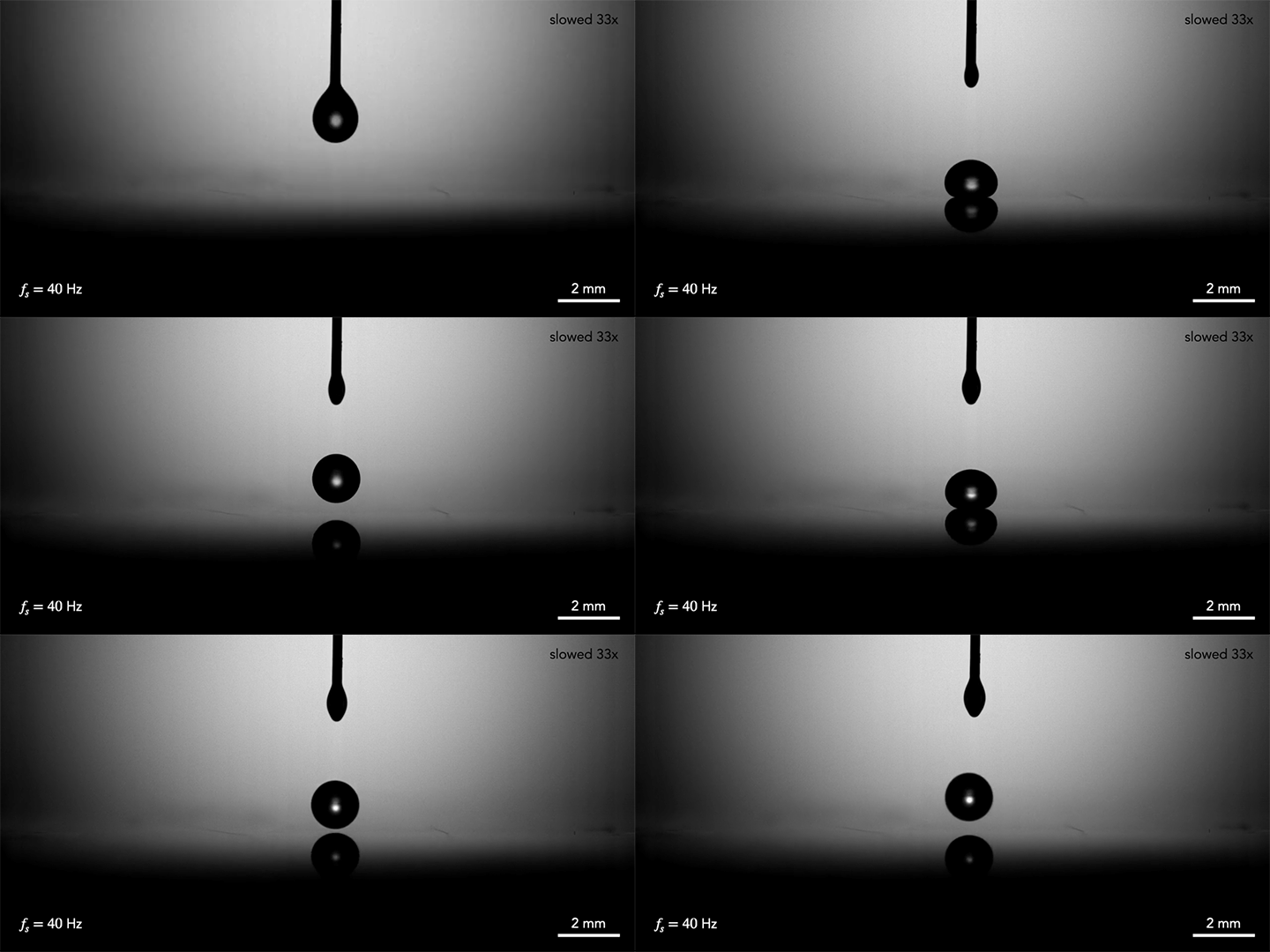
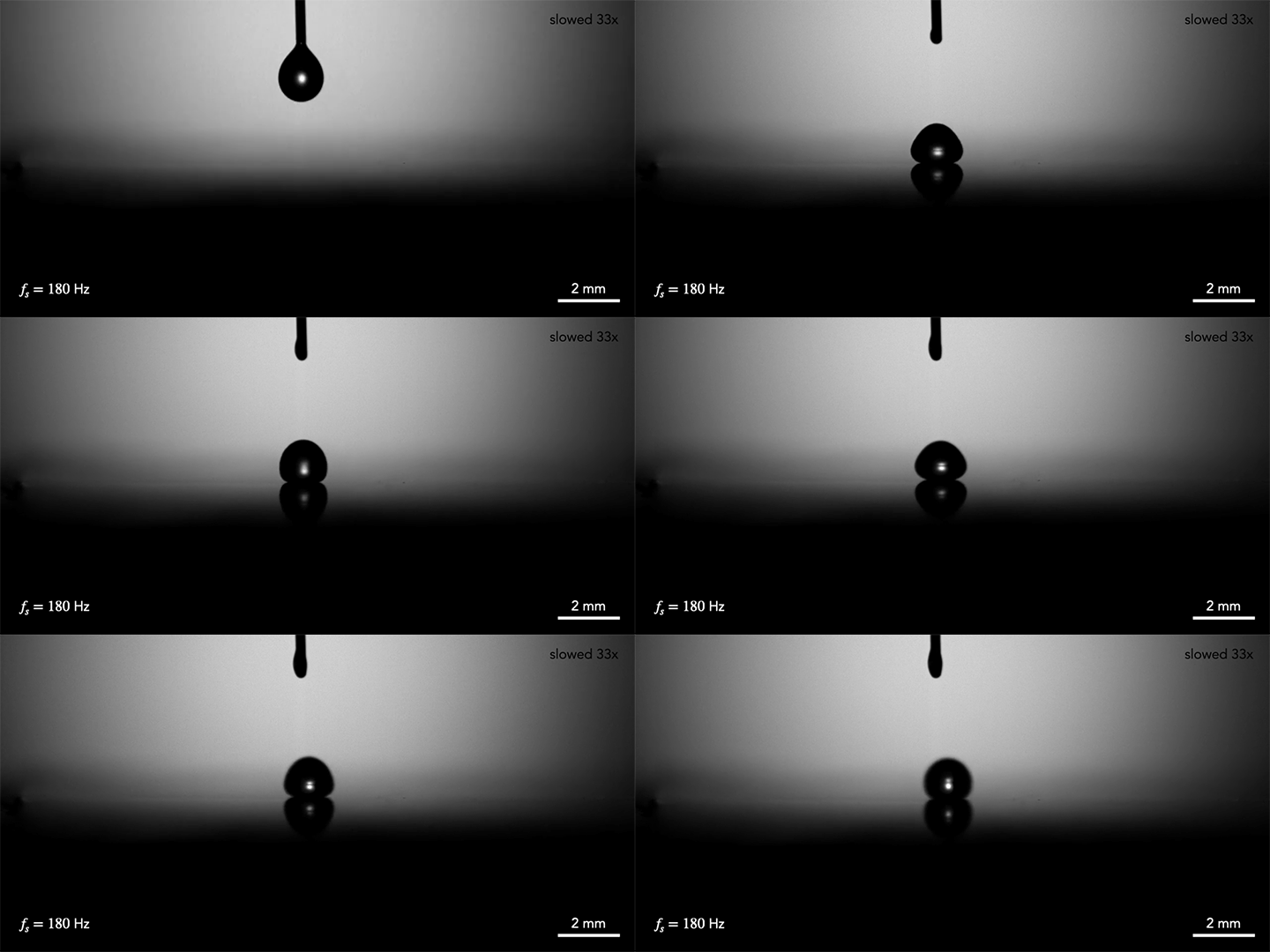
When a droplet falls on a surface, it spreads itself horizontally into a thin lamella. Sometimes — depending on factors like viscosity, impact speed, and air pressure — that drop splashes, breaking up along its edge into myriad smaller droplets. But a new study finds that a small electrical charge is enough to suppress a drop’s splash, as seen below.

The drop’s electrical charge builds up along the drop’s surface, providing an attraction that acts somewhat like surface tension. As a result, charged drops don’t lift off the surface as much and they spread less overall; both factors inhibit splashing.* The effect could increase our control of droplets in ink jet printing, allowing for higher resolution printing. (Image and research credit: F. Yu et al.; via APS News)
*Note that this only works for non-conductive surfaces. If the surface is electrically conductive, the charge simply dissipates, allowing the splash to occur as normal.

Quietening Drones
A drone’s noisiness is one of its major downfalls. Standard drones are obnoxiously loud and disruptive for both humans and animals, one reason that they’re not allowed in many places. This flow visualization, courtesy of the Slow Mo Guys, helps show why. The image above shows a standard off-the-shelf drone rotor. As each blade passes through the smoke, it sheds a wingtip vortex. (Note that these vortices are constantly coming off the blade, but we only see them where they intersect with the smoke.) As the blades go by, a constant stream of regularly-spaced vortices marches downstream of the rotor. This regular spacing creates the dominant acoustic frequency that we hear from the drone.

Animation of wingtip vortices coming off a drone rotor with blades of different lengths. This causes interactions between the vortices, which helps disrupt the drone’s noise. To counter that, the company Wing uses a rotor with blades of different lengths (bottom image). This staggers the location of the shed vortices and causes some later vortices to spin up with their downstream neighbor. These interactions break up that regular spacing that generates the drone’s dominant acoustic frequency. Overall, that makes the drone sound quieter, likely without a large impact to the amount of lift it creates. (Image credit: The Slow Mo Guys)

“My Own Galaxy”
Fungal spores sketch out minute air currents in this shortlisted photograph by Avilash Ghosh. The moth atop a mushroom appears to admire the celestial view. In the largely still air near the forest floor, mushrooms use evaporation and buoyancy to generate air flows capable of lifting their spores high enough to catch a stray breeze. (Image credit: A. Ghosh/CUPOTY; via Colossal)