This photograph uses fluorescent dye to visualize the wake behind a rigid flat plate pitching about its leading edge. A vortex is shed from the plate twice in each cycle of oscillation. These vortices entangle, producing the structured wake above. The top photo shows a side view of the wake, the bottom photo is a top view. (Photo credit: J. Buchholz and A. Smits)
Search results for: “flow visualization”

Smoke-Wire Visualization
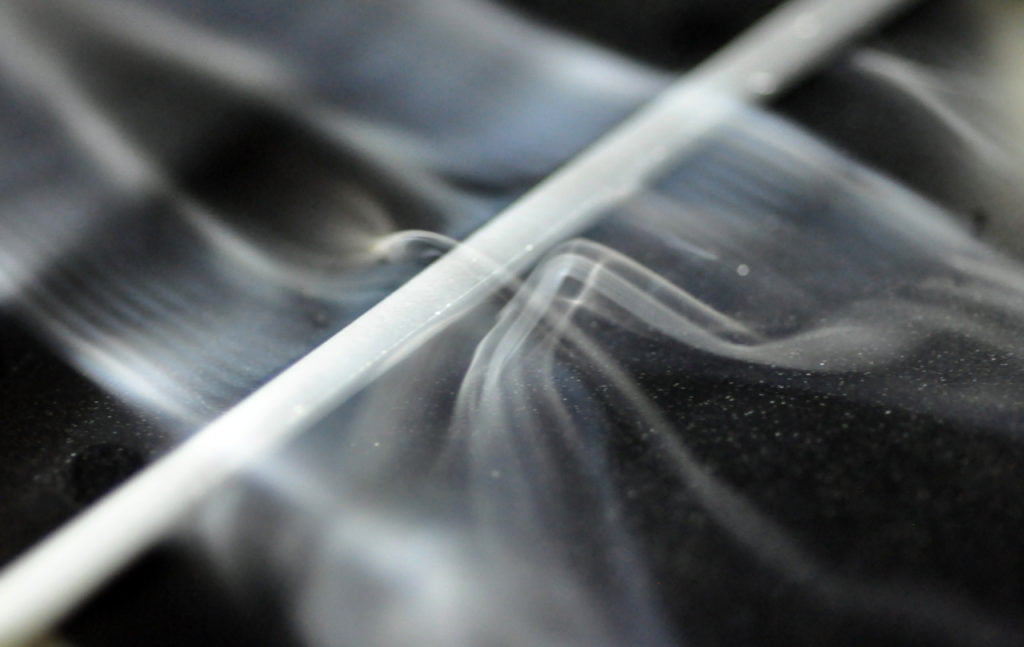
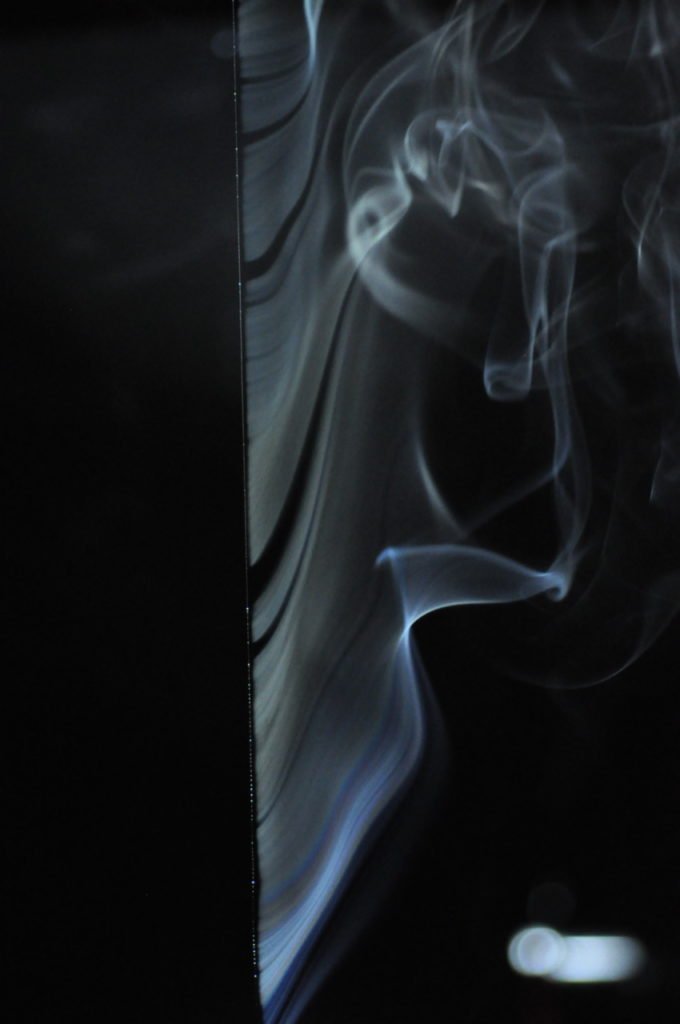
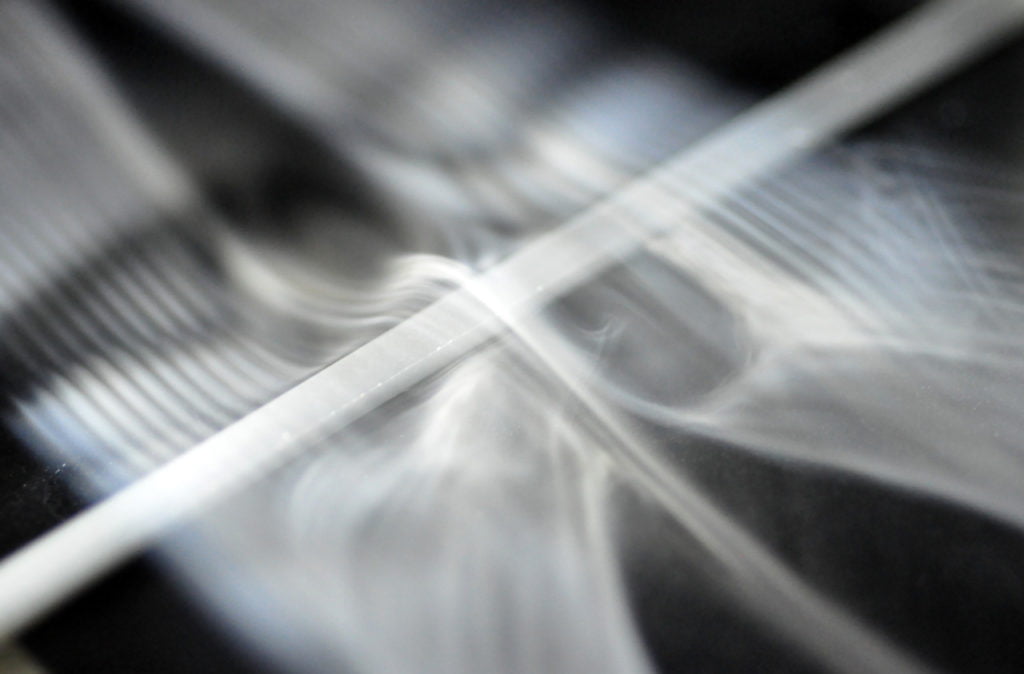


One common simple form of flow visualization is the smoke-wire technique. A thin wire is coated in oil, then heated. The resulting smoke flows over and around the object of study, providing a useful tracer for the flow. While not necessarily helpful as a quantitative measure, smoke-flow visualization helps researchers get a sense of what is going on in the flow. (Photo credits: TAMU Hypersonics Lab)

Jellyfish Flow
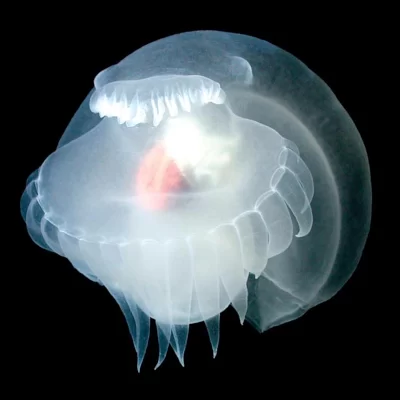
Florescent dye reveals the flow pattern of ocean water around a swimming jellyfish. Some researchers posit that fluid drift associated with the swimming of marine animals may be as substantial a factor in ocean mixing as turbulence caused by the wind and tides. If true, modeling of climate change–past, present, and future–would need to take into account the biology of the ocean as well! #
Soap Film Flow Viz
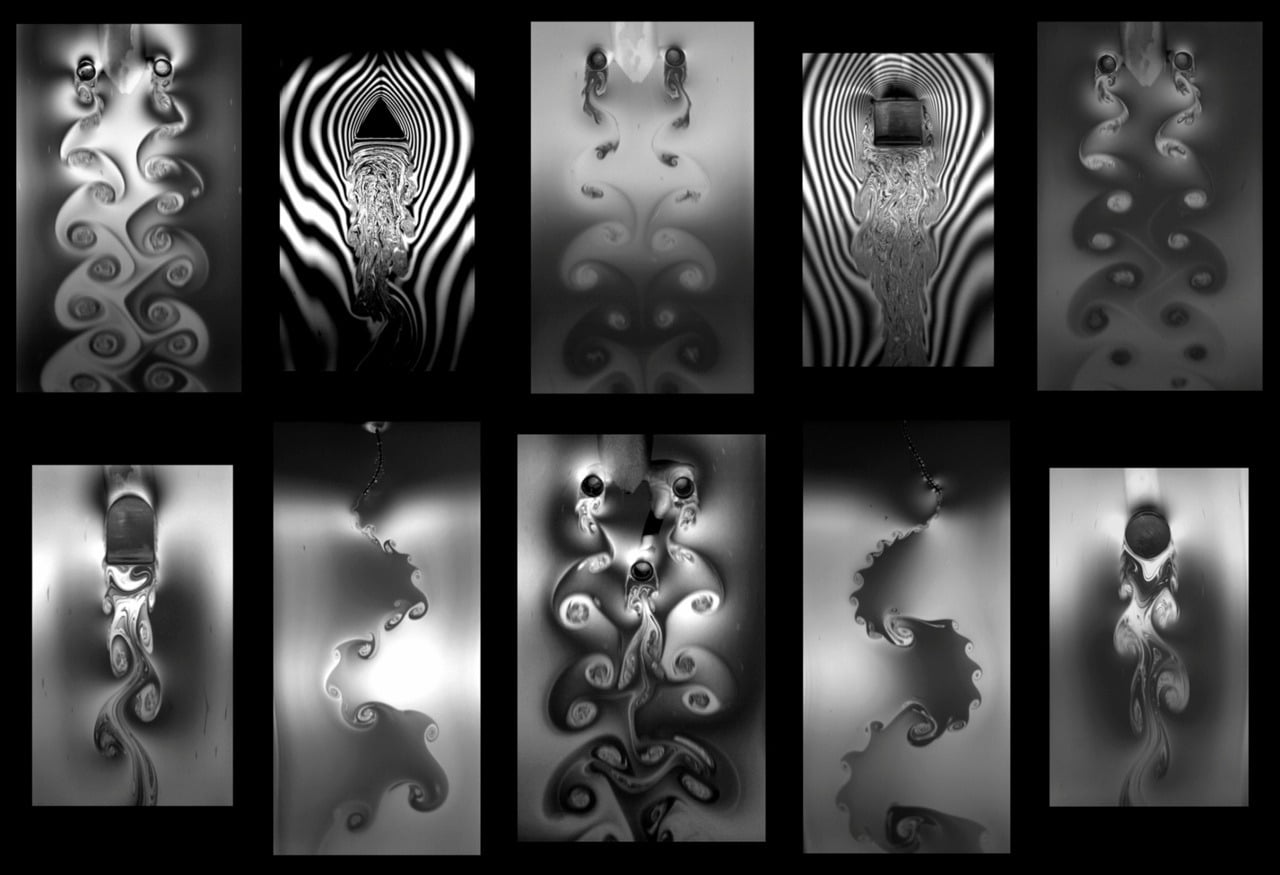
Flowing soap films provide an educational and beautiful method for visualizing the wakes of objects in two-dimensional flows. High-speed photography highlights the interference patterns on the soap film, providing detail without the necessity for the particulate tracking of other flow visualization methods. Highlights here include wakes behind bluff bodies, interacting cylinders, and flapping flags. (pdf) #

Flow Around a Delta Wing
Smoke visualization in a wind tunnel shows the vortices wrapping around and trailing behind a delta wing. As with more commonly seen rectangular or swept wings, the vortices that form around delta wings affect lift, drag, and control of an aircraft. They can also be hazardous to aircraft nearby. Note that, although delta wings are often seen on supersonic aircraft, this visualization only applies at subsonic speeds. The flow field changes drastically above the speed of sound.

Shuttlecock Flow Viz
The flow around a shuttlecock is visualized in a water channel using fluorescent dye illuminated by laser light ultraviolet LEDs. Note the recirculation zone on the upper shoulder. Experimenters can match flow characteristics in water to that in air by matching the Reynolds numbers. (Photo credit: Rob Bulmahn)
Updated, thanks to information from the photographer. Thanks!

Flow Viz of a Locust
Smoke visualization in a wind tunnel reveals the airflow over a flying locust. Researchers are unraveling the aerodynamics of insect flight in order to produce better Micro Air Vehicles (MAVs) and miniature flying robots. #
Smoke Visualization on an F-16
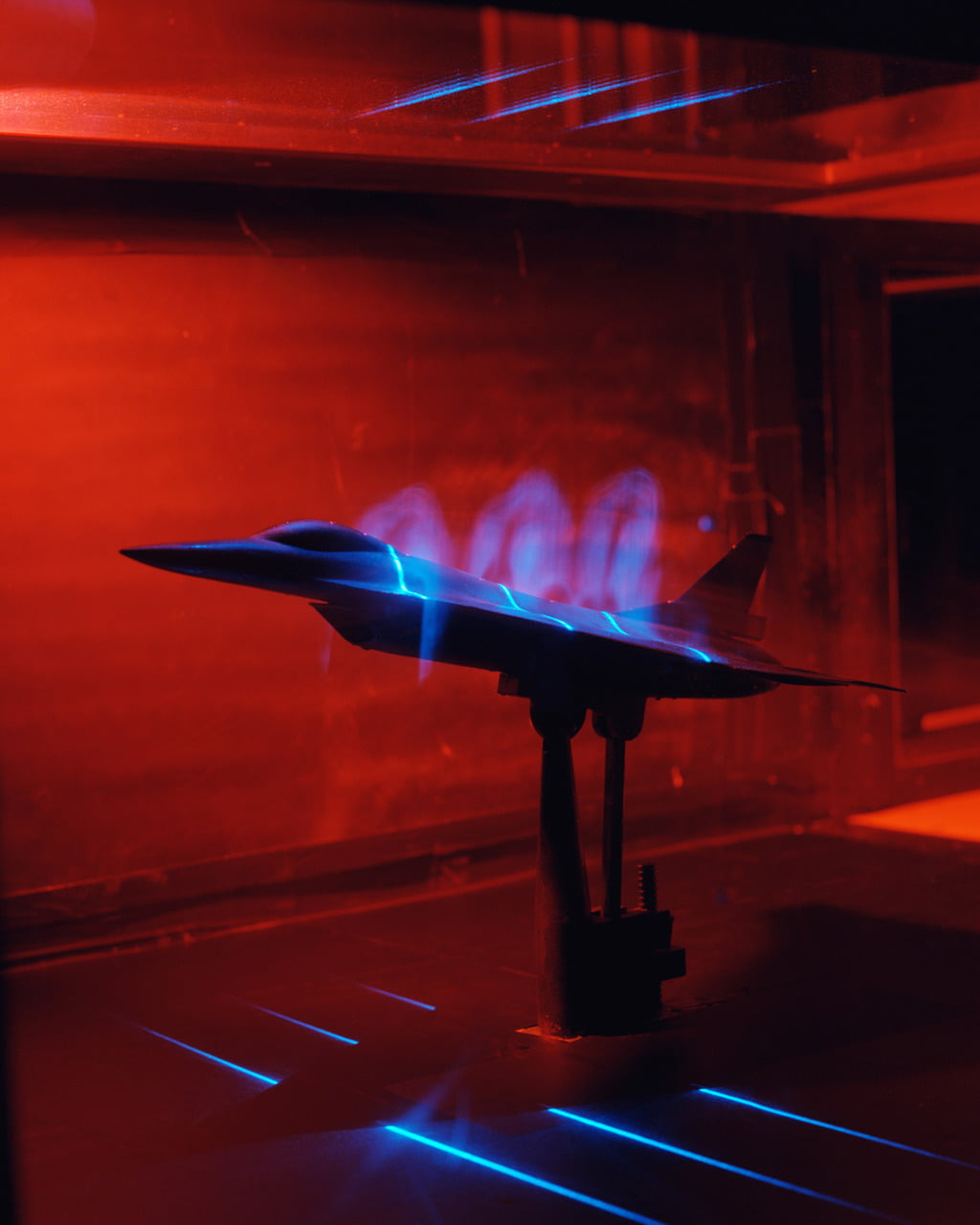
Flow around an F-16XL Scamp model is visualized using smoke illuminated by laser sheets. Lasers are common equipment in fluids laboratories; they’re useful for flow visualization and for many velocimetry techniques.
Blowing Droplets Apart


In raindrops, ink-jet printing, and spray painting, droplets get broken apart by the air flowing around them. Here, researchers investigate how a jet of fluid can push a droplet from its perch, or–with enough momentum–shatter the droplet. There are some lovely flow visualizations here; it’s especially cool to see the starting vortex ring of the jet push and deform the droplet. (Video and image credit: S. Jain et al.)
Even Penguins Love Bubbles
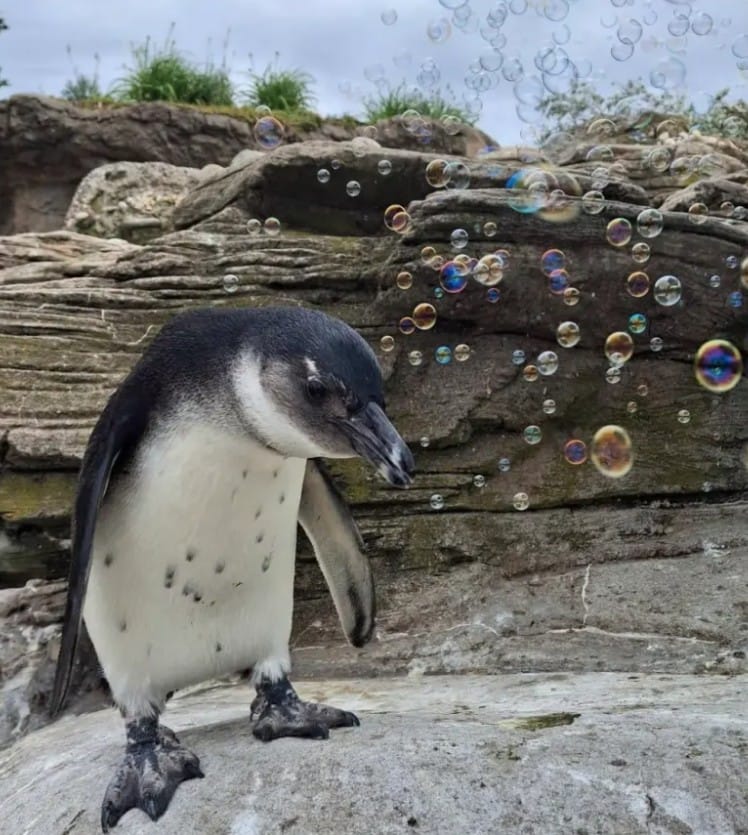
Walter, a young African penguin at the New York Aquarium, loves soap bubbles. In fairness to Walter, so do most people I’ve met. There’s just something that feels a bit magical about these ephemeral rainbow spheres that pop at a (dry) touch.
Bubbles owe their colors to thin film interference–the colors actually indicate how thick the bubble film is–and their stability (and fast disintegration) to surface tension. With schlieren photography or flow visualization, watching bubbles gets even cooler. Do you suppose a penguin would appreciate bubbles popping at 50,000 fps? (Image credit: New York Aquarium; via PopSci)
Fediverse Reactions
-