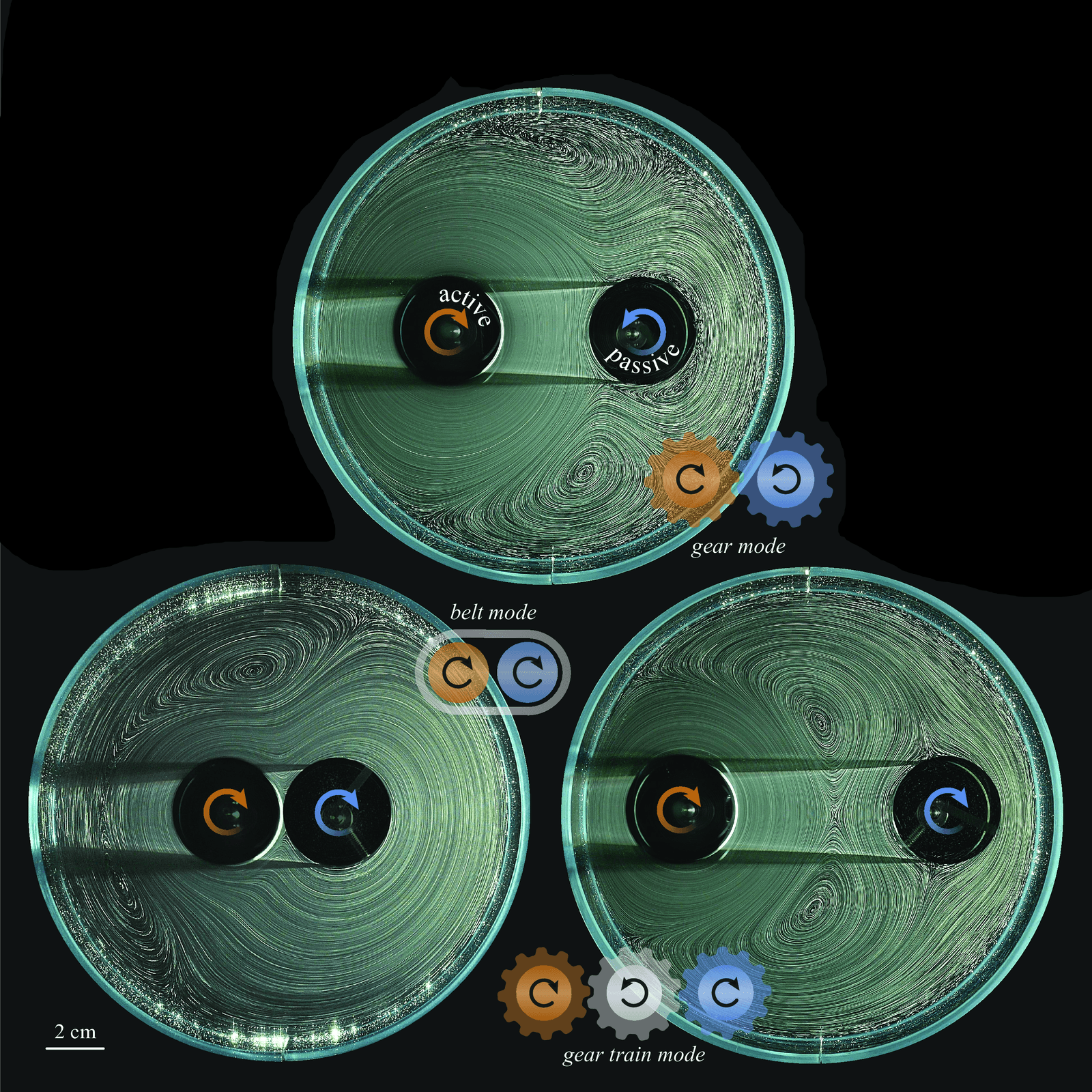
In mechanical systems, gears and pulleys transmit rotation from one location to another. Here, researchers explore a fluid dynamical version of such systems. The set-up consists of two rotors contained in a cylindrical corral filled with a water-glycerin mixture. One of the rotors is active, marked here with orange; the other (blue) one is passive, meaning that it can rotate due to the forces on it but it is not actively driven by a motor.
The three flow visualizations illustrate different configurations the rotors can take on, depending on their separation distance. In the top image, the rotors have a moderate separation distance and the passive one rotates opposite of the active one. That rotation direction is set by the high-shear flow on its inner side. If the rotors are close together (left image), they rotate in the same direction, aided by strong shear on the outside edge of the passive rotor; this mimics being linked with a belt. And, finally, if the rotors are widely separated, they also corotate, with the fluid in between acting like a virtual gear linking them. (Image credit: J. Smith et al.)
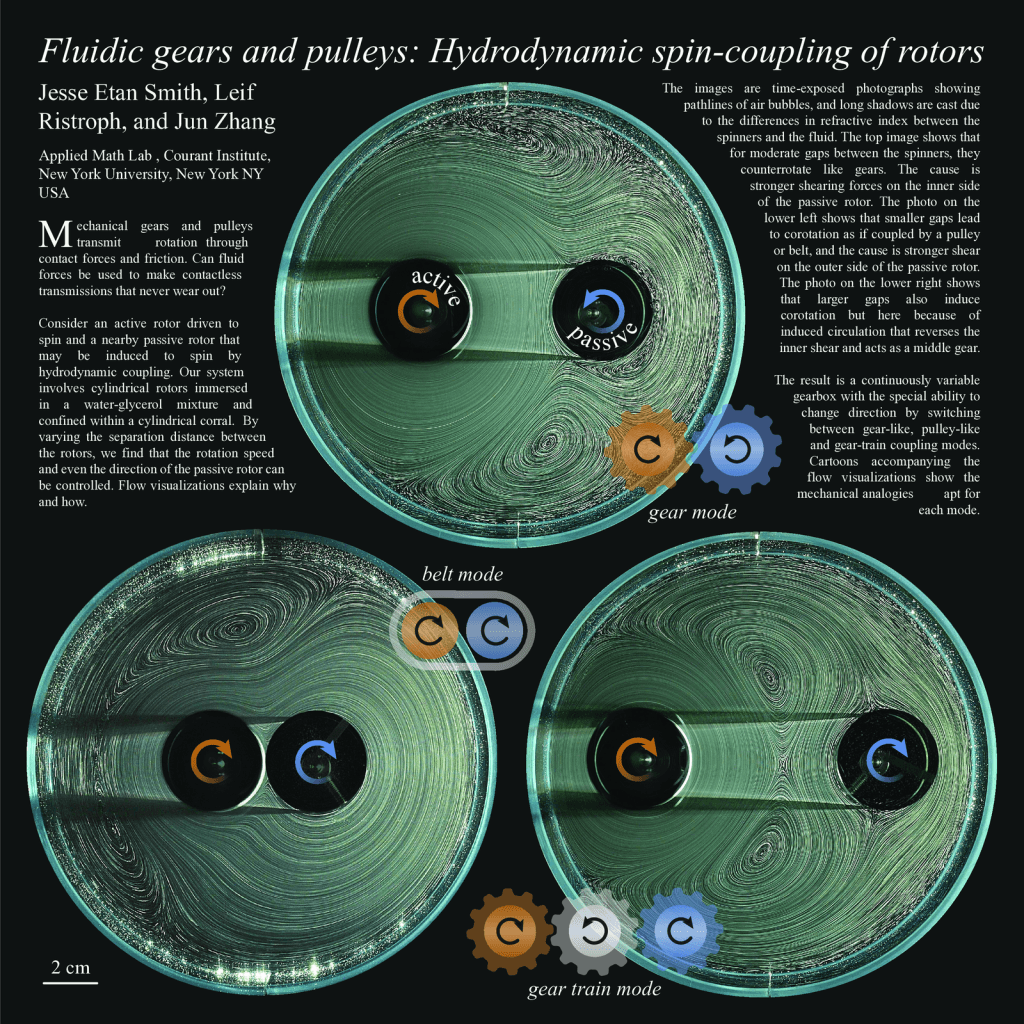
Research poster showing how an active and a passive rotor can be paired through hydrodynamic interactions.
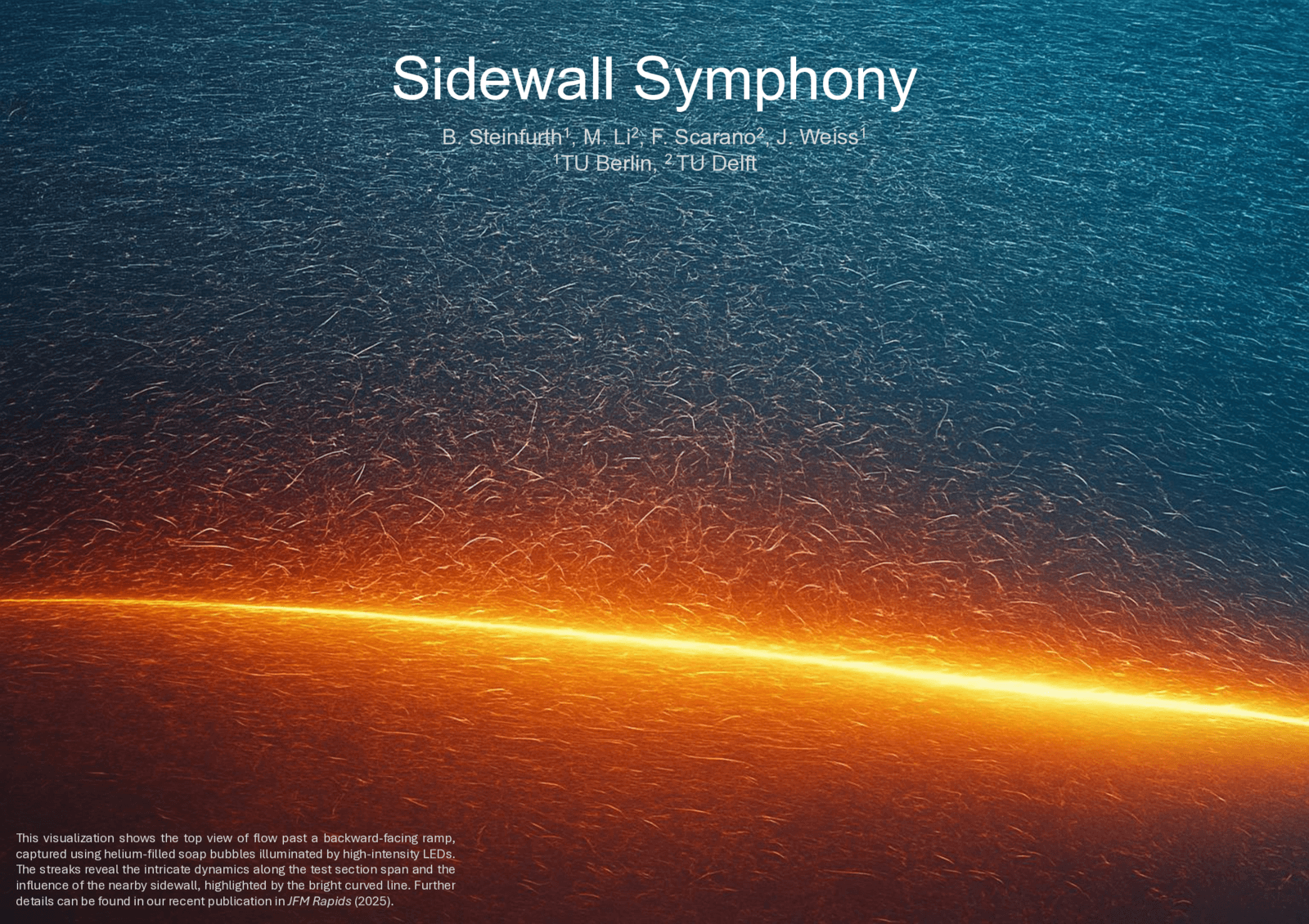
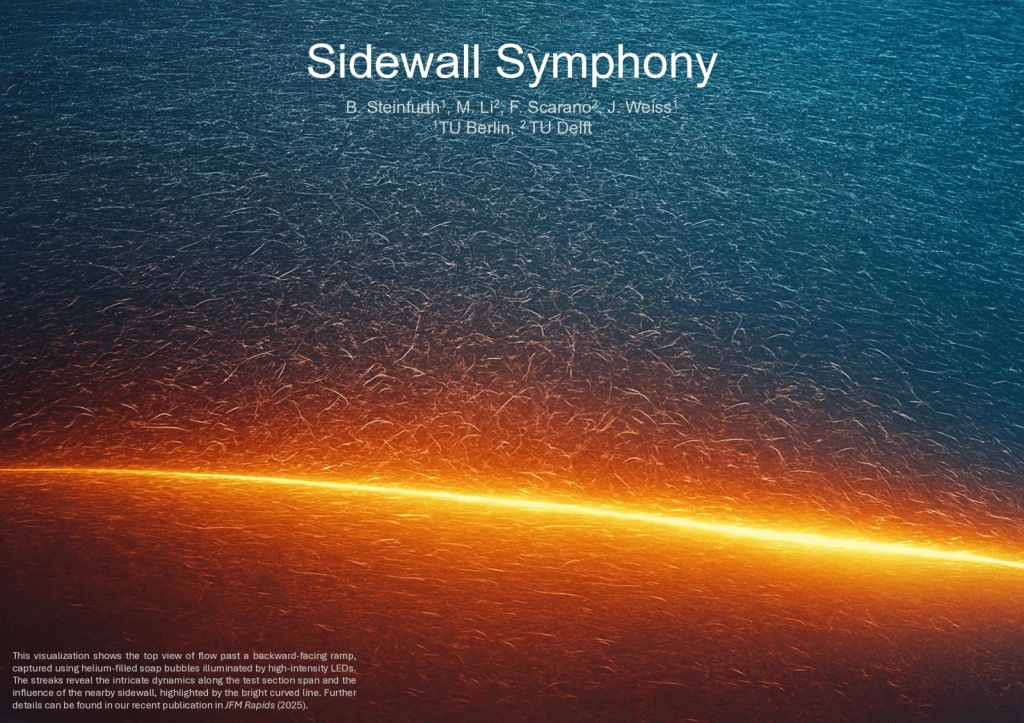
Flow visualization is both an art and science in fluid dynamics. Here, researchers were interested in studying the separation bubble that forms over a backward-facing ramp–a shape that shows up, for example, on an aircraft. In these areas, the flow over the surface separates, leaving an unsteady, recirculating bubble.
That’s the flow that researchers are visualizing here. They’ve done so by adding tiny helium-filled soap bubbles to the flow. With bright lights illuminating the bubbles, each one leaves a streak in a photograph, showing where the bubble moved during the time the camera’s shutter was open. Although images like these are beautiful, they can also be analyzed by computers to extract the underlying flow that created the image. (Image and research credit: B. Steinfurth et al.; see also here)
Schlieren techniques are one of my favorite forms of flow visualization. They cleverly make the invisible visible through an optical set-up that’s sensitive to changes in density. They’re great–as seen in the examples here–for seeing local buoyant flows like the plumes that rise from a candle, or for making gases like carbon dioxide visible. They’re also excellent for visualizing shock waves.
In this video, physicist David Jackson explains how one particular flavor of schlieren–one using a spherical mirror–works. There are lots of other possible schlieren set-ups, too, though each one has its quirks. (Video and image credit: All Things Physics; submitted by David J.)
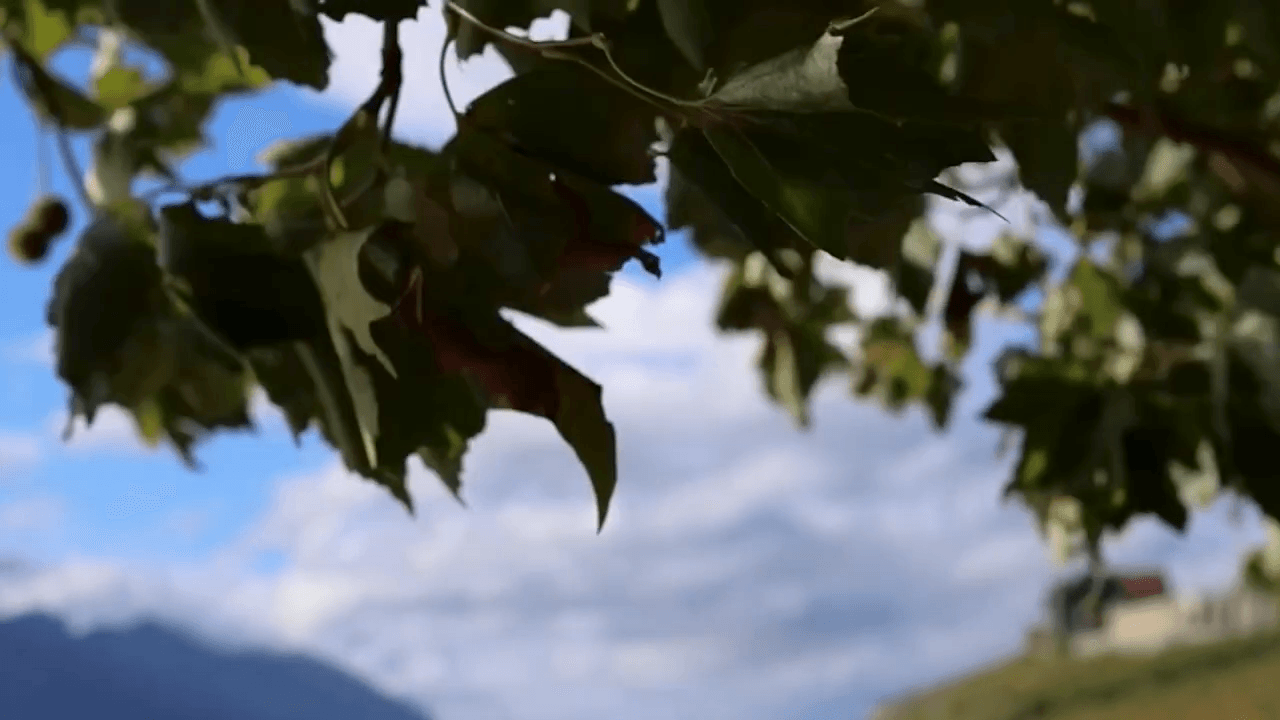
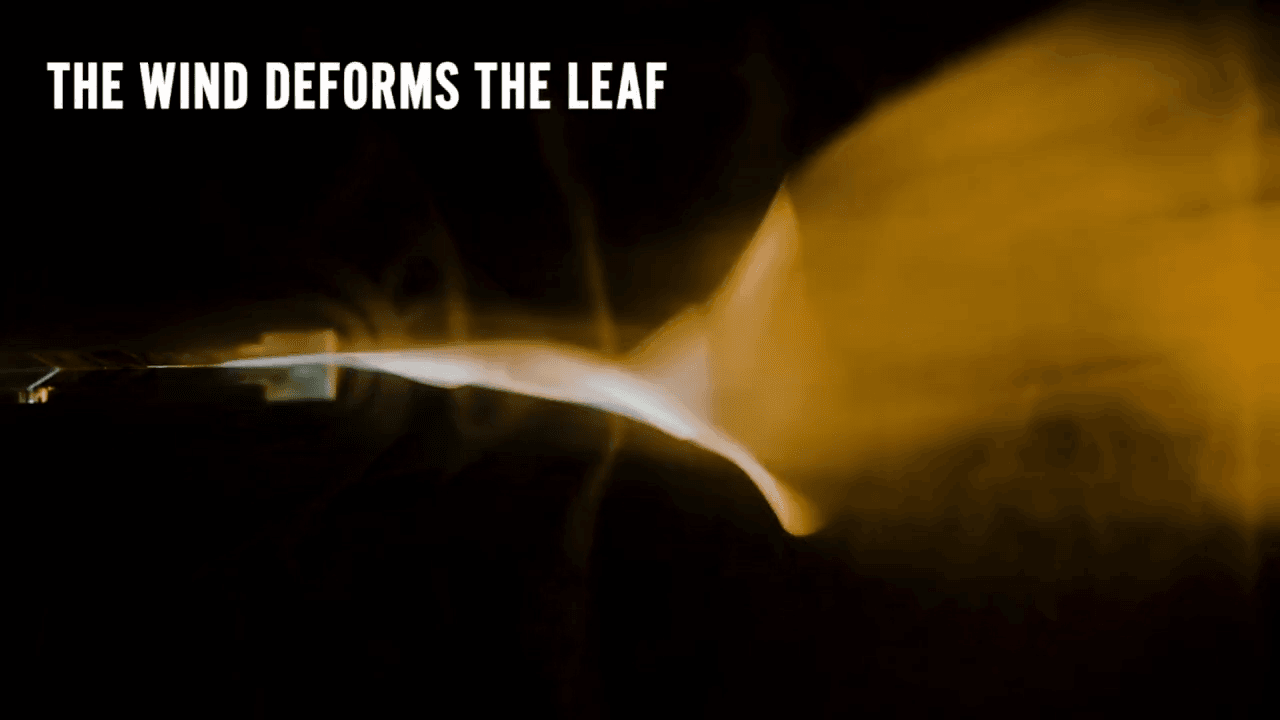
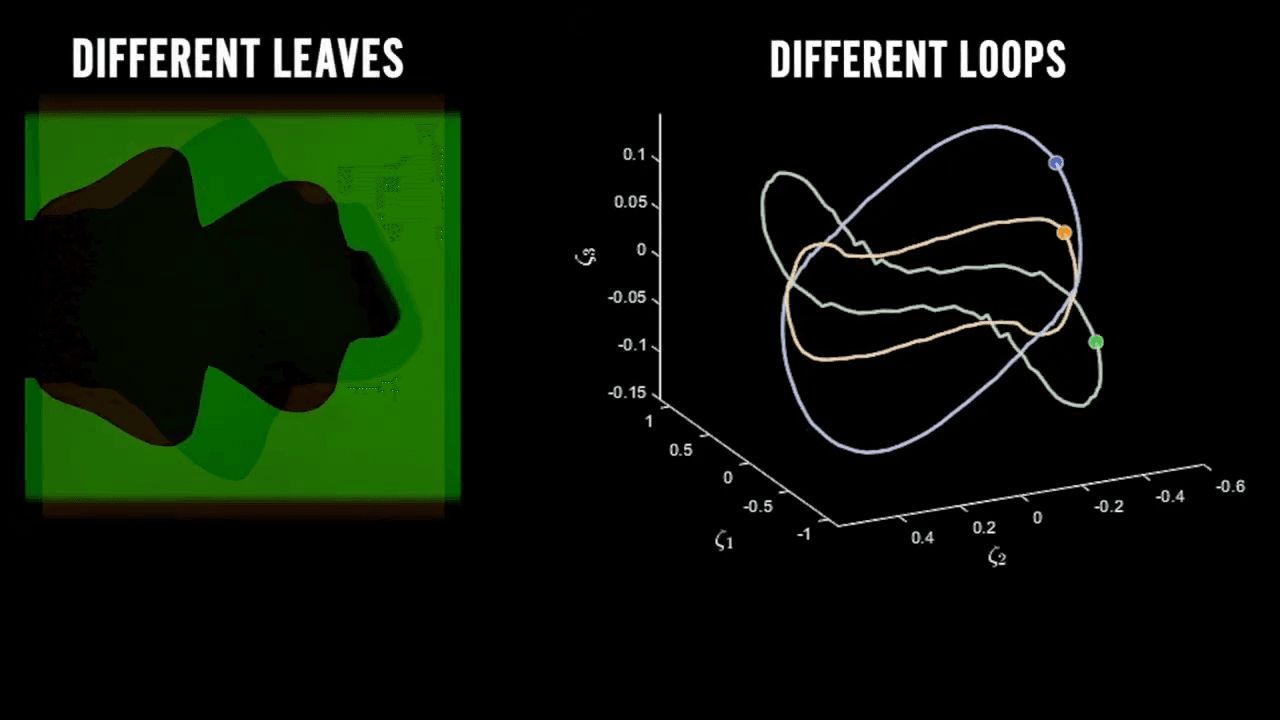
Once a breeze kicks up, leaves on a tree start dancing. Every tree’s leaves have their own shapes, some of which appear very different from other trees. But their dances have patterns, as this video shows. In it, researchers explore how leaves of different shapes deform in the wind and how they can decompose that motion to compare across leaves. (Video and image credit: K. Mulleners et al.; via GFM)
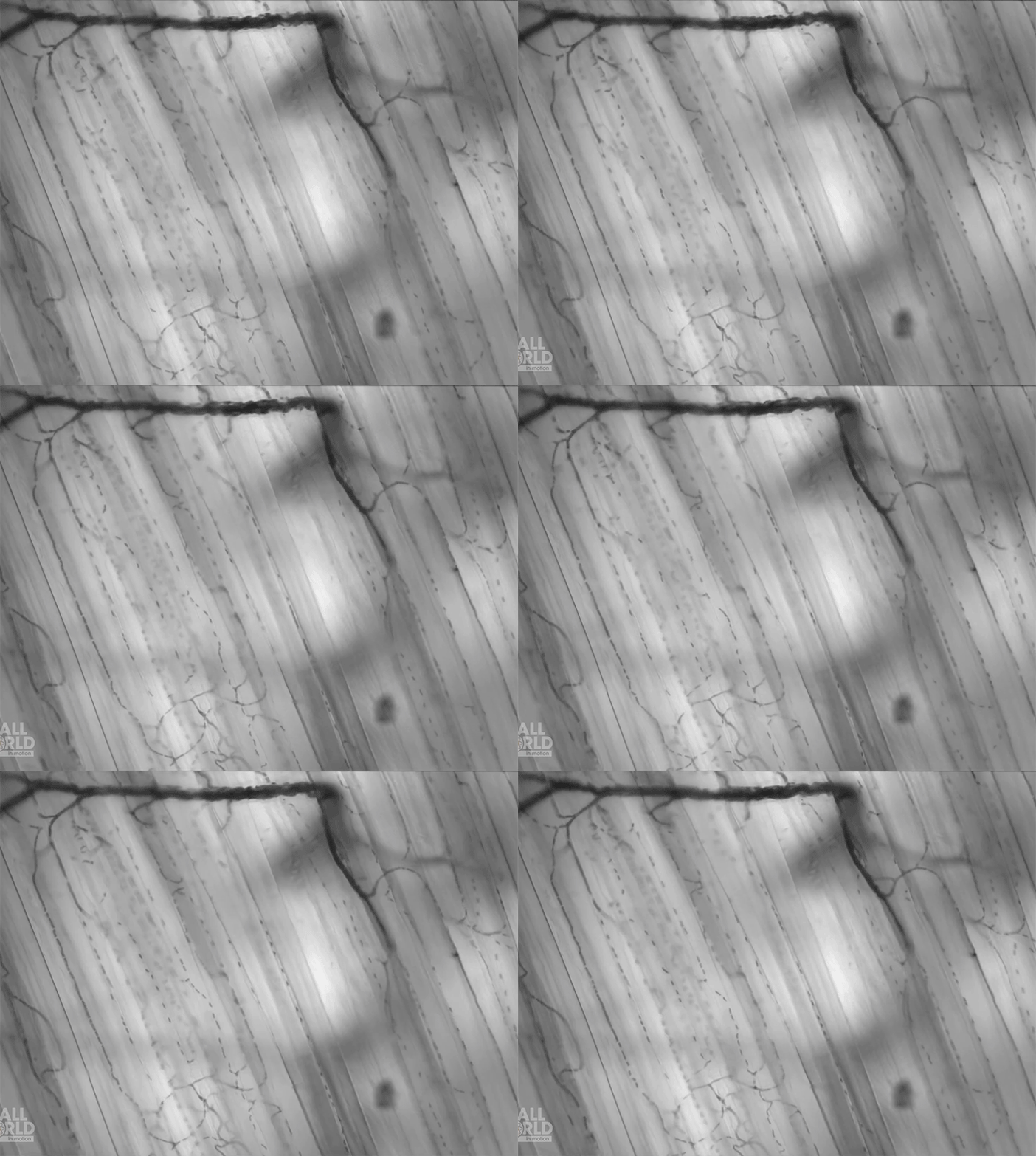
Today’s video shows red blood cells flowing through a capillary network in a rat’s skeletal muscle. At this resolution, our eyes can follow the paths of individual red blood cells squeezing through each capillary, as well as the faster blur of thicker capillaries where many cells can pass at once. Watching videos like this is a great way to build intuition for particle image velocimetry, streaklines, and other flow visualization methods as our brains can readily recognize where the cells are moving fast and where they are slower. (Video and image credit: Dr. G. McEvoy et al.; via Colossal)
In the next video of his current collection, Roman De Giuli takes us flying over liquid landscapes that look like our Earth in miniature. Many of them have the feeling of river deltas or glaciers. Sharp-eyed viewers will notice bubbles and flotsam in some of these streams. If you follow them, you can see how the flows vary — wiggling around islands, speeding up through constrictions and slowing down when the stream widens. It is, as always, a beautiful form of flow visualization. (Video and image credit: R. De Giuli)
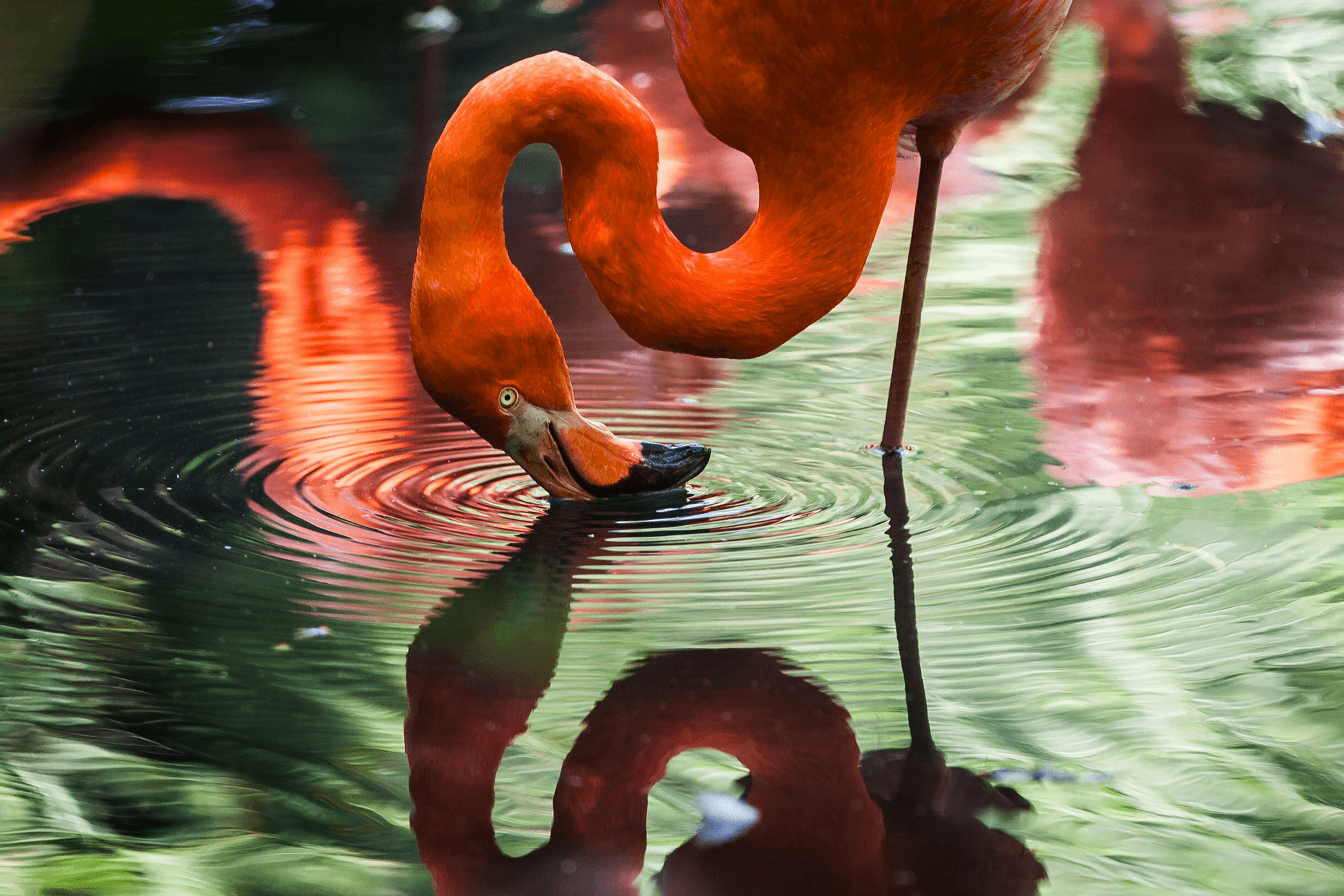
Flamingos are unequivocally odd-looking birds with their long skinny legs, sinuous necks, and bent L-shaped beaks. They are filter-feeders, but a new study shows that they are far from passive wanderers looking for easy prey in shallow waters. Instead, flamingos are active hunters, using fluid dynamics to draw out and trap the quick-moving invertebrates they feed on. In today’s post, I’ll focus on how flamingos use their heads and beaks; next time, we’ll take a look at what they do with their feet.
Feeding flamingos often bob their heads out of the water. This, it turns out, is not indecision, but a strategy. Lifting its flat upper forebeak from near the bottom of a pool creates suction. That suction creates a tornado-like vortex that helps draw food particles and prey from the muddy sediment.
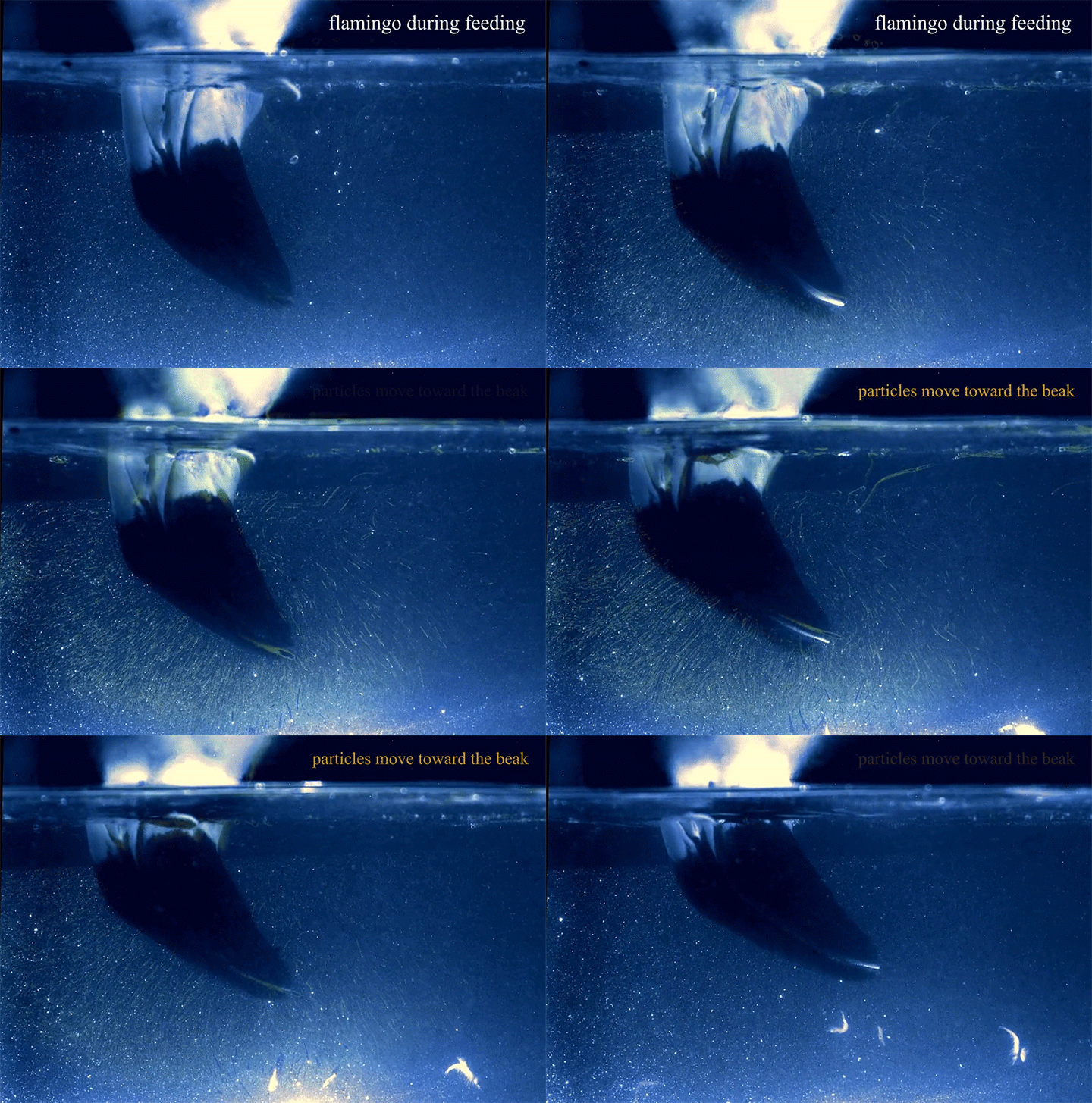
When feeding, flamingos will also open and close their mandibles about 12 times a second in a behavior known as chattering. This movement, as seen in the video above, creates a flow that draws particles — and even active swimmers! — toward its beak at about seven centimeters a second.
Staying near the surface won’t keep prey safe from flamingos, either. In slow-flowing water, the birds will set the upper surface of their forebeak on the water, tip pointed downstream. This seems counterintuitive, until you see flow visualization around the bird’s head, as above. Von Karman vortices stream off the flamingo’s head, which creates a slow-moving recirculation zone right by the tip of the bird’s beak. Brine shrimp eggs get caught in these zones, delivering themselves right to the flamingo’s mouth.
Clearly, the flamingo is a pretty sophisticated hunter! It’s actively drawing out and trapping prey with clever fluid dynamics. Tomorrow we’ll take a look at some of its other tricks. (Image credit: top – G. Cessati, others – V. Ortega-Jimenez et al.; research credit: V. Ortega-Jimenez et al.; submitted by Soh KY)
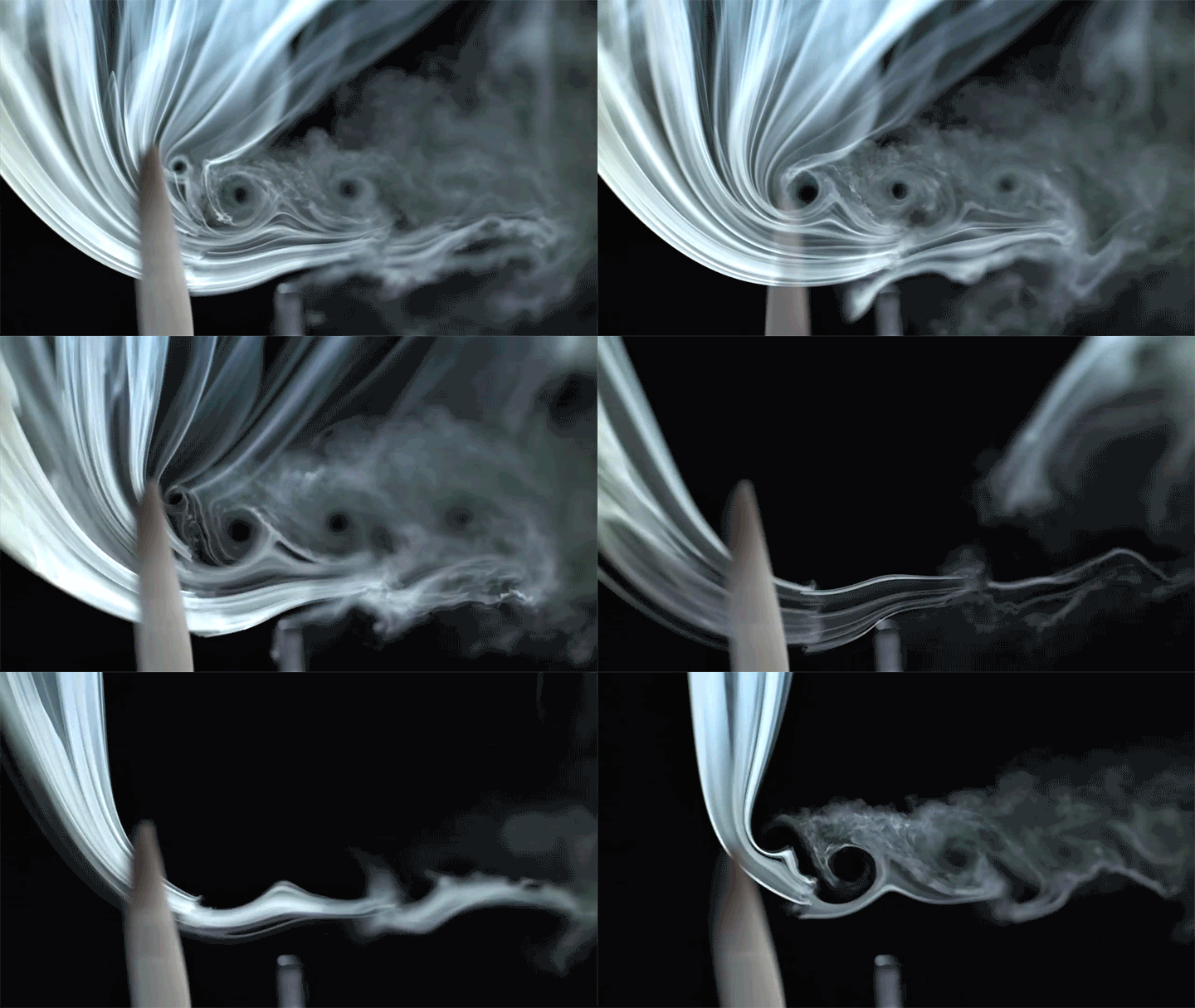
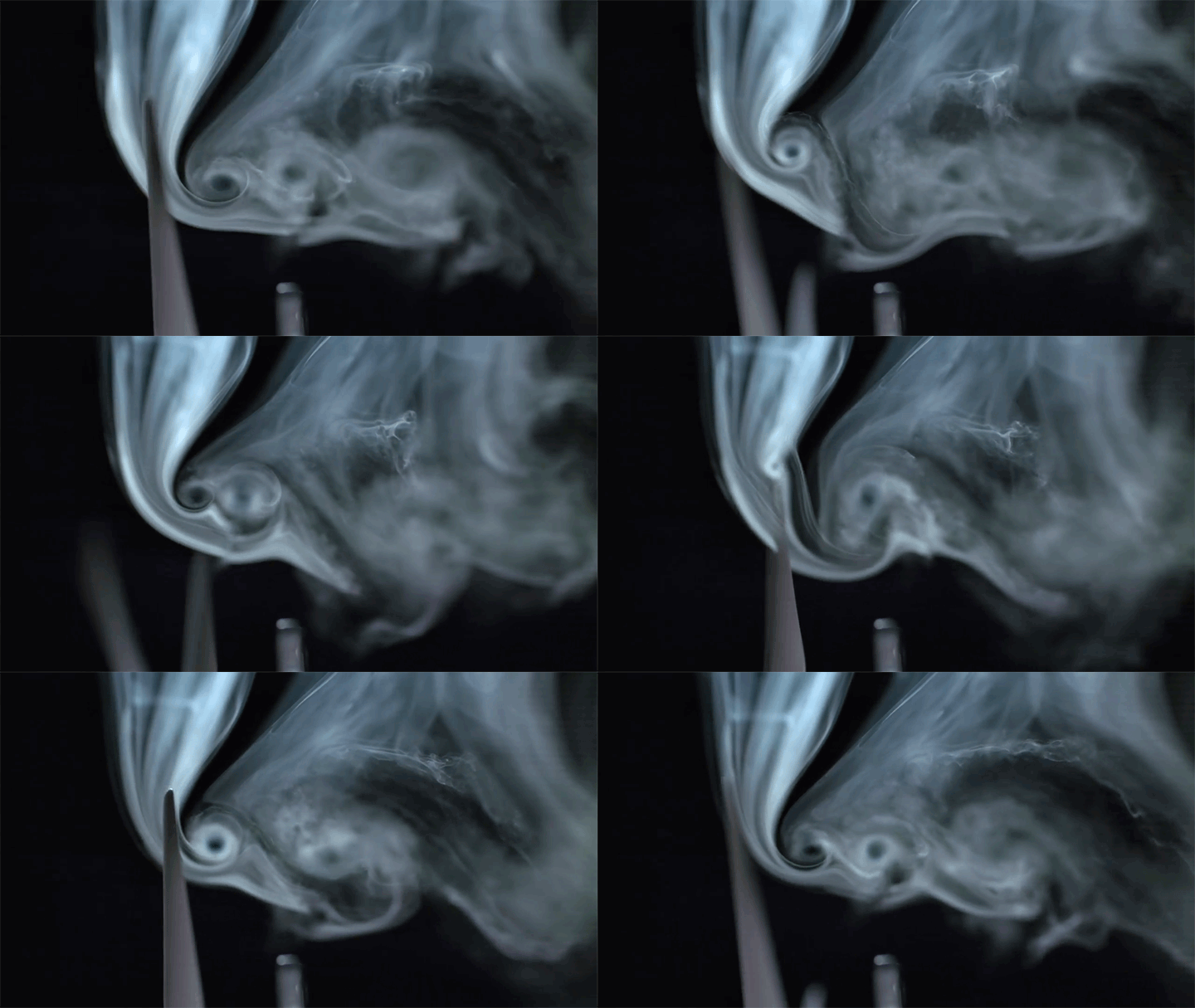
A drone’s noisiness is one of its major downfalls. Standard drones are obnoxiously loud and disruptive for both humans and animals, one reason that they’re not allowed in many places. This flow visualization, courtesy of the Slow Mo Guys, helps show why. The image above shows a standard off-the-shelf drone rotor. As each blade passes through the smoke, it sheds a wingtip vortex. (Note that these vortices are constantly coming off the blade, but we only see them where they intersect with the smoke.) As the blades go by, a constant stream of regularly-spaced vortices marches downstream of the rotor. This regular spacing creates the dominant acoustic frequency that we hear from the drone.
Animation of wingtip vortices coming off a drone rotor with blades of different lengths. This causes interactions between the vortices, which helps disrupt the drone’s noise.
To counter that, the company Wing uses a rotor with blades of different lengths (bottom image). This staggers the location of the shed vortices and causes some later vortices to spin up with their downstream neighbor. These interactions break up that regular spacing that generates the drone’s dominant acoustic frequency. Overall, that makes the drone sound quieter, likely without a large impact to the amount of lift it creates. (Image credit: The Slow Mo Guys)
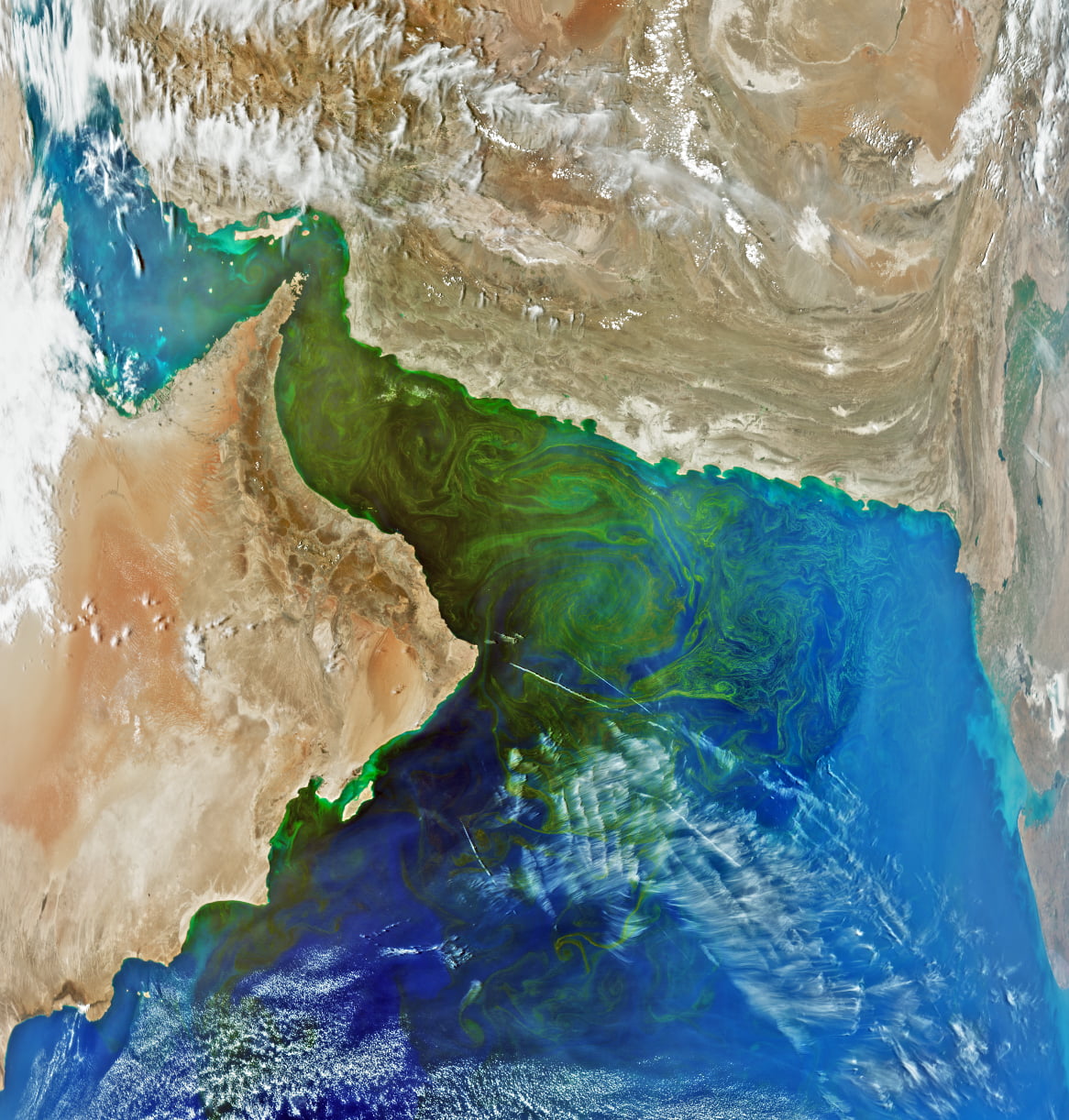
Captured in March 2024, this satellite image of the Gulf of Oman comes from an instrument aboard the PACE spacecraft. The picture of a phytoplankton bloom is not quite natural-color, at least not as our eyes would see it. Instead, engineers combined data taken from multiple wavelengths and adjusted it to bring out the fine details. It’s not what we’d see by eye, but every feature you see here is real.
Traditionally, the only way to identify the species of a phytoplankton bloom like this one is by taking a sample directly. But PACE’s instruments can detect hundreds of wavelengths of light, offering enough color detail that scientists may soon be able to identify and track phytoplankton species by satellite image alone. I wonder if distinguishing species could also provide some quantitative flow visualization from a series of these images. In the meantime, at least we can enjoy the view! (Image credit: J. Knuble; via NASA Earth Observatory)
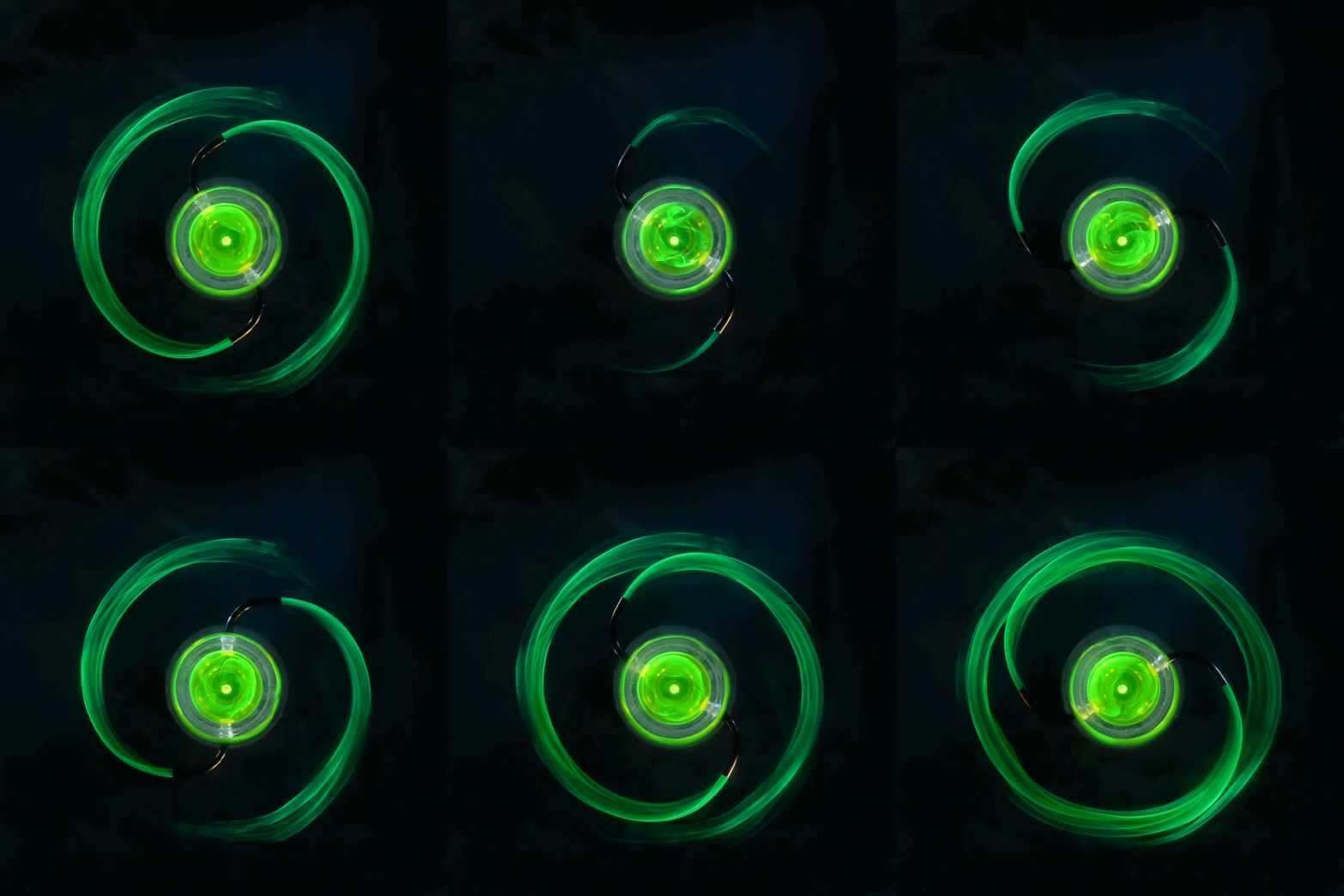
In graduate school, my advisor introduced us to a particularly vexing fluid dynamical thought experiment known as the Feynman sprinkler. After observing an S-shaped sprinkler that rotated when water shot out its arms, physicist Richard Feynman wondered what would happen if the device were placed in a tank of water with the flow reversed. If the sprinkler was sucking in water, would it rotate and, if so, in what direction?
This seemingly simple question has confounded physicists ever since, in part because you can make believable arguments for multiple different results. Attempts to build the apparatus experimentally produced differing results, too — often due to variables that don’t appear in the thought experiment, like friction in the sprinkler’s bearing. But, at long last, a group posits they have the final answer to the problem.
They cleverly built their sprinkler so that it floats in its tank, with the addition or removal of water from the sprinkler controlled by a second siphon-connected tank. With no solid-solid contacts, the sprinkler can rotate with very little friction.
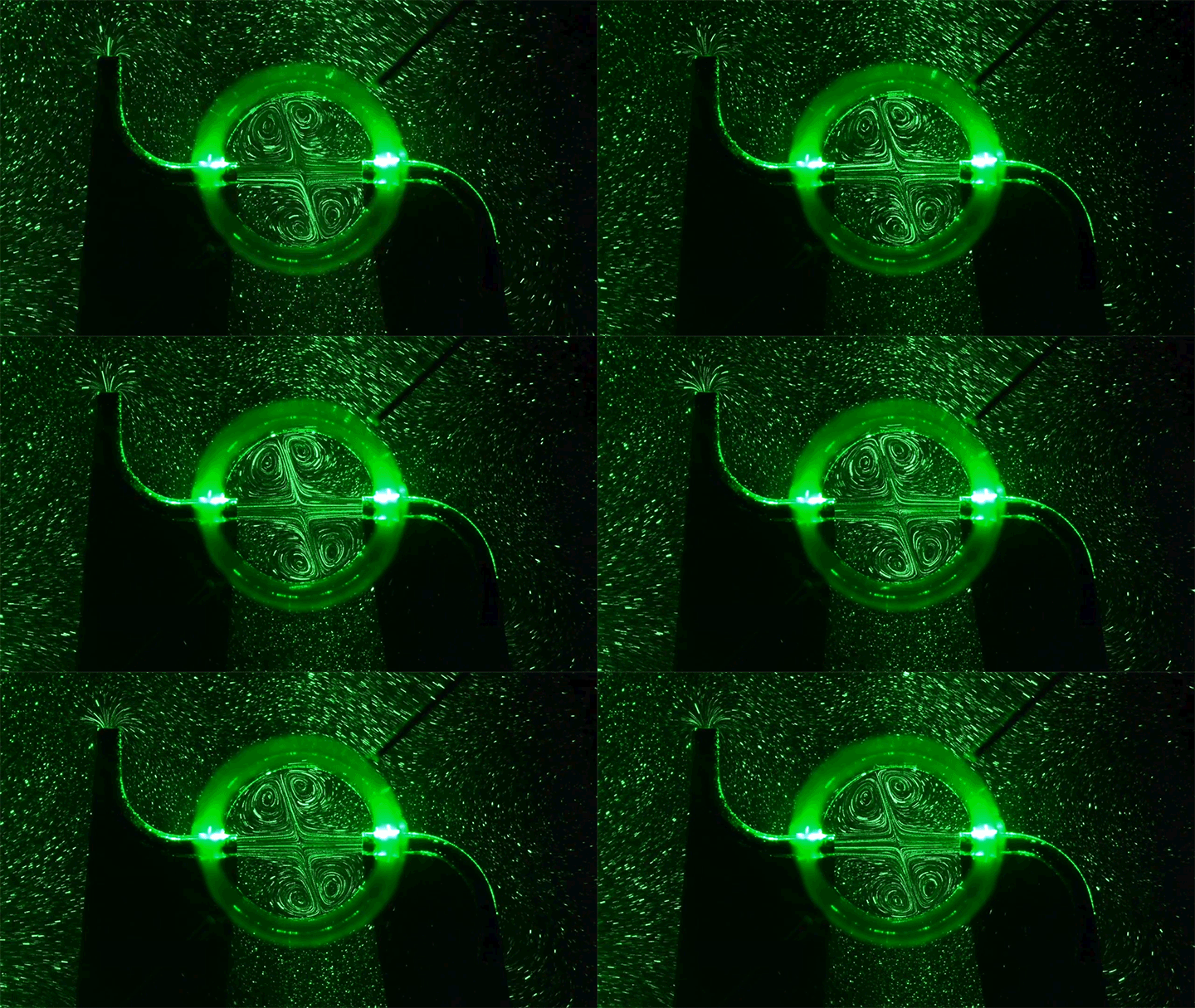
Flow visualization of the sprinkler in reverse (suction) mode. For image clarity, the device is held in place to prevent spinning. Notice how the jets coming into the hub glance off one another and form counter-rotating vortex pairs at an angle. This asymmetry is the source of the sprinkler’s rotation when allowed to move.
The team found that sucking water into the sprinkler does, indeed, reverse the sprinkler’s rotation, but it’s not a simple reversal of the forward sprinkler’s flow. To see why, check out the video above, which visualizes flow inside the sprinkler during suction. For clarity, the device is held fixed in place during flow visualization. Notice that the two arms of the sprinkler sit directly opposite one another in the hub. Thus, you’d expect their two jets to collide and form counter-rotating vortices along a vertical axis. But the vortex pairs are offset from the centerline.
This asymmetry takes place because the velocity profiles of flow across the hub inlets are skewed. Instead of the largest velocity occurring on the centerline of the inlet, each occurs slightly to one side. So when the jets collide, they do so off-center and impart a torque to the sprinkler. The reason for the skewed profiles at the inlets lies further upstream in the curved arms of the sprinkler. Centrifugal force from turning the corner leaves a mark on the flow, leading, ultimately, to the skewed velocity profiles, offset jets, and spinning sprinkler. (Image and research credit: K. Wang et al.; via APS Physics)