Search results for: “art”

  • Following the Flow

    Following the Flow

    In early December 2020, the world’s largest iceberg — roughly 135 km long by 44 km wide — was heading straight for South Georgia Island. Luckily for the island, iceberg A-68A was being carried by ocean surface currents that approach the island before turning sharply southward. The enormous iceberg followed, rotating nearly 90 degrees and drifting away on faster currents.

    Scientists track these large-scale — 50 to 100 km wide — currents using satellites that measure the ocean height. Currents of this size actually generate a measurable tilt to the ocean surface, which scientists measure and use as input into models that estimate the surface currents’ speed and direction. (Image credit: L. Dauphin and J. Stevens; via NASA Earth Observatory)

  • Uncovering Erosion Patterns

    Uncovering Erosion Patterns

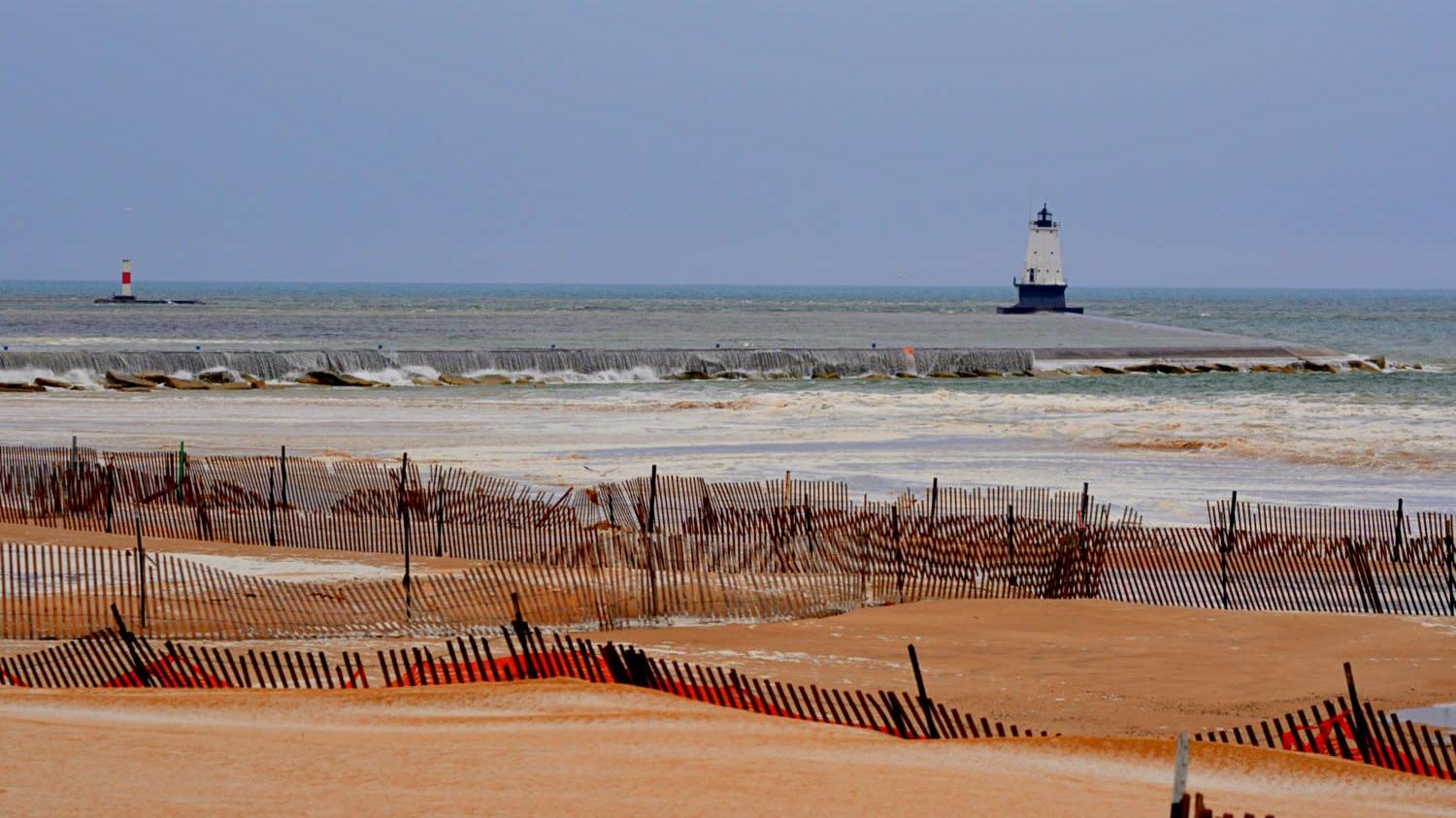
    Gypsum and limestone cliffs sometimes form patterns of long, parallel grooves known as rillenkarren. Recent research shows that these patterns form when a thin layer of water flows over a dissolvable surface. As the running water picks up solute, its concentration increases, causing changes in the local hydrodynamics. What begins as a small perturbation in an otherwise flat surface grows into a groove with walls that eventually rise out of the water layer. At that point, the growth mechanism shifts because the flow is restricted to channels in the rock. (Image credit: Ymaup/Wikimedia Commons; research credit: A. Guérin et al.; via APS Physics; submitted by Kam-Yung Soh)

  • Hedgehogs Atop Waves

    Hedgehogs Atop Waves

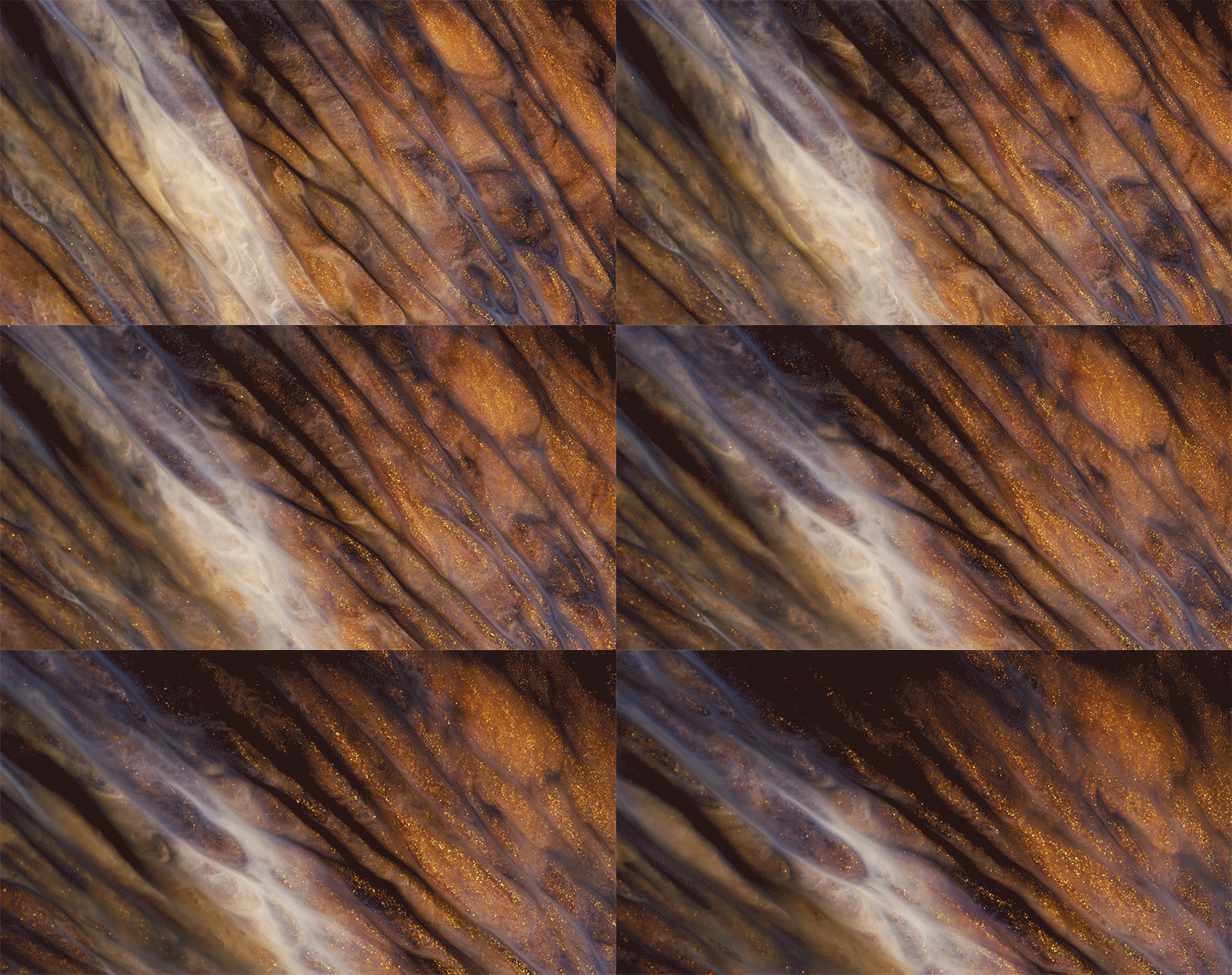
    Since Michael Faraday, scientists have watched the curious patterns that form in a vibrating liquid. By adding floating particles to such a system, researchers have discovered spiky, hedgehog-like shapes that form near the surface. At low amplitudes, the surface patterns resemble the typical smooth rounded lobes one would expect, but as the wave amplitude increases, spikes form in the tracers, driven by the motion of the waves. (Image and research credit: H. Alarcón et al.; via APS Physics)

  • Stabilizing Foams

    Stabilizing Foams

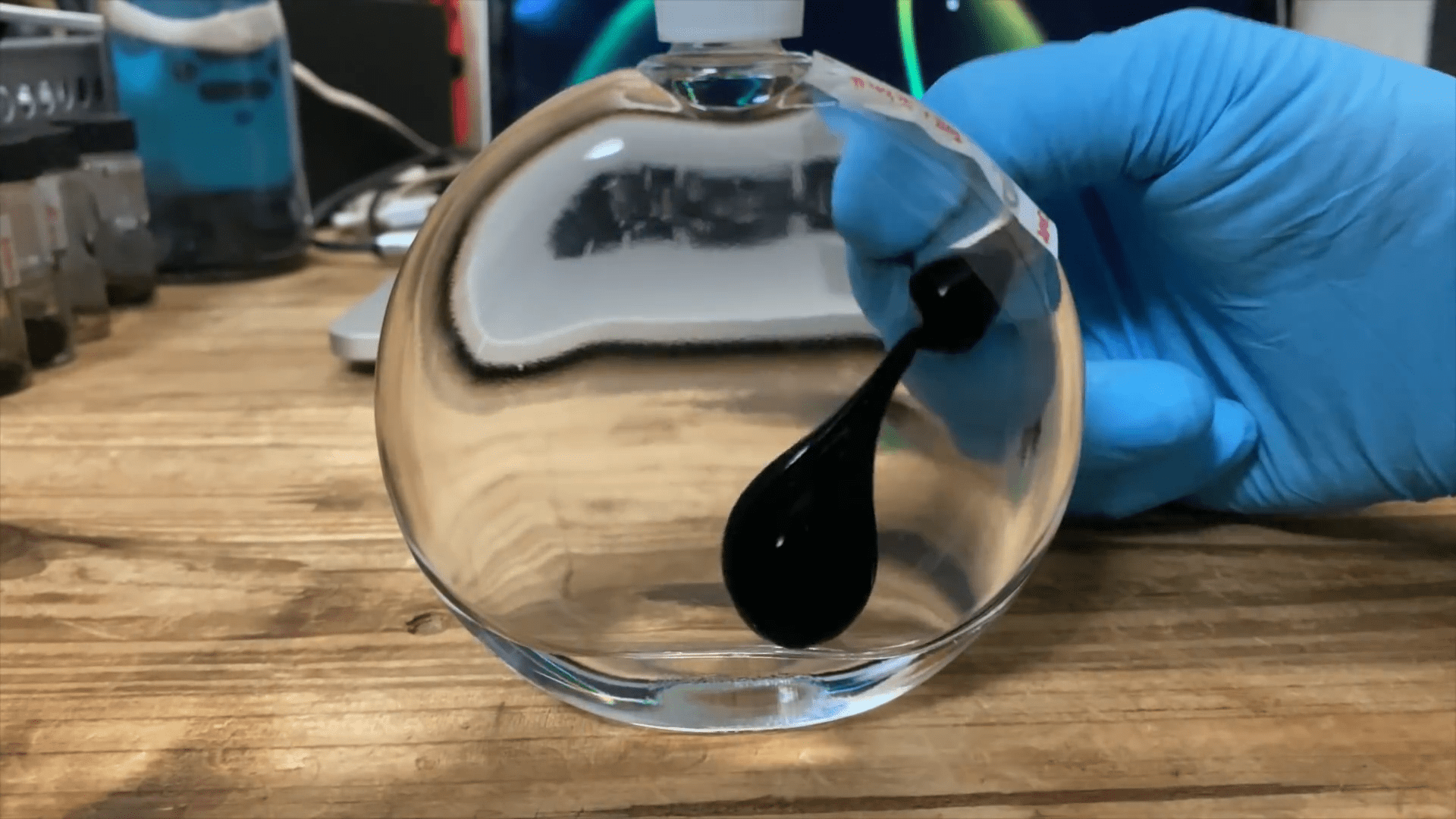
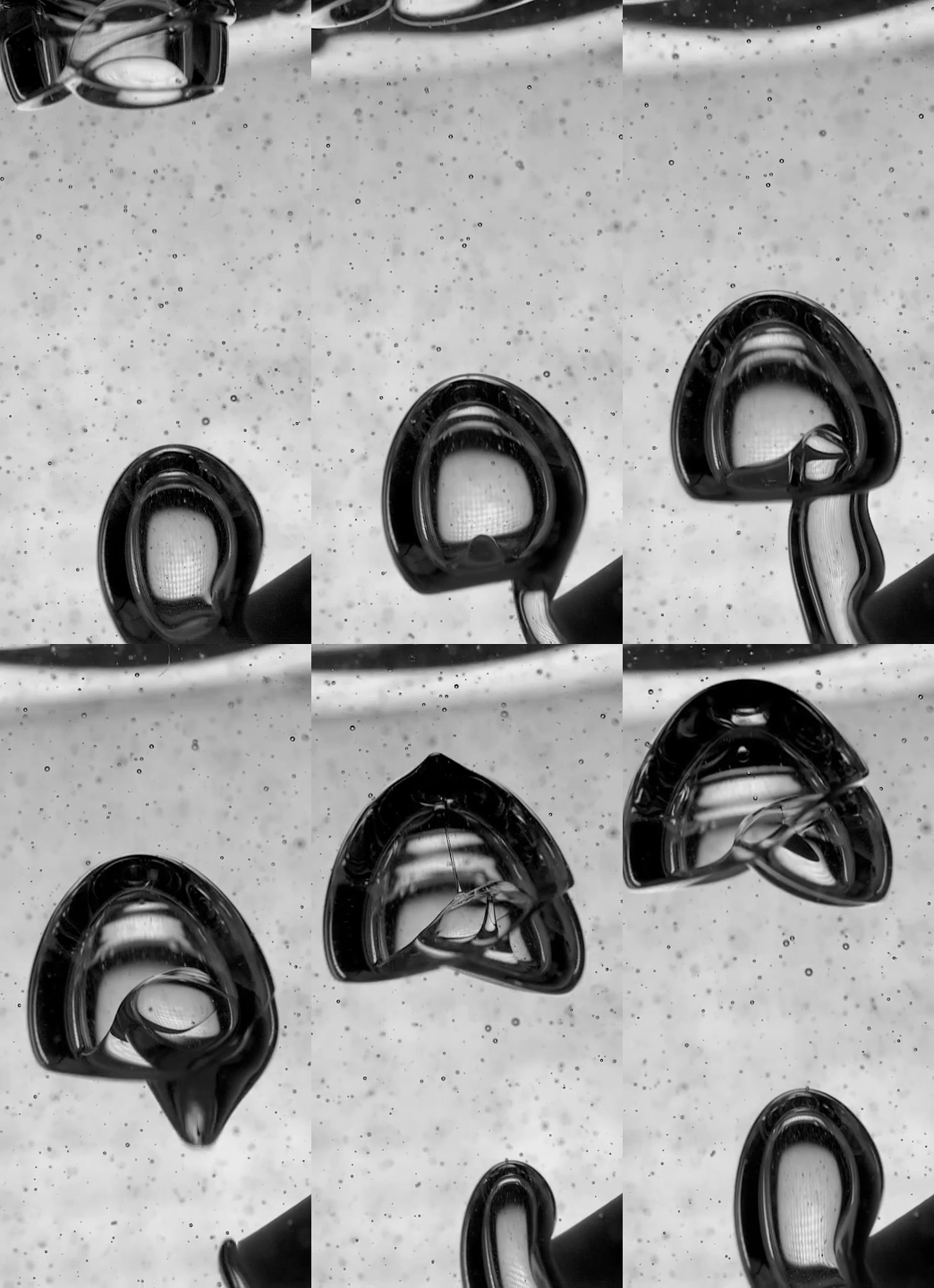
    Bubbles in a pure liquid don’t last long, but with added surfactants or multiple miscible liquids, bubbles can form long-lasting foams. In soapy foams, surfactants provide the surface tension gradients necessary to keep the thin liquid layers between bubbles from popping. But what stabilizes a surfactant-free foam?

    New work finds that foams in mixtures of two miscible fluids only form when the surface tension depends nonlinearly on the concentration of the component liquids. When this is true, thinning the wall between bubbles creates changes in surface tension that stabilize the barrier and keep it from popping.

    In mixtures without this nonlinearity, foams just won’t form. The new results are valuable for manufacturing, where companies can avoid unintentional foams simply by careful selection of their fluids. (Image credit: G. Trovato; research credit: H. Tran et al.; via APS Physics; see also Ars Technica, submitted by Kam-Yung Soh)

  • Sunset Swirls

    Sunset Swirls

    This gorgeous photograph of Kelvin-Helmholtz clouds was taken in late December in Slovenia by Gregor Riačevič. The wave-like shape of the Kelvin-Helmholtz instability comes from shear between two fluid layers moving at different relative speeds. Here on Earth, clouds like these are often short-lived, but we see similar structures in the atmospheres of gas giants like Jupiter and Saturn. (Image credit: G. Riačevič; submitted by Matevz D.)

  • High Tide

    High Tide

    Broad Sound, in eastern Australia, is home to some of the most extreme tidal swings in the world, with more than ten meters difference between high and low tides. The bay’s peculiar geography, along with the topography of nearby reefs, combine to cause the large tides. This color-enhanced satellite image shows the bay at high tide, as phytoplankton and suspended sediments are swept into the bay and around its many islands. The level of detail is just stunning. I particularly love all the von Karman vortex streets visible in the wakes of islands. I count more than a dozen of them! (Image credit: N. Kuring/NASA/USGS; via NASA Earth Observatory)

  • Featured Video Play Icon

    Slow Mo Pulse Jet Engine

    Pulse jet engines rely on their shape to maintain combustion without moving parts. The pressure waves that travel through the engine pump fresh oxygen into the combustion chamber and then ignite it with exhaust remaining from the last cycle. In this Slow Mo Guys video, we get to see that process in action. It’s a pretty neat view of combustion in a working engine, but these guys are definitely not going to win any awards for safety measures. Seriously, don’t try this at home! (Image and video credit: The Slow Mo Guys)

  • Dual Structure of Water

    Dual Structure of Water

    Water is so ubiquitous in our lives that we rarely recognize just how strange it is. For example, when pure liquid water is supercooled well below its freezing temperature, it takes on not one but two molecular arrangements, one of which is high-density and one of which is low-density. Theory had posited this configuration for some time, but only recently has experimental evidence supported it.

    The experimental challenge was water’s rapid crystallization in the temperature region of interest. Any time water was held at those temperatures in order to study it, it would crystallize before researchers could make their observations. To get around this, a team studied extremely thin layers of water which they heated with a laser before rapidly cooling. By repeating this heating-and-cooling cycle many times, they were able to measure water properties that only make sense if it conforms to the two-density theory. (Image credit: T. Holland/Pacific Northwest National Laboratory; research credit: L. Kringle et al.; via Science News; submitted by Kam-Yung Soh)

  • Featured Video Play Icon

    Seismic Events Reveal Ocean Temperatures

    Decades ago, researchers proposed sending sound waves through the ocean to measure its temperature. Although the technique worked, it ran into noise pollution issues, but now it’s back, using naturally-occurring seismic events as the sound source.

    When fault lines shift, they generate seismic waves that travel through the ocean as sound. When they reach a land mass, the waves get converted back into seismic energy that’s then picked up by a receiver. Knowing the distance from the source to the receiver and the time necessary for the wave to travel, scientists can then determine the average temperature of the water based on the speed of sound.

    The technique can track temperature changes down to thousandths of a degree. Based on more than a decade of seismic data from the Indian Ocean, researchers found almost double the temperature increase measured by a different sensor network. (Image and video credit: Science; research credit: W. Wu et al.; submitted by Kam-Yung Soh)

  • Featured Video Play Icon

    The Strangeness of Sand

    Sand and other granular materials can flow, jam, and transmit forces in counterintuitive ways. This Lutetium Project video gives a nice overview of some of these bizarre properties.

    Many of sand’s odd characteristics come from the way forces move through grains that touch. Around 5:20 there’s a demo of one of these effects: the Janssen effect. Using a scale, the video shows the mass of a bunch of grains. Then, the host pours those grains into a narrow cylinder. If you watch the scale, you’ll see that it shows a smaller mass than before. That’s not because of a difference in mass between the bowl and the cylinder; the scale is calibrated to only measure the mass of the grains. In the narrow cylinder the grains appear to weigh less because part of their weight is being supported by force chains that run to the container’s walls. (Image and video credit: The Lutetium Project)